Do Quartz Infrared Heaters Produce More Btus Than Resistance?
The core difference often lies in how heat is delivered, not just the total amount. Quartz infrared heaters transfer heat directly, while resistance heaters warm the air. Understanding this helps explain why one might feel warmer or be more efficient in certain situations.
Understanding Heat Transfer: Infrared vs. Resistance
When we talk about heaters, we’re really talking about how they move heat. There are two main ways heat moves around: convection and radiation. Most common heaters use convection.
They heat the air. That warm air then rises and moves around the room.
Infrared heaters are different. They use radiation. Think of the sun.
It sends out rays of heat. These rays travel through space. When they hit something, they warm it up directly.
Infrared heaters work much like the sun. They send out invisible infrared rays. These rays warm objects and people they touch.
They don’t spend much energy heating the air first.
This difference in heat transfer is key. It explains a lot about why people like infrared heaters. You feel the warmth right away.
You don’t have to wait for the whole room to heat up. It’s like stepping into a patch of sunlight on a cool day. You feel warm right where you are.
What are BTUs, Anyway?
BTU stands for British Thermal Unit. It’s a standard way to measure energy. Specifically, it measures heat energy.
One BTU is the amount of heat needed to warm one pound of water by one degree Fahrenheit.
Heaters are often rated in BTUs. A higher BTU number means the heater can produce more heat. This sounds simple, right?
More BTUs means more warmth. But it’s not the whole story for comfort.
Think about a big room. A heater with a high BTU might be able to heat it. But how it heats matters.
If it heats the air, the warm air might go right up to the ceiling. The floor stays cold. If it uses radiation, it warms you directly.
This can make you feel warmer with fewer BTUs.
How Resistance Heaters Work
Most common electric heaters are resistance heaters. These are the ones you see with coils that glow red. Or they might have a fan that blows air over heated elements.
Inside, they have a special wire. This wire has high electrical resistance. When electricity flows through it, the wire gets hot.
This is like how a toaster works. The hot wire heats the air around it.
A convection heater then uses a fan. The fan pulls in cooler room air. It blows this air over the hot coils.
The heated air is then pushed back into the room. This warm air rises. It slowly warms the space.
A radiant resistance heater might not have a fan. It might just have a glowing element. It sends heat out directly.
But it still uses the resistance principle to get hot. The heat it gives off is often a mix of radiant and convective heat.
The total energy used is similar for both types of electric heaters if they have the same wattage. A 1500-watt heater uses 1500 watts, no matter how it’s designed. The BTU output is directly related to wattage.
More wattage means more BTUs. So, a 1500-watt resistance heater will produce about 5115 BTUs.
How Quartz Infrared Heaters Work
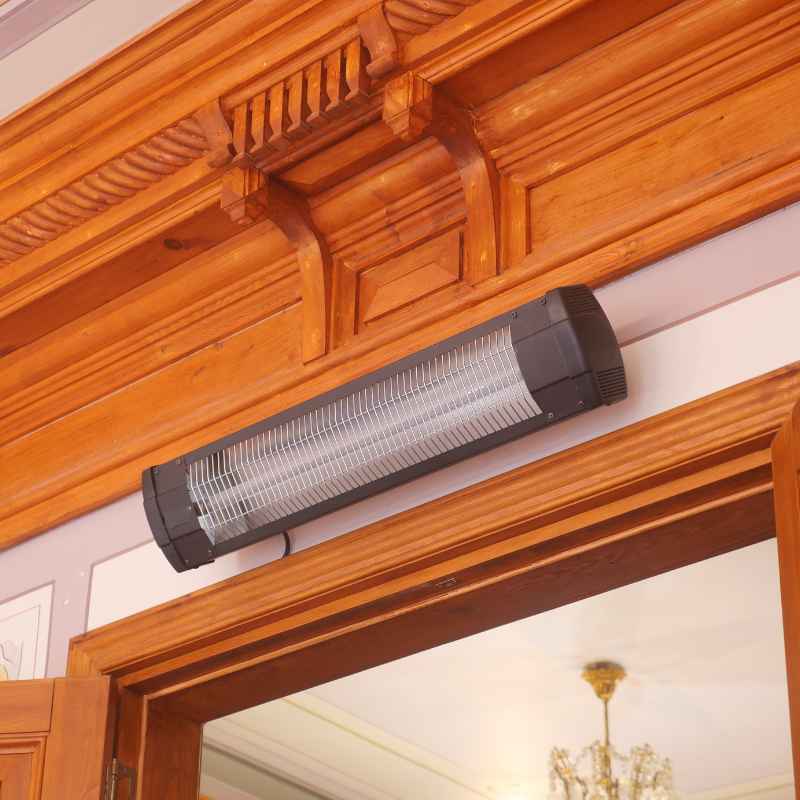
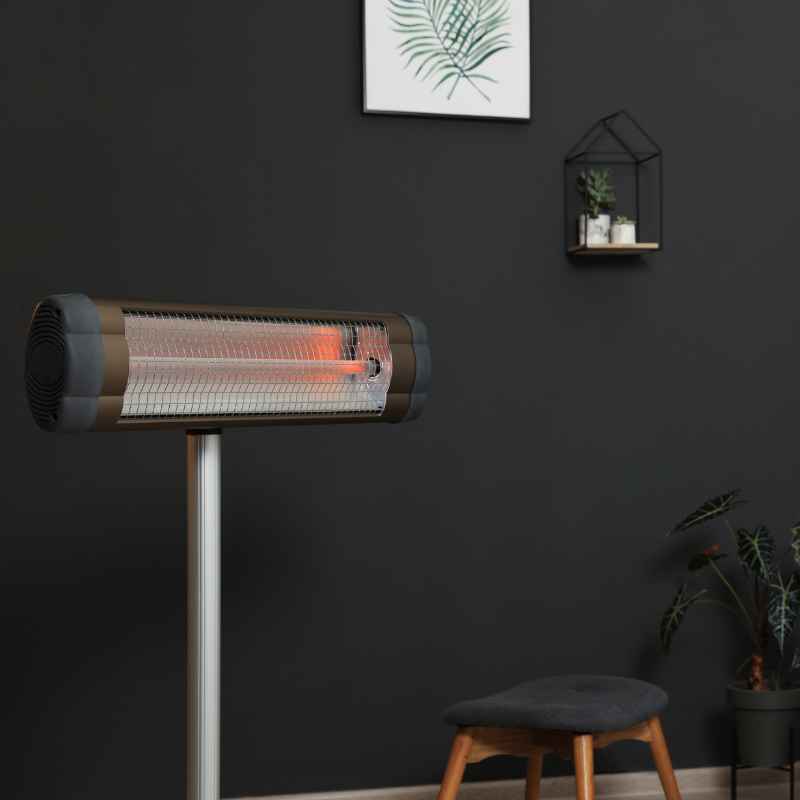
Quartz infrared heaters are a bit different. They use quartz tubes. Inside these tubes is a heating element, often a nichrome wire.
When electricity passes through, the wire heats up. It gets very hot.
The quartz tube is important. It helps conduct the heat. It also allows the infrared rays to pass through easily.
These rays are a form of electromagnetic radiation. They travel at the speed of light.
When these infrared rays hit an object, they transfer their energy. This energy makes the object’s molecules vibrate faster. This is perceived as heat.
So, these heaters warm surfaces directly. This includes furniture, walls, floors, and people.
The air itself is heated much less. It’s a byproduct of the warm objects. This is why you can feel warm near an infrared heater even if the air temperature is cooler.
It’s a more focused kind of warmth.
The BTU output of a quartz infrared heater is also tied to its wattage. A 1500-watt quartz infrared heater will also produce about 5115 BTUs. The fundamental physics of energy conversion don’t change based on the type of heater for the same wattage.
BTU Output: The Science Behind It
Let’s get down to the numbers. For electric heaters, the relationship between wattage and BTUs is pretty fixed. A common rule of thumb is that 1 watt of electricity produces about 3.412 BTUs of heat per hour.
So, if you have a 1000-watt heater, it produces roughly 3412 BTUs per hour. If you have a 1500-watt heater, it’s about 5118 BTUs per hour. This applies to both resistance and quartz infrared heaters.
This means, on a pure BTU output basis, a 1500-watt quartz infrared heater and a 1500-watt resistance heater produce the same amount of BTUs. The quartz heater doesn’t magically create more heat energy from the same amount of electricity.
The confusion often comes from the experience of heat. Infrared heat feels more immediate and direct. This can make it seem like there’s “more” heat.
But the total energy transferred is the same for equal wattage.
Where the difference can come in is efficiency of heating a specific space or person. If you only need to heat a small area or yourself, infrared might be more effective. You’re not wasting energy heating air that just escapes or rises away from you.
Consider a drafty garage. If you use a resistance heater, it heats the air. That air quickly escapes through cracks.
You’re constantly heating new air. An infrared heater would warm your workbench and you directly. The heat stays where it’s needed.
Comparing Heat Delivery Methods
The way heat is delivered is the real game-changer. Resistance heaters are great for raising the overall temperature of a room. They work by heating the air.
This warm air then circulates.
This is good for making a whole room feel toasty. But it can take time. And if the room isn’t well-insulated, or if there are drafts, a lot of that warm air can be lost.
You might feel warm spots, but other areas stay chilly.
Quartz infrared heaters offer a different approach. They send heat waves out. These waves travel in a straight line.
They warm whatever they hit directly. Imagine standing in front of a campfire. You feel the heat on your front, but your back might still be cool.
It’s directional warmth.
This direct heating can be very pleasant. You feel warmer faster. It’s also efficient for spot heating.
If you’re sitting at a desk in a large, cool room, an infrared heater pointed at you can make you feel comfortable. A resistance heater would have to heat the entire room to achieve the same comfort level.
The perceived intensity of heat is different. Infrared heat can feel more intense because it’s direct. It bypasses the air.
Resistance heating is like a warm hug for the whole room. It’s a gentler, more ambient warmth.
So, while the BTU number might be the same, the feeling of warmth and the way it’s used can make one seem more powerful or effective than the other in specific situations.
Quick Comparison: Infrared vs. Resistance
Infrared Heaters:
- Heat Type: Radiant (waves)
- How it Feels: Direct, immediate warmth
- Best For: Spot heating, feeling warm quickly, open spaces, rooms with drafts
- Primary Function: Warms objects and people
Resistance Heaters:
- Heat Type: Convective (air)
- How it Feels: Ambient, even room warmth
- Best For: Heating whole rooms, well-insulated spaces, long-term ambient heat
- Primary Function: Warms the air
Factors Affecting Perceived Heat
Several things can make one heater feel warmer or more effective, even if the BTU output is the same. One big factor is the environment.
In a well-sealed, small room, a resistance heater might do a great job. It heats the air, and that warm air stays put. You get a nice, even warmth.
But in a large, open-plan living area, or a room with high ceilings, a resistance heater might struggle. The warm air rises quickly or escapes through gaps. You might feel warm air near the ceiling, but it’s cold down where you are.
This is where infrared heaters shine. They can heat you directly. So, even in a large space, you can feel warm because the rays are focused on you.
The air temperature might still be lower, but you feel comfortable. This is a huge advantage for comfort and sometimes energy savings.
Another factor is air movement. Drafts can carry heat away. If you have windows or doors that aren’t perfectly sealed, warm air from a resistance heater can be lost.
An infrared heater’s warmth is less affected by drafts because it heats objects directly, and those objects hold heat.
Your own activity matters too. If you’re moving around a lot, you might not notice the difference as much. But if you’re sitting still, like reading or watching TV, the direct warmth of an infrared heater is very noticeable and appreciated.
I remember one chilly autumn evening. I was working late in my home office. It’s a decent-sized room, but it has an older window.
I had a small electric fan heater (a resistance type) running. It made the air feel a little warmer, but I still felt a chill on my feet and hands. It took forever to feel truly comfortable.
Then I tried an infrared panel heater. I placed it near my desk. Within minutes, I could feel a pleasant warmth on my legs and arms.
The air temperature didn’t change much, but my comfort level went way up. It was like the room suddenly got cozy, but only where I was sitting. That experience showed me the power of direct radiant heat.
Energy Efficiency and Cost
When we talk about energy efficiency, it’s important to be clear. All electric resistance heaters are essentially 100% efficient at converting electricity into heat. This means that all the electricity they use turns into heat.
The same is true for quartz infrared heaters.
So, in terms of raw energy conversion, there’s no difference. A 1500-watt heater of any electric type uses 1500 watts and produces about 5118 BTUs of heat.
The cost savings come from how effectively that heat is used. If an infrared heater allows you to feel warm and comfortable at a lower overall room air temperature, you might use less energy. Or, if you only need to heat a small spot, you can turn off the main heating system and just use the infrared heater.
For example, if your home has a central heating system that struggles to keep a specific room warm enough, you might be tempted to crank up the thermostat for the whole house. This wastes energy heating rooms you’re not using.
Using a quartz infrared heater as a supplement can be very cost-effective. You can keep the main thermostat lower and use the infrared heater to warm yourself directly. This targeted approach can lead to real savings on your electricity bill.
However, if your goal is to raise the temperature of an entire, well-sealed room by several degrees, a resistance heater might be just as efficient, or even more so, if it circulates warm air effectively throughout the space. It depends on the room and your goals.
I’ve seen people use infrared patio heaters on their covered porches. They get the same heat output from the patio heater as they would from an electric coil heater inside. But because the heat isn’t constantly lost to the open air, they can actually enjoy sitting outside on cooler evenings.
It’s about using the heat where it counts.
When is More BTUs Actually Better?
There are times when a higher BTU output is definitely what you need. This is usually when you’re trying to heat a larger space or combat very cold temperatures.
If you have a very large room, like a spacious living room or a workshop, you need a heater with enough power to raise the air temperature significantly. In this case, a heater with a higher BTU output will be more effective at warming the entire volume of air.
Similarly, if you live in a region with extremely cold winters, and your home’s insulation isn’t perfect, you’ll need more BTUs to overcome the heat loss. A heater that produces, say, 10,000 BTUs is going to be more effective at warming a large, cold space than one producing only 3,000 BTUs.
For these situations, both resistance and infrared heaters come in higher wattage models. You can get powerful infrared heaters designed for large spaces. They still deliver heat via radiation, but they do it on a larger scale.
The key is matching the heater’s capacity to the room’s size and the climate.
I once helped a friend set up heating in a detached garage he used for woodworking. It was a big space, and he wanted to work in there during the winter. We looked at different options.
A small fan heater just wasn’t cutting it. The heat went straight up. We ended up installing a larger infrared panel heater on the wall.
It bathed his workbench and the area where he stood in a nice, consistent warmth. It wasn’t about just blasting BTUs into the air; it was about directing the heat where he was working.
So, while infrared heaters don’t produce more BTUs for the same wattage, their radiant delivery can make them feel more effective or be more efficient for spot heating. For bulk heating of large volumes of air, higher BTU output from any type of electric heater is key.
What This Means for Your Home
So, what does all this mean for your home? It really comes down to how you want to heat your space and what you’re trying to achieve.
If you want to quickly warm yourself up in a chilly room, or if you have a drafty area where you spend time, a quartz infrared heater is likely a great choice. It provides targeted warmth without needing to heat the entire air volume of the room.
If your main goal is to raise the overall temperature of a well-insulated room and keep it consistently warm, a resistance heater might be perfectly suitable. These are often more affordable upfront and provide a comfortable, ambient heat.
Many people find a combination works best. They use their main heating system (like a furnace or boiler) for overall temperature control. Then, they use supplemental heaters like infrared for specific areas or to feel warmer at lower thermostat settings.
This can be a smart way to save energy and stay comfortable.
I’ve found that in older homes, especially those with less-than-perfect insulation, layering heating methods is often the most effective strategy. You can’t always rely on one type of heater to do everything perfectly.
Think about your own home. Where do you feel cold? Is it the whole house, or just certain spots?
Do you sit still for long periods, or are you always on the move? Answering these questions will help you choose the right type of heater for your needs.
When to Worry About Heat Output
Generally, you don’t need to worry about a heater producing “too few” BTUs for its intended use, as long as you choose the right size for the space. The concern is usually choosing a heater that’s too small for the job.
If you find yourself constantly running a heater on its highest setting, and the room still doesn’t feel warm enough, that’s when you have a mismatch. This could mean your heater isn’t powerful enough, or the room is losing too much heat due to poor insulation or drafts.
With resistance heaters, if the air temperature isn’t climbing, it means the heater isn’t generating enough heat to overcome heat loss. With infrared heaters, if you’re sitting right in front of it and still feel a chill in the air, it might not be powerful enough to provide enough radiant warmth for your comfort zone.
Another sign to watch for is uneven heating. If one part of the room is uncomfortably hot while another is still cold, your heater might not be distributing heat effectively. For resistance heaters, this could be a fan issue.
For infrared heaters, it could mean the coverage area isn’t right for the space.
It’s always a good idea to check the manufacturer’s recommendations for room size. They often provide guidance on how many BTUs or watts are needed per square foot. For example, a common recommendation for electric heat is 10 watts per square foot for average insulation.
I once helped a family who had bought a very cheap, small fan heater for a large basement den. They complained it never got warm. The heater was probably only 500 watts, suitable for a tiny bathroom.
For that large den, they needed something closer to 1500 watts or even a larger infrared unit to make a difference. It was a classic case of underestimating the heating needs of the space.
Quick Tips for Maximizing Heater Effectiveness
No matter what type of heater you have, a few simple things can make a big difference in how warm you feel and how efficiently you use energy.
- Seal Drafts: Check windows and doors for air leaks. Use weather stripping or draft stoppers. This is crucial for any heating system.
- Insulate: Ensure your attic and walls are well-insulated. This keeps heat in during winter and out during summer.
- Use Curtains and Blinds: Close them at night to keep heat from escaping through windows. Open them during the day on sunny sides to let solar heat in.
- Target Your Heat: If using an infrared heater, position it so it directly warms where you spend your time. Don’t just have it blasting into an empty corner.
- Thermostat Settings: Lower your thermostat when you’re asleep or away. Even a few degrees can save significant energy over time.
- Zoning: If you have rooms you don’t use often, consider closing vents or turning down their heat. Use portable heaters strategically only in occupied areas.
- Regular Maintenance: Keep heaters clean. Dust can clog filters or reduce efficiency. For infrared heaters, ensure the quartz tubes are clean for maximum ray transmission.
These tips aren’t fancy, but they work. They help your heater do its job better. They also make sure you’re not wasting energy.
It’s about working smarter with the heat you have.
Frequently Asked Questions
Do quartz infrared heaters use more electricity than resistance heaters?
No, not for the same wattage. All electric heaters, whether quartz infrared or resistance, are about 100% efficient at converting electricity into heat. A 1500-watt quartz heater uses the same amount of electricity as a 1500-watt resistance heater.
Can an infrared heater heat an entire room?
Yes, powerful infrared heaters can heat entire rooms, especially larger ones. However, their strength is in direct, radiant heat. They warm objects and people directly.
This can make you feel warmer faster, even if the air temperature is slightly lower than with a convection heater. For very large or poorly insulated spaces, you might need a higher wattage model.
What is the difference between quartz and ceramic infrared heaters?
Both use infrared radiation to heat. Quartz heaters often use a nichrome wire inside a quartz tube. Ceramic infrared heaters typically use a ceramic element that heats up.
Quartz can sometimes heat up faster and transmit heat more directly, while ceramic might offer a more diffused warmth.
Are infrared heaters safe for pets?
Yes, infrared heaters are generally safe for pets. They don’t have exposed hot coils like some resistance heaters. However, pets should not be able to touch the heater directly or sit too close for extended periods, just as with any heat source.
Always follow manufacturer guidelines.
How many BTUs does a typical portable electric heater produce?
Portable electric heaters are usually rated in watts. A common size is 1500 watts. Since 1 watt produces about 3.412 BTUs per hour, a 1500-watt heater produces approximately 5118 BTUs per hour.
Which type of heater is better for a bathroom?
For a bathroom, you want something that heats up quickly and safely. Small ceramic resistance heaters with fans are common and effective. Infrared heaters can also work well for direct warmth, but ensure they are rated for damp environments if they are not permanently installed.
Safety is paramount in bathrooms.
Conclusion
So, do quartz infrared heaters produce more BTUs than resistance heaters? The simple answer is no, not if they have the same wattage. Both convert electricity to heat with nearly 100% efficiency, meaning their BTU output is directly tied to their power consumption.
The real difference lies in how they deliver that heat. Infrared’s radiant warmth directly heats objects and people, offering a quick, focused comfort. Resistance heaters warm the air, providing a more ambient, room-filling heat.
Your choice depends on your needs for spot heating versus whole-room warmth and your home’s specific conditions.
Sponsored / affiliate links. As an Amazon Associate I earn from qualifying purchases. I may earn additional commission from eligible campaigns.