Best Heater Options for Large Open Living Rooms: Based on Specs
For a large open living room, the best heater depends on layout: use a high-output infrared or convection unit for whole-room warmth, and a smaller zoned heater for one seating area; ceiling heights over 10 feet usually need more output. Bad placement wastes energy and leaves cold pockets. This guide shows how to match heater type, size, and location to drafts, ceiling height, and seating zones.
Quick comparison
| Product | Badge | Best for | Price | ||
|---|---|---|---|---|---|
 |
Lasko 23" Ceramic Tower Space Heater with Remote Control –Lasko | Our pick | 23" Tower · 1500W · Remote Control | $71.99
Price as of 24 Oct 2026
|
View |
 |
hykolity Electric Patio Heater 38.5in, 1500W Infraredhykolity | Also great | 38.5in Standing · 1500W · IPX4 Waterproof | $109.99
Price as of 24 Oct 2026
|
View |
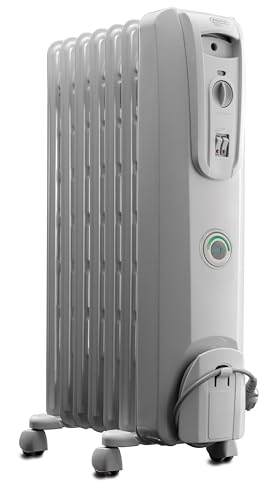 |
De’Longhi Oil filled Radiator Heater, 1500W Electric SpaceDe’Longhi | Upgrade pick | Oil Filled · 1500W · Energy Saving | $129.95
Price as of 24 Oct 2026
|
View |
 |
Amazon Basics Ceramic Space Heater, Portable Indoor HeatingAmazon Basics | Budget pick | 7.52" Compact · 1500W · Ceramic | $20.69
Price as of 24 Oct 2026
|
View |
 |
Danluke Patio Heater for Outdoor Use 1500W ElectricDanluke | Also great | Ceiling Mounted · 1500W · Infrared Hanging | $108.99
Price as of 24 Oct 2026
|
View |
Use the comparison table to separate whole-room comfort from spot heating. In an open living room, those are not the same job.
After that, check ceiling height, draft sources, and where the couch or sectional actually sits. That is where most buyer mistakes happen.
How we chose
The list below focuses on heater classes that fit open living rooms, not just small bedrooms. Each pick is judged on output, heat spread, noise, safety features, and how well it fits a sectional or open-plan layout.
We also favored products with clear manufacturer specs, because coverage claims matter only when they are tied to room shape and placement. A 1500W unit can be right for a seating zone and still fall short in a tall, drafty great room.
Finally, the picks are separated by use case: fast supplemental heat, drafty rooms, quiet TV spaces, and semi-permanent installs. That keeps the buying decision tied to the room, not only to the heater type.
Lasko 23-inch ceramic tower heater: best for fast supplemental heat
The Lasko ceramic tower is a good fit when you want quick heat spread across a sectional or a defined seating zone. Its 1500W output, widespread oscillation, remote control, timer, and overheat protection make it a practical portable option for many open living rooms.
Based on the manufacturer details, this is the kind of heater that works best when you want warm air moving through occupied space rather than just a hot beam aimed at one person. Oscillation helps it cover more of the couch area, especially in an 8-foot-ceiling room with limited drafts.
The honest drawback is that a 1500W tower is still a portable heater. In a vaulted room, or in a space that leaks air around stairs and wide openings, it may feel like spot heat instead of full-room comfort.
Hykolity infrared heater: best for drafty open layouts

The hykolity infrared standing heater suits rooms where warm air keeps getting pulled away by drafts or an open staircase. Infrared heat warms people and nearby objects more directly, so it can feel effective even when the room itself is not fully warmed.
Its 1500W rating, remote, timer, tip-over protection, and overheat protection make it a useful supplemental unit for a seating zone near a cold perimeter. If your sofa sits close to a chilly window wall, infrared heat can feel more immediate than a fan-driven tower.
The drawback is that infrared is less convincing as whole-room heat in a very open layout. It is strongest when you stay in the beam path, so placement matters more than with a conventional convection unit.
De’Longhi oil-filled radiator: best for quiet, steady comfort
The De’Longhi oil-filled radiator is the quietest style in this list for living-room use. It delivers steady radiant heat at 1500W and adds thermostat and timer controls, so it is better suited to long TV sessions than a fan-heavy heater.
This type works well when you want even, low-noise warmth near where people sit. It is also a sensible pick if you prefer fewer moving parts and a surface that does not blast air across the room.
The drawback is speed. Oil-filled radiators usually feel slower to respond than ceramic or infrared models, so they are less useful when you need rapid warm-up from a cold start.
Amazon Basics ceramic space heater: best for budget portable heat
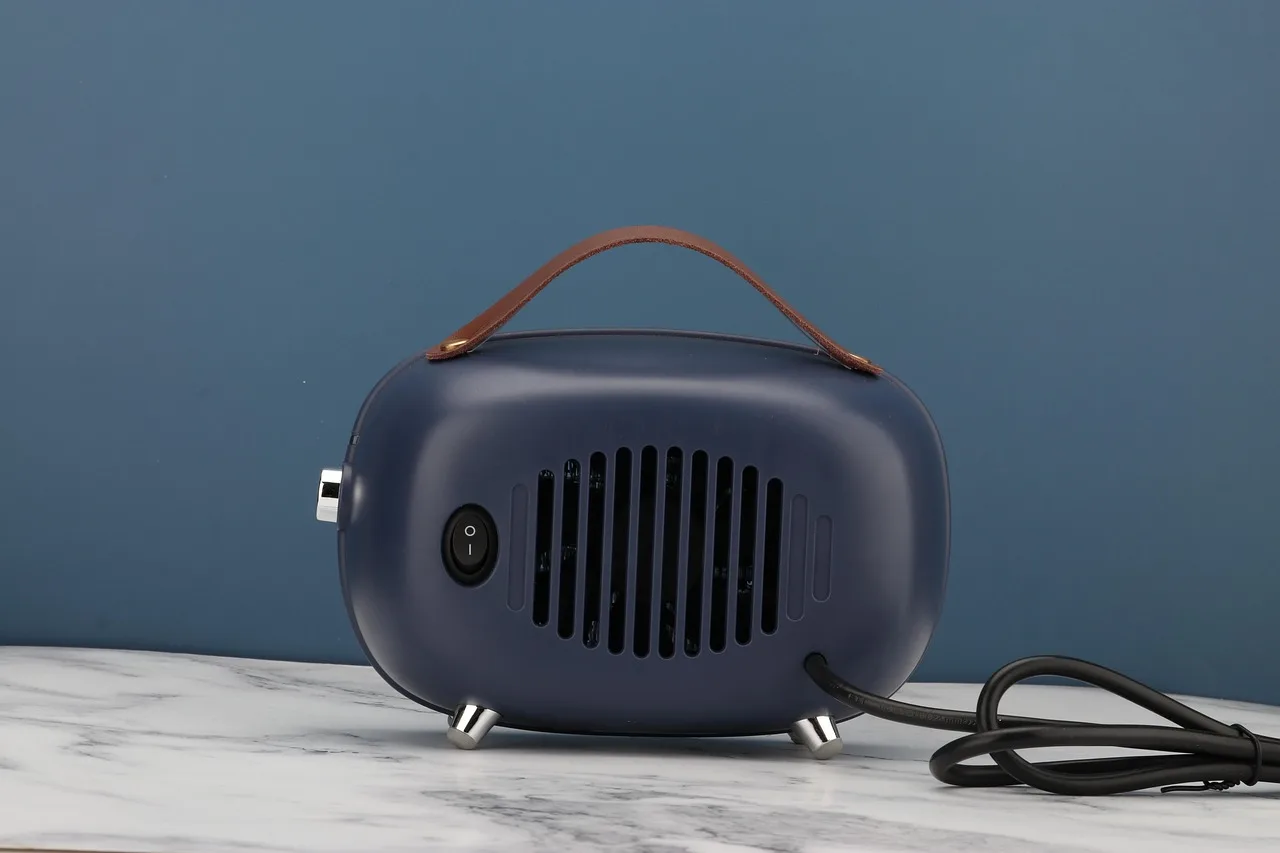
The Amazon Basics ceramic heater is the simplest budget pick for a person who needs basic portable heat and little else. It is a 1500W ceramic unit with thermostat control, fan-only mode, and tip-over and overheat protection, which covers the basics for a small seating zone.
It makes sense when the goal is to warm the chair, desk, or end of the sectional where you spend the most time. It is also easy to move between rooms, which helps if the living room is only one of several spaces you want to supplement.
The drawback is that it is non-oscillating and compact, so its heat spread is narrower than a tower heater. That can be a problem in a broad open-plan room where cold pockets form farther from the unit.
Danluke ceiling-mounted infrared heater: best for semi-permanent heat
The Danluke ceiling-mounted infrared heater makes sense when you want to save floor space and keep a more permanent heat source in place. Overhead mounting can work well in open layouts because the heater is out of traffic paths and aimed downward toward a seating area.
This style is a strong fit for rooms where a portable heater keeps getting moved, blocked, or tipped. The carbon fiber element and hanging design are especially useful when you want targeted radiant heat without another tower taking up floor space.
The drawback is installation and fit. Ceiling-mounted infrared heaters are not a casual plug-in swap, and you need to confirm the location, mounting clearance, and electrical setup before buying.
What kind of heater works best for a large open living room?
The best heater for a large open living room is usually the one that matches the room’s airflow and seating pattern. If you need whole-room warmth, a high-output infrared, convection, or hard-wired unit makes more sense. If you only need comfort where people sit, a portable ceramic or infrared heater is often the better buy.
Open layouts lose heat into stairwells, hallways, and adjoining spaces. That means the “best” heater is often the one that can warm a defined zone without trying to heat every cubic foot in the house.
How many watts do I need for a large open-concept room?
There is no single wattage that fits every open room, because ceiling height, draftiness, and room volume change the load. A 1500W portable heater is a common ceiling for plug-in units, and it can work for supplemental comfort in many living rooms, but it is not a guarantee of whole-room heat.
If the room has 8-foot ceilings and modest air leakage, 1500W may be enough for a seating zone. If the room is vaulted or connected to a stairwell, the same wattage can feel underpowered because the warm air has more space to rise and mix.
Are infrared heaters better than ceramic heaters for open spaces?
Infrared heaters often feel better in drafty open spaces because they warm people and objects directly instead of relying mainly on air movement. Ceramic heaters can spread warmth faster through the room, especially when paired with oscillation, but they are more affected by open drafts and large air volume.
If your sofa sits near a cold window wall, infrared can feel more effective. If you want to warm a broader seating zone with moving air, a ceramic tower is often the better match.
Can a 1500W space heater warm a large living room?
A 1500W space heater can warm part of a large living room, but it usually works best as supplemental heat rather than full-room heat. In a closed or moderately sized room, it may be enough for a seating area. In a large open room, it often leaves far corners cooler.
That is why placement matters so much. Put the heater near the occupied zone, not in a corner that lets warm air drift into unused space.
Oil-filled radiator: best for quiet, steady comfort
An oil-filled radiator fits a living room that needs calm, even heat with minimal fan noise. It is especially useful near a TV area because it does not push air around aggressively, so it is less likely to be noticed during conversation or dialogue-heavy viewing.
It also reduces the distraction of a visible fan blast. For a lot of homeowners, that matters more than raw warm-up speed.
Safety and surface-temperature notes
Oil-filled radiators still get hot enough to demand clear floor space. Look for thermostat and timer controls, plus tip-over and overheat protection if the unit includes them. A cool-touch exterior is a useful bonus in family spaces, but the main concern is keeping it away from drapes, toys, and traffic paths.
The steady heat is a plus, but the surface can stay warm after shutoff. That makes placement more important than with a compact fan heater that can be moved away quickly.
Where it works better than fan heaters
Oil-filled radiators work better than fan heaters when quietness matters and the room does not need fast heat pulses. They also make sense when you want the heater to sit in one place for hours instead of being moved around the room.
They work less well when you need quick recovery after opening exterior doors or when you want a heater that can chase cold pockets around a sectional. In those cases, a fan-driven ceramic tower usually spreads warmth faster.
Hard-wired wall heater: best for semi-permanent heat
A hard-wired wall heater is often the best answer when you want semi-permanent supplemental heat and do not want to give up floor space. It can be the better choice for a large open living room when a portable unit keeps feeling temporary or cluttered.
The tradeoff is installation. Unlike plug-in heaters, hard-wired units are tied to the home’s electrical setup, so compatibility has to come first.
Voltage and circuit checks before buying
Do not assume every hard-wired wall heater uses the same voltage. Models can come in different configurations, and you need to check the product’s stated electrical requirements before purchase. Some units are designed for 240V service, while others may be built for different circuits depending on the model.
If the heater needs new wiring or a dedicated circuit, a professional electrician is usually the right move. That is especially true in a finished living room where you want the install to be safe, neat, and code-compliant.
Space-saving tradeoffs
The biggest advantage is floor space. The biggest drawback is commitment. Once installed, the heater is not as easy to reposition if the furniture layout changes or if a new draft source becomes the main problem.
It also makes less sense if you only need heat for a few cold weeks each year. In that case, a portable heater gives more flexibility with less upfront work.
How to choose
Start with ceiling height. Standard 8-foot rooms are easier to warm than vaulted or two-story spaces because the heated air stays closer to the people. Once the ceiling gets tall, room volume rises fast and a portable heater has to work harder to feel effective.
Next, map the draft sources. A living room with stairwells, open hallways, or perimeter windows needs a heater that can either aim directly at the seating zone or move warm air across it. Coverage numbers on the box are only a starting point, not a guarantee of comfort.
Then decide whether you want whole-room warmth or spot heating. Whole-room comfort usually pushes you toward a larger output unit or a hard-wired solution. Spot heating points you toward infrared, ceramic, or a quiet oil-filled radiator placed near the seat you actually use.
Noise matters more in living rooms than in spare rooms. Oil-filled radiators are usually the quietest. Fan-driven ceramic heaters make more sound because of airflow. Some infrared units are quiet, while others add a fan or blower for better spread.
- Measure the room shape, not just the square footage. Note open stairways, vaulted ceilings, and long sightlines to adjoining spaces.
- Pick the comfort target. Choose between warming one seating zone or trying to raise the temperature in most of the room.
- Match the heater type to the airflow. Use infrared for drafty perimeters, ceramic for faster spread, and oil-filled for low-noise steady heat.
- Check placement before buying. A heater near the couch can outperform a stronger unit stuck in the wrong corner.
- Verify safety features. Tip-over shutoff, overheat protection, cool-touch surfaces, and ETL/UL listing matter in family rooms.
- Confirm installation limits. If a hard-wired heater is on the table, check voltage and circuit needs first.
Say your living room has 8-foot ceilings, a sectional, and a cold window wall. A 1500W infrared or ceramic tower placed near the seating zone can make that corner comfortable without trying to heat the entire open floor plan.
Suppose the room has a vaulted ceiling and a stair opening to the second floor. A portable heater may still help, but it is more realistic to aim for spot comfort near the couch or to consider a hard-wired unit if you want semi-permanent heat.
Large-room heater decision table
| Room condition | Best heater class | What to look for | Placement | Expected comfort outcome | Red flags |
|---|---|---|---|---|---|
| Open concept with 8-foot ceilings | PTC ceramic or oscillating tower | 1500W output, thermostat, timer, oscillation | Near the main seating zone, aimed across the couch area | Good supplemental warmth for the occupied zone | Do not expect full-house heating through wide openings |
| Vaulted or two-story living room | Infrared or hard-wired heater | Higher output, directional heat, installation fit if permanent | Target the seating area or the wall nearest the coldest zone | Better spot comfort than a small portable unit | Portable 1500W units often feel underpowered here |
| Drafty perimeter windows | Infrared heater | Direct radiant heat, remote, timer, overheat protection | Angle it toward the cold side of the room and the seats nearby | More immediate perceived warmth near people and objects | Do not rely on air-warming alone if drafts are strong |
| Kid or pet household | Oil-filled radiator or protected tower with safety shutoffs | Tip-over shutoff, overheat protection, cool-touch exterior, ETL/UL listing | Out of traffic paths, away from toys, blankets, and drapes | Safer low-noise supplemental heat when placed correctly | Skip exposed hot surfaces and unstable narrow bases |
| Silent TV-room priority | Oil-filled radiator | Thermostat, timer, steady radiant output | Beside the seating area with clear floor space | Quiet, steady comfort with little airflow noise | Fan heaters may distract during quiet scenes |
| Semi-permanent supplemental heat | Hard-wired wall heater | Correct voltage, suitable circuit, professional install if needed | Mounted to serve the main seating area without blocking traffic | Cleaner floor layout and more consistent daily use | Do not buy before checking electrical compatibility |
| Budget portable-only setup | Basic 1500W ceramic heater | Thermostat, tip-over shutoff, overheat protection | Close to where you sit, not in the far corner | Lowest-cost supplemental heat for one zone | Weak choice for vaulted rooms or whole-room heating |
Which one should you buy?
If budget is the main constraint, start with the Amazon Basics ceramic heater. It is the least expensive portable option here and gives you the core safety and thermostat features you need for basic supplemental heat.
If your room is drafty or your couch sits near a cold wall, choose the hykolity infrared heater. It is the better fit when direct radiant warmth matters more than moving warm air around the whole room.
If noise tolerance is low, choose the De’Longhi oil-filled radiator. It is the best match for TV rooms and late-evening use because it does not rely on a loud fan.
If you want the most flexible portable heat for a sectional, the Lasko ceramic tower is the strongest all-around portable choice here because oscillation helps it spread warmth across a wider seating area. If you want to free up floor space and are willing to install it, the Danluke ceiling-mounted heater is the more permanent route.
A hard-wired wall heater becomes the better choice when you want semi-permanent heat in a large open living room and a portable unit keeps feeling like a compromise. That is also the point where a professional electrician becomes part of the buying plan, not an afterthought.
Frequently asked questions
What heater is safest to run in a living room with kids or pets?
Choose a model with tip-over shutoff, overheat protection, and a cool-touch exterior if possible, and look for ETL or UL listing. Oil-filled radiators can be good for quiet comfort, but they still need clear space and careful placement away from traffic, toys, and curtains.
Do oscillating heaters heat large rooms better than stationary ones?
Oscillation helps a heater spread warmth across a wider section of the room, which is useful for sectionals and open seating zones. It does not fix poor insulation or a very large room volume, but it can reduce cold spots better than a fixed-direction heater.
How noisy are large-room space heaters?
Noise varies by type. Oil-filled radiators are usually the quietest because they do not depend on strong airflow. Ceramic towers and some infrared units make more noise because of fans or blowers, so they are less ideal when silence matters during TV or conversation.
How do I choose between a portable heater and a hard-wired heater?
Choose portable if you want flexibility, lower upfront cost, and the option to move the heater with the seating plan. Choose hard-wired if you want semi-permanent heat, cleaner floor space, and a more permanent answer for a living room that stays cold every winter.
What size space heater is best for a room with high ceilings?
Rooms with high ceilings need more output than rooms with standard ceilings because warm air has a larger volume to fill. A 1500W portable heater may still help near the seating area, but higher ceilings often push buyers toward stronger infrared, convection, or hard-wired options.
Sponsored / affiliate links. As an Amazon Associate I earn from qualifying purchases. I may earn additional commission from eligible campaigns.
 MEGAWISE Portable Air Conditioner and Heater, 420W 110V Compact AC Unit with Remote Control, 1400W Cooling Capacity, 800W Heating, Dehumidifier, Fan, Sleep Timer, ChampagneAZEUS Portable AC and Heater Unit, 420W 110V Compact Air Conditioner for Tent RV Truck Cabin and Small Room, 1400W Cooling, 800W Heating, Remote Control, Dehumidifier, Sleep Timer, Champagne