How to Size a Heater for a Room or Whole House
A common rule of thumb is to size a heater at about 10 watts per square foot for a well-insulated room with 8-foot ceilings; use 12 to 15 watts for average insulation and 15 to 20 watts for poor insulation or cold climates. Too-small heaters run constantly and still leave cold spots, while oversized units waste energy and can cycle harshly. This guide shows how to size room and whole-house heaters, convert watts to BTUs, and decide when a portable heater is no longer enough.
Start with room size


Measure the room’s length and width in feet. Multiply those numbers to get square footage, and use that figure as your starting point. A 10-by-12 room is 120 square feet, while a 15-by-20 room is 300 square feet. Small rooms can often use a portable heater; large rooms may need either a high-output unit or a different heating approach.
How to calculate room area
Use this formula: length × width = room area in square feet. For odd shapes, split the space into rectangles, calculate each one, and add the totals. If the room opens into a hallway or another room with no door, count that connected space too, because heat will move into it.
Use square footage to estimate starting wattage
For supplemental heating, a common rule is about 10 watts per square foot. That gives you a first-pass wattage target before you adjust for ceiling height, insulation, air leakage, and climate. For example, a 120-square-foot room starts near 1,200 watts under average conditions.
Flag small rooms, large rooms, and open-plan spaces
Small rooms often fit within 750W to 1000W if the space is tight and well sealed. Larger rooms usually need 1500W, and some rooms near 200 square feet may push toward 2000W. Open-plan spaces rarely behave like a closed bedroom, because heat spreads farther and more slowly.
What size heater do you need?
Match the heater to the room load, not the number printed on the box. A 750W unit suits very small, well-insulated spaces or spot warmth. A 1000W heater fits many small rooms. A 1500W heater is the common upper limit for portable electric models, and 2000W is usually for larger rooms or specialized portable units. If the room needs far more than that, a portable heater is probably the wrong tool.
Use a simple watt-per-square-foot starting point
Start by multiplying square footage by about 10 watts for a reasonably sealed room. A 12×12 room is about 144 square feet, so the base load is about 1,440 watts. That lines up with the common 1,500W portable size and explains why that size fits many bedrooms and offices.
Know when a portable heater is too small
Once a room pushes past the output of the available portable unit, you will see longer runtimes, colder corners, and less comfort. A 2000W heater will probably heat a room size of between 150 and 200 square feet, depending on conditions. If the room is larger, highly leaky, or open to other spaces, step back and reconsider the heating plan.
Say your home office is 11 by 13 feet, with average insulation and an 8-foot ceiling. The room measures 143 square feet, so the starting point is about 1,430 watts. A 1,500W heater makes sense there, but a 750W unit would likely leave the far side of the room cool.
Adjust for ceiling height and insulation
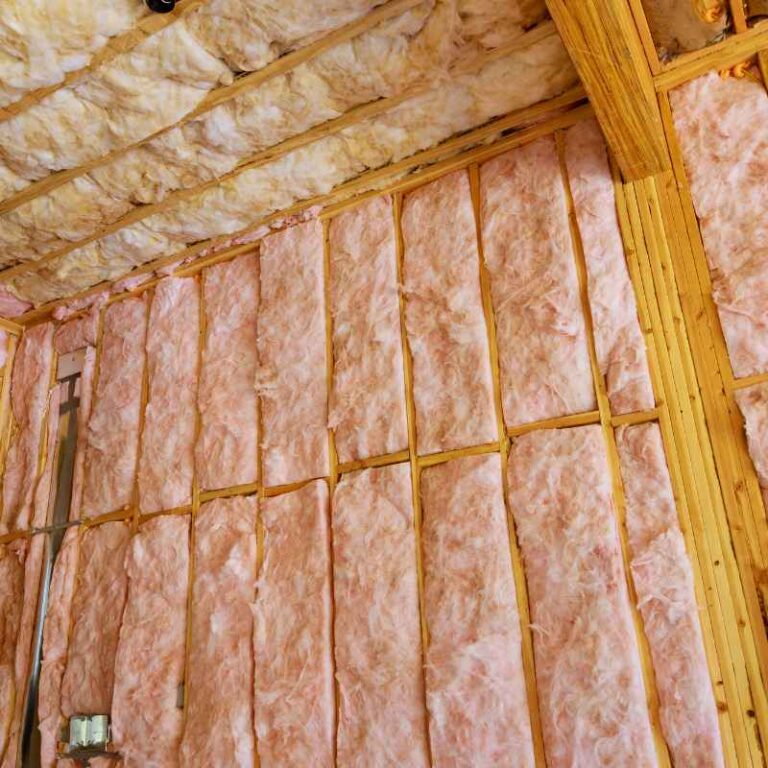
Ceiling height, draftiness, and insulation can change the target more than many buyers expect. A room with 10-foot ceilings has more air to warm than the same floor area with 8-foot ceilings. Tight, newer rooms need less heat. Drafty, poorly insulated rooms need more.
Add wattage for high ceilings and air leakage
When ceilings rise above 8 feet, the heater must warm a larger volume of air. A practical adjustment is to increase your wattage target by about 10 to 25 percent for noticeably higher ceilings, then move upward again if the room leaks air around windows, doors, or framing gaps. Open stairwells can also pull warm air away from the room.
Reduce wattage for newer, tighter spaces
Good insulation and low air leakage can trim the needed output. In a well sealed room, the 10 watts per square foot rule often stays close to the mark. That is why a newer bedroom or home office may feel comfortable with a 1000W or 1500W heater where an older, leakier room would need more.
Scale up for drafty or poorly insulated rooms
Poor insulation, cold exterior walls, and leaky windows all raise the heat load. In those spaces, 15 to 20 watts per square foot is a better planning range. If the room is also cold because it sits over an unheated garage or faces strong winter wind, choose the higher end of that range or move to a different heating solution.
A common mistake is sizing only by floor area. A 180-square-foot sunroom with thin glass and a 9-foot ceiling can demand much more than a 180-square-foot bedroom with insulated walls. Same square footage, very different heat loss.
Heater sizing worksheet
Use this worksheet to turn room dimensions into a wattage target, then decide whether a portable heater is enough. The third column converts the result to BTUs so you can compare output across heater types. The last column helps you decide when the room has moved beyond portable heating.
| Room | Area and base watts | Adjusted watts and BTUs | Portable heater or central heat? |
|---|---|---|---|
| Bedroom, 10 × 12 ft | 120 sq ft × 10 W = 1,200 W | Average insulation: about 1,200 to 1,400 W, or 4,092 to 4,774 BTU/hr | Portable heater is usually enough |
| Office, 12 × 12 ft | 144 sq ft × 10 W = 1,440 W | Average insulation: about 1,440 W, or about 4,910 BTU/hr | Portable heater is usually enough |
| Drafty family room, 15 × 20 ft | 300 sq ft × 10 W = 3,000 W | Poor insulation may push this well above 3,000 W | Portable heater is likely too small; consider central heat |
| Garage workshop, 20 × 20 ft | 400 sq ft × 10 W = 4,000 W | High ceilings and air leaks often raise the load further | Usually a whole-room or installed heater, not a portable one |
- Measure length and width, then calculate square footage.
- Start with about 10 watts per square foot for a closed, well-insulated room.
- Add wattage for high ceilings, air leakage, and severe winter conditions.
- Subtract some demand if the room is tight, newer, and well sealed.
- Convert watts to BTUs if you want to compare different heater types.
- Stop when the room needs more than a portable unit can safely provide.
How many BTUs do you need?
BTUs let you compare heater output in another unit. Use 1 watt = 3.41 BTU/hr. That means a 1,500-watt heater puts out roughly 5,100 BTU, and a 2,000W unit gives about 6,820 BTU/hr. BTUs help when you compare portable heaters, garage heaters, and other output labels side by side. (Wikipedia)
Convert watts to BTUs for comparison
Multiply watts by 3.41 to estimate heat output in BTU/hr. A 750W heater gives about 2,558 BTU/hr. A 1000W heater gives about 3,410 BTU/hr. A 1500W heater gives about 5,115 BTU/hr, which is why the common 1,500W portable size is a practical upper boundary for many homes.
Use BTUs to compare heater output types
BTU output is useful when two heaters use different terms on the label. Some fan heaters, ceramic heaters, and infrared units list wattage; some room or garage products emphasize BTU/hr. Use the conversion to check whether the output matches the room size rather than guessing from the product category alone.
Choose heater type by room size and use case
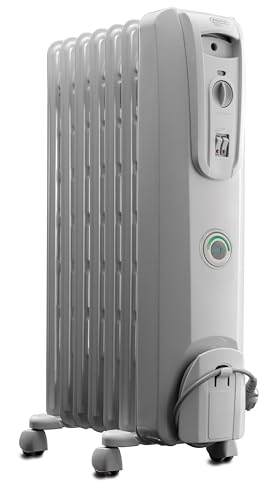
Pick the heater style that fits the room’s shape and how you plan to use the heat. Ceramic and fan heaters throw quick warmth. Convection models warm the air more evenly. Oil-filled radiators heat slowly but hold warmth well. Infrared and halogen units are useful when you want direct warmth aimed at people or a work area.
Ceramic and fan heaters
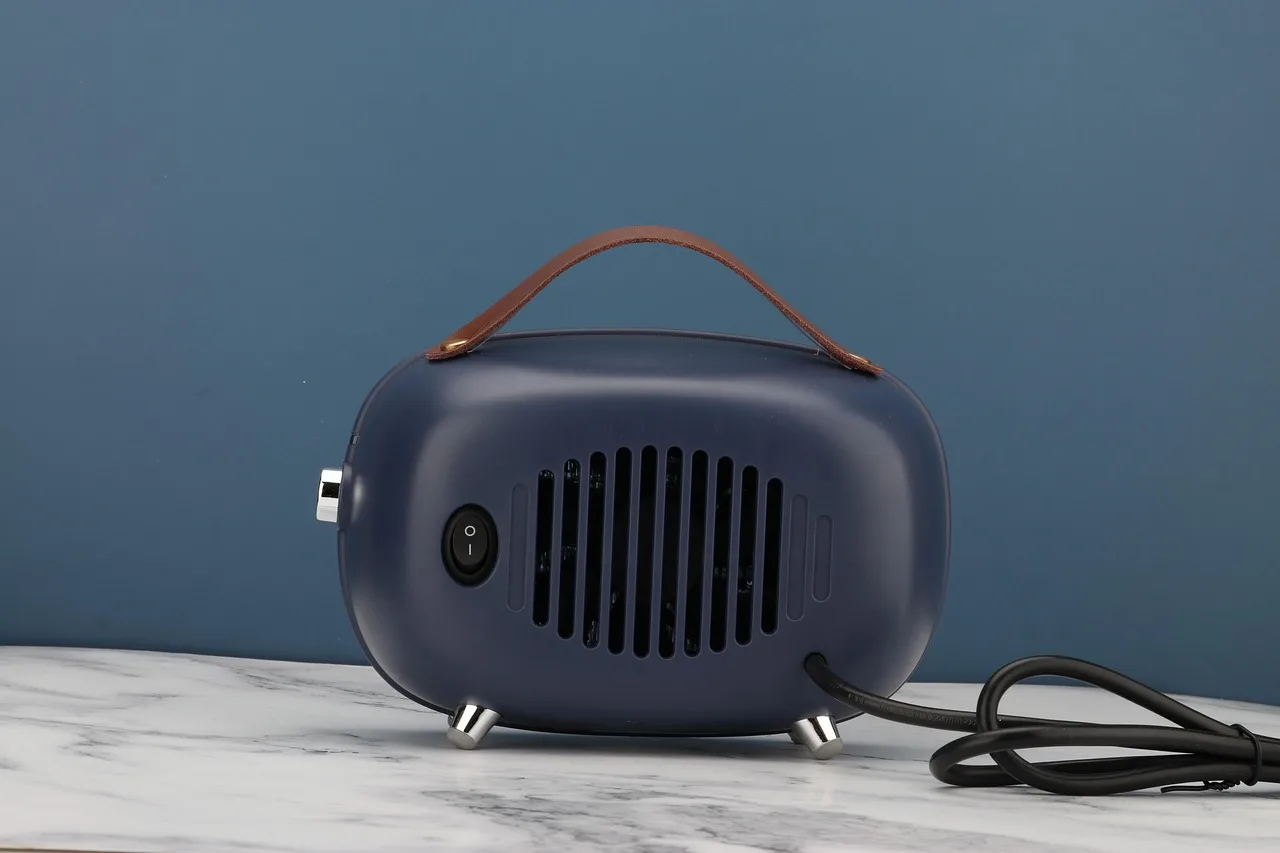
Ceramic heaters with fans are common for bedrooms, offices, and other enclosed rooms because they heat up quickly and spread warm air across a small space. Fan heaters work similarly, but they can feel noisier. These are good choices when you want fast spot heating for a single room.
Convection and oil-filled radiator heaters
Convection heaters warm the room air and can feel steadier in spaces where you want even heating. Oil-filled radiators warm more slowly, but they can hold heat after the element cycles off. Both styles suit rooms where you want less blast and more steady background warmth.
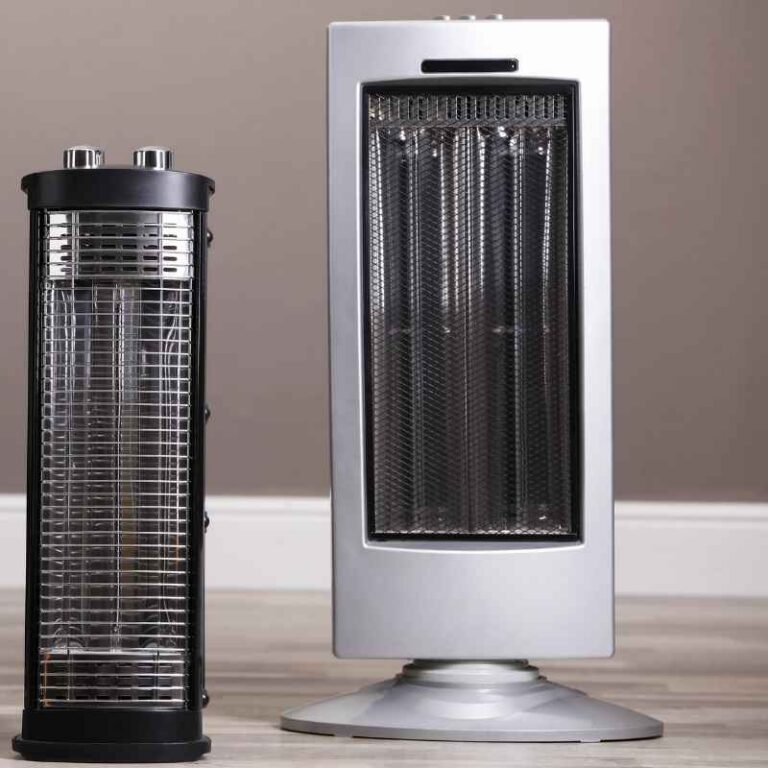
Infrared and halogen heaters
Infrared and halogen units are best when you want warmth aimed at people or a workbench rather than the whole room. They can be useful in a garage, workshop, or drafty area where you sit in one spot. They are less suitable when you need to warm an entire open room evenly.
What size unit heater do you need for a garage or workshop?
Garages and workshops often need more output than a closed room of the same floor area because they leak air and often have higher ceilings. Treat them as a separate category. If the space is only for occasional spot heat, an infrared or portable unit may help. If you want the whole space warm, size toward the higher end and consider installed heat instead.
Portable heater safety and features
Safety and sizing belong together. An undersized heater may run longer, which can tempt people to place it too close to furniture or walkways. A properly sized unit with the right safety features is easier to place, easier to control, and less likely to be used in risky ways.
Plug directly into a wall outlet
The heater should be plugged straight into a wall outlet. Do not use an extension cord or power strip.
Keep 3 feet of clearance
A portable heater should have at least three feet of empty space all around it. Keep it away from curtains, bedding, furniture, paper, and stored items. Clearance matters as much as wattage, because a heater placed too close to combustibles creates a hazard even if the output is correct for the room.
Look for thermostat, tip-over protection, and overheat protection
An adjustable thermostat helps the heater hold a target temperature and reduces runtime. Tip-over protection shuts the unit off if it falls. Overheat protection shuts it down if internal temperatures climb too high. Those features do not replace proper sizing, but they make the heater safer and easier to live with.
Picture a 200-square-foot home office that feels cold every evening. A 1500W heater may warm the desk area well if the room is reasonably sealed. The same unit in a drafty room with a tall ceiling can leave the far corner cold and run almost nonstop, which is a sign that the room needs more insulation or a different heat source.
When to stop using a portable heater
Stop treating the room as a portable-heater job when the wattage target rises beyond what the unit can deliver, or when the space is no longer really a single room. Whole-house heating is a different sizing problem. It depends on the entire building envelope, not just one room’s floor area.
Can one space heater warm my whole house?
No. A portable space heater is for a single room or other small area, not a whole house. One unit can create a pocket of warmth quickly, which is useful in a bedroom or office, but whole-house heat depends on central equipment sized for the building. If multiple rooms need warmth at once, move to a central system or room-by-room solution.
Why whole-house heating needs different sizing
Whole-house sizing accounts for wall area, windows, insulation, duct losses, air leakage, and the total conditioned volume. That is why a room-based wattage rule is not enough. Professional sizing is the right move for a full home, because the load calculation is broader than a single square-foot estimate.
Frequently asked questions
How do I size a heater for a room?
Measure the room’s length and width, multiply them to get square footage, then start with about 10 watts per square foot. Adjust upward for poor insulation, air leaks, high ceilings, and very cold weather. If the room needs more than a portable unit can supply, move to a different heating option.
What size space heater do I need for my room?
Most small rooms fall in the 750W to 1500W range, depending on size and insulation. Larger, draftier rooms may need 2000W or a different heat source.
How many watts do I need to heat a 12×12 room?
A 12×12 room has 144 square feet. Using the 10 watts per square foot rule for supplemental heat, the room needs about 1,440 watts with average insulation. That is close to a 1500W heater, which is why that size often fits this room well.
What size heater do I need for a large room?
Large rooms often need the upper end of portable heater output, and some exceed it. If the room is bigger or open to other spaces, a portable heater is usually not enough.
How do insulation and draftiness change heater size?
Good insulation lowers the load, so the basic watts-per-square-foot rule may be enough. Average rooms need a moderate bump. Poor insulation, leaky windows, and drafty doors push the needed wattage higher, sometimes into a range that exceeds portable heater output. That is where room sealing or central heat matters.
What size storage heater for room size
Use the same room-area method, but match the storage heater to the room’s actual heat loss and charging schedule. Storage heaters are sized differently from plug-in portable units, so check the manufacturer’s room coverage guidance and compare it against the square footage, insulation level, and climate before buying.
Sponsored / affiliate links. As an Amazon Associate I earn from qualifying purchases. I may earn additional commission from eligible campaigns.
 ROVSUN 18000 BTU Mini Split AC/Heating System with Inverter, 20 SEER2 Energy Saving 230V Ductless Split-System Air Conditioner with Pre-Charged Condenser, Heat Pump, Remote Control & Installation Kit
 AZEUS Portable AC and Heater Unit, 420W 110V Compact Air Conditioner for Tent RV Truck Cabin and Small Room, 1400W Cooling, 800W Heating, Remote Control, Dehumidifier, Sleep Timer, Champagne