How to Keep Your House Warm During a Power Outage
Start by closing off unused rooms, trapping heat in one room, adding layers and blankets, and using only safe backup heat. If the indoor temperature is dropping fast, if safe heat is unavailable, or if anyone in the home is high-risk, leave for a heated shelter or warming center sooner rather than later. A bad plan can cause hypothermia, carbon monoxide poisoning, or frozen pipes, and the CDC warns that cold stress can become dangerous before a house feels truly frigid. This guide covers the first 15 minutes, the first night, backup heat choices, and the warning signs that may mean you should leave home. For more on exhaust risks, see carbon monoxide safety.
What you’ll need


- Flashlights and extra batteries
- Charged power banks for phones
- Blankets, sleeping bags, and warm layers
- Hats, socks, gloves, and dry clothing
- Bottled water
- Battery-powered smoke detector
- Battery-powered or battery-backup carbon monoxide detector listed to UL Standard 2034; the CPSC recommends alarms that meet this standard for home CO protection
- Backup heat gear that matches your setup, such as a generator, indoor-rated propane heater, or indoor-rated kerosene heater
- Towels or unused clothing for draft blocking
- Any prescription medicines, chargers, and medical device backup power
- Food that does not require cooking
- Pet supplies if animals are in the home
First 15 minutes
- Check the indoor temperature and decide whether to stay home, isolate to one room, or leave now. There is no single universal cutoff for every household; the safest choice depends on how fast the home is cooling, how long the outage may last, and who is inside.
- Assess household risk: infants, older adults, anyone with limited mobility, and anyone relying on medical devices generally need a lower threshold for leaving. CDC guidance treats these groups as more vulnerable to cold-related illness.
- Move everyone to the smallest protected room that stays warm best, because a smaller room is easier to heat than a large one.
- Close doors to unused rooms and block major drafts with towels or unused clothing under doors and at window gaps.
- Turn on flashlights and confirm that phones and power banks are charged before the room gets colder.
- Set out blankets, layers, socks, and hats so people can stay warm without relying on the whole house.
- Start any safe backup heat only if the equipment is meant for indoor use and all detector and ventilation requirements are already in place. Follow the device manual rather than assuming generic ventilation advice applies to every heater.
How do you keep one room warm?
Use the smallest interior room you can reasonably occupy, then cut heat loss before adding any heat source. Close the door, cover gaps, and keep people and pets in that room only. If you have one CO detector, place it close to bedroom areas, and keep a battery-powered smoke detector running alongside any combustion-based heat. For broader winter prep, use winter emergency kit guidance before storms hit.
Choose the best room
- Pick a room with the fewest windows and the least outside wall exposure.
- Favor a middle-floor or interior room when possible.
- Choose a room that gives access to a bathroom without opening several exterior doors.
- Keep the door closed once everyone is inside.
Block drafts and hold heat
Use towels, blankets, or unused clothing under doors and along drafty window edges. Close blinds at night. During the day, open blinds on sunny windows if they face useful light. Picture a 12-by-12-foot bedroom with one window and a closed door: blocking the door gap and window edge usually matters more than heating the whole floor plan.
Keep body heat working for you
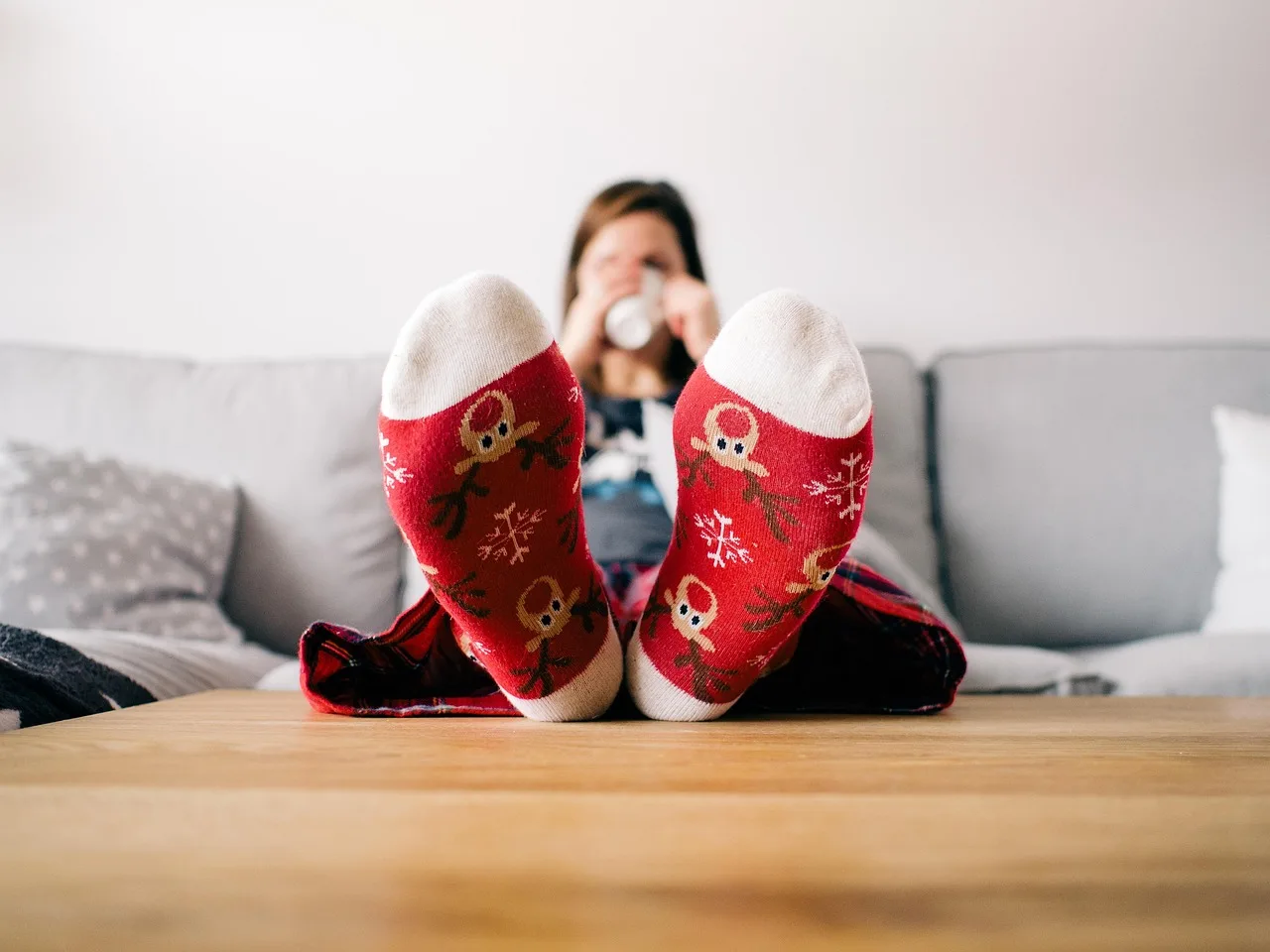
Wear layers, add a hat and dry socks, and keep blankets over laps and shoulders. For a child or adult who is sweaty or damp, switch to dry clothes first, then add blankets. If someone starts shivering hard, slurring speech, or acting confused, treat that as a warning sign, not a comfort issue; the CDC and Red Cross both list confusion and uncontrolled shivering among concerning cold-stress symptoms.
Warm room options
The safest backup heat depends on outage length, fuel supply, ventilation, and whether the equipment is meant to run where people are sleeping. Use the table below to match the option to the situation instead of choosing the hottest device available. Emergency preparedness groups recommend being self-reliant for at least 72 hours after a storm, so short outages and longer outages call for different plans.
| Heating option | Safety | Fuel needed | Ventilation detail | Outage-duration fit | Detector needs | Sleeping-safe? | Room-size fit | Best use case |
|---|---|---|---|---|---|---|---|---|
| Extra blankets and layers | Lowest risk | None | None needed | Any length, but best as the first step while deciding on a longer plan | Smoke detector is still recommended in the home | Yes, if bedding stays dry and people can stay warm enough | Any room; works best when paired with a small protected space | First line of defense for every home |
| Battery-backed home heating system | Low to moderate | Battery or home power reserve | None for the heating source itself, but follow the equipment manual | Short outages, especially when power returns quickly | Smoke detector recommended; CO detector needed if any fuel-burning appliance is involved | Often yes, if the system is designed for unattended operation | Whole home or selected zones, depending on the system | Homes with compatible backup equipment |
| Portable generator | Moderate to high hazard if misused | Gasoline or other rated fuel | Outdoor-only operation; placement distance depends on the generator manual, local code, and official fire-safety guidance | Longer outages when power is needed for essential appliances | Battery-powered CO detectors should be operating in the home; smoke detectors should also be active | No, not as a sleeping-area heat source | Not a room heater; supports selected appliances or a furnace blower if the setup is designed for it | Running select appliances, lights, or a refrigerator |
| Indoor-rated propane heater | Moderate to high hazard | Propane | Use only exactly as the manufacturer directs; do not rely on generic “slightly open a window” advice unless the manual says so | Short to moderate outages | Battery-powered smoke detector plus a CO detector listed to UL 2034 | Only if the manual explicitly allows it and all detector and clearance rules are met | One room sized according to the heater’s rating and instructions | Heating one ventilated room with detector protection |
| Indoor-rated kerosene heater | Moderate to high hazard | Kerosene | Use only with the ventilation specified in the manual; do not improvise airflow | Short to moderate outages | Battery-powered smoke detector plus a CO detector listed to UL 2034 | Only if the manual explicitly allows it and the room setup is correct | Usually a single controlled room, not a whole house | Supplemental heat in a controlled, ventilated room |
| Warming center | Lowest in-home risk | None | Not needed at home | Severe, prolonged, or unsafe outages | None needed for the trip itself | Yes, because it removes the home-heating hazard | Not a room-size issue | When staying home becomes unsafe |
Use a portable generator only outside
Portable generators can help power lights, a refrigerator, and small appliances, but they should never operate indoors or in a closed or attached garage. Keep the unit outside and away from windows, doors, vents, and air intakes according to the owner’s manual and official fire-safety guidance. Say your home loses power in freezing weather and the refrigerator matters more than whole-house heat: a generator can support that limited need, but it is not a safe indoor heater. For a step-by-step breakdown, see portable generator safety.
Use indoor-rated propane or kerosene heat with caution
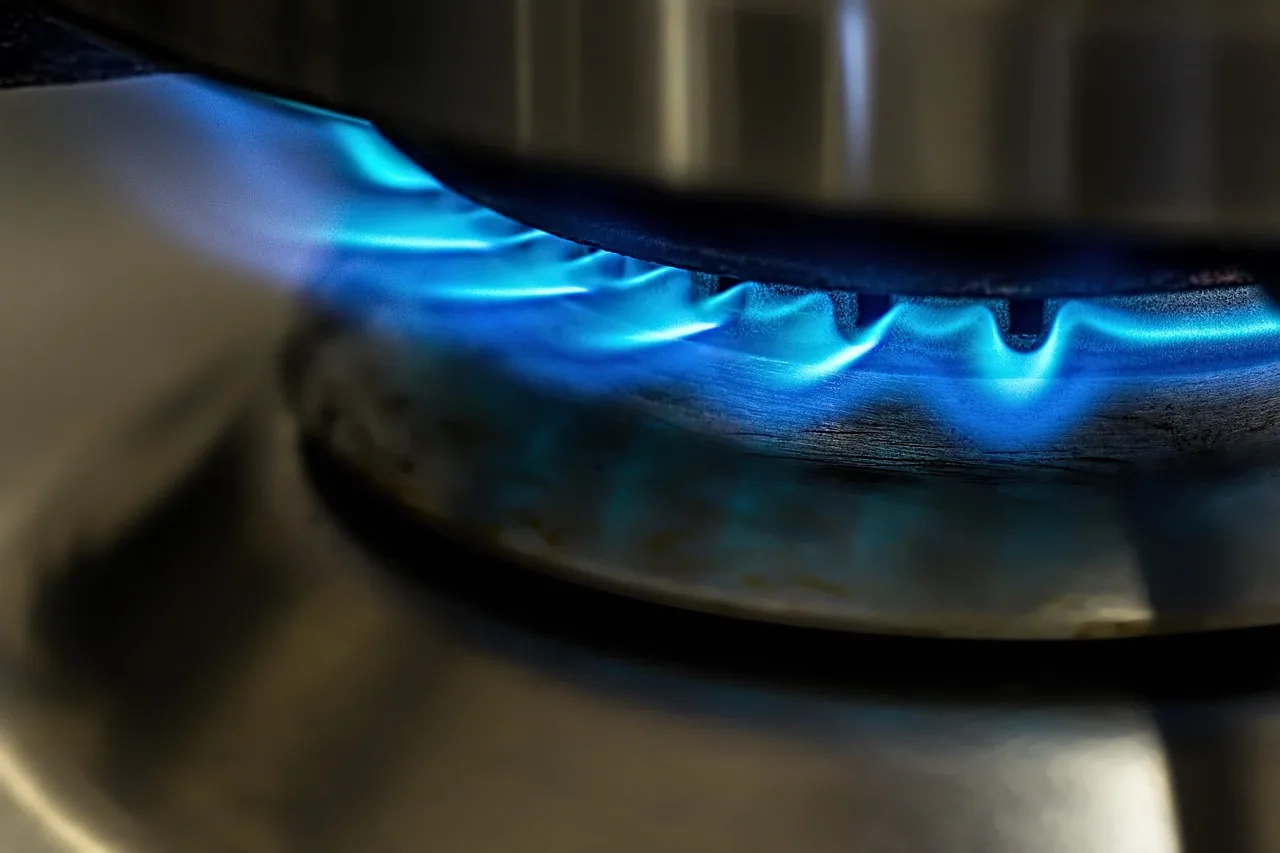
Propane and kerosene heaters produce carbon monoxide, so they are not casual substitutes for regular heat. Use only models designed for indoor spaces, follow the manufacturer’s instructions, and provide ventilation exactly as directed by the manual. Some heater manuals call for specific room size, clearance, and fresh-air rules; do not invent your own setup. Keep a battery-powered smoke detector operating and a UL 2034 carbon monoxide detector nearby. For safer setup details, use space heater safety guidance when applicable to electric portable heat.
Should you use a generator to heat your house?
A generator is the right answer when you need power for selected equipment, not when you want an indoor heat source. It can support a furnace blower, some lights, or a refrigerator if the system is wired and sized for that purpose. It is the wrong answer if you plan to place it in a basement, porch, garage, or anywhere fumes can enter the home, and it should never be treated as a substitute for proper indoor ventilation.
When a generator is the right fit
- Use it outdoors only, with exhaust pointed away from openings.
- Keep it far from windows, doors, vents, and air intakes according to the owner’s manual and official fire guidance.
- Use it for listed loads that the generator can actually support.
- Refuel only after it is shut down and cooled.
When a generator is the wrong answer
- Do not use it inside any room.
- Do not use it in an attached garage, even with the door open.
- Do not use it as a replacement for proper indoor heat.
How to keep exhaust away from the house
Put the generator well outside, then check that exhaust cannot drift into windows, doors, vents, or attic intakes. If the carbon monoxide detector alarm goes off, get fresh air immediately and move away from the source. That alarm is not a nuisance to ignore. The CPSC and NFPA both stress that generator exhaust can be deadly even when the unit is outside, so placement must follow official instructions rather than a fixed “good enough” distance.
When should you leave for a warming center?
Leave for a warming center when indoor temperature keeps falling, the outage looks prolonged, or anyone at home is high-risk and cannot stay warm safely. Warming centers are temporary alternate shelter options, and they may be harder to reach during storm conditions. Do not wait until someone is confused, very sleepy, or shivering uncontrollably; those can be signs of cold stress or hypothermia, which CDC and Red Cross materials treat as urgent.
Go/no-go checklist
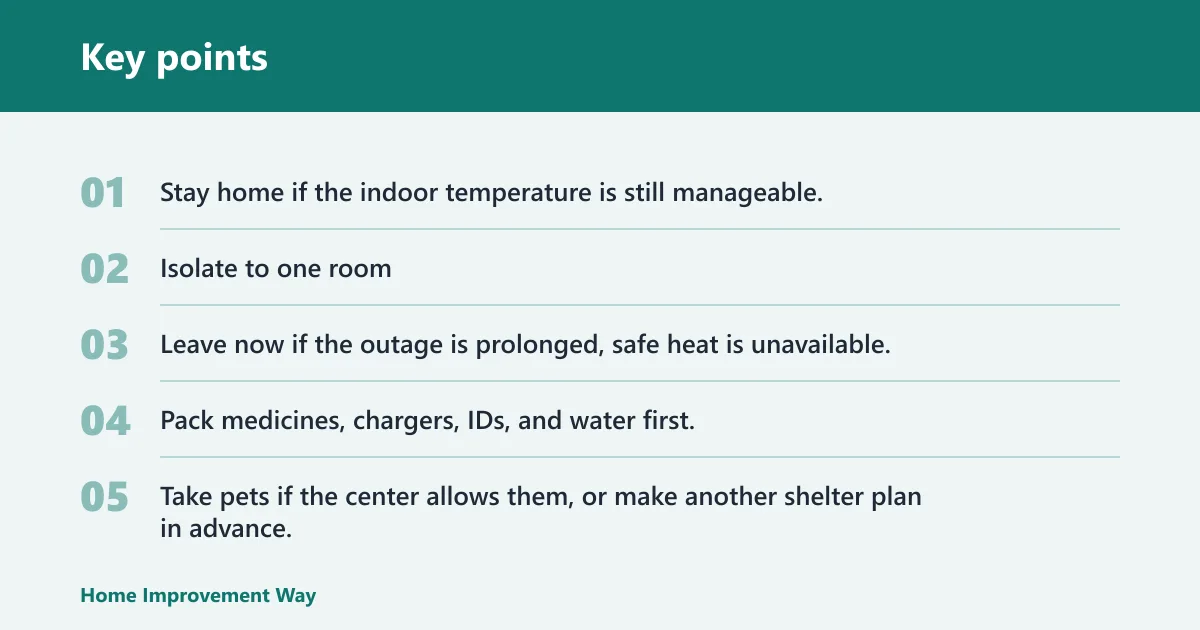
- Stay home if the indoor temperature is still manageable, everyone can stay in one protected room, and you have safe heat or enough insulation to get through the night.
- Isolate to one room if the rest of the house is losing heat quickly but the chosen room can be kept warmer with blankets, closed doors, and draft blocking.
- Leave now if the outage is prolonged, safe heat is unavailable, someone is vulnerable and cannot stay warm, or cold-stress symptoms are starting to appear.
What changes the decision
Younger children, especially infants, are at risk for hypothermia, and older adults may cool down faster than expected. Add medical devices, mobility limits, and poor access to transportation, and the threshold to leave becomes lower. A common first-timer mistake is waiting for the whole house to feel cold before acting; by then, the safest choice may already be gone. The Red Cross and CDC both emphasize acting early when vulnerable people cannot maintain body heat.
What to do before you leave
- Pack medicines, chargers, IDs, and water first.
- Take pets if the center allows them, or make another shelter plan in advance.
- Turn off and unplug nonessential appliances.
- Leave a note if needed and shut doors behind you to slow heat loss and pipe freezing.
House warm during power checklist
- Stay home if you can keep one room warm, everyone can sleep safely, and no one is showing cold-stress symptoms.
- Isolate one room if the house is cooling but a small protected room still holds heat with layers, closed doors, and draft blocking.
- Leave for a warming center if the home is getting colder despite your efforts, if a fuel-burning heater cannot be used safely, or if anyone is at higher risk and cannot stay warm.
Household heat retention and recovery
Use sunlight during the day and close blinds at night to reduce heat loss. Once power returns, warm the house back up gradually so moisture does not build up and equipment does not restart under stress. Keep an eye on pipes, fuel-burning appliances, and any tripped breakers before turning everything back on at once. For pipe-specific help, see frozen pipe prevention.
House warm during power checklist
- Choose one warmest room and keep everyone in it.
- Dress in dry layers, with hats and socks on.
- Block door and window drafts.
- Confirm flashlights, batteries, and phone power.
- Verify smoke and CO detectors are on.
- Set up bedding before bedtime so no one has to search in the dark.
Prolonged-outage checklist
- Track indoor temperature and household symptoms through the day.
- Use fuel-burning heat only if the manual, detectors, and ventilation are all correct.
- Decide early whether a warming center is safer than waiting.
- Protect pipes by keeping cabinet doors open where needed and limiting cold drafts.
- Ration phone and power-bank use for calls, alerts, and emergency updates.
Recover the house safely
- Check that the furnace, boiler, or heat pump is clear and ready before restoring full demand.
- Ventilate briefly if you used fuel-burning backup heat indoors, but only as the appliance instructions require.
- Restart equipment one system at a time rather than all at once.
- Look for leaks, unusual smells, or condensation on windows and cold walls.
Prevention
Before winter, keep a winter emergency kit ready with flashlights, batteries, blankets, and charged power banks so you do not have to search during the outage. If your area has storm evacuation or shelter notices, save local warming center resources before the next cold snap.
Common mistakes
- Using candles as heat: candles are a fire hazard and are not a meaningful way to warm a room.
- Overloading outlets: do not plug multiple high-wattage heaters into the same circuit.
- Running a generator in the wrong place: never use it indoors, in a garage, or near openings.
- Leaving a space heater unattended: many space heaters are not safe to run while you sleep or leave the room.
- Skipping detectors: battery-powered smoke and carbon monoxide detectors should be operating during fuel-burning heating.
- Ignoring draft control: towels, blankets, and closed doors can make a real difference in one room.
Frequently asked questions
How to keep your house warm in a power outage
Close off unused rooms, move everyone into one small interior space, and block drafts with towels or blankets. Add layers, hats, and dry socks before you try any backup heat. If the outage is long or indoor temperature keeps falling, a warming center is the safer option.
How can I keep my house warm during a power outage?
Start with heat retention, not equipment. Use blinds, closed doors, and draft blocking to protect one room, then rely on safe backup heat only if the device is meant for indoor use. Keep a battery-powered smoke detector and a UL 2034 carbon monoxide detector in place.
What is the safest way to stay warm without electricity?
The safest approach is layered clothing, dry bedding, a closed interior room, and no combustion-based heat unless it is indoor-rated and properly set up. If the indoor temperature is falling quickly or anyone is high-risk, leaving for a heated shelter is the safer move.
How do I keep a room warm during a blackout?
Choose the smallest protected room, keep the door closed, and block gaps around doors and windows with towels or unused clothing. Use blankets over the seated or sleeping area, not just around the room. A room with fewer windows will usually hold heat better.
Should I use a generator to heat my house during a power outage?
Use a generator for power, not for direct heat. Run it well outside the house and garage, away from windows and air intakes, and never indoors. If you need room heat, use a safe indoor-rated heater with ventilation and detectors, or leave for a warming center.
When should I leave home for a warming center during a power outage?
Leave when the house cannot stay warm enough for the people inside, the outage is likely to last, or someone vulnerable cannot stay warm. Infants, older adults, and people using medical devices need a lower threshold. If roads are dangerous, leave earlier rather than waiting for conditions to worsen.
Sponsored / affiliate links. As an Amazon Associate I earn from qualifying purchases. I may earn additional commission from eligible campaigns.
 MEGAWISE Portable Air Conditioner and Heater, 420W 110V Compact AC Unit with Remote Control, 1400W Cooling Capacity, 800W Heating, Dehumidifier, Fan, Sleep Timer, ChampagneAZEUS Portable AC and Heater Unit, 420W 110V Compact Air Conditioner for Tent RV Truck Cabin and Small Room, 1400W Cooling, 800W Heating, Remote Control, Dehumidifier, Sleep Timer, Champagne