Water Heater Size Calculator: How Much Do You Need?
Size a water heater by peak-hour demand: add the gallons each fixture uses in the busiest hour, then pick a tank that can cover that total or a tankless unit that meets that flow and temperature rise. Size it wrong and you get cold showers, slow recovery, and a unit that wastes energy or money. This guide uses a practical water heater size calculator method with overlapping showers, laundry, and dishwasher use.
How is this calculated?
Press Calculate to see the math with your numbers.
How to size a water heater by peak-hour demand
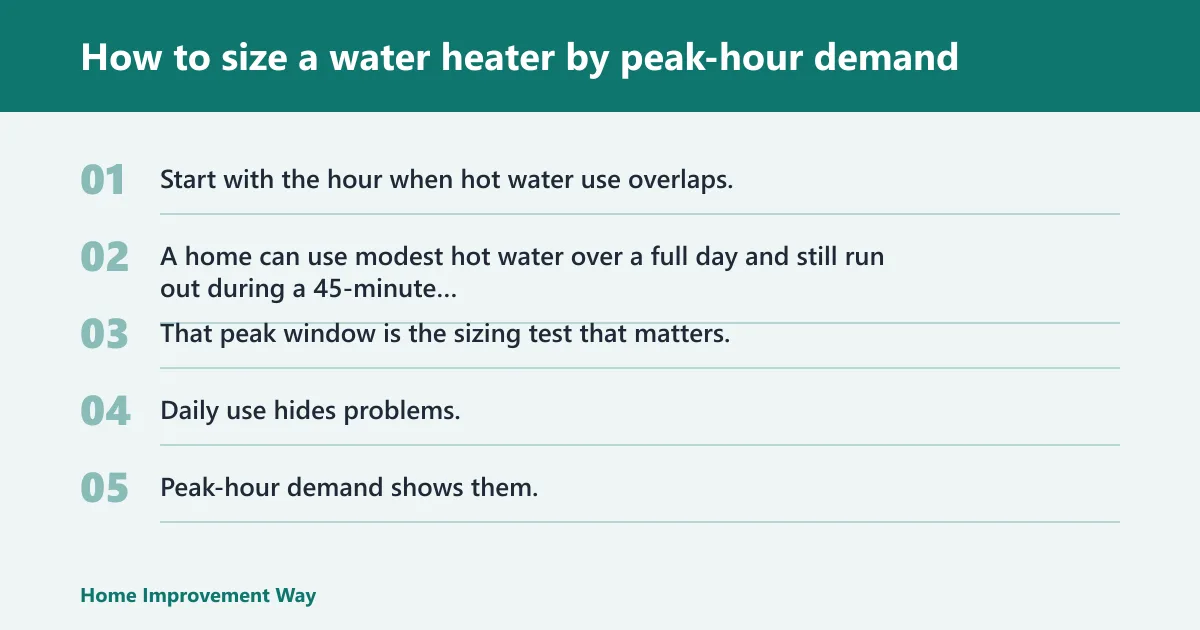

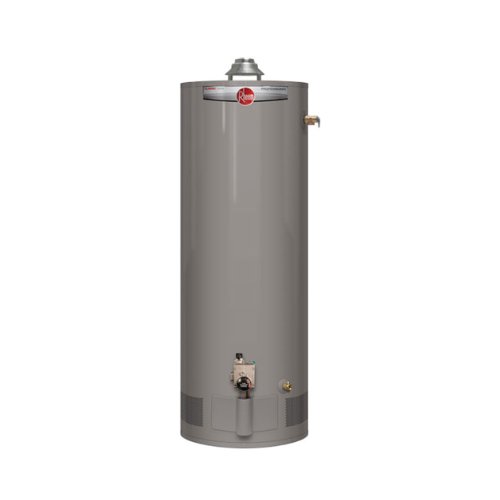
Start with the hour when hot water use overlaps. A home can use modest hot water over a full day and still run out during a 45-minute stretch when two showers, a dishwasher cycle, and laundry line up. That peak window is the sizing test that matters.
Daily use hides problems. Peak-hour demand shows them. A tank can look large on paper and still fall short if the first hour rating is too low, or if the tankless unit cannot carry enough flow at the incoming water temperature.
Why simultaneous fixtures matter more than daily use
A family does not use hot water one fixture at a time. Morning routines stack. One person showers while another starts laundry and the dishwasher runs after breakfast. That overlap is what the water heater must survive without a cold spell at the tap.
For that reason, a water heater size calculator should start with fixture overlap, then check tank capacity, first hour rating, and recovery rate. If the home is fed cold water in winter, the same fixture mix may need more capacity because incoming water starts colder.
According to plumbercalc.com — The calculator says a family of four typically needs 50-65 gallons.
How do I determine what size water heater I need?
Determine size by listing the fixtures that may run at the same time, estimating each one’s hot-water draw, and comparing the total to either tank first hour rating or tankless GPM capacity. Household size helps, but peak use and fuel type decide whether the unit will actually keep up.
A simple homeowner sizing path
- List the busiest 30 to 60 minutes in the house.
- Mark which fixtures overlap: showers, bath fill, dishwasher, laundry.
- Add the hot-water demand for that overlap.
- Check a storage tank by capacity and first hour rating.
- Check a tankless unit by GPM and temperature rise.
- Round up if the household has teens, guests, or back-to-back showers.
This path keeps the decision tied to actual use. It also avoids a common mistake: choosing a water heater from bedroom count or bathroom count alone.
How a family of 4 can land in a 50- to 65-gallon range
For many homes, a family of four typically needs 50-65 gallons, and the practical range often depends on how many showers overlap and whether laundry or a dishwasher runs in the same window. Teenagers, long showers, or frequent bath use can push the pick toward the upper end.
The simple size guide also points to 50 gallons for two to three people, 65 gallons for three to four people, and 80 gallons for four to five people. Those numbers are a starting point, not the final answer, because first hour rating matters more than tank size in many cases.
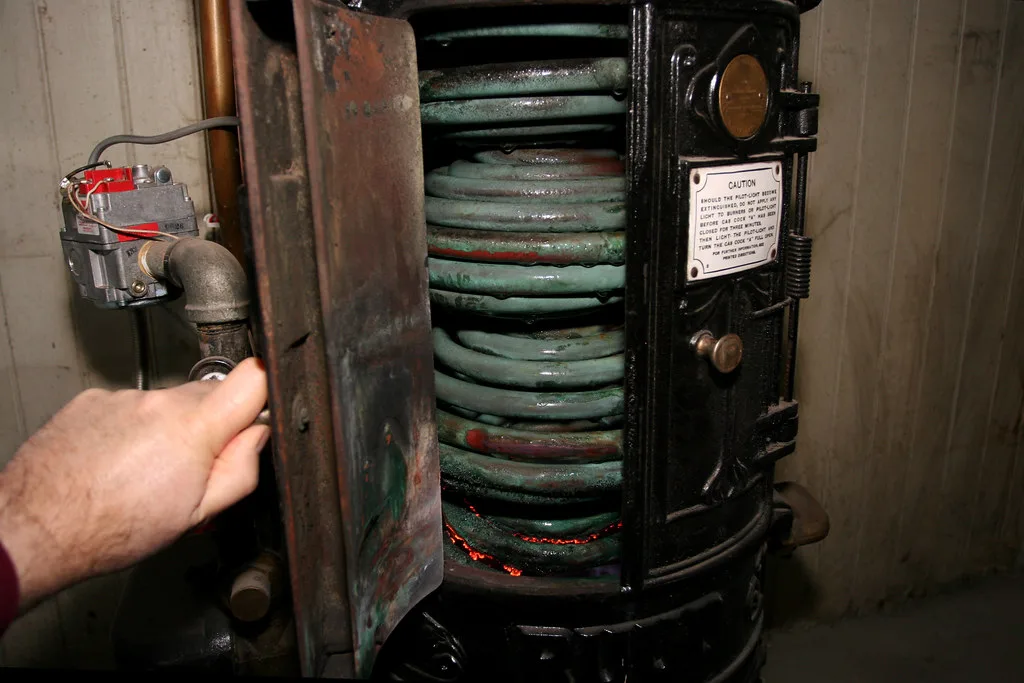
Storage tank water heater sizing basics
A storage tank water heater is sized by capacity in gallons or liters, but that is only part of the story. First hour rating tells you how much hot water is available in the first hour, and recovery rate tells you how fast the unit reheats after a draw.
Capacity in gallons and liters
Tank size is the stored volume. For U.S. homes, that is usually stated in gallons. For international projects, the same number can be checked in liters. A quick conversion helps compare options without guessing.
Useful conversions for a water heater size calculator are simple: gallons to liters, GPM to LPM, and GPH to LPH. A practical metric toggle is worth using if the project sheet mixes unit systems.
| Imperial | Metric | Quick use |
|---|---|---|
| 1 gallon | 3.785 liters | Tank capacity |
| 1 GPM | 3.785 LPM | Tankless flow |
| 1 GPH | 3.785 LPH | Recovery or heating rate |
First hour rating versus tank size
First hour rating is how much hot water is available in the first hour. That number can matter more than tank size because a tank with modest storage but a strong recovery rate may outperform a larger tank with weak reheating. Matching FHR to peak demand is the cleaner way to avoid short showers.
The sourced guidance is clear on that point: the key is matching the First Hour Rating to peak demand. In borderline homes, that matters more than the nameplate tank size alone.
How recovery rate changes usable capacity
Recovery rate is how quickly the heater makes more hot water, usually shown in gallons per hour or liters per hour. Faster recovery reduces the amount of storage you need because the tank refills its usable hot water sooner after a draw.
That is where fuel type starts to matter. Gas units heat about 40 gallons per hour compared with electric’s 23 gallons per hour. Gas units usually cost less to operate and heat faster, while hybrid heat pump water heaters can cut costs by 60-70% but may need more space and a different sizing mindset.
How to size a tankless water heater by GPM
Size a tankless water heater by the number of simultaneous fixtures, then confirm the GPM at the incoming water temperature. Tankless units do not store hot water, so the flow rate has to cover every fixture that may run together at the coldest realistic inlet temperature.
Count simultaneous fixtures, not bedrooms
Bedrooms do not tell the story. A two-bedroom home with two full baths and frequent laundry overlap can need more tankless capacity than a larger home with one person and staggered use. The better question is how many fixtures run at the same time.
That means adding shower flow, tub fill, dishwasher draw, and laundry demand in the same hot-water window. If the sum exceeds the unit’s GPM at the site’s incoming water temperature, the water will go lukewarm or cold during peak use.
How incoming water temperature changes the required flow
Colder incoming water forces a tankless unit to work harder to reach the set outlet temperature. In colder climates, the same GPM rating can shrink in practice because the heater must raise temperature by a larger amount. That is why climate should be checked before finalizing size.
Efficiency also matters here. A more efficient tankless unit can deliver better real-world performance at the same fuel input, but it still has to meet the flow and temperature rise required by the home.
Sizing for showers, baths, dishwasher, and laundry
Showers, bath fill, dishwasher loads, and laundry loads are the usual drivers of peak hot-water use. The right size depends on whether these fixtures overlap, how long they run, and whether the house keeps them on a tight morning schedule or spreads them out.
Two showers at once
Two showers at the same time are a common borderline case. If both run long or if one uses a high-flow showerhead, a small tank can fall behind fast. In that case, size up or confirm that the first hour rating covers the combined draw plus recovery.
Bath fill plus dishwasher or laundry
A bathtub fill can consume a large share of available hot water, and pairing it with a dishwasher or laundry cycle can push the system past its comfort zone. That overlap often moves a household from a modest tank to a larger tank or a stronger tankless unit.
When overlapping loads push you up a size
If the water heater will be used during back-to-back showers, or if teenagers tend to shower one after another while laundry runs, choose the next size up. Larger households usually need larger tanks or multiple units because the overlap, not the daily total, becomes the limiting factor.
Proof asset: peak-hour sizing worksheet and fixture overlap table
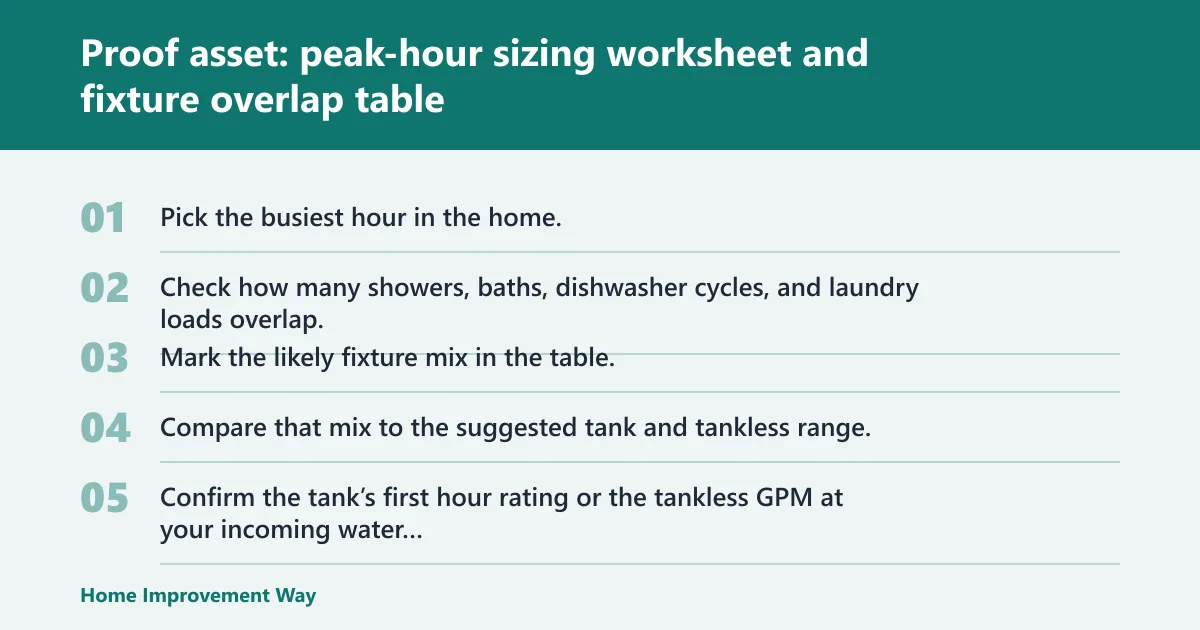
Use this one-page peak-hour sizing worksheet as a sanity check. Write down the fixtures that overlap, total their expected hot-water draw, and compare the result with the recommended tank or tankless range. It is a simple way to catch borderline cases before buying the wrong size.
How to use the worksheet
- Pick the busiest hour in the home.
- Check how many showers, baths, dishwasher cycles, and laundry loads overlap.
- Mark the likely fixture mix in the table.
- Compare that mix to the suggested tank and tankless range.
- Confirm the tank’s first hour rating or the tankless GPM at your incoming water temperature.
| Simultaneous use scenario | Likely tank range | Likely tankless range | Why this lands there |
|---|---|---|---|
| 1 shower, no other overlap | 30-40 gallons | 4-6 GPM | Low peak draw, short window |
| 2 showers at once | 40-50 gallons | 6-8 GPM | Two fixtures drive the peak |
| 2 showers + dishwasher | 50-65 gallons | 8-10 GPM | Overlap pushes demand above basic sizing |
| Bath fill + shower + dishwasher | 65-80 gallons | 10+ GPM | High peak-hour draw, less margin for error |
| Shower + laundry + dishwasher | 50-80 gallons | 8-12 GPM | Mixed fixtures can create a long hot-water window |
Sanity-check examples for borderline households
A family of four with one teenage shower, one younger child, and laundry running after school may need the upper end of the 50- to 65-gallon range. If the house stacks two showers and a dishwasher in the same morning slot, moving up one size is usually safer than hoping recovery rate covers the gap.
That is where the example minimum tank size of 53.33 gallons fits as a checkpoint. It is a reminder that a calculated minimum can land between standard sizes, and the real choice should round up.
What size water heater do I need for a family of 4?
A family of 4 typically needs 50-65 gallons, but the right choice depends on whether showers overlap, whether one person takes long baths, and whether dishwashers or laundry run during the same hour. A home with teens and back-to-back showers usually belongs near the upper end.
Borderline cases with teens, back-to-back showers, or laundry overlap
Teenagers often change the answer more than headcount does. Back-to-back showers, longer runtimes, and laundry in the same window all raise the peak-hour load. In those homes, a larger tank or a second unit can be smarter than trying to force a smaller model to keep up.
Metric conversions and fuel type differences
Metric and imperial units should both be checked on the sizing sheet, especially on international projects or mixed-spec documents. The calculator should support both, and the homeowner should be able to compare tank capacity, flow rate, and recovery rate without unit confusion.
Gallons to liters and GPM to LPM
Use the quick conversions in the table above for tank capacity and tankless flow. If the home uses a metric spec sheet, convert gallons to liters, GPM to LPM, and GPH to LPH before comparing models.
Electric, natural gas, propane, and hybrid heat pump notes
Fuel type affects both operating cost and recovery. Electric units often recover more slowly, gas units heat faster, propane behaves more like gas in sizing logic, and hybrid heat pump water heaters can cut costs by 60-70% while changing the space and airflow considerations.
Gas-unit clearances also matter during installation planning: 6 inches on the sides and back and 18 inches in front. That affects where the heater can go, especially in tight utility rooms or closets.
Frequently asked questions
How do I determine what size water heater I need?
List the fixtures that run at the same time during the busiest hour, total their hot-water demand, and compare that total to a tank’s first hour rating or a tankless unit’s GPM at the local incoming water temperature. Household size helps, but overlap is the real test.
What matters more: tank size or first hour rating?
For many homes, first hour rating matters more than tank size because it shows how much hot water is available when the tank and recovery are both in play. A smaller tank with a strong first hour rating can perform better than a larger tank with weak recovery.
Should I size up if two people shower at the same time?
Usually yes, if those showers are long or if any other fixture runs at the same time. Two showers can use a large share of the available hot water fast, so sizing up is a practical way to avoid a cold finish and a strained recovery cycle.
What size water heater do I need in liters?
Convert the gallon target to liters by multiplying by 3.785. A 50-gallon tank is about 189 liters, 65 gallons is about 246 liters, and 80 gallons is about 303 liters. Use the converted figure to compare metric spec sheets directly.
How do I size a tankless water heater by GPM?
Add the hot-water flow from all fixtures that may run at once, then compare that total with the tankless unit’s GPM at your incoming water temperature. If the home has cold inlet water, a higher nominal GPM model may still be needed to cover the same fixtures.
What if my household uses dishwashers and laundry during peak hot water use?
Include them in the calculation. Dishwasher loads and laundry loads can overlap with showers and baths, and that overlap is what pushes a home into the next tank size or a higher tankless GPM range. Daily use alone will miss that spike.
Sponsored / affiliate links. As an Amazon Associate I earn from qualifying purchases. I may earn additional commission from eligible campaigns.