Tankless Water Heater Size Calculator for Right GPM
A tankless water heater size calculator typically starts with peak hot-water demand in GPM and required temperature rise; in many homes, a roughly 7.5–9.0 GPM unit may work for one shower plus a sink, but colder-climate and higher-use homes may need more or multiple units. Undersized equipment gives lukewarm showers and nuisance shutdowns, while oversized units can exceed gas, electric, venting, or panel capacity. This guide shows how to size for showers, fixtures, fuel type, climate, and the real installation limits that decide what you can actually install.
How is this calculated?
Press Calculate to see the math with your numbers.
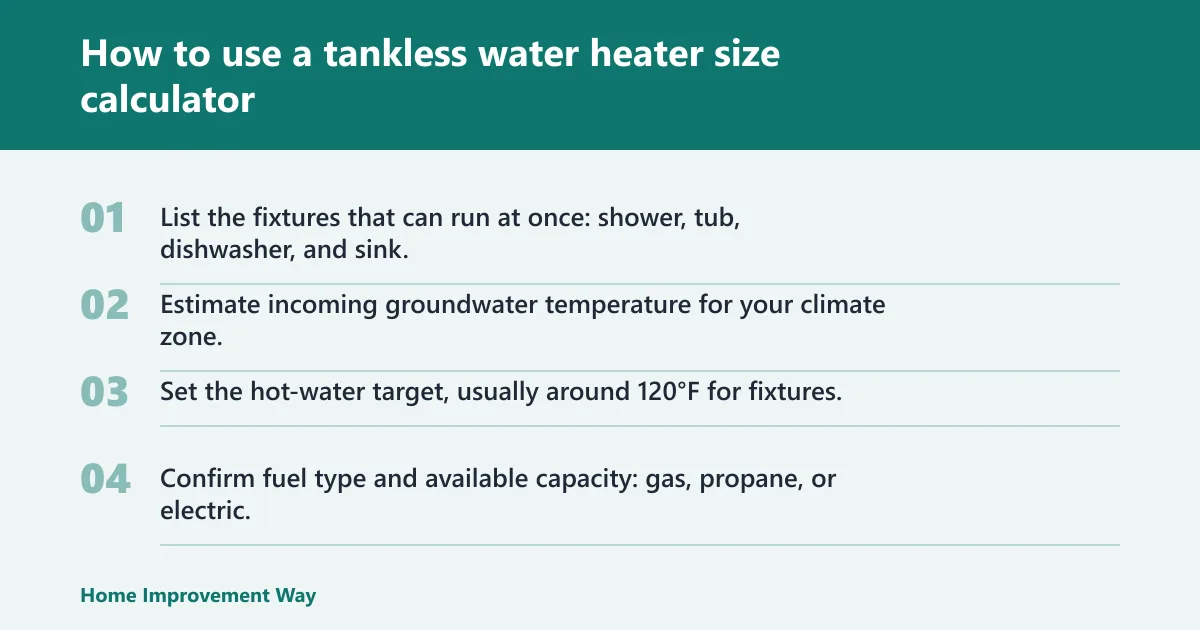
How to use a tankless water heater size calculator

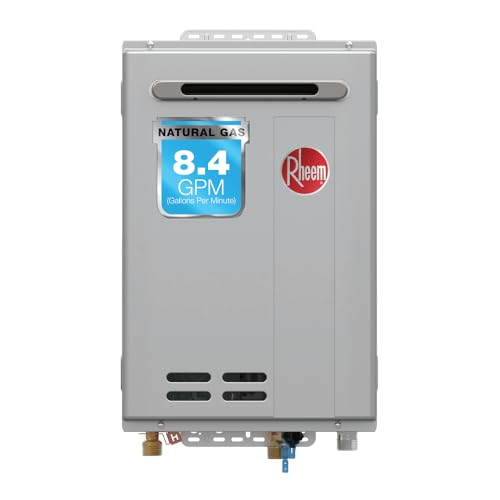
A useful tankless water heater size calculator starts with the household’s peak demand, then checks temperature rise and installation limits. Do not begin with a product label. Start with how the home actually uses hot water at the same time, because that is what decides whether the unit will keep up or fall short.
Gather the four inputs you need
- List the fixtures that can run at once: shower, tub, dishwasher, and sink.
- Estimate incoming groundwater temperature for your climate zone.
- Set the hot-water target, usually around 120°F for fixtures.
- Confirm fuel type and available capacity: gas, propane, or electric.
WaterHeaterSize.com uses groundwater temperature, desired hot-water temperature, usage, climate zone, gas type, and efficiency priority as calculator inputs. That is the right order. The unit size comes after the load, not before it.
Convert fixture use into real flow demand
Use a realistic peak, not a total fixture count. A sizing guide may list shower usage around 2.5 GPM and bathtub usage around 4.0 GPM. A shower plus a kitchen sink is not the same as a shower plus dishwasher plus laundry, and the calculator should reflect that difference.
Check the result against your installation limits
Once the GPM and temperature rise are known, verify the unit against gas line size, gas meter capacity, venting category, indoor or outdoor placement, and electrical panel capacity. A heater can be large enough on paper and still be a bad fit if the home cannot support it.
According to Best Tankless Water Heaters (2026) – This Old House — This Old House notes tankless water heaters can cost $100–$600 for smaller units. (source)
What GPM do I need for my tankless water heater?
The GPM you need is the highest simultaneous hot-water flow you expect at one time, plus a little margin. In many homes, one shower and one sink may land around 3.0 to 4.0 GPM, while two showers can push demand close to or above 5.0 GPM before temperature rise is considered.
Figure out simultaneous fixture demand
Flow rate is the sum of fixtures running together. If two showers are active, use both shower flows. If the dishwasher fills while someone washes hands at the kitchen sink, include that too. The unit must cover the peak, not the average day.
Estimate shower, tub, dishwasher, and sink flow rates
- One shower: use the shower GPM rating from the fixture or calculator.
- Bathtub fill: use the tub fill rate, which is often much higher than a shower.
- Dishwasher and sink: count them when they run during the same hot-water event.
- Multi-shower demand: add both shower flows if the home often runs two at once.
Adjust for households that often run two showers at once
Homes with two or more bathrooms need a higher peak flow than single-bath homes. What matters is real overlap. A family home where one person showers while another starts a bathroom sink and the dishwasher cycles needs more capacity than the same home used one fixture at a time.

How do I calculate temperature rise?
Temperature rise is the gap between incoming groundwater temperature and the hot-water temperature you want at the tap. Colder incoming water means the heater must work harder to produce the same shower temperature, so the same GPM may require much more BTU input or kW capacity in a cold climate.
Use incoming groundwater temperature by climate zone
A simple climate proxy helps. Southern areas usually have warmer incoming water. Central areas sit in the middle. Northern areas start colder. WaterHeaterSize.com uses climate zone as a sizing input for that reason, because inlet temperature changes output more than many homeowners expect.
Set the target hot-water temperature
For sizing, use a target hot-water temperature around the fixture setpoint you actually want, then compare that against incoming water. If groundwater arrives much colder in winter, the heater must raise the water more, and the unit’s output at that rise becomes the limiting factor.
Work through a cold-climate and warm-climate example
In a warm-climate home, a smaller rise may support the same GPM with less input. In a cold-climate home, the rise can be high enough that the same fixture load needs a much larger gas unit or a lower-flow electric model. That is why climate belongs in the calculator.
How many BTUs or kW does the size calculator need?
Gas and propane units are sized by BTU input, while electric units are sized by kW. The demand math still starts with GPM and temperature rise, then converts to the fuel-specific capacity that can actually deliver that heat without nuisance shutdowns or weak outlet temperature.
Convert GPM and temperature rise into gas input needs
WaterHeaterSize.com shows a BTU formula: BTU = GPM × 500 × Temp Rise ÷ Efficiency. Use that as a planning check, not a guess. Higher flow, colder inlet water, and lower efficiency all increase the needed input.
Compare natural gas, propane, and electric output limits
Natural gas and propane units generally cover higher flow rates than electric units. That does not mean they are automatically a fit. The fuel type must match the home’s supply, and the capacity must match the real installation, including meter, venting, and line size.
Account for efficiency and UEF when reading specs
Efficiency affects how much fuel input is needed to produce the same hot water output. Standard, high, and premium efficiency units can have different practical capacity at the same demand. A label may look strong, but the real output depends on the temperature rise and the unit’s efficiency assumptions.
| Input | Small apartment | 2-bath family home | Cold-climate home |
|---|---|---|---|
| Simultaneous demand | Shower + sink | Two showers + sink | Shower + dishwasher + sink |
| Estimated flow rate | 3.5 GPM | 5.5 GPM | 6.0 GPM |
| Temperature rise | 50°F | 55°F | 70°F |
| Estimated gas input | About 87,500 BTU | About 151,250 BTU | About 210,000 BTU |
| Estimated electric load | About 10 to 13 kW | About 18 to 27 kW | About 30 to 36 kW or more |
| Red-flag limits | Small panel, limited gas line | Meter capacity, venting, line distance | Cold inlet water, high BTU demand, fuel supply limits |
Sample sizing worksheet for 3 real households
These examples show how a calculator should work in real life. The point is not to chase the biggest number. The point is to find a size that fits the household demand and the house itself.
Small apartment: low flow, short runs, simple install
A one-bath apartment often needs one shower and a bathroom or kitchen sink at the same time. That puts demand in a lower GPM range, but the installation may still be limited by electrical panel space or a small gas service. Rheem RTEX-13 electric tankless water heater is rated at 13 kW, which may suit light-duty demand if the electrical service supports it.
2-bath family home: shower plus dishwasher demand
A family home can see two showers, a dishwasher, and a sink run close together. That pushes demand higher than a simple fixture count suggests. Rheem RTG gas tankless water heater is the best overall with 7 GPM and 160,000 BTUs, which shows the kind of input level many two-bath homes need if the gas service and venting are adequate.
Cold-climate home: higher temperature rise and lower output
Cold-climate homes often need the highest capacity because inlet water starts colder. Rinnai RE199iN reaches 9.8 GPM and up to 199,000 BTUs, which helps explain why higher-input gas models are often chosen in northern areas. Even so, the gas line, venting, and altitude still have to line up.
What installation limits can change the answer?
Installation limits can turn a correct size into the wrong purchase. A tankless water heater can meet the demand mathematically and still fail in the field if the gas line is too small, the electrical panel is full, or the venting path is not approved for the model.
Gas line size, gas meter capacity, and distance from the meter
What size gas line do you need for a tankless water heater? It depends on BTU input, pipe length, and the total load on the system. Long runs lose capacity. If the heater is far from the meter, a line that looks acceptable on paper may still be undersized in practice.
Venting category, indoor or outdoor placement, and altitude
How does altitude affect tankless water heater sizing? WaterHeaterSize.com says altitude requires a 4% BTU reduction per 1000 feet above 2000 feet. That means a unit that looks large enough at sea level may not deliver the same output in higher elevations, especially when paired with colder inlet water.
Electrical panel capacity for electric units
Electric sizing is often limited by available amperage before it is limited by the heater’s flow target. Stiebel Eltron Tempra 36 Plus is rated at 36 kW and up to 7.5 GPM, which shows how quickly electric demand climbs with flow. A panel upgrade may be required before the unit can be installed.
Do I need a gas or electric tankless water heater size calculator?
Yes, the calculator should match the fuel type. Gas and propane use BTU-based sizing, while electric units use kW and available amperage. The wrong calculator can lead to a number that looks correct but does not fit the home’s supply or the unit’s operating limits.
When gas and propane calculators are different
Propane units usually need the same kind of flow and temperature-rise math as natural gas, but the fuel supply and equipment settings differ. A propane calculator should confirm tank size, regulator capacity, and the burner input that the appliance can actually use.
When electric capacity becomes the limiting factor
Electric models often run into panel limits before they run into flow limits. Rheem RTEX-13 electric tankless water heater is rated at 13 kW, while larger electric models can move far more power. If the panel cannot supply the amperage, the size target has to come down or the service has to change.
How to pick the right calculator for your fuel type
Use a gas calculator if the home has natural gas service and enough line capacity. Use a propane calculator if the appliance will run on LP. Use an electric calculator if the house can support the amperage and the expected GPM is within electric limits for the inlet-water temperature.
Frequently asked questions
How do I calculate the right size tankless water heater?
Start with the largest simultaneous hot-water event, then add fixture flow rates in GPM. Next, find the temperature rise by subtracting incoming groundwater temperature from your target hot-water temperature. Finally, check the BTU or kW output against gas, electric, venting, and panel limits before you buy.
What GPM do I need for my tankless water heater?
Use the peak combined flow of the fixtures that may run at the same time. One shower and a sink may need far less than two showers plus a dishwasher. The right GPM is the real household peak, not the sum of every fixture in the building.
How many BTUs does a tankless water heater need?
BTU need depends on GPM, temperature rise, and efficiency. A higher flow rate or colder incoming water increases the input required. WaterHeaterSize.com’s formula, BTU = GPM × 500 × Temp Rise ÷ Efficiency, is a practical planning check before you compare gas or propane models.
What size tankless water heater do I need for 2 showers?
Two showers can add up fast, especially if both run at the same time. Use the actual shower flow rates, then add temperature rise. In many homes, this pushes demand beyond small electric units and into higher-output gas models, provided the line, venting, and meter can support them.
What groundwater temperature should I use in a sizing calculator?
Use a realistic incoming-water estimate for your climate zone, not an annual average that hides winter conditions. Northern homes should size for colder inlet water than southern homes. If the calculator allows it, use the coldest expected incoming temperature for the season you care about most.
How does altitude affect tankless water heater sizing?
Altitude reduces available output, so a heater that works at low elevation may need more capacity higher up. WaterHeaterSize.com says altitude requires a 4% BTU reduction per 1000 feet above 2000 feet. That matters most in cold climates, where the temperature rise is already demanding.
Sponsored / affiliate links. As an Amazon Associate I earn from qualifying purchases. I may earn additional commission from eligible campaigns.