Do Hot Water Recirculating Pumps Work With Tankless Water Heaters?
Hot water recirculating pumps can work with tankless water heaters, but the compatibility depends heavily on the pump type and installation method. Many homeowners assume these two technologies conflict, yet with the right setup — typically a dedicated return line or a crossover valve — you can enjoy instant hot water without wasting gallons down the drain. This guide explains exactly which pump systems are safe for tankless units, how to avoid damaging your heater, and what installation approach delivers the best balance of comfort and efficiency.
Simply put, yes — hot water recirculating pumps work with tankless water heaters when installed correctly. The key is using a pump designed for on-demand systems, avoiding constant recirculation that can damage the heat exchanger, and ensuring your tankless unit supports external recirculation. A dedicated return line system is the safest and most efficient choice.
Key Takeaways
- Hot water recirculating pumps are compatible with tankless water heaters, but not all pump types work safely with condensing units.
- Dedicated return line systems are the most reliable and efficient option for tankless water heaters, avoiding recirculation-related damage.
- Retrofit crossover valve kits work for tankless units but can reduce flow rate and trigger short-cycling in some models.
- Pump control strategies — temperature-activated, timer-based, or on-demand — directly affect energy savings and heater longevity.
- Proper sizing and installation by a licensed plumber is essential to avoid voiding your tankless heater warranty.
How a Hot Water Recirculating Pump Works With a Tankless Water Heater
A hot water recirculating pump keeps hot water moving through your pipes so you get instant hot water at any faucet. With a tankless water heater, the pump sends cooled water from the return line back to the heater, which then reheats it on demand. The pump only runs when the water temperature drops below a set threshold or when you activate it manually.
In a standard tank-type system, the pump cycles hot water through the water heater tank constantly. But tankless heaters are different — they only heat water when flow is detected. This means the recirculation strategy must match how a tankless unit operates to avoid damage and wasted energy.
- Dedicated return line systems send cooled water back through a separate pipe directly to the heater inlet
- Cross-over valve kits use the cold water line as a temporary return path when the pump runs
- On-demand pump activation uses a push button or motion sensor to trigger the pump only when needed
- Temperature-controlled pumps monitor water temperature in the return line and cycle on when it drops
- Timer-based pumps run during scheduled high-use periods like morning and evening
Important: Not all tankless water heaters have a built-in recirculation port. Check your owner’s manual or manufacturer specifications before purchasing any pump system. Units without a dedicated return port require external modifications.
| Pump Type | Tankless Compatibility | Installation Difficulty |
|---|---|---|
| Dedicated return line | Excellent | High (requires extra pipe) |
| Cross-over valve kit | Moderate | Low to Medium |
| On-demand pump | Very good | Low |
| Temperature-controlled | Good (with caution) | Medium |
Choosing the right pump type for your tankless water heater depends on your home’s plumbing layout, your budget, and how often you want instant hot water. Dedicated return lines offer the best performance but require more upfront work.
What Is a Dedicated Return Line System and Why Does It Matter?
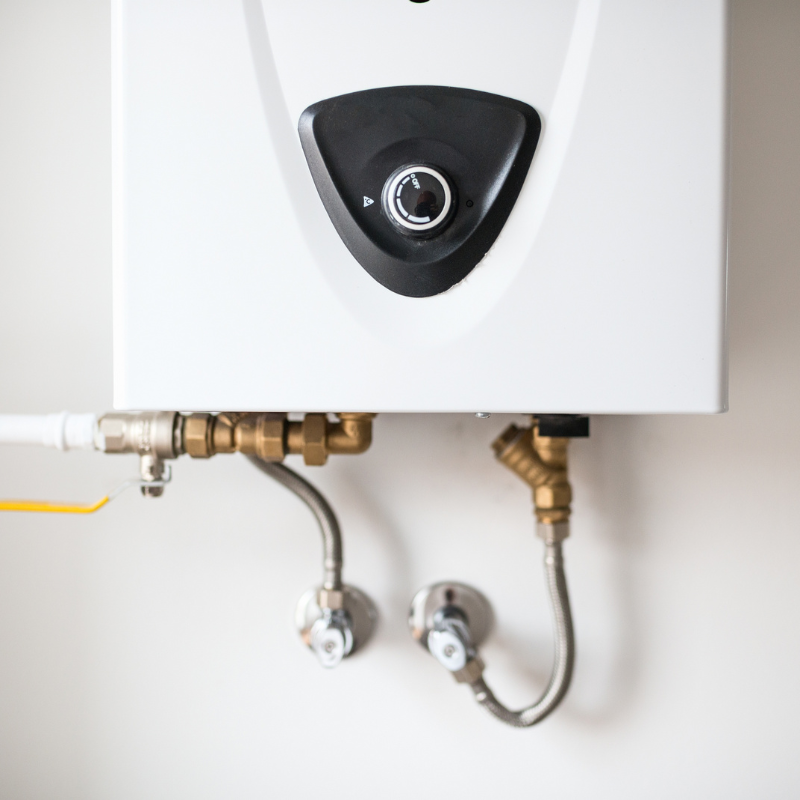
A dedicated return line is a separate pipe that runs from the farthest fixture back to the water heater. This pipe carries cooled water directly to the tankless unit’s inlet, where it gets reheated and sent back through the hot water supply. This setup creates a closed loop that does not interfere with your cold water plumbing.
Tankless water heaters with a built-in recirculation port are designed specifically for this type of system. The port connects directly to the return line, allowing the pump to cycle water without triggering the heater’s flow sensor incorrectly. According to the U.S.
Department of Energy, dedicated return line systems reduce water waste by up to 90% compared to waiting for hot water at the tap.
- Install the return pipe from the fixture farthest from the water heater back to the unit’s return port
- Mount the recirculating pump on the return line near the water heater
- Connect the pump to a power source and a control system (timer, thermostat, or demand switch)
- Set the pump to run only when needed — typically 15-30 seconds before you want hot water
- Test the system to ensure the tankless heater fires up correctly when the pump runs
Tip: If your tankless water heater does not have a factory-built recirculation port, you can still install a dedicated return line. Use a check valve to prevent backflow and install the pump with isolation valves for easy maintenance access.
The main advantage of a dedicated return line is that it keeps your cold water supply completely separate. This means your kitchen faucet always gets cold water when you want it, and your tankless heater only fires up when the return water actually needs reheating. According to Energy Star, homeowners with dedicated return lines save an average of 2,500 to 4,000 gallons of water per year.
How Does a Cross-Over Valve Affect Tankless Water Heater Performance?
A cross-over valve, also known as a comfort valve, connects the hot and cold water lines under a sink. When the pump runs, cooled water from the hot line gets pushed into the cold line and eventually back to the water heater. This is the most common retrofit solution because it does not require a dedicated return pipe.
However, cross-over valves can cause problems with tankless water heaters. Because these valves push water into the cold line, they can reduce the flow rate available at other fixtures. If the flow drops below the tankless heater’s minimum activation threshold — typically 0.5 to 0.8 gallons per minute — the heater may not fire up at all.
| Issue | Cause | Solution |
|---|---|---|
| Short-cycling | Pump cycles heater on and off rapidly | Use a pump with minimum runtime settings |
| Cold water temperature rise | Warm water enters cold lines | Install a thermal expansion tank |
| Flow rate too low | Pump restricts cold water supply | Upgrade to a higher-flow pump |
| Heater fails to ignite | Flow below minimum threshold | Add a buffer tank or use dedicated return |
The American Society of Plumbing Engineers (ASPE) recommends against cross-over valve systems for tankless water heaters in new construction. They advise using dedicated return lines instead. However, for existing homes where adding a return pipe is impractical, a high-quality cross-over valve with a check valve can work if the pump is properly sized.
Warning: Never install a cross-over valve without a spring-loaded check valve. Without it, hot water can backflow into your cold water lines, leading to lukewarm water at every faucet and potential scalding risks.
What Are the Best Recirculation Strategies for Tankless Water Heaters?
Not all recirculation strategies are created equal when paired with a tankless water heater. The best approach balances convenience, energy efficiency, and equipment longevity. Three main strategies exist: temperature-activated, timer-based, and on-demand recirculation.
Temperature-activated pumps monitor the water temperature in the return line and turn on when it drops below a set point, typically 90-95°F. This works well with tankless heaters because the pump runs only when the water has cooled enough to need reheating. However, if the pump cycles too frequently, it can cause short-cycling that wears out the heat exchanger over time.
Timer-based systems run the pump during scheduled periods, such as 6-8 AM and 5-9 PM when most households use hot water. This approach minimizes unnecessary pump operation and reduces energy consumption. According to a study by the National Renewable Energy Laboratory, timer-based recirculation cuts pump energy use by 50-70% compared to continuous operation.
- On-demand systems use a push button at the fixture or a motion sensor to trigger a short pump cycle, usually 30-60 seconds
- Demand-based recirculation eliminates wasted energy from the pump running when no one needs hot water
- Smart pumps with Wi-Fi connectivity allow you to control recirculation from your phone and set schedules
- Some tankless water heaters, like those from Rinnai and Navien, have built-in recirculation modes that work with external pumps
- Combining timer control with a temperature sensor gives you the most efficient operation for tankless systems
Tip: For tankless water heaters, on-demand recirculation is the safest and most energy-efficient strategy. It prevents unnecessary heating cycles and extends the life of the heat exchanger by reducing thermal stress.
Manufacturers like Rheem, Noritz, and Takagi now offer tankless water heaters with built-in recirculation pumps. These integrated systems are designed specifically for the unit’s flow and temperature requirements. They automatically adjust pump speed and runtime to match demand, reducing the risk of damage while delivering instant hot water.
How Does a Recirculating Pump Affect Tankless Water Heater Efficiency?
A recirculating pump affects tankless water heater efficiency in both positive and negative ways. On the positive side, you waste far less water waiting for hot water at the tap. On the negative side, the pump causes the heater to fire up more frequently, which increases gas or electricity consumption compared to a non-recirculated system.
According to the California Energy Commission, tankless water heaters with recirculation pumps use about 10-20% more energy than stand-alone tankless units. This is because the pump periodically pushes cooled water back through the heater, triggering the burner or heating element even when no one is actively using hot water. However, the water savings often offset the energy cost in regions with high water rates.
| Factor | Without Pump | With Pump (On-Demand) |
|---|---|---|
| Water wasted per day (gallons) | 10-15 | 0.5-2 |
| Energy consumption increase | Baseline | 5-10% |
| Time to hot water at farthest fixture | 30-90 seconds | 5-15 seconds |
| Annual pump electricity cost | $0 | $15-40 |
Modern tankless water heaters with modulating gas valves and variable-speed fans can adjust their output to match the lower flow of a recirculation loop. This helps maintain efficiency even when the pump is running. Look for units with a thermal efficiency rating of 0.90 or higher for the best results with recirculation.
What Tankless Water Heater Brands Support Recirculating Pumps?
Most major tankless water heater brands now offer built-in recirculation support. The level of integration varies by manufacturer and model. Some units have a dedicated return port and an internal pump, while others simply support an external pump with a control interface.
Navien tankless water heaters are widely regarded as the best for recirculation systems. Their NPE-A series includes a built-in recirculation pump and an internal buffer tank that prevents short-cycling. Similarly, Rinnai’s Sensei series features a built-in pump with smart recirculation technology that learns your usage patterns and adjusts pump operation accordingly.
- Navien NPE-A and NPE-S series have integrated pumps and dedicated return ports
- Rinnai Sensei and RUR series support both internal and external recirculation pumps
- Noritz NRCB series includes a built-in recirculation pump with timer controls
- Rheem RTG-EP series works with external pumps and has a dedicated return connection
- Takagi T-K series can be used with external pumps but requires a return line kit
- Bosch Therm 800 series supports external recirculation with an add-on pump kit
If you already own a tankless water heater that does not have built-in recirculation support, you can still add an external pump. Brands like Grundfos, Taco, and Bell & Gossett make pumps specifically designed for tankless applications. These pumps have lower flow rates and shorter run times to match the heater’s capacity.
Tip: When choosing an external pump for your tankless water heater, look for one with a flow rate between 1 and 3 GPM. Higher flow rates can overwhelm the heater’s burner and cause condensation issues in condensing models.
Common Mistakes When Installing a Recirculating Pump on a Tankless Heater
Installing a recirculating pump on a tankless water heater is not as straightforward as adding one to a tank-style heater. Several common mistakes can lead to poor performance, higher energy bills, or even damage to the unit. Understanding these pitfalls helps you avoid costly errors.
The most frequent mistake is using a pump designed for tank-type water heaters. These pumps run continuously or on long cycles that keep the heater firing constantly. According to plumbing experts at This Old House, continuous recirculation on a tankless heater can reduce its lifespan by 30-40% due to thermal fatigue on the heat exchanger.
- Installing the pump on the wrong side of the return line — always place it on the return line, not the supply
- Sizing the pump too large — a pump that moves 5 GPM can trigger the heater even when no fixture is open
- Forgetting to install a check valve — without it, hot water can backflow into cold lines and cause temperature issues
- Skipping the expansion tank — tankless heaters with recirculation can cause pressure spikes that damage pipes
- Using a standard cross-over valve without verifying it has a spring-loaded internal check valve
- Setting the pump to run 24/7 — this wastes energy and causes unnecessary wear on the heat exchanger
Warning: Never install a recirculating pump on a tankless water heater without first checking the manufacturer’s warranty. Many warranties explicitly exclude damage caused by improperly installed external pumps.
A less obvious mistake is not accounting for the heater’s minimum flow rate. Tankless water heaters need a certain flow rate to activate. If the pump’s flow falls below this threshold, the heater will not fire and the recirculation loop will simply circulate cold water.
Always match the pump flow to your heater’s minimum activation requirement, which is usually listed in the product specifications.
How to Install a Recirculating Pump on an Existing Tankless Water Heater
Installing a recirculating pump on an existing tankless water heater requires careful planning and attention to detail. While some homeowners tackle this as a DIY project, most experts recommend hiring a licensed plumber for the job, especially if you need to run a dedicated return line.
Start by determining your tankless heater’s compatibility with external pumps. Check the owner’s manual for a recirculation port or return connection. If your unit has one, the installation is much simpler.
If not, you will need to install a return line kit or a cross-over valve system.
- Turn off the gas or electricity to the water heater and shut off the water supply at the main valve
- Install the pump on the return line, positioning it vertically with the motor above the pump body to prevent air locking
- Add a spring-loaded check valve between the pump and the water heater to prevent backflow
- Install isolation valves on both sides of the pump so you can service it without draining the system
- Connect the pump to a thermostat or timer control unit, or wire it to a push-button demand switch
- Purge air from the system by opening the farthest hot water faucet and letting it run until a steady stream appears
- Test the system by activating the pump and verifying the heater fires up within 5-10 seconds
Important: After installation, check the water heater’s error codes and performance logs. Any error codes related to flow or temperature indicate an issue with the pump setup that needs immediate attention.
The entire installation typically takes 3-6 hours for a DIYer with basic plumbing skills. For a dedicated return line installation, expect 6-10 hours due to the additional pipe work. Professional installation costs range from $400 to $1,200 depending on the complexity and whether a return line needs to be added.
Frequently Asked Questions
Can I use a standard recirculating pump with any tankless water heater?
Most tankless water heaters can work with a standard recirculating pump, but you must use a pump designed for on-demand systems. Standard continuous-run pumps will cause short-cycling and may damage the heat exchanger. Always check your heater’s manual for pump compatibility requirements.
Will a recirculating pump void the warranty on my tankless water heater?
It can, if the pump is not installed according to the manufacturer’s specifications.
Many tankless heater warranties require that any external pump be installed with a dedicated return line and a check valve. Always get written approval from the manufacturer or installer before adding a pump to an existing system.
How much does it cost to install a recirculating pump on a tankless water heater?
The total cost ranges from $300 to $1,500. The pump itself costs $100 to $400. Installation labor adds $200 to $800.
If you need to install a dedicated return line, expect an additional $200 to $600. Cross-over valve systems are the cheapest retrofit option.
Does a recirculating pump waste energy with a tankless water heater?
Yes, it adds 5-20% to your energy usage because the heater fires up more frequently. However, the water savings often offset the energy cost. On-demand pump systems waste the least energy, while continuous recirculation wastes the most.
Timed systems offer a good middle ground.
Can I install a recirculating pump myself?
If you have basic plumbing skills, you can install a cross-over valve kit yourself. But installing a dedicated return line or configuring pump controls requires professional knowledge. Incorrect installation can damage your heater or cause safety issues.
For warranty protection, hire a licensed plumber.
Final Thoughts
Hot water recirculating pumps absolutely work with tankless water heaters when you choose the right pump type and installation method. A dedicated return line paired with an on-demand pump control delivers instant hot water without sacrificing efficiency. While the upfront cost is higher than a standard recirculation setup, the long-term water and energy savings make it worthwhile.
Always verify compatibility with your specific tankless model and consult a professional plumber to protect your warranty.
Sponsored / affiliate links. As an Amazon Associate I earn from qualifying purchases. I may earn additional commission from eligible campaigns.