Are Tankless Heaters Better Than Traditional? Cost & Environment Compared
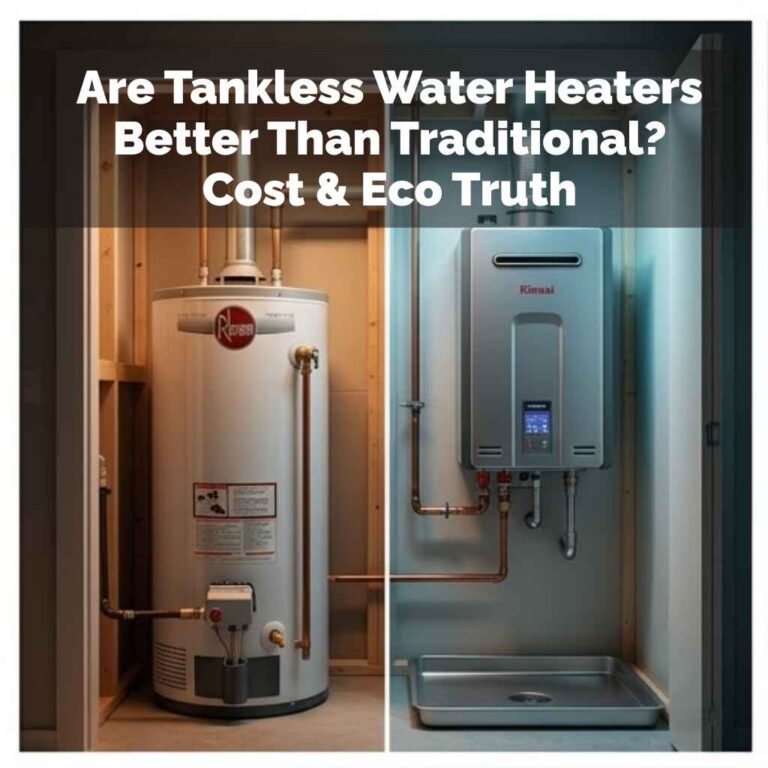
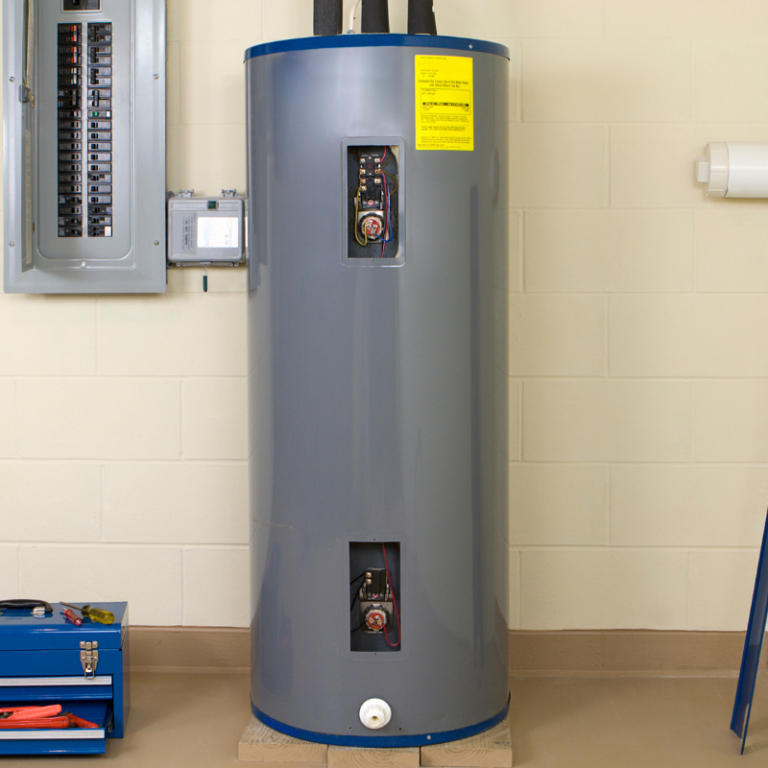
Many homes have a big tank that holds hot water. This is a traditional water heater. It keeps a large amount of water warm all the time.
This means hot water is ready when you turn on a faucet. But it uses energy to keep that water hot. It’s always on, even when you don’t need hot water.
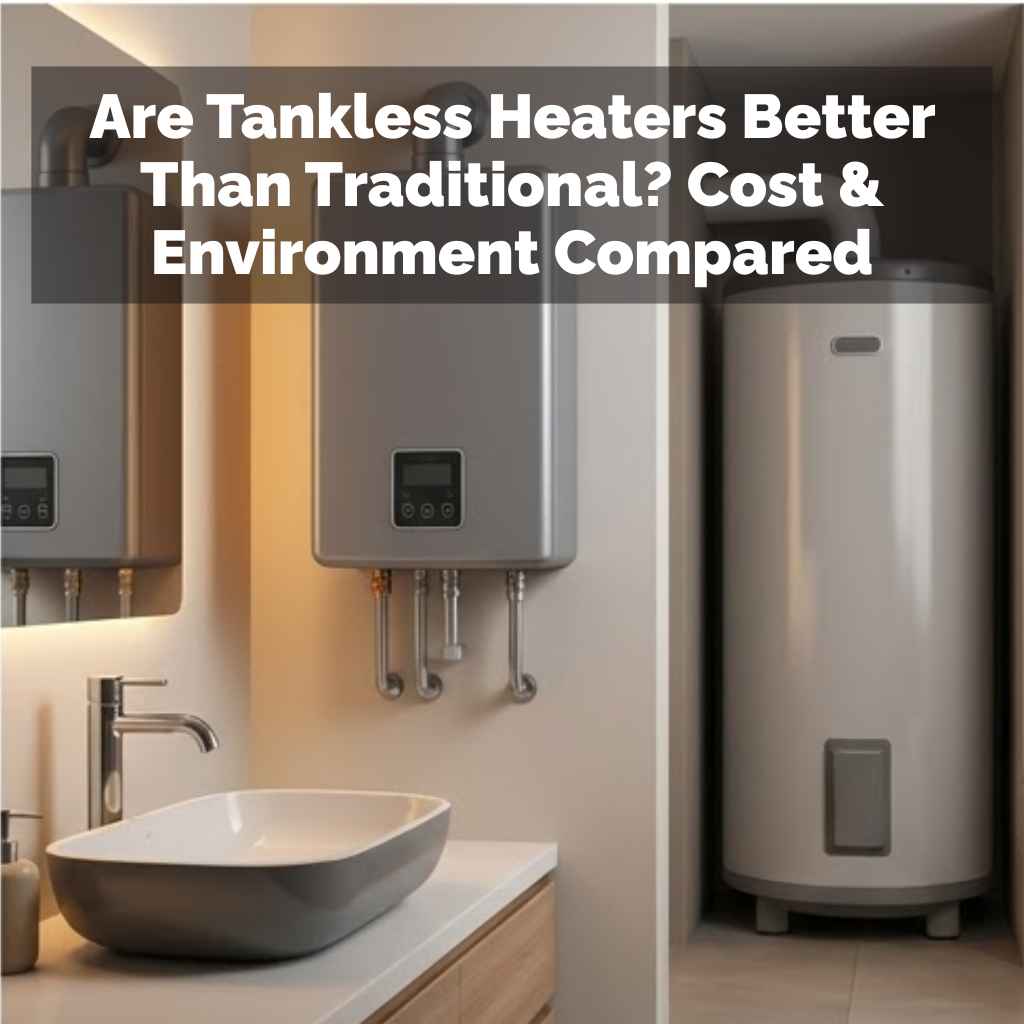
A tankless water heater is different. It heats water only when you need it. When you turn on a hot water tap, cold water flows through a heat exchanger.
A powerful burner heats the water very fast. Then, the hot water goes straight to your faucet. This is why they are also called “on-demand” water heaters.
The main idea is simple. Traditional heaters store and keep water hot. Tankless heaters make hot water as you use it.
This makes them work in a very different way. It changes how much energy they use. It also changes how they perform over time.
Let’s look at why this matters for your home.
My Experience: The Day My Old Tank Died
I remember one very cold Tuesday morning. I stumbled out of bed, ready for a hot shower. I turned the knob, and nothing but a trickle of icy water came out.
Panic! My old tank water heater, a faithful servant for over 15 years, had finally given up. I stood there, shivering, with no idea what to do next.
The thought of a cold shower was awful. But even worse was the thought of a huge repair bill or a complicated
Tank vs. Tankless: Quick Look
Traditional Tank:
- Stores hot water.
- Ready to go.
- Uses energy to keep water hot.
- Can run out of hot water.
Tankless Heater:
- Heats water on demand.
- Uses energy only when you need hot water.
- Provides endless hot water.
- Needs power and gas.
How They Work: The Inside Story
Let’s dive a bit deeper into how these work. A traditional tank heater has a big cylinder. This tank can hold anywhere from 20 to 80 gallons of water.
Inside the tank, a heating element or a burner heats the water. For electric heaters, it’s usually two heating elements. For gas heaters, it’s a burner at the bottom.
A thermostat controls the temperature. It turns on the heat when the water gets too cool. This means it’s constantly using power or gas to maintain that heat.
So, even if you are at work, your heater is using energy.
A tankless heater is quite different. Think of it as a high-tech heat exchanger. When you turn on a hot water tap, a sensor detects the water flow.
This signal tells the heater to start. A powerful gas burner or electric element heats a metal coil or a series of pipes. As cold water passes through these hot pipes, it gets heated up instantly.
The hotter the water flow you want, the more the heater has to work. The flow rate of hot water you can get depends on the heater’s power. You might notice less hot water flow if many faucets are on at once.
For example, a powerful tankless unit can heat about 5 to 10 gallons of water per minute. A larger family might need more. Some units can be “stacked” or linked together to handle high demand.
This is something to think about for busy households. It’s a key difference from the stored water in a tank, which can be depleted.
Key Parts of a Tankless System
Flow Sensor: Tells the heater when water is moving.
Heat Exchanger: Where the water gets hot.
Burner/Element: The part that creates the heat.
Thermostat: Controls the water temperature.
Cost Comparison: Upfront vs. Long-Term Savings
When you look at water heaters, cost is a big part. There are two main costs: buying it and running it. Let’s talk about upfront costs first.
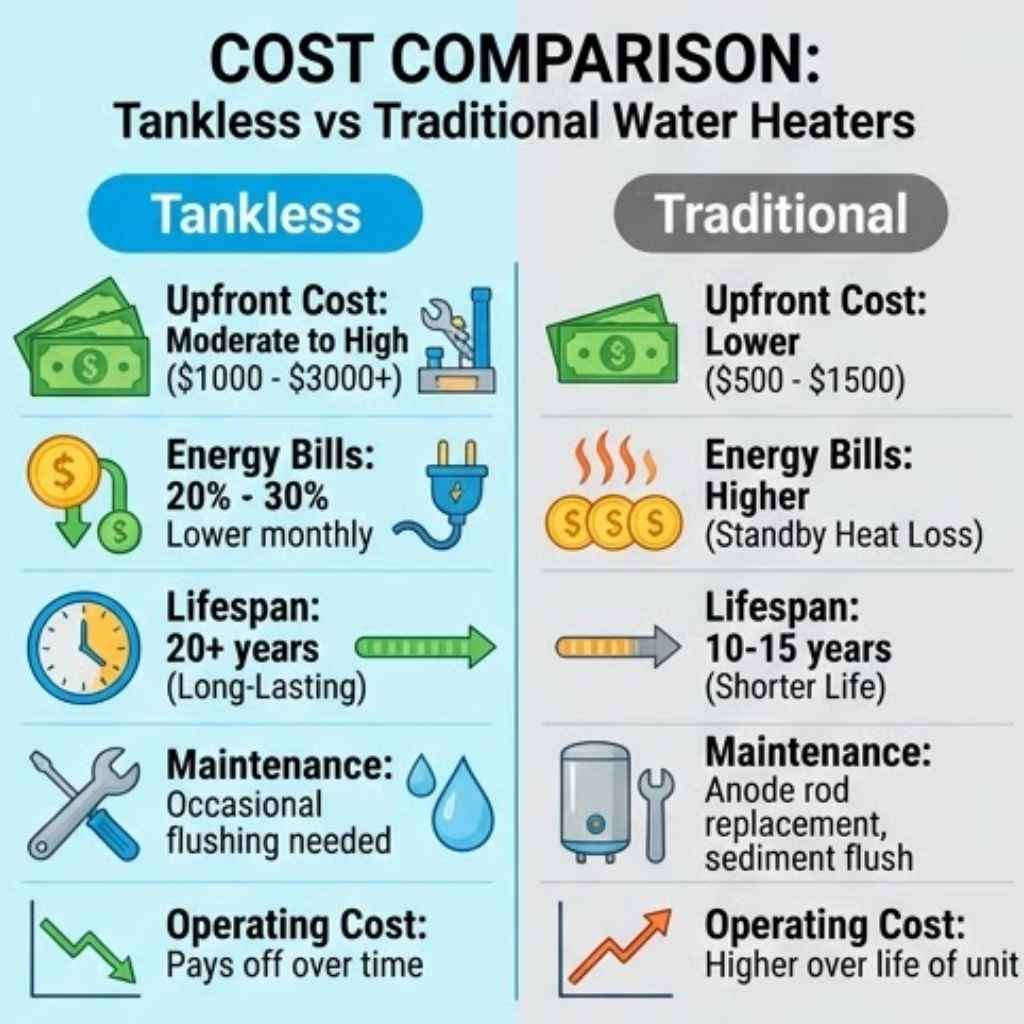
Tankless water heaters generally cost more to buy. They are more complex machines. You might pay $1,000 to $3,000 for a tankless unit.
Installation can also be more. Sometimes, you might need bigger gas lines or more electrical power. This adds to the total price.
A new traditional tank heater can cost $500 to $1,000 for the unit itself. Installation is usually simpler and cheaper.
But don’t stop there! You need to think about running costs. This is where tankless heaters can shine.
Because they only heat water when you need it, they use less energy. For gas tankless heaters, you can save 20% to 30% on your gas bill. Electric tankless heaters can save even more, maybe 30% to 50%.
This is because traditional heaters lose heat from the tank all day and night. This “standby loss” adds up. Over the life of the heater, these savings can make the tankless option cheaper.
Think about it like this: A tank heater is like a stove that is always on low heat. A tankless heater is like a stove you only turn on when you cook. The second one uses much less energy overall.
So, while the initial price is higher for tankless, the long-term savings can be significant. Many people find that the payback period is worth the investment.
Cost Breakdown
| Feature | Traditional Tank | Tankless |
| Unit Price | $500 – $1,000 | $1,000 – $3,000 |
| Installation | Lower | Higher (may need upgrades) |
| Energy Use (Gas) | Higher (standby loss) | Lower (20-30% savings) |
| Energy Use (Electric) | Higher (standby loss) | Lower (30-50% savings) |
| Lifespan | 10-15 years | 20+ years |
Environmental Impact: A Greener Choice?
Thinking about the planet is important for many people. Water heaters use a lot of energy. This energy often comes from fossil fuels.
So, how do tankless and traditional heaters compare for the environment?
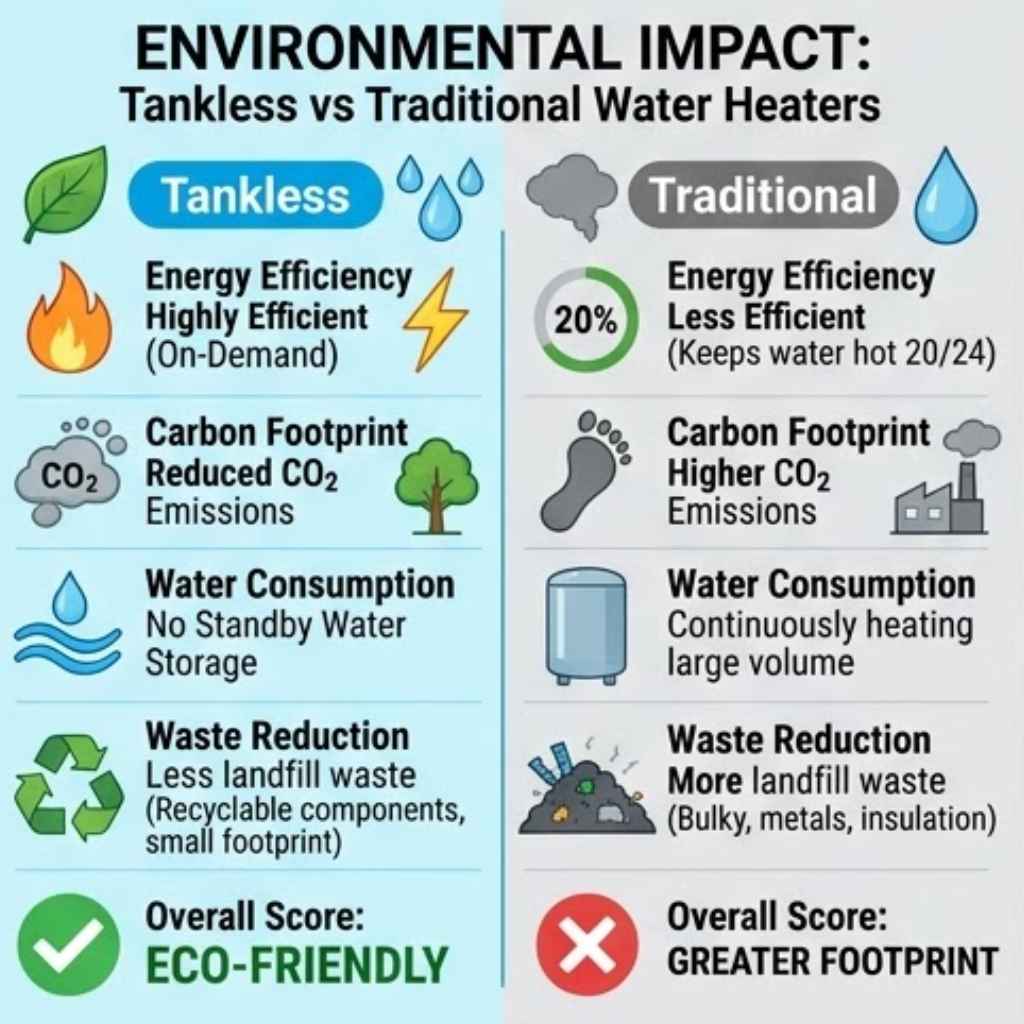
Tankless water heaters are generally seen as better for the environment. The main reason is their energy efficiency. By heating water only when needed, they reduce wasted energy.
Less energy use means fewer greenhouse gas emissions from power plants or burning gas. This is a big plus for reducing your carbon footprint.
Also, traditional tanks can sometimes develop leaks or burst. This can lead to water damage. Tankless heaters are usually more durable.
They also take up less space. This can mean less material used in manufacturing and less waste when they are eventually replaced. Some tankless models also have very low standby energy losses.
This further reduces their environmental impact.
However, there are some things to consider. The manufacturing of tankless units might use more complex materials. Also, the power source matters.
If your electricity comes from renewable sources, an electric tankless heater is very green. If it comes from coal, the benefit is less direct. But overall, the energy savings from tankless technology make it a more environmentally friendly option for most homes.
Performance and Hot Water Supply: Endless vs. Limited
One of the biggest benefits of a tankless water heater is the endless hot water. Imagine never running out of hot water during a busy morning. You can run the dishwasher, take a long shower, and wash clothes without interruption.
This is a huge advantage, especially for larger families or homes that use a lot of hot water at once.
Traditional tank heaters have a limit. Once the hot water in the tank is used up, you have to wait. The heater needs time to heat up a new batch of water.
This waiting period can be frustrating. If you have guests or a busy household, you might find yourself running out of hot water often. The size of the tank determines how much hot water you have.
A 40-gallon tank might be fine for a small family. A larger family might need a 60 or 80-gallon tank.
There’s also a slight delay with tankless heaters. When you turn on the hot water, it takes a few seconds for the hot water to reach the faucet. This is because the water has to travel through the pipes from the heater.
With a tank heater, the hot water is already close by. Some people also notice a change in water temperature. This can happen if you turn on another hot water tap suddenly.
The tankless heater has to adjust its heating power. Newer models are much better at handling these changes. But it’s a difference to be aware of.
Performance Checks
Tankless:
- Pro: Endless hot water.
- Pro: Consistent temperature (with newer models).
- Con: Slight delay at faucet.
- Con: Flow rate limits multiple uses.
Traditional:
- Pro: Hot water is quick at the tap.
- Pro: Can handle multiple uses at once (within tank limits).
- Con: Can run out of hot water.
- Con: Water temperature can drop.
Lifespan and Maintenance: Durability Matters
When you buy an appliance, you want it to last. Water heaters are a big purchase. How long do they typically last?
Traditional tank water heaters usually last about 10 to 15 years. This can depend on water quality and how well they are maintained. Over time, sediment can build up in the tank.
This sediment can cause corrosion and reduce efficiency. Regular flushing of the tank is recommended to extend its life.
Tankless water heaters tend to last much longer. Many can last 20 years or more. The main reason for this is that they are not constantly holding water.
This means less corrosion from sitting water and sediment. However, they still need maintenance. In areas with hard water, mineral buildup can occur in the heat exchanger.
This can reduce efficiency and even damage the unit over time.
Manufacturers usually recommend an annual check-up or descaling service for tankless heaters. This involves flushing the unit with a special solution. This removes mineral deposits.
This maintenance is crucial for keeping the heater working well and for reaching its full lifespan. So, while tankless units are more durable, they do require a different kind of care. It’s not just about forgetting about them.
Maintenance Snapshot
Traditional Tank:
- Flush tank annually to remove sediment.
- Check for leaks.
- Anode rod replacement (every few years).
Tankless:
- Annual descaling (especially in hard water areas).
- Check vents and gas lines.
- Inspect for leaks.
Space and Installation: What Fits Your Home?
One of the most visible differences is size. Traditional water heaters are bulky tanks. They often sit in a basement, garage, or utility closet.
They take up a fair amount of floor space. This can be an issue in smaller homes or apartments where space is limited. You need enough room to stand the tank up and access it for maintenance.
Tankless water heaters are much more compact. They are often about the size of a small suitcase. They mount directly onto a wall.
This frees up valuable floor space. This is a big advantage for many homeowners. You can install them in smaller closets or even on an exterior wall.
This can also make them less of an eyesore.
However, installation can be more complex for tankless units. Gas tankless heaters often require larger gas pipes than traditional ones. This is because they need more gas to heat water quickly.
They also need a different type of vent. Sometimes, you need a special vent that goes through the wall. Electric tankless heaters need a lot of electrical power.
You might need a dedicated circuit with a higher amperage. This can mean electrical upgrades, which add to the cost. So, while they save space, they might require more work to get them set up.
Real-World Scenarios: When Does Each Shine?
Let’s think about different situations. For a small apartment or a single person, a small traditional tank heater might be perfectly fine. The energy cost of keeping 20-30 gallons warm might not be too high.
The upfront cost is lower, and the installation is simple. You rarely run out of hot water for one person’s needs.
For a family of four or more, a tankless heater often makes more sense. The ability to never run out of hot water is a huge benefit. Think about mornings when everyone needs to shower, then the dishwasher runs, and laundry is done.
A tankless system can handle this better. The long-term energy savings also add up quickly for higher water usage.
What about in colder climates? Water entering the house is colder in winter. This means a water heater has to work harder.
Tankless heaters need to be powerful enough to heat very cold water to your desired temperature. You might need a larger or more powerful model in a cold climate. Traditional heaters also work harder in cold climates.
But their ability to provide a steady amount of hot water is based on the tank size, not just the incoming water temperature.
Consider homes with high water pressure. Both types of heaters can be affected by very high water pressure. It’s important to have a pressure-reducing valve installed if needed.
This protects the plumbing and the water heater itself. For older homes with old pipes, retrofitting a tankless system might be more complex due to gas line or electrical needs. A tank replacement might be simpler.
Best Fit Scenarios
Traditional Tank is Great For:
- Small families or single people.
- Budget-conscious upfront.
- Homes with limited electrical or gas upgrades possible.
- Rental properties where longevity is less critical.
Tankless Heater Shines With:
- Large families with high hot water demand.
- Saving money on energy bills over time.
- Homes where space is a concern.
- Those looking for a longer-lasting appliance.
- Environmental consciousness.
What This Means For You: Making the Right Choice
So, are tankless heaters better than traditional ones? The answer isn’t a simple yes or no. It really depends on your specific needs and your home.
If your top priority is saving energy and having an endless supply of hot water, and you have the budget for the initial cost, a tankless heater is likely a great choice.
If you’re on a tighter budget upfront, or if your home has limitations on gas lines or electrical capacity, a traditional tank heater might be the more practical option. They are simpler to install and cheaper to buy. You can still get a very efficient tank heater.
Energy Star certified models use less energy than older ones.
It’s also worth considering the lifespan. A tankless unit can last twice as long as a tank. So, over 20 years, you might end up replacing a tank heater twice, but only buy one tankless unit.
When you factor in all costs, including energy bills and replacement costs, the tankless option can be cheaper in the long run.
Before you decide, talk to a qualified plumber. They can assess your home’s needs. They can tell you what kind of installation would be best and what the total costs would be.
They can also explain any local rebates or incentives for energy-efficient water heaters. This professional advice is invaluable.
Quick Tips for Water Heater Happiness
No matter which type of heater you choose, there are ways to make it work better for you and your home. Always check the water heater’s energy efficiency rating. Look for Energy Star certified models.
They meet strict standards set by the U.S. Environmental Protection Agency.
Set your water heater to the right temperature. For most homes, 120°F (49°C) is hot enough. It’s also safer, reducing the risk of scalding.
Higher temperatures use more energy and increase the risk of burns. For tankless heaters, make sure the flow rate meets your needs. If you have many bathrooms or high-demand appliances, you might need a more powerful unit.
Regular maintenance is key. For tank heaters, flush out sediment annually. For tankless heaters, get them descaled yearly, especially if you have hard water.
This keeps them running efficiently and prevents costly repairs. Don’t ignore strange noises or leaks. Address problems early.
Water Heater Maintenance Checklist
Annual Checks:
- Test the temperature and pressure relief valve.
- Flush the tank (traditional) or descale (tankless).
- Inspect for leaks or corrosion.
- Check the venting system (gas models).
As Needed:
- Clean air filters.
- Replace the anode rod (traditional tanks).
Frequently Asked Questions
Can a tankless water heater really run out of hot water?
Yes, but it’s rare and usually due to high demand. If you try to run too many hot water appliances at the exact same time (like multiple showers, dishwasher, and washing machine), the heater might not be able to keep up with the demand. This is called exceeding its “flow rate.” A properly sized tankless unit for your home should prevent this for normal daily use.
Running out of hot water is much more common with traditional tank heaters when the stored hot water is depleted.
How much more does a tankless water heater cost to install than a traditional one?
Installation costs can vary widely. However, tankless heaters often cost more to install. This is because they might need upgrades to gas lines (to supply more fuel) or electrical circuits (for electric models).
They also often need special venting. A simple tank replacement might cost $500 to $1,000 for installation. A tankless installation could range from $1,000 to $4,000 or more, depending on the complexity of the job and the unit chosen.
Getting quotes from several plumbers is a good idea.
What is the average lifespan of a tankless water heater?
Tankless water heaters are designed to last much longer than traditional tank heaters. Most manufacturers estimate a lifespan of 20 years or more. With proper maintenance, such as annual descaling in areas with hard water, they can even exceed this.
Traditional tank heaters typically last between 10 to 15 years before they need replacement.
Do tankless water heaters use a lot of electricity?
Electric tankless water heaters do use a significant amount of electricity when they are actively heating water. This is because they need a lot of power to heat water on demand. However, they only use this power when hot water is being used.
This means their overall energy consumption for the year can be much lower than an electric tank heater that constantly keeps water hot. For gas tankless heaters, the primary fuel is natural gas or propane, not electricity, though they do use a small amount of electricity for controls and fans.
Is it worth switching to a tankless water heater if my old tank is still working?
This depends on your priorities. If you’re looking to reduce your energy bills significantly, save space, and have an endless supply of hot water, it can be worth it. Tankless heaters are more energy-efficient and last longer, which can offset the higher initial cost over time.
If your main concern is the lowest possible upfront cost and your current tank is still functional, sticking with it might be fine for now. Consider your home’s water usage and your long-term budget.
How does hard water affect tankless water heaters?
Hard water contains a lot of minerals, like calcium and magnesium. These minerals can build up inside the heat exchanger of a tankless water heater. This buildup, known as scale, can clog the unit, reduce its efficiency, and even cause it to overheat or fail.
This is why regular descaling maintenance, typically once a year, is very important for tankless heaters in areas with hard water. Most manufacturers recommend it to maintain performance and lifespan.
Conclusion: Your Hot Water Future
Choosing a water heater is a big decision for your home. Both tankless and traditional heaters have their place. Understand your hot water needs, your budget, and your home’s setup.
Tankless offers efficiency and endless hot water. Traditional offers lower upfront costs and simplicity. By looking at the costs, performance, and environmental impact, you can make the best choice for your family.
Your decision impacts comfort, your wallet, and the planet.
Sponsored / affiliate links. As an Amazon Associate I earn from qualifying purchases. I may earn additional commission from eligible campaigns.