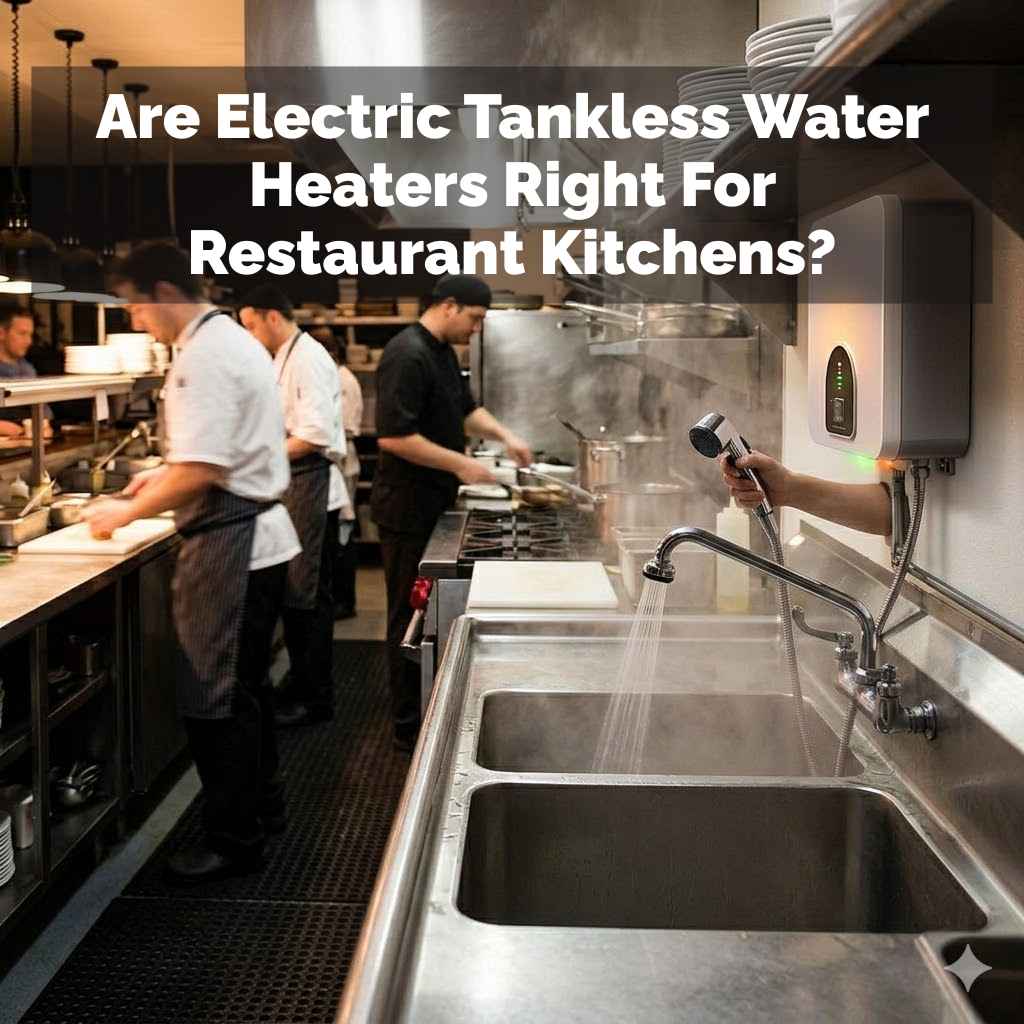
Are Electric Tankless Water Heaters Right For Restaurant Kitchens?
Imagine a busy dinner rush. Orders are flying. Pots are boiling.
And then, the hot water sputters out. That’s a kitchen nightmare. Restaurants need a water heater that can keep up.
Electric tankless heaters promise endless hot water. But can they handle the heat of a commercial kitchen?
Many restaurant owners hear about the benefits of tankless heaters. They hear they save energy. They hear they save space.
And they hear they offer hot water on demand. This sounds great for a busy spot. But there are important details to know.
We need to look at how they work. We need to see how they perform in real, tough settings. This guide will help you understand if electric tankless water heaters are the right choice for your kitchen.
The primary goal for any restaurant kitchen is consistent, reliable hot water. Electric tankless water heaters offer an on-demand solution, but their capacity and electrical needs must match the high flow rates and continuous demand typical of commercial food service environments.
What is an Electric Tankless Water Heater?
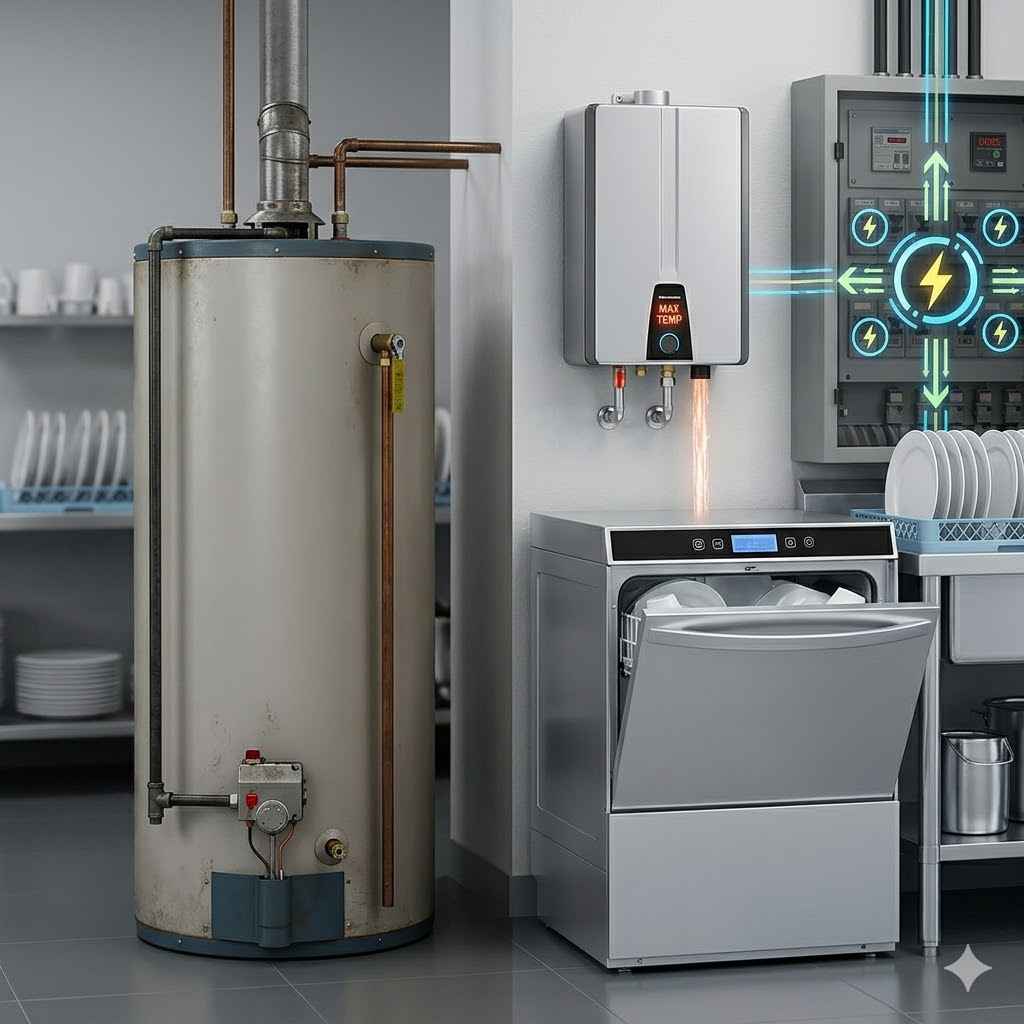
Think of a regular water heater. It has a big tank. It heats water and stores it.
Then it waits to be used. An electric tankless heater is different. It has no tank.
When you turn on a hot water tap, a heating element kicks in. It heats the water as it flows through. This means you get hot water right away.
And you get it as long as you need it. It’s “on-demand” hot water.
These heaters use powerful electric elements. They heat water very fast. They are often smaller than tank heaters.
This saves space. It’s a key benefit for many homes. For businesses, the idea of “endless” hot water is very appealing.
No more running out during peak times. That’s the promise.
They work by passing cold water over high-power electric coils. These coils get very hot. The water gets hot as it rushes past.
The flow rate matters a lot. The faster the water flows, the less time it has to heat up. So, the heater must be strong enough.
It needs to heat the water to the right temperature. It must do this even with fast flow.
Why Are Restaurants So Demanding?
A restaurant kitchen is a unique place. It’s not like a home. It’s much more intense.
Let’s break down why. First, there’s the sheer volume of water use. Think about dishwashing.
You have big pots, pans, plates, and utensils. Many sinks might be running at once. Some might have hot water.
Others might need it soon.
Then there’s cooking. Steamers use a lot of hot water. Prep stations need it for washing vegetables.
Handwashing sinks are used constantly by staff. And cleaning up at the end of the night takes a lot of hot water too. This is not just a trickle of hot water.
It’s a flood, often all at once.
The temperature needs to be right too. Food safety is key. Many cleaning tasks require hot water.
It helps cut through grease. It kills germs better. So, the water needs to be hot enough, consistently.
A dip in temperature can cause problems. It can slow down work. It can make cleaning less effective.
This is why restaurants have very high demands.
The Experience: A Real Kitchen Challenge
I remember visiting a friend’s busy diner. It was a Saturday lunch. The place was packed.
The kitchen was a whirlwind. Plates were stacked high for washing. The dishwasher was running non-stop.
Suddenly, the dishwashing station helper yelled out. “The hot water’s gone cold!” Panic set in for a moment. They couldn’t wash the plates fast enough.
Orders started backing up. It was a mess.
They had a big tank heater. It worked well most of the time. But on days like that, it just couldn’t keep up.
The tank would empty. Then it would take time to reheat. That downtime was costly.
It affected service. It made the staff stressed. That single moment showed me how vital a reliable hot water system is.
It’s not just about comfort. It’s about business. It’s about keeping things moving smoothly.
This experience made me look closer at water heating options for places like this. I saw how a simple failure could ripple through everything. That’s when the idea of “endless” hot water from tankless systems really grabbed my attention.
But I also knew that simply installing one wasn’t enough. It had to be the right one.
How Electric Tankless Heaters Perform in Commercial Settings
Electric tankless heaters are great for many homes. A single unit can serve a bathroom or a small sink. But a restaurant kitchen is different.
The biggest challenge is flow rate. Flow rate is how much water comes out of a tap. Think about a shower.
It uses a certain amount of water per minute. A faucet uses less. A commercial dishwasher might use a lot.
If you have several things needing hot water at once, the total flow rate goes up. An electric tankless heater has a limit. It can only heat so much water at once.
If the demand is higher than its limit, the water won’t get as hot as you want. It might even turn lukewarm. This is a big problem for a kitchen.
For example, a standard electric tankless might provide 3-5 gallons per minute (GPM). A busy restaurant might need 10 GPM or more. This could be from a commercial dishwasher and a sink running together.
So, for a restaurant, you often need multiple large units. Or one very, very powerful unit. These need a lot of electricity.
That’s another factor to consider.
Electric Tankless: Key Performance Factors
Flow Rate (GPM): How many gallons of hot water the unit can deliver per minute. Commercial kitchens need high GPM. Residential units are often too low.
Temperature Rise: How much the heater can raise the water temperature. This depends on incoming water temp and desired output temp.
Electrical Needs: High-power units require substantial electrical service. This means checking your building’s capacity.
Simultaneous Use: Can it handle multiple hot water demands at once? This is crucial for kitchens.
The Power Problem: Electricity Demands
This is a major hurdle for electric tankless heaters in restaurants. They use a lot of electricity. To heat water quickly, they need powerful heating elements.
These elements draw a lot of amperage. Think about your home’s electric oven or dryer. They have high amperage needs.
Tankless heaters for a whole house, or a commercial kitchen, need even more.
You might need a dedicated high-amperage circuit. Or even a new electrical panel. This can be a significant cost.
It’s not just the heater itself. It’s the upgrades to your building’s electrical system. You must consult with an electrician.
They will assess your current setup. They will tell you what’s possible. And what it will cost.
Many older buildings, or smaller restaurants, may not have the electrical capacity. Upgrading can be very expensive. Sometimes more expensive than the heater itself.
This is a point where gas tankless heaters might be considered. They often have lower electrical needs. But they have their own set of pros and cons.
Electrical Load Considerations
Amperage: The amount of electrical current the heater uses. Higher GPM and temperature rise mean higher amperage.
Voltage: Most units use 240V. Ensure your service can handle this.
Dedicated Circuits: High-power units usually need their own circuit breaker. They can’t share with other appliances.
Professional Assessment: Always get an electrician to check your building’s capacity before purchasing.
Space Saving vs. Capacity Needs
One of the big selling points for tankless heaters is their small size. They are compact. They can fit in tight spots.
This is a dream for kitchens with limited space. A big tank heater takes up a lot of floor area. Replacing it with a small wall-mounted unit can free up valuable room.
However, the “small size” comes with a trade-off. As we discussed, heating a lot of water fast requires powerful elements. These elements need space inside the unit.
And the unit needs to be robust. So, while a tankless heater is smaller than a tank, a high-capacity commercial electric tankless unit might still be a decent size. It might not be as tiny as a home bathroom unit.
You might need multiple units. These would be placed strategically. One near the dishwashing station.
Another near prep areas. This distributes the load. It also means you have more than one unit to maintain.
But it ensures you have enough hot water where and when you need it. The space-saving benefit is real, but the size of the unit still depends on its power.
Installation: What to Expect
Installing an electric tankless water heater is not a simple DIY job, especially for a commercial setting. It requires specialized knowledge. First, the plumbing needs to be right.
You need to connect the cold water inlet and the hot water outlet. This is usually straightforward for a plumber.
The electrical work is the big part. As mentioned, these units draw a lot of power. You need thick gauge wiring.
You need a high-amperage breaker. You might need a whole new electrical panel or service upgrade. This is where an experienced electrician is essential.
They understand the codes and safety requirements.
For a restaurant, safety is paramount. A faulty electrical installation can be a fire hazard. It can also lead to the unit not working correctly.
Or tripping breakers constantly. This means downtime for your hot water. Which means downtime for your business.
It’s worth paying for expert installation. It’s an investment in reliability.
The location of the unit also matters. It should be accessible for maintenance. It should be protected from splashes or damage.
Some units are designed for wall mounting. Others might sit on a shelf. Your installer will help you find the best spot.
Real-World Scenarios & Use Cases
Let’s look at where electric tankless heaters might actually work for a restaurant. Think about a small cafe. Maybe it has a single dishwasher.
It doesn’t have huge peak demands. It might only serve breakfast and lunch. In this case, a properly sized, high-output unit could be a good fit.
It would save space and provide enough hot water.
Another scenario: A restaurant that uses its hot water in specific zones. For example, a dedicated dishwashing station with its own powerful system. And then separate handwashing sinks.
You could install a dedicated electric tankless for the dishwashing. It would need to be a commercial-grade, high-flow model. Then, smaller units could serve the other sinks.
However, for a large, busy, full-service restaurant with multiple cooking stations and a high-volume dishwashing operation, a single electric tankless system is rarely enough. You would likely need several very large units. Or a combination of systems.
Some restaurants might opt for a hybrid system. Maybe a small tank heater to pre-heat water. Then an electric tankless to boost the temperature.
This can reduce the electrical load on the tankless unit.
Use Case Spotlight: The Busy Dish Pit
Scenario: Commercial dishwasher running continuously during peak hours.
Need: High flow rate (e.g., 7-10 GPM) and consistent temperature rise.
Electric Tankless Solution: Requires a heavy-duty commercial unit or multiple powerful units. Significant electrical upgrades are likely necessary. Gas may offer a more robust solution for this specific high-demand task.
Gas vs. Electric Tankless for Restaurants
It’s important to compare electric with gas tankless heaters. Many restaurants already have gas lines. If so, a gas tankless heater is often a more practical choice for high-demand applications.
Gas units typically have lower upfront costs for the unit itself. They also tend to have lower operating costs in many regions.
The main advantage of gas is its power. Gas burners can often provide higher flow rates and temperature rises more easily than electric elements. This means they can handle simultaneous demands better.
They also have lower electrical demands. They mainly need electricity for controls and a fan. This often means less need for major electrical upgrades.
However, gas units have their own needs. They require proper ventilation. This is crucial for safety.
You need a flue or vent pipe. This adds to installation complexity and cost. There’s also the ongoing cost of natural gas or propane.
And maintenance might involve cleaning burners and checking ventilation.
So, the choice often comes down to your existing infrastructure. Do you have a strong electrical service? Or do you have a gas line readily available?
What are your local energy costs? These factors will heavily influence the decision.
What This Means for Your Restaurant
For many restaurant kitchens, purely electric tankless systems might not be the ideal primary solution. The high electrical demands are often a major barrier. Especially in older buildings or those not built with heavy electrical loads in mind.
The cost of electrical upgrades can be prohibitive.
However, this doesn’t mean electric tankless has no place. They can be excellent for specific, lower-demand applications within a restaurant. Like a single handwashing sink in a remote prep area.
Or a coffee station. Or a small bar area where only one or two taps are used at a time.
If you’re set on electric, you must do your homework. Get quotes from electricians. Understand the total cost of installation, including upgrades.
Talk to manufacturers about commercial-grade units. They are built for higher demands.
It’s about matching the technology to the need. Don’t assume “tankless” means one size fits all. Especially not for a restaurant.
When is an Electric Tankless Water Heater “Normal” for a Restaurant?
An electric tankless water heater is “normal” for a restaurant in specific, limited situations. Think of it as a supplementary system. Or for very small establishments with very low hot water demand.
Normal uses include:
- A single handwashing sink in a food prep area.
- A sink at a coffee bar or beverage station.
- A small server station for warming plates.
- A restroom handwashing sink.
- Very small cafes or food trucks with minimal dishwashing needs.
In these cases, a properly sized, single-point-of-use electric tankless unit works well. It provides instant hot water where it’s needed. And it avoids the cost of running hot water lines from a central heater.
When to Worry or Seek Expert Advice
You should worry if you’re considering an electric tankless water heater for your main dishwashing operations. Or for multiple high-demand sinks. Especially if you haven’t had an electrician assess your building’s electrical capacity.
Signs you should pause and seek advice:
- Your existing electrical panel is already full or outdated.
- Your building’s total power service is limited.
- You anticipate frequent simultaneous use of hot water (e.g., dishwasher + sink + steamer).
- You are looking for a single unit to serve your entire kitchen’s hot water needs.
- You are unfamiliar with electrical work and codes.
A qualified commercial plumber and an electrician are your best resources. They can assess your specific needs and your building’s capabilities. They can tell you if electric tankless is feasible and cost-effective, or if other solutions are better.
Quick Tips for Consideration
If you are exploring electric tankless for any part of your restaurant, keep these tips in mind:
- Size Matters: Commercial-grade units are different from residential ones. Always look for units designed for commercial use.
- GPM is King: Calculate your peak hot water demand in gallons per minute (GPM). This is the most critical number.
- Electrical Audit: Get a professional electrical assessment before buying. Understand the costs of any necessary upgrades.
- Ventilation is Key (for gas, but good practice for any unit): Ensure your chosen unit has proper ventilation requirements met.
- Multiple Units: For higher demand, consider multiple smaller units installed strategically rather than one giant one. This can be more reliable and easier to manage if one fails.
- Water Temperature: Know your incoming water temperature. This affects how much the heater needs to raise it, impacting its performance.
- Warranty & Support: Commercial units should have robust warranties. Ensure the manufacturer offers good support for commercial clients.

Frequently Asked Questions
Can one electric tankless water heater power my entire restaurant kitchen?
For most busy restaurants, a single electric tankless unit is unlikely to meet the high, simultaneous demand for hot water. You would typically need multiple high-capacity units or a different heating solution. The electrical requirements for such powerful units can also be prohibitive.
What is the typical electrical requirement for a commercial electric tankless heater?
Commercial electric tankless heaters are power-hungry. They often require 240V and can draw 80 to 150 amps or more, depending on their capacity. This usually necessitates dedicated, heavy-gauge wiring and a substantial circuit breaker, often requiring significant electrical upgrades to your building’s service.
How does an electric tankless heater handle grease and grime in a restaurant setting?
While the heating elements themselves are not directly exposed to grease, the unit is part of the overall kitchen environment. Regular maintenance is important. Cleaning the exterior and ensuring proper water flow can prevent issues.
However, the water it heats is used for cleaning grease, so the unit itself should be kept clean from external kitchen buildup.
Are electric tankless heaters more expensive to run than gas tankless heaters in a restaurant?
This depends heavily on local energy prices. In areas where electricity is significantly cheaper than natural gas or propane, electric can be more cost-effective to run. However, gas units often provide higher flow rates more easily, and the cost of electricity for high-draw electric units can quickly outweigh savings on unit cost or installation.
What if my incoming water is very cold in winter? Can an electric tankless keep up?
If your incoming water is very cold, the electric tankless heater has to work harder and use more power to reach your desired hot water temperature. This reduces the maximum flow rate it can provide. For colder climates, you need a unit with a higher temperature rise capability or consider that its output will be lower in winter months.
Can I install an electric tankless heater myself in my restaurant?
No, this is not recommended. Installing commercial-grade electric tankless water heaters involves complex plumbing and significant electrical work. Improper installation can be dangerous, lead to equipment failure, and void warranties.
Always hire qualified commercial plumbers and electricians.
The Bottom Line: Is It a Fit?
Electric tankless water heaters offer compelling benefits like space-saving and on-demand hot water. For a restaurant kitchen, however, these benefits often come with significant challenges. The high electrical demands and the need for substantial electrical upgrades can make them less practical than gas alternatives for primary heating needs.
They can be a great solution for specific, lower-demand applications within a restaurant. Think of those single sinks that need hot water instantly. But for the heart of a busy kitchen, always consult with professionals.
They will help you find the most reliable and cost-effective way to keep your kitchen running hot.
Sponsored / affiliate links. As an Amazon Associate I earn from qualifying purchases. I may earn additional commission from eligible campaigns.
 Ddayup Smart Toilet, Electric Tankless Toilet with Bidet Built in & Dryer, Auto Open/Close, Instant Warm Water, Elongated Heated Seat, Auto Flush (Matte Black, Oval Egg Shaped) (Black3)
 Water Flow Control Shut Off Valve with Brass Adjustable Hand Level Water Pressure Regulator for Hand Held Shower Head & Bidet Sprayer, Brushed Nickel Water Saver G1/2