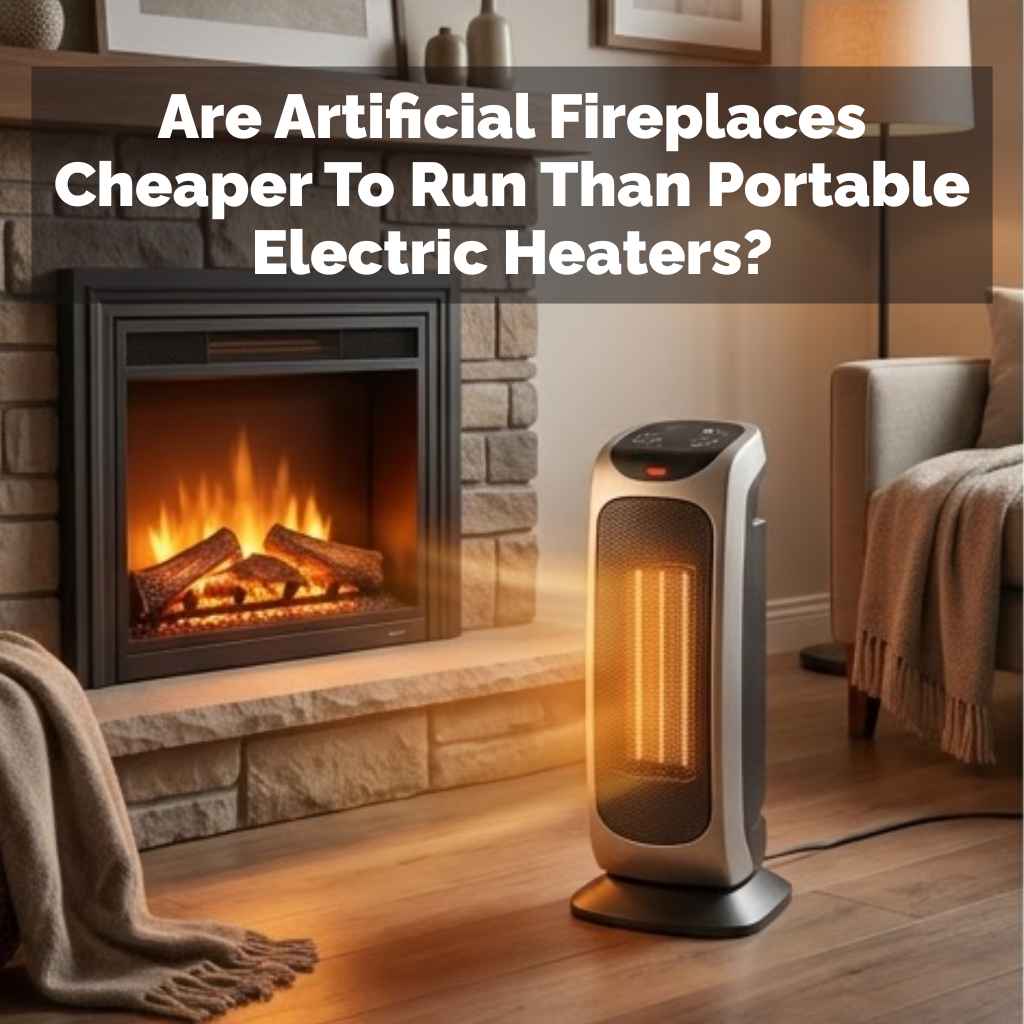
Are Artificial Fireplaces Cheaper To Run Than Portable Electric Heaters?
Artificial fireplaces are often not cheaper to run than portable electric heaters. While they offer aesthetic appeal, their heating efficiency and energy consumption can be higher. Portable electric heaters are generally more direct and cost-effective for supplemental heating. Costs depend on specific models, energy rates, and usage patterns.
Understanding Artificial Fireplaces
Artificial fi
The heating part of an electric fireplace works like a standard electric heater. It uses a resistance coil to generate heat. A fan then pushes this warm air out.
The wattage of these heaters can vary. Many are between 1000 and 1500 watts. This is similar to many portable electric heaters.
The main difference is the overall unit. An electric fireplace is a piece of furniture. It’s meant to be a focal point.
A portable heater is usually smaller and more functional.
The cost to run one depends on a few things. First is the wattage. Higher wattage means more power used.
Second is how long you run it. The longer it’s on, the more energy it consumes. Finally, your local electricity rates play a big role.
Electricity prices change by region and by time of day. So, a 1500-watt heater running for 3 hours will cost a certain amount. This amount changes based on your specific utility company’s rates.
Portable Electric Heaters: A Closer Look
Portable electric heaters are designed for one primary purpose: to heat a space. They come in many shapes and sizes. Some are small ceramic heaters.
Others are larger oil-filled radiators. There are also fan-forced heaters and radiant heaters. Each type works a bit differently.
But they all use electricity to create warmth.
Most portable electric heaters also use resistance heating. Like electric fireplaces, they have heating elements that get hot. A fan, or natural convection, then moves the heat into the room.
Common wattages for these units are also around 1000 to 1500 watts. Some smaller ones might be lower. Some larger ones might be higher.
But the 1500-watt mark is a common maximum for standard household outlets.
The advantage of portable heaters is their directness. They are built for efficient heating. They don’t have the added components of a decorative fireplace.
This means their energy is focused on heat production. They are often more energy-efficient per watt. This is because they don’t need to power elaborate flame effects or large decorative casings.
They are often thermostat-controlled. This helps maintain a set temperature and avoid wasting energy.
Running a portable electric heater is calculated the same way. You look at wattage, usage time, and your electricity cost. A 1500-watt heater will use 1.5 kilowatts of power.
If you run it for an hour, it uses 1.5 kilowatt-hours (kWh). Multiply this by your local price per kWh to get the cost.
Cost Comparison: Wattage and Usage
Let’s get down to the numbers. The most important factor in running costs is the power a device uses. This is measured in watts (W).
A higher wattage means it uses more electricity. For heating, this often translates to more heat produced. But it also means a higher running cost.
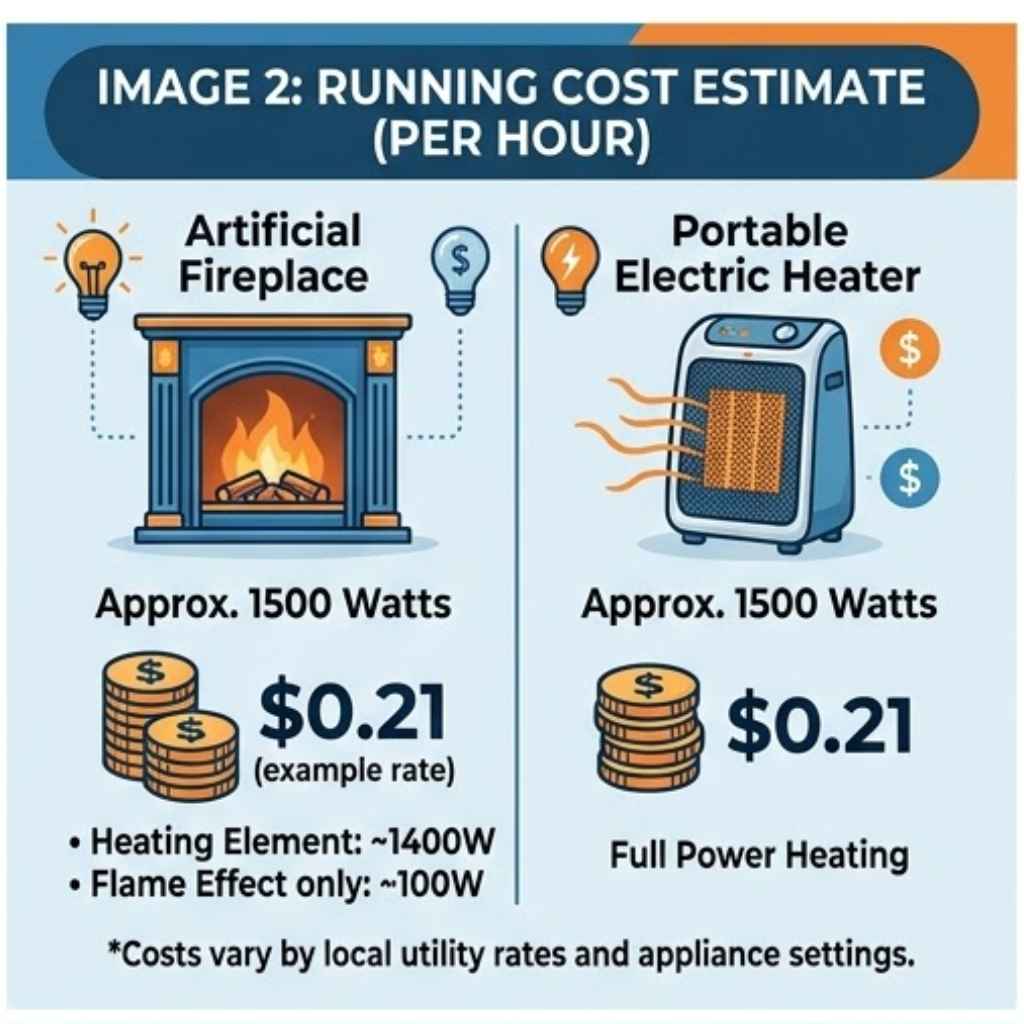
Many artificial fireplaces have a heating output of around 1000 to 1500 watts. Some might offer a lower heat setting, like 750 watts. Portable electric heaters also commonly range from 750 to 1500 watts.
So, on their highest heat setting, they often use the same amount of power. For example, a 1500-watt electric fireplace heating a room uses the same electricity as a 1500-watt portable heater.
The key difference often lies in how effectively they deliver that heat. An electric fi
Let’s imagine you have a small room. You want to add some warmth. You have a 1500-watt electric fi
However, if the portable heater warms the room faster or more effectively, you might be able to turn it off sooner. This is where the real savings can happen. Using less time means less energy used.
This is a crucial point many people overlook when comparing. It’s not just about the power draw, but the duration of use.
Example:
1000-watt heater for 1 hour = 1 kWh
1500-watt heater for 1 hour = 1.5 kWh
If electricity costs $0.15 per kWh, then:
1000-watt heater for 1 hour costs $0.15
1500-watt heater for 1 hour costs $0.225
So, choosing a lower wattage heater or one with a good thermostat is important for saving money. Always check the wattage of any heating appliance before buying. It’s usually printed on the unit itself or in the user manual.
Energy Use Breakdown
Electric Fireplace Heater:
- Wattage: Typically 1000W – 1500W (sometimes with a 750W low setting)
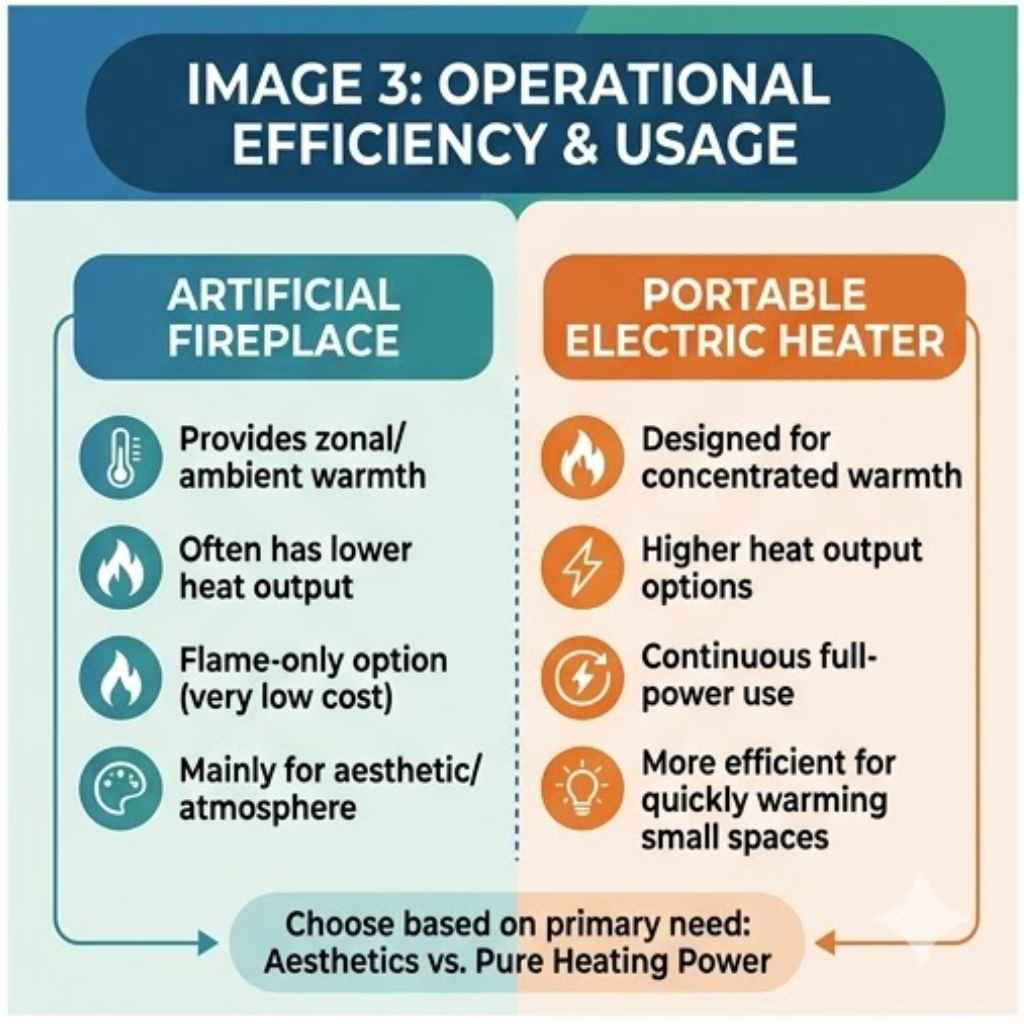
- Function: Provides heat and flame effect. Heating is a secondary feature for many.
- Efficiency: Can be less efficient for pure heating due to design.
Portable Electric Heater:
- Wattage: Typically 750W – 1500W
- Function: Primarily designed for heating a space directly.
- Efficiency: Generally more efficient for heating due to focused design.
The Role of Thermostats and Efficiency
One of the biggest factors in controlling heating costs is how smart the appliance is. This is where thermostats come in. Many modern heaters, both portable ones and electric fi
A good thermostat can save a lot of money. If you set your portable heater to 70 degrees Fahrenheit, it will heat the room until it reaches that temperature. Then, it will turn off.
When the temperature drops, it will turn back on. This prevents overheating and wasted energy. It’s much more efficient than just leaving a heater on high all day.
Some older or very basic models might not have this feature. They might just have an “on” setting and perhaps a fan speed control. If you have one of these, you have to manually turn it off.
This is where costs can add up quickly. You might overheat the room and then have to turn it off, only for it to get cold again later.
When comparing artificial fi
Beyond thermostats, consider the overall design efficiency. Some portable heaters are better at distributing heat. For example, radiant heaters heat objects directly, which can feel warmer at a lower air temperature.
Oil-filled radiators release heat slowly and steadily, providing a more consistent warmth.
Electric fireplaces, while often attractive, may have design elements that slightly reduce heating efficiency. The air intake and outflow might be less optimized. The heat might be absorbed by the decorative mantel or surround.
While the difference might not be huge, over extended periods, it can add up. For pure, cost-effective heating, a dedicated portable heater is often the winner.
Thermostat Tip
Why a Thermostat Matters:
- Saves Energy: Prevents overheating by cycling the heater on and off.
- Maintains Comfort: Keeps the room at your desired temperature.
- Reduces Wear: Less constant running can extend the life of the appliance.
Look for: Digital thermostats are often more precise than analog ones.
Ambiance vs. Pure Heat: What’s Your Goal?
This is perhaps the biggest deciding factor for many. Are you looking for a beautiful focal point for your living room? Or do you just need to take the chill off a specific room?
Your primary goal will heavily influence which option is “cheaper” in the long run.
If you love the idea of a cozy fireplace glow, an artificial fireplace offers that. You get the visual appeal of flickering flames. You get the warmth as a bonus.
Many people are willing to pay a bit more on their energy bill for this aesthetic. They might use it primarily for ambiance. The heating function might be used only occasionally.
In this scenario, the cost comparison gets tricky. If you only use the flame effect, it uses very little electricity. It’s usually just for the LED lights.
The heating element is off. This is much cheaper than running any heater. The cost then is just the initial purchase price and the small amount for the lights.
However, if you plan to use the electric fireplace as your main heat source for a room, that’s where the cost can rise. If it’s a 1500-watt heater running for 6 hours a day, that adds up. You might find that a dedicated portable heater would warm the room just as well, or better, for the same or less energy cost.
Portable electric heaters are all about function. They aren’t designed to be decorative. They are meant to efficiently heat a space.
If your goal is to warm up your bedroom at night, a small, efficient portable heater is likely the more cost-effective choice. You won’t be paying for a fancy firebox or mantelpiece.
Think about how often you’ll actually use the heating function. For an electric fireplace, if the heating is used sparingly, the running cost for heat might be acceptable. But if it’s on for hours every day, the cost will be higher than a similarly powered portable heater that’s designed for maximum heating efficiency.
Quick Scan: Goal vs. Cost
| Goal: Ambiance with occasional heat | Best Choice: Artificial Fireplace (if used mostly for looks) | Cost Implication: Lower running cost if heat is minimal. |
| Goal: Primary heating for a room | Best Choice: High-efficiency Portable Heater | Cost Implication: Likely lower running cost due to better heat dispersal. |
| Goal: Supplemental heat, quick warmth | Best Choice: Portable Heater (various types) | Cost Implication: Direct and often more cost-effective. |
Real-World Scenarios and Experiences
I remember a few years back. My upstairs home office used to get incredibly cold in winter. The central heating just didn’t reach it well.
I was working from home a lot and getting pretty miserable. I looked at my options. I really liked the look of some electric fireplaces I saw online.
They seemed like they’d make the space cozier.
But I was also on a tight budget. I decided to do some digging. I found out that the heating elements in many electric fireplaces were pretty standard.
They were often the same wattage as portable heaters. The added cost was for the aesthetics. I ended up buying a simple, ceramic portable heater.
It was about 1500 watts and had a thermostat.
Honestly, it was a game-changer. The room warmed up quickly. The thermostat kept it at a comfortable temperature without me thinking about it.
I used it for about 4-5 hours a day during the coldest months. I kept an eye on my electricity bill. It did go up, of course.
But it wasn’t nearly as bad as I feared. I estimated it cost me about $10-$15 extra per month for that room.
Later, I visited a friend who had a built-in electric fireplace in her living room. It looked beautiful. She told me she rarely used the heater part.
She mostly used it for the flame effect when guests were over. When she did use the heater, she said it took a while to warm up the large living space. She often ended up turning on a small portable heater too, just to speed things up.
This experience really solidified for me that the primary function matters.
In my own home, I have a small electric fireplace in the bedroom. I bought it mainly for the cozy look. I use the heater on a very low setting (750 watts) for maybe an hour before bed.
It takes the edge off the cold. My electricity bill for that room is minimal because I’m not relying on it to heat the whole space constantly. It’s more about comfort and ambiance, like my friend’s.
If I needed serious heat in that room, I’d grab a more powerful portable unit.
So, my advice comes from these experiences. If you want pure, efficient heat and budget is a major concern, go for a well-rated portable electric heater. If you crave the visual charm of a fireplace and the heat is a secondary bonus, an electric fireplace can be a good choice, but be mindful of its running cost if you use the heater often.
My Home Office Heating Journey
The Problem: Cold upstairs office, central heat not effective.
The Decision: Opted for a portable ceramic heater (1500W with thermostat) over a decorative electric fireplace.
The Result: Room warmed effectively and affordably. Estimated monthly cost for 4-5 hours/day use was low ($10-$15).
Key Takeaway: For pure heating needs, dedicated portable units often win on cost and efficiency.
Understanding Your Electricity Bill
To truly know if something is “cheaper,” you need to understand how your electricity bill is calculated. Most utility companies charge you based on kilowatt-hours (kWh). A kilowatt-hour is a unit of energy.
It equals using 1000 watts of power for one hour.
Your electricity rate (price per kWh) can vary a lot. It depends on where you live in the U.S. It can also change based on the time of day or even the season.
Some areas have “time-of-use” rates. This means electricity is cheaper during off-peak hours (like late at night) and more expensive during peak hours (like late afternoon).
Let’s do a quick calculation. Suppose your electricity rate is $0.15 per kWh. A 1000-watt (1 kW) heater running for 1 hour uses 1 kWh.
Cost: 1 kWh $0.15/kWh = $0.15. A 1500-watt (1.5 kW) heater running for 1 hour uses 1.5 kWh. Cost: 1.5 kWh $0.15/kWh = $0.225.
Now, if you run that 1500-watt heater for 8 hours a day:
Daily cost: 1.5 kWh 8 hours $0.15/kWh = $1.80 per day. Monthly cost (30 days): $1.80/day * 30 days = $54.00 per month.
This is just for one room, running one heater. If you use multiple heaters, or if your electricity rate is higher, your costs will increase significantly. This is why understanding your specific rate is so important.
Electric fi
The “cheaper” aspect comes down to usage patterns and efficiency. If your electric fireplace has a less effective thermostat, or if you run it for longer periods because it doesn’t heat as efficiently, then it will be more expensive to run than a comparable portable heater. Always check your local utility rates.
This will give you a clearer picture of potential costs.
Calculating Your Heating Costs
Formula:
Cost per Hour = (Wattage / 1000) * (Electricity Rate per kWh)
Example:
- Heater Wattage: 1500W
- Electricity Rate: $0.15/kWh
- Cost per Hour = (1500 / 1000) $0.15 = 1.5 $0.15 = $0.225
Remember: This is just for one hour. Multiply by total hours of use for daily/monthly costs.
When Are Artificial Fireplaces Cheaper?
There are specific scenarios where an artificial fireplace might be considered “cheaper” or at least more cost-effective for your needs. This usually hinges on how you plan to use it.
1. Primarily for Ambiance: If your main goal is the visual appeal of a fireplace, and you rarely use the heating function, then it’s very cheap to run. The flame effect uses minimal electricity, often just a few watts.
Compared to the cost of a traditional fireplace (wood, gas, maintenance), an electric one is far cheaper in upkeep.
2. Occasional Supplemental Heat: If you only need to take the chill off a room for a short time, and the electric fireplace has a lower heat setting (e.g., 750 watts), it can be less expensive than running a full 1500-watt portable heater. This is especially true if it has a good thermostat that quickly heats the space and turns off.
3. Small Spaces and Short Durations: For very small rooms that heat up quickly, the time a 1500-watt unit runs will be short. Whether it’s a fireplace heater or a portable heater, if it’s only on for 30 minutes, the energy cost will be relatively low.
In this case, the difference between the two might be negligible.
4. Built-in Units vs. Portable: Sometimes, the initial cost of a freestanding electric fireplace is higher.
However, if it’s integrated into your home’s decor, you might not need to buy a separate decorative heater. In this sense, it’s a dual-purpose item, though its heating function might not be as efficient as a dedicated unit.
5. Energy-Efficient Flame Effects: Modern electric fi
It’s important to distinguish between the cost of running the heating element and the cost of owning the unit. Electric fireplaces can be more expensive upfront than basic portable heaters. But if they serve a dual purpose of decor and occasional heat, their overall value might be higher for certain homeowners.
For pure, consistent, cost-saving heat, portable heaters usually have the edge.
When an Electric Fireplace Might Make Sense (Cost-Wise)
- Primary Use: Ambiance (flame effect only).
- Secondary Use: Occasional, short bursts of supplemental heat.
- Lower Heat Setting: Utilizes a 750W setting effectively.
- Quick Heating: Heats a small space very quickly.
- Integrated Decor: Replaces the need for a separate decorative heating unit.
When Are Portable Electric Heaters Cheaper?
Portable electric heaters almost always win when the primary goal is cost-effective heating. Here’s why and when they are the cheaper option:
1. Pure Heating Functionality: Their sole purpose is to generate and disperse heat. They are designed for maximum efficiency in this task.
There are no decorative components or separate flame effects to power, which means all the energy drawn is directly converted to heat and delivered to the room.
2. Higher Heating Efficiency: Many portable heaters are designed with optimized airflow and heat distribution. This means they can warm a room faster and more thoroughly with the same wattage as an electric fireplace.
This leads to shorter run times and lower energy consumption.
3. Better Thermostat Control: While both can have thermostats, portable heaters often have more precise and responsive temperature controls. This prevents the room from getting too hot, which wastes energy.
They cycle on and off more effectively to maintain a steady temperature.
4. Wide Range of Options: You can find portable heaters at various price points and wattages. You can choose a small, low-wattage unit for a tiny space or a more powerful one for a larger area.
This allows you to match the heater’s capacity precisely to your needs, avoiding oversizing and wasted energy.
5. Lower Upfront Cost: Basic portable electric heaters are often significantly cheaper to purchase than a full electric fireplace unit, which includes a mantel, surround, and decorative firebox. If you only need heat, this upfront saving contributes to the overall “cheaper” aspect.
6. Targeted Heating: Portable heaters are ideal for heating a specific area or “zone” where you spend your time, rather than trying to heat an entire room with a less efficient source. This focused approach is inherently more cost-effective.
Consider a situation where you need to heat a home office or a garage workshop. A dedicated portable heater will almost certainly be more economical to run than an electric fireplace if your goal is purely to keep the space warm. The simplicity of their design translates directly to cost savings on your energy bill.
When Portable Heaters Shine (Cost-Wise)
- Primary Goal: Efficient, cost-effective heating.
- Heating Needs: Consistent or primary heat source for a room.
- Energy Focus: All power used for heat production and distribution.
- Precise Control: Desire for accurate thermostat management.
- Budget-Conscious: Lower initial purchase price.
- Targeted Warmth: Heating specific zones or small areas.
What This Means for Your Heating Strategy
Deciding between an artificial fireplace and a portable electric heater involves looking at your priorities. If your main concern is reducing your electricity bill while staying warm, portable electric heaters are generally the more cost-effective choice. They are designed for efficient heating and often cost less to buy upfront.
However, if the aesthetic of a fireplace is important to you, and you want to add ambiance and a bit of warmth, an electric fireplace can be a good option. You just need to be aware of its running costs. If you use the heating element frequently, it will consume electricity similarly to a portable heater.
If you primarily use the flame effect, the running cost is very low.
Think about where you need heat. Is it a specific room you use most of the time, like a home office or bedroom? A portable heater is perfect for this.
Or is it a living area where you want both visual appeal and some comfort? An electric fi
Check your local electricity rates. This is crucial. A lower rate will make any electric heating method cheaper.
A higher rate will make you more sensitive to energy consumption. Always look for energy-efficient models. Look for good thermostats, high safety ratings, and appropriate wattage for the space you need to heat.
Ultimately, there isn’t one “cheaper” answer for everyone. It depends on your lifestyle, your home’s insulation, and what you value most: pure heating efficiency or decorative charm with added warmth.
Quick Fixes & Tips for Lower Heating Costs
Regardless of whether you choose an artificial fireplace or a portable heater, there are many ways to make your electric heating more budget-friendly. These tips focus on maximizing efficiency and minimizing waste.
1. Seal Drafts: Check windows and doors for leaks. Use weather stripping or caulk to seal them.
Drafts let warm air escape and cold air enter. This makes your heater work harder.
2. Use Curtains and Blinds: Close them at night to keep heat in. Open them during the day on sunny sides of your house to let in natural warmth.
3. Insulate Your Space: Good insulation in walls and attics is key. If you’re using a portable heater in a specific room, ensure that room is as well-sealed as possible.
4. Lower the Thermostat: Even a degree or two can make a difference. Try setting your thermostat a little lower and wear warmer clothes.
5. Use a Timer: If your heater doesn’t have a built-in thermostat, use an external plug-in timer. This ensures it only runs when you need it to.
6. Zone Heating: Only heat the rooms you are currently using. Close doors to unused rooms to keep the heat concentrated where it’s needed.
7. Regular Maintenance: Ensure your heater is clean and in good working order. Dust can clog vents and reduce efficiency.
8. Choose the Right Size: Don’t use a heater that’s too powerful for the space. It will cycle off and on too frequently, or overheat the room, wasting energy.
Check the manufacturer’s recommendations for room size.
By combining the right appliance with smart energy habits, you can enjoy a warm home without an astronomical heating bill.
Frequent Questions About Electric Heating Costs
Are electric fireplaces expensive to run if I only use the flame effect?
No, electric fireplaces are very inexpensive to run when you only use the flame effect. The flame effect typically uses LED lights, which consume very little electricity, often just a few watts. This is comparable to the power used by a small light bulb and will add minimal cost to your electricity bill.
Which type of portable electric heater is cheapest to run: ceramic, oil-filled, or radiant?
All common types of portable electric heaters (ceramic, oil-filled, radiant, fan-forced) use similar amounts of electricity for the same wattage. A 1500-watt ceramic heater uses the same energy as a 1500-watt oil-filled heater. The real cost savings come from the heater’s efficiency in warming the space, its thermostat, and how long you run it.
Can an electric fireplace replace my main heating system?
For most homes, an electric fireplace is not designed to be a primary heating source. They are best suited for supplemental heating or for warming small, well-insulated spaces. Relying solely on an electric fireplace for main heating in a large or poorly insulated house can be very expensive and may not keep the space adequately warm.
How much does it cost per hour to run a 1500-watt electric heater?
The cost depends on your local electricity rate. If your rate is $0.15 per kWh, a 1500-watt heater uses 1.5 kW. So, it costs 1.5 kW * $0.15/kWh = $0.225 per hour.
This means it would cost about $2.25 to run it for 10 hours.
Is it cheaper to run an electric heater all day on a low setting or turn it on high for shorter periods?
It is generally cheaper to run a heater on a lower setting with a good thermostat. A thermostat will cycle the heater off when the desired temperature is reached, preventing overheating and saving energy. Running a heater on high constantly, even for short periods, uses more power in that time and may lead to overheating if not carefully managed.
Sponsored / affiliate links. As an Amazon Associate I earn from qualifying purchases. I may earn additional commission from eligible campaigns.
 Portable Air Conditioners, 14000 BTU Portable AC Unit with Remote Control, 3-In-1 Quiet Air Conditioner for Room, Dorm, Office, Cools Up to 750 Sq. Ft, Sleep Mode, 24H Timer, Window Kit, Grey
 Portable Air Conditioners, 14000 BTU Portable AC Unit with Remote Control, 3-In-1 Quiet Air Conditioner for Room, Dorm, Office, Cools Up to 750 Sq. Ft, Sleep Mode, 24H Timer, Window Kit, Black Top