Are Tankless Water Heaters Better Than Traditional? Cost & Eco Truth
It’s a question many homeowners ponder when their old water heater starts groaning: should I go for a tankless model? You’ve probably heard they save energy and space. But are they really worth the switch from the trusty tank we’ve known for years?
Let’s dive into the facts.
Tankless water heaters can offer energy savings and a continuous hot water supply, but they come with a higher upfront cost and may not be suitable for every household’s usage patterns compared to traditional tank models. Understanding your specific needs is key.
Understanding Tankless vs. Traditional Water Heaters
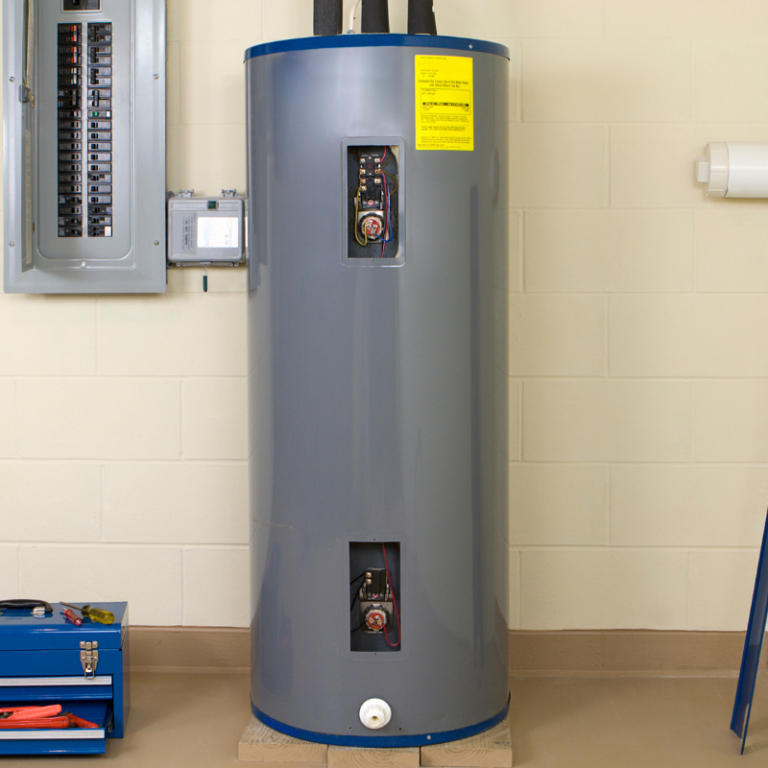
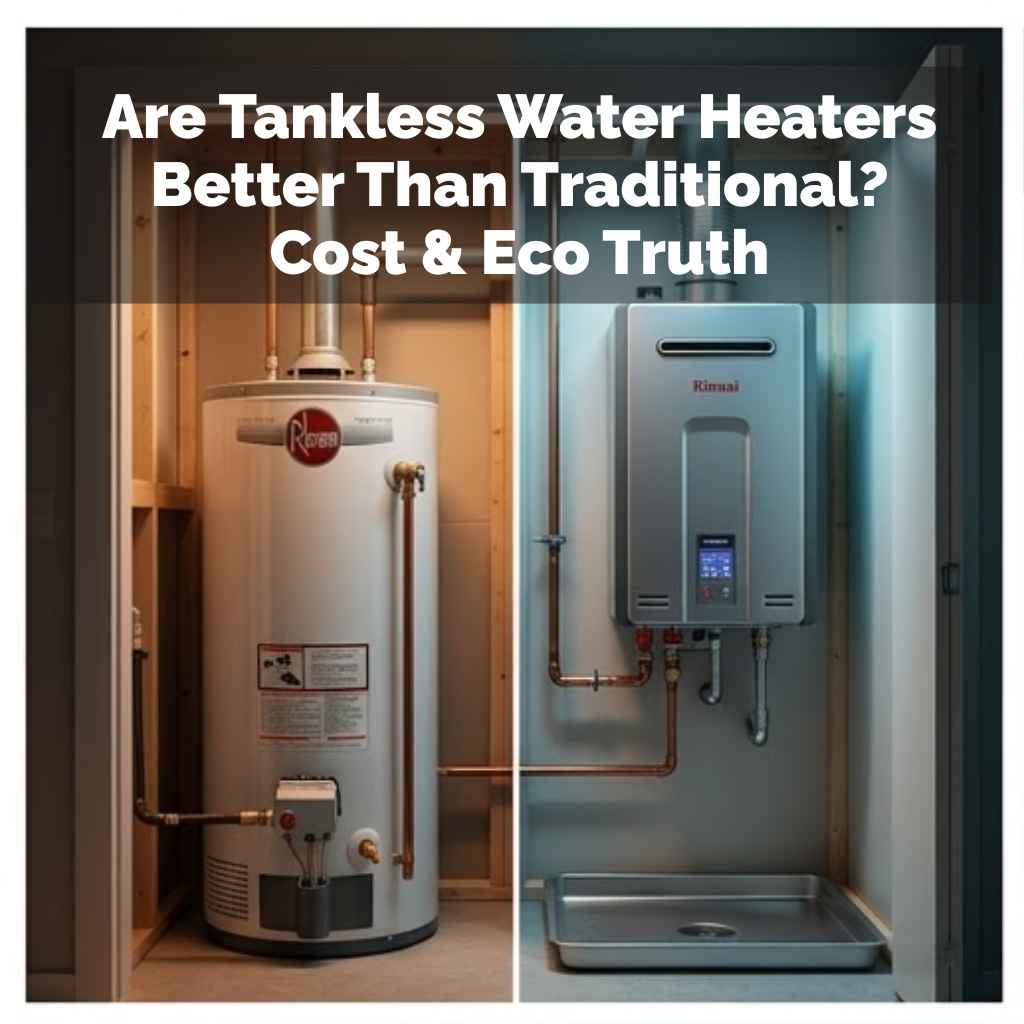
Think of a traditional water heater like a big thermos. It keeps a large tank of water hot all the time. When you turn on a faucet, hot water flows out.
This means it’s always using energy to keep that water warm, even when you’re not using any.
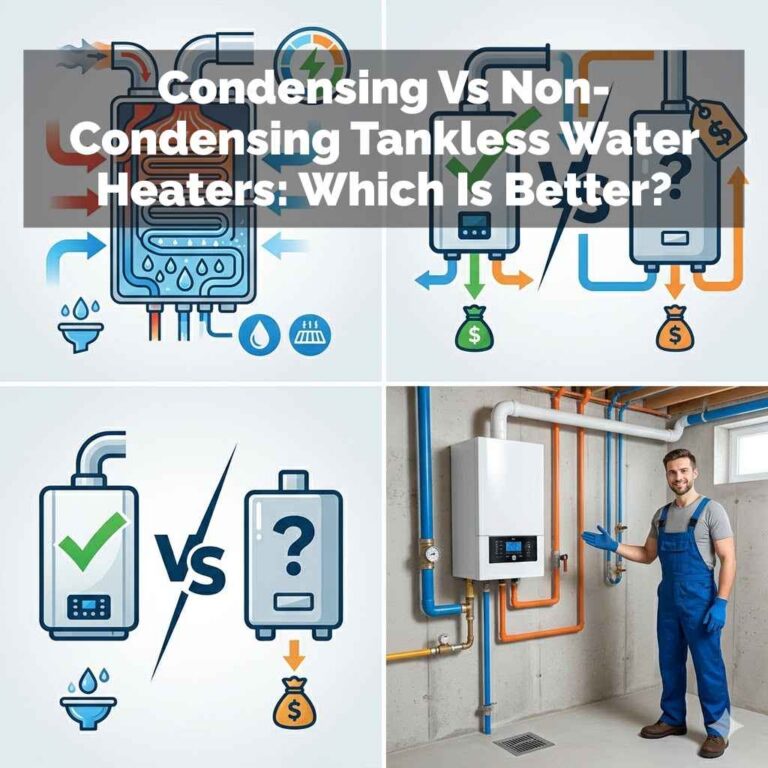
A tankless water heater works differently. It’s like a powerful instant noodle maker. When you need hot water, it heats it up right then and there.
It uses a heating element, either gas or electric, to warm the water as it passes through. This is why they are also called “on-demand” water heaters.
This “on-demand” style is the big difference. It means they only use energy when you actually need hot water. This sounds like a smart way to save money and be kinder to the planet.
The Pros of Going Tankless
One of the biggest draws of tankless systems is the promise of endless hot water. Imagine never running out during a busy morning shower, even with multiple people getting ready. This is a huge win for larger families or homes that use a lot of hot water throughout the day.
Another major advantage is energy efficiency. Since they only heat water when you need it, tankless heaters can significantly cut down on energy waste. This translates to lower utility bills over time.
Studies show they can be 24% to 34% more energy-efficient than traditional tank models.
Space saving is also a big plus. Traditional tanks are bulky and often sit in a basement or utility closet. Tankless units are much smaller, usually mounted on a wall.
This frees up valuable space in your home. They can even be installed in tighter spots.
Longevity is another factor. Tankless water heaters typically last longer than tank models. While a tank heater might last 10 to 15 years, a tankless unit can often go 20 years or more with proper maintenance.
This means fewer replacements over your lifetime.
Safety is also a consideration. Traditional tanks hold a large volume of hot water. If a tank fails, it can cause significant water damage.
Tankless heaters hold much less water, reducing the risk of major leaks or floods.
The Downsides of Tankless Systems
The initial cost of a tankless water heater is higher than a traditional one. Not only is the unit itself more expensive, but installation can also be more complex and costly. This is especially true if you’re switching from a tank model, as you might need to upgrade gas lines or ventilation.
Another potential drawback is the “cold water sandwich” effect. If you turn off the hot water for just a moment and then turn it back on, you might get a brief blast of cold water before the unit heats up again. This is less common with newer models but can still happen.
Flow rate can also be an issue. Tankless heaters have a maximum flow rate. If you run too many hot water appliances at once, you might not get enough hot water to all of them.
For example, running a shower, dishwasher, and washing machine simultaneously might strain a single tankless unit.
Electric tankless heaters, in particular, can be power-hungry. They often require special, high-amperage circuits. If your home’s electrical system isn’t equipped, you’ll need costly upgrades.
Gas models are generally more common and efficient for whole-house heating.
Maintenance is also important. Tankless units need to be descaled regularly, especially in areas with hard water. This prevents mineral buildup that can reduce efficiency and shorten the unit’s lifespan.
This is an added cost and task you’ll need to remember.
Cost Comparison: Upfront vs. Long-Term
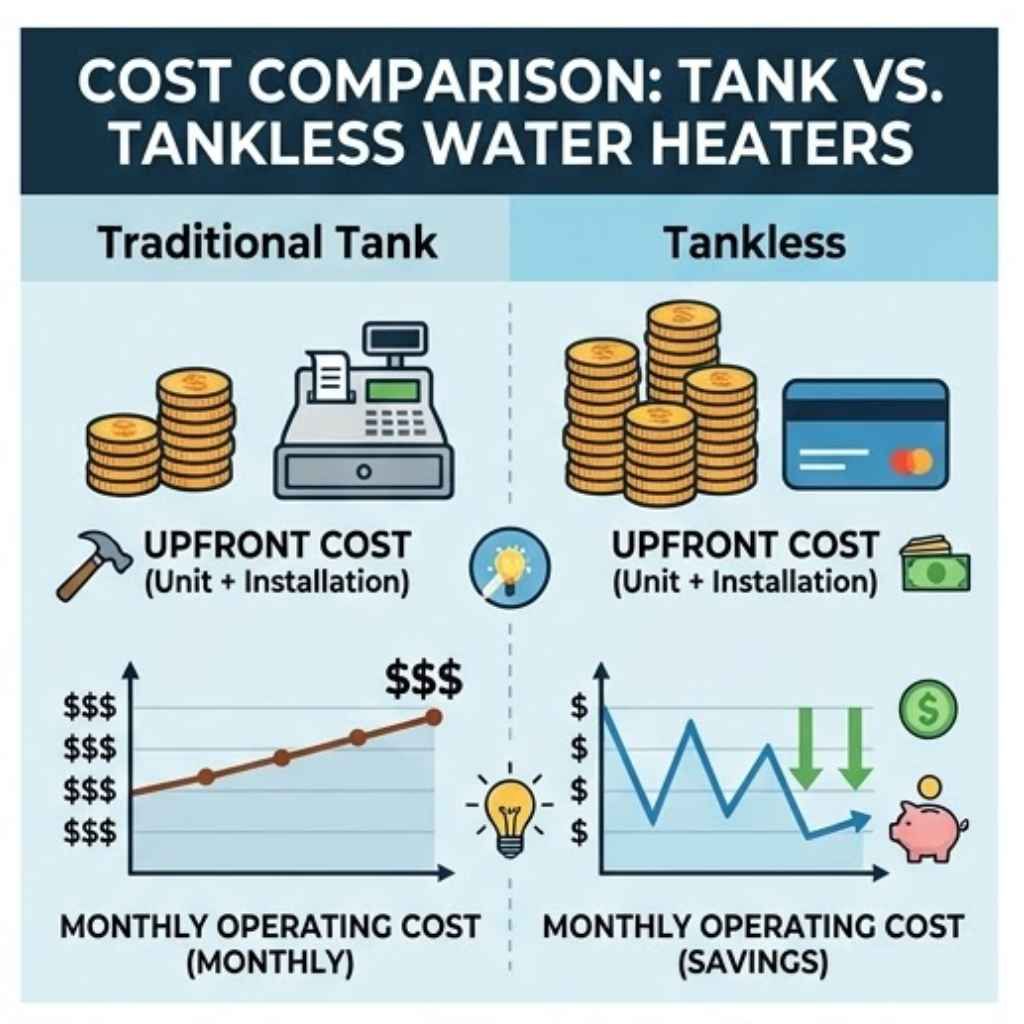
Let’s talk numbers. The upfront cost for a tankless water heater can range from $1,000 to $3,500 or more for the unit itself. Installation can add another $1,000 to $2,000, depending on the complexity.
This is a significant investment compared to a traditional tank, which might cost $500 to $1,500 installed.
However, the long-term savings can offset this. Because they are more energy-efficient, you’ll likely see lower monthly utility bills. Over the 20-year lifespan of a tankless unit, these savings can add up.
The U.S. Department of Energy suggests that switching to a tankless system can save you about 8% to 34% on your water heating costs annually.
When you factor in the lifespan, a tankless heater might actually be cheaper in the long run. You’re buying a system that lasts longer and uses less energy per year. You also avoid the cost of replacing a tank heater multiple times over the life of a tankless one.
Quick Cost Breakdown
Tankless Water Heater:
- Unit Cost: $1,000 – $3,500+
- Installation: $1,000 – $2,000+
- Lifespan: 20+ years
- Energy Savings: 24% – 34%
Traditional Tank Water Heater:
- Unit Cost: $500 – $1,500
- Installation: $500 – $1,000
- Lifespan: 10 – 15 years
- Energy Savings: (Less efficient than tankless)
It’s important to get quotes from several plumbers. They can assess your home’s specific needs and give you a more accurate picture of installation costs. Don’t forget to ask about any potential upgrades needed for gas lines or electrical systems.
Energy Savings and Environmental Impact
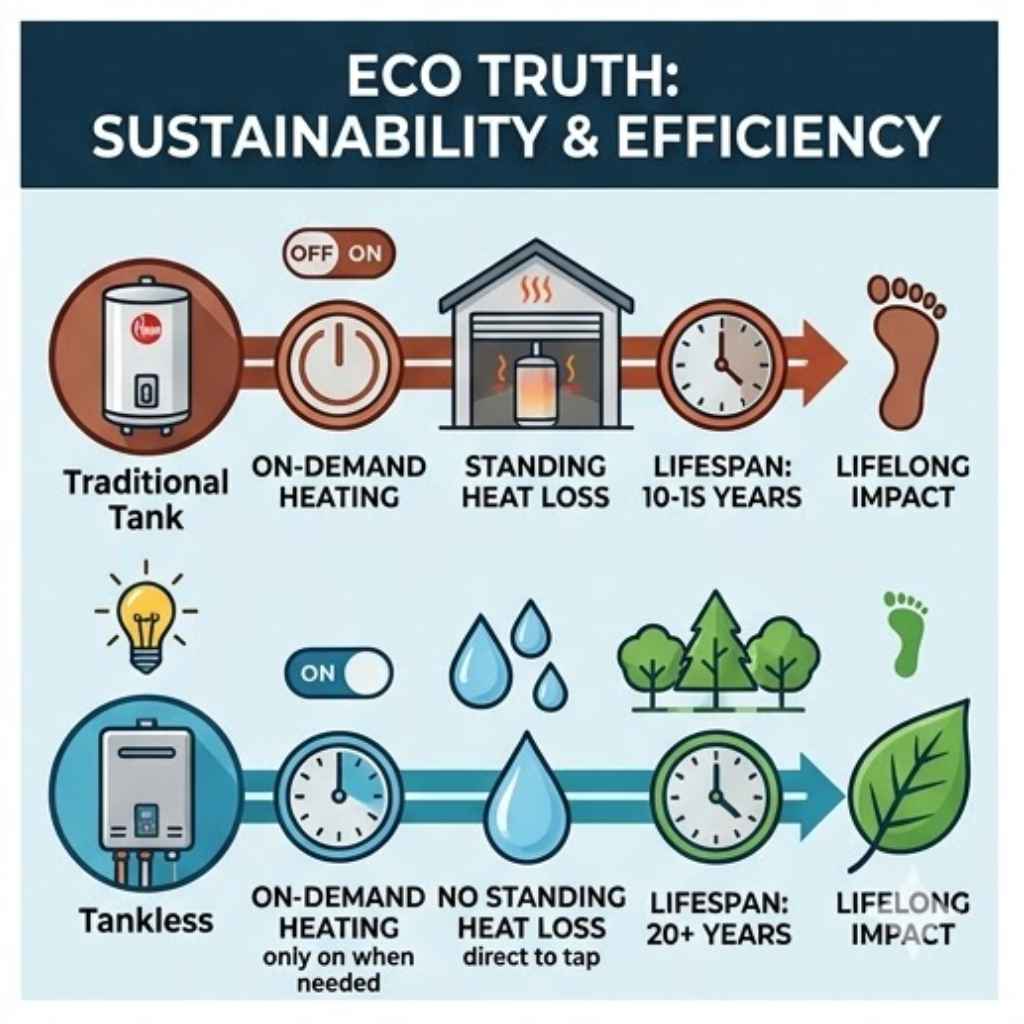
The energy savings from a tankless water heater are a major selling point. Traditional tank heaters constantly keep a large volume of water hot, even when no one is home. This is called standby heat loss.
They lose about 10% of the energy they use each day just keeping the water warm.
Tankless heaters avoid this standby loss entirely. They only turn on when you demand hot water. This makes them much more efficient.
For a typical household, this could mean saving hundreds of dollars a year on energy bills. These savings are even more pronounced in areas with higher energy costs.
The environmental benefit is also significant. Using less energy means a smaller carbon footprint. For homeowners looking to make their lives more eco-friendly, a tankless water heater is a step in the right direction.
Reducing energy consumption helps lower greenhouse gas emissions.
Consider the fuel source. Most tankless water heaters are gas-powered. While natural gas is a fossil fuel, it’s often seen as a cleaner-burning option than oil or electricity generated from coal.
However, electric tankless models are available, which can be a good choice if you have access to renewable energy sources.
The manufacturing and disposal of water heaters also play a role. Tankless units, with their longer lifespan, mean fewer units are manufactured and disposed of over time. This reduces waste and the environmental impact of production.
Environmental Edge: Tankless vs. Tank
Tankless Advantage:
- No Standby Heat Loss: Saves energy 24/7.
- Lower Carbon Footprint: Uses less energy overall.
- Longer Lifespan: Reduces waste from frequent replacements.
Tank Considerations:
- Constant Energy Use: Heats water even when not needed.
- Potential for Leaks: Larger water volume increases damage risk.
It’s crucial to look at the Energy Factor (EF) or Uniform Energy Factor (UEF) rating when comparing models. Higher numbers mean better efficiency. Both tank and tankless heaters have these ratings, but tankless units generally score much higher.
Space-Saving and Installation Nuances
The physical size difference between a tankless and a traditional water heater is striking. A typical 50-gallon tank heater might be around 5 feet tall and 2 feet in diameter. A tankless unit, on the other hand, is often about the size of a small suitcase and mounts directly onto a wall.
This can be a game-changer for smaller homes or older houses where space is at a premium. That utility closet could become a pantry, or you could gain extra storage in the garage. The sleek, wall-mounted design also looks more modern.
Installation complexity is where things can get tricky. If you’re replacing an existing tank heater with another tank heater, it’s usually a straightforward swap. Installing a tankless unit often requires more specialized work.
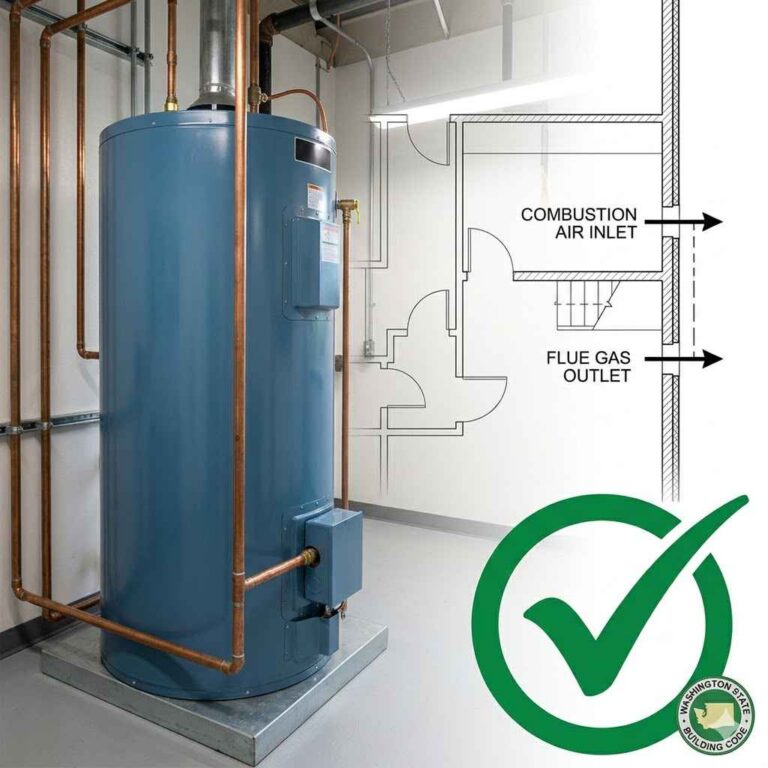
Gas tankless heaters need proper ventilation, often a direct vent system that goes through an exterior wall. Some older homes might need new gas lines installed to handle the higher gas input required for instant heating. Electric tankless heaters need dedicated, high-amperage electrical circuits, which can mean upgrading your home’s wiring.
I remember a friend who decided to go tankless. He was excited about the space savings. But his house was older, and the existing gas line wasn’t strong enough.
The plumber had to run a new, larger pipe from the meter. That added a good chunk to the bill!
It’s essential to have a professional assess your home before buying. They can tell you exactly what needs to be done to install a tankless unit safely and efficiently. This upfront assessment saves you from surprises and unexpected costs down the line.
Flow Rate and Usage Patterns
One of the most important factors in deciding if a tankless system is right for you is your household’s hot water usage. Tankless heaters are rated by their flow rate, usually measured in gallons per minute (GPM).
A typical shower might use 2.5 GPM. A washing machine could use 1.5 to 2 GPM. A dishwasher might use 1 GPM.
If your family often uses multiple hot water appliances at the same time, you need a tankless unit that can keep up.
For example, if you have two showers running (5 GPM total) and someone is doing dishes (1 GPM), you need a unit that can provide at least 6 GPM. Many standard tankless units might max out around 5-7 GPM. This might be fine for smaller households but could be a problem for larger ones.
Larger, whole-house tankless units are available, but they are more expensive and require more power (gas or electricity). Sometimes, a solution is to install two smaller tankless units, perhaps one for the kitchen and another for the bathrooms. This can be more costly but ensures enough hot water.
What about the temperature rise? Tankless heaters also have to work harder to heat water when the incoming cold water is very cold, like in winter in colder climates. A unit that provides enough hot water in the summer might struggle in the dead of winter.
You need to consider the maximum temperature rise needed for your location.
Flow Rate Matters!
Consider these typical demands:
- Shower: 2.5 GPM
- Dishwasher: 1.0 GPM
- Washing Machine: 1.5 – 2.0 GPM
- Kitchen Sink: 1.0 GPM
Calculate your peak demand: Add up the GPM of appliances you might use simultaneously. Ensure your chosen tankless unit can meet or exceed this number, considering the required temperature rise.
I’ve heard stories of people installing a tankless heater thinking it was a magic bullet, only to be frustrated by lukewarm showers when the whole family was getting ready. It’s all about matching the unit’s capacity to your actual hot water needs.
When Is a Tankless Water Heater the Right Choice?
So, who benefits most from a tankless system? If your current water heater is old and you’re looking for a long-term, energy-efficient solution, tankless is a strong contender. If you plan to stay in your home for many years, the higher upfront cost can be justified by long-term savings and durability.
Households with high hot water demands, like large families or people who often run dishwashers and washing machines simultaneously, can benefit greatly from the “endless” hot water supply. If you’ve ever experienced the misery of a cold shower mid-wash, you’ll appreciate this.
Homeowners looking to free up space will also find tankless units appealing. If you need that utility closet for something else, a wall-mounted tankless heater is a great space-saving option. They also offer a more modern aesthetic.
If your home has adequate gas line capacity or you are willing to upgrade it, a gas tankless heater is generally more efficient and powerful than an electric one for whole-house heating. For smaller needs, like a single sink or a remote cabin, electric tankless can be suitable.
Finally, if you’re focused on reducing your home’s environmental impact, the energy efficiency of tankless heaters makes them a greener choice. Every bit of energy saved contributes to a healthier planet.
When a Traditional Tank Might Still Be Better
For those on a tighter budget, the lower upfront cost of a traditional tank water heater is a major advantage. If you don’t plan to stay in your home for many years, the long-term savings of a tankless unit might not be realized.
If your household’s hot water needs are modest, a standard tank heater might be perfectly sufficient. For example, a couple or a single person who doesn’t run multiple appliances at once might not see significant benefits from a tankless system’s “endless” supply.
Some homes have limitations that make tankless installation difficult or prohibitively expensive. If your gas lines are old and undersized, or your electrical panel can’t handle the load of an electric tankless unit, sticking with a traditional tank might be the most practical solution.
The “cold water sandwich” effect, while minor, can be a dealbreaker for some. If you absolutely demand perfectly consistent hot water with no interruptions, a tank heater might feel more reliable, as it always has a large supply ready.
Also, if your current tank heater is still functioning well, there’s no urgent need to replace it. The cost and hassle of upgrading might not be worth it for a slight improvement in efficiency or space. Sometimes, waiting until the old unit fails is the most sensible approach.
Tankless vs. Tank: Quick Match
Choose Tankless If:
- You want long-term energy savings.
- You have a high demand for hot water (large family).
- You want to save space.
- You plan to stay in your home long-term.
- Your home’s utilities can support it.
Choose Traditional Tank If:
- You have a limited upfront budget.
- Your hot water demand is low to moderate.
- Your home has utility limitations for tankless.
- You prefer simpler installation.
- You don’t plan to stay in the home long enough for savings.
Maintenance and Longevity: What to Expect
Both types of water heaters require maintenance to ensure they run efficiently and last as long as possible. However, the specific maintenance needs differ.
Traditional tank heaters need to be flushed out periodically. This removes sediment that builds up at the bottom of the tank. Sediment can reduce efficiency and lead to corrosion.
The anode rod, which sacrifices itself to protect the tank from rust, also needs to be checked and replaced every few years.
Tankless water heaters require descaling. In areas with hard water (high mineral content), scale can build up inside the heat exchanger. This reduces the unit’s efficiency and can eventually damage it.
Descaling usually involves flushing the unit with a vinegar solution or a specialized descaling fluid. This should be done annually or biannually, depending on your water hardness.
I learned this the hard way. My neighbor’s tankless heater started acting up. It wasn’t heating water as well.
Turns out, he hadn’t descaled it in years, and mineral deposits had significantly reduced its performance. A good descaling brought it back to life, but it was a good lesson.
Manufacturers often recommend professional servicing for tankless units every year or two. This ensures everything is working correctly and can catch potential problems early. While the units are built to last, neglecting their maintenance will shorten their lifespan and increase the risk of costly repairs.
When it comes to longevity, tankless heaters typically boast a lifespan of 20 years or more, often exceeding that of tank heaters (10-15 years). This is partly due to their design, which avoids storing water and the associated corrosion risks. It’s also because they are used less constantly than a tank that’s always heating.
Common Misconceptions About Tankless Water Heaters
There are quite a few myths floating around about tankless water heaters. One of the biggest is that they are universally more expensive over their lifetime. While the upfront cost is higher, the energy savings and longer lifespan can often make them cheaper in the long run.
Another myth is that they provide truly “unlimited” hot water. While they provide a continuous supply, their flow rate is limited. If you demand more hot water than the unit can produce at the required temperature rise, you will run out.
It’s more accurate to say they provide an “on-demand” supply.
Some people believe they are complicated to operate. Modern tankless units are quite user-friendly. Many have digital displays and simple controls.
The main operational aspect is ensuring you don’t overload the unit with too many simultaneous hot water demands.
There’s also a misconception that electric tankless heaters are as efficient as gas ones for whole-house heating. While electric models are more efficient than electric tank heaters, they often have much lower flow rates and can struggle to provide enough hot water for multiple fixtures in a large home. Gas models generally have higher GPM ratings and a more powerful heating capacity.
Busting Tankless Myths
Myth: They are always more expensive over time.
Truth: Long-term savings from energy efficiency and lifespan often offset higher upfront costs.
Myth: They provide truly unlimited hot water.
Truth: Flow rate is limited; peak demand must be considered.
Myth: They are difficult to use.
Truth: Modern units are user-friendly with simple controls.
Myth: Electric tankless are as good as gas for whole homes.
Truth: Gas models typically offer higher flow rates for whole-house heating.
It’s always best to get information from reliable sources, like reputable plumbing companies or energy efficiency experts, rather than relying on hearsay.
What This Means for Your Home
Deciding between tankless and traditional is a significant home investment. The choice impacts your budget, your comfort, and your home’s environmental footprint. If you’re looking for efficiency and a long-term solution, tankless heaters are a compelling option.
For homes with high hot water demands, the continuous supply offers a tangible improvement in daily life. No more shower wars! The space savings can also be a pleasant surprise, opening up possibilities for your home’s layout.
However, if your budget is tight or your hot water needs are modest, a traditional tank heater might still be the most practical and cost-effective choice. There’s nothing wrong with a reliable tank heater if it meets your needs.
Regardless of your choice, proper installation and regular maintenance are crucial. A well-installed and maintained water heater, whether tank or tankless, will serve you better for longer.
Simple Checks and When to Worry
If you have a traditional tank heater, keep an eye out for leaks around the base of the tank. Also, listen for strange noises like popping or rumbling, which can indicate sediment buildup. If you notice rust-colored water, it might be time for a replacement.
For tankless units, pay attention to any decrease in hot water temperature or flow rate. If the unit starts making unusual noises, or if error codes appear on the display, it’s time to call a professional. Regular descaling is key; if you notice mineral buildup, get it addressed promptly.
If your water heater is over 10-15 years old (for tanks) or 15-20 years old (for tankless), it’s approaching the end of its typical lifespan. It’s wise to start budgeting for a replacement before it fails unexpectedly, which can lead to water damage and a lack of hot water.
Quick Tips for Hot Water Efficiency
Whether you have a tank or tankless system, a few simple habits can help you save energy and water. Lowering the thermostat setting on your water heater can make a difference. For tank heaters, 120°F (49°C) is usually recommended by the U.S.
Department of Energy. Tankless units often have digital controls that make this easy.
Fixing leaky hot water faucets is also a good idea. A small drip can waste a surprising amount of hot water over time. Installing low-flow showerheads can also significantly reduce hot water consumption without sacrificing water pressure.
Consider insulating your hot water pipes. This is especially effective for traditional tank heaters, as it reduces heat loss as the water travels from the tank to your faucet. You can also insulate the tank itself if it feels warm to the touch, though newer tanks are already well-insulated.
Run your dishwasher and washing machine only when they are full. These appliances use a lot of hot water, so maximizing their efficiency with full loads makes sense. Using cold water for laundry when possible also saves energy.
Frequently Asked Questions
How much more does a tankless water heater cost to install than a traditional one?
Installation costs for tankless water heaters can be significantly higher, often ranging from $1,000 to $2,000 or more, compared to $500 to $1,000 for a traditional tank heater. This is due to potential upgrades needed for gas lines, ventilation, or electrical circuits.
Will a tankless water heater really save me money on my energy bills?
Yes, tankless water heaters can save you money because they only heat water when you need it, eliminating standby heat loss. You can expect to save between 8% and 34% on your water heating costs annually compared to traditional tank models.
Can I run a shower and the dishwasher at the same time with a tankless heater?
It depends on the flow rate of the tankless unit and the demands of your appliances. If the combined flow rate exceeds the unit’s capacity, you might experience reduced hot water flow or temperature. It’s important to match the unit’s GPM rating to your household’s peak usage.
How often do tankless water heaters need maintenance?
Tankless water heaters generally require annual or biannual descaling, especially in areas with hard water, to prevent mineral buildup. Many manufacturers also recommend professional servicing every one to two years to ensure optimal performance and longevity.
How long do tankless water heaters last compared to traditional ones?
Tankless water heaters typically last longer, with a lifespan of 20 years or more. Traditional tank water heaters usually last between 10 and 15 years.
Do tankless water heaters require special venting?
Yes, most gas tankless water heaters require specialized venting, often a direct vent system that exhausts gases through an exterior wall using PVC pipes. Electric tankless models do not require venting but need significant electrical power.
The Final Verdict on Tankless vs. Tank
Choosing between a tankless and a traditional water heater is a personal decision. There’s no single “better” option for everyone. Tankless heaters offer impressive energy savings, endless hot water, and space efficiency.
They are a great long-term investment for many homes.
However, their higher upfront cost and potential installation complexities mean they aren’t always the right fit. Traditional tank heaters remain a reliable, budget-friendly choice for many households. Weigh your home’s needs, your budget, and your long-term goals carefully.
Sponsored / affiliate links. As an Amazon Associate I earn from qualifying purchases. I may earn additional commission from eligible campaigns.