Are Electric Tankless Water Heaters Good For Restaurant Kitchens?
Running a busy restaurant kitchen means constant demand for hot water. From washing dishes to prepping food, it’s a critical need. You’re likely wondering about the best way to meet this demand efficiently.
You might be looking at newer technologies like electric tankless water heaters. Are they really up to the task? This guide will help you understand if these units are a good fit for your commercial kitchen.
Electric tankless water heaters can be a good choice for restaurant kitchens, offering energy efficiency and on-demand hot water. However, their effectiveness depends on the kitchen’s specific hot water needs, including flow rate and temperature rise requirements, which must be carefully matched to the unit’s capacity to avoid performance issues.
What Are Electric Tankless Water Heaters?
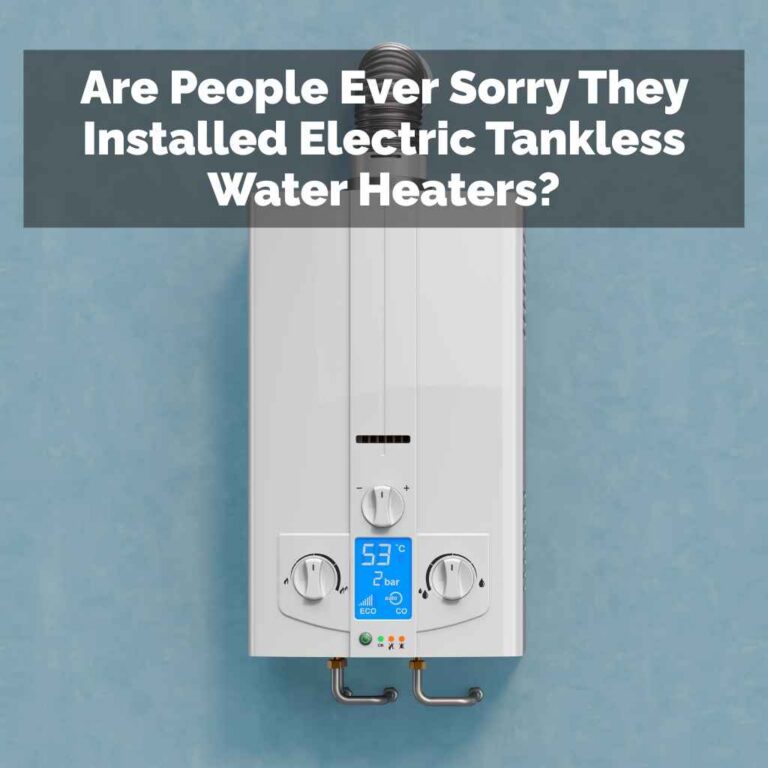
Electric tankless water heaters work differently than old tank heaters. Instead of keeping a big tank of hot water ready, they heat water only when you need it. When you turn on a hot water faucet, cold water flows through the unit.
Powerful electric heating elements quickly heat this water to your set temperature. This means you get hot water as long as you need it, without running out.
They don’t have a large storage tank. This saves a lot of space. They also only use energy when hot water is being used.
This makes them very energy efficient. You don’t have to heat water that sits in a tank all day. This saves money on your energy bills.
It’s a big change from traditional water heaters.
Why Restaurant Kitchens Need Lots of Hot Water
Restaurant kitchens are hot water demand zones. Think about it. Dishes pile up constantly.
Pots and pans used for cooking need thorough cleaning. Food prep often involves rinsing vegetables or meats. Sanitizing surfaces requires hot water.
Even hands need washing frequently to maintain hygiene standards. All these tasks drain hot water very quickly.
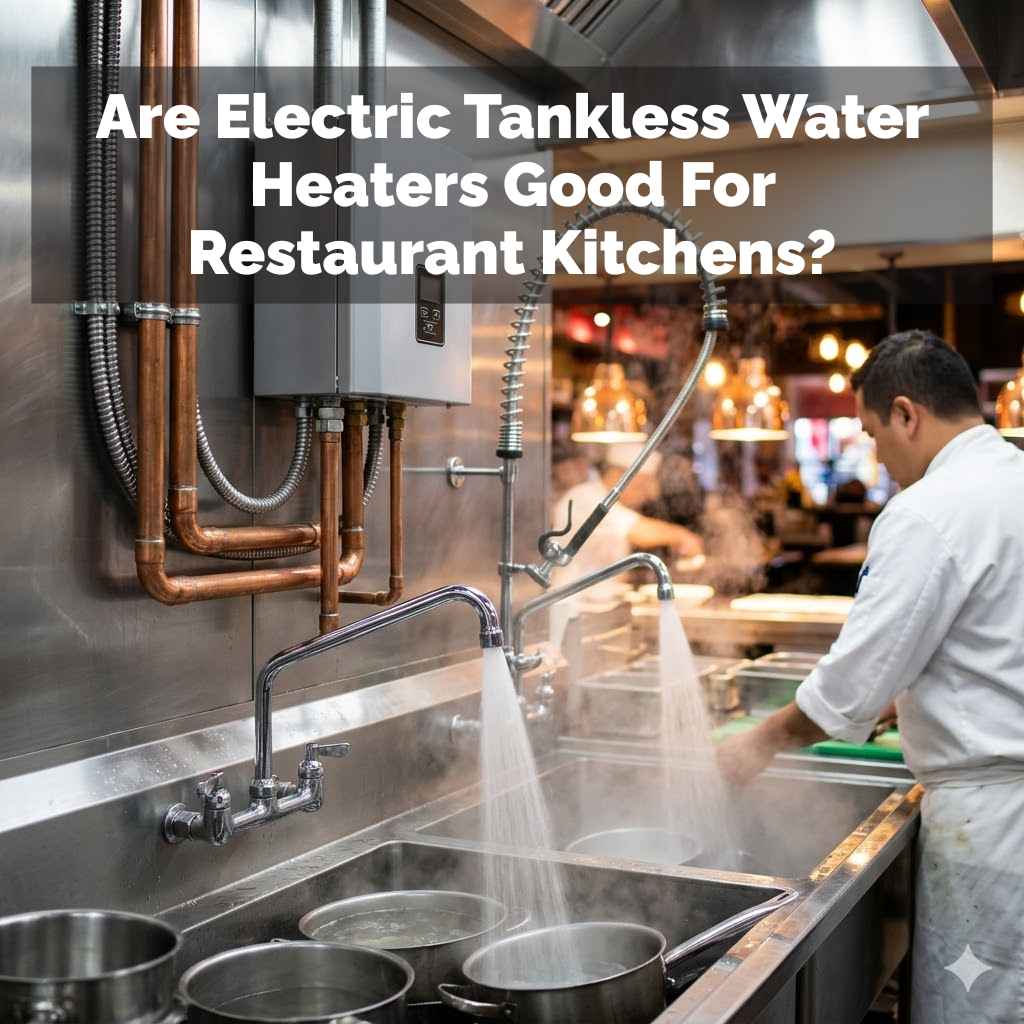
A restaurant kitchen might have multiple sinks running at the same time. Dishwashers need a steady supply of very hot water to work effectively. Staff might need hot water for handwashing while a dishwasher is running.
This continuous and high demand is a challenge for any water heating system. The system must be able to keep up without interruption.
Can Electric Tankless Heaters Handle the Load?
This is the big question for any restaurant owner or manager. The answer is not a simple yes or no. It depends heavily on the specific hot water demands of your kitchen.
Electric tankless units have a maximum flow rate. This is the amount of hot water they can produce at a given temperature. They also have a temperature rise capability.
This is how much they can heat the incoming cold water.
In the U.S., incoming cold water temperatures vary a lot by region and season. In colder climates, the water is much colder. This means the heater has to work harder to reach your desired hot water temperature.
For example, if your incoming water is 40°F, and you need 120°F water, you need a 80°F temperature rise. If the unit’s flow rate drops too low, it might not provide enough hot water. Or, if the temperature rise is too high, it won’t reach your target temperature.
Electric Tankless vs. Gas Tankless
Electric Tankless:
- Heats water on demand.
- Uses electricity.
- Often smaller and easier to install.
- Can require significant electrical upgrades.
- Performance depends heavily on available electrical power.
Gas Tankless:
- Heats water on demand.
- Uses natural gas or propane.
- Requires a gas line and venting.
- Can often produce higher flow rates than electric units.
- May have lower operating costs if gas is cheaper than electricity.
Understanding Flow Rate and Temperature Rise
Let’s break down flow rate and temperature rise. Flow rate is measured in gallons per minute (GPM). Think of it as how much hot water can come out at once.
A single faucet might use 1 GPM. A commercial dishwasher could use 2 GPM. If you have three sinks running, and a dishwasher, that’s a lot of GPM needed at the same time.
Temperature rise is how much hotter the water gets. The incoming water temperature is key here. In summer, it might be 70°F.
In winter, it could be 40°F. If you need your water at 130°F for sanitizing, that’s a 60°F rise in summer and a 90°F rise in winter. Electric tankless heaters have limits on both GPM and temperature rise.
For a busy restaurant, you need a unit that can provide a high GPM at a significant temperature rise, even in colder months. You can’t afford for the hot water to run out or be lukewarm during peak hours. This means you often need a very powerful electric tankless unit.
These powerful units require a lot of electricity.
The Electrical Demand Challenge
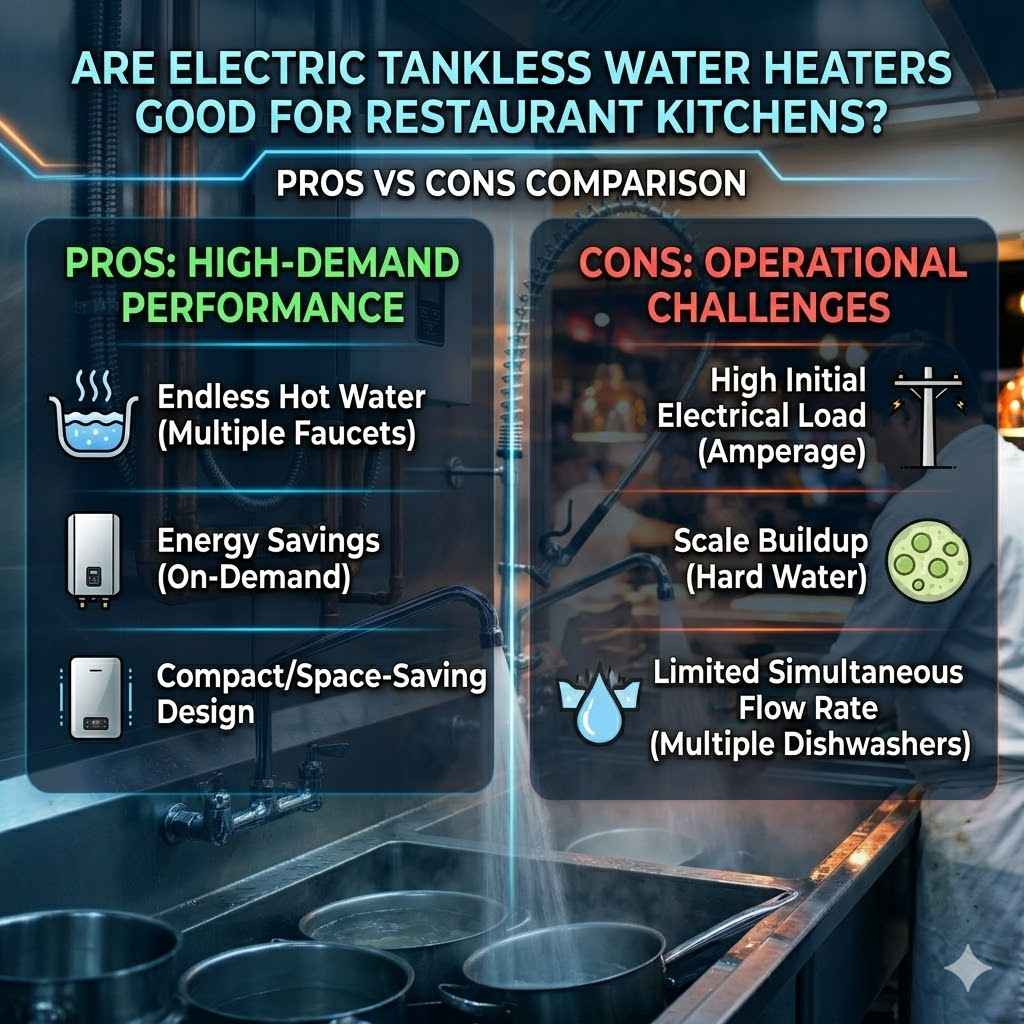
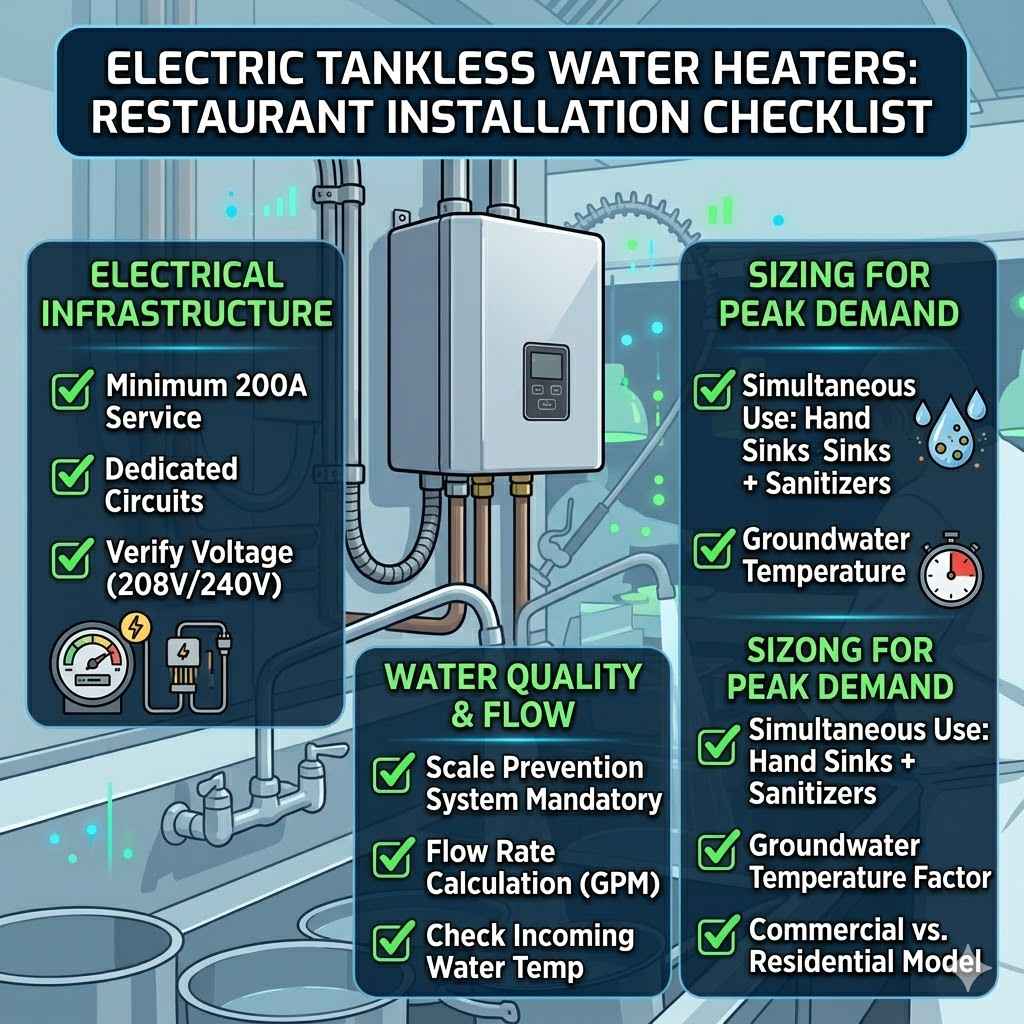
This is often the biggest hurdle for electric tankless heaters in commercial kitchens. Powerful electric tankless units that can handle restaurant demand need a lot of amperage. Sometimes, they need more amperage than your current electrical system can provide.
You might need to upgrade your building’s electrical panel and wiring. These upgrades can be very expensive.
You’ll need a licensed electrician to assess your current electrical capacity. They will determine if your system can support the demands of a commercial-grade electric tankless heater. It’s not uncommon to find that a restaurant kitchen needs a 3-phase power supply for such a unit.
Many older buildings, or smaller establishments, may not have this already installed.
Key Considerations for Electrical Capacity
- Amperage Requirements: High-demand units need 100-200 amps or more.
- Voltage: Many commercial units use 208V or 240V, often requiring 3-phase power.
- Existing Panel Size: Can your main electrical panel handle the added load?
- Wiring: Are the existing wires rated for the new load?
- Professional Assessment: Always consult a qualified electrician.
Installation Space and Venting
One advantage of electric tankless heaters is their size. They are much smaller than traditional tank heaters. This is great for kitchens where space is often at a premium.
You can often mount them on a wall, freeing up valuable floor space. They don’t need the complex venting that gas heaters require.
Gas tankless heaters need to vent exhaust fumes outside. This involves running pipes through walls or roofs. Electric units don’t produce combustion fumes.
They just need a place to be installed and access to power and water lines. This simplifies the installation process in many ways. However, the electrical wiring still needs to be robust and properly installed.
Energy Efficiency: A Closer Look
Electric tankless heaters are highly energy efficient. They only heat water when it’s needed. This eliminates standby energy losses associated with keeping a tank hot 24/7.
This can lead to significant savings on energy bills over time compared to older tank models. However, the cost of electricity versus gas needs to be factored in.
While they are efficient in how they use energy, the source of energy matters. If your electricity is generated from renewable sources, the environmental impact is lower. If it comes from fossil fuels, the efficiency gains are mainly on your end, not the overall energy production.
It’s important to look at the total energy picture.
Quick Scan: Electric Tankless Benefits
- On-Demand Hot Water: Never run out during peak use.
- Space Saving: Compact design fits easily.
- Energy Efficiency: Heats only when needed, saving standby losses.
- Lower Emissions (Local): No combustion fumes on-site.
- Longer Lifespan: Often last longer than tank heaters.
My Experience in a Busy Cafe Kitchen
I remember working in a cafe kitchen a few years back. It was a bustling place, especially during the morning rush. We had two large commercial dishwashers and three prep sinks.
We relied on a big, old-school gas tank water heater. It was rated for commercial use. Most of the time, it kept up.
But there were those moments. Mid-morning, everyone is prepping for lunch, the dishwashers are running non-stop, and someone needs hot water to clean a greasy pan. That’s when you’d hear it – the water temperature would drop.
Not completely cold, but definitely lukewarm. It was annoying. It made cleaning harder and slower.
It felt like a bottleneck we couldn’t easily fix without a major overhaul.
We often had to stagger our hot water use. The dishwashers would get a break during busy prep times. Someone would always say, “Don’t use hot water now, we’re swamped!” It was a constant dance.
I saw firsthand how critical a reliable, high-capacity hot water system is. Any system that can’t deliver consistently is a problem. It impacts efficiency and customer satisfaction.
Real-World Context: Restaurant Scenarios
Imagine a Saturday lunch service at a popular diner. The three-compartment sink is full of greasy plates. A commercial dishwasher is cycling continuously.
The chef needs hot water to blanch some vegetables. Simultaneously, a server washes their hands before going on the floor. If the water heater can’t handle this simultaneous demand, several things happen.
The dishwashing water becomes less effective at cutting grease. The dishwasher might not sanitize properly. The chef’s vegetables get washed in tepid water.
And the server’s handwashing is less hygienic. This isn’t just an inconvenience; it can affect food safety and operational efficiency. Every drop of hot water counts in a busy food service environment.
Scenario Breakdown: Peak Demand
- Demand: Multiple sinks, dishwashers, cooking needs, handwashing.
- Challenge: Simultaneous, high-volume hot water usage.
- Impact of Failure: Reduced cleaning effectiveness, hygiene issues, operational delays.
- Required Solution: High GPM, high-temperature rise capability.
What This Means for Your Restaurant
So, what does all this mean for your restaurant kitchen? It means careful planning is essential. You need to accurately assess your peak hot water demand.
This involves looking at the GPM requirements of all your hot water fixtures and appliances. You also need to consider the coldest incoming water temperature you’ll face.
If your calculations show a very high GPM requirement, or if you’re in a colder climate, an electric tankless unit might struggle unless you invest in multiple units or a very specialized, high-capacity model. These models, as discussed, require significant electrical infrastructure. You must be prepared for potential electrical upgrades, which can add substantially to the cost.
When is it normal to consider electric tankless? If your hot water needs are moderate, perhaps a smaller cafe or a place with a very efficient, low-flow dishwasher and only one or two sinks. In these cases, a properly sized electric unit could be a great space and energy saver.
When should you worry or look elsewhere? For high-volume restaurants, busy bars, or places with multiple large dishwashers and extensive cooking operations, relying solely on electric tankless might be risky. Gas tankless heaters often offer higher GPM output for their size and cost. They might be a more robust solution for extreme demand.
Normal vs. Concerning Scenarios
| Normal for Electric Tankless | Concerning for Electric Tankless |
|---|---|
| Small cafe, limited sinks. | Large restaurant, multiple dishwashers. |
| Moderate hot water use. | Very high, continuous hot water use. |
| Existing strong electrical service. | Need for expensive electrical upgrades. |
| Colder climates where water is less cold. | Very cold incoming water temperatures requiring high rise. |
Quick Tips for Evaluating Options
When you’re looking at water heaters for your kitchen, consider these points. First, get a professional assessment of your current and future hot water needs. This isn’t a DIY task for a commercial kitchen.
Talk to your plumbing contractor. They can help calculate your GPM and temperature rise requirements.
Second, get quotes for both electric and gas tankless options. Include installation costs, potential electrical or gas line upgrades, and any necessary venting for gas units. Factor in the ongoing energy costs for each.
Look at the lifespan and warranty of different models. Some commercial units are built to last much longer.
Third, consider redundancy. For a critical need like hot water, sometimes having a backup or a secondary system is wise. This could mean a smaller electric unit as a backup, or simply ensuring your primary unit is oversized slightly to handle unexpected demand surges.
It’s about minimizing risk.
Frequently Asked Questions
Can one electric tankless heater serve an entire restaurant kitchen?
It’s possible for very small kitchens with low demand. However, for most busy restaurants, one unit may not provide enough hot water flow (GPM) or temperature rise. Multiple units or a gas tankless system are often more suitable.
What is the typical flow rate needed for a restaurant?
This varies greatly. A single sink might need 1-2 GPM. A commercial dishwasher can need 2-4 GPM.
Peak demand can easily reach 10-20 GPM or more in a large kitchen. You need to add up the GPM of all fixtures that might run simultaneously.
How much does it cost to upgrade electrical service for an electric tankless heater?
Costs can range from a few hundred dollars for minor panel work to tens of thousands of dollars for significant upgrades, including new service entrances or 3-phase power. This is highly dependent on your building and local utility requirements.
Are electric tankless water heaters reliable enough for commercial use?
When properly sized and installed, they can be reliable. However, undersizing them for a demanding commercial kitchen is a common pitfall. Ensuring the unit is rated for commercial use and can handle your peak demand is crucial for reliability.
How do I calculate the temperature rise needed?
Subtract the coldest expected incoming water temperature from your desired hot water temperature. For example, if your coldest water is 40°F and you need 130°F for sanitizing, you need a 90°F temperature rise.
Should I consider a hybrid water heater for my restaurant?
Hybrid, or heat pump water heaters, are very efficient but typically designed for residential use. Their hot water recovery rates and GPM might not be sufficient for a busy commercial kitchen’s constant demand.
Conclusion
Electric tankless water heaters offer exciting benefits like energy efficiency and space savings. For a restaurant kitchen, they can be a viable option, but only if your hot water demands are carefully matched to the unit’s capabilities. Be prepared for the significant electrical infrastructure requirements.
If your needs are very high, or your electrical system is limited, a gas tankless system might be a more practical and powerful solution. Thorough assessment is key to making the right choice.
Sponsored / affiliate links. As an Amazon Associate I earn from qualifying purchases. I may earn additional commission from eligible campaigns.
 Ddayup Smart Toilet, Electric Tankless Toilet with Bidet Built in & Dryer, Auto Open/Close, Instant Warm Water, Elongated Heated Seat, Auto Flush (Matte Black, Oval Egg Shaped) (Black3)
 100 PCS Floor Cleaning Sheets, Multi-Effect Water Soluble Floor Cleaner Tablets for Hardwood, Tile, Laminate, Deep Stain Removal Fresh Scent (Blue)