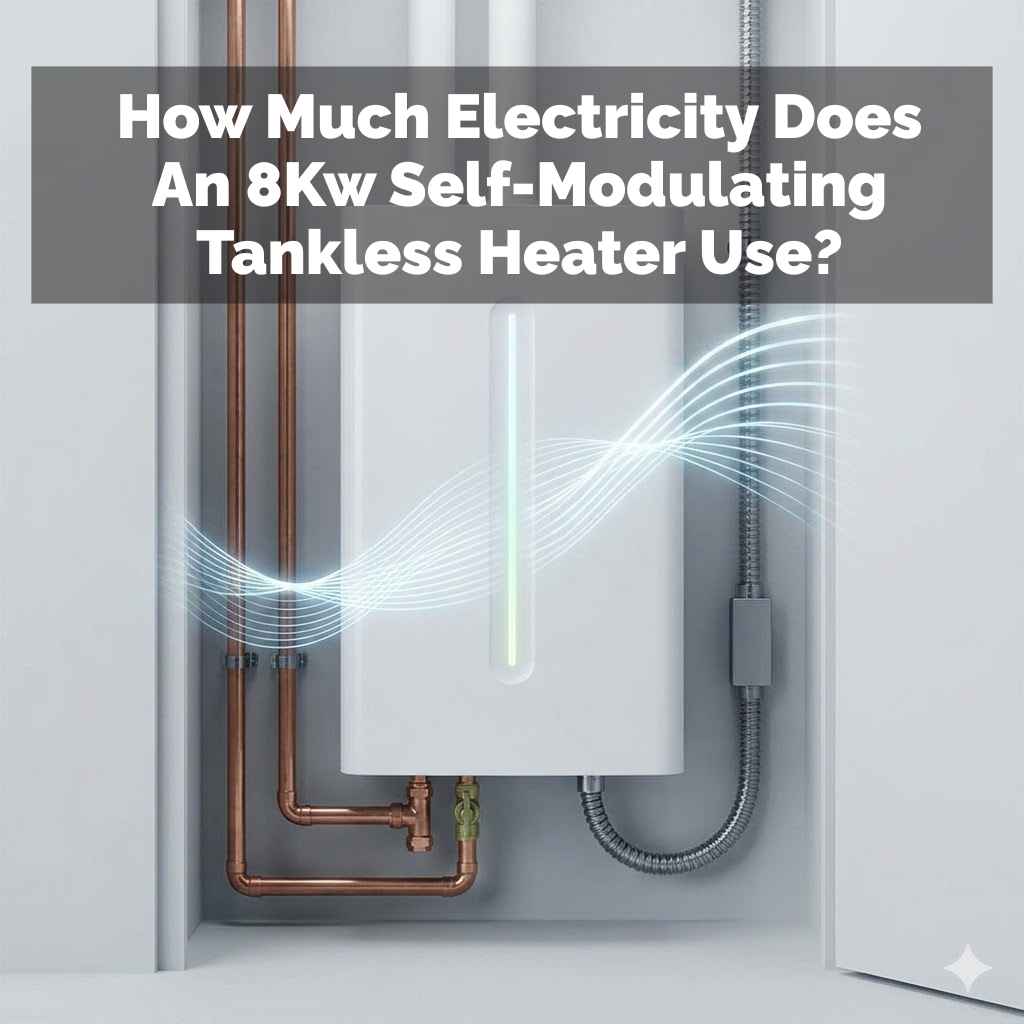
How Much Electricity Does An 8Kw Self-Modulating Tankless Heater Use?
An 8kW self-modulating tankless heater typically uses up to 8,000 watts of power when it’s actively heating water. The actual usage varies greatly based on how much hot water you demand, its incoming temperature, and your desired output temperature. It won’t use the full 8kW constantly.
Understanding Your 8kW Tankless Heater’s Power Needs
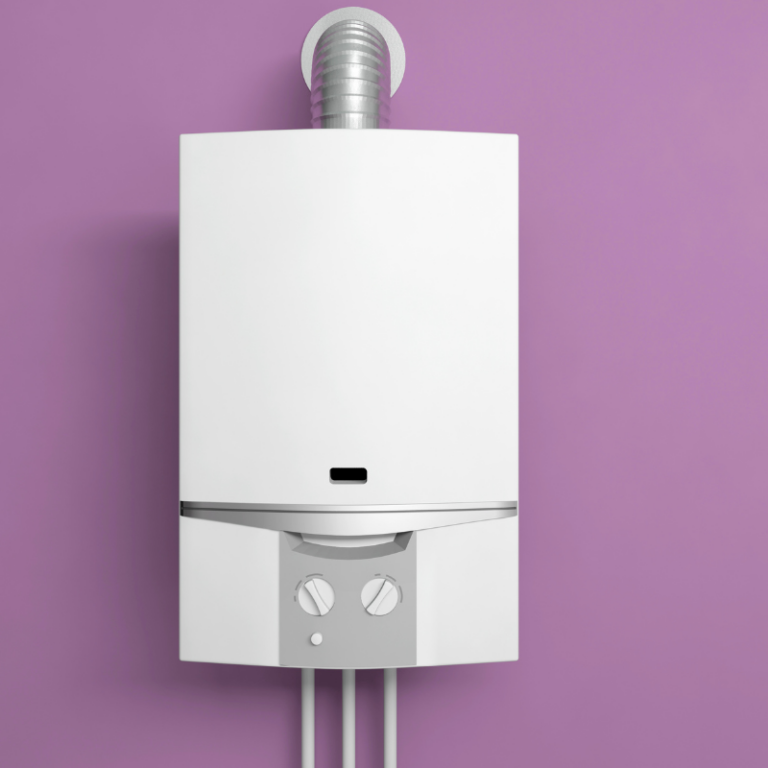
An 8kW tankless water heater is a powerful appliance. The “kW” stands for kilowatt. This tells you its maximum power output.
Think of it like the horsepower of a car. An 8kW heater can deliver a lot of hot water quickly. But it only uses its top power when it needs to.
This is the magic of “self-modulating.”
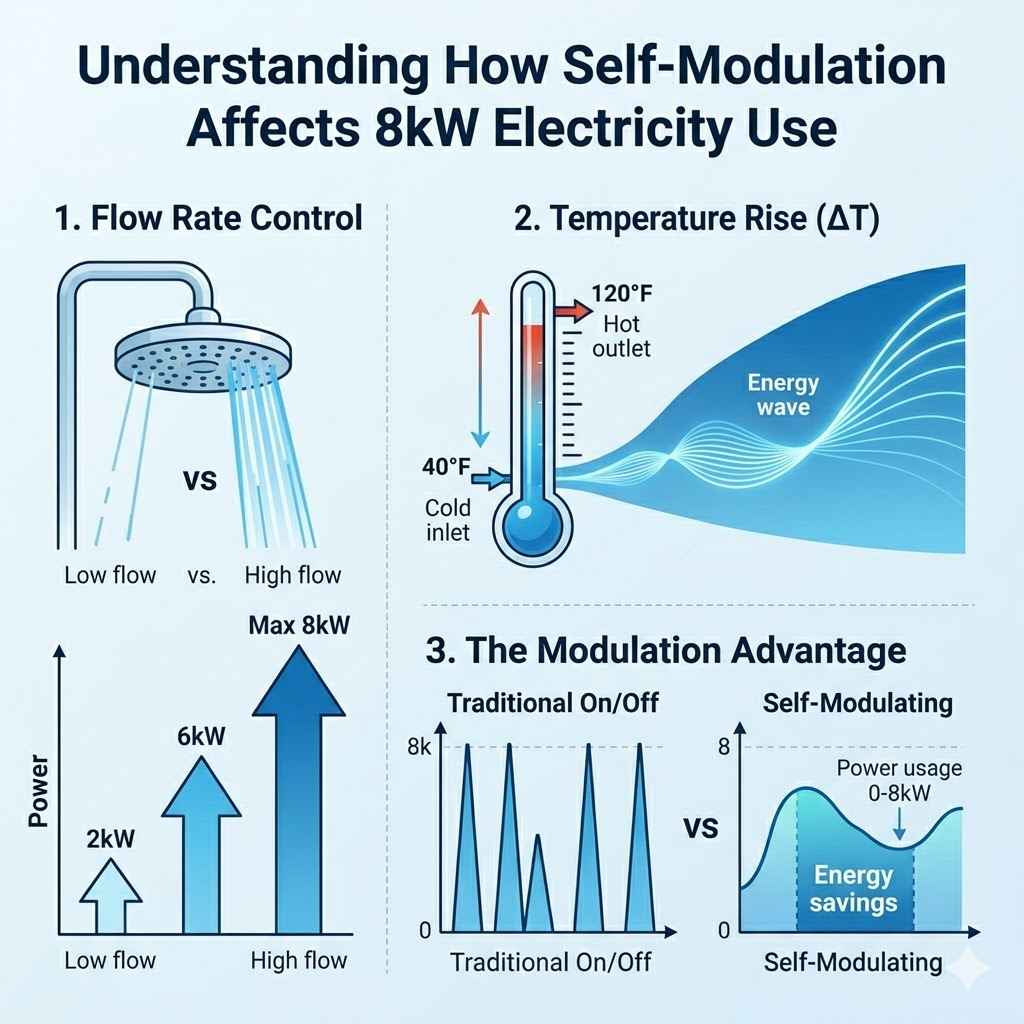
What does self-modulating mean? It means the heater adjusts its power on the fly. It senses how much hot water you’re calling for.
It also checks the temperature of the incoming cold water. Then, it fine-tunes its heating element’s power. This keeps the output water temperature just right.
It’s smart technology designed to save energy.
So, when you turn on a hot water faucet, the heater wakes up. It starts drawing electricity to heat the water passing through. If you only need a little bit of warm water, it uses less power.
If you run a hot shower for a long time, it ramps up. It tries to hit that 8kW mark to keep the flow consistent.
The incoming water temperature plays a big role too. In the summer, your cold water pipes might have warmer water. This means the heater doesn’t have to work as hard.
It uses less electricity to get it to your desired shower temperature. In the winter, that cold water is much colder. The heater has to add more heat.
So, it will use more power, perhaps even close to its 8kW limit.
Your desired hot water temperature setting is another key factor. Some people like their showers scalding hot. Others prefer just warm.
Setting a lower output temperature means the heater uses less energy. It doesn’t need to heat the water as much. This directly impacts how much electricity is consumed over time.
My Own “Aha!” Moment with Hot Water Heaters
I remember when we first moved into our house years ago. It had an old, massive tank water heater. It sat in the basement, humming along day and night, even when we weren’t using hot water.
One month, our electricity bill shot up. I was baffled. We hadn’t changed any habits.
I started digging. I learned about standby heat loss. That’s when traditional tank heaters constantly use electricity.
They keep a big tank of water hot, just in case. It felt like such a waste. That’s when I first thought about tankless.
The idea of “heat on demand” was so appealing.
When I finally switched to a tankless model, I was nervous about the electric bill. I picked a good-sized one, an 8kW unit. At first, I found myself watching the meter.
I’d open the faucet slightly, then fully. I was trying to gauge the power draw. It was a bit of an obsession, honestly.
But seeing how it only kicked into high gear when needed was a revelation. It was so different from that old tank always working.
Key Factors Affecting Electricity Usage
Several things influence how much electricity your 8kW heater uses. Understanding these can help you manage your bills. It’s not just about the heater itself.
Your lifestyle and home play a part.
Hot Water Demand
This is the biggest driver. How often do you use hot water? How long are your showers?
Do you run the dishwasher and washing machine on hot cycles? More hot water use means more electricity used.
Typical Activities and Estimated Usage:
- Short Shower (5 mins): Might use 1-2 kWh.
- Long Shower (15 mins): Could use 3-6 kWh.
- Dishwasher Cycle: Uses energy for heating water.
- Washing Machine (Hot Wash): Also needs heated water.
- Hand Washing Dishes: Small amounts, but frequent use adds up.
Incoming Water Temperature
As mentioned, the starting temperature of your water matters. This varies by season and your location.
Seasonal Impact:
- Summer: Incoming water might be 70-80°F. Heater needs to raise it 50-60°F.
- Winter: Incoming water might be 40-50°F. Heater needs to raise it 70-80°F.
This means your heater works harder and uses more electricity in colder months.
Desired Output Temperature
You set the temperature you want your hot water to be. A higher setting means more heating. This uses more power.
Common Settings:
- Dishwasher/Washing Machine: Often need 120-140°F.
- Showers/Sinks: Usually set between 105-120°F for comfort and safety.
Be mindful of your settings. You might not need extremely hot water for everything.
Flow Rate
The rate at which water flows through the heater affects its output. Higher flow rates mean the water spends less time being heated. The heater may need to work harder to maintain temperature.
Flow Rate Effects:
- Low Flow: Water heats up more easily. Less power needed.
- High Flow: Water moves faster. Heater must apply maximum heat. This uses more power.
Showerheads with lower flow rates can help save energy.
Heater Efficiency
While an 8kW unit has a set maximum, its actual efficiency can vary slightly. Newer models are generally more efficient. Proper installation and maintenance also play a role.
Efficiency Factors:
- Model Age: Newer heaters often have better energy transfer.
- Installation Quality: Correct wiring and plumbing ensure optimal performance.
- Maintenance: Regular checks prevent scale buildup, which hinders heating.
How Much Electricity is “A Lot”?
Let’s put this into perspective. An 8kW heater, running at its maximum for one hour, would use 8 kWh (kilowatt-hours). This is the standard unit for electricity billing.
If your electricity costs $0.15 per kWh, running it at full power for an hour would cost $1.20.
But here’s the crucial part: it rarely runs at full power for an entire hour straight. Your typical shower or faucet use involves bursts of activity. The heater heats the water as it flows. Then it rests.
Consider a 10-minute shower. If the heater averages 4kW during that time (which is half its max), it uses 4kW * (10/60) hours = 0.67 kWh. At $0.15/kWh, that’s about $0.10 for that shower.
Daily Usage Example:
Daily Hot Water Habits
Morning Shower: 10 minutes, average 4kW draw = 0.67 kWh
Hand Washing Dishes: 5 minutes total, average 2kW draw = 0.17 kWh
Evening Dishwasher: (Heats water internally, but tankless still supplies it) Assume 1.5 kWh usage for water heating portion.
Total Estimated Daily Use: 0.67 + 0.17 + 1.5 = 2.34 kWh
Estimated Daily Cost (at $0.15/kWh): 2.34 * $0.15 = $0.35
This shows that while the heater has a high maximum rating, its actual daily consumption can be quite modest. The “self-modulating” feature is the hero here.
Real-World Scenarios: Where Usage Varies
Let’s look at different homes and how their hot water habits might affect an 8kW tankless heater’s electricity use. It’s not a one-size-fits-all answer.
Scenario Comparison: Home Usage
Scenario A: Single Person Apartment
- Habits: One shower per day, occasional sink use.
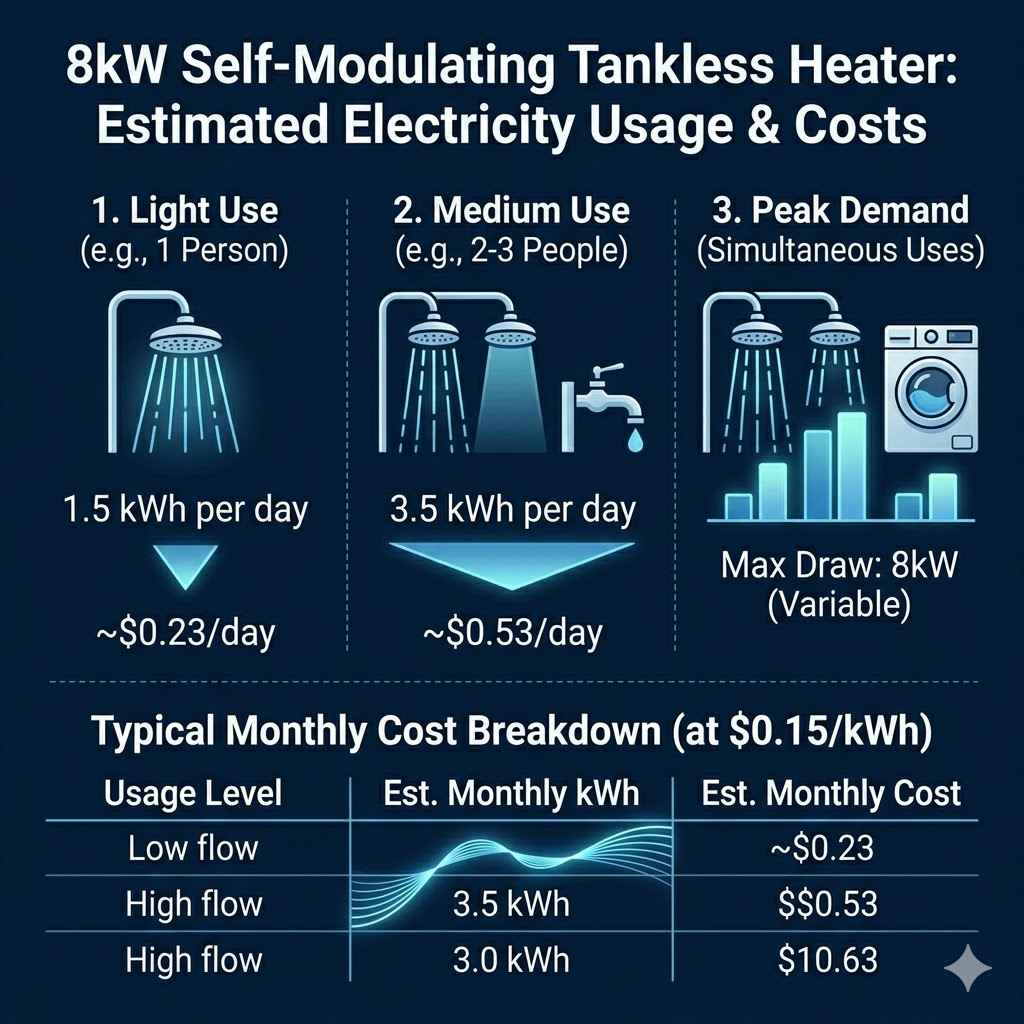
- Expected Usage: Low. The heater rarely needs to run at high power. Daily consumption might be 1-3 kWh.
Scenario B: Family of Four (Suburban Home)
- Habits: Multiple showers a day, kids doing dishes, laundry on hot.
- Expected Usage: Moderate to High. Hot water is in demand throughout the day. Daily consumption could range from 5-15 kWh or more, depending on habits.
Scenario C: Small Business (e.g., Hair Salon)
- Habits: Frequent sink use for washing hair, cleaning.
- Expected Usage: Potentially High. Constant, though often short, bursts of hot water demand. Careful monitoring of settings and flow rate is important.
As you can see, the numbers change based on who is using the hot water and how. Even with an 8kW heater, a household with very high hot water demands will use more electricity than a smaller household.
When is 8kW Enough?
An 8kW tankless heater is a popular choice for many homes. It’s designed to handle the needs of an average household. This means it can generally provide enough hot water for:
- One or two simultaneous hot water uses (like a shower and a sink).
- Providing a comfortable flow rate for most showerheads.
- Meeting the demands of a family with moderate hot water usage.
However, it might not be enough for homes with exceptionally high demand. This includes:
- Homes with multiple bathrooms where showers might run at the same time.
- Situations requiring very high flow rates for extended periods.
- Homes in very cold climates if multiple high-demand uses occur simultaneously.
This is where “self-modulating” is key. If you have a very high-demand moment, the 8kW unit will draw close to its maximum power. If your demand is lower, it uses much less.
It’s about matching the output to the need.
Calculating Your Potential Electricity Bill Impact
To estimate the impact on your bill, you need two numbers: your average daily kWh usage and your electricity rate. Your utility company provides your rate, usually listed in cents per kWh or dollars per kWh.
Calculation:
Daily kWh Usage x Electricity Rate per kWh = Daily Cost
Monthly Cost = Daily Cost x 30 (or 31) days
Let’s assume some numbers:
Example Bill Impact
Scenario: Family of Four, moderate usage.
- Estimated Daily Usage: 7 kWh
- Average Electricity Rate: $0.16 per kWh
Daily Cost: 7 kWh * $0.16/kWh = $1.12
Estimated Monthly Cost: $1.12/day * 30 days = $33.60
This is an estimate. Your actual usage could be higher or lower. Factors like more frequent laundry, longer showers, or colder weather can increase costs.
Using energy-efficient showerheads and fixing leaky faucets can lower them.
Understanding Your Breaker Panel
An 8kW heater requires a dedicated circuit. This means it needs its own breaker in your electrical panel. The size of this breaker is important.
For an 8kW unit, you’ll typically need a double-pole 40-amp breaker. This ensures the circuit can safely handle the high current draw when the heater is operating at its maximum.
If your home’s electrical panel is older or not up to current codes, you might need an upgrade. This is a cost to consider. A qualified electrician can assess your panel’s capacity.
They can tell you if it can support the new heater.
Key Electrical Considerations:
- Breaker Size: Usually a 40-amp double-pole breaker for 8kW.
- Wire Gauge: Proper size wiring is crucial for safety and performance.
- Panel Capacity: Ensure your main panel has enough amperage and space.
Never attempt electrical work yourself unless you are qualified. It can be dangerous and lead to fires or serious injury.
Tips for Optimizing Energy Use
You’ve invested in a tankless heater. Now, let’s make sure you’re getting the most out of it. Small changes can add up to big savings.
It’s all about using hot water wisely.
Smart Hot Water Habits
1. Adjust Your Thermostat: Set the output temperature lower. Most people don’t need water hotter than 120°F.
Check your manual for safe temperature ranges.
2. Fix Leaks: A dripping hot water faucet wastes energy and water.
3. Use Low-Flow Fixtures: Install low-flow showerheads and faucet aerators. This reduces the amount of hot water used per minute.
4. Run Full Loads: Only run your dishwasher and washing machine when they are full.
5. Consider Cold Water Washes: Many modern detergents work well in cold water for laundry.
6. Shorter Showers: Even cutting a minute or two off your shower time makes a difference.
These are simple habits. They don’t require a big sacrifice. But they significantly cut down on the amount of hot water your 8kW heater needs to produce.
That means lower electricity bills.
When to Worry About Your Heater’s Usage
While an 8kW heater is designed for efficiency, there are times when you might notice unexpected changes. If your electricity bill suddenly jumps without a clear reason, it’s worth investigating.
Signs to Watch For:
- Sudden Spike in Bills: If your bill is unusually high compared to previous months or the same time last year.
- Hot Water Not Hot Enough: This could mean the heater is struggling, possibly due to scale buildup or a faulty element.
- Heater Constantly Running: If you can hear it working much more often than usual, even during low usage periods.
- Error Codes: Check if your heater displays any error messages.
If you notice any of these, it’s a good idea to check your heater’s performance. Sometimes, it’s just a simple maintenance issue. Other times, it might indicate a problem that needs professional attention.
Regular checks can prevent bigger issues down the road.
Maintenance is Key
Like any appliance, your tankless heater needs care. Regular maintenance helps it run efficiently and prevents costly repairs. This is where expertise truly shines.
What Maintenance Involves:
- Descaling: Mineral deposits from water can build up inside the heater. This reduces its heating efficiency. Most manufacturers recommend descaling annually, especially in areas with hard water. You can buy descaling kits or hire a professional.
- Checking Anode Rod: Some models have an anode rod that protects the tank from corrosion. It needs periodic inspection.
- Flushing the System: Ensuring water flows freely through the unit.
- Checking Connections: Making sure electrical and water connections are secure and free from corrosion.
Follow your heater’s manufacturer guidelines for maintenance. Many homeowners opt for an annual service plan with a qualified plumber or HVAC technician. This ensures the heater performs at its best and uses electricity as efficiently as possible.
The “Self-Modulating” Advantage Explained
Let’s circle back to that “self-modulating” feature. It’s the heart of why these heaters are efficient. Imagine you’re cooking.
You don’t use the highest heat setting for everything. For a gentle simmer, you use low heat. For boiling pasta, you turn it up.
Your tankless heater does the same with electricity.
Analogy: A Light Dimmer
Think of it like a dimmer switch for a light. A regular water heater is like a light that’s either fully ON or fully OFF. It heats the water to a set temperature, then waits.
A self-modulating tankless heater is like that dimmer switch. It can be set to 100% brightness (full power), 50% brightness (half power), or any level in between. It adjusts based on what you need right now.
This precise control means you’re not wasting energy heating water you don’t need. If you just need to warm up your hands at the sink, it uses minimal power. If you’re running a long, hot shower, it ramps up to meet that demand.
This on-demand, variable power usage is what makes it efficient over time, despite its high maximum rating.
How Much Electricity Does an 8kW Tankless Heater Use? Frequently Asked Questions
What is the primary function of an 8kW self-modulating tankless heater?
Its main job is to heat water on demand. It uses electricity to instantly warm water as it flows through the unit, providing hot water whenever you need it. The “self-modulating” part means it cleverly adjusts its power usage based on how much hot water you’re using.
Does an 8kW tankless heater use a lot of electricity compared to a traditional tank heater?
Generally, yes, it can draw a lot of power when it’s actively heating, up to 8kW. However, traditional tank heaters constantly use electricity to keep a large tank of water hot (standby heat loss). An 8kW tankless heater only uses power when hot water is flowing.
Over a month, for average usage, it often uses less total electricity and saves money.
How can I tell if my 8kW tankless heater is using too much electricity?
Look for a sudden, unexplained increase in your electricity bill. Also, if the unit seems to be running much more often than usual, or if your hot water is no longer as hot as it used to be, these could be signs of a problem. Regular maintenance helps prevent these issues.
What is the average electricity cost for running an 8kW tankless heater daily?
This varies greatly. For moderate use, it might cost between $0.30 and $1.50 per day. This depends on your local electricity rates, how much hot water you use, and the temperature of your incoming water.
The key is that it only uses power when needed.
Can I run other high-power appliances when my 8kW tankless heater is running?
It depends on your home’s electrical service capacity. An 8kW heater needs a dedicated 40-amp circuit. If you try to run it simultaneously with other major appliances like an electric oven, clothes dryer, or central air conditioner on the same circuit or if your total home demand exceeds your service capacity, you could trip a breaker.
Proper installation by an electrician ensures it has the power it needs safely.
What is the temperature range an 8kW tankless heater can heat water?
An 8kW heater can typically raise the incoming water temperature by about 40-70°F, depending on the flow rate. For example, if your incoming water is 50°F and you set the output to 110°F, it needs to raise it 60°F. The heater will adjust its power output to achieve this desired temperature rise.
Conclusion: Power When You Need It, Savings When You Don’t
Understanding the electricity usage of your 8kW self-modulating tankless heater is key to managing your home’s energy costs. While its 8,000-watt maximum power rating might seem high, the “self-modulating” technology ensures it only uses that power when absolutely necessary. For most households, this means efficient operation and potential savings compared to older tank models.
By being mindful of your hot water habits and performing regular maintenance, you can maximize the benefits of your tankless system. It’s a smart choice for modern homes seeking both comfort and efficiency.
Sponsored / affiliate links. As an Amazon Associate I earn from qualifying purchases. I may earn additional commission from eligible campaigns.