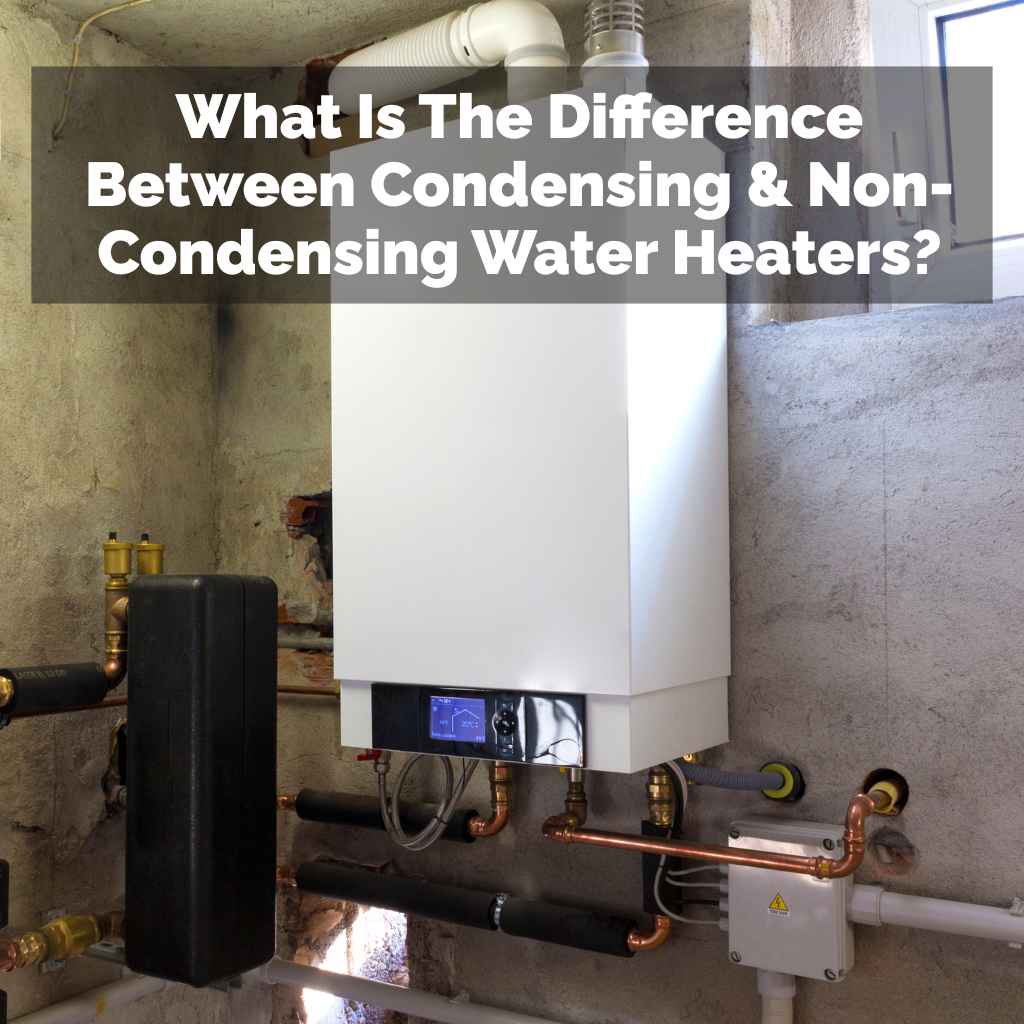
What Is The Difference Between Condensing & Non-Condensing Water Heaters?
The main difference lies in how they handle exhaust gases and reclaim heat. Condensing models capture extra heat from exhaust gases, making them more energy-efficient than traditional non-condensing types. This heat capture process involves condensation.
Understanding Water Heater Types
Water heaters are vital for homes. They give us hot water for showers, dishes, and laundry. There are two main kinds you’ll see.
These are non-condensing and condensing models. Each works in its own way. Their designs affect how much energy they use.
They also impact how much hot water they can give you.
Non-condensing water heaters are the older, more common type. They work much like they have for years. Their exhaust gases are hot.
These gases go straight out of your home. They carry away a lot of heat. This means some energy is lost.
Think of it like a car exhaust pipe. It gets hot and lets heat escape into the air.
Condensing water heaters are newer technology. They are built to be more efficient. They capture more heat.
They do this by cooling down the exhaust gases. When these gases cool, water vapor in them turns back into liquid water. This process is called condensation.
This is where the name comes from. The heat released during this condensation is then used. It helps heat up more water.
This makes them save energy.
How Non-Condensing Water Heaters Work
A non-condensing water heater is pretty straightforward. It has a tank. This tank holds water.
A heating element warms the water. This element can be gas or electric. For gas models, a burner at the bottom heats the water.
For electric models, heating elements are inside the tank.
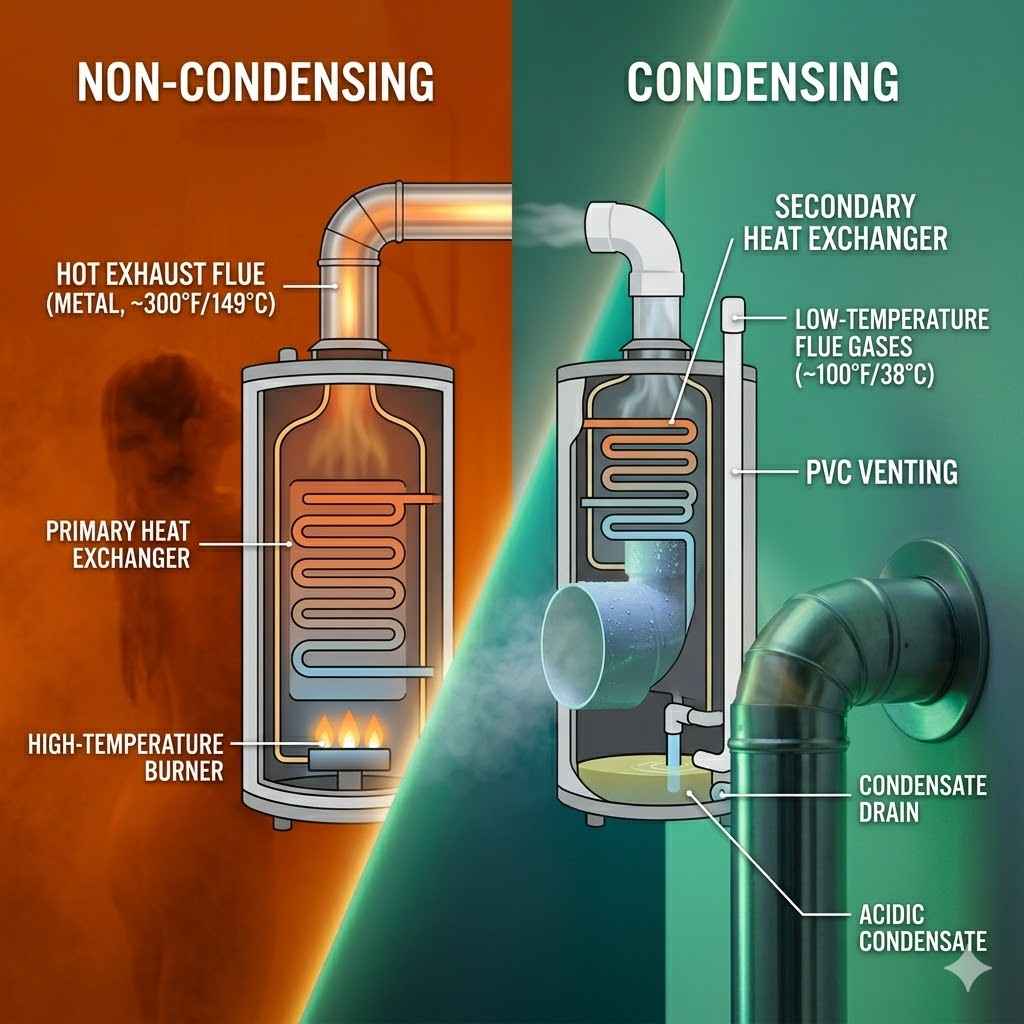
The hot exhaust gases from the burner (in gas models) rise. They pass through a flue. This flue is a metal pipe.
It goes up through the middle of the tank. The gases then exit the tank and your home through a vent pipe. These gases are still quite hot when they leave.
They might be 300 to 400 degrees Fahrenheit.
Because these hot gases are vented directly outside, a lot of heat energy is wasted. It just goes up the chimney. This is the main reason why they are less efficient.
They are like a regular fire that sends all its warmth straight up. They do their job, but not as smartly as they could.
These units have been around for a long time. They are reliable and often cheaper to buy upfront. Most homes already have the venting system they need.
This makes them an easy replacement for an old unit.
How Condensing Water Heaters Work
Condensing water heaters are a bit more complex. They use a similar tank and heating system. But they have an extra step to grab heat.
The goal is to use as much of the burner’s energy as possible.
In a gas condensing water heater, the exhaust gases are routed differently. Instead of going straight up a flue in the middle, they are sent through a special heat exchanger. This exchanger is designed to cool the gases down.
As the gases cool, the water vapor inside them turns into liquid water. This liquid water is then drained away. It’s often called condensate.
The process of turning gas into liquid water releases a lot of latent heat. This heat is captured by the heat exchanger. It’s then used to preheat the incoming cold water.
This means the burner doesn’t have to work as hard. It doesn’t need to heat the water from cold to hot. It only needs to heat it from “pre-heated” to hot.
Because of this heat recovery, the exhaust gases are much cooler. They might be only 100 to 150 degrees Fahrenheit. This cooler exhaust means less heat is lost.
It also means the flue materials can be different. They don’t need to handle such high temperatures. Often, plastic pipes are used for venting.
This can make installation easier in some cases.
The condensate produced is slightly acidic. It needs to be drained properly. It usually goes into a drain pipe.
Sometimes a small pump is needed to move it if the drain is far away.
Energy Efficiency Explained
Energy efficiency is where these two types really differ. This is the main selling point for condensing models. It’s also why they cost more upfront.
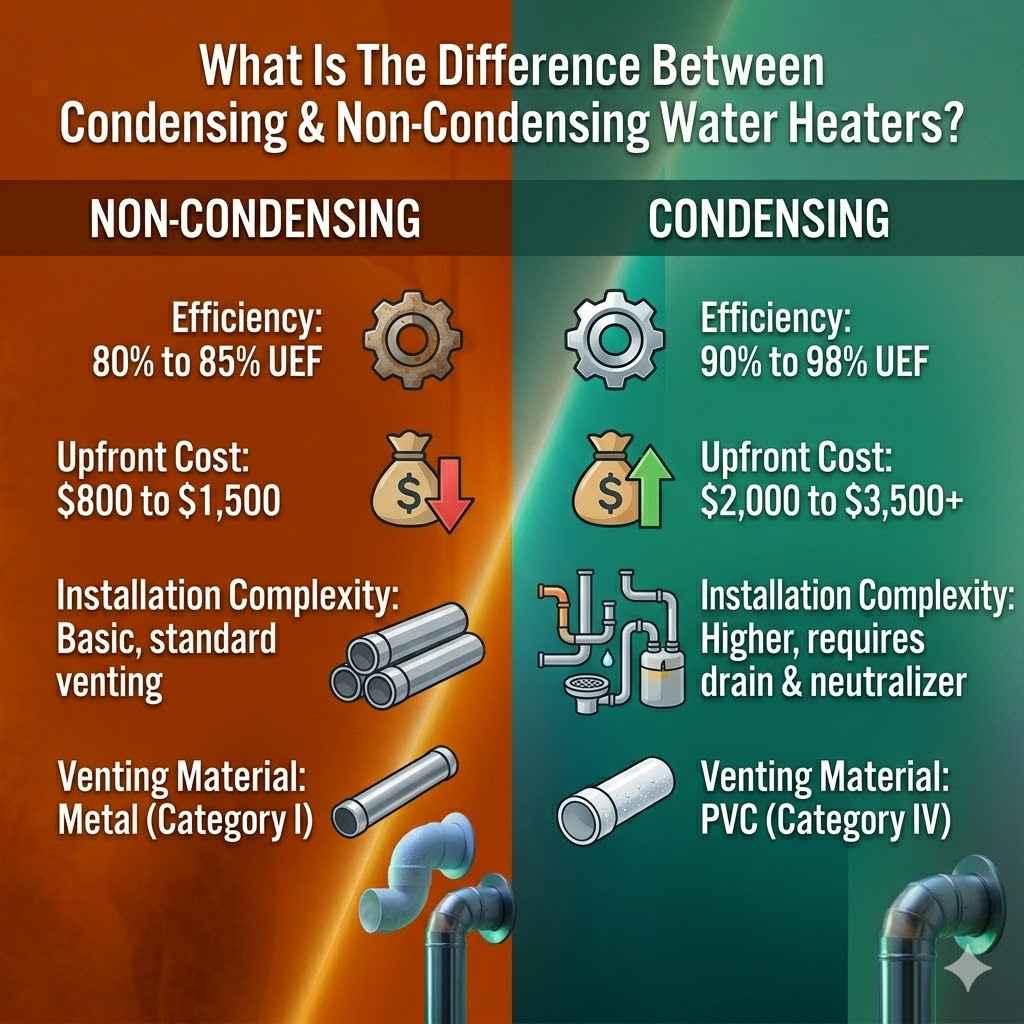
Non-condensing water heaters typically have an Energy Factor (EF) between 0.55 and 0.75. The EF is a number that shows how much hot water is produced for a given amount of energy used. A higher number means more efficiency.
Condensing water heaters can have an EF of 0.80 or higher. Some can even reach 0.95. This means they use much less energy.
For every dollar you spend on gas or electricity to heat water, more of that money goes into your hot water. Less is wasted up the vent.
The U.S. Department of Energy (DOE) has set standards. These standards push for more efficient water heaters.
Condensing technology is becoming more common because of these rules. They are seen as the future for gas water heating. They help reduce a home’s energy bills.
They also reduce the impact on the environment.
Think about it like this: If you have a 100-gallon tank and it needs heating every day, a 20% improvement in efficiency adds up fast. Over a year, that’s a lot of saved energy. Saved energy means saved money.
For many families, this is a big deal.
Cost: Upfront vs. Long-Term
When you look at buying a new water heater, cost is always a factor. There are two main costs to consider: the price you pay to buy it and install it, and the money you spend to run it over time.
Upfront Cost: Non-condensing water heaters are usually cheaper to buy. They have simpler designs. They don’t have the extra parts like advanced heat exchangers or condensate drains.
You might pay 30% to 50% less for a basic non-condensing model compared to a condensing one.
Installation Cost: Sometimes installation can be more. If your home already has the right venting for a non-condensing unit, it’s straightforward. Condensing units might need new vent pipes.
They might need a drain line for the condensate. This can add to the labor cost. However, in some cases, using plastic pipes for venting can make it easier and cheaper.
Long-Term Cost: This is where condensing models shine. Because they use less energy, your monthly utility bills will be lower. The amount you save depends on your local energy prices.
It also depends on how much hot water your household uses. Over the life of the water heater (which can be 10 to 20 years), the energy savings can often make up for the higher initial price.
Payback Period: Experts often talk about a “payback period.” This is how long it takes for the energy savings from the more efficient unit to equal the extra cost you paid for it. For condensing water heaters, this period can range from a few years to maybe seven or eight years. After that, you’re just saving money.
Condensing vs. Non-Condensing: At a Glance
Non-Condensing:
- Pros: Lower upfront cost, simpler technology, often easier replacement if venting is already in place.
- Cons: Less energy efficient, higher operating costs, more heat wasted.
Condensing:
- Pros: Higher energy efficiency, lower operating costs, potential rebates or incentives, better for the environment.
- Cons: Higher upfront cost, requires condensate drainage, may need different venting.
When Condensing Water Heaters Make Sense
Condensing water heaters are a great choice for many homes. They are especially good if you are looking to save money on your energy bills. They are also a smart option if you care about reducing your carbon footprint.
High Hot Water Usage: If your family uses a lot of hot water, the savings from a condensing unit will be more noticeable. Think of large families, homes with multiple bathrooms, or people who run laundry often. The more hot water you use, the more you can save by using an efficient heater.
High Energy Costs: If you live in an area where natural gas or electricity prices are high, a condensing unit will pay for itself faster. The savings will be more significant.
New Construction or Major Renovation: If you are building a new home or doing a big remodel, it’s the perfect time to install a condensing water heater. You can plan the venting and drainage from the start. This makes the installation smoother and potentially less expensive.
Replacing an Old, Inefficient Unit: If your current water heater is old and running poorly, upgrading to a condensing model is a smart long-term investment. Even if your current unit is still working, if it’s an older, less efficient model, the savings might be worth the switch.
Environmental Concerns: For people who want to be more environmentally friendly, a condensing unit is a good choice. Using less energy means fewer greenhouse gas emissions. It’s a way to make your home more sustainable.
Government Incentives: Sometimes, there are rebates or tax credits available for installing high-efficiency appliances. These can help offset the higher upfront cost of a condensing water heater. It’s worth checking with your local utility company or government websites for any available programs.
Choosing the Right Venting
Non-Condensing: Typically uses Type B vent piping. This is a double-walled metal pipe. It needs to be properly sized and routed to vent safely outside.
Condensing: Can often use PVC or CPVC pipes. These are plastic pipes. They are lighter and easier to install.
The exhaust gases are cooler. However, the exact type of plastic and installation must follow manufacturer and local building codes.
When Non-Condensing Water Heaters Are Still a Good Choice
While condensing water heaters offer better efficiency, non-condensing models are not obsolete. There are still situations where they make more sense or are the only practical option.
Budget Constraints: If your budget for a new water heater is very tight, a non-condensing unit is the more affordable choice upfront. Sometimes, you just need to get hot water flowing again without a big immediate expense.
Simple Replacement: If your current water heater is a standard non-condensing model and it fails, the easiest and quickest replacement is often another non-condensing unit. Your existing venting will likely work. This can save on installation time and costs.
Low Hot Water Usage: If you live alone or in a very small household, and your hot water needs are minimal, the energy savings from a condensing unit might not be as significant. The payback period could be much longer, making the upfront cost less justifiable.
Rental Properties: For landlords, the upfront cost is often the biggest factor. A cheaper non-condensing unit might be preferred, assuming it meets basic code requirements. The ongoing energy savings are usually passed on to the tenant.
No Suitable Venting or Drainage: If your home’s structure makes it difficult or very expensive to add the proper venting or condensate drainage required for a condensing unit, a non-condensing model might be the only practical choice. This could be the case in older homes with limited space for modifications.
Electric Water Heaters: It’s important to note that most electric water heaters are non-condensing by nature. The technology for making them “condensing” is not common or cost-effective in residential electric models. Therefore, if you have an electric water heater, you’ll likely be replacing it with another non-condensing electric model.
Installation and Maintenance Differences
The installation and upkeep of these two types of water heaters have some key differences that are worth noting.
Installation: As mentioned, condensing units might require specialized venting. This often involves running new pipes, possibly made of PVC. These pipes need to be sloped correctly for condensate to drain.
They also need to terminate outside your home in an approved location. Non-condensing units typically use existing metal flues. The installation is usually more straightforward if the old venting is in good condition.
Drainage: Condensing water heaters produce condensate. This water needs a place to go. It must be piped to a suitable drain.
If a floor drain isn’t nearby, a small condensate pump might be needed. This adds another component that requires power and occasional checks.
Maintenance: Both types need regular maintenance for optimal performance and lifespan. This includes flushing the tank to remove sediment and checking the anode rod. However, condensing units have a few extra things to check.
The condensate drain line can sometimes get clogged. The heat exchanger might need occasional cleaning. The drain pan also needs to be checked to ensure it’s not holding water.
Lifespan: While both types can last many years, the extra complexity of condensing units might mean slightly more potential for issues down the line. However, with proper maintenance, both can be very reliable. Many manufacturers offer good warranties on their condensing models, especially on the heat exchanger.
Professional Installation is Key: For both types, but especially for condensing units, professional installation is highly recommended. A qualified plumber or HVAC technician will ensure everything is installed correctly, safely, and according to local building codes. This is crucial for performance and preventing potential problems like carbon monoxide leaks (with gas units).
Quick Scan: Maintenance Checks
- Both: Tank flushing, anode rod check, temperature and pressure relief valve check.
- Condensing: Check and clean condensate drain line, inspect heat exchanger, check condensate pump (if applicable).
Environmental Impact
When we think about our homes, we also think about their impact on the planet. Water heaters play a role in this, especially gas models.
Energy Use: Condensing water heaters use less energy. This means they burn less natural gas. Burning natural gas produces carbon dioxide (CO2), a greenhouse gas.
It also produces other pollutants.
By using less gas, condensing units help reduce a household’s carbon footprint. This is a significant benefit for those concerned about climate change. The DOE estimates that switching to a high-efficiency condensing water heater can reduce a home’s energy consumption by as much as 10-20% compared to a standard model.
Resource Conservation: Using less energy also means conserving natural resources. Natural gas is a finite resource. Using it more wisely helps ensure its availability for the future.
Water Waste: While not directly related to condensing vs. non-condensing, efficient water heating can also indirectly reduce water waste. If hot water is readily available and affordable, people might be less mindful of long showers.
However, this is more about user behavior. The heater itself doesn’t directly cause water waste.
Emissions: Gas-fired water heaters produce combustion byproducts. These include nitrogen oxides (NOx) and carbon monoxide (CO). While modern heaters are designed to burn fuel cleanly, reducing the amount of fuel burned inherently reduces these emissions.
For many people, choosing a condensing water heater is an easy way to make their home more environmentally friendly without sacrificing comfort. It’s a practical step towards a greener lifestyle.
Real-World Scenarios
Let’s look at a couple of real-life situations to see how these differences play out.
Scenario 1: The Young Family
Sarah and Tom just bought their first home. They have a toddler and are thinking about having another child. Their old water heater is about 15 years old and starting to make strange noises.
They need a new one. They use a lot of hot water for laundry, baths for their son, and running the dishwasher. They want to save money on their bills, especially with a growing family.
Their gas bill is already pretty high in the winter.
Their plumber suggests a condensing gas water heater. He explains that while it costs more now, the monthly savings on their gas bill will add up. He shows them how the new venting is needed but is manageable.
They decide to go with the condensing model. They expect to see lower bills in a few months and feel good about using less energy.
Scenario 2: The Empty Nesters
Mark and Lisa’s kids have moved out. It’s just the two of them now. Their old electric water heater finally gave out.
They don’t use a lot of hot water compared to before. They have a small tank, and it’s worked fine for years. They are on a fixed income and are very careful with their budget.
They don’t want to spend a lot of money right now.
Their technician tells them that electric water heaters are almost always non-condensing. He says the cost of a high-efficiency gas condensing unit, plus the potential need for new gas lines and venting, would be too much for their current budget. They decide to stick with a new electric water heater.
It’s a simpler, less expensive
Contrast Matrix: When to Choose
Myth: All new water heaters are complicated and expensive.
Reality: Non-condensing models are still widely available and more affordable upfront. Condensing models offer long-term savings and environmental benefits.
Normal: A standard non-condensing water heater is fine for most basic needs and tight budgets.
Concerning: Not properly venting a gas water heater, regardless of type, can be very dangerous. Always ensure professional installation and adherence to codes.
What This Means For You
So, what does all this mean for your home and your hot water?
If you have a gas water heater: You have a choice between condensing and non-condensing. If you’re replacing an old unit and want to save money on energy bills long-term, and your budget allows, a condensing model is usually the best upgrade. If budget is very tight, or you need a quick, simple replacement, a non-condensing unit will still do the job.
If you have an electric water heater: You will likely be replacing it with another non-condensing electric unit. The technology for condensing electric water heaters isn’t common for homes. Efficiency gains in electric models usually come from better insulation or timers.
Check Your Venting: For gas units, pay attention to your venting. Condensing units need different vents than non-condensing units. Your installer will figure this out.
Understand Your Usage: Think about how much hot water your family uses. This will help you estimate potential savings from a more efficient unit.
Consider the Long Game: While the upfront cost is important, look at the total cost of ownership over 10-15 years. Energy savings can make a big difference.
Safety First: No matter which type you choose, proper installation is vital. A gas water heater, if not vented correctly, can release carbon monoxide. Always use a qualified professional.
Quick Fixes & Tips
While replacing a water heater is a big step, there are smaller things you can do to ensure you get the most from it and keep it running well.
Check the Temperature Setting: Most water heaters are set higher than needed. Setting your water heater to 120°F (49°C) is often sufficient. This saves energy and reduces the risk of scalding.
Check your manual for instructions. Always be careful when adjusting these settings.
Insulate the Tank and Pipes: If you have an older, non-condensing tank, adding an insulating blanket can help reduce standby heat loss. Also, insulate the first few feet of both the hot and cold water pipes connected to the tank. This is a simple, inexpensive way to save energy.
Make sure not to block any vents on gas models.
Regular Flushing: Even with new units, sediment can build up in the tank. Flushing the tank once a year removes this sediment. This helps the heater work more efficiently and can extend its life.
Consult your manual for how to do this safely.
Check the Anode Rod: The anode rod is a sacrificial rod that protects your tank from corrosion. It needs to be checked every 1-3 years and replaced when it’s mostly gone. This is a key maintenance step for tank longevity.
Leaks: Keep an eye out for any leaks around the tank or fittings. Small leaks can become big problems quickly. Address them as soon as you notice them.
Read Your Manual: Seriously, read the owner’s manual. It has specific information about your model, its maintenance needs, and recommended settings. It’s the best resource for keeping your water heater running smoothly.
Frequently Asked Questions
What is the main advantage of a condensing water heater?
The main advantage is significantly higher energy efficiency. Condensing models capture extra heat from exhaust gases, using less fuel to heat water compared to non-condensing units. This leads to lower energy bills and a reduced environmental impact.
Do condensing water heaters cost more to run?
No, condensing water heaters cost less to run because they are more energy-efficient. While their upfront purchase price is higher, the savings on your monthly utility bills typically make them cheaper to operate over their lifespan.
Can I vent a condensing water heater with standard PVC pipes?
Often, yes. Condensing water heaters produce cooler exhaust gases, which allows for the use of plastic vent pipes like PVC or CPVC in many cases. However, this depends on the specific model and local building codes, so always follow the manufacturer’s installation instructions.
Does a condensing water heater require a condensate drain?
Yes, a condensate drain is essential for condensing water heaters. The process of condensation creates liquid water, which must be safely drained away from the unit, typically into a household drain.
How much more efficient are condensing water heaters?
Condensing water heaters are typically 10-20% more efficient than standard non-condensing models. Their Energy Factor (EF) can be 0.80 or higher, compared to 0.55-0.75 for non-condensing units.
Are there any rebates or tax credits for condensing water heaters?
Yes, many utility companies and government programs offer rebates or tax credits for installing high-efficiency appliances like condensing water heaters. It’s a good idea to check with your local energy provider or government websites for available incentives.
Conclusion
Choosing between a condensing and non-condensing water heater comes down to your needs and priorities. Condensing models offer superior efficiency and long-term savings. Non-condensing units provide a more budget-friendly upfront option.
Consider your hot water usage, local energy costs, and installation feasibility. Either way, understanding these differences helps you make a smart choice for your home.
Sponsored / affiliate links. As an Amazon Associate I earn from qualifying purchases. I may earn additional commission from eligible campaigns.