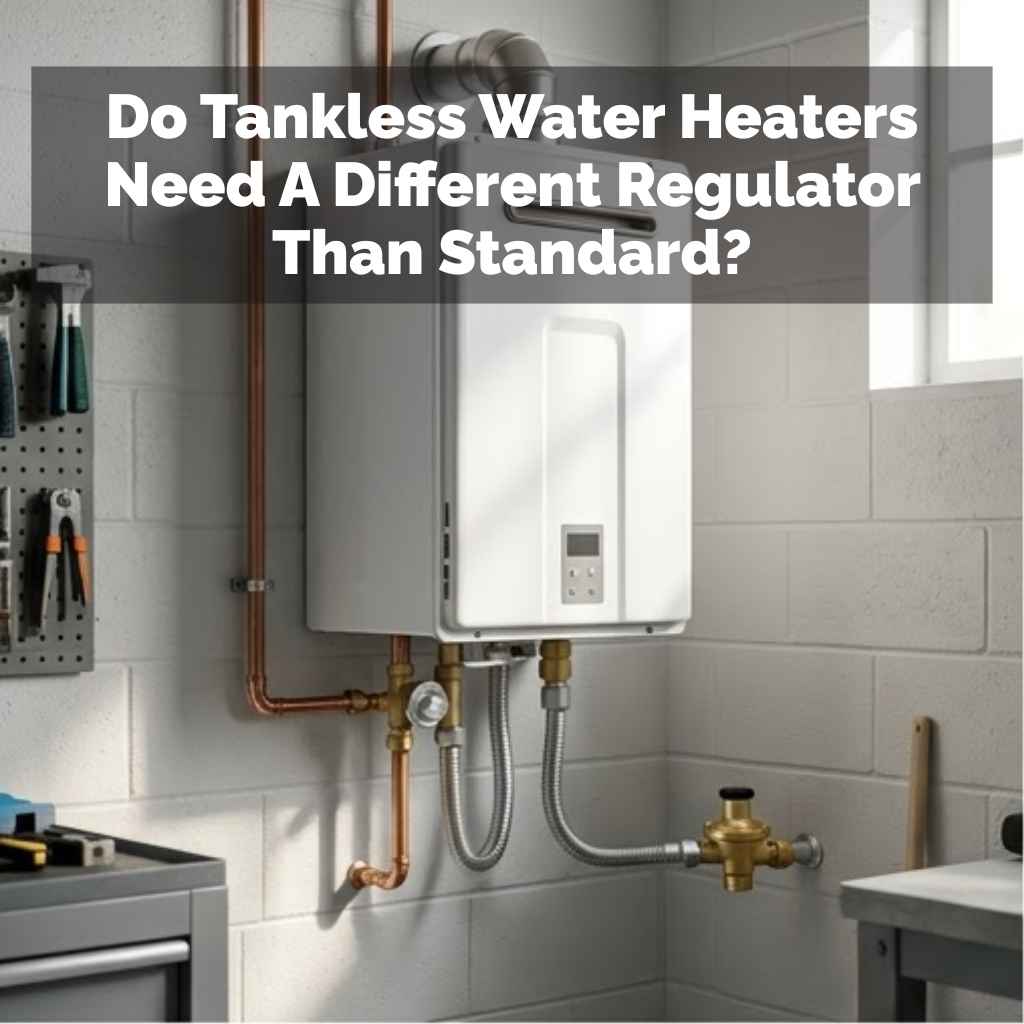
Do Tankless Water Heaters Need A Different Regulator Than Standard?
You’ve probably heard about tankless water heaters. They promise endless hot water and energy savings. But when you start looking into them, a question pops up.
Do these fancy new systems need special parts? Specifically, what about the water pressure regulator? It’s a common concern, and for good reason.
Getting plumbing right is key to a happy home.
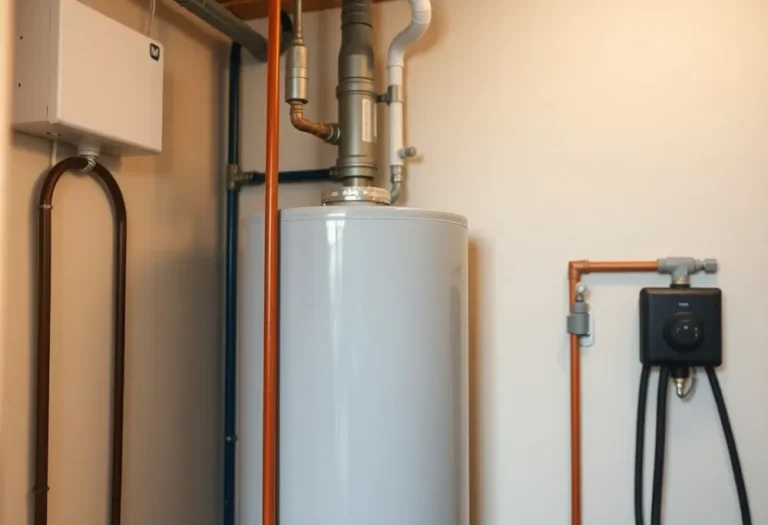
Tankless water heaters can often use the same type of water pressure regulator as standard tank heaters. However, the specific requirements and recommendations might vary based on the tankless unit’s flow rate, pressure needs, and the plumbing system. Always check the manufacturer’s guidelines.
Understanding Water Pressure Regulators
Let’s break down what a water pressure regulator does. Think of it as a traffic cop for your water pipes. Your main water supply from the city can sometimes be too strong.
This high pressure can be hard on your pipes. It can also damage your appliances. Things like washing machines, dishwashers, and yes, your water heater, can suffer.
A regulator lowers this incoming pressure to a safe, consistent level. This protects your home’s plumbing system. It also helps your appliances work better for longer.
Most homes in the U.S. have a water pressure regulator. It’s usually a bell-shaped device.
You can often find it where the main water line enters your house. Sometimes it’s on an outside spigot. This little gadget ensures the water pressure stays within a certain range.
Usually, this is between 40 and 60 pounds per square inch (psi). Some areas might have higher or lower pressure. The regulator helps keep it stable.
Why is this important for water heaters? Both standard tank heaters and tankless units need water to flow through them. Too much pressure can cause leaks.
It can stress internal parts. Too little pressure means you won’t get enough hot water. Or, the hot water might come out weakly.
A regulator ensures a steady flow at the right strength. This is good for all water heaters.
Tankless Water Heaters: What’s Different?
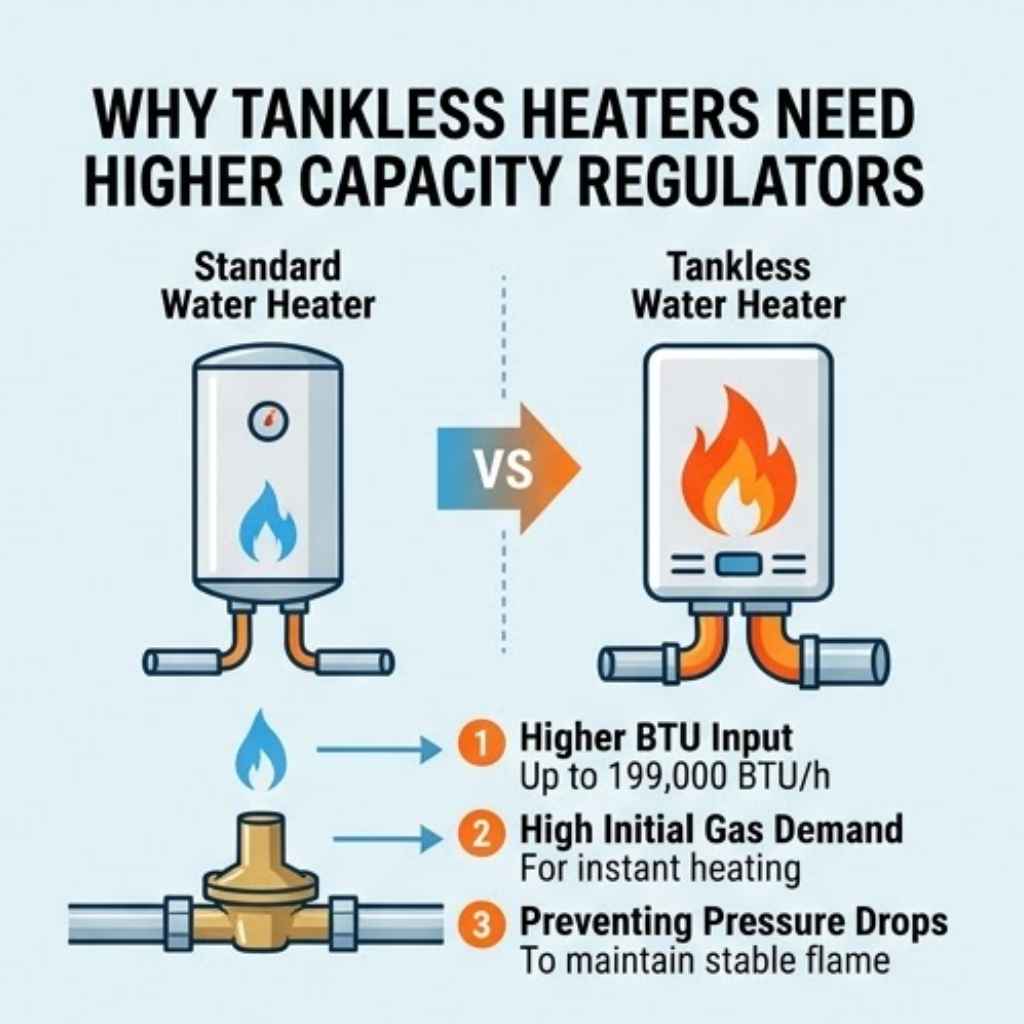
Tankless water heaters work a bit differently than traditional ones. Instead of heating a large tank of water, they heat water on demand. When you turn on a hot water tap, cold water flows through a powerful heating element.
This heats the water instantly. Then, it’s sent straight to your faucet. This means they don’t store hot water.
They only heat what you’re using right at that moment.
This on-demand heating has some implications. For one, the flow rate is super important. A tankless heater needs a certain minimum flow rate to even turn on.
It needs enough water passing through it to engage its sensors and start heating. If your home’s water pressure is too low, you might not hit this minimum. This means no hot water, even if the heater is working fine.
Conversely, some tankless units have limits on how much pressure they can handle. While they don’t store hot water, the plumbing connections and internal heat exchanger still have limits. Overly high pressure can still be an issue.
So, the need for a regulator is definitely still there. The question is whether the type of regulator needs to change.
My Own Tankless “Oops” Moment
I remember when I first looked into getting a tankless water heater for my own home. It was a few years ago. I was so excited about the idea of never running out of hot water during a big family gathering.
My old tank heater always struggled. I’d run out of hot water during showers. Guests would complain.
It was a constant annoyance.
I did a lot of research. I found a great-looking tankless model online. It promised great efficiency and endless hot water.
The installation guide looked pretty straightforward. I even watched a few YouTube videos. I felt pretty confident.
Then I got to the section about water pressure. It said the incoming pressure should be between 40 and 80 psi. My home’s pressure was usually around 70 psi.
I thought, “Great! It’s within the range.”
I had a plumber come over to assess the situation. He took one look at my existing setup. He pointed to the old, slightly corroded regulator on my main line.
“That regulator is old and a bit loose,” he said. “And frankly, it’s probably not set precisely enough for a sensitive unit like a tankless.” He explained that while the range was okay, the consistency and exact setting were crucial for tankless heaters.
He told me about how tankless units have minimum flow rates to activate. He also mentioned some models have specific pressure tolerances. If the pressure was too low, it wouldn’t kick on reliably.
If it was too high, it could damage the unit over time. He suggested replacing the old regulator with a new, adjustable one. He set it precisely to 65 psi.
It wasn’t a massive cost, but it felt like a crucial step I might have missed if I’d tried to DIY it completely. It really hammered home that while the basic concept of pressure regulation is the same, the details matter a lot with these newer systems.
Key Differences in Flow and Pressure Needs
Flow Rate Matters Most: Tankless heaters need a certain GPM (gallons per minute) to start. Standard heaters don’t care as much if the flow is slow. They just heat the stored water.
Consistent Pressure is Key: Tankless units are pickier. They need a steady pressure, not one that swings wildly. A good regulator keeps it stable.
Peak Demand vs. Continuous: Standard heaters heat a big batch. Tankless heaters heat a steady stream.
This affects how they react to pressure changes.
Can You Use the Same Regulator?
So, back to the main question: can you use the same regulator? Often, yes. The fundamental job of a regulator—reducing high city water pressure to a safe household level—is the same for both types of water heaters.
If your current regulator is newer, in good working order, and set to a pressure compatible with your tankless unit, it might be fine.
However, there are important considerations. Older regulators can become less accurate. They might stick or not hold a steady pressure.
This can cause problems. Also, some tankless water heaters have specific pressure requirements. They might need a pressure at the higher end of the typical range (e.g., 60-80 psi) to ensure minimum flow activation.
Or, they might have a strict maximum pressure limit to prevent damage.
It’s not just about the regulator itself. It’s about the whole plumbing system. The pipes in your house, their condition, and the diameter of the pipes all play a role.
If your pipes are old and narrow, they might already restrict flow. This can make it harder for a tankless heater to get enough water. You might need a regulator set at a slightly higher pressure to compensate.
But only if your tankless unit can handle it.
Most plumbers will recommend installing a new, high-quality, adjustable regulator when you switch to a tankless system. It’s a relatively inexpensive part that can prevent much more costly damage down the line. It also ensures your new, expensive tankless heater operates at its peak efficiency and longevity.
Think of it as a small investment for peace of mind.
When Your Old Regulator Might Be Okay
Age and Condition: If it’s less than 5-10 years old and looks clean, it’s likely still good.
Consistent Output: Does your water pressure feel steady? No sudden drops or surges?
Manufacturer Specs: Does your tankless heater’s manual say your current pressure range is acceptable?
Factors That Influence Regulator Choice
Several things will determine if you need a special regulator, or if your existing one will do. The first is the flow rate of the tankless water heater. Units vary.
Some small ones might need only 1-2 GPM to turn on. Larger whole-house units might need 4-5 GPM or more.
Next, consider the minimum and maximum pressure ratings specified by the tankless heater’s manufacturer. This is usually found in the installation manual. This is the most critical piece of information.
You need to ensure your regulator is set to keep the pressure within these exact limits. Some manufacturers might even recommend specific types of regulators.
Your home’s existing water pressure is also a factor. If your city pressure is consistently very low (e.g., under 40 psi), a standard regulator won’t help you activate a tankless heater. In fact, you might need a booster pump in that situation.
If your pressure is very high (e.g., over 100 psi), a good regulator is absolutely essential.
The type of regulator also matters. There are direct-acting (spring-loaded) regulators and pilot-operated regulators. Pilot-operated ones are generally more accurate and maintain pressure better, especially under varying flow conditions.
For sensitive electronics in a tankless heater, a more precise regulator might be beneficial.
Finally, local plumbing codes can play a role. Some areas have specific requirements for water pressure regulation, especially with new installations. It’s always best to check with your local building department or a qualified plumber.
Quick Scan: Regulator Check List
- Manufacturer’s Manual: Check specs!
- Current Water Pressure: Test it.
- Regulator Age/Condition: Inspect closely.
- Desired Flow Rate: Matches heater?
- Plumbing Codes: Local rules.
What Does the Manufacturer Say?
This is the golden rule: always consult the installation manual for your specific tankless water heater. Manufacturers test their units rigorously. They know exactly what water pressure and flow rate are required for safe and efficient operation. They will clearly state the acceptable pressure range, often in psi.
For example, one manufacturer might say the inlet water pressure must be between 30 psi and 150 psi. Another might be more stringent, stating 40 psi to 80 psi. Some might even have a recommended setting within that range, like “set regulator to 60 psi.”
The manual will also tell you about flow rates. It might state: “The unit requires a minimum flow of 0.5 GPM to activate.” This tells you that if your home’s water pressure is so low that you can barely get a trickle, the heater won’t turn on. A regulator’s job is to reduce pressure, so it can’t increase it to meet a minimum flow requirement if the source pressure is too low.
That’s where a booster pump might be needed.
If the manual recommends a specific type of regulator or notes any special installation requirements related to water pressure, you must follow them. Ignoring these guidelines can void your warranty. It can also lead to performance issues or even damage to the unit.
The manual is your ultimate guide.
Split Insight: Pressure vs. Flow
Water Pressure: This is the force pushing the water through your pipes. Measured in PSI. It’s what a regulator controls.
Water Flow Rate: This is how much water is moving per unit of time. Measured in GPM. It’s what activates the tankless heater and determines how much hot water you get.
The Connection: Higher pressure generally means higher flow. But pipe size, length, and obstructions also affect flow. A regulator ensures pressure is right, which helps achieve the necessary flow.
When to Consider an Upgrade or New Regulator
You should definitely consider a new or upgraded regulator in a few situations. If your current regulator is old (over 10-15 years) or shows signs of wear, it’s time for a change. Look for leaks, visible corrosion, or unusual noises coming from it.
If your water pressure seems inconsistent—sometimes strong, sometimes weak—your regulator might be failing.
If you’re installing a new tankless water heater and the manufacturer’s specifications for pressure are very specific, it’s wise to install a new, adjustable regulator. This allows you to set the pressure precisely to the manufacturer’s recommendation. Trying to get an old, non-adjustable regulator to meet exact specs can be difficult or impossible.
Consider an upgrade if you live in an area with known water pressure fluctuations. Some municipal systems have daily or seasonal changes. A high-quality, pilot-operated regulator will handle these changes much better than a basic spring-loaded one.
This ensures consistent performance from your tankless heater.
Another reason is if your home has had plumbing work done recently. Sometimes, when pipes are disturbed, the old regulator might not be seated correctly or could have been damaged. Replacing it ensures everything is up to code and working properly.
And, as in my story, if a plumber or installer recommends it during the tankless heater installation, it’s usually for good reason. They have the expertise to assess your system and the requirements of the new unit.
Signs Your Regulator Needs Help
- Age: Older than 10-15 years.
- Leaks: Water dripping from the regulator.
- Noise: Whistling or vibrating sounds.
- Inconsistent Pressure: Water flow varies wildly.
- Appliance Issues: Other fixtures acting up.
Real-World Scenarios and What They Mean
Let’s look at a few common scenarios. Imagine you live in a newer home in a suburban area. The water pressure from the city is typically around 75 psi.
Your new tankless heater requires 40-80 psi. In this case, your existing, modern regulator might be fine if it’s set to keep pressure around 60-70 psi. You just need to verify its setting.
Now, consider an older home in a hilly part of town. The water pressure can fluctuate quite a bit due to elevation changes. It might dip to 45 psi during peak usage and jump to 90 psi at night.
A basic regulator might struggle to keep up. You’d likely need a new, more robust, adjustable regulator set to a mid-range pressure (like 55 psi) that your tankless unit can handle, ensuring it still activates when pressure dips but doesn’t exceed limits when it spikes.
What if you’re in an apartment building? Centralized water systems in large buildings often have their own pressure regulation. You might not even have an individual regulator.
Your tankless unit (if allowed) would need to be compatible with the building’s supplied pressure. You would absolutely need to check the building management and the heater’s specs.
Another scenario: you have a well system. Well water pressure is generated by a pressure tank and pump. This system is often more variable than city water.
You’ll need a well-experienced plumber to set up the pressure tank correctly and then use a high-quality regulator to ensure consistent pressure for your tankless heater. The pressure tank itself needs to be sized and set correctly for the tankless heater to function.
Contrast: Normal vs. Concerning Pressure
Normal: Water pressure is steady, appliances work well, no leaks, within manufacturer specs.
Concerning: Pressure drops when multiple taps are used, pipes make noise, appliances malfunction, shower pressure is weak, leaks appear.
What This Means for Your Home
The bottom line is that while a tankless water heater doesn’t inherently require a completely different type of regulator than a standard tank heater, it demands more precision. Your existing regulator might work, but it’s often best practice to have it checked, adjusted, or replaced when installing a tankless system.
Here’s what it means for you:
- Check the Manual First: This is your primary source of truth for pressure requirements.
- Know Your Home’s Pressure: A simple pressure gauge can tell you this. Plumbers can measure it accurately.
- Assess Your Current Regulator: Age, condition, and type matter.
- Consult a Professional: A qualified plumber experienced with tankless heaters is your best bet.
If your pressure is too low, a regulator won’t fix it. You might need a pump. If your pressure is too high or inconsistent, a good regulator is essential.
The goal is to provide the tankless heater with the optimal water conditions so it can do its job efficiently and reliably for years to come.
Failing to address water pressure can lead to a few unhappy outcomes. Your tankless heater might not activate consistently, leaving you with cold showers. It could operate inefficiently, costing you more in energy bills.
Or, the excessive pressure could cause premature wear and tear on the unit’s components, leading to costly repairs or even failure.
Quick Tips for Optimal Performance
Here are a few simple things to keep in mind to ensure your tankless water heater performs its best:
- Regularly Test Water Pressure: Do this once a year. It’s an easy check.
- Listen for Unusual Sounds: Gurgling, hammering, or whistling from your pipes or water heater could indicate pressure issues.
- Inspect Your Regulator: Look for any signs of leaks or corrosion.
- Keep the Heater Clean: Follow the manufacturer’s advice for flushing and descaling. This is separate from pressure but vital for efficiency.
- Don’t Overload the System: Be mindful of how many hot water fixtures you’re using at once, especially with smaller tankless units.
These small steps help maintain the health of your entire plumbing system, not just your water heater. They ensure that the pressure regulator is doing its job correctly, protecting your investment.
Frequently Asked Questions
Do I need a regulator if my city water pressure is already low?
If your city water pressure is consistently below the minimum required by your tankless heater (e.g., below 30-40 psi), a pressure regulator won’t help. Its job is to reduce high pressure, not increase low pressure. In very low-pressure situations, you might need a booster pump to ensure adequate flow to the tankless unit.
What is the ideal water pressure for a tankless water heater?
The ideal water pressure is determined by the specific tankless water heater’s manufacturer. Most fall within a range of 30 to 80 psi. Always check your unit’s installation manual for its exact requirements.
Maintaining pressure within this range ensures proper activation and prevents damage.
How often should a water pressure regulator be replaced?
Most manufacturers recommend inspecting water pressure regulators every 5 years and replacing them every 10-15 years, or sooner if they show signs of wear. Older regulators can lose their effectiveness and fail to maintain consistent pressure, which is critical for tankless water heaters.
Can too much water pressure damage my tankless water heater?
Yes, absolutely. High water pressure can stress the internal components of a tankless water heater, including the heat exchanger and seals. This can lead to leaks, premature failure, and costly repairs.
A properly set water pressure regulator is essential to prevent this damage.
What is the difference between a standard and a high-flow regulator?
A “high-flow” regulator typically refers to a regulator designed to handle larger volumes of water without a significant drop in pressure. For tankless water heaters, the key is not necessarily “high-flow” but rather maintaining a consistent and accurate pressure within the manufacturer’s specified range, regardless of how many fixtures are running. Some specialized regulators might be better suited for very high flow demands.
Can I adjust my own water pressure regulator?
Yes, many modern regulators are adjustable. They usually have a screw or a nut that you can turn. However, it’s crucial to have a water pressure gauge handy to measure the pressure accurately as you adjust it.
Incorrect adjustments can lead to too much or too little pressure. If you’re not comfortable doing this, it’s best to hire a qualified plumber.
Final Thoughts
Switching to a tankless water heater is a great upgrade. Ensuring your plumbing system, especially water pressure, is optimized is a key part of that process. While your old regulator might be okay, a new, adjustable one offers peace of mind and precise control.
Always prioritize the manufacturer’s guidelines for your specific unit to guarantee performance and longevity.
Sponsored / affiliate links. As an Amazon Associate I earn from qualifying purchases. I may earn additional commission from eligible campaigns.
 Water Flow Control Shut Off Valve with Brass Adjustable Hand Level Water Pressure Regulator for Hand Held Shower Head & Bidet Sprayer, Brushed Nickel Water Saver G1/2
 Rocky Mountain Goods Shower Flow Control Adapter – 1/2 Inch IPS – Chrome Plated ABS – Water Saver Valve to Adjust or Shut Off Shower Water