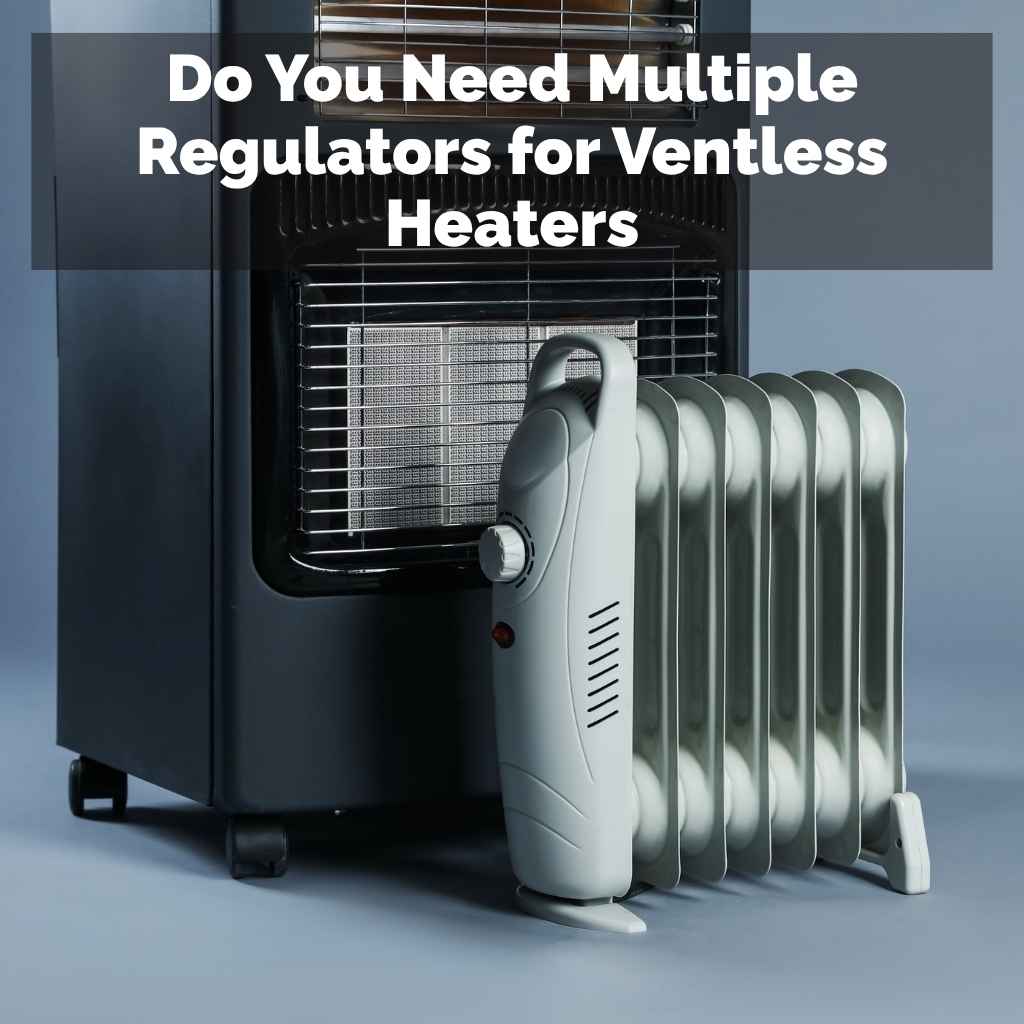
Do You Need Multiple Regulators for Ventless Heaters
Getting your ventless heaters set up right can sometimes feel tricky, especially when you’re not sure about all the parts. A common question that pops up is, “Do You Need Multiple Regulators for Multiple Ventless Heaters?” It’s a simple question that can lead to some confusion for folks just starting out. Don’t worry, though!
We’re going to break this down nice and easy, step by step, so you’ll know exactly what to do. We’ll cover why this question comes up and give you clear answers.
Understanding Propane Regulator Basics
A propane regulator is a really important device for any propane appliance. Its main job is to control the pressure of the propane gas coming from your tank. Propane tanks hold gas at a very high pressure.
This high pressure would be way too much for your ventless heater to handle safely. The regulator reduces this high pressure down to a safe and consistent level that your heater can use. Think of it like a faucet for your gas line.
It makes sure just the right amount of gas flows through, not too much, not too little. This precise control is key for your heater to run efficiently and, most importantly, safely.
What Is Gas Pressure
Gas pressure is essentially the force that pushes gas through a pipe or hose. In the case of propane, the gas is stored under significant pressure in the tank. This pressure can be quite high, varying depending on the temperature and how full the tank is.
For instance, at room temperature, propane in a tank might be around 100-150 PSI (pounds per square inch). This pressure is far too high for direct use in appliances like ventless heaters, which are designed to operate at much lower pressures, typically around 11 inches of water column for natural gas equivalents or specific low PSI ratings for propane. Without a regulator to lower this pressure, appliances could be damaged, or worse, pose a significant safety risk like gas leaks or uncontrolled flames.
How Regulators Work
A propane regulator works by using a diaphragm and a spring mechanism. When propane flows into the regulator from the tank, it pushes against a diaphragm. This diaphragm is connected to a valve.
A spring presses down on this valve, keeping it closed when there’s no demand for gas. When an appliance calls for gas, the pressure inside the regulator drops. This causes the spring to push the valve open slightly, allowing more propane to flow from the tank.
The diaphragm then pushes back against the spring. This creates a balance, maintaining a constant outlet pressure regardless of fluctuations in the tank pressure or gas flow rate. This automatic adjustment is what ensures your ventless heater receives a steady supply of gas at the correct pressure, preventing issues caused by over or under-pressurization.
Types of Regulators
There are generally two main types of propane regulators you’ll encounter: single-stage and two-stage. A single-stage regulator reduces the tank pressure in one step to the required appliance pressure. These are usually simpler and less expensive, but they might not maintain as consistent a pressure, especially as the tank empties or in fluctuating temperatures.
A two-stage regulator system uses two regulators. The first regulator, often called the line regulator, reduces the high tank pressure to an intermediate pressure. A second regulator, connected to the appliance, then reduces this intermediate pressure to the final, safe operating pressure.
Two-stage systems provide a more stable and accurate pressure control, which is generally preferred for appliances where consistent performance is critical, like heating equipment.

Ventless Heater Gas Requirements
Ventless heaters are designed to be efficient and convenient. They don’t require a chimney or vent, making installation simpler and allowing them to be placed in more locations. However, this convenience comes with specific gas requirements.
The amount of gas a ventless heater needs, and the pressure at which it needs it, are critical factors for its safe and effective operation. Understanding these requirements is the first step to figuring out if you need one regulator or more.
BTU Output and Gas Flow
BTU, or British Thermal Unit, is a measure of heat energy. The BTU output of a ventless heater indicates how much heat it can produce. Higher BTU ratings mean the heater consumes more propane to generate more heat.
For example, a 30,000 BTU heater will burn propane at a faster rate than a 10,000 BTU heater. This higher consumption requires a greater volume of gas to flow from the tank to the heater. The gas lines and regulators must be sized appropriately to supply this volume of gas without causing a pressure drop that would starve the appliance.
If the gas supply system cannot keep up with the demand, the heater’s performance will suffer, potentially leading to incomplete combustion or the unit shutting off.
Pressure Requirements Explained
Ventless heaters operate within a specific pressure range, typically measured in inches of water column (in. w.c.) for natural gas or low PSI for propane. For propane, this is often around 11 to 13 inches of water column, which is equivalent to about 0.4 PSI.
This is a very low pressure compared to what’s stored in the tank. The regulator’s job is to consistently deliver gas at this precise pressure. If the pressure is too high, it can damage the heater’s internal components or lead to dangerous combustion.
If the pressure is too low, the heater won’t produce enough heat or might not ignite at all. Ensuring the regulator can maintain this specific, low pressure is paramount for safe and efficient operation.
Sizing Your Gas Lines
The size of your gas lines is just as important as the regulator. Gas lines need to be large enough to carry the required volume of gas from the tank to the appliance without significant pressure loss. This is especially true for longer runs or when supplying multiple appliances.
If the gas lines are too small, they act like a bottleneck, restricting the flow of propane. This restriction can cause the pressure to drop, even if the regulator is functioning correctly. The regulator might try to compensate by increasing the output pressure, but if the lines can’t handle the flow, the appliance will still not receive enough gas.
Manufacturers provide charts that help determine the correct pipe size based on the appliance’s BTU rating and the length of the gas line run.
Do You Need Multiple Regulators for Multiple Ventless Heaters?
This is the core question, and the answer often depends on how your ventless heaters are set up and how they’re being supplied with gas. The goal is always to ensure each appliance receives a stable, adequate supply of propane at the correct pressure. Let’s explore the scenarios where you might need more than one regulator.
Single Heater, Single Regulator Setup
For a single ventless heater, the most common and straightforward setup involves one propane tank, one regulator connected to that tank, and a single gas line running from the regulator to the heater. In this configuration, the regulator directly controls the pressure for that one appliance. This is the simplest setup and is generally used for smaller heaters or when only one heating unit is being used.
The regulator on the tank is designed to step down the high tank pressure to the appropriate level for the connected appliance.
Multiple Heaters from One Tank
When you have multiple ventless heaters that you want to run from a single propane tank, things can get a bit more complex. If these heaters are very close to the tank and have very low BTU ratings, a single, appropriately sized regulator might suffice. However, this is rarely the case for any significant heating needs.
As soon as you start connecting multiple appliances, the total gas demand increases significantly. A single regulator might struggle to keep up with this combined demand, leading to pressure drops. Also, if the heaters are located at different distances or heights from the tank, ensuring consistent pressure to all of them becomes a challenge.
This is where additional regulators or distribution systems become necessary.
Why One Regulator Might Not Be Enough
When multiple ventless heaters are connected to a single regulator, the regulator’s capacity is a major concern. Regulators have a maximum flow rate they can handle. If the combined BTU requirement of your heaters exceeds this capacity, the regulator will become a bottleneck.
This leads to a significant drop in gas pressure reaching the heaters. Imagine trying to fill multiple buckets quickly from a single, narrow garden hose; the water flow to each bucket will be weak. Similarly, the propane flow to your heaters will be insufficient.
This insufficient flow can cause the heaters to operate poorly, produce less heat, and potentially even create safety hazards due to incomplete combustion. For instance, if you have two 30,000 BTU heaters, their combined demand is 60,000 BTU. A regulator designed for a single 20,000 BTU heater will not be able to supply enough gas, causing problems.
Another issue is pressure consistency. The pressure delivered by a regulator can fluctuate slightly, especially as the propane level in the tank decreases or with changes in ambient temperature. If you have multiple appliances, these small fluctuations can have a more noticeable impact on the performance of all of them simultaneously.
The ideal scenario is to have a stable, consistent pressure delivered to each appliance, regardless of the others. This is difficult to achieve with a single regulator serving multiple high-demand units. Furthermore, the physical distance and elevation differences between the tank and each heater can also play a role.
Propane is a liquid that vaporizes into a gas, and its flow is affected by these factors. A single regulator at the tank might not be able to overcome these differences to supply consistent pressure to heaters located further away or at a higher elevation.
Using a Distribution Tree or Manifold
A common solution for supplying multiple ventless heaters from one tank is to use a gas distribution tree or manifold. This system starts with a single regulator connected to the propane tank. This regulator steps down the pressure to an intermediate, but still relatively high, pressure.
From this first regulator, the gas flows to a manifold or distribution tree. The manifold then has multiple outlets, each connected to its own secondary regulator. Each of these secondary regulators is then connected to a separate gas line running to one ventless heater.
This setup ensures that each heater receives precisely regulated gas at the correct, low operating pressure, independent of the others. This is a highly recommended method for ensuring safety and consistent performance when using multiple propane appliances.
How Distribution Systems Work
A gas distribution system, often referred to as a manifold or a tree, is designed to safely and effectively split the gas supply from a single source (like a propane tank) to multiple appliances. The initial step involves connecting a primary regulator directly to the propane tank. This regulator reduces the very high pressure from the tank to a moderate, stable intermediate pressure.
This intermediate pressure is still too high for direct use by appliances but is manageable for the distribution system. From the outlet of this primary regulator, the gas flows into the manifold. The manifold itself is a piece of equipment with a central body and several ports or outlets.
Each of these ports can accept a secondary regulator. A gas line is then connected from each port, through its secondary regulator, to an individual ventless heater. This layered approach provides excellent control over gas pressure to each appliance.
The primary regulator handles the bulk of the pressure reduction, bringing the gas down to a consistent level. The secondary regulators then fine-tune this pressure down to the exact, low operating pressure required by each specific ventless heater. This means that even if one heater’s demand changes significantly, it won’t dramatically affect the pressure delivered to the other heaters.
This independent regulation is crucial for maintaining optimal performance and safety across all your heating units. The manifold itself is typically made of durable brass or steel to withstand the gas flow and is designed to provide secure connections for all components. Proper installation and adherence to gas fitting codes are essential for the safe operation of these systems.
Multiple Tanks with Multiple Regulators
Another approach, especially for larger heating needs or when efficiency is paramount, is to use multiple propane tanks, each with its own regulator. This setup is common for larger homes or commercial applications. Each tank can be connected to its own regulator, and then the lines from these regulators can be combined through a changeover valve or directly fed into a distribution manifold.
This strategy ensures that each regulator is only responsible for supplying gas to a smaller portion of the total demand, making it easier for each regulator to maintain consistent pressure. It also provides a level of redundancy; if one tank runs out of gas, the others can continue to supply the heaters.
Benefits of Using Multiple Tanks
Using multiple propane tanks offers several significant advantages. Firstly, it increases the total fuel capacity. Instead of being limited by a single tank’s volume, you have a larger reserve of propane, meaning less frequent refills and less worry about running out of heat during cold periods.
Secondly, it distributes the workload on the regulators and gas lines. Each tank and regulator system only needs to support a fraction of the total BTU demand. This significantly reduces the likelihood of pressure drops and ensures a more stable gas supply to all connected heaters.
For example, if you have two 100-pound tanks, each with its own regulator, and your heaters require a total of 60,000 BTU, each system only needs to supply 30,000 BTU, which is well within the capacity of most standard regulators and line sizes.
Thirdly, multiple tanks provide redundancy. If one tank runs empty, a properly configured system with a changeover valve can automatically or manually switch to the other tank, providing uninterrupted heat. This is particularly valuable in critical heating situations.
Lastly, it can sometimes be more cost-effective to purchase propane in larger quantities across multiple tanks, depending on local supplier pricing. The setup can involve a dual-cylinder regulator with an automatic changeover feature, which seamlessly switches from an empty tank to a full one, or a manual changeover valve that requires operator intervention. This provides flexibility and reliability for your heating solution.
Automatic Changeover Regulators
An automatic changeover regulator is a clever device designed for systems using two propane tanks. It has two inlets, one for each tank, and a single outlet that connects to the gas line supplying your heaters (or to a manifold). As one tank is supplying gas, the regulator monitors its pressure.
When the pressure in the active tank drops to a certain level (indicating it’s nearly empty), the regulator automatically switches to draw gas from the second, full tank. Most automatic changeover regulators also have a visual indicator, often a colored flag or pointer, that shows which tank is in use and which one is empty, prompting you to refill or
How Changeover Regulators Work
An automatic changeover regulator is a sophisticated piece of equipment that simplifies the management of multi-tank propane systems. It typically has two inlet ports, each designed to connect to the valve of a propane tank. Internally, it contains a mechanism that allows it to draw gas from only one tank at a time, designating it as the “active” or primary supply.
A sensing mechanism within the regulator continuously monitors the pressure of the gas being supplied by the active tank. When the pressure in the active tank falls below a pre-determined threshold, signaling that the tank is nearly depleted, the internal mechanism automatically redirects the gas flow to draw from the second, “reserve” or secondary tank. This transition is designed to be seamless, meaning the gas supply to your appliances does not get interrupted during the changeover process.
Furthermore, most automatic changeover regulators include a visual indicator. This indicator, often a small lever or flag, changes position or color to alert the user that the primary tank has been depleted and the system is now drawing from the reserve tank. This provides a clear visual cue that it’s time to get the empty tank refilled or replaced.
This feature is incredibly useful for ensuring that you always have a propane supply and can plan refills proactively, avoiding unexpected outages. The outlet of the changeover regulator then connects to your gas piping system, which may lead directly to a single heater or, more commonly, to a distribution manifold for multiple heaters, ensuring all appliances receive a consistent gas supply.
Sizing Your Regulator Correctly
Choosing the right regulator size is absolutely critical. A regulator that is too small will restrict gas flow, leading to insufficient pressure and poor heater performance. A regulator that is too large might be more expensive and, if not properly selected, could potentially over-pressurize the system if other components aren’t perfectly matched, though this is less common with standard two-stage systems.
The sizing is primarily based on the total BTU demand of the appliance(s) it will be serving and the desired outlet pressure.
Manufacturers provide sizing charts that correlate BTU capacity with regulator inlet and outlet pressures. For a single ventless heater, you would look at its BTU rating. If you are supplying multiple heaters from a single regulator (a setup generally discouraged for significant BTU loads), you must sum the BTU ratings of all heaters.
For example, if you have two 40,000 BTU heaters, your total demand is 80,000 BTU. You would then select a regulator that is rated to handle at least this total BTU load at the required outlet pressure (e.g., 11 inches of water column for propane). Always err on the side of a regulator with a higher BTU capacity than you think you need to ensure adequate flow even in extreme conditions or with future expansion.
It’s also important to consider the regulator type. For most ventless heater applications, a two-stage system is recommended for its superior pressure stability. If using a two-stage system, you’ll need to consider the capacity of both the first-stage and second-stage regulators.
Often, a dual-stage regulator assembly is sold as a single unit, but their individual capacities matter. For multi-appliance setups, a primary regulator with a higher capacity might feed into a manifold from which multiple secondary regulators branch off, each sized for the individual appliance it serves.
Installation and Safety Considerations
Proper installation of propane regulators and gas lines is not just about performance; it’s fundamentally about safety. Incorrect installation can lead to gas leaks, fires, or carbon monoxide poisoning. Always follow manufacturer instructions and local building codes.
Gas Leak Detection
Propane has a distinct odorant added to it, often described as “rotten eggs,” which makes leaks detectable. However, your sense of smell can become fatigued, or the odorant can be absorbed by soil, making it less reliable. Therefore, it’s crucial to use proper leak detection methods.
After connecting any gas line, especially after installing or adjusting regulators, you should always perform a leak test. A common method is to use a solution of soapy water. Apply the soapy water to all joints and connections.
If bubbles form, it indicates a gas leak. You should immediately shut off the gas supply and address the leak before proceeding.
Commercial gas leak detectors are also available and are more sensitive than soapy water. These electronic devices can detect even small leaks. Regularly inspecting your propane system, including the tanks, regulators, hoses, and connections, is a vital part of maintaining safety.
Pay attention to any unusual smells, sounds of hissing gas, or changes in appliance performance, as these can all be indicators of a potential leak. It’s also wise to have your propane system inspected by a qualified professional periodically to ensure everything is in good working order and up to code.
Carbon Monoxide Safety
Ventless heaters, by definition, do not vent combustion byproducts outside. While modern ventless heaters are designed to burn fuel very efficiently and have safety features to minimize emissions, there is always a potential risk of carbon monoxide (CO) production, especially if the heater is not operating correctly or if the room is not adequately ventilated. Carbon monoxide is a colorless, odorless gas that can be deadly.
Therefore, it is absolutely essential to install a carbon monoxide detector in any area where a ventless heater is used. Ensure the CO detector is working properly and test it regularly. Follow the heater manufacturer’s recommendations for room size and ventilation requirements to ensure safe operation.
Ventilation Requirements
Even though they are called “ventless,” these heaters still require adequate air for combustion and to prevent the buildup of combustion byproducts. Manufacturers specify minimum room size requirements and ventilation needs for their ventless units. These requirements are often based on the BTU output of the heater.
For example, a larger BTU heater will require a larger room or more dedicated air intake than a smaller one. This ventilation ensures that the oxygen needed for complete combustion is available and that any minimal byproducts are dispersed safely within the space. Failing to meet these ventilation requirements can lead to incomplete combustion, reducing the heater’s efficiency and increasing the risk of carbon monoxide production.
Always consult the owner’s manual for your specific ventless heater model to understand its ventilation needs.
Professional Installation Recommended
While some DIY enthusiasts might feel comfortable handling propane system installations, it is strongly recommended that you have a qualified professional install your ventless heaters and their associated propane systems, especially when dealing with multiple units or complex setups. Propane systems involve pressurized gas, and mistakes can have severe consequences. A certified technician will have the knowledge and tools to ensure all connections are secure, regulators are correctly sized and installed, gas lines are properly routed, and all safety checks are performed according to industry standards and local building codes.
They can also advise on the most efficient and safest configuration for your specific needs, whether it involves a single regulator, a distribution manifold, or multiple tanks.
A professional installation not only ensures safety but also guarantees that your system is operating at peak efficiency. They can identify potential issues before they become problems, such as improper pipe sizing or regulator selection. Furthermore, many manufacturer warranties require professional installation for them to remain valid.
If you are unsure about any aspect of propane system setup, it is always best to err on the side of caution and hire a professional. This investment in professional service can prevent costly repairs, dangerous accidents, and ensure peace of mind throughout the heating season.

Frequently Asked Questions
Question: Can I use one regulator for two small ventless heaters?
Answer: It depends on the total BTU output of both heaters. If their combined BTU is within the capacity of a single, appropriately sized regulator and the heaters are close together, it might be possible. However, for consistent performance and safety, using a distribution manifold with secondary regulators for each heater is generally the better and recommended approach.
Question: How often should I check my propane regulators?
Answer: It’s a good practice to visually inspect your regulators and connections for any signs of damage or corrosion regularly, perhaps monthly. Perform a leak test with soapy water after any adjustments or if you suspect a problem. Annual professional inspections of your entire propane system are also recommended.
Question: Will one regulator work if I have two ventless heaters far apart?
Answer: No, it’s highly unlikely that a single regulator at the tank will provide consistent and adequate pressure to two heaters that are far apart. The pressure will likely drop significantly over the longer gas line, leading to poor performance and potential safety issues. A manifold system with secondary regulators is necessary.
Question: What happens if my regulator fails?
Answer: If a regulator fails and stops reducing pressure, the gas flowing to your heater will be at a much higher pressure than intended. This can cause flames to be too large, damage the heater’s components, or even create a fire hazard. If you suspect regulator failure, shut off the gas supply immediately and have it inspected or replaced by a professional.
Question: Can I connect a ventless heater directly to a propane tank without a regulator?
Answer: Absolutely not. This is extremely dangerous. Propane tanks store gas at very high pressures that would overwhelm and damage any appliance, creating a severe fire or explosion risk.
A regulator is an essential safety device for controlling this pressure.
Final Thoughts
Deciding if you need multiple regulators for your ventless heaters hinges on total BTU demand and placement. For a single heater, one regulator is typical. For multiple units, especially if they are far apart or have high BTU needs, a distribution manifold with secondary regulators or a multi-tank setup is crucial for safety and performance.
Always prioritize proper sizing and professional installation.
Sponsored / affiliate links. As an Amazon Associate I earn from qualifying purchases. I may earn additional commission from eligible campaigns.