How Long Does It Take To Make Petrified Wood Naturally?
The process of petrifying wood naturally is incredibly slow, taking anywhere from thousands to millions of years to fully form. It requires specific geological conditions over vast stretches of time, involving mineral-rich water seeping into wood and gradually replacing its organic material with stone.
The Slow Magic of Turning Wood to Stone
Petrified wood is wood that has turned into a fossil. It happens over a very, very long time. The original wood is replaced by minerals.
This process is called permineralization. It’s like a slow-motion swap. The minerals that make up the wood are the same as the minerals in rocks.
Think quartz or chalcedony.
This doesn’t happen to just any old log. Special conditions must be just right. The wood needs to be buried quickly.
This protects it from rotting away. It then needs to be in contact with mineral-rich water. This water slowly works its way into the wood’s cells.
Over ages, it deposits mineral after mineral. Each tiny pore and cell wall gets filled.
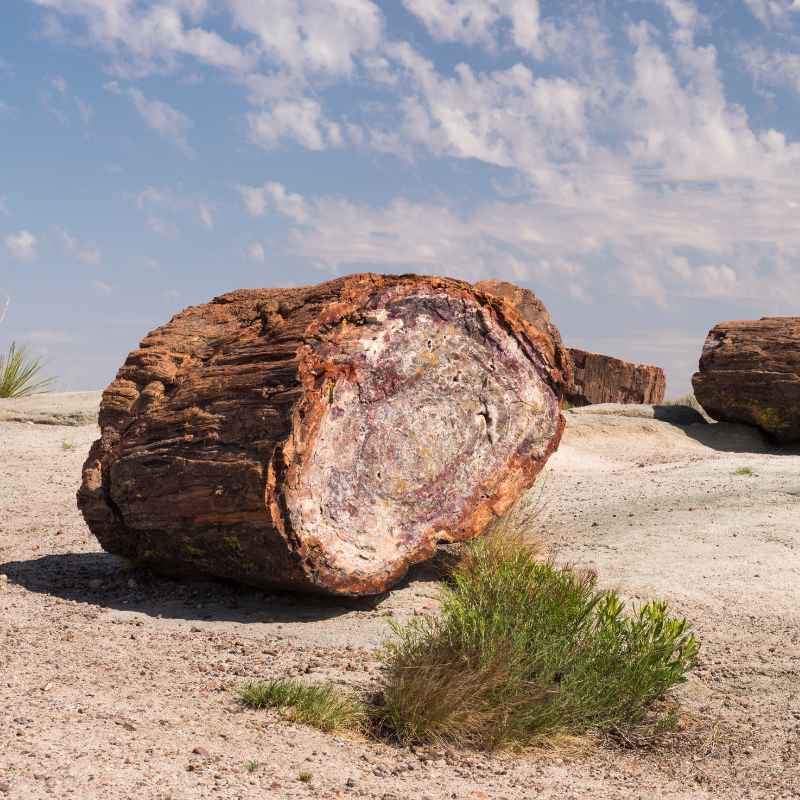
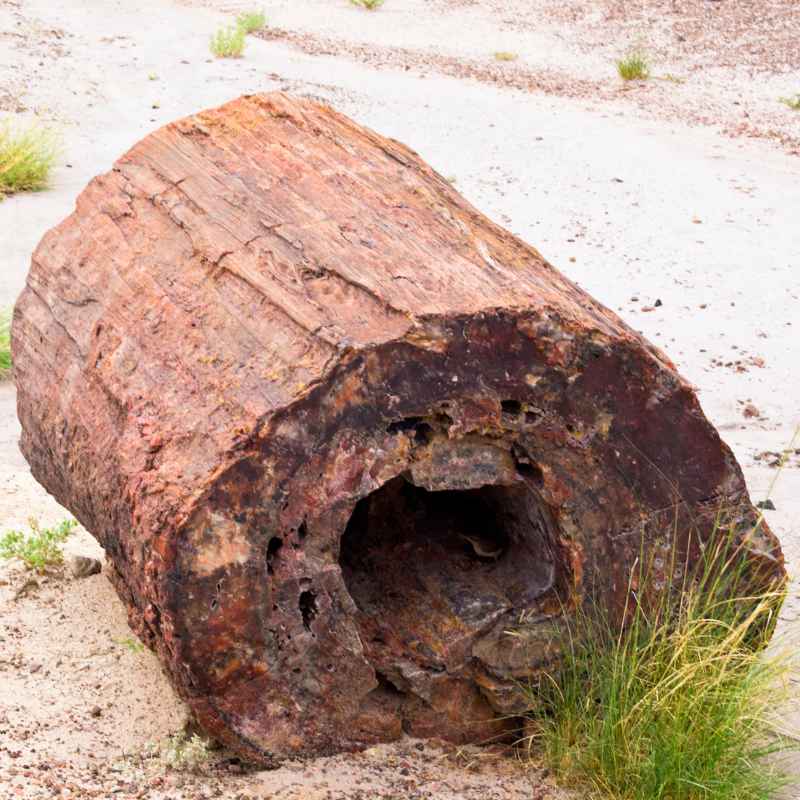
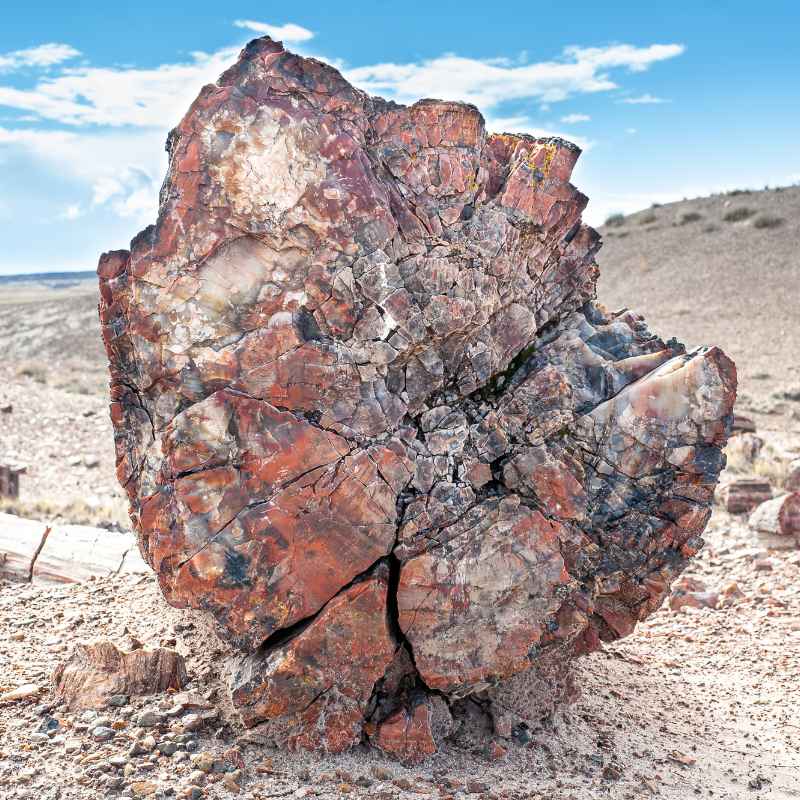
The final result looks like wood. It has the grain and even the bark texture. But it is solid stone.
It can be as hard as granite. This transformation is a beautiful example of nature’s patience. It shows how geological processes unfold over immense timescales.
The beauty of petrified wood is its history. It’s a story written in stone.
My “Aha!” Moment with Ancient Logs
I remember the first time I held a real piece of petrified wood. I was in a small museum in Arizona. It was a sunny afternoon.
The chunk of wood felt surprisingly heavy. It had the distinct look of aged timber, but it was cool and smooth to the touch. I was told it was once a living tree, millions of years ago.
My mind couldn’t quite grasp it. A tree, living and breathing, slowly becoming a solid rock? It seemed impossible.
I imagined a log lying on the ground. Then, I pictured water seeping into it. But the idea of that happening over so long, to the point where every bit of organic material is gone, was mind-boggling.
It made me feel very small. It also made me incredibly curious about the journey that wood took to get to that museum display.
Understanding the Geological Process
The journey of a tree becoming petrified wood is a long one. It starts when a tree dies. Then, it must be buried quickly.
This usually happens from volcanic ash or river sediment. This burial is key. It stops the wood from decaying.
It also keeps oxygen away. Oxygen helps rot to happen. So, quick burial is step one.
Next, the buried wood sits in water. This water is special. It is full of dissolved minerals.
It might come from underground springs or slowly moving water. This mineral-rich water seeps into the wood. It goes into every tiny cell.
It fills up all the spaces. This happens very, very slowly.
As the water moves, it leaves the minerals behind. Think of it like a slow drip leaving mineral marks. Over thousands, even millions, of years, these minerals build up.
They replace the original wood material. This is called permineralization. First, the cell walls are filled.
Then, the empty spaces inside are filled too. The original structure is preserved.
The most common minerals are silica-based. This includes quartz and chalcedony. These minerals are very hard.
They are what make petrified wood strong. Other minerals can also be present. These give petrified wood its colors.
Iron can make reds and yellows. Manganese can make blues and purples. It is a slow chemical process.
This entire sequence takes an enormous amount of time. We are talking about geological time. That means thousands of years are just the beginning.
For truly solid, well-formed petrified wood, it often takes millions of years. The slow and steady work of water and minerals is what creates these natural wonders. It is a testament to the power of time and chemistry.
Key Stages of Petrified Wood Formation
1. Burial: A dead tree is covered quickly. This can be by mud, sand, or ash.
This prevents decay.
2. Saturation: The buried wood is exposed to mineral-rich groundwater. This water slowly seeps into the wood.
3. Mineral Infiltration: Dissolved minerals in the water begin to fill the wood’s cells and pores. This is a gradual process.
4. Replacement: Over vast periods, the organic material of the wood is slowly replaced by mineral deposits. This can be molecule by molecule.
5. Lithification: The mineral-filled wood hardens into stone. This results in a fossil that retains the wood’s original shape and texture.
Factors Influencing Formation Time
The time it takes for wood to become petrified isn’t fixed. Several factors play a big role. Think of it as a recipe with variable ingredients.
The type of wood matters. Denser woods might take longer to mineralize fully. Softer woods might mineralize quicker, but the fossil might be less robust.
The type of minerals available is also important. If the groundwater is rich in silica, the process can happen faster. Silica is a common mineral for petrification.
Different minerals create different colors. This shows the variety in the environment. The concentration of these minerals in the water is key.
Higher concentrations mean quicker deposition.
The rate of water flow is another big factor. If water moves too fast, it might not deposit enough minerals. If it moves too slowly, the process might be even slower.
The perfect flow rate allows for steady mineral deposition. It’s a balance. This balance is achieved over long periods.
The geological environment plays a huge part. Areas with volcanic activity are good candidates. Volcanic ash can bury forests quickly.
This ash can also break down into minerals. This provides the necessary rich groundwater. Riverbeds and ancient floodplains are also common spots.
These environments offer sediment for burial and water flow.
Pressure from overlying rock and soil also influences the process. More pressure can sometimes speed up mineral deposition. But too much pressure can crush the wood.
It needs to be just right to preserve the form. This whole process happens deep underground for long stretches. It is not something that happens on the surface quickly.
So, while we say it takes thousands to millions of years, that’s a broad range. A specific piece of petrified wood could have formed in 10,000 years. Another might have taken 100 million years.
It depends on the unique history of that specific location. Each piece has its own story. It’s a slow story of change.
What Makes Petrified Wood So Colorful?
The colors in petrified wood are like nature’s own artwork. They are not added later. They are part of the mineral replacement process.
Different elements in the groundwater cause these colors. It is quite fascinating how simple chemistry creates such beauty.
Iron is a big player in the color palette. If there is iron oxide present, you can get reds, oranges, and yellows. Think of rust colors.
These are common in many petrified wood samples. The amount of iron and how it’s bound affects the shade. It’s a spectrum of warm earthy tones.
Manganese is another important element. It can produce blues and purples. These colors are often less common but very striking.
Sometimes, manganese can also create black or gray hues. It depends on the specific chemical conditions. This adds a cool contrast to the warmer colors.
Carbon can also contribute to the colors. It can create black or very dark brown colors. This is often seen in wood that was very densely packed with organic material.
The carbon atoms get trapped during the mineral replacement. They create deep, rich dark shades.
Other trace elements can also play a role. Even small amounts of certain metals can affect the hue. It’s like a painter using a few drops of color to change the whole mood of a canvas.
The final color is a result of all the minerals present. It is also affected by the temperature and pressure during formation.
The patterns of color can be just as varied as the colors themselves. Sometimes, the colors are in distinct bands. Other times, they are swirled together.
This depends on how the mineral-rich water flowed through the wood. It followed the grain and the pores. So, the colors also tell a story about the wood’s structure.
It’s a natural masterpiece.
Color Guide for Petrified Wood
- Red/Orange/Yellow: Usually caused by iron oxides.
- Blue/Purple: Often due to manganese.
- Black/Dark Brown: Can be from carbon or manganese compounds.
- Green: Sometimes caused by copper or chromium.
Note: The specific colors depend on the exact mineral composition and geological conditions.
Real-World Context: Where and How It Happens
Petrified wood is found in many places around the world. However, certain locations are famous for it. The Petrified Forest National Park in Arizona is a prime example.
Here, ancient forests were buried by volcanic ash. This ash then eroded over millions of years. This exposed the petrified logs.
It’s like an ancient forest frozen in time.
Another notable area is the Ginkgo Petrified Forest State Park in Washington. This park preserves a forest that was buried by Mount Mazama’s eruption. The eruption that formed Crater Lake also created this petrified forest.
These sites show us how specific catastrophic events can lead to remarkable preservation.
In general, petrified wood forms in areas that were once wet environments. These include ancient river valleys, swamps, and lake beds. These environments provided the necessary water and sediment for burial.
Forests in these areas were more likely to be preserved. They had a higher chance of becoming petrified.
The process requires stability over very long periods. The area must not be disturbed too much. For example, intense seismic activity or rapid erosion could break up the wood before it petrifies.
The steady conditions allow the slow mineral replacement to occur. It needs a calm, patient environment to work.
We often find petrified wood in sedimentary rock layers. These layers are formed from accumulated sediments like sand, silt, and clay. The wood would be buried within these layers.
Over time, these sediments themselves turn into rock. The petrified wood is then found encased within this rock. It is a fossil within fossils, in a way.
Understanding these contexts helps us see why petrified wood is rare. It’s not just about a tree dying. It’s about a specific set of environmental conditions aligning perfectly.
These conditions are rare and must persist for immense geological timescales. It makes each piece of petrified wood a truly special find.
Common Environments for Petrified Wood
Ancient Forests: Areas that were once densely wooded.
Volcanic Zones: Places where volcanic ash covered forests.
River Valleys: Floodplains where trees could be quickly buried by sediment.
Swamps and Lakes: Waterlogged areas that promote burial and prevent decay.
Sedimentary Basins: Regions where layers of sediment build up over time, trapping organic material.
What This Means for You: Normal vs. Concerning
When you find a piece of wood that looks like stone, it’s likely petrified. This is a normal geological process. There’s usually nothing to worry about.
The slow rate of formation means it doesn’t happen overnight. It’s a sign of ancient geological activity. It’s a connection to the deep past.
There isn’t really a “concerning” aspect to petrified wood itself. It’s a stable mineral form. It’s not radioactive or toxic.
The primary concern might be more about conservation. Many beautiful sites are protected. It’s important to know the rules about collecting specimens.
In national parks or protected areas, taking petrified wood is illegal.
Sometimes, people might confuse other types of fossilized wood. Some wood might be coalified or carbonized. This means it’s been turned into a form of coal.
This happens under different conditions and timescales. It won’t have the mineral structure of petrified wood.
The main takeaway is appreciation. Petrified wood is a natural wonder. It shows the power of geological forces.
It shows the immense span of time. It’s a piece of history you can hold. If you find it on your property, you can admire it.
If you’re in a place where collecting is allowed, you can keep a small piece. But always be mindful of local laws and conservation efforts.
It’s important to remember that the wood itself is gone. It has been completely replaced by minerals. So, it’s stone, not wood.
This transformation is a natural event. It happens in specific geological settings over vast periods. It is a fascinating topic that connects us to the Earth’s history.
Quick Checks for Petrified Wood
Hardness: Petrified wood is very hard, like quartz or granite. It can scratch glass.
Weight: It is usually denser and heavier than regular wood.
Appearance: It retains the texture and grain of wood, but with a stony finish.
Porosity: It is not porous like unpetrified wood. It is solid stone.
Quick Tips for Appreciating Petrified Wood
If you want to learn more or see petrified wood, visiting certain places is best. National Parks like the Petrified Forest are excellent. Museums often have displays.
Even some gift shops sell polished pieces. They are great to look at and touch.
When you look at petrified wood, try to see the story. Think about the tree that it once was. Imagine the environment it lived in.
Consider the millions of years it took to become stone. This perspective changes how you see it. It’s not just a rock; it’s a time capsule.
If you are lucky enough to find a piece, treat it with respect. Avoid damaging it. If it’s on public land, check regulations.
Many places have rules about what you can take. Preserving these natural artifacts is important for everyone.
Polished pieces show off the colors and patterns best. Unpolished pieces can still show the grain and texture. Both have their own unique beauty.
The slow work of nature is visible in every sample. It’s a reminder of the planet’s long and complex history.
Learning about petrified wood can be a fun way to explore geology. It connects science with history. It shows how the Earth changes over vast time.
You can learn about mineralogy, paleontology, and earth science. It’s a gateway to many scientific fields. It makes learning about our planet engaging.
Frequently Asked Questions About Petrified Wood
How long does it typically take for wood to become petrified?
The process is very slow. It can take from thousands to millions of years. The exact time depends on many factors like mineral content and water flow.
What is the main mineral that replaces wood to make it petrified?
Silica is the most common mineral. This includes quartz and chalcedony. Other minerals like iron and manganese also contribute to color.
Can any type of wood become petrified?
In theory, any organic material can be preserved. However, for it to become petrified wood, it needs specific conditions. These include rapid burial and exposure to mineral-rich water.
Are there places where you can legally collect petrified wood?
Yes, in some areas, collecting small amounts is allowed on certain public lands. However, it is strictly forbidden in national parks and monuments. Always check local regulations before collecting.
Does petrified wood still contain any original wood material?
No, the original organic wood material is completely replaced by minerals. The structure is preserved, but the substance is now stone.
Why is petrified wood so hard?
It is hard because it is made of minerals like quartz. These minerals are very dense and durable. This makes petrified wood as hard as many types of rock.
The Timeless Story in Stone
So, the next time you see a piece of petrified wood, take a moment. Remember the incredible journey it has taken. It started as a living tree.
It faced a slow transformation. This took ages under the earth. It is a powerful reminder of our planet’s deep history.
It shows nature’s patient artistry. It’s a connection to a world long gone.
Sponsored / affiliate links. As an Amazon Associate I earn from qualifying purchases. I may earn additional commission from eligible campaigns.