Mineral Spirits Vs Acetone For Cleaning Wood: Which Wins?
Mineral spirits and acetone are common wood cleaners. Mineral spirits are good for light grease and wax. Acetone is stronger and removes tough finishes. They have different uses and safety needs. Understanding these differences helps you pick the best one for your specific wood cleaning task.
Understanding Mineral Spirits
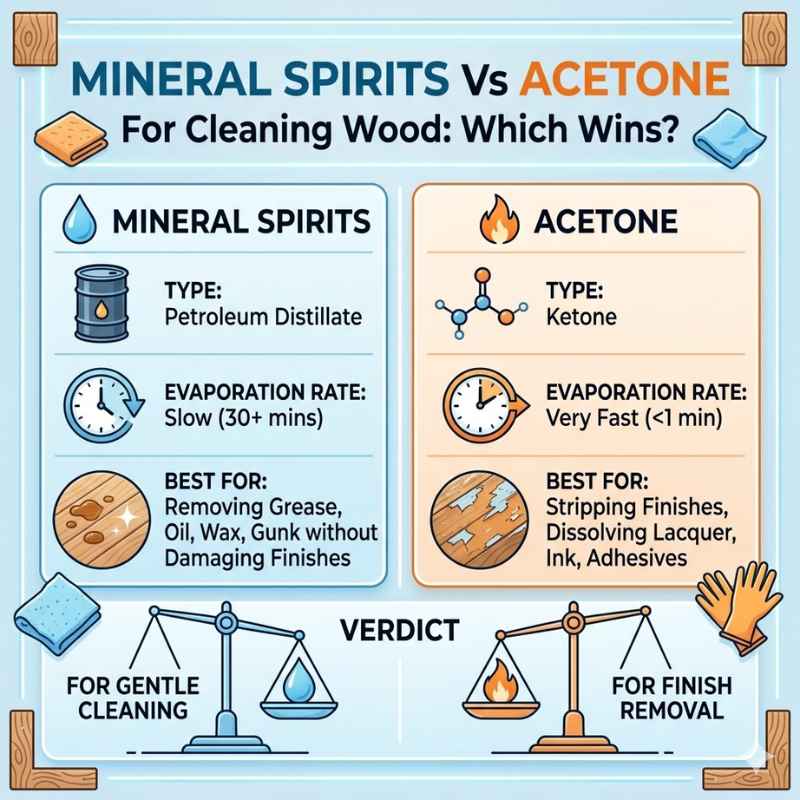
Mineral spirits, sometimes called paint thinner, is a petroleum-based solvent. It’s made from distilled crude oil. Think of it as a mild cleaner.
It’s great for removing common household grime. This includes things like grease, oil, and wax. It’s also effective at thinning oil-based paints and varnishes.
This makes it a dual-purpose product for many workshops.
When you use mineral spirits, it works by dissolving these substances. It lifts them from the wood’s surface. It doesn’t evaporate as quickly as some other solvents.
This gives you a little more time to work. It’s less harsh than many other cleaning agents. This means it’s often a safer choice for delicate surfaces or when you’re unsure about a finish.
Understanding Acetone
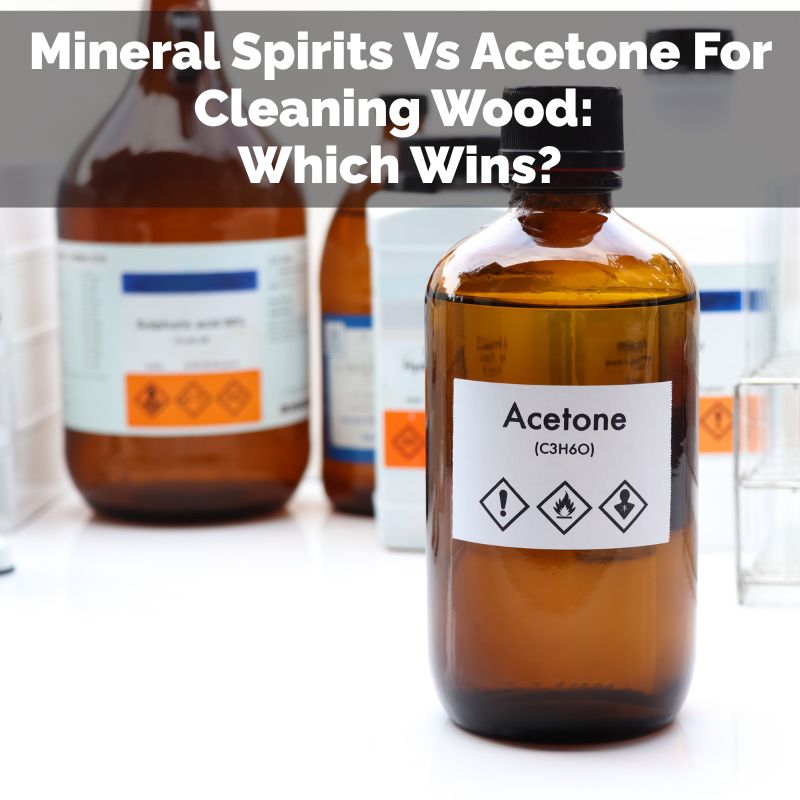
Acetone is a much stronger solvent. It’s a clear, volatile liquid. You might know it as a main ingredient in nail polish remover.
Acetone is powerful. It can break down many types of adhesives. It also dissolves tough finishes like lacquers and shellacs.
It’s a go-to for serious cleaning tasks in woodworking and craft projects.
Because acetone is so strong, it works fast. It evaporates very quickly. This can be good for rapid drying.
But it also means you need to work with it carefully. It can also damage certain materials. It’s important to test it in an inconspicuous spot first.
Its strength makes it ideal for jobs where other cleaners fail.
Mineral Spirits vs. Acetone: The Big Differences
The main difference lies in their strength and purpose. Mineral spirits are for lighter duty. They are for cleaning general shop grime.
Acetone is for heavy-duty cleaning. It’s for removing stubborn residues and finishes.
Think about it like this: mineral spirits are like a good dish soap. They handle everyday messes well. Acetone is more like a heavy-duty degreaser.
It tackles the really tough stuff. Their evaporation rates also differ greatly. Acetone dries almost instantly.
Mineral spirits take longer to disappear.
Quick Comparison: Mineral Spirits vs. Acetone
Mineral Spirits
Use: Light grease, oil, wax removal. Paint thinning. General cleaning.
Strength: Mild.
Evaporation: Slow.
Safety: Lower risk, but still needs ventilation.
Acetone
Use: Tough finishes, adhesives, deep cleaning. Fast drying.
Strength: Strong.
Evaporation: Very Fast.
Safety: High risk, requires excellent ventilation and protection.
When to Use Mineral Spirits on Wood
Mineral spirits shine when you need to prep wood for a new finish. They are perfect for removing old wax or polish buildup. This is common on antique furniture.
If a piece has a sticky residue from tape or labels, mineral spirits can help lift it. They are also great for cleaning brushes used with oil-based paints or stains.
I remember working on an old oak dresser once. It was covered in layers of furniture polish. It felt sticky and dull.
Soap and water often make little difference. A friend suggested mineral spirits. Apply it with a soft cloth.
The polish wiped away easily. The wood underneath looked so much better. It was ready for a new coat of oil.
That experience showed me how useful mineral spirits are for gentle cleaning.
Another common use is degreasing wood. If you’re working with wood that might have sap or natural oils, mineral spirits can cut through that. It prepares the surface for stain or paint to adhere properly.
Without this prep, your new finish might not last. It could bubble or peel later on.
When to Use Acetone on Wood
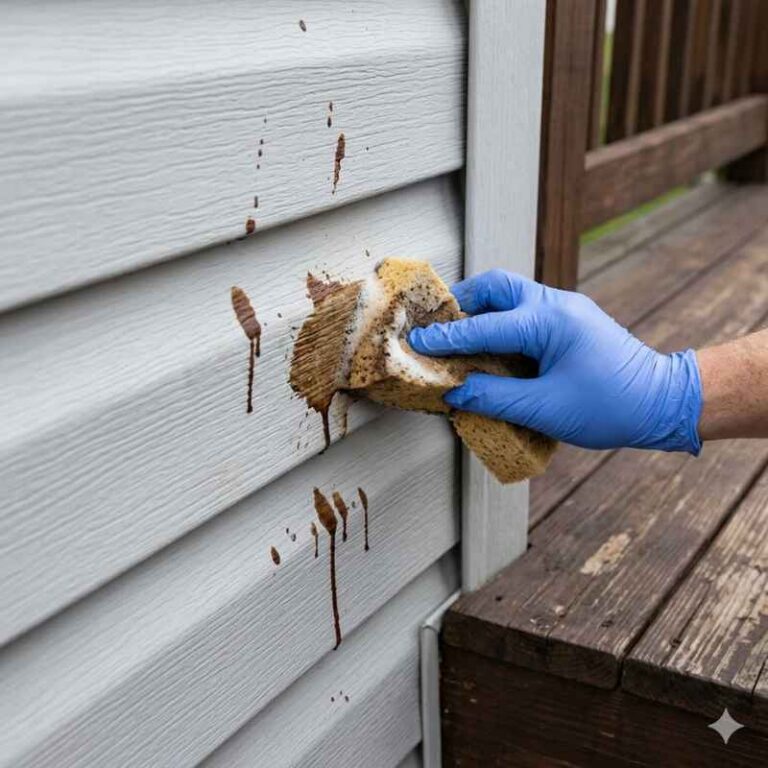
Acetone is your heavy hitter. You reach for acetone when mineral spirits won’t cut it. It’s excellent for removing old paint drips or spills.
If you’ve accidentally splashed paint on a wood surface, acetone can often clean it up. It’s also effective at removing old glue residues. This is useful when you’re disassembling furniture or repairing parts.
I had a project involving some reclaimed wood. It had old varnish and what looked like some kind of sealant on it. Mineral spirits barely touched it.
I was worried I’d have to sand everything down completely. Acetone can be used as an option. Test it on a small, hidden area first.
It worked wonders! It dissolved the old finish right away. I could wipe it clean with a rag.
It saved me so much sanding time and effort. Work quickly because it dries fast.
Acetone is also the choice for removing certain types of finishes themselves. If you want to strip old lacquer or shellac from wood, acetone is often the solvent used. It doesn’t always remove everything in one go.
But it’s a key component in many stripping processes. It breaks down these tough coatings.
Safety First: Handling Both Solvents
Both mineral spirits and acetone are solvents. This means they require careful handling. Safety is a top priority, especially with acetone.
Ventilation is key for both. Always use them in a well-ventilated area. Open windows and doors.
Use a fan to move air. Breathing in the fumes for too long can cause headaches and dizziness. For acetone, this is even more critical.
Its fumes are stronger and can be more harmful.
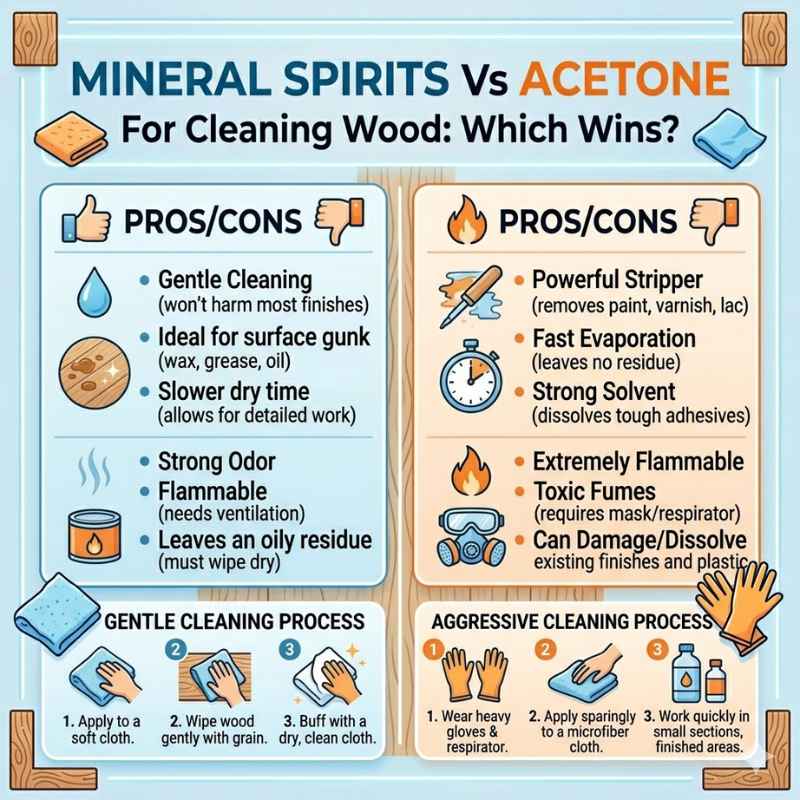
Protect your skin and eyes. Wear chemical-resistant gloves. Nitrile gloves are a good choice. Avoid latex gloves, as some solvents can break them down.
Safety glasses are a must. Splashes can happen. Protect your eyes from irritation or injury.
Flammability is a major concern. Both solvents are flammable. Keep them away from open flames, sparks, and heat sources. This includes pilot lights on stoves or water heaters.
Do not smoke while using them. Store them in their original containers, tightly sealed, away from heat.
Acetone’s extra caution: Acetone can damage finished surfaces. It can dissolve plastics and some synthetic materials. Be careful where you set down a rag soaked in acetone.
It might leave a mark on your workbench or floor. Also, it can dry out your skin much more than mineral spirits. So, more diligent hand protection is needed.
Safety Checklist
- Ventilation: Always use in a well-aired space.
- Gloves: Wear chemical-resistant gloves (nitrile recommended).
- Eye Protection: Use safety glasses or goggles.
- No Flames: Keep away from heat, sparks, and open flames.
- First Aid: Know what to do in case of skin or eye contact.
- Storage: Store in sealed, approved containers.
What About Other Wood Cleaners?
Sometimes people ask about other cleaning agents for wood. For example, denatured alcohol is another solvent. It’s often used for cleaning before applying shellac.
It’s stronger than mineral spirits but less aggressive than acetone.
For general cleaning of light dirt or dust, simple soap and water can work. However, be careful with water on wood. Too much moisture can cause wood to swell or warp.
Always use a damp cloth, not a wet one. And dry the wood thoroughly afterward. This is usually sufficient for basic dusting or wiping down after sanding.
For more stubborn, non-finish-related grime, a dedicated wood cleaner might be an option. These are often formulated to be effective but gentler on finishes than pure solvents. However, if your goal is to remove grease, old wax, or a specific finish layer, mineral spirits or acetone are usually more direct solutions.
Testing Before You Commit
This is a crucial step, no matter which solvent you choose. Wood finishes and types vary greatly. What works on one piece of wood might damage another.
Always test your chosen cleaner on an inconspicuous area first.
For a table, the underside of the top or a leg is a good spot. For a chair, check the bottom of the seat or inside a leg. Apply a small amount of the solvent to a clean cloth.
Gently rub the test area. Watch for any negative reactions.
With mineral spirits, you’re looking to see if it dulls the finish. You want to ensure it lifts the grime without harming the wood’s existing seal. With acetone, you’re looking for a much more dramatic reaction.
It will likely soften or remove the finish quickly. If this is your goal, great. If not, acetone is too strong for that area.
This simple test can save you a lot of trouble. It prevents accidental damage to the entire piece. It gives you confidence in your cleaning choice.
It’s part of the expert approach to woodworking and restoration.
Real-World Scenarios
Let’s look at some common situations where the choice between mineral spirits and acetone becomes clear.
Scenario 1: Cleaning a Dusty Antique Table
You find a beautiful antique table at a flea market. It’s covered in a fine layer of dust and perhaps some old wax polish. You want to bring it back to life and give it a new coat of furniture oil.
Choice: Mineral Spirits.
Why? The dust and wax are light grime. Mineral spirits are perfect for this.
They will dissolve the wax without damaging any existing finish or the wood itself. Apply mineral spirits to a soft cloth and wipe down the table. The wax and grime will lift.
You can then follow up with a light buffing. This preps the wood for the new oil finish. Using acetone here would be overkill.
It could strip away a finish you wanted to keep. It’s too aggressive.
Scenario 2: Removing Paint Splatters from a Wooden Floor
You were painting a wall and accidentally dripped some latex paint onto your hardwood floor. You need to get it off without damaging the floor’s finish.
Choice: Acetone (with extreme caution).
Why? Latex paint can be stubborn. While soap and water might work on fresh latex, dried drips often need something stronger.
Acetone is effective at dissolving many types of paint. However, this is where the test spot is vital. Different floor finishes react differently to acetone.
Apply a tiny amount of acetone to a cotton swab. Gently touch a drip. See if it softens.
If it does, work quickly in small sections. Use a clean cloth to wipe away the softened paint. Immediately wipe the area with a damp cloth to remove any acetone residue.
Follow up with a dry cloth. For some finishes, even acetone might be too harsh. In that case, you might need to carefully scrape or even sand the spot.
Always prioritize the integrity of the floor’s protective coating.
Scenario 3: Preparing a Desk for a New Lacquer Finish
You have an old desk. You’ve sanded off the old finish. Now you need to clean the bare wood surface.
You want it perfectly clean so the new lacquer adheres well.
Choice: Acetone.
Why? After sanding, wood dust is everywhere. You need to remove every bit of it.
You also want to remove any oils or residues from your hands or the environment. Acetone is excellent for this. It evaporates completely.
It leaves behind no residue. It essentially “cleans” the wood surface at a molecular level. Wipe down the entire desk surface with a tack cloth first.
Then, use a clean rag dampened with acetone to give it a final wipe. This ensures no dust or oil remains. This is a standard practice before applying lacquers and other high-gloss finishes.
What This Means for Your Wood Projects
Understanding the difference between mineral spirits and acetone is key to successful wood finishing. It’s about matching the tool to the task. Using the wrong solvent can lead to more work or even ruin a piece.
When it’s normal: It’s normal to use mineral spirits for general cleaning of oily residues, waxes, or to thin oil-based products. It’s normal to use acetone to remove tough finishes, adhesives, or as a final wipe-down on bare wood before a spray finish.
When to worry: You should worry if a solvent is doing more than you intended. If mineral spirits are dulling a shiny finish you wanted to keep, that’s a problem. If acetone is softening or removing a finish you didn’t plan to strip, stop immediately.
Worry if you’re not using proper safety gear. Fumes can be harmful, and skin contact can cause irritation.
Simple checks: Always do a test spot. Use a clean rag. Check for unexpected reactions.
Look for dulling, softening, or discoloration. Feel the wood surface after it dries. Does it feel different?
Quick Tips for Using Solvents on Wood
Here are some practical tips to make your solvent cleaning easier and safer.
- Use clean rags. Old t-shirts work well. Cut them into manageable sizes.
- Work in small areas. Don’t try to clean too much at once. This is especially true with acetone.
- Wipe, don’t scrub. Let the solvent do the work. Gentle wiping is usually enough.
- Allow drying time. Even with quick-evaporating solvents like acetone, give the wood a moment to air out before proceeding.
- Dispose of rags properly. Rags soaked in solvents can spontaneously combust. Lay them flat to dry completely in a safe outdoor area away from buildings before disposal, or soak them in water.
Frequently Asked Questions
Can I use mineral spirits to clean greasy kitchen cabinets?
Yes, mineral spirits are often effective for cleaning greasy kitchen cabinets. They can cut through oil and grease buildup without damaging most painted or varnished finishes. Always test in an inconspicuous area first.
Use a clean cloth dampened with mineral spirits and wipe down the cabinets. Follow up with a clean, dry cloth to remove any residue.
Is acetone safe for all wood finishes?
No, acetone is not safe for all wood finishes. It is a strong solvent that can dissolve or damage many finishes like lacquer, shellac, and some varnishes. It is generally safe for use on bare wood after sanding.
Always perform a patch test on an hidden area before applying acetone to an entire piece.
How long does it take for mineral spirits to dry on wood?
Mineral spirits dry relatively slowly. It can take anywhere from 30 minutes to a few hours for the odor to disappear and the surface to feel completely dry. This longer evaporation time can be beneficial for cleaning tasks, giving you more working time.
However, ensure adequate ventilation during this period.
Can I use acetone to remove old paint from furniture?
Yes, acetone can be effective in removing certain types of old paint from furniture, especially if the paint is a lacquer or enamel. You would typically apply acetone with a rag or brush, let it soften the paint, and then scrape or wipe the paint away. Be aware that acetone can also damage underlying finishes or the wood itself, so testing is crucial.
What is the difference between mineral spirits and paint thinner?
Mineral spirits are a type of paint thinner. The terms are often used interchangeably. Mineral spirits are a refined petroleum distillate.
“Paint thinner” is a broader category that can include mineral spirits, but also other solvents like naphtha or toluene, which can be more aggressive.
Should I wear a mask when using acetone or mineral spirits?
Yes, it is highly recommended to wear a respirator mask designed for organic vapors when using acetone or mineral spirits, especially in enclosed spaces. While good ventilation helps, a mask provides an extra layer of protection against inhaling harmful fumes, which can cause respiratory irritation and other health issues.
Final Thoughts on Your Wood Cleaning Choices
Choosing between mineral spirits and acetone for cleaning wood comes down to the specific job. Think about what you need to remove. Consider the type of wood and its current finish.
Always prioritize safety with proper ventilation and protection. Testing in an inconspicuous spot is your best friend. By understanding these differences, you can make the right choice and achieve beautiful, clean wood for all your projects.
Sponsored / affiliate links. As an Amazon Associate I earn from qualifying purchases. I may earn additional commission from eligible campaigns.