What Size Pocket Hole Screws for 3/4 Plywood: 1-1/4 Inch
Use a 1-1/4 inch coarse-thread pocket hole screw for 3/4 inch plywood, the size Kreg and every major jig maker recommends. Go longer, like 1-1/2 or 2-1/2 inches, and the tip pokes through the mating piece or splits the plywood layers; go shorter and the joint pulls apart under load. This guide covers when to size up for thicker stock, coarse vs fine thread, and a quick test to check your screws before committing to a real project.
Understanding Pocket Hole Screw Sizes
Best Pocket Hole Screw Pick
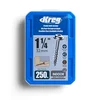
Kreg Zinc Pocket-Hole Screws, 1-1/4 Inch (250 Count) – $20.99
The exact 1-1/4 inch coarse-thread screw this guide recommends for 3/4 inch plywood, straight from Kreg.
Check on Amazon
 Kreg Pocket-Hole Jig 720PRO – $149.00 The jig that drills the angled pocket hole this guide’s screw-size chart is built around. Check on Amazon |
 LIONMAX Pocket Hole Screws #8 x 2-1/2 Inch – $17.99 For the heavy-duty case this guide flags – joining two 3/4 inch pieces together when extra holding power matters. Check on Amazon |
 Titebond III Ultimate Wood Glue (16 oz) – $9.58 The wood glue this guide’s tip #5 calls for alongside pocket hole screws for the strongest possible joint. Check on Amazon |
As an Amazon Associate we earn from qualifying purchases.
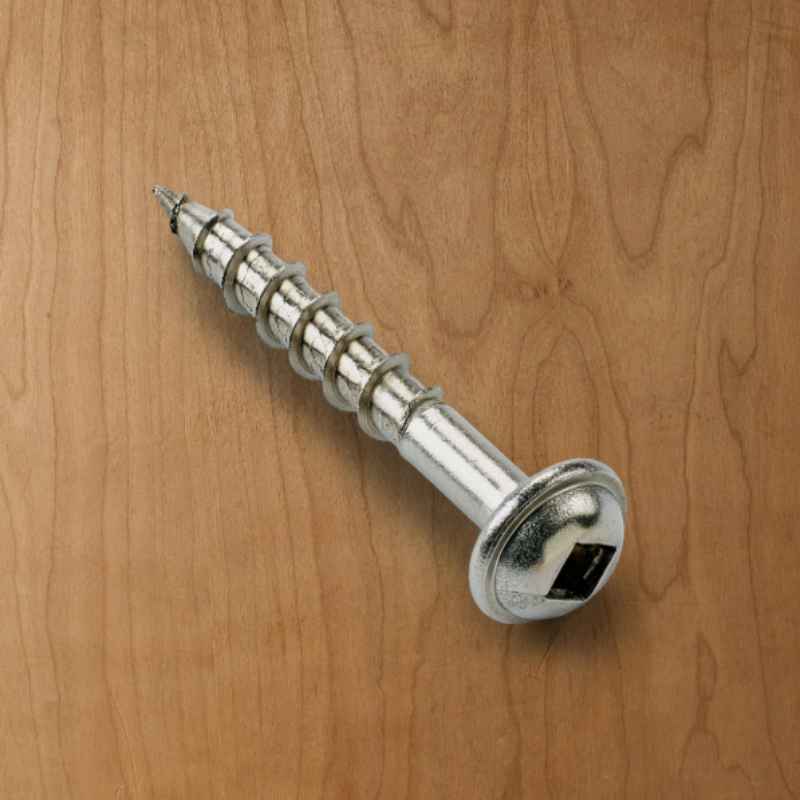
Pocket hole joinery is a clever way to make strong, hidden joints. A pocket hole jig drills angled holes. These holes let you drive screws at an angle. This pulls two pieces of wood together tightly. The screws you use are special. They have a self-tapping tip. They also have a washer-head. This head sits flat against the wood. It prevents the screw from pulling through.
The size of the screw matters a lot. It depends on the thickness of your wood. If the screw is too short, it won’t grip enough. Your joint will be weak. If the screw is too long, it can poke through the other side. This looks bad. It can also split the wood. This ruins your project.
For 3/4 inch plywood, you are working with a standard thickness. Most jigs and screw manufacturers give clear guidelines. They suggest specific screw lengths for different wood thicknesses. These guidelines are there for a reason. They ensure your joints are strong and look clean.
Why 1 1/4 Inch is Usually the Winner for 3/4 Plywood
When you drill a pocket hole into 3/4 inch plywood, the hole itself takes up some space. The angle of the hole also means the screw enters the mating piece a little distance from the edge. The goal is for the screw threads to get a good bite. You want them to go into the second piece of wood. But you don’t want them to go all the way through.
A 1 1/4 inch screw is designed to do just that. It’s long enough to get good thread engagement. It pulls the two pieces together. The washer head seats nicely in the pocket. It holds the pieces snug. The screw tip stops just before it would exit the other side of a typical joint. This is especially true when joining 3/4 inch material to 3/4 inch material.
Think of it like this: the screw is like a handshake. You want a firm, secure grip. You don’t want to grip so hard you crush the other person’s hand. A 1 1/4 inch screw gives that perfect, strong grip for 3/4 inch plywood.
Pocket Hole Screw Basics
Screw Type: Pocket hole screws.
Head Style: Washer head (flat bottom).
Tip: Self-tapping.
Purpose: To join wood pieces at an angle.
Key Benefit: Strong, hidden joints.
When Might You Need a Different Size?
While 1 1/4 inch is the go-to, there are times you might consider other sizes. This usually happens when you are joining two pieces of 3/4 inch material together edge-to-edge, or when one piece is much thicker than the other.
Joining Two Pieces of 3/4 Inch Plywood Together
Sometimes, you might be building something where you’re attaching one 3/4 inch piece directly to the face of another 3/4 inch piece. In this case, the total thickness the screw needs to pass through is about 1 1/2 inches (3/4″ + 3/4″). However, the pocket hole is drilled into only one of those pieces. The screw then enters the second piece.
When you are joining two pieces of 3/4 inch plywood, and the pocket holes are drilled into one of them, the 1 1/4 inch screw is still generally the best choice. The screw will pass through the thickness of the first board (3/4 inch), and then its threads will engage into the second board. The washer head will sit flush in the pocket of the first board.
However, for very robust projects where you want extra holding power, some woodworkers might opt for a 2 1/2 inch screw when joining two 3/4 inch pieces. This is less common for standard pocket hole jig setups and might require careful adjustment to avoid over-driving the screw. It’s usually overkill and can lead to issues if not done precisely. Sticking with 1 1/4 inch is safer and more effective for most situations.
Joining 3/4 Inch Plywood to Thinner Material
If you are attaching 3/4 inch plywood to a thinner piece of wood, say 1/2 inch or 1/4 inch, you absolutely need to use a shorter screw. A 1 1/4 inch screw would go straight through a 1/2 inch piece and stick out quite a bit. In these cases, you’d use screws designed for the thinner material. For a 1/2 inch piece, 1 inch screws are often used. For 1/4 inch material, you might even use 3/4 inch screws.
Common Pocket Hole Jig Setups and Their Recommendations
Leading pocket hole jig manufacturers provide excellent guidance. Their systems are designed with standard wood thicknesses in mind.
Kreg Jig (Most Popular)
Kreg Tool is the most well-known name in pocket hole jigs. Their systems are widely used. For 3/4 inch material (including plywood), Kreg consistently recommends 1 1/4 inch coarse-thread screws. They offer these screws in various types:
Coarse Thread: Best for softwoods and plywood. This is what you’ll use most often.
Fine Thread: Best for hardwoods.
If you have a Kreg jig, and you’re working with 3/4 inch plywood, grab those 1 1/4 inch coarse-thread screws. They’ve tested it extensively.
Other Jig Brands
Many other brands make pocket hole jigs. The principles are the same. They are all designed to work with standard screw lengths for standard wood thicknesses. Always check the manual that came with your specific jig. It will have a chart or guide. This guide shows which screw length to use for each wood thickness.
What About Screw Threads? Coarse vs. Fine
This is an important detail often overlooked. Plywood, being made of layers of veneer, acts more like a softwood than a hardwood. The layers can sometimes separate if the screw is too aggressive.
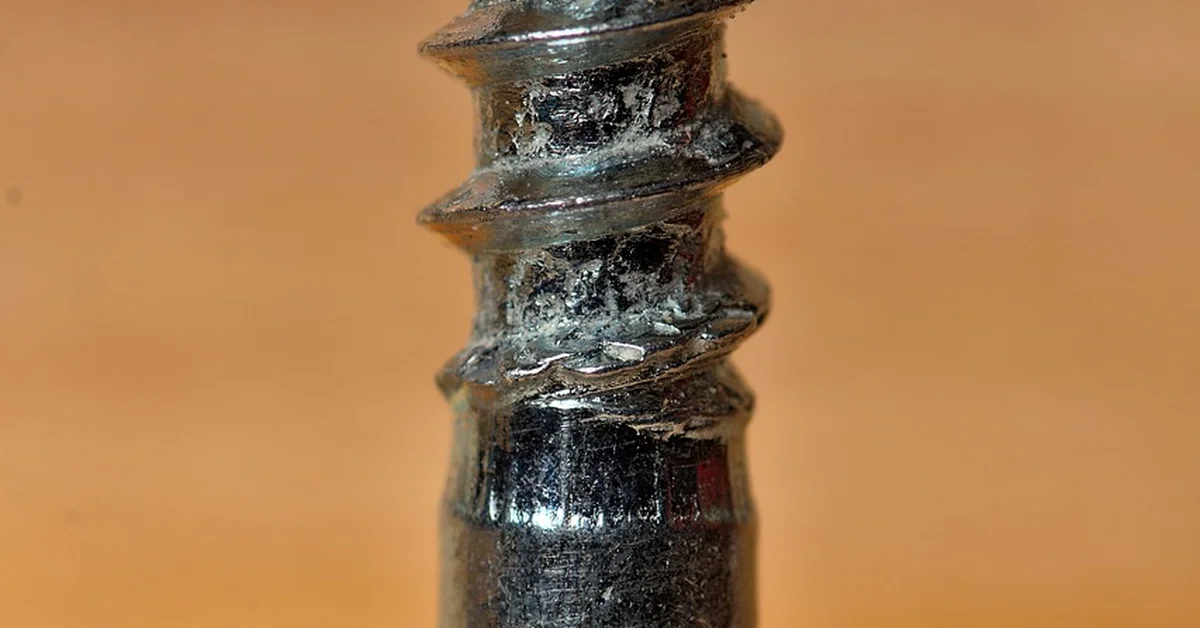
Coarse Thread Screws: These have wider, more spaced-out threads. They grip well in softer materials like pine, MDF, and plywood. They are less likely to strip out the wood fibers. For 3/4 inch plywood, coarse thread screws are almost always the correct choice.
Fine Thread Screws: These have many tightly packed threads. They are designed for hardwoods like oak, maple, or walnut. The tighter threads create a stronger hold in dense wood. Using fine thread screws in plywood is generally not recommended. They can sometimes split the plywood layers.
So, when you buy your 1 1/4 inch pocket hole screws for 3/4 inch plywood, make sure they are coarse thread.
Quick Screw Size Guide for Common Wood Thicknesses
Wood Thickness: 1/2 inch (12mm)
Recommended Screw: 1 inch
Wood Thickness: 3/4 inch (19mm)
Recommended Screw: 1 1/4 inch (Coarse Thread for Plywood)
Wood Thickness: 1 1/2 inch (38mm)
Recommended Screw: 2 1/2 inch
My Own Pocket Hole Screw Mishap
I remember building a simple bookshelf for my garage a few years back. I was using some leftover 3/4 inch plywood. I had a big project planned, so I grabbed a box of what I thought were all-purpose wood screws. They were 1 1/2 inch screws. I thought, “Close enough to 1 1/4 inch, right?” Big mistake.
I drilled my pocket holes, set up my jig, and started driving those 1 1/2 inch screws. The first one went in okay, but it felt a bit tight. As I drove the second screw into the same joint, connecting two 3/4 inch pieces, I felt a slight crunch. I pulled the pieces apart, and sure enough, the screw had just barely started to poke out the other side of the mating piece. Worse, the plywood around the pocket hole looked a little stressed.
It wasn’t a complete disaster, but it wasn’t the clean, strong joint I wanted. I had to back out the screws, fill the holes, and start over with the correct 1 1/4 inch screws. It was a frustrating delay. That experience taught me a valuable lesson: always use the recommended screw size. Precision matters in woodworking, even for small details like screw length. It saved me from potentially weaker joints and a less professional look.
Real-World Scenarios: When is 3/4 Plywood Used?
3/4 inch plywood is a workhorse material. You see it everywhere in DIY projects and furniture making. Understanding where it’s used helps explain why the correct screw size is so important.
Cabinet Boxes
Many cabinet boxes are made from 3/4 inch plywood. The sides, bottoms, and tops are often this thickness. Pocket holes are a popular way to join these panels. This creates strong, square cabinet boxes that will last. Using 1 1/4 inch screws ensures these joints are solid. They can hold the weight of drawers, doors, and whatever you put inside.
Shelving Units
From sturdy garage shelving to decorative bookshelves, 3/4 inch plywood is a common choice. The shelves themselves and the vertical supports are often made from this material. Pocket holes provide a fast and easy way to assemble these units. The right screw size means your shelves won’t sag or pull away from the supports over time.
Tabletops and Workbench Tops
For a durable and flat surface, 3/4 inch plywood is often used. It might be used on its own or as a sub-top for a laminate or butcher block surface. Pocket holes can be used to attach the top to its base. The strength provided by the correct screw size is crucial here.
Drawer Boxes
While some drawer boxes use 1/2 inch plywood, many robust designs opt for 3/4 inch for the sides and front/back. The bottoms are often thinner, like 1/4 inch or 1/2 inch, inserted into grooves. When joining the 3/4 inch sides, 1 1/4 inch screws are the standard. This makes for drawers that can handle heavy loads without coming apart.
What This Means for Your Projects
Choosing the right pocket hole screw size for your 3/4 inch plywood isn’t just about following rules. It directly impacts the quality and longevity of your projects.
When is it Normal to Use 1 1/4 Inch Screws for 3/4 Plywood?
It’s normal and expected to use 1 1/4 inch coarse thread pocket hole screws whenever you are joining two pieces of 3/4 inch plywood together, or when you are attaching a 3/4 inch piece to another piece of similar thickness, and the pocket holes are drilled into the 3/4 inch material. This is the standard for most basic cabinet construction, shelving, and furniture frames.
When Should You Pause and Double-Check?
Joining 3/4 inch to much thinner material: If you are attaching 3/4 inch plywood to something like 1/4 inch hardboard or 1/2 inch plywood, a 1 1/4 inch screw is too long. You need to use a shorter screw that matches the thinner material.
Joining two very thick pieces: While 1 1/4 inch is standard for 3/4 inch, if you were building something extremely heavy-duty, like a workbench where the top is made of two layers of 3/4 inch plywood glued and screwed together, you might* consider a longer screw. However, always test this first. The standard Kreg jig recommendations are usually sufficient.
If the screw feels too tight or too loose: Trust your feel. If a screw is difficult to drive or feels like it’s not biting, stop. It might be the wrong thread type, or you might have an issue with your jig setup.
Simple Checks You Can Do
Before you start driving screws on your actual project, always do a test.
1. Take two scraps of your 3/4 inch plywood.
2. Drill a pocket hole in one piece.
3. Align it with the second piece as if you were making a joint.
4. Drive one of your chosen screws.
5. Inspect the back of the second piece. Does the screw tip protrude? If so, it’s too long.
6. Gently try to pull the pieces apart. Does it feel secure? If it wobbles easily, the screw might be too short or not engaging properly.
This simple test takes seconds and can save you a lot of frustration and rework.
Myth vs. Reality: Pocket Hole Screws
Myth: Any wood screw will work in a pocket hole jig.
Reality: Pocket hole screws have a special washer head and self-tapping tip for optimal performance.
Myth: Longer screws always make a stronger joint.
Reality: Screws that are too long can split wood or poke through, weakening the joint.
Myth: Fine thread screws are universally better.
Reality: Coarse thread screws are best for softwoods and plywood, while fine threads are for hardwoods.
Quick Fixes & Tips for Pocket Hole Screws
While the focus is on the right size, a few other tips can make your pocket hole joinery even better.
1. Buy Quality Screws
Don’t skimp on screws. Cheap screws can have inconsistent threads, weak heads that snap off, or tips that don’t self-tap well. Invest in reputable brands like Kreg, GRK, or Spax for pocket hole applications. This is especially true for your 1 1/4 inch screws for 3/4 inch plywood.
2. Match Thread Type to Wood
As mentioned, always use coarse thread for plywood and softwoods. This is a golden rule.
3. Drive Screws Straight
Your jig should help with this. But sometimes, especially with handheld jigs, it’s easy to drive the screw at a slight angle. Try to keep the driver bit perfectly aligned with the pocket hole. A wobbly screw is a weak screw.
4. Don’t Overtighten
Pocket hole screws are self-tapping. They don’t need extreme force. Drive them until the washer head is snug against the wood surface. Overtightening can strip the wood fibers, weakening the joint. It can also cause the wood to split, especially near the edges.
5. Use Wood Glue
For the strongest joints, always use a bit of wood glue in addition to pocket hole screws. Apply a thin bead of glue to the edge of the piece that will receive the screw. Then, drive the screws. The glue adds significant strength. It makes the joint much more rigid.
6. Keep Your Jig Clean
Dust and debris can interfere with the accuracy of your jig. A clean jig leads to accurately drilled pocket holes. This, in turn, helps your screws go in straight and true.
Frequently Asked Questions
How long should pocket hole screws be for 3/4 inch plywood?
How long should pocket hole screws be for 3/4 inch plywood?
For 3/4 inch plywood, the standard and most recommended pocket hole screw size is 1 1/4 inch. This length provides a secure grip without poking through the opposite side of the wood when joining typical pieces.
Can I use longer screws than 1 1/4 inch on 3/4 inch plywood?
Can I use longer screws than 1 1/4 inch on 3/4 inch plywood?
While you might be tempted to use longer screws for extra strength, it’s generally not recommended for standard pocket hole joinery with 3/4 inch plywood. Screws that are too long can penetrate the opposite surface, leading to a weaker joint or visible damage. Always stick to the recommended 1 1/4 inch size unless your specific project dictates otherwise and you’ve tested it.
What type of pocket hole screw thread is best for plywood?
What type of pocket hole screw thread is best for plywood?
For plywood, which is considered a softwood or composite material, you should always use coarse thread pocket hole screws. Coarse threads have wider spacing and grip better in these materials without stripping the wood fibers or causing splitting. Fine threads are reserved for hardwoods.
Do I need special screws for pocket holes?
Do I need special screws for pocket holes?
Yes, you do need special screws for pocket holes. Pocket hole screws have a unique washer head that sits flat in the pocket hole, and they feature a self-tapping tip. This design ensures a strong, flush joint without needing pilot holes.
Regular wood screws are not designed for pocket hole joinery.
What is the difference between coarse and fine thread pocket hole screws?
What is the difference between coarse and fine thread pocket hole screws?
The main difference is the spacing and density of the threads. Coarse thread screws have wider, more aggressive threads and are ideal for softwoods like pine, fir, and plywood. Fine thread screws have tighter, more numerous threads and are best suited for hardwoods like oak, maple, and cherry, where they provide a stronger hold.
Can I use 2 1/2 inch screws for 3/4 inch plywood?
Can I use 2 1/2 inch screws for 3/4 inch plywood?
Using 2 1/2 inch screws for 3/4 inch plywood is generally not recommended for standard pocket hole joinery. This size is typically used for joining much thicker materials, such as two pieces of 1 1/2 inch lumber. For 3/4 inch plywood, 1 1/4 inch screws are the standard.
Using screws that are too long can lead to them poking through the wood.
Conclusion
Getting the right screw size for your pocket hole projects is key. For 3/4 inch plywood, it’s almost always 1 1/4 inch coarse thread pocket hole screws. This size is designed to give you strong, clean joints. It ensures your projects look great and last for years. Always test your screws on scrap wood first. This simple step prevents common mistakes. Happy building!
Sponsored / affiliate links. As an Amazon Associate I earn from qualifying purchases. I may earn additional commission from eligible campaigns.