Space Heater Efficiency by Room Size and Insulation Level
A 1,500-watt space heater can often cover roughly 75 square feet in a drafty or poorly insulated room, and it can cover more area in a tighter space with average or good insulation. A practical sizing shortcut is about 10 watts per square foot for an 8-foot-ceiling room with average insulation, with lower wattage for tight rooms and higher wattage for leaky ones. The U.S. Department of Energy notes that room-by-room heating needs depend heavily on insulation, air leakage, and room characteristics, while Energy Star and electrical safety guidance commonly treat 1,500 watts as the practical upper end for a standard plug-in portable heater on a typical 15-amp household circuit. A 1,500-watt heater also equals about 5,118 BTU/hr because 1 W = 3.412 BTU/hr.
What heater size fits your room?
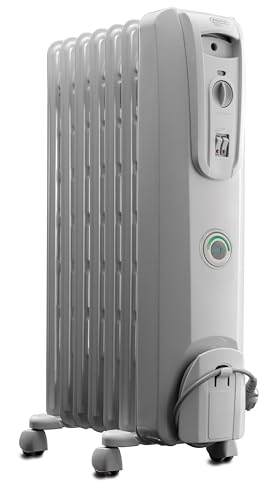

Start with floor area, then adjust for insulation, ceiling height, drafts, and whether the heater is supplemental or primary heat. An 8-foot ceiling and average insulation give you the cleanest baseline. From there, the same wattage can fit one room and fall short in another.
Start with floor area
Room size is the first input because it gives you a rough heat load before you account for leaks and ceiling height. A practical starting point is 10 watts per square foot for a standard room with 8-foot ceilings and average insulation, which puts a 200 square foot room near 2,000 watts under average conditions. DOE room-heating guidance and utility sizing guides use this kind of square-foot baseline as a starting estimate, then adjust for the room envelope.
Match the heater to insulation level
Insulation quality changes the watts per square foot. Well-insulated rooms often fit around 6-8 W/sq ft, average rooms around 8-10 W/sq ft, and poorly insulated or drafty rooms around 12-15 W/sq ft. That is why the same 1,500-watt heater can feel fine in a tight bedroom and underpowered in a leaky basement.
Choose supplemental or primary heat
Supplemental heat means the heater is supporting an existing system, so you can size closer to the low end of the range. Primary heat means the heater is carrying the room on its own, so you need more output and fewer heat-loss gaps. The same room may need one wattage band for backup warmth and a larger one for full-room heating.
How room conditions change wattage
Room loss is not only about square footage. Exterior walls, roof or attic exposure, window area, drafts, and air leakage all raise the load, and colder outdoor-to-indoor temperature differences raise it again. High ceilings do the same because you are heating more air volume above the occupied zone.
Good, average, and poor insulation
A tight modern room with good insulation often fits the lower end of the watt range. An average room sits near the 10 W/sq ft rule. A drafty older room can push demand into the 12-15 W/sq ft range, especially when one wall faces outdoors or the room sits under an attic.
Why ceiling height changes the load
Eight feet is the baseline. If the ceiling is higher, the room volume rises and the heater must warm more air, which increases the load even if the floor area stays the same. That matters most in living rooms, sunrooms, garages, and open-plan spaces where heat can pool above you.
How walls, windows, and drafts change the result
More exterior wall area usually means more heat loss. Large windows add another loss path, especially if they are old or single-pane. Air leakage around doors, trim, attic hatches, and rim joists can move a room that should fit one wattage band into the next band up.
When cold weather raises the demand
The greater the temperature difference between outdoors and the target indoor temperature, the more wattage you need. A room that works in mild weather may fall short on a very cold night. That is one reason the same heater can feel fine in autumn and weak during a deep cold snap.
Room sizing matrix

Use this table by starting with your room’s floor area, then moving across to insulation quality. If the room has high ceilings, several exterior walls, or noticeable drafts, move up one band. If the heater is only supplemental, you can often stay lower. For primary heat, choose the higher end of the range or the next watt band up when the room is marginal.
| Room size | Good insulation | Average insulation | Poor insulation | Note for high ceilings, exterior walls, or drafts |
|---|---|---|---|---|
| 100 sq ft | 500W supplemental; 750W primary | 750W supplemental; 1000W primary | 1000W supplemental; 1500W primary | Move up one band if the room has more than one exterior wall, a ceiling above 8 feet, or obvious air leakage. |
| 150 sq ft | 750W supplemental; 1000W primary | 1000W supplemental; 1500W primary | 1500W supplemental; 2000W primary, or higher-output hardwired heat if needed | Move up one band if the room is above unheated space, has large windows, or feels drafty near doors and trim. |
| 200 sq ft | 1000W supplemental; 1500W primary | 1500W supplemental; 2000W primary | 2000W supplemental; 3000W primary, usually beyond common plug-in portable limits | Rooms with tall ceilings, multiple windows, or basement leakage often need the higher end of the range. |
| 300 sq ft | 1500W supplemental; 2000W primary | 2000W supplemental; 3000W primary, usually beyond common plug-in portable limits | 3000W supplemental; larger fixed or hardwired heat for primary use | Open layouts, two exterior walls, or a cold floor assembly usually push this size toward fixed heat. |
| 400 sq ft | 2000W supplemental; 3000W primary, usually beyond common plug-in portable limits | 3000W supplemental; larger fixed or hardwired heat for primary use | Larger fixed or hardwired heat for primary use | High ceilings, strong drafts, or many windows usually make a portable heater a poor primary-heat fit. |
The rule of thumb above lines up with cited room-load guidance from DOE-style sizing references: lower watts in tight rooms, higher watts in leaky rooms, and a larger allowance when the heater must be the primary heat source. The practical takeaway is that room size alone is not enough. Insulation and air leakage can shift the same room by several hundred watts.
Portable space heaters are typically in the 750W to 1,500W range, and 1,500W is often treated as the common plug-in practical limit for a standard household circuit and receptacle setup. Higher-output units may require a different voltage, a dedicated circuit, or a fixed installation. Check the manufacturer’s listing for your model and compare it with your outlet and circuit limits before you buy. Electrical safety guidance from utility and fire-safety sources generally advises against exceeding the heater’s listed electrical requirements or overloading household circuits.
A 1,500 watt heater produces approximately 5,118 BTU per hour, using 1 W = 3.412 BTU/hr. That BTU figure helps you compare compare electric heaters with other heating fuels. It also explains why a 1,500W unit can handle a small room well but may feel stretched in a larger room with more leakage.
Is 1,500 watts enough?
For many bedrooms and home offices, yes, if the room is small enough and the envelope is tight. A 1,500-watt heater is often sufficient for a room up to about 150 square feet with average insulation, and it is a common practical match for a bedroom or office that just needs backup warmth. In a leaky or larger room, it can be too small.
Bedroom sizing
A bedroom under 150 sq ft with average insulation is the clearest fit for 1,500W. If the room has one exterior wall and a decent door seal, that wattage often works for supplemental heat. If the bedroom has high ceilings, a bay window, or a cold corner above a garage, move up only if the heater type and electrical setup allow it.
Home office sizing
sizing for home offices usually starts below the level needed for larger living areas because the room is often smaller, enclosed, and used intermittently. A 1,500W heater is a common fit when the office door stays closed and the room has average or better insulation. Open doors, thin walls, and a cold floor above unheated space can push the room out of that range.
What makes 1,500W too small
It becomes too small when the room is larger than about 150 square feet, when insulation is poor, when the ceiling is higher than 8 feet, or when the room has multiple exterior walls. If the heater runs constantly and the room still feels uneven, the load is above what 1,500W can cover.
Say your 140 square foot bedroom has average insulation and one exterior wall. A 1,500W heater can work as backup heat, but the same room with poor insulation and a drafty window often needs a higher watt band or a different heat source for primary use.
What if the room is drafty?
Drafts change the answer fast because they move warm air out and cold air in. Exterior walls, leaky windows, basement air leakage, and sunroom glazing can all push the room into a higher wattage band. In those rooms, sizing by floor area alone is usually too optimistic.
Exterior walls and window area
Each exterior wall adds a path for heat loss, and each window adds more. A room with two outside walls usually needs more power than a same-size interior room. If the windows are large, old, or poorly sealed, the heater may need the next watt step even if the floor area looks small.
Basements and sunrooms
Basements often need extra wattage because concrete, leakage, and cooler surrounding spaces pull heat away. Sunrooms are similar because glass area is high and solar gain swings with the weather. A drafty basement or sunroom often needs the higher end of the range, which is why portable units can run short for primary heating in those spaces.
Why poor insulation changes the answer fast
Poor insulation can move a room from a 1,000W or 1,500W need into the 2,000W to 3,000W range very quickly. That jump is why 100 sq ft can be listed at 1,500 W in poor insulation but only 800 W in good insulation. The room did not grow; the heat loss did.
Suppose a 200 square foot basement office has an 8-foot ceiling, two exterior walls, and noticeable air leakage. Under average insulation, 2,000W is the starting point. If the room is drafty, the practical answer moves toward the high end, and a common portable unit may no longer be enough for primary heat.
Which heater type fits the room?
Heater type changes how heat feels and how quickly a room warms, but it does not cancel the sizing rules. A heater that suits a drafty bathroom may be the wrong choice for a living room. Match the technology to the room and the way heat needs to spread.
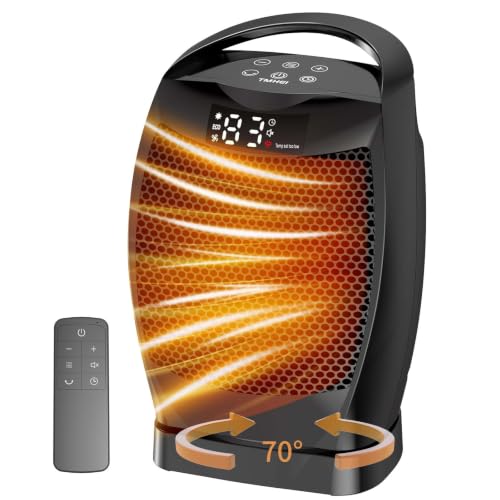
Ceramic fan heaters
Ceramic fan heaters move heat quickly and suit short bursts in bedrooms, offices, and small living areas. They are useful when you want fast warm-up and the room is not too leaky. Their output still has to match the room load, or the fan just circulates warm air that cannot keep up.
Oil radiators
Oil radiators give slower, steadier heat and work well for rooms where you want a gentler temperature rise. They are often a good fit for bedrooms and offices used for longer stretches. They are less about quick recovery and more about holding a room at a steady temperature.
Infrared radiant heaters
Infrared radiant heaters warm objects and people in their path first, so they can feel effective in garages, workshops, and some sunrooms. They are often a better choice when you care more about spot comfort than heating every cubic foot evenly. Open, drafty rooms still need enough wattage to avoid cold drift.
Convection baseboard heaters
when convection baseboard heaters make more sense than portable units comes down to room size, run time, and how stable you want the heat to feel. Convection baseboard heaters warm the air around them and work best when the room has a reasonable seal and a clear path for air circulation. They can suit bedrooms, living rooms, and some basement spaces. In a drafty room, they may need more capacity than a same-size radiant unit to keep up.
Frequently asked questions
How many watts do I need for my room size and insulation level?
Use room area first, then adjust for insulation. A practical rule is 10 watts per square foot for a standard room with 8-foot ceilings and average insulation. Well-insulated rooms often need 6-8 W/sq ft, while poorly insulated rooms may need 12-15 W/sq ft, especially with more outside wall area.
Is a 1,500-watt space heater enough for a bedroom?
Usually, yes, if the bedroom is up to about 150 square feet and has average insulation. It is a common size for a portable unit and equals about 5,118 BTU per hour. If the room is drafty, larger, or has high ceilings, 1,500W can be too small.
How much more heater power do I need for a drafty room?
Drafts can move you up one or even two watt bands, depending on how much heat is escaping. A room that would need 1,000W in a tight condition may need 1,500W or 2,000W once exterior walls, window leakage, and air movement are part of the load.
Does a high ceiling change the heater size I need?
Yes. The standard baseline is an 8-foot ceiling, and higher ceilings increase the amount of air and wall area that must be heated. That raises the load even when the floor area stays the same. In rooms with tall ceilings, size above the floor-area rule rather than below it.
What heater size is best for a small apartment versus a garage?
A small apartment often fits a 750W to 1,500W portable heater if the rooms are closed off and reasonably insulated. A garage usually needs more output because it is leakier and often has colder surfaces. For garage use, radiant or higher-output fixed heat is often a better fit than a small plug-in unit.
Should I use supplemental heat or primary heat sizing?
Use supplemental sizing when the heater is backing up an existing system. Use primary sizing when the unit must carry the room on its own. Primary heat needs a bigger watt band because it has to overcome the full room load, not just trim the chill.
Sources
- U.S. Department of Energy, Energy Saver: room heating, insulation, and heat-loss guidance
- ENERGY STAR guidance on room heaters and efficient heating practices
- Fire-safety and electrical safety guidance on portable space heaters, circuit loading, and plug-in limits
- Manufacturer engineering and spec sheets for portable electric space heaters and nameplate wattage limits
Sponsored / affiliate links. As an Amazon Associate I earn from qualifying purchases. I may earn additional commission from eligible campaigns.