Which Heater Is Best for a Home Office?
For most home offices, a ceramic space heater with tip-over and overheat protection gives the fastest desk-side warmth. For rooms up to about 150 square feet, 1,500 watts is a common starting point. A poor match can waste energy, leave cold spots, or create safety and noise problems that break concentration. This guide helps you choose by office size, noise, safety features, and whether you need spot heating or whole-room heat.
Match the right heater to your desk and room

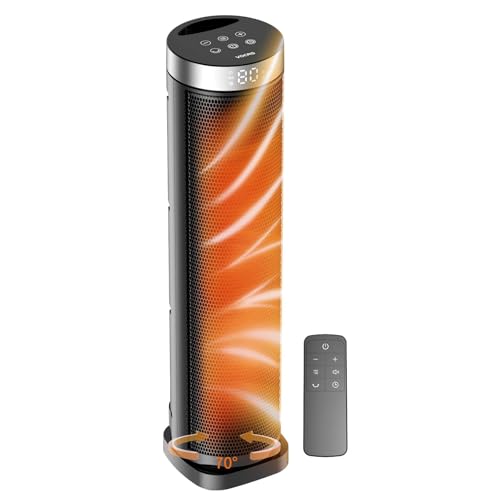
Top pick by office setup
If you work alone at a desk, a small ceramic or infrared-plus-PTC heater is usually the best fit because it warms your body faster than it warms the room. If you share the room, move up to a heater that raises room temperature more evenly, such as a larger ceramic unit or an oil-filled radiator with a thermostat. The right answer depends on where the cold is, how long you sit, and how much noise you can tolerate.
When one heater can cover the whole room
Whole-room heating makes sense when the office is small, enclosed, and only mildly drafty. A space heater can work for that setup if the room is close to the heater’s coverage range and the doorway stays closed. For a standard reference room, Consumer Reports evaluates heat gain in a 17×12-foot room, which is a useful size benchmark for many home offices.
When a personal heater is the better choice
Personal heat is the better choice when the room itself is not especially cold, but your feet, legs, or hands are. That is common at a solo desk, near a window, or in an under-desk setup. Spot heating is most effective when you sit about 4 feet from the heater, because the goal is to warm the person rather than the whole room. (Consumerreports)
📊 CR evaluates heat gain in a standard-sized room measuring 17×12 feet. Source: Best Space Heaters for a Home Office.
Quick picks for home office heaters
- Best for a solo desk: Ceramic or infrared-plus-PTC heater with tip-over shutoff, overheat protection, and a thermostat.
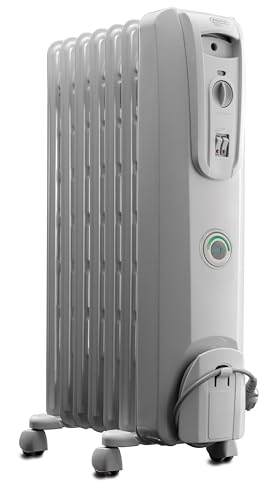
- Best for a shared office: Oil-filled radiator or larger whole-room heater with steady output and precise control.
- Best for under-desk use: Small personal heater that stays on the floor and does not trap heat against the desk.
- Best for a drafty room: Whole-room heater with stronger airflow or radiant support, plus ECO mode.
Home office heater decision table
| Office type | Best heater type | Expected warmth behavior | Likely noise impact | Safety watchouts | Run-cost risk |
|---|---|---|---|---|---|
| Solo desk | Small ceramic or infrared-plus-PTC personal heater | Fast spot heat aimed at one seated person | Low to moderate; fan noise can rise at higher settings | Keep on the floor, away from curtains and furniture; do not block with bags or cords | Lower than heating the whole room if you only run it while seated |
| Shared office | Oil-filled radiator or whole-room ceramic heater with thermostat | More even room warming for more than one person | Usually quieter than fan-only heaters | Needs clear space around it and direct wall-outlet power | Higher if you try to warm the entire room for long stretches |
| Under-desk use | Low-profile personal heater used only where the manual allows | Warm feet and shins rather than the room | Quietest models are best for calls and focus | Do not trap heat under a desk; avoid carpet blockage and cable clutter | Moderate; efficient for a single seated user, wasteful if left running empty |
| Drafty attic | Whole-room heater with thermostat and ECO mode | Fights heat loss better than a tiny personal heater | Can be noticeable if the fan runs often | Keep it on the floor and away from upholstered furniture and curtains | High if insulation is poor and the room leaks heat fast |
| Basement office | Oil-filled radiator or ceramic heater with steady output | Useful for cold floors and cooler air near the ground | Radiators are usually quieter; fan heaters are louder at high output | Mind dampness, cord routing, and clearance from storage items | Moderate to high depending on room size and insulation |
| Small enclosed room | Standard 1,500-watt space heater with thermostat | Can raise room temperature without chasing a huge space | Often manageable for calls if it has a lower fan setting | Plug directly into a wall outlet; never use an extension cord | Lower when the room is small and closed off |
Which heater works best for a solo desk?
A solo desk is where spot heating wins. You usually want warm legs, feet, and hands within arm’s reach, not a heater that spends energy on the far corners of the room. For that setup, a quiet personal heater with a thermostat is usually better than a larger room heater.
Spot heating at about 4 feet
Spot heating works best when you sit about 4 feet from the heater. That distance is close enough to feel warmth quickly without turning the whole office into a hot box. Consumer Reports measures how well heaters warm a person about 4 feet away, which matches how many people actually work at a desk.
Quiet output for calls and focus
Noise matters more in a home office than in a spare room. Fan heaters can become distracting on higher settings, even when the heat is useful. If you take calls often, look for a unit with a lower noise rating, a steady output mode, or a design that does not rely on a loud fan to push heat.
Suppose your desk sits beside a window in a roughly 120-square-foot office. A heater aimed at your chair can make the seat comfortable without warming the rest of the room. That is usually the better tradeoff than running a room heater on high for two hours just to fix cold hands.
When a small personal heater is enough
A small personal heater is enough when the room is already close to comfortable and you only need to take the edge off the cold. A small personal heater should include tip-over shutoff and overheat protection, and cool-touch surfaces if available. Place it on the floor, not on a table, unless the manual specifically allows tabletop use.
A shared office usually needs whole-room heating, not just desk-level warmth. When more than one person sits in the same room, a personal heater aimed at one chair can create uneven comfort and arguments about the thermostat. A steadier room heater does a better job when the goal is shared comfort.
Whole-room heating for more than one person
Whole-room heating raises the room temperature rather than only warming one person. That is the better choice for meeting-heavy rooms, offices with multiple desks, or spaces where people move around. In those setups, a heater with a thermostat matters because it can cycle instead of blasting heat nonstop.
Room size, draftiness, and heat loss
Room size and insulation change the result more than many buyers expect. A small enclosed room may warm quickly with a standard space heater. A drafty attic or basement can need more output, because heat loss through walls, floors, or leaky windows can erase comfort before the room stabilizes.
Why thermostat control matters more here
A thermostat and ECO mode help because they adjust output instead of running full blast all the time. That keeps temperature steadier, reduces overshooting, and can cut wasted energy when the room cycles between warm and cool periods. For shared spaces, that control is often more valuable than raw heater power.
How do you choose a heater for your office?
Choose by room size, insulation, noise, and the kind of heat you need at your desk. A compact personal heater can be best for one person. A room heater makes more sense when the office is shared, drafty, or large enough that spot heating will not reach beyond your chair.
Room size and insulation
A common rule of thumb is that about 1,500 watts suits a small office, while larger or draftier spaces need more careful matching. For a standard-sized room like the 17×12-foot reference size Consumer Reports uses, a space heater can be a practical room heater if the office is closed off and not badly leaky. In a larger drafty room, the same heater may only soften the chill near the desk.
What matters most is square footage and heat loss. A well-insulated 120-square-foot room behaves very differently from a drafty attic of the same size.
Thermostat, ECO mode, and heat control
Thermostat control gives you precise temperature control, while ECO mode lowers output once the room reaches the set point. Those features help a heater behave more like a controlled room appliance and less like an on-off blast of heat. That is useful for a workday, because comfort changes less than the weather does.
Noise, portability, and safety features
Quiet operation matters for productivity, especially during video calls. Portability matters too, because many home offices double as guest rooms, bedrooms, or storage spaces. Look for tip-over shutoff, overheat protection, cool-touch surfaces where available, and a cord that reaches a wall outlet without an extension cord.
CR says heaters should stay on the floor rather than on a table, and they should be kept away from upholstered furniture and curtains. CR also advises plugging a heater directly into a wall outlet and never using an extension cord with a space heater. Those details matter more in an office than many buyers think, because desks, cable clutter, and paper piles create easy ignition risks.
Infrared and PTC for office comfort
Infrared and PTC heating can be a good office combination because it gives an immediate radiant feel with sustained heat behind it. That mix helps when you want fast comfort at the desk without waiting for the whole room to equalize. It is especially useful in bedrooms and offices where you want quick warmth without a large footprint.
Heater Advisor’s best choice is the Dreo Portable Electric Heater, and it describes one featured heater as warming an office in under five minutes. It also cites a model operating at 34dB, which is the kind of noise level that can matter in a quiet work setup. Another model is described as suited to areas up to 250 sq ft, and one has 70° wide-angle oscillation.
CR has tested more than 150 space heaters. It also lists the Vornado MVH Whole Room Heater among recently tested models. Those references are useful because they point to the difference between a heater that warms a person nearby and one meant to warm more of the room.
Cost of spot heat versus room heat
Operating cost depends on wattage, cycle time, and your local electricity rate. A 1,500-watt heater can be reasonable for spot heating if you run it only while seated, but the cost rises quickly when you use it to heat the entire room for an 8-hour workday. Spot heating can be cheaper because you may only need the heater during the coldest part of the day.
For example, a heater that runs briefly at your desk for two or three hours is a very different cost proposition from one that stays on all day to warm a drafty office. That is why office setup matters more than heater type alone.
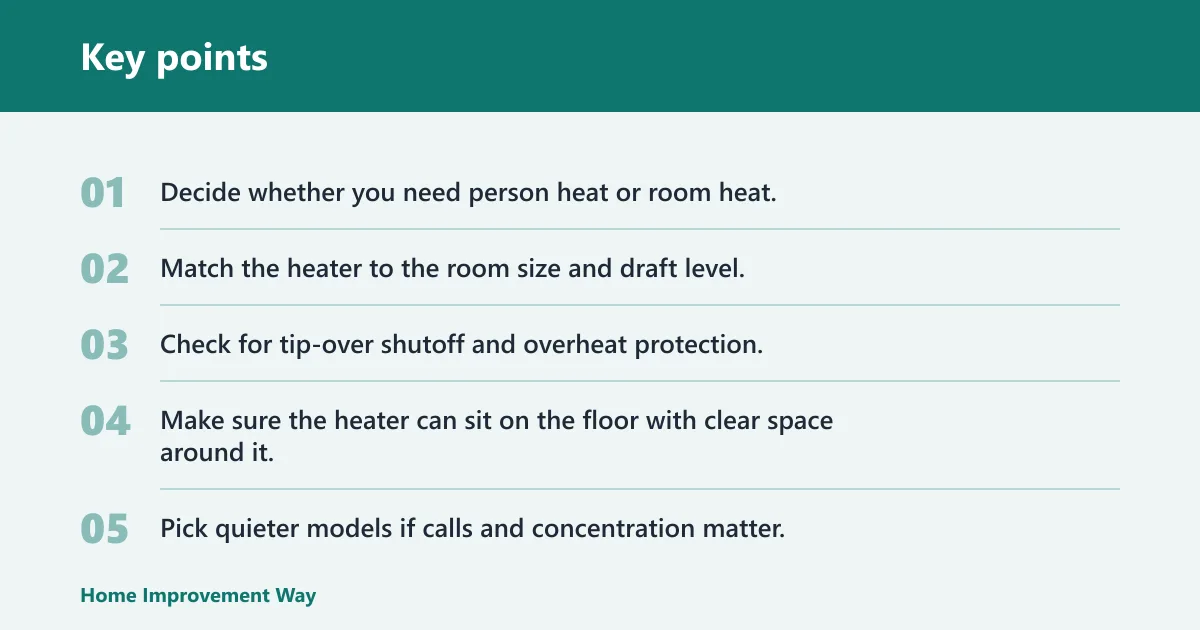
A simple buying path
- Decide whether you need person heat or room heat.
- Match the heater to the room size and draft level.
- Check for tip-over shutoff and overheat protection.
- Make sure the heater can sit on the floor with clear space around it.
- Pick quieter models if calls and concentration matter.
- Use thermostat control or ECO mode if you expect long daily runs.
A common mistake is choosing a bulky space heater with too much output for a compact home office, which can make the room feel stuffy and waste energy. That can add fan noise, dry out the room, and waste energy when a smaller personal heater would have solved the problem at the desk.
Frequently asked questions
Which heater is best for a home office?
The best heater for most home offices is a ceramic space heater with tip-over and overheat protection, because it heats quickly and works well for desk-side comfort. If you need quieter all-day heat, an oil-filled radiator is often the better fit. Match the heater to whether you want spot heating or room heating.
What is the best heater for a small office?
The best heater for a small office is usually a 1,500-watt space heater with a thermostat, especially if the room is closed and only mildly drafty. If noise is a concern, a radiator-style heater may be better because it tends to be quieter than a fan-driven unit.
What is the best personal heater for an office?
The best personal heater for an office is one that warms you about 4 feet away without overheating the room. Look for a compact ceramic or infrared-plus-PTC model with quiet operation, tip-over shutoff, and overheat protection. That setup is best when you sit in one place most of the day.
What is the best office heater under a desk?
The best office heater under a desk is a low-profile personal heater only if the manual allows that placement and heat can escape freely. Avoid models that trap heat against the desk, sit on carpet, or crowd cables. Under-desk use should warm your legs, not create a blocked heat pocket.
Can a portable heater replace central heating in a home office?
A portable heater can replace central heating only in a small, enclosed office for limited periods. It is not a full substitute in a drafty attic, basement, or larger room with heat loss. For most people, a portable heater is best as a zone heater for the workspace, not the whole house.
What room size and insulation level do I need to consider?
Start with room size, then account for insulation and drafts. A standard 17×12-foot room is a useful reference point, but a small insulated office will heat more easily than a drafty room of the same size. If walls, windows, or floors leak heat, choose more controlled whole-room heating rather than relying on a tiny personal heater.
Which heater is best for home?
For home use, the best heater depends on the room and how you sit in it. A portable space heater is best for a small room or one person nearby, while a radiator-style heater is better when you want quieter, longer-lasting warmth. Choose by space, not by heater label alone.
Which room heater is best for home?
The best room heater for home is the one that matches the room’s size, draftiness, and your noise tolerance. For a small enclosed room, a thermostat-controlled space heater works well. For a cooler, shared room, a quieter whole-room heater or oil-filled radiator is often the smarter choice.
Sponsored / affiliate links. As an Amazon Associate I earn from qualifying purchases. I may earn additional commission from eligible campaigns.