Mr. Heater Portable Buddy Vs Big Buddy: Which Is Better?
The Mr. Heater Portable Buddy is best for smaller spaces or personal warmth, while the Big Buddy is suited for larger areas and more robust heating needs, offering greater BTU output and coverage.
Let’s dive into what makes these two heaters stand out. They both run on propane, which is a common fuel for portable heaters. This makes them convenient for places without electricity.
But the main difference is how much heat they give off and how big of an area they can warm up. Think of it like comparing a small fan heater to a larger space heater.
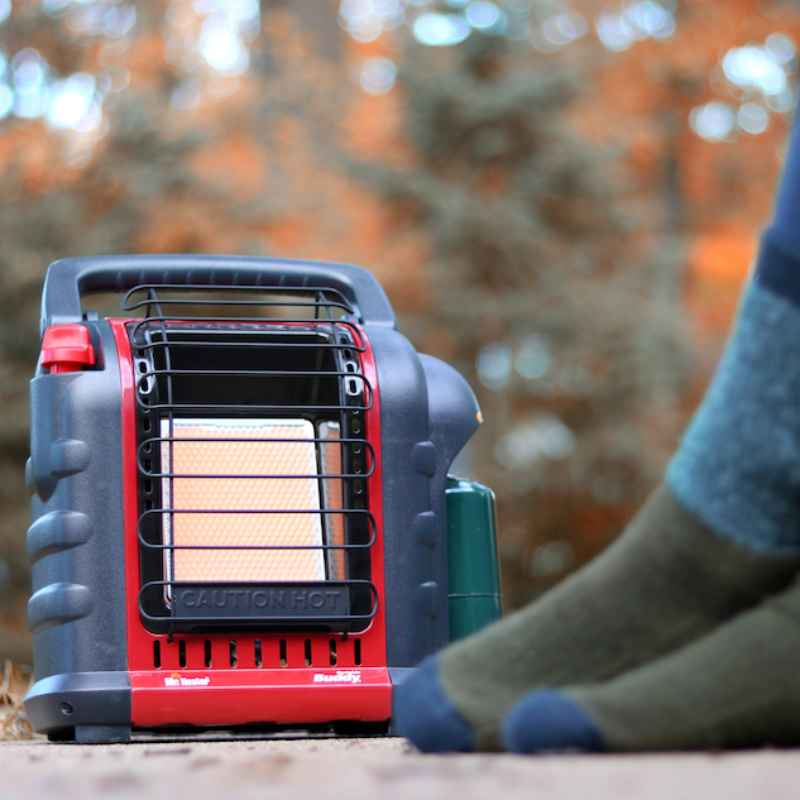
The Portable Buddy is designed for personal comfort. It’s great for keeping you warm when you’re sitting still. This could be while you’re fishing, watching a game from the sidelines, or just sitting in a small tent.
It’s more about direct warmth for one or two people.
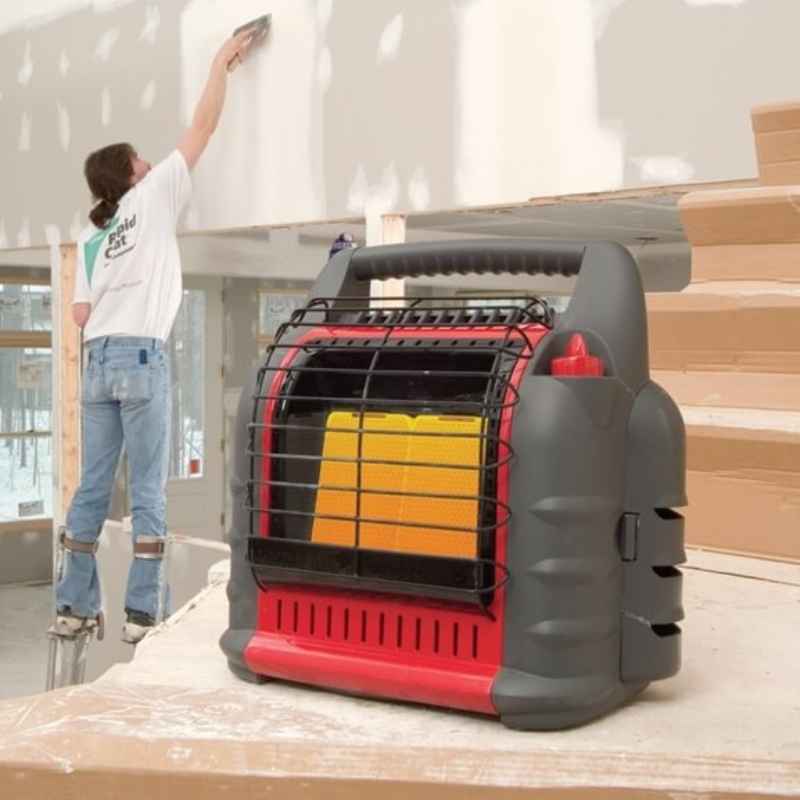
The Big Buddy steps things up. It’s built to heat larger spaces. Imagine warming up a big garage, a screened-in porch, or a much larger RV.
It has more power to push warm air further. This means it can tackle colder temperatures and bigger rooms more effectively.
Mr. Heater Portable Buddy: Your Personal Warmth Companion
The Mr. Heater Portable Buddy is a compact unit. It’s often chosen for its portability and ease of use.
You can pick it up and carry it with one hand. Its design focuses on safety and simple operation, making it a go-to for many outdoor enthusiasts and people who need quick, localized heat.
It usually puts out around 4,000 BTUs on its low setting and up to 9,000 BTUs on its high setting. BTUs, or British Thermal Units, measure heat output. More BTUs mean more heat.
This amount is perfect for warming up a small tent, a fishing blind, or just yourself in a chilly garage.
One of its key features is the auto shut-off system. If the heater tips over, it automatically turns off. It also has a low-oxygen sensor.
If the oxygen level in the air drops too much, it shuts down. These safety features are really important for indoor use or in enclosed spaces.
Fueling the Portable Buddy is straightforward. It typically uses a 1-pound propane cylinder. These small tanks are easy to find and screw right onto the heater.
For longer use, you can buy an adapter hose to connect it to a larger 20-pound propane tank. This gives you much more runtime.
I remember using a Portable Buddy on a camping trip once. It was a surprisingly cold fall night, and our tent was getting pretty chilly. We fired up the Portable Buddy on its lowest setting.
Within about 15 minutes, the inside of the tent felt so much cozier. It wasn’t like a furnace, but it took the edge off the cold. We could even take off our extra layers.
It was a game-changer for sleeping comfortably that night.
Portable Buddy Quick Facts
- BTU Output: 4,000 – 9,000 BTUs
- Fuel Source: 1 lb propane cylinder (adapter for 20 lb tank available)
- Heating Area: Up to 200 sq ft
- Safety Features: Tip-over safety shut-off, low-oxygen sensor
- Dimensions: Compact and lightweight
- Best For: Small spaces, personal warmth, personal tents, fishing shelters
Mr. Heater Big Buddy: For Larger Heating Needs
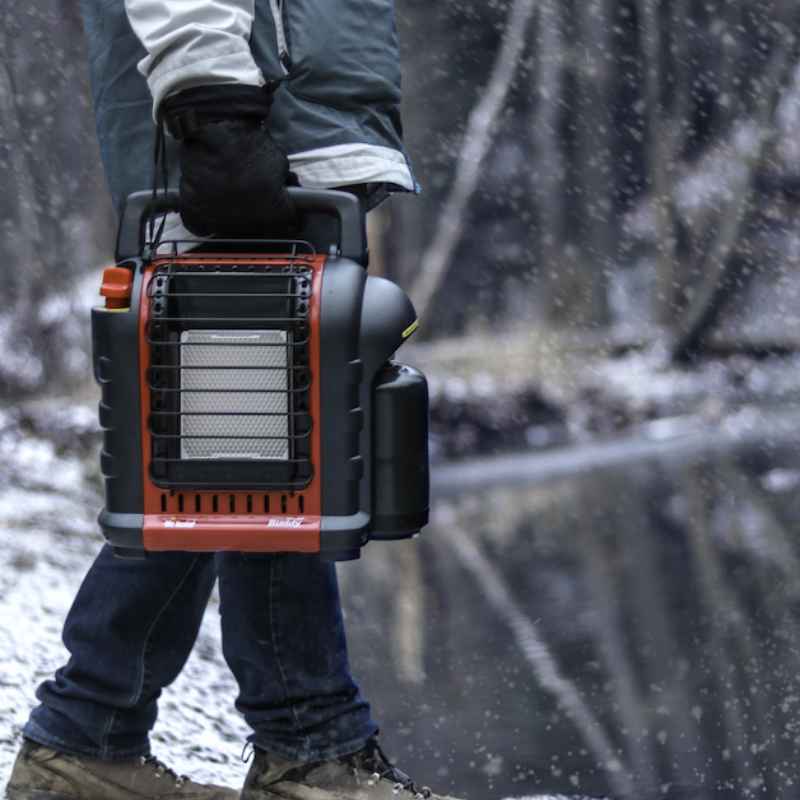
The Mr. Heater Big Buddy is, as the name suggests, a bigger unit. It’s designed to handle more demanding heating jobs.
If you need to warm up a substantial area, this is the one that often comes to mind. Its power and capacity are its main selling points.
The Big Buddy typically offers three heat settings. It can produce 4,000 BTUs, 10,000 BTUs, and up to 18,000 BTUs. This range is what allows it to heat larger spaces.
The 18,000 BTU output is significant and can make a noticeable difference in a cold garage or a large screened-in porch.
Like the Portable Buddy, the Big Buddy also has important safety features. It includes the tip-over safety shut-off and the low-oxygen sensor. These are critical for safe operation, especially when you’re using it in an enclosed area for extended periods.
Always ensure you have proper ventilation.
The Big Buddy also commonly uses propane. It’s designed to run on one or two 1-pound propane cylinders. For continuous or longer heating sessions, it comes with a hose that allows you to connect it directly to a larger 20-pound propane tank.
This is a huge advantage for a heater with a higher BTU output, as it would burn through small cylinders very quickly.
When we first moved into our house, the garage was freezing. It’s a two-car garage, and it was totally uninsulated. I wanted a place to work on projects even in winter.
We got a Big Buddy, and it made such a difference. On a really cold Saturday, I set it to 10,000 BTUs. It took a little while, maybe 30-40 minutes, but it warmed up the space enough so I could actually stand there and do some woodworking without my fingers going numb.
It’s not as hot as a home furnace, but it made the garage usable for a few hours at a time.
Big Buddy Key Features
- BTU Output: 4,000 – 18,000 BTUs (with 3 settings)
- Fuel Source: 1 lb propane cylinders (1 or 2), or adapter for 20 lb tank
- Heating Area: Up to 400 sq ft
- Safety Features: Tip-over safety shut-off, low-oxygen sensor
- Dimensions: Larger than Portable Buddy
- Best For: Larger spaces, garages, workshops, RVs, patios, cabins
Heating Capacity and Area Coverage
This is where the two heaters really show their different strengths. The Portable Buddy is rated to heat an area of up to 200 square feet. This rating is usually under ideal conditions.
Think of a small room or a very well-insulated tent. It’s good for direct, personal heat.
The Big Buddy doubles that capacity. It’s rated for areas up to 400 square feet. This is a much larger space.
It makes sense because it can produce almost twice the maximum heat output. For a two-car garage, a large workshop, or a sizable screened porch, this coverage is essential.
It’s important to remember that these are estimates. Factors like outside temperature, insulation of the space, ceiling height, and drafts can all affect how well a heater works. In extremely cold weather, even the Big Buddy might struggle to keep a very large, uninsulated space toasty.
But for their intended uses, the coverage difference is clear.
Coverage Comparison
Portable Buddy
Up to 200 sq ft
Big Buddy
Up to 400 sq ft
Fuel Consumption and Runtime
How long can you run these heaters? That depends on the fuel source and the heat setting you use. Propane consumption is a key factor for any portable heater.
A 1-pound propane cylinder contains about 21,000 BTUs of fuel. The Portable Buddy uses about 0.27 pounds of propane per hour on its highest setting (9,000 BTUs). This means a single 1-pound cylinder would last roughly 3-4 hours on high.
On its lower setting (4,000 BTUs), it uses less, so the cylinder lasts longer.
The Big Buddy is a different story. On its highest setting (18,000 BTUs), it uses about 0.62 pounds of propane per hour. If you run it on high using two 1-pound cylinders (total 42,000 BTUs), you’d get about 6-7 hours of heat.
However, most people opt for the 20-pound tank adapter for the Big Buddy.
A 20-pound propane tank holds about 430,000 BTUs. If you run the Big Buddy on its 18,000 BTU setting, a 20-pound tank would last around 20-25 hours. This is a massive difference and makes the Big Buddy much more practical for extended use in larger areas.
The ability to connect to a larger tank is a huge advantage for the Big Buddy.
Estimated Runtime on 1 lb Cylinder
Portable Buddy (9,000 BTU)
Approx. 3-4 hours
Big Buddy (18,000 BTU)
Approx. 1.5-2 hours (using one 1 lb cylinder)
Note: Runtime varies greatly with heat setting.
Safety Features: A Top Priority
Both Mr. Heater models place a strong emphasis on safety. This is crucial for any product that uses propane and operates indoors or in semi-enclosed spaces.
The most common safety feature on both is the tip-over safety shut-off valve. If the heater is accidentally knocked over, this valve is designed to shut off the gas supply immediately. This prevents uncontrolled burning and potential fires.
Another vital feature is the low-oxygen sensor (Oxygen Depletion Sensor – ODS). Propane combustion uses oxygen. In a poorly ventilated area, the oxygen level can drop.
The ODS detects this and shuts the heater down before the oxygen gets dangerously low, which can cause carbon monoxide buildup or suffocation.
It’s essential to understand that these safety features are not foolproof. They are designed to mitigate risks, but they do not
I once left a window slightly open in our RV when using a Mr. Heater. It was a cold night, and I was worried about being too cold.
I checked the oxygen sensor light on the heater a few times, and it seemed fine. The air felt fresh enough. It gave me peace of mind knowing that if something went wrong, the heater would shut off.
These safety measures really do make a difference in feeling secure while staying warm.
Safety First!
Tip-Over Safety Shut-Off: Shuts off gas if heater is knocked over.
Low-Oxygen Sensor (ODS): Shuts off gas if oxygen levels get too low.
Always ensure proper ventilation! Crack a window or door.
Never use in a completely sealed, unventilated space.
Portability and Design
When we talk about portability, the Portable Buddy definitely has the edge. It’s much lighter and more compact. Its handle is ergonomically placed for easy carrying.
The Big Buddy is larger and heavier. While it has a handle, it’s more of a unit you set up in a location and leave there for a while, rather than something you pick up and move constantly. If you’re moving between different fishing spots or need to carry your heater from your truck to a small ice shanty, the Portable Buddy is the clear winner.
However, “portability” can also mean how easy it is to set up and connect fuel. Both are designed for relatively easy setup. Connecting a 1-pound cylinder is simple for both.
The Big Buddy’s hose for a 20-pound tank takes a little more effort to connect initially, but it’s still manageable.
The design of both units is focused on durability and functionality. They typically feature a sturdy metal grille to protect the heating element and a stable base to help prevent tipping. The overall aesthetic is practical, not decorative.
They are built for purpose.
When to Choose the Mr. Heater Portable Buddy
You should consider the Portable Buddy if:
- Your primary need is personal warmth in a small space.
- You’re heading out for activities like ice fishing, hunting, or camping in a small tent.
- You need something very easy to carry and set up repeatedly.
- You are warming up a very small, enclosed area like a small ice fishing shelter or a single person hunting blind.
- Budget is a significant factor, as it’s typically less expensive than the Big Buddy.
It’s perfect for keeping your immediate personal bubble warm. Think of it as a focused heat source for one or two people. If you’re sitting still for long periods, its direct heat is very effective.
When to Choose the Mr. Heater Big Buddy
The Big Buddy is the better choice if:
- You need to heat a larger area, like a garage, workshop, cabin, or a larger RV.
- You require more powerful heating capabilities, especially in colder temperatures.
- You plan on using the heater for extended periods and want to avoid constantly changing small propane cylinders.
- You need to warm up a space for multiple people.
- You prioritize higher BTU output and faster heating of a larger volume of air.
This is the heater for when you need serious warmth for a substantial space. The ability to run it off a 20-pound tank is a game-changer for longer projects or occupying larger spaces for longer durations.
Scenario Guide
Use Case
Ice Fishing Shelter
Small Tent
Hunting Blind
Garage Workshop
Large RV / Cabin
Screened-in Porch
Recommended Heater
Portable Buddy
Portable Buddy
Portable Buddy
Big Buddy
Big Buddy
Big Buddy
Real-World Usage and Considerations
Beyond the basic specs, how do these heaters perform in actual, everyday situations? Let’s look at some real-world factors.
Noise Level: Both heaters are relatively quiet. They produce a low hum from the pilot light and fan (if applicable on some models), but it’s not disruptive. You can easily hold a conversation while they are running.
Odor: When using propane, there can be a slight smell, especially when first lighting the pilot or if there’s a small leak. However, clean-burning propane should not produce strong or offensive odors. If you notice a strong smell, check for proper connection and ventilation.
The smell of propane itself is a safety feature, as it’s added to make leaks detectable.
Maintenance: Both units require minimal maintenance. Keeping them clean, checking the connections, and ensuring the safety sensors are free of debris are usually sufficient. It’s good practice to store them in a dry place when not in use.
Cost: The Mr. Heater Portable Buddy is generally less expensive than the Mr. Heater Big Buddy.
This is a significant factor for many buyers. The cost of propane is ongoing for both, but the Big Buddy’s ability to use larger tanks can make its fuel source more economical per hour of heat.
Environmental Factors: In extremely cold weather, performance can be affected. Propane vaporizes less efficiently in very low temperatures. For best performance in freezing conditions, keeping the propane tank (especially the larger 20lb tank) insulated or slightly above freezing can help.
You might also notice longer ignition times or reduced heat output in extreme cold.
Frequent Questions About Mr. Heater Buddy Heaters
Can I use the Mr. Heater Portable Buddy inside my house?
Yes, the Mr. Heater Portable Buddy is designed for indoor use, but only in well-ventilated areas. It has safety features like a tip-over switch and low-oxygen sensor, but it still burns propane and uses oxygen.
Always ensure you have fresh air circulating by cracking a window or door. Never use it in a completely sealed room.
Is the Big Buddy safe to use in an RV?
The Mr. Heater Big Buddy is often used in RVs, but always check your RV’s manual and local regulations. Similar to indoor use, proper ventilation is critical.
Ensure there’s a way to bring in fresh air. Many RVs have built-in ventilation systems that can help. Always prioritize safety and ventilation.
How long does a 20 lb propane tank last with the Big Buddy?
A 20 lb propane tank holds about 430,000 BTUs. The Big Buddy uses approximately 0.62 lbs of propane per hour on its highest setting (18,000 BTUs). This means a 20 lb tank should last roughly 20-25 hours of continuous operation on high.
Runtime will be longer on lower settings.
Which heater is better for a large garage?
For a large garage, the Mr. Heater Big Buddy is generally the better choice. Its higher BTU output (up to 18,000 BTUs) and ability to heat larger areas (up to 400 sq ft) make it more effective than the Portable Buddy, which is designed for smaller spaces and personal warmth.
Can I use a Mr. Heater Buddy in a tent?
You can use the Mr. Heater Portable Buddy in a tent, but it requires extreme caution and proper ventilation. Always leave a window or door slightly open for fresh air.
Never run it unattended or while sleeping. Some campers prefer to use it only to warm the tent up before bed and then turn it off.
What is the main difference in BTU output?
The main difference is the maximum heat output. The Portable Buddy goes up to 9,000 BTUs, suitable for personal warmth in small spaces. The Big Buddy offers a much higher output, reaching up to 18,000 BTUs, allowing it to heat larger areas more effectively.
Conclusion: Making Your Warmth Choice
Deciding between the Mr. Heater Portable Buddy and the Mr. Heater Big Buddy really comes down to your specific needs.
Do you need a portable, personal heat source for smaller adventures? The Portable Buddy is likely your answer. Are you looking to warm up a larger space for longer periods or for more people?
The Big Buddy offers the power and capacity you’ll need.
Both heaters are designed with safety and ease of use in mind. They utilize propane efficiently and offer crucial safety features. By understanding their differences in BTU output, heating area, and fuel consumption, you can confidently choose the heater that will keep you comfortable when the temperature drops.
Sponsored / affiliate links. As an Amazon Associate I earn from qualifying purchases. I may earn additional commission from eligible campaigns.
 Portable Air Conditioner,14,000 BTU for Rooms up to 750 Sq.Ft., 4-IN-1 Smart Compact AC Unit with Cooling, 24 Hour Timer, Dehumidifier, Fan, Remote Control and Window Kit, White
 MEGAWISE Portable Air Conditioner and Heater, 420W 110V Compact AC Unit with Remote Control, 1400W Cooling Capacity, 800W Heating, Dehumidifier, Fan, Sleep Timer, Champagne