How Long Does A Portable Buddy Heater Last? Real Results
This guide is here to help. We’ll break down exactly what affects the run time of your heater. We’ll talk about the fuel it uses, how long a typical tank lasts, and what you can do to make it run even longer.
Understanding these details can make a big difference. You’ll feel more prepared and confident, knowing your Portable Buddy Heater will be there for you.
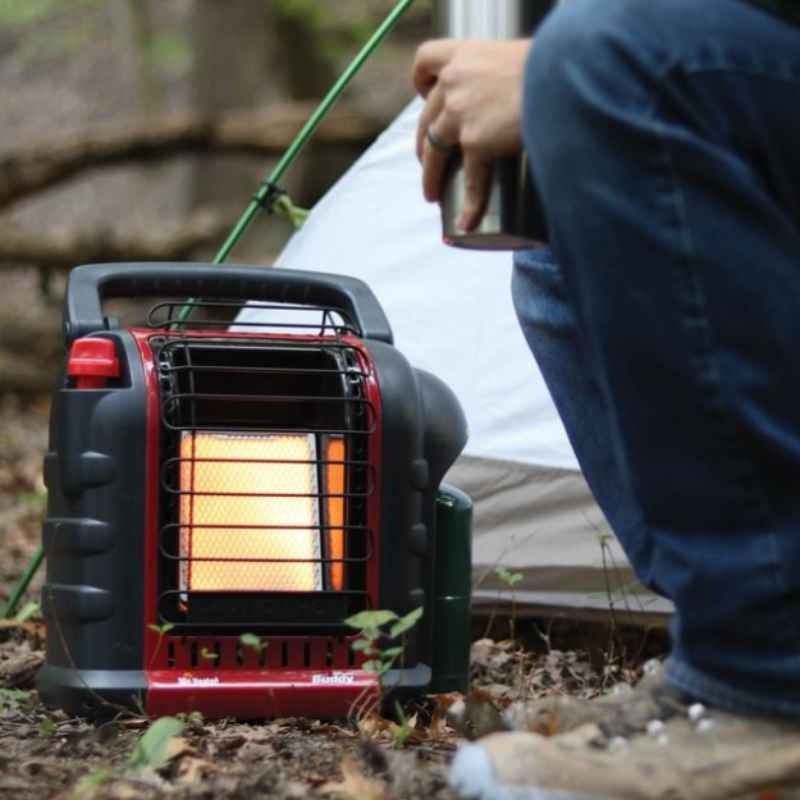
The run time of a Portable Buddy Heater depends on the model, the heat setting used, and the fuel source. Typically, a single 1-pound propane cylinder can power a Mr. Heater Little Buddy heater for about 5.5 to 6 hours on low. Larger Buddy heaters using a 20-pound propane tank can last many more hours, sometimes days, depending on usage.
Understanding Your Portable Buddy Heater’s Run Time
So, you’ve got your heater, and you’re ready to get cozy. But how long will it actually keep you warm? This isn’t a simple “one size fits all” answer.
Several things play a role in how long your Portable Buddy Heater keeps working. Think of it like a car. How far it goes depends on the engine size, how much you press the gas, and the type of road you’re on.
Your heater is similar.
The most important factor is the heat setting. Most Buddy heaters have a low and a high setting. When you use the high setting, it burns fuel faster.
It’s like turning up the flames on your stove; it cooks food quicker, but uses more gas. The low setting sips fuel, making it last much longer. So, if you just need a little warmth, the low setting is your friend.
Then there’s the fuel source itself. The most common fuel for these heaters is propane. They often use small, 1-pound propane cylinders.
These are convenient, but they don’t hold a lot of fuel. Bigger heaters might hook up to a larger, 20-pound propane tank. This is like having a much bigger gas tank for your car – it will last a whole lot longer.
The specific model of your heater also matters. Mr. Heater makes different versions of the Buddy heater.
Some are designed for smaller spaces and use less fuel. Others are built for bigger areas and need more power. Always check the manual for your exact model.
It will give you the best estimate for its run time. It’s worth looking up the details for your specific heater.
My Own “Oh No” Moment with Fuel Life
I remember a few years back, we had a big ice storm. The power went out for nearly two days. It was pretty cold, and my husband and I were huddled in the living room.
We had a Little Buddy heater going, and it was a lifesaver. We had a few of those small 1-pound propane tanks, so we thought we were all set.
The first day was fine. We kept the heater on a low setting. But on the second day, things got tense.
We’d used up a tank, then another. I started to get that nagging feeling. I knew they didn’t last forever, but I hadn’t really paid attention to exactly how long each one did.
We were down to our last tank, and the forecast said the power wouldn’t be back until late that night. I could feel a little bit of panic setting in. We were only about halfway through the day.
That’s when I realized I should have been more mindful. I should have timed how long each tank lasted. I ended up rationing the last tank, turning it off for periods.
It wasn’t ideal, but it got us through. That experience taught me the value of knowing your fuel usage. Now, before winter hits, I always test out a full tank.
I write down the time and see how long it lasts. It’s a small step that brings a lot of peace of mind.
Little Buddy Heater Fuel Quick Scan
Model: Mr. Heater Little Buddy (MH9BX)
Fuel Source: 1-pound propane cylinder
Heat Settings: Low and High
Run Time on Low: Approx. 5.5 to 6 hours
Run Time on High: Approx. 2.5 to 3 hours
Key Tip: Always check your specific model’s manual for exact times.
The Math Behind the Heat: Propane Consumption
Let’s get a little more specific about how propane is used. This helps explain why run times vary so much. Think of the propane consumption in terms of BTUs, which stands for British Thermal Units.
BTUs are a measure of energy. The higher the BTU output, the more heat the heater produces, and the more fuel it burns.
A Little Buddy heater, for example, typically puts out about 4,000 BTUs on high and 4,000 BTUs on low. This sounds odd, but the difference is how the heat is delivered and controlled. The actual fuel consumption rate is what changes.
A common rate for a 4,000 BTU heater is around 0.2 pounds of propane per hour on high.
So, if you have a 1-pound propane cylinder, and it burns 0.2 pounds per hour, you can do the math: 1 pound / 0.2 pounds per hour = 5 hours. This is a simplified example. The actual burn might be a bit less or more depending on the heater’s efficiency and the exact gas flow.
For the Little Buddy, the manual often states about 5.5 to 6 hours on low. This aligns with a slightly lower fuel burn rate on that setting.
When you move to a larger heater, like the standard Buddy Heater (MH9XR) or the Big Buddy Heater (MH18B), the BTU output is higher. The standard Buddy heater is rated at 9,000 BTUs. The Big Buddy is rated at 18,000 BTUs.
These higher outputs mean they burn through propane much faster. A 9,000 BTU heater might consume around 0.4 pounds of propane per hour on high.
If you’re using a 20-pound propane tank with a standard Buddy heater, that’s a lot more fuel. 20 pounds / 0.4 pounds per hour = 50 hours of run time on high. That’s a huge difference compared to the 1-pound cylinder.
This is why choosing the right heater size and fuel source is key for longer heating needs.
Fuel vs. Heat: A Simple Comparison
Concept: BTUs and Propane Use
What it means: More BTUs = More Heat = Faster Fuel Use
Little Buddy (4,000 BTU): Uses about 0.2 lbs propane/hour on high. A 1 lb tank lasts ~5 hours.
Standard Buddy (9,000 BTU): Uses about 0.4 lbs propane/hour on high. A 20 lb tank lasts ~50 hours.
Big Buddy (18,000 BTU): Uses about 0.8 lbs propane/hour on high. A 20 lb tank lasts ~25 hours.
Real-World Scenarios: Where Buddy Heaters Shine
Buddy heaters aren’t just for power outages. They are used in many situations where a little extra warmth is needed. Think about camping trips.
Many campers use them to take the chill off their tents or RVs on cool nights. This is especially popular in the shoulder seasons, like spring and fall, when it can get quite cold at night.
Another common use is for working in unheated spaces. Garages, workshops, and sheds can get very cold. A portable heater can make these spaces usable even in winter.
I’ve seen folks use them to work on cars in their garage or to do woodworking projects. It makes a big difference in comfort and productivity.
Construction sites also often use these heaters. When workers are on a job site in cold weather, they need a way to stay warm. Buddy heaters are portable and don’t require electricity, making them ideal for this.
They can be moved from one area to another as needed.
Even for tailgating or outdoor events, a Buddy heater can be a great addition. Imagine a chilly football game or an outdoor concert. A little portable heater can keep you and your friends comfortable.
The key in all these scenarios is planning for fuel. You don’t want your heater to die halfway through the event or workday.
What Affects the Lifespan of the Heater Itself?
We’ve talked about how long a tank of fuel lasts. Now, let’s talk about how long the Portable Buddy Heater itself will last. These heaters are built to be pretty rugged.
They are often used in tough conditions, so durability is a key feature. But like any appliance, they have a lifespan.
The main factors affecting the heater’s lifespan are maintenance and usage. If you use your heater regularly, especially in dusty or dirty environments, it’s important to keep it clean. Dust and debris can clog up the heating elements or the igniter.
This can make it work harder or not work at all. A little cleaning goes a long way.
Following the manufacturer’s instructions for use and care is also crucial. This includes not using it in inappropriate conditions or trying to modify it. The parts inside are designed to work together.
Messing with them can cause damage and shorten the heater’s life. It also creates safety risks, which is never a good idea.
Storage plays a role too. When you’re not using the heater, store it in a clean, dry place. Protect it from extreme temperatures or moisture.
Proper storage helps prevent rust and damage to the components. Think of it like putting away your winter coat at the end of the season. You want to store it carefully so it’s ready for next year.
With good care, a well-maintained Buddy heater can last for many years. I have friends who have had their heaters for 8, 10, even 15 years. They use them for camping every year and during power outages.
They just do basic cleaning and check-ups. It’s a good investment if you take care of it.
Heater Longevity: Key Factors
Usage: Regular use in demanding conditions requires more care.
Maintenance: Regular cleaning of components is vital.
Storage: Proper, dry storage extends life.
Careful Operation: Follow manufacturer guidelines always.
Environment: Avoid excessive dust, dirt, and moisture.
Tips for Maximizing Your Heater’s Run Time
Want to get the most out of every propane tank? There are a few smart ways to do this. It’s all about being a little efficient with your heat.
The goal is to stay warm without burning through fuel too fast.
The easiest trick is to use the lowest effective heat setting. If the room is only slightly cool, you don’t need the high setting. Start on low.
If you feel a bit chilly, then turn it up. But often, the low setting is enough to maintain a comfortable temperature, especially in a smaller, enclosed space.
Insulate your space as much as possible. If you’re in a tent, make sure the zippers are closed properly. If you’re in a room, close the doors and windows.
Block any drafts. A well-sealed space will hold heat better. This means your heater doesn’t have to work as hard to keep the temperature up.
It’s like wearing a good jacket on a cold day; it keeps your body heat in.
Use a timer or thermostat if your heater has one. Some models have these features built-in. If yours doesn’t, you can sometimes use an external plug-in timer.
This allows you to set specific times for the heater to run. You can have it turn on just before you need it and turn off automatically. This prevents you from accidentally leaving it on too long.
Don’t overheat the space. Aim for a comfortable, not scorching, temperature. The ideal temperature for comfort is often between 68-72 degrees Fahrenheit.
Going much higher than that uses a lot more fuel for minimal extra comfort. It’s about finding that sweet spot.
Finally, keep an eye on your fuel level. Don’t wait until the last minute to swap out a propane tank. If you notice the flame getting weaker, it’s time to change the tank.
Having a spare, full tank ready to go means no interruption in your warmth. This proactive approach is key for long run times.
Quick Tips for Longer Heater Life
Setting: Use low heat whenever possible.
Space: Seal the area to trap heat.
Control: Use timers to manage run times.
Temp: Aim for comfort, not extreme heat.
Fuel: Swap tanks before they are completely empty.
When to Worry: Signs Your Heater Isn’t Running Right
While Buddy heaters are generally reliable, there are times when something isn’t quite right. Recognizing these signs can help you catch a problem early. This can prevent the heater from failing when you need it most, or worse, becoming a safety hazard.
One common sign is an inconsistent flame. The flame should be mostly blue with a little bit of yellow at the tips. If the flame is mostly yellow, sputtering, or looks weak, it could indicate a problem.
This might be due to a dirty burner, an issue with the propane flow, or even low fuel in the tank.
Another thing to watch for is difficulty igniting. If your heater takes many tries to light, or won’t light at all, there’s an issue. This could be a problem with the igniter itself, or it could mean the pilot light assembly is dirty or blocked.
Sometimes, the fuel valve might not be opening correctly.
You might also notice unusual smells. While propane has a distinct smell, that’s by design to alert you to leaks. However, if you smell something like burning plastic or oil, that’s not normal.
This could mean a component is overheating or a part is failing. Always shut off the heater immediately if you smell something strange.
Weak or no heat output, even when the heater is lit and running, is another red flag. If the heater is on high and you’re not feeling much warmth, something is wrong. This could be a clogged burner, a faulty regulator, or a problem with the heat-generating element.
The heater might be consuming fuel but not converting it to heat efficiently.
Finally, strange noises are worth noting. While a heater might make some minor operational sounds, loud clanking, grinding, or hissing noises (other than the normal gas flow sound) are concerning. These could indicate a mechanical issue within the heater’s system.
If you notice any of these problems, it’s important to stop using the heater and consult your owner’s manual. Many issues can be resolved with simple cleaning. However, if you’re not comfortable troubleshooting, it’s best to have it inspected by a qualified technician.
Safety should always be the top priority with any heating appliance.
Red Flags for Your Heater
Flame: Mostly yellow or sputtering flame.
Ignition: Takes many tries or fails to light.
Smell: Burning plastic, oil, or unusually strong chemical smells.
Heat Output: Little to no heat, even on high.
Noise: Loud, unusual mechanical sounds.
Action: Consult manual or professional if these occur.
Frequently Asked Questions About Buddy Heater Run Time
How many hours can a Mr. Heater Little Buddy run on one 1lb propane tank?
A Mr. Heater Little Buddy typically runs for about 5.5 to 6 hours on the low setting and approximately 2.5 to 3 hours on the high setting using a single 1-pound propane cylinder.
Can I connect a large 20lb propane tank to a Little Buddy heater?
No, the Little Buddy heater is designed specifically for 1-pound disposable propane cylinders. Connecting a larger tank requires a specific adapter hose, and it’s crucial to ensure it’s compatible with your heater model and used correctly. Always check your heater’s manual before attempting to use external fuel sources.
What is the difference in run time between Buddy Heater models?
Different Buddy Heater models have different BTU outputs, which directly affects run time. Smaller models like the Little Buddy use less fuel and last longer per pound of propane. Larger models like the Big Buddy have higher BTU outputs, meaning they consume fuel faster and will have shorter run times from the same amount of propane compared to smaller units.
Does the temperature outside affect how long the heater runs?
Indirectly, yes. If it’s very cold outside, your heater will have to work harder to maintain a set temperature inside. This means it will likely consume fuel at a higher rate, reducing the overall run time on a single tank or cylinder compared to when it’s only mildly cool.
How can I make my Portable Buddy Heater last longer on a tank of propane?
You can extend run time by using the lowest effective heat setting, ensuring the space is well-insulated and draft-free, and avoiding overheating. Also, consider using a programmable thermostat or timer if your model supports it, and changing the propane tank proactively before it runs completely empty.
What is considered the average lifespan of a Portable Buddy Heater itself?
With proper maintenance and care, a Portable Buddy Heater can last for many years, often 10-15 years or even longer. Regular cleaning, correct storage, and following operating instructions are key to maximizing its operational life.
Wrapping Up: Knowing Your Heater’s Limits
Understanding how long your Portable Buddy Heater will last comes down to a few key things. It’s not just about how much fuel is in the tank. It’s also about how you use the heater and how well you take care of it.
Being prepared means knowing these details.
By paying attention to the heat setting, the type of fuel, and the specific model, you can get a good estimate of your run time. Small steps, like keeping your space warm and clean, can make a big difference. This knowledge helps you feel confident.
You’ll be ready for chilly nights or unexpected power outages. Enjoy your warmth, safely and smartly.
Sponsored / affiliate links. As an Amazon Associate I earn from qualifying purchases. I may earn additional commission from eligible campaigns.