What Portable Heaters Are The Cheapest To Run At Home?
The cheapest portable heaters to run at home are typically those that use electricity most efficiently, like oil-filled radiators and ceramic heaters, and are sized appropriately for the space they need to heat. Understanding their wattage and comparing energy prices is key.
Understanding Portable Heater Running Costs
When we talk about portable heaters, “cheapest to run” really means looking at how much energy they use and how much that energy costs you. This boils down to a few key things. First, the heater’s wattage.
This tells you how much power it draws. A higher wattage heater uses more energy. Second, how long you run it.
A heater on for just an hour uses less energy than one on all day.
Third, and this is a big one, is the price of electricity in your area. This can change quite a bit depending on where you live and what kind of plan you have with your power company. Some places have cheaper rates than others.
Finally, the efficiency of the heater matters. Some heaters are better at turning that electricity into useful heat than others.
Think of it like a car. A big truck uses more gas than a small, efficient car. But if the truck can haul a huge load in one trip, maybe it’s more cost-effective for certain jobs.
Portable heaters are similar. A powerful one might heat a room faster, meaning it can run for less time. Or a more efficient one might use less power overall to reach the same temperature.
We need to look at the different types of portable heaters out there. Each has its own way of making heat. Some heat up the air around them.
Others warm up objects and people directly. This difference affects how we perceive warmth and how much energy is needed to feel comfortable. It’s not just about the raw numbers; it’s about smart use, too.
Many people assume that a smaller heater is always cheaper to run. While it might use less power at any given moment, it might also take much longer to heat a space. This can end up costing more in the long run if it has to stay on for extended periods.
It’s a balance we need to figure out.
The goal is to find a heater that gives you the most warmth for the least amount of money spent on electricity. This means looking beyond just the purchase price. The upfront cost of a heater is one thing, but the ongoing cost of running it is often much more significant over time.
We want to focus on that long-term saving.
The Different Types of Portable Heaters and Their Costs
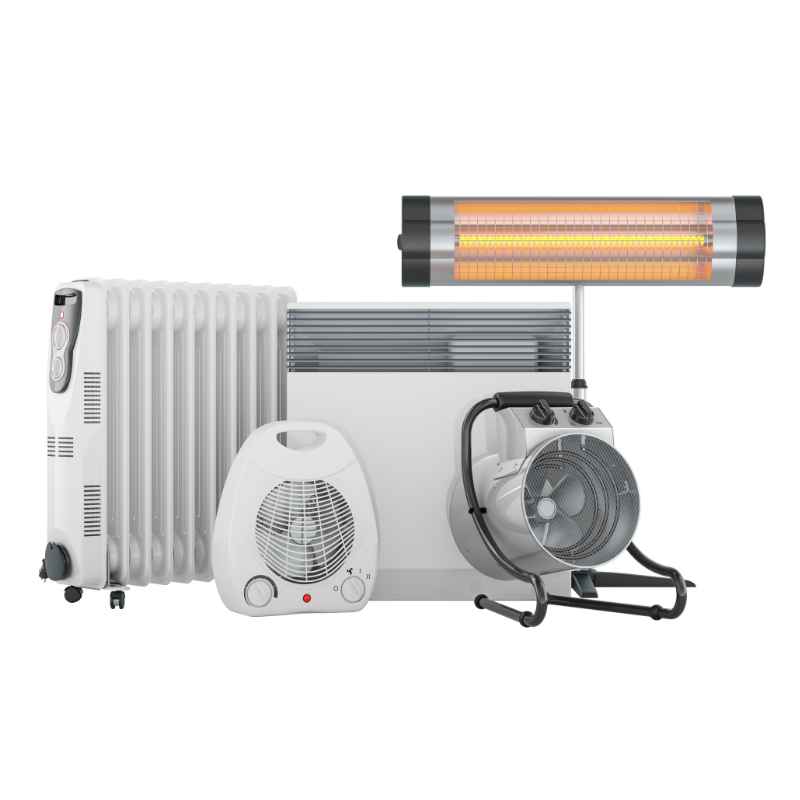
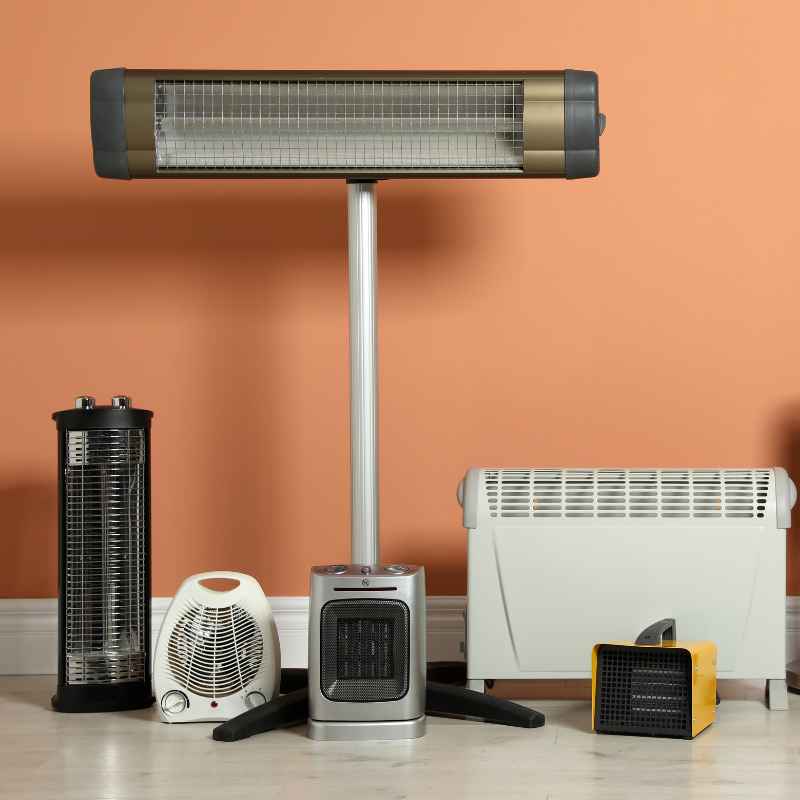
Let’s break down the common types of portable heaters you’ll find. Understanding how each one works helps us guess their running costs. We’ll talk about radiant heaters, convection heaters, and fan heaters.
Radiant Heaters
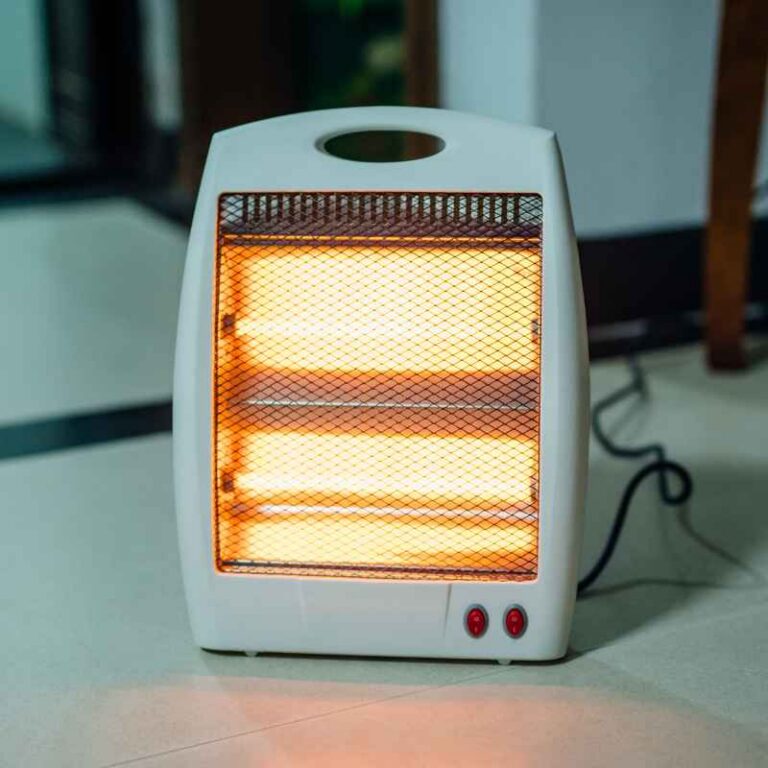
Radiant heaters are like the sun. They give off heat in the form of infrared radiation. This heat warms objects and people directly in its path.
Think of sitting by a campfire; you feel the heat even if the air isn’t super warm. They tend to heat up a specific area quickly. This can be good if you’re just sitting in one spot.
Common types include quartz heaters, infrared patio heaters, and some panel heaters. They often have a visible heating element that glows. Because they heat things directly, they can feel warmer faster than other types.
You don’t have to wait for the whole room’s air to get warm.
However, the heat from radiant heaters doesn’t stay put. If you move out of the direct path, you stop feeling warm. They’re not great at heating an entire room evenly.
They’re best for targeted warmth. This can be good if you only need to heat yourself. But for a whole space, they might not be the most efficient.
Their wattage can vary. Smaller quartz heaters might be around 400-800 watts. Larger infrared heaters can be 1500 watts or more.
Because they heat directly, you might be able to turn them off sooner than other types. This can save money. But if you need to keep a whole room warm, they might not be the best choice.
Convection Heaters
Convection heaters work by heating the air. They draw in cool air, heat it up inside the unit, and then release the warm air into the room. This warm air rises and circulates, slowly warming the entire space.
Think of a slow, steady bake rather than a quick toast.
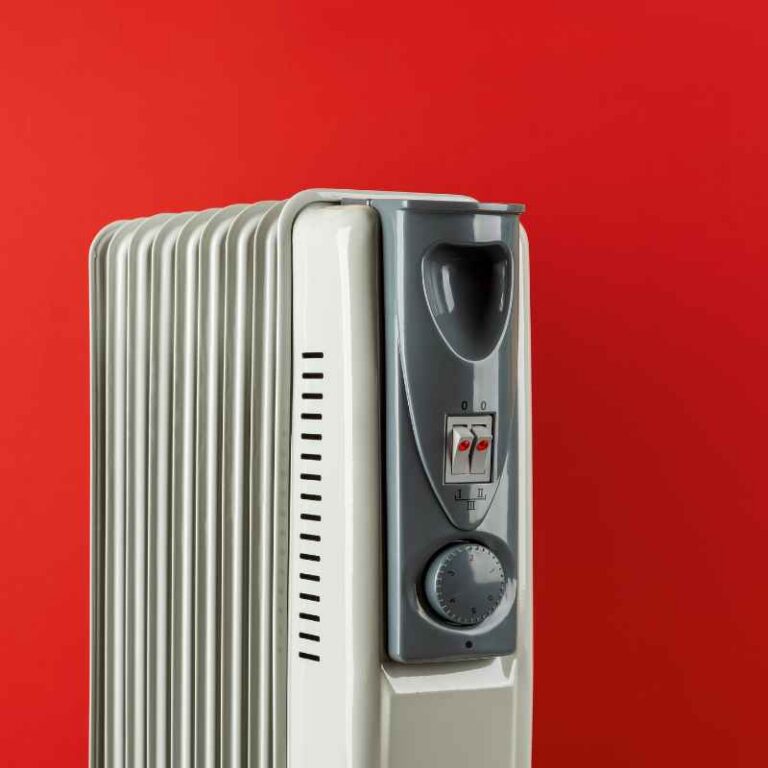
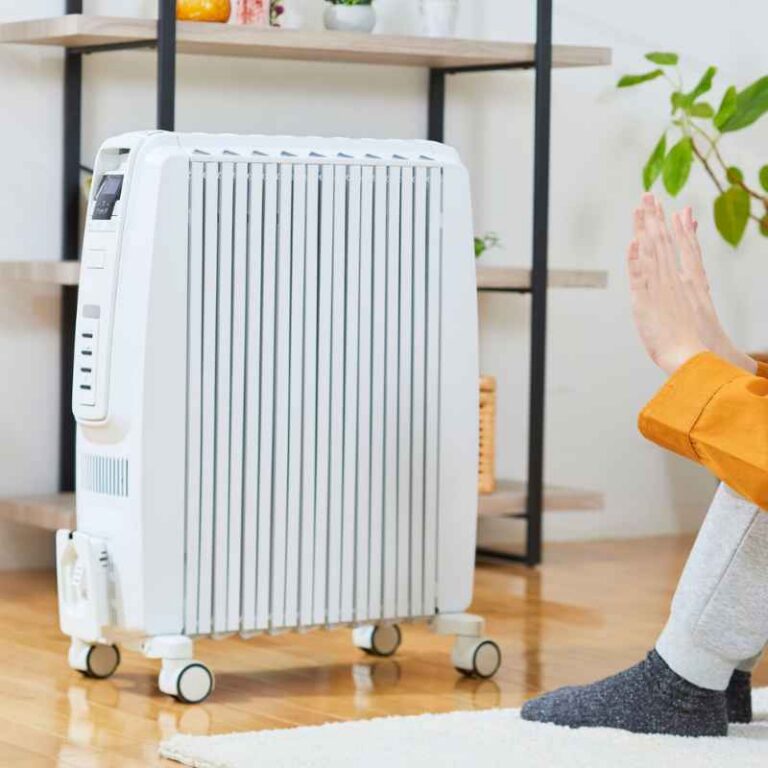
Oil-filled radiators are a popular type of convection heater. They have heating elements that warm up oil sealed inside. This oil then radiates heat, warming the fins and the surrounding air.
They heat up more slowly, but they also tend to retain heat longer. This can make them run more consistently.
Another common type is the panel heater. These are often slim and designed to be wall-mounted, but many can be used as portable units too. They use a heating element to warm the air that passes over it.
Ceramic heaters also fall into this category sometimes, especially those with a fan to move the air.
Convection heaters are good at providing a steady, even heat throughout a room. They don’t rely on you being in a specific spot. This makes them great for maintaining a comfortable temperature in a bedroom or living room.
They tend to be quieter too, as they don’t always have a fan running loudly.
Their running cost depends on their wattage and how long they need to be on. Since they heat the whole room’s air, they might need to run longer. But the heat they provide is more evenly distributed.
Oil-filled radiators, in particular, can be quite efficient because they hold their heat. You might even unplug one, and it keeps radiating warmth for a while.
Fan Heaters (Ceramic Heaters with Fans)
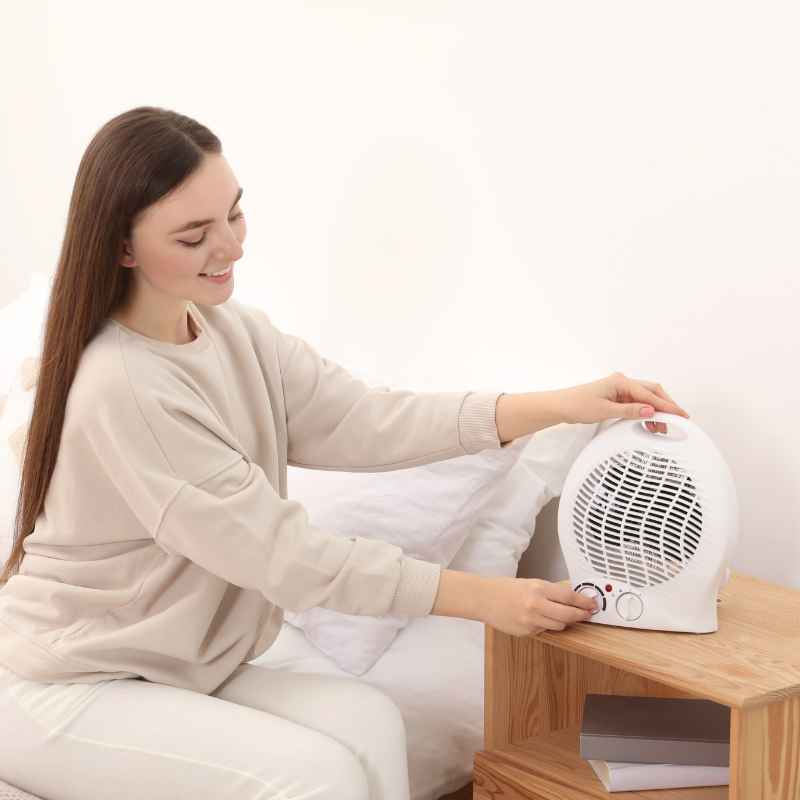
Fan heaters, often ceramic heaters with a built-in fan, are very popular for quick spot heating. They use an electric element (often ceramic, which heats up fast and is durable) to generate heat. A fan then blows this heat out into the room.
This is why they heat up a space very quickly.
The fan is key here. It pushes the warm air out rapidly. This means you feel heat almost instantly.
They’re great for warming up a small area, like your desk space or feet under a table, very fast. They’re also usually quite compact and lightweight, making them truly portable.
The downside is that the fan can make them noisy. Also, because they rely on air circulation, they might dry out the air more. Their quick heating can be both a pro and a con for running costs.
You can get warm fast, but the fan motor itself uses energy, and the heating element is often at a high wattage (typically 1500 watts) to achieve that speed.
If you only need heat for short bursts, a fan heater can be cost-effective. You turn it on, get warm, and turn it off. If you leave it running continuously, the constant fan action and high wattage can add up on your bill.
It’s about how you use it.
Portable Heater Type Quick Glance
Heat objects directly. Fast spot heating. Best for individuals.
Heat air, circulate it. Even room warming. Steady heat.
Heat and blow air fast. Quickest room warming. Can be noisy.
Wattage, Energy Use, and Your Electric Bill
The term wattage (W) is crucial. It’s the unit of power a heater uses. Most portable electric heaters are between 700W and 1500W.
A 1500W heater uses more electricity than a 700W heater when they are both running.
To figure out the cost, you need to know your electricity price per kilowatt-hour (kWh). A kilowatt is 1000 watts. So, a 1500W heater is 1.5kW.
If you run it for one hour, it uses 1.5kWh.
Let’s say your electricity costs $0.15 per kWh. A 1500W heater running for one hour costs: 1.5kW $0.15/kWh = $0.225. A 700W heater running for one hour costs: 0.7kW $0.15/kWh = $0.105.
That’s a noticeable difference. So, a lower wattage heater can be cheaper to run, but only if it provides enough heat. If a 700W heater has to run for three hours to achieve the same warmth a 1500W heater does in one hour, then the lower wattage one ends up costing more ($0.105 * 3 = $0.315).
This is why sizing and type matter. An oil-filled radiator might be rated at 1500W, but it heats up slowly and retains heat. This means it might cycle on and off, using less total energy over time than a fan heater that runs at 1500W constantly to keep a room at the same temperature.
I remember a time when I was trying to heat a drafty old home office. I had a small fan heater. It felt warm right away, which was great for my feet.
But the room itself never felt truly warm. It was like I was only heating a small bubble around me. I ended up running it for hours, and the bill was higher than I expected.
Then I switched to an oil-filled radiator. It took longer to get going, and the room didn’t feel warm for maybe 30 minutes. But once it was warm, it stayed that way.
The radiator would cycle off and on, and the overall energy use felt much lower. It was a lesson in patience and understanding how heat works.
Cost Calculation Example
Heater 1: 1500W Fan Heater
Heater 2: 1500W Oil-Filled Radiator
Electricity Cost: $0.18/kWh
Scenario: Heating a room for 4 hours.
- Fan Heater: Runs constantly. 1.5kW 4 hours = 6 kWh. Cost: 6 kWh $0.18 = $1.08
- Oil-Filled Radiator: Cycles on/off, estimated average use of 800W (0.8kW) over 4 hours. 0.8kW 4 hours = 3.2 kWh. Cost: 3.2 kWh $0.18 = $0.58
Note: This is an estimate. Actual use varies greatly.
The Most Efficient Portable Heaters
When we talk about efficiency, it’s often about how well a heater converts electricity into usable heat and how that heat is distributed. Some heaters are better at keeping heat where you want it for longer.
Oil-Filled Radiators
These are often cited as some of the most cost-effective portable electric heaters. They are a type of convection heater. The oil inside heats up and stays hot for a long time.
This means the heater can continue to radiate heat even after it’s been turned off or cycled off by its thermostat.
Their heating element is submerged in oil. This makes the heating process more gradual. It also means the element itself doesn’t get as intensely hot as in some other types.
This can lead to less degradation over time and a more consistent heat output. They are generally quiet and don’t dry out the air.
The typical wattage is 1500W, similar to many fan heaters. But the way they release heat is different. Because the oil holds onto heat, the heater can cycle off more often while still keeping the room warm.
This means they can use less total electricity over an extended period compared to a heater that needs to run continuously.
They are best for maintaining a steady temperature in a medium-sized room. They aren’t the fastest at warming up a cold space, but once warm, they are excellent at keeping it that way with minimal energy input. The slow, steady release of heat is their strength for efficiency.
I’ve found that an oil-filled radiator is fantastic for a bedroom overnight. You set the thermostat, and it cycles gently. You don’t wake up to a freezing room, and the power usage is managed well.
It doesn’t blast heat; it just provides a gentle warmth that keeps the chill away.
Ceramic Heaters (with good design)
Ceramic heaters can be very efficient, especially newer models with smart features. The ceramic element itself heats up quickly and holds heat well. Many models use a fan to distribute this heat.
The key to their efficiency is often the thermostat and oscillation features. A good thermostat will accurately regulate the temperature, preventing overheating and wasted energy. Oscillation (swiveling) helps spread the heat around the room more evenly.
This means you don’t have to point it directly at yourself all the time and can warm a larger area.
Some ceramic heaters have lower wattage settings (e.g., 750W) for maintaining warmth, while others have a higher setting (e.g., 1500W) for quick heating. Using the lower setting when possible can significantly reduce running costs. It’s about using the right amount of power for the job.
The fan in ceramic heaters can be a bit noisy, and they can dry out the air. But for quick bursts of targeted heat or for warming a small to medium-sized room, they can be quite efficient if used wisely with their thermostat settings. Look for models with adjustable heat settings and reliable thermostats.
Infrared Heaters (for specific uses)
Infrared heaters are a type of radiant heater. They emit infrared radiation that directly warms people and objects. They don’t heat the air itself, which means heat isn’t lost through drafts as quickly.
This makes them very efficient for heating specific zones.
For example, if you have a large, drafty living room but only need to heat the seating area, an infrared heater pointed at the couch can be very effective and energy-saving. You feel warm quickly, and the heat isn’t wasted warming empty space or escaping through windows.
Their wattage can vary widely. Some small personal infrared heaters might be around 400-600W. Larger ones can be 1500W or more.
The benefit is that you feel the heat almost instantly. This means you might be able to turn it off sooner.
The main drawback is that if you move out of the direct beam, you stop feeling the warmth. They are not ideal for heating an entire room evenly, especially if people are moving around. But for targeted warmth, they can be a very energy-smart choice.
Think of them as a “personal heat bubble.”
Energy Efficiency Tips
- Use a Thermostat: Set it to the lowest comfortable temperature.
- Right Size Heater: Don’t use a small heater for a big room.
- Insulate: Close doors and windows. Use draft stoppers.
- Targeted Heat: Use radiant or infrared for personal warmth.
- Timer Use: Set heaters to turn off automatically.
Heaters to Be Wary Of (Cost-Wise)
While most portable electric heaters have a similar maximum wattage, some designs or usage patterns can make them more expensive to run.
Simple Resistance Heaters without Thermostats
These are the most basic heaters. They have a heating element and usually a fan. Once you turn them on, they just keep going at full power until you turn them off.
There’s no built-in way to regulate the temperature.
They are often the cheapest to buy. But they can be the most expensive to run because they don’t know when to stop. You might end up overheating a room and wasting a lot of electricity.
To control the heat, you have to manually turn them on and off, which is easy to forget.
I had one of these years ago for my garage workshop. It was cheap and heated up fast. But I’d forget it was on, and the garage would get uncomfortably hot.
Then I’d turn it off, and it would get freezing again. It was a cycle of waste. A heater with a thermostat is usually a much better investment for controlling costs.
Undersized Heaters in Large Spaces
Using a heater that’s too small for the space you need to heat is inefficient. The heater will have to run constantly at its maximum output, and it still might not get the room warm enough. This leads to high energy consumption without achieving comfort.
For example, trying to heat a large living room with a small 400W personal heater is not going to work well. It will run and run, using electricity, but the room will remain chilly. You’d be better off with a 1500W oil-filled radiator that can heat the space more effectively and cycle off.
Heaters Used in Very Drafty Areas
No matter how efficient a heater is, if it’s placed in a room with significant drafts or poor insulation, a lot of that heat will escape. This means the heater has to work harder and longer to maintain a comfortable temperature. It’s like trying to fill a leaky bucket.
You might find that sealing up drafts around windows and doors, or using heavy curtains, can make your portable heater much more effective and cheaper to run. The heat stays in the room where you want it.
Contrast: Smart vs. Basic Heaters
Pros: Controls temperature, prevents overheating, reduces energy waste, can schedule use.
Cons: Higher initial cost.
Pros: Low purchase price.
Cons: High running costs due to continuous operation, risk of overheating, requires constant monitoring.
Factors Beyond Heater Type Affecting Costs
It’s not just the heater itself. Several other things play a big role in how much you spend to stay warm.
Your Local Electricity Rates
This is a major one. The cost of electricity varies significantly by state and even by utility provider. Some states have much higher per-kWh rates than others.
For instance, California’s rates are generally higher than those in states with more hydroelectric or nuclear power.
If you live in an area with high electricity prices, even an efficient heater will cost more to run. This is where looking for the lowest wattage setting that still provides comfort becomes extra important. Sometimes, a higher upfront cost for a more efficient heater pays off faster in areas with high energy prices.
I have friends in different parts of the country, and their energy bills are wildly different. Someone in the Pacific Northwest might pay half as much per kWh as someone in New England. It’s something to check with your utility company.
Many have online tools to help you understand your usage and rates.
The Size and Insulation of Your Room
A small, well-insulated room will require less energy to heat than a large, drafty one. Heat escapes through windows, doors, walls, and even the ceiling. The better your insulation, the less your heater has to work.
For example, a 1500W heater might be perfect for a 10×12 foot bedroom with good insulation. But that same heater might struggle to keep a 20×25 foot living room with old, single-pane windows warm. You might need a more powerful heater, or better yet, a combination of sealing drafts and using a heater suited for the space.
My parents recently upgraded their home insulation, and they noticed a big difference not just in their heating bills but how their portable heaters performed. The heat stayed where it was supposed to. It was a good reminder that the house itself is a big part of the heating system.
Thermostat Settings and Usage Habits
How you use your heater makes a huge difference. If you set your thermostat very high, you’ll use more energy. Most people are comfortable at temperatures between 68°F and 72°F (20°C-22°C).
Dropping the temperature even a few degrees when you’re not in the room or when you go to bed can save a lot.
Using timers is also a smart habit. You can set a heater to turn on just before you wake up or come home and to turn off automatically when you leave or go to sleep. This prevents accidental overheating and wasted electricity.
It’s about being mindful of when and how long the heater is actually needed.
I know people who set their thermostat and forget it. Then they complain about high bills. I try to be more deliberate.
I’ll turn on a personal heater when I’m at my desk, but I won’t heat the whole house to 75°F. It’s about using the right tool for the specific need.
Outside Temperature and Climate
This one is obvious, but it bears repeating. If it’s freezing outside, your heater will have to work much harder to maintain a comfortable indoor temperature. The bigger the temperature difference between the inside and outside, the more energy is lost, and the more your heater will run.
Portable heaters are best for supplemental heat or for heating small, well-sealed spaces. They are generally not designed to be the primary heat source for an entire home in a very cold climate, as this can lead to very high running costs. They are great for taking the edge off or heating a specific room.
Quick Scan: Cost Factors
| Factor | Impact on Running Cost | Notes |
|---|---|---|
| Electricity Price | High | Varies greatly by location. Check your utility rate. |
| Room Size | Higher for larger rooms | Needs a heater appropriately sized for the space. |
| Insulation & Drafts | Higher with poor insulation | Sealing drafts is crucial for efficiency. |
| Thermostat Settings | Higher for higher temps | Lowering temps by a few degrees saves energy. |
| Usage Habits | Higher with continuous use | Timers and mindful operation save money. |
| Outside Temperature | Higher when it’s very cold | The greater the temp difference, the more energy lost. |
Making Your Portable Heater Cheaper to Run
So, how can you get the most warmth for your money? It’s a combination of choosing the right heater and using it smartly.
Choose Oil-Filled Radiators or Efficient Ceramic Heaters
For consistent, even room heating, oil-filled radiators are often the best bet for lower running costs. They provide steady warmth and retain heat well. Look for models with adjustable thermostats and multiple heat settings (e.g., low, medium, high) so you can use the minimum power needed.
Good ceramic heaters with reliable thermostats and oscillation features can also be very cost-effective, especially for heating small to medium rooms quickly or maintaining a comfortable temperature. The ability to select lower wattage settings (like 750W) is a big plus for energy saving.
Always Use a Thermostat and Timer
This is non-negotiable for cost savings. A heater with a good thermostat prevents the unit from overheating and wasting electricity. It cycles on and off to maintain your desired temperature.
If your heater doesn’t have one, consider a plug-in mechanical timer.
A timer allows you to schedule when the heater operates. You can set it to warm up a room before you need it and turn off automatically. This prevents you from forgetting to turn it off, which is a common way to waste energy and money.
Many modern heaters have digital timers built-in.
Right Size for the Space
Don’t buy a tiny personal heater to warm a large living room. It will run constantly and still won’t do the job. Conversely, don’t use a massive space heater for a small bathroom if a lower-wattage option would suffice.
Generally, a 1500W heater is suitable for a medium-sized room (around 150-200 sq ft). For smaller spaces (like a small office or bedroom), you might get away with a 750W setting or a heater with a lower maximum wattage. Always check the manufacturer’s recommendations for room size.
Seal Up Drafts and Insulate
This makes any heating method more efficient, including portable heaters. Check for drafts around windows and doors. Use draft stoppers or weatherstripping.
Close doors to unused rooms to keep heat where you need it. Close curtains at night to add an extra layer of insulation.
I’ve found that a simple fabric draft stopper under a door makes a surprising difference in how quickly a room warms up and how long it stays warm. It’s a cheap fix that pays off in energy savings.
Use Targeted Heating
Instead of heating an entire empty house, focus on heating only the room you are in. If you’re working at a desk, use a small ceramic heater or infrared heater pointed at you. If you’re reading in an armchair, position a radiant heater nearby.
This “personal heating” approach uses much less energy.
This is where infrared or small radiant heaters shine. They provide immediate warmth directly to you, so you don’t need to crank up the thermostat for the whole room. It’s a very energy-smart strategy.
Cost-Saving Checklist
- Heater Choice: Oil-filled or efficient ceramic?
- Thermostat: Is it accurate and used?
- Timer: Scheduled use to prevent waste?
- Room Size: Is the heater appropriately sized?
- Drafts: Are windows and doors sealed?
- Targeting: Are you heating only where needed?
What This Means for Your Home
Understanding which portable heaters are cheapest to run empowers you to make smarter choices. It’s not just about buying the cheapest heater upfront; it’s about the total cost over its lifetime.
When is a Portable Heater a Good Choice?
Portable heaters are excellent for supplementing your home’s main heating system. They are great for:
- Warming up a single room that tends to get colder than others (e.g., a basement den, a home office).
- Providing quick heat for a short period, like warming up a bathroom before a shower.
- Heating a small space where running the main thermostat higher would be wasteful.
- Temporary heating needs during repairs to your main system.
They offer flexibility and control over your heating. You can add warmth exactly where and when you need it, without heating the entire house.
When Should You Worry About Running Costs?
You should worry about running costs if:
- You are relying on portable heaters as your primary heat source for a large portion of your home, especially in a very cold climate.
- Your electricity bills are significantly higher than expected after using portable heaters.
- The room you are trying to heat remains uncomfortable even after running the heater for an extended period.
- You have a heater that is constantly running at full blast with no thermostat control.
In these situations, it might be more cost-effective in the long run to improve your home’s insulation, seal drafts, or invest in a more robust heating solution for the area.
Simple Checks for Your Heater
- Is it cycling? If your heater is always on and never turns off, its thermostat might be broken, or it might be a model without one. This will cost you money.
- Is the room too hot? If you find yourself opening windows to cool down the room, your heater is likely set too high or is too powerful for the space.
- Listen to the fan: Is the fan running constantly and loudly? This uses energy. Some heaters have eco modes or lower fan speeds.
- Feel the air: Is the heat being distributed effectively, or is it just blowing hot air in one direction?
Frequently Asked Questions
Are oil-filled radiators really cheaper to run than ceramic heaters?
Oil-filled radiators are often considered cheaper to run for maintaining consistent room temperature over longer periods. They heat up slowly, retain heat well, and cycle off more frequently thanks to their thermal mass. Ceramic heaters can be cheaper for quick, targeted heating as they warm up and cool down faster, but continuous use of a high-wattage ceramic heater can be more expensive.
What does wattage really mean for running costs?
Wattage tells you how much electricity a heater uses per hour. A 1500W heater uses 1.5 kilowatts (kW) of power. If your electricity costs $0.15 per kilowatt-hour (kWh), running a 1500W heater for one hour costs $0.225.
Lower wattage means less energy used per hour, but the total cost depends on how long it runs and how effectively it heats.
Should I get a heater with a thermostat or a timer?
Yes, absolutely. A thermostat helps maintain a set temperature by cycling the heater on and off, preventing overheating and saving energy. A timer allows you to schedule operation, so the heater only runs when you need it.
Both features are crucial for controlling running costs and are highly recommended.
Can a portable heater actually heat an entire room?
Yes, but it depends on the heater’s type, size, wattage, and the room’s insulation and drafts. Convection heaters (like oil-filled radiators) are best for heating entire rooms evenly. Fan heaters can warm a room quickly but might be noisier and dry the air.
Radiant heaters are best for direct, personal warmth.
Is it cheaper to heat one room with a portable heater or turn up the main thermostat?
Generally, heating one room with a portable heater is cheaper than turning up the main thermostat for the entire house, especially if your house is large or poorly insulated. This is because you’re only using energy to heat a smaller, targeted space.
Are infrared heaters expensive to run?
Infrared heaters can be cost-effective if used for targeted heating. They warm objects and people directly, so you feel the warmth almost instantly. This allows you to turn them off sooner.
However, they are not good at heating an entire room evenly. Their running cost depends on their wattage and how long you use them for direct heat.
Conclusion
Finding the cheapest portable heater to run means looking beyond the price tag. It’s about choosing efficient types like oil-filled radiators or good ceramic models. Always use their thermostats and timers.
Make sure the heater is the right size for your room and seal up any drafts.
By using these smart strategies, you can enjoy cozy warmth without a frighteningly high electricity bill. It’s all about making informed choices and using your heating wisely.
Sponsored / affiliate links. As an Amazon Associate I earn from qualifying purchases. I may earn additional commission from eligible campaigns.