Are Portable Heaters Energy Efficient? The Honest Breakdown
Portable heaters can be energy efficient when used correctly for spot heating. However, they are generally not efficient for heating entire rooms or homes. Their efficiency depends on the type, how you use it, and your home’s insulation.
Understanding Portable Heater Efficiency
When we talk about energy efficiency, we mean how well a device uses the power it gets. For heaters, it’s about how much heat they produce compared to the electricity they use. Most electric portable heaters are actually very good at converting electricity into heat.
This means almost all the energy they consume becomes warmth.
So, in a way, they are 100% efficient at turning electricity into heat. But this doesn’t tell the whole story about your energy bills. The real issue isn’t how well they convert power.
It’s about how much power they use and where that heat goes.
Think of it like a light bulb. An LED bulb is very efficient at making light. It doesn’t waste much energy as heat.
An old incandescent bulb wastes most of its energy as heat, not light. Portable heaters are more like the incandescent bulb in terms of converting all energy to heat. But we want to know if that heat is being used smarty.
Types of Portable Heaters and Their Efficiency
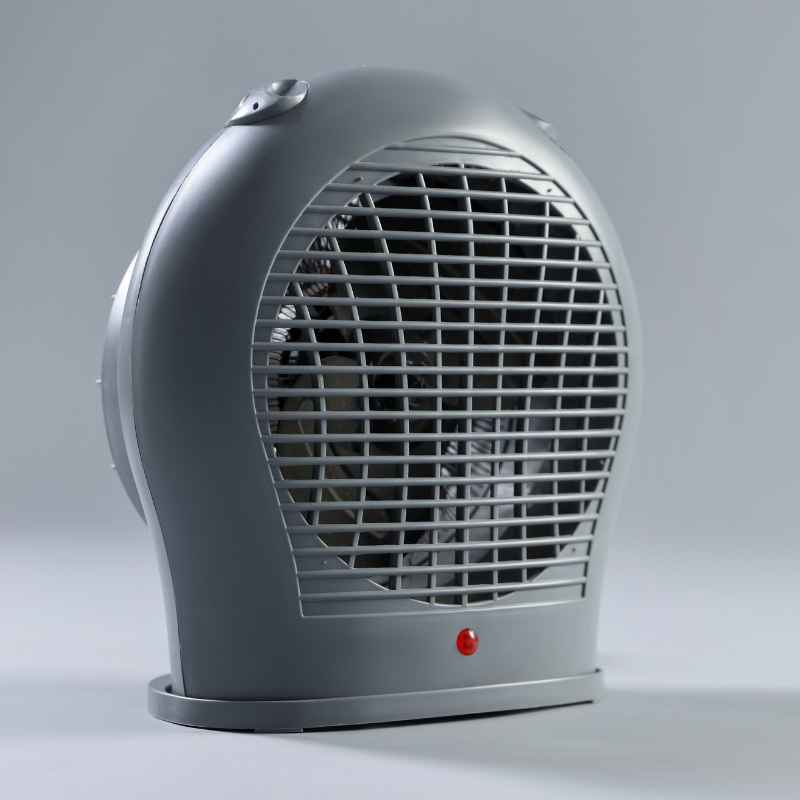
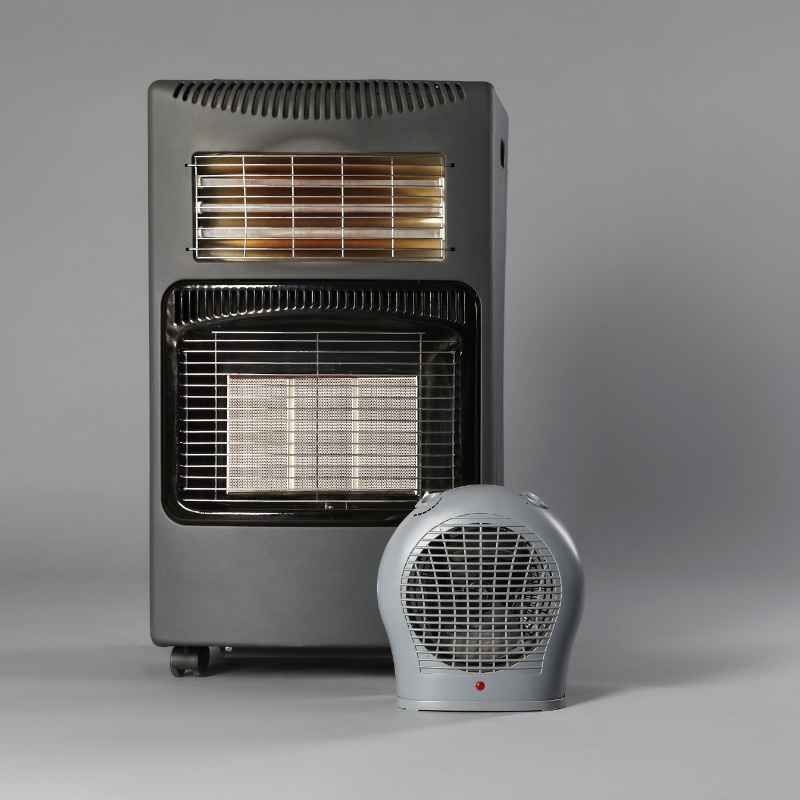
Different kinds of portable heaters work in different ways. This affects how they heat a space and how much energy they might use.
Convection Heaters
These heaters warm up a room by heating the air. They have a heating element that warms air, which then rises. This creates a gentle circulation of warm air around the room.
They are good for keeping a steady, comfortable temperature. But they can take a little while to warm up a space.
Their efficiency comes from heating the air evenly. However, if you have drafts or poor insulation, that warm air can escape quickly. This means the heater has to work harder and longer to maintain the temperature.
This uses more electricity over time.
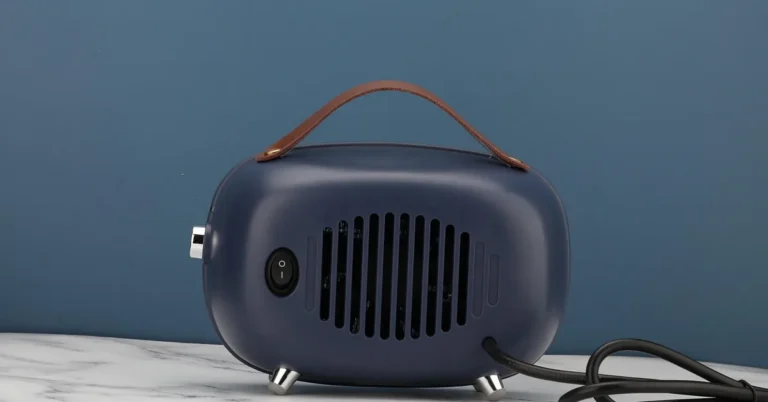
Radiant Heaters (Infrared Heaters)
Radiant heaters work differently. They heat objects and people directly with infrared heat. Think of the warmth you feel from the sun.
They don’t heat the air first. This means you feel warm much faster, even if the air temperature is still a bit cool.
They are very efficient for spot heating. If you’re sitting in front of one, you’ll feel warm quickly. This can be great for saving energy if you only need to warm a small area where you are.
You can turn down the main thermostat and just use the radiant heater for personal warmth.
However, they don’t do a great job of heating an entire room. The heat is focused. If you move away from the heater, you won’t feel as warm.
They also don’t warm up furniture or walls, so the room might feel cooler overall to others.
Ceramic Heaters
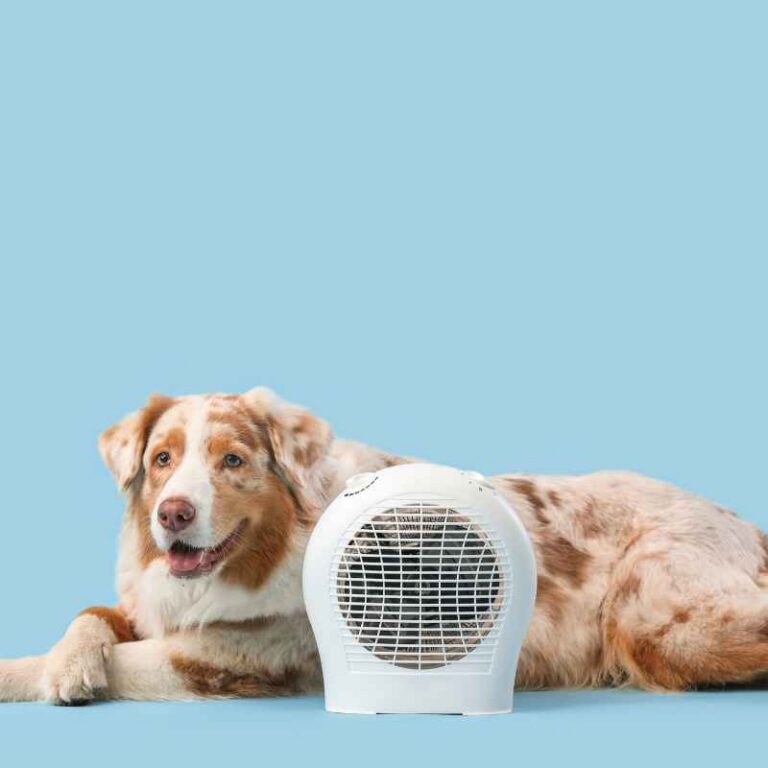
Ceramic heaters are very popular. They use a ceramic plate that heats up. A fan then blows air across this hot plate.
This pushes warm air into the room, similar to convection heaters but often faster.
These are also good for quickly warming up smaller spaces. Many have adjustable thermostats, which helps prevent them from running constantly. This can improve their energy efficiency.
The fan uses a small amount of extra electricity. But usually, this is minor compared to the heating element. Like convection heaters, their efficiency in a larger space depends on how well the room is sealed.
Oil-Filled Radiators
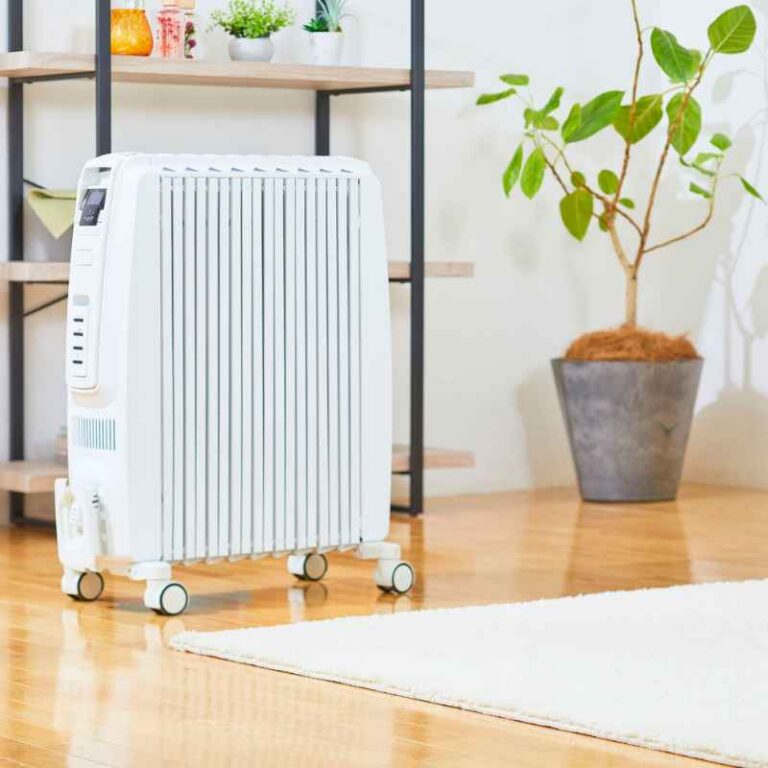
These look like old-fashioned radiators but are filled with oil. The oil heats up and then radiates warmth into the room. They heat up slowly but provide a very steady and even heat.
They are also often quieter than fan-forced heaters.
They are quite efficient for maintaining a consistent temperature in a room over long periods. Because they retain heat well, they can continue to radiate warmth even after being turned off for a short time. This can mean less cycling on and off.
However, they can take a long time to heat a cold room initially. Their larger size also means they are less portable than some other types.
The Role of Wattage and BTU
When you look at a portable heater, you’ll see its wattage. This tells you how much electricity it uses. Higher wattage means it uses more power.
For example, a 1500-watt heater uses more electricity than a 750-watt heater.
You might also see BTUs (British Thermal Units). This is a measure of heat output. Generally, a higher BTU means more heating power.
But wattage is what relates directly to your electricity bill.
A heater with a higher wattage will heat a space faster. But it will also cost more to run for the same amount of time. The key is to match the heater’s power to the size of the space you need to heat.
Using a very powerful heater in a small bathroom is like using a sledgehammer to crack a nut. It works, but it uses more energy than needed and might even overheat the space quickly, leading to wasted energy.
Matching Heater Wattage to Room Size
Small Rooms (e.g., Bathroom, Small Office): 500-750 Watts. These are usually enough to take the chill off a small space quickly.
Medium Rooms (e.g., Bedroom, Living Room): 750-1500 Watts. This range is common and can handle moderately sized areas effectively.
Larger Rooms or Supplemental Heat: 1500 Watts and up. These are powerful but use more energy. Use them wisely.
Portable Heaters vs. Central Heating
This is where the “energy efficient” question gets tricky. Portable heaters are often thought of as more efficient because you can use them to heat just one room. This is called spot heating.
If you have central heating, it heats your whole house. If you only need to warm your office while you work, running central heating for the whole house is wasteful. In this case, using a small portable heater just for your office is much more energy-efficient.
However, if you need to heat multiple rooms or your entire home, central heating is usually more efficient overall. This is because a central system is designed to heat a larger volume of air more effectively. Also, the energy cost per unit of heat delivered by a well-maintained central system can be lower.
Think about insulation. A well-insulated home with good central heating will hold heat better than a drafty room heated by a portable unit. The portable heater will struggle to keep up if heat is constantly escaping.
So, the efficiency really depends on your goal: heating one small area versus heating a whole house.
My Own Experience: The Office Heater Story
I remember one particularly cold winter a few years back. My home office was always the coldest room. The rest of the house was warm enough with the main thermostat, but my office felt like a freezer.
I was working late one night, trying to focus, but my fingers were numb. I felt a real sense of frustration, thinking about my upcoming deadlines and how uncomfortable I was.
I decided to buy a small ceramic portable heater. It was about 1500 watts. I plugged it in, set the thermostat to a comfortable level, and within about 15 minutes, the room felt much warmer.
I was so relieved! I could finally get my work done without shivering.
For weeks, I used it every day. My electricity bill did go up a bit, which I expected. But it was much cheaper than trying to crank up the main thermostat for the whole house just to make my office warm.
I learned that for targeted heating, these little heaters can be a lifesaver.
What stood out was that I didn’t need it running all day. I only turned it on when I was actually in the office. This saved a lot of energy.
If I had left it on all day, the cost would have added up much faster.
Factors Affecting Real-World Efficiency
Even if a heater is technically good at converting electricity to heat, other things impact how much energy you actually use.
Home Insulation
This is a big one. If your walls, windows, and doors are drafty, warm air escapes. Portable heaters have to work harder to replace that lost heat.
This means they run longer and use more electricity.
Homes built more recently often have better insulation. Older homes might need some attention to sealing leaks around windows and doors. Even simple things like using draft stoppers under doors can make a difference.
Thermostat Settings
How you set the thermostat matters a lot. If you set a portable heater to a very high temperature, it will run more often. If you can tolerate a slightly cooler temperature, say 68°F instead of 72°F, you will save energy.
Many portable heaters have adjustable thermostats. Use them! This prevents the heater from overheating the space and then shutting off for a long time, only to start up again.
A consistent, moderate temperature uses less energy than wild swings.
Room Size and Ceiling Height
A powerful heater in a tiny room can overheat it quickly. A small heater in a large room will struggle to make it comfortable. Choosing a heater that’s the right size for the space is key to efficiency.
Higher ceilings mean more air volume to heat. This requires more energy. If you have very high ceilings, a portable heater might not be the most efficient solution for that space.
Quick Check: Is Your Room Leaky?
Feel for drafts: On a windy day, walk around your windows and doors. Can you feel cool air coming in?
Check for gaps: Look at the seals around window frames and door frames. Are they intact?
Under the door: Use a rolled-up towel or a draft stopper to block air from coming in under doors.
Outlets and switches: Sometimes, air can leak through electrical outlets on exterior walls. Foam gaskets can help.
Usage Patterns
When and how long you use the heater makes a huge difference. Using it only when you’re in the room is the most efficient approach.
Leaving a portable heater on all day in an empty room is a sure way to waste electricity. It’s like leaving all the lights on in a house when no one is home.
Consider timers. Some portable heaters have built-in timers. You can set them to turn on just before you need them and turn off after you leave or go to sleep.
Are They Safe? Understanding Safety Features
Safety is crucial when using any heating device. Modern portable heaters come with several safety features designed to prevent accidents.
Tip-over protection: This is a common feature. If the heater is knocked over, it automatically shuts off. This is a really important safety measure to prevent fires.
Overheat protection: If the heater gets too hot internally, it will shut itself down. This protects the unit and reduces fire risk.
Cool-touch housing: Many portable heaters have exteriors that don’t get dangerously hot. This reduces the risk of burns, especially if you have children or pets.
Always read the manufacturer’s instructions. Place the heater on a flat, stable surface. Keep it away from flammable materials like curtains, bedding, or paper.
Never dry clothes on a portable heater.
Safety Checklist for Portable Heaters
- Place on a level, hard, non-flammable surface.
- Keep at least 3 feet away from anything that can burn.
- Never use in bathrooms or near water sources.
- Ensure cord is not frayed or damaged.
- Unplug when not in use or when cleaning.
- Check for tip-over and overheat protection features.
When Portable Heaters Make Sense (and When They Don’t)
So, to sum up, when are these heaters a smart choice for your energy use?
Good Uses for Portable Heaters:
- Spot Heating: Warming a small area where you are sitting or working, like an office, a reading nook, or a specific spot in a larger room.
- Supplemental Heat: Adding a bit of extra warmth to a room that doesn’t get quite warm enough with your main heating system.
- Drafty Rooms: Heating a single room that tends to be much colder than the rest of the house, rather than heating the whole house.
- Temporary Needs: When your main heating system is temporarily out of order, a portable heater can provide crucial warmth.
When Portable Heaters Might Not Be Efficient:
- Heating Entire Homes: They are generally not designed or efficient for this purpose.
- Heating Large Rooms: Unless it’s a very powerful unit, it will struggle to heat a large space effectively.
- Poorly Insulated Homes: If heat escapes quickly, the heater will run constantly, using a lot of energy.
- As a Primary Heat Source in Very Cold Climates: They might not provide enough warmth or be cost-effective for extreme cold.
Cost Considerations: Beyond the Purchase Price
The purchase price of a portable heater can range from $20 to over $100. But the real cost is what you pay to run it.
Let’s do a simple example. A 1500-watt heater running for one hour uses 1.5 kilowatt-hours (kWh) of electricity. If your electricity rate is $0.15 per kWh, that hour of heating costs $0.225 (22.5 cents).
Running that same heater for 8 hours a day for 30 days would cost: 1.5 kWh/hour 8 hours/day 30 days $0.15/kWh = $108.00 per month.
This is a simplified example. Your actual costs will vary based on your electricity rates, how often you use the heater, and its actual wattage. But it shows how quickly costs can add up.
Quick Cost Estimation Tool
Your Heater’s Wattage: watts (e.g., 1500)
Hours Per Day Used: hours (e.g., 4)
Days Per Month Used: days (e.g., 20)
Your Electricity Rate: $ per kWh (e.g., 0.15)
Calculation: (Wattage / 1000) Hours/Day Days/Month * Rate = Estimated Monthly Cost
Example: (1500 / 1000) 4 20 * 0.15 = $24.00 per month
Tips for Maximizing Efficiency and Saving Money
Using portable heaters smartly can save you money and keep you comfortable.
1. Choose the Right Heater for the Job
Don’t buy a huge heater for a tiny space. Match the wattage to the room size. A smaller, more appropriate heater will use less energy.
2. Seal Up Your Space
Before you even turn on the heater, take steps to reduce heat loss. Seal drafts around windows and doors. Use curtains to block cold air from windows at night.
3. Use the Thermostat Wisely
Set it to the lowest comfortable temperature. Avoid the temptation to crank it up high. Small adjustments can save significant energy.
4. Only Heat When and Where You Need It
This is the golden rule of portable heater efficiency. Turn it off when you leave the room. Use timers if available.
5. Consider a Programmable Thermostat
If you have central heating, consider upgrading to a programmable thermostat. This allows you to set different temperatures for different times of day, saving energy overall.
6. Maintain Your Heater
Keep the vents clean. Dust can make the heater work harder. Check the cord and plug for any damage.
7. Combine with Other Heat Sources
Sometimes, just opening curtains on a sunny day can provide enough free solar heat to make a room more comfortable. Wear warmer clothes indoors.
I found that wearing a cozy sweater and thick socks made a big difference. I could set my office heater to a lower temperature when I was wearing warmer clothes. This was a simple way to save energy.
The Future of Efficient Heating
As energy costs rise and environmental concerns grow, the focus on efficiency will only increase. Newer technologies are emerging that offer better ways to heat our homes.
Heat pumps, for example, are becoming more efficient and affordable. They move heat from one place to another, rather than generating it from electricity. This makes them very energy-efficient, especially in milder climates.
Smart home technology is also playing a role. Smart thermostats and connected heaters can be controlled remotely and learn your habits to optimize energy use. This takes a lot of the guesswork out of saving energy.
However, for quick, targeted warmth, portable heaters still have their place. They offer an accessible and often affordable solution for specific heating needs, provided they are used wisely.
Frequently Asked Questions About Portable Heater Efficiency
Are all portable heaters equally energy efficient?
No, not all portable heaters are created equal in terms of efficiency for heating a space. While most electric heaters convert nearly 100% of electricity into heat, their overall efficiency depends on how well they distribute that heat, how quickly they heat a space, and whether they have smart features like thermostats. Radiant heaters are efficient for direct, spot heating, while convection and ceramic heaters can warm up a room faster but might lose heat quickly if the room isn’t well-sealed.
Can a portable heater heat an entire house?
Generally, no. Portable heaters are designed for spot heating or warming small to medium-sized rooms. Attempting to heat an entire house with multiple portable heaters would be very inefficient and costly.
Central heating systems are designed for whole-house heating and are typically more energy-efficient for larger areas.
Is it cheaper to run a portable heater or my central heating?
It depends on what you’re heating. If you’re only heating one small room for a short period, a portable heater is usually much cheaper than running your central heating for the whole house. However, if you need to heat multiple rooms or your entire house, central heating is generally more cost-effective and efficient overall, especially in well-insulated homes.
How much electricity does a typical portable heater use per hour?
Most common portable heaters range from 750 watts to 1500 watts. A 1500-watt heater will use 1.5 kilowatt-hours (kWh) of electricity for every hour it runs. This usage directly impacts your electricity bill, so it’s important to be mindful of how long you run it.
Are oil-filled radiators more energy efficient than ceramic heaters?
Oil-filled radiators are often considered more efficient for maintaining a consistent temperature over long periods because they retain heat well. Ceramic heaters can heat a room up faster initially. For continuous, steady warmth in a room you use often, an oil-filled radiator might be slightly more energy-efficient.
For quick bursts of heat in smaller spaces, a ceramic heater is often better.
What are the most energy-efficient types of portable heaters?
For direct, personal warmth, radiant or infrared heaters are very efficient because they heat you directly without needing to heat the air first. For warming a small room, ceramic heaters with thermostats can be efficient if used properly. Oil-filled radiators excel at maintaining a steady temperature with less cycling.
Conclusion
So, are portable heaters energy efficient? The answer is a nuanced yes, but with important conditions. They are very efficient at turning electricity into heat.
However, their true energy efficiency for your wallet depends entirely on how and where you use them. For targeted spot heating, they can be a smart, cost-effective choice. But for whole-house warmth, they are generally not the best option.
By understanding their strengths and weaknesses, and by using them wisely, you can stay warm without excessive energy waste.
Sponsored / affiliate links. As an Amazon Associate I earn from qualifying purchases. I may earn additional commission from eligible campaigns.
 Portable Air Conditioners 14000 BTU, Energy Efficient AC with Remote Control & 24H Timer, Ultra Quiet Cooling Unit for Large Rooms Up to 750 Sq. Ft, Office, Bedroom, White
 8,000 BTU Portable Air Conditioner with Remote, Dehumidifier, Fan Mode for Rooms Up to 350 Sq. Ft., 3-In-1 AC Unit with Timer & Window Kit, Grey