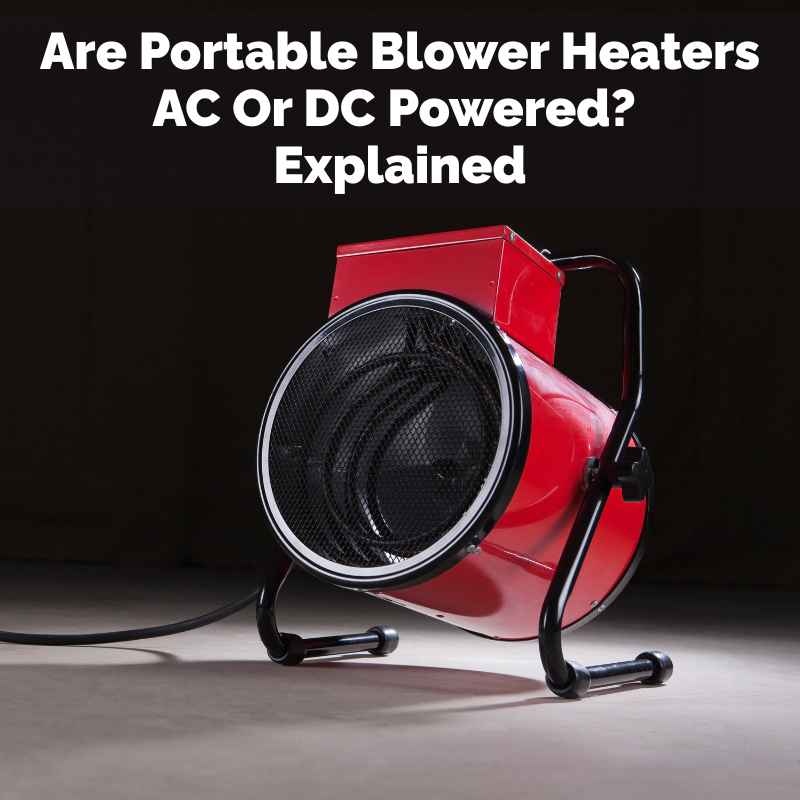
Are Portable Blower Heaters AC Or DC Powered? Explained
It’s that time of year again. The air outside is getting crisp. You might be thinking about staying cozy indoors.
Maybe you need a little extra warmth in a garage or workshop. Portable blower heaters seem like a great idea. But a question pops up, and it’s a good one.
Are these handy heaters actually powered by AC or DC electricity?
It’s a puzzle many folks run into. You see these units plugged into a wall. That makes you think one thing.
But then you see them used where there’s no wall outlet nearby. That makes you wonder about another power source. Let’s break down this common question.
We’ll make sure you understand exactly how these heaters get their power.
Portable blower heaters primarily use AC (Alternating Current) power from standard wall outlets in homes and businesses. Some smaller, specialized models or those designed for vehicles might use DC (Direct Current) power, often from a car’s battery or a portable DC power station, but these are less common for general home use.
Understanding AC vs. DC Power
Before we dive deep into heaters, let’s quickly touch on AC and DC power. It helps to know the basics. This makes understanding your heater much easier.
AC (Alternating Current) is what powers most of our homes. Think of the plugs you use for lamps, TVs, or computers. The electricity in these plugs flips direction many times each second.
This is why it’s called alternating. Wall outlets in your house provide AC power. The voltage is usually quite high.
This helps move power efficiently over long distances.
DC (Direct Current) power flows in one direction. Batteries are a great example of DC power. Your phone battery, a flashlight battery, or your car battery all use DC.
The flow is steady and constant. DC power is often at lower voltages than AC power. It’s great for small electronics and portable devices.
How Portable Blower Heaters Get Their Power
Now, let’s get back to those blower heaters. The vast majority of portable blower heaters you’ll find are designed for indoor use. They need a good amount of power to heat up a space.
This is why they almost always rely on AC power.
These heaters plug into a standard wall outlet. This outlet provides the AC electricity they need. The heater then uses this power to run a fan and a heating element.
The fan blows air across the hot element. This warm air is then pushed out into the room. It’s a simple but effective system.
The power from your home’s electrical system is perfect for this job.
You’ll see different wattage ratings on these heaters. Higher wattage means more power. It also means it can heat a larger area or heat it faster.
A 1500-watt heater, for instance, needs a good amount of electricity. Your home’s AC circuits are built to handle this. They can safely deliver that power.
When You Might See DC Power
So, if most are AC, why the confusion? Sometimes people think about portable power. They might be thinking of heaters used in cars.
Or perhaps they’ve seen smaller, battery-operated devices. These are the exceptions, not the rule.
Vehicle Heaters: Some small heaters are made for cars or trucks. These often plug into the cigarette lighter socket. This socket provides DC power from the car’s battery.
These heaters are usually quite small. They are meant to provide a little warmth in a car cabin. They don’t heat a whole room.
Their power draw is limited by the car’s electrical system.
Battery-Powered Heaters: You might also find some newer, very small portable heaters that run on rechargeable batteries. These batteries store DC power. Think of them like a powerful portable fan with a heating coil.
They are convenient for very small personal spaces. Again, their heating output is much lower. They are not designed for heating garages or large rooms.
Camping and RVs: In RVs or campers, you might find a mix. Many larger appliances run on AC power. You might use an adapter to plug into shore power.
But some smaller heaters or devices might use the RV’s battery system, which is DC. This is often for short periods or when not plugged into an external source. You’d need to check the specific heater’s power needs.
My Own Experience with a Stubborn Space Heater
I remember a few years back. I had this old shed I wanted to use as a little art studio. It was freezing in there during the winter.
I bought what I thought was a great portable blower heater. It was pretty powerful. I plugged it into an extension cord running from the house.
It worked okay at first. But then, one particularly cold day, it just wouldn’t get warm enough.
I fiddled with it. I checked the plug. I even thought maybe the extension cord was too long.
I was getting really frustrated. I pictured myself shivering while trying to paint. I finally looked closer at the heater’s manual.
That’s when I saw it. It was rated for a standard 120V AC outlet. But the shed didn’t have its own dedicated circuit from the house.
It was on a circuit with other things.
The heater was trying to draw more power than that circuit could safely give it without everything else on it. It wasn’t about AC vs. DC in that moment.
It was about the capacity of the AC power source. I ended up having an electrician run a new, dedicated circuit for the shed. That made a huge difference.
It showed me that even with AC power, the setup matters a lot. This heater was definitely an AC unit, but it needed a strong AC supply.
It was a stark reminder that “plug it in” isn’t always the whole story. You need to make sure the electrical system can handle the load. Especially with something that draws a lot of power like a heater.
My shed saga confirmed that home heaters are built for the AC grid. They rely on that robust system. The power from a car cigarette lighter or a small battery is just too different.
It’s not enough for what most home-style portable heaters need.
Most people don’t realize how much power these things use. A typical heater might use 10-15 amps. That’s a lot for a single outlet, especially if other things are plugged in.
Understanding the difference between AC and DC is the first step. But understanding your home’s electrical capacity is just as crucial. For my shed, the existing AC outlet simply wasn’t up to the task for a powerful blower heater.
It needed its own dedicated AC line to perform as expected.
It also made me think about those really basic car heaters. They’re so small. You can usually run them and still use your car’s radio or lights.
That’s because they’re designed to work within the limits of a car’s DC system. They’re not trying to heat an entire room. They’re just trying to take the chill off your feet.
It highlights the fundamental difference in power needs and availability.
So, when you’re looking at a portable blower heater for your home, garage, or workshop, always assume it’s AC. And then, always check the plug and the power requirements. Make sure the outlet you plan to use can handle the load.
It’s better to be safe and understand the limits of your electrical system. This avoids any electrical headaches later on.
Understanding Heater Power Types
AC Powered Heaters:
- Use standard wall outlets (120V in the US).
- Found in most homes, garages, workshops.
- Offer higher wattage for effective heating.
- Require a sufficient electrical circuit to operate safely.
DC Powered Heaters:
- Use batteries or vehicle power outlets (like cigarette lighters).
- Typically lower wattage, for small spaces or personal warmth.
- Common in cars, RVs (when not on shore power), or for very specific portable uses.
Factors Affecting Heater Power Consumption
The type of power is only part of the story. Several other things affect how much power your portable blower heater uses. And how well it works.
Wattage: As we mentioned, this is key. A higher wattage heater uses more electricity. It also produces more heat.
A small 500-watt heater won’t do much in a large garage. A 1500-watt heater is more common for general use.
Room Size: A heater’s effectiveness depends on the space it’s trying to warm. A heater that’s perfect for a small bathroom might struggle in a large living room. It will run longer and use more power trying to keep up.
This is why selecting the right size heater is important.
Insulation: How well your space is insulated matters a lot. A well-insulated room keeps heat in. A poorly insulated one lets it escape quickly.
This means the heater has to work harder. It will run more often. This uses more electricity over time.
Thermostat Settings: If your heater has a thermostat, setting it to a comfortable temperature helps. You don’t need to set it to “bake.” A reasonable setting prevents the heater from running non-stop. This saves energy and reduces wear and tear.
Voltage: While most home heaters are 120V, some larger or commercial units might be 240V. These need a different type of outlet and a stronger circuit. Always check the voltage requirement.
Make sure your home’s wiring can support it.
Quick Scan: Heater Power Essentials
| Feature | Standard AC Home Heater | Specialty DC Heater (e.g., Car) |
|---|---|---|
| Power Source | AC (Alternating Current) from Wall Outlet | DC (Direct Current) from Battery or Adapter |
| Typical Use | Homes, Garages, Workshops, Offices | Cars, Small RV Areas, Personal Use |
| Wattage Range | 500W – 1500W+ | 50W – 300W (much lower) |
| Heating Capacity | Small to Medium Rooms | Very Small Personal Space, Defrosting |
| Electrical Needs | Standard Household Circuit (check load) | Vehicle’s 12V System or Battery Pack |
Identifying Your Heater’s Power Type
How can you be absolutely sure what kind of power your heater uses? It’s usually quite straightforward.
Check the Plug: The most obvious clue is the plug itself. Does it have a regular three-prong plug (or two flat prongs) that fits into your wall socket? If yes, it’s almost certainly an AC heater.
If it has a different kind of connector, like a small barrel plug or a plug designed for a car’s 12V socket, it’s likely DC.
Read the Label: Most appliances have a label on the back or bottom. This label will tell you the voltage (V), frequency (Hz), and wattage (W) or amperage (A). For AC heaters in the US, you’ll see something like “120V ~ 60Hz” and a wattage figure.
The “~” symbol often indicates AC power.
Consult the Manual: If you still have the owner’s manual, it will clearly state the power requirements. This is the most reliable source of information. It will tell you exactly what kind of power your heater needs and how much.
Look at the Cord: Is it a thick cord designed to handle high household current? Or is it a thinner cord with a smaller plug, like the kind you see for phone chargers or car accessories? The cord can give you a hint.
Real-World Scenarios: Where Do You Find Each Type?
Let’s paint a picture of where you’d commonly use AC versus DC heaters.
AC Heaters in Action:
- Home Offices: Keeping a small home office warm without heating the whole house.
- Garages/Workshops: Providing temporary heat when you’re working on projects.
- Basements: Supplementing heat in a chilly basement area.
- Bedrooms: For extra warmth on very cold nights, often used with a thermostat.
- Small Businesses: Heating a small retail space or a back room.
DC Heaters in Action:
- Cars/Trucks: For quick defrosting or a little warmth on a commute. These are often called “automotive heaters” or “defrosters.”
- Boats/RVs: Small heaters used when not connected to shore power, drawing from the vehicle’s battery.
- Camping: Some very specialized, low-power battery-operated heaters for tents.
- Emergency Kits: Small devices that can run off portable power banks for personal warming.
Myth vs. Reality: Heater Power
Myth: All portable heaters run on AC power.
Reality: While most home-use portable blower heaters run on AC, smaller specialized units for vehicles or personal battery use run on DC power.
Myth: A small heater is safe to plug into any outlet.
Reality: All heaters draw significant power. Always check the heater’s wattage and ensure the circuit can handle the load. Overloading a circuit is a fire hazard.
Myth: DC heaters are just as powerful as AC heaters.
Reality: DC power from sources like car batteries or small battery packs is much less powerful than standard household AC power. DC heaters are therefore much less powerful and suitable only for very small spaces.
What This Means for You: Choosing and Using Your Heater
Understanding the power source helps you make smart choices. It also helps you use your heater safely.
For Home Use: If you’re buying a portable heater for your house, garage, or workshop, you’ll almost certainly be buying an AC-powered unit. Make sure you have appropriate outlets available. Check the wattage.
Ensure the circuit it plugs into isn’t already overloaded with other appliances. A dedicated circuit is ideal for higher-wattage heaters.
For Vehicle Use: If you need heat in your car, look for small, plug-in automotive heaters. These are designed for DC power. Be aware they are usually not very powerful.
They’re for supplemental warmth.
For Off-Grid or Portable Power: If you plan to use a heater with a portable power station or a generator, you’ll need to match the power source. Most portable power stations output AC power. So, you’d plug an AC heater into it.
Ensure the power station has enough capacity (wattage and battery life) for your needs. Small battery-powered heaters are an option if you don’t need much heat.
Safety First: Never try to plug an AC heater into a DC socket, or vice versa, unless the device is specifically designed for it with an adapter. This can damage the heater and the power source. Always follow the manufacturer’s instructions.
Ensure good ventilation for any heater you use. Never leave a portable heater unattended.
Quick Tips for Using Your Portable Heater
Here are some easy tips to make sure your portable heater works well and safely:
- Read the Manual: Seriously, it’s there for a reason! It tells you the power needs and safety warnings.
- Check Your Outlets: Make sure the outlet is in good condition and not loose.
- Avoid Extension Cords When Possible: If you must use one, make sure it’s heavy-duty and rated for the heater’s wattage. Long, thin cords can overheat.
- Keep Clearances: Keep heaters away from curtains, furniture, and anything flammable. The manual will specify distances.
- Don’t Block Airflow: Make sure the air vents on the heater are not blocked. This helps it work efficiently and prevents overheating.
- Turn It Off: Always turn off and unplug the heater when you leave the room or go to sleep.
- Clean Regularly: Dust can build up on the heating element and fan. This can reduce efficiency and be a fire risk. Unplug the heater and clean it gently.
Frequently Asked Questions About Heater Power
Are all portable electric heaters AC powered?
No, most portable electric heaters for home use are AC powered. However, some smaller, specialized heaters designed for vehicles (like cars) or very portable applications may be DC powered. Always check the plug and the appliance’s label.
Can I use a car heater in my house?
No, you should not try to use a car heater (which is DC powered) in a standard house outlet (AC powered). They are designed for different power types and voltages. Attempting to do so could damage the heater or cause a fire.
Similarly, you can’t plug a standard home heater into a car’s 12V socket.
How do I know if my home’s electrical circuit can handle a powerful heater?
Check the heater’s wattage (e.g., 1500W). Look at your home’s circuit breaker panel. Standard household circuits are often 15A or 20A.
A 1500W heater on a 120V circuit draws about 12.5A (1500W / 120V = 12.5A). If other devices are on the same circuit, it could trip the breaker or be a safety hazard. For high-wattage heaters, consider a dedicated circuit.
What is the difference between a 120V and 240V heater?
A 120V heater uses standard household outlets. A 240V heater requires a special outlet, often found in laundry rooms or garages, and a dedicated, higher-amperage circuit. 240V heaters are generally more powerful and heat larger spaces more quickly.
Can I run a portable heater off a generator?
Yes, you can run most AC portable heaters off a generator. Ensure the generator’s wattage output is sufficient for the heater’s requirements and any other appliances you might run simultaneously. Check the generator’s fuel type and run time for your needs.
What does the “AC only” label mean on a heater?
An “AC only” label means the heater is designed to run only on Alternating Current, which is the power supplied by wall outlets in homes and buildings. It cannot be used with DC power sources like car batteries or standard battery packs.
Conclusion
So, to wrap things up, portable blower heaters you’ll use in your home, garage, or workshop are overwhelmingly designed for AC power. They plug into your wall and use the electricity supplied by your home’s electrical system. While specialized, smaller DC units exist for cars or very niche uses, they are not interchangeable.
Understanding your heater’s power needs and your home’s electrical capacity is key to safe and effective heating.
Sponsored / affiliate links. As an Amazon Associate I earn from qualifying purchases. I may earn additional commission from eligible campaigns.