How Much Heat Output Is Good For Outdoor Heaters? Explained
The best heat output for an outdoor heater depends on its intended use and coverage area. For general patio heating, look for heaters with a BTU output that matches the square footage you need to warm. Typically, 20,000 to 40,000 BTUs are common for residential spaces, but larger areas may need more. Consider factors like wind, ceiling height, and desired warmth.
Understanding Heat Output: What Does It Mean?
When we talk about heat output for outdoor heaters, the most important number you’ll see is the BTU. BTU stands for British Thermal Unit. It’s a standard way to measure energy.
One BTU is the amount of heat needed to raise the temperature of one pound of water by one degree Fahrenheit. Think of it as a unit of power for your heater.
The higher the BTU number, the more heat the heater can produce. This tells you how powerful the unit is. For example, a heater with 40,000 BTUs puts out more heat than one with 20,000 BTUs.
This is a key factor when you’re trying to decide which heater is right for your needs. It’s not just about the size; it’s about the heating ability.
Most residential outdoor heaters fall into a certain range. You’ll commonly see them offering between 20,000 and 50,000 BTUs. This range is usually enough for most patios and decks.
But some industrial or very large areas might need much more. It’s like choosing a car engine size; you need enough power for the job.
It’s also important to know that not all BTUs are created equal. The way a heater distributes its heat matters a lot. A well-designed heater can spread warmth more evenly.
A poorly designed one might have hot spots and cold spots. So, while BTU is a big number, how that heat is used is also very important for comfort. It’s not just the raw power.
Why BTU Matters for Your Outdoor Space
Your outdoor space is different from inside your home. It’s open to the air. This means heat can escape easily.
Wind can also blow the warm air away. This is why outdoor heaters need to be quite powerful. They have a tougher job to do compared to indoor heaters.
Think about a cool evening. You step onto your patio. You want to feel a cozy warmth, not just a slight puff of air.
The BTU rating tells you if the heater has the muscle to fight off the cool air and wind. A heater with too few BTUs will struggle. You’ll end up feeling cold, which defeats the purpose.
The size of your space is a big deal. A small balcony needs less heat than a large backyard patio. A heater that’s too small won’t warm the area.
You’ll waste energy trying to heat an area it wasn’t designed for. A heater that’s too big might make the space too hot. It can also be wasteful of fuel.
The height of your outdoor space also matters. If you have a high ceiling or a covered patio with a roof that’s very high up, the heat has more room to rise and escape. This means you’ll need more BTUs to get the warmth down to where you are sitting.
It’s like trying to fill a tall bucket versus a short one.
Key takeaway: More BTUs generally mean more heat. But you need the right amount for your specific space and conditions. Don’t just grab the biggest number.
Match it to your needs. This ensures comfort and efficiency. It’s a balance between power and purpose.
Factors Affecting Outdoor Heater Performance
Beyond the BTU rating, several other things can change how well your outdoor heater works. These factors can make a heater seem weaker or stronger than its label suggests. Understanding them helps you set realistic expectations and choose the best heater.
Wind is a major player. A gentle breeze is one thing. Strong winds are another. Wind can blow warm air away from where you are.
It can also make the heater work harder to maintain a temperature. If your patio is often windy, you might need a heater with more BTUs than you’d expect. Or, you might need a heater designed to shield its flame better.
Coverage area is directly tied to BTU. Manufacturers often give you a suggested coverage area for their heaters. This is usually given in square feet.
A 10-foot by 10-foot area is 100 square feet. A 20-foot by 20-foot area is 400 square feet. Make sure the heater you choose is rated for your space size.
Don’t try to stretch a small heater too far.
Type of heater also plays a role. There are different kinds. Propane patio heaters are common.
They have a visible flame. Electric heaters use a heating element. Infrared heaters warm objects directly, not just the air.
Each type distributes heat differently. Some are better for open areas, others for more enclosed spaces. The shape and design matter.
Obstructions and enclosures can affect heat flow. A solid wall or a roof can help trap heat. This makes the heater more effective.
But too many walls can block the heat from spreading. If your patio is almost fully enclosed, you might need less powerful heating. If it’s very open, you’ll need more.
Desired warmth level is personal. Some people like it toasty warm. Others prefer just a slight boost against the chill.
If you like it very warm, you’ll need more BTUs. If you’re just trying to take the edge off a cool evening, you might need less. Think about what feels comfortable to you.
Ceiling height is crucial for covered spaces. Heat rises. If your ceiling is very high, the warm air collects at the top.
It doesn’t reach you. You need a heater powerful enough to push the heat down or one that directs heat downward more effectively. Tall spaces often require higher BTU units.
Quick Check: BTU vs. Square Feet
Here’s a simple guide. Remember this is a starting point. Many factors can change the actual need.
Small Area (e.g., 50-100 sq ft): 10,000 – 20,000 BTUs
Medium Area (e.g., 100-200 sq ft): 20,000 – 35,000 BTUs
Large Area (e.g., 200-400 sq ft): 35,000 – 50,000+ BTUs
Very Large/Open Area: May need more, or multiple units.
Common Outdoor Heater Types and Their BTUs
Different types of outdoor heaters are built for different needs. They also come with a wide range of BTU outputs. Knowing these differences helps you pick the right tool for the job.
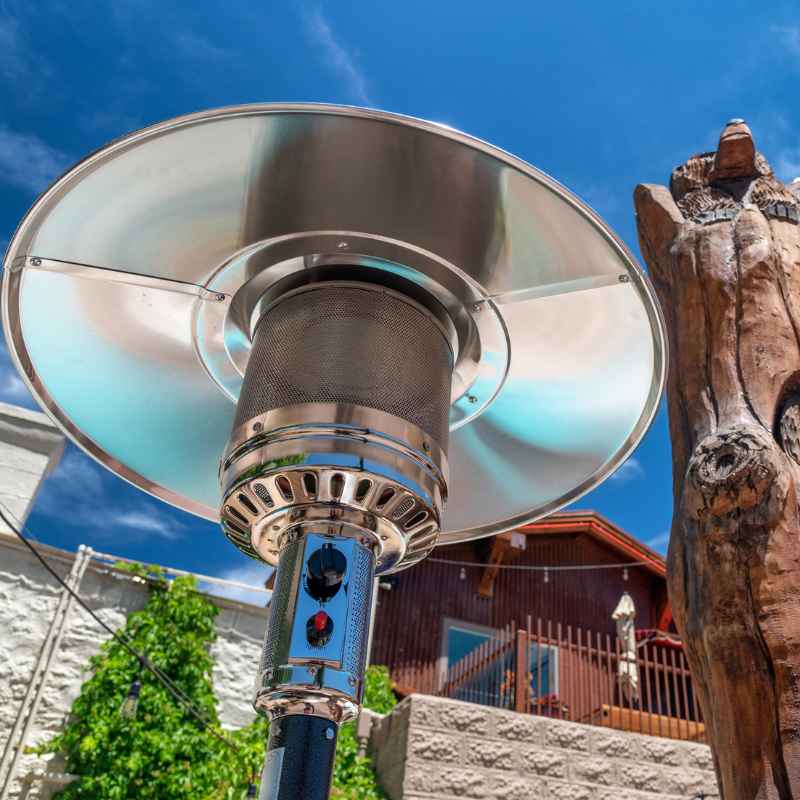
Propane Patio Heaters (Standing): These are the most common type you see. They are tall, freestanding units. They use a propane tank, usually stored in the base.
Their BTU output typically ranges from 30,000 to 45,000 BTUs. Some larger or commercial models can go up to 50,000 BTUs or more. They are great for heating open patios and decks.
Natural Gas Patio Heaters: Similar to propane heaters, but they connect directly to your home’s natural gas line. This means you don’t have to refill tanks. They often have slightly higher BTU outputs, ranging from 35,000 to 60,000 BTUs.
They are best for permanent installations. They offer consistent heat.
Electric Patio Heaters: These plug into an electrical outlet. Their power is measured in watts, but can be converted to approximate BTUs. A 1500-watt heater is roughly 5,000 BTUs.
They are generally less powerful than propane or gas heaters. They are best for smaller, more sheltered areas. They are good for taking the chill off close by.
They don’t fight wind well.
Wall-Mounted and Ceiling-Mounted Heaters: These can be electric, propane, or infrared. They save floor space. Their BTU output varies widely.
Electric versions are similar to standalone electric heaters. Propane or infrared models can have higher outputs, often in the 20,000 to 40,000 BTU range. They are great for covering specific seating areas.
Tabletop Heaters: These are small, portable heaters. They sit on an outdoor table. They are usually much less powerful, often ranging from 10,000 to 20,000 BTUs.
They are good for personal warmth when sitting at a table. They won’t heat a whole patio. They are best for very localized heating.
Infrared Heaters: These heaters use infrared radiation to warm people and objects directly. They don’t heat the air as much. This makes them more efficient in windy conditions.
They can be propane or electric. Their BTU output can vary, but they often feel warmer than electric heaters of the same wattage/BTU because of how they work.
Electric Heater BTU Conversion
To compare electric heaters to gas or propane, you can use this:
Watts x 3.412 = Approximate BTUs per hour
Example: A 1500-watt heater is about 5118 BTUs.
Personal Experience: The Day My Patio Heater Failed Me
I remember one crisp autumn evening. My partner and I had planned a nice dinner outdoors. The leaves were turning, and it had that perfect fall chill in the air.
We’d bought a new propane patio heater the year before. It seemed to do a decent job. So, I fired it up, thinking we were all set.
About twenty minutes later, I was shivering. We were sitting around the heater, but the warmth just wasn’t reaching us. It felt like trying to warm a whole room with a single candle.
I could feel a little heat if I put my hand right over the top, but it just disappeared into the night. I felt a wave of annoyance and then worry. Had I wasted money?
Was this thing just junk?
My partner, who is much more patient, suggested we check the propane tank. It was full. Then we looked at the heater itself.
It seemed to be working. The flame was there. But the heat was just… gone.
I looked out at our patio, which is a decent size, maybe 15 by 20 feet, and it was just too much for our little heater. It was a classic case of having a tool that wasn’t quite the right size for the job. That night, dinner was cut short, and we retreated inside, feeling a bit defeated by the cold.
Real-World Context: Where and Why Heaters Differ
The environment your outdoor heater is in makes a huge difference. Let’s break down some common scenarios and why a certain BTU output might be good or not.
The Open Patio: This is where most people use their heaters. It’s usually a paved area off the back of the house. It might be uncovered or have a simple roof.
Here, wind is a big factor. A strong gust can blow away a lot of heat. You need a heater with good BTUs, maybe 30,000 to 45,000, to combat this.
The heat needs to reach out to where you’re sitting.
The Balcony or Small Deck: These spaces are often smaller, maybe 50 to 150 square feet. They can also be more sheltered, especially if you’re on a higher floor with walls around. You might get away with a smaller heater, perhaps 10,000 to 25,000 BTUs.
A tabletop heater or a smaller standing one could work well. Overheating a small space is also a risk.
The Enclosed Sunroom or Screened Porch: These spaces offer more protection. Walls and a roof trap heat better. You don’t need as much BTU power.
An electric heater or a smaller propane heater might be enough. You’re basically heating a room that just happens to have outdoor walls. This is where you’ll see lower BTU needs, perhaps 5,000 to 20,000 BTUs.
The Windy Coastal Area: If you live near the ocean or in a generally windy region, this is tough. Wind can make even a powerful heater feel weak. You’ll want a heater with high BTUs, 40,000 and up, and one that has a good reflector or shield to protect the flame.
Infrared heaters can also be a better choice here, as they warm objects directly, and the wind has less effect on that direct warmth.
The Restaurant Patio: Commercial settings often have large, open areas. They need to heat many people. These patios often use very powerful heaters, sometimes multiple units, with outputs of 40,000 to 60,000 BTUs each.
They might also use specialized heating systems. The goal is to create a consistent warm zone for guests.
Your Habits: Do you like to sit very close to the heater, or do you want to feel warmth across a larger area? If you plan on hosting large gatherings, you’ll need more heat. If it’s just for two people sitting on chairs near the unit, a smaller output might suffice.
Your personal comfort level is a key design element for your outdoor space.
Style & Function: What to Look For
Radiant Heat vs. Convection Heat: Radiant heaters warm objects and people directly. Convection heaters warm the air.
In windy spots, radiant heat is often better.
Flame Visibility: Some people like the visual appeal of a dancing flame. Others prefer the clean look of an electric or infrared element.
Portability: Do you need to move it often? Look for wheels and a manageable weight. Refillable propane tanks add weight.
Fuel Type: Propane is common and portable. Natural gas is convenient for fixed locations. Electric is easy but has power limits.
What This Means for You: Choosing the Right Output
So, what’s the magic number for your outdoor heater? It’s not one single answer. It’s about matching the heater’s output to your specific needs.
Here’s how to figure that out.
When is a lower BTU output good?
- For very small spaces like a balcony or a small seating nook.
- If your space is mostly enclosed (like a sunroom).
- If you only need to take the slight edge off a cool evening.
- For personal, focused warmth (like a tabletop heater).
- For electric heaters, where higher wattage isn’t always an option.
When do you need a higher BTU output?
- For large patios or backyards.
- If your space is very open and exposed to wind.
- If you have high ceilings.
- If you want to feel warm across a wide area, not just close to the heater.
- If you live in a colder climate and want to extend your outdoor season significantly.
- For commercial patios that need to warm many people.
Simple Checks:
- Measure your space: Know the length and width in feet. Calculate the square footage (length x width).
- Assess wind exposure: Is your area often breezy or constantly windy?
- Consider enclosure: How much is your space open to the elements?
- Think about your comfort: Do you run hot or cold?
Most manufacturers will provide guidelines on their packaging or website. They’ll say something like, “Ideal for spaces up to 200 sq ft.” Always read these recommendations. They are based on average conditions and are a good starting point.
If you’re unsure between two models, it’s often better to go slightly higher on the BTU. You can always turn down a more powerful heater. You can’t make a weak heater stronger.
But don’t go excessively high, as that can be wasteful of fuel and potentially too hot if you’re sitting too close.
Quick Fixes & Tips for Better Outdoor Heating
Even with the right BTU, you can improve your outdoor heating experience. These tips focus on making the most of the heat you have.
Strategic Placement: Don’t just put the heater anywhere. Place it where people will be sitting. Aim to have the heat directed towards the seating area.
If you have a table and chairs, position the heater so its warmth reaches everyone. Avoid placing it too close to flammable materials.
Use Windbreaks: If wind is a constant problem, consider adding temporary windbreaks. This could be a decorative screen, a sturdy plant pot, or even a well-placed furniture arrangement. This helps keep the warm air around you.
Consider a Radiant Heater: As mentioned, radiant heaters are great for windy conditions. They don’t rely on warming the air, which the wind can quickly dissipate. They focus heat on people and objects, providing a more direct sense of warmth.
Add Layers: Encourage guests to bring a sweater or a blanket. Simple layers can make a big difference. Sometimes, just having a cozy throw available is enough to keep people comfortable on a cooler evening.
Maintain Your Heater: Make sure your heater is clean and in good working order. A dirty burner or clogged parts can reduce its efficiency. Follow the manufacturer’s maintenance schedule.
This applies to both propane tanks (checking for leaks) and the heating elements themselves.
Use a Lower Setting if Possible: If your heater has adjustable settings, start with a lower one and only increase it if needed. This saves fuel and prevents overheating the immediate area. It also helps you find that perfect balance of warmth.
Consider a Cover: When not in use, a cover can protect your heater from the elements. This keeps it cleaner and can prolong its life. Moisture and dirt can affect performance over time.
Heater Efficiency Checklist
- Check Fuel Levels: Propane tanks should be full.
- Inspect Burners: Are they clean and free of debris?
- Test Controls: Do all settings work correctly?
- Look for Leaks: Use soapy water on propane connections.
- Check Reflectors: Are they clean and directing heat properly?
Frequent Questions About Outdoor Heater Output
How many BTUs do I need for a 10×12 patio?
For a 10×12 patio, which is 120 square feet, you’re looking at a medium-sized area. A good starting point would be a heater with 20,000 to 35,000 BTUs. If it’s very windy or has a high ceiling, you might lean towards the higher end of that range or slightly above.
Are higher BTU outdoor heaters more efficient?
Higher BTU heaters produce more heat, but “efficiency” can mean different things. They use fuel faster. However, if you need that much heat for a large or windy area, a higher BTU heater will be more effective and might use fuel more wisely than a small heater struggling to do the job.
The key is matching BTU to the task.
Can an outdoor heater be too powerful for my space?
Yes, an outdoor heater can be too powerful. If you have a small, enclosed space, a very high BTU heater could make it uncomfortably hot. It can also be a waste of fuel.
It’s best to choose a heater with an output appropriate for your space size and conditions. Many heaters have adjustable settings, which helps.
How does wind affect the BTU output needed?
Wind blows warm air away, making your heater work harder. If your area is windy, you’ll need a higher BTU output than you would for a sheltered spot of the same size. You might also consider heaters designed to work better in wind, like radiant or infrared models.
What’s the difference between BTU and wattage for heaters?
BTU (British Thermal Unit) is a measure of heat energy, commonly used for gas and propane heaters. Wattage is a measure of electrical power, used for electric heaters. You can convert watts to approximate BTUs.
Generally, gas/propane heaters have much higher BTU outputs than electric heaters.
Is 40,000 BTU enough for a large backyard deck?
For a large backyard deck, 40,000 BTUs might be sufficient for a medium-sized area within that deck, or if the conditions are very calm. However, for a truly large deck (e.g., 300+ sq ft), especially if it’s open or windy, you might need more BTUs or multiple heaters to achieve adequate warmth across the entire space.
Conclusion: Finding Your Perfect Warmth
Choosing the right outdoor heater is all about understanding heat output, or BTUs. It’s not just about getting the biggest number. It’s about finding the right balance for your unique outdoor space.
Consider the size, wind, and how you like to feel warm.
By matching the BTU rating to your needs, you can ensure your patio becomes a cozy haven. You’ll extend your enjoyment of the outdoors. Happy heating!
Sponsored / affiliate links. As an Amazon Associate I earn from qualifying purchases. I may earn additional commission from eligible campaigns.