How Much Does It Cost To Replace Wood Floors In 2025?
Thinking about new wood floors? It’s a big decision. You want beauty and warmth.
But the cost can feel a bit scary. We get it. Prices change.
What you paid last year might be different now. Let’s break down what you can expect for 2025. We’ll look at all the pieces.
You’ll feel more ready to plan.
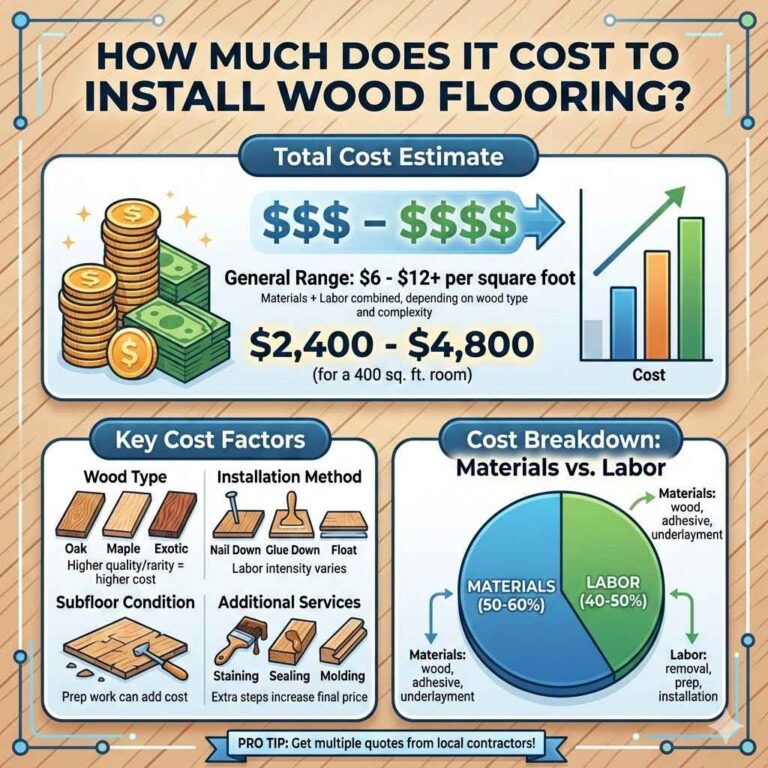
Replacing wood floors in 2025 typically costs between $3,500 and $15,000. This depends on wood type, room size, and labor rates. Expect to pay roughly $6 to $15 per square foot for materials and installation.
Understanding Wood Floor Replacement Costs
So, what makes up the price tag for new wood floors? It’s not just one number. Several things add up.
The type of wood you pick is a big one. So is the size of the room. Labor costs also play a huge part.
We’ll cover these basics first.
Let’s start with the wood itself. Different kinds of wood cost different amounts. Some are harder and more durable.
These often cost more upfront. Others are softer but still beautiful. You have to weigh these options.
Think about your budget and how you use the space.
The size of your project matters too. A small bedroom will cost less than a large living room. Measure your space carefully.
This will give you a better estimate. It’s good to have a ballpark figure before you start looking.
Labor is another key factor. Experienced installers charge more. But they do great work.
Cheaper labor might mean more mistakes. You want skilled hands for this job. Rates can change based on where you live.
Some areas have higher living costs. This often means higher service prices.
Don’t forget about the old floor. If you have to remove an old floor, that adds cost. We’ll talk more about this later.
It’s an important detail to remember. Planning for all these parts helps avoid surprises. You want a smooth process from start to finish.
Types of Wood Flooring and Their Price Tags
The world of wood flooring is vast. Each type offers unique looks and feels. But they also come with different price points.
Knowing these differences helps you choose wisely. Let’s explore the most common options and what they might cost in 2025.
Solid Hardwood Flooring
Solid hardwood is what many people picture first. It’s a single piece of wood. It’s usually about 3/4 inch thick.
This material is very durable. It can be sanded and refinished many times. This means it can last for decades, even centuries.
Common solid hardwoods include oak, maple, and cherry. Red oak is very popular. It’s strong and takes stain well.
Maple is harder and has a finer grain. Cherry wood is known for its rich, reddish hue. Walnut is a darker, more luxurious option.
The cost for solid hardwood varies. Basic oak might be around $6 to $10 per square foot. More exotic woods like Brazilian cherry or walnut can go up to $12 to $20 per square foot.
This is just for the material. Installation adds more.
Installation for solid hardwood is usually more involved. It often needs to be nailed or stapled down. This requires a subfloor.
The installer needs to be skilled. This means labor costs can be higher for solid wood.
Solid hardwood is a great investment. It adds value to your home. It’s also beautiful.
But it does come with a higher initial cost. Think about its lifespan. It’s a floor that can be with your family for a very long time.
Solid Wood Price Range (Material Only)
Oak, Maple: $6 – $10 per sq ft
Hickory, Cherry: $8 – $12 per sq ft
Walnut, Exotic Woods: $10 – $20+ per sq ft
Engineered Hardwood Flooring
Engineered hardwood is a bit different. It’s made of layers. The top layer is real hardwood veneer.
Underneath are layers of plywood or high-density fiberboard (HDF). This construction makes it more stable. It’s less likely to warp or expand with moisture.
This makes engineered wood a good choice for certain areas. It can often be installed in basements or over concrete. It’s also suitable for kitchens and bathrooms where humidity can be higher.
The top layer is real wood, so it looks just like solid hardwood.
The cost of engineered hardwood is often similar to solid hardwood. The price depends on the thickness of the veneer and the type of wood used. You can find good quality engineered wood for $5 to $10 per square foot.
Higher-end options can reach $15 per square foot or more.
Installation for engineered wood can sometimes be easier. It can be glued down, nailed down, or even floated. A floating floor means the planks click together.
This can sometimes lower labor costs. However, complex installations can still be expensive.
Engineered wood is a very popular choice. It offers the look of real wood. It’s also more adaptable to different home environments.
It’s a solid option for many families looking for a beautiful, functional floor.
Laminate Flooring
Laminate flooring is not real wood. It’s made of composite wood pressed together. On top is a photographic image of wood.
This image is covered by a clear protective layer. It can look very much like real wood. It’s also very durable and scratch-resistant.
Laminate is usually the most affordable option. You can find decent quality laminate for $2 to $5 per square foot. High-end laminate with very realistic textures can go up to $7 per square foot.
Installation is often simple. Most laminate clicks together. It can be installed as a floating floor.
This makes it a good DIY project for some. Labor costs are generally lower than for hardwood. This can save you money overall.
However, laminate cannot be refinished. If it gets deeply scratched or damaged, you usually have to replace the planks. It also doesn’t have the same feel or sound as real wood.
It’s a good choice for budget-conscious projects. It offers a wood look at a lower price.
Flooring Material Cost Comparison (per sq ft)
Laminate: $2 – $7
Engineered Hardwood: $5 – $15+
Solid Hardwood: $6 – $20+
Note: These are material costs only. Installation adds significantly.
Luxury Vinyl Plank (LVP) Flooring
Luxury Vinyl Plank (LVP) is another popular choice. It’s made of vinyl. It comes in planks that mimic wood.
LVP is waterproof. It’s very durable. It’s also comfortable underfoot.
It can be a great option for kitchens, bathrooms, and basements.
The cost of LVP is competitive. It often ranges from $2 to $6 per square foot for good quality. Some higher-end LVP can cost $7 to $10 per square foot.
It offers a lot of value for its price.
Installation is usually straightforward. Many LVP products click together. They can be installed as a floating floor.
This makes it a good DIY option. Labor costs tend to be lower than for hardwood.
LVP is very resilient. It stands up well to wear and tear. It’s easy to clean.
While it doesn’t have the same organic feel as real wood, its durability and water resistance make it a practical choice for many busy households. It’s important to choose LVP made in the USA if possible, for better quality control and fewer chemicals. Some sources mention EPA guidelines for safe flooring installation.
Factors Affecting Installation Costs
The price of the flooring material is only part of the story. The cost to have it installed is often just as significant, if not more so. Several factors go into determining these labor costs.
Understanding them will help you budget better.
Labor Rates by Region
Just like housing prices, labor rates vary by location. Installers in major cities or high-cost-of-living areas will typically charge more. This is because their own expenses are higher.
They need to earn enough to live comfortably in that area.
For example, flooring installation in California might be more expensive than in a rural part of the Midwest. It’s always a good idea to get quotes from several local professionals. This will give you a clearer picture of the rates in your specific area.
You can also check with local trade organizations for average rates.
Complexity of the Installation
Some floor installations are straightforward. Others are much more complex. Stairs, intricate room shapes, and multiple doorways can all increase labor time.
This means higher costs. A simple, rectangular room is the easiest to work with.
If you have existing hardwood that needs to be salvaged or worked around, that adds complexity. Special patterns, like herringbone or chevron, take much longer to install. These require more skill and precision.
They will definitely cost more than a standard straight lay.
Subfloor Preparation
The condition of your subfloor is crucial. A perfectly flat and stable subfloor makes installation easier. If your subfloor is uneven, damaged, or not level, it needs to be fixed.
This prep work adds to the cost. It might involve leveling compound or new plywood.
If the subfloor just needs leveling rather than a full tear-out, compare prices first. This cost breakdown for leveling a wooden floor covers small, medium, and large room pricing before you commit to a full replacement.
A contractor will inspect your subfloor. They will tell you if any work is needed. Sometimes, this is a small part of the job.
Other times, it can be a significant expense. It’s essential for the longevity of your new floor.
Removal of Old Flooring
Most installations require removing the old flooring first. This includes pulling up old carpet, tile, or existing wood. The old material then needs to be disposed of.
This process takes time and effort. It adds to the overall labor cost.
Some contractors include removal and disposal in their quote. Others charge for it separately. Always clarify this when getting an estimate.
If you have a lot of old flooring, like thick carpet padding or glued-down tile, it can be more labor-intensive.
Labor Cost Influencers
Skill Level: Experienced installers charge more.
Location: Urban areas are typically higher.
Room Shape: Complex layouts take longer.
Subfloor Condition: Repairs add time and cost.
Old Flooring: Removal and disposal have fees.
Flooring Type: Some materials are harder to install.
Additional Costs to Consider
Beyond the main material and labor, there are other expenses. These can sometimes be overlooked. They might seem small, but they add up.
Being aware of them helps you create a more accurate budget.
Underlayment
Many types of flooring require an underlayment. This is a layer placed between the subfloor and the new flooring. It provides cushioning.
It can also help with moisture protection and sound dampening. The type of underlayment needed depends on the flooring material.
For example, laminate and engineered wood often use a foam or cork underlayment. This adds to the material cost. While it’s an added expense, it greatly improves the feel and performance of the floor.
Some higher-end LVP also includes an attached underlayment.
Transition Strips and Trim
When your new wood floor meets another type of flooring, like tile or carpet, you need transition strips. These are metal or wood pieces that create a smooth edge. They prevent tripping hazards.
They also give a finished look.
You’ll also need new baseboards or shoe molding around the edges of the room. This covers the small gap between the floor and the wall. The cost of these materials and their installation should be factored in.
They are usually priced per linear foot.
Finishing and Sealing (for Solid Hardwood)
If you choose unfinished solid hardwood, it needs to be sanded, stained, and sealed on-site. This is a multi-step process. It requires skilled labor.
The cost of the stains, sealers, and the labor for this can be significant. It’s often a separate charge from the basic installation.
Pre-finished hardwood comes with its factory finish already applied. This saves you the cost and time of on-site finishing. But it might limit your color choices compared to custom staining.
Moving Furniture
Most contractors will expect you to move furniture out of the room before they start. If you need the installers to move heavy furniture, they will likely charge extra for this service. It takes extra time and manpower.
Plan to do this yourself or hire movers.
Hidden Cost Checkpoints
Underlayment: Required for many flooring types.
Transitions: For doorways and different floor types.
Molding: Baseboards or shoe molding to finish edges.
Finishing Supplies: If using unfinished wood.
Disposal Fees: For old flooring and waste.
Furniture Moving: If you need installers to help.
My Own Experience: The Surprise Subfloor Cost
I remember planning to replace the carpet in my guest bedroom. It was a medium-sized room, about 12 by 15 feet. I had picked out some beautiful engineered oak.
I got a quote for the flooring and installation. It seemed reasonable. I felt pretty good about it.
Then, the installer came to measure and check things out.
He tapped on the floor a few times. He looked concerned. He explained that the subfloor was uneven.
It had some soft spots from an old water leak I didn’t even know about. He said if we didn’t fix it, the new floor would creak. It might even warp over time.
Uh oh. That wasn’t in my budget!
He gave me a new quote. It included patching the subfloor and adding a leveling compound. It was an extra $800.
That felt like a lot at the time. I was a little frustrated because it was unexpected. But he was right.
A good floor needs a good foundation. We went ahead with the repairs. The new floor looks and feels amazing.
But that subfloor issue was a big lesson. Always, always factor in potential subfloor work. It’s worth the extra peace of mind.
Average Cost for a 15×15 Room in 2025
Let’s put some numbers together for a common room size. A 15×15 foot room is 225 square feet. This is a decent size, like a master bedroom or a living area.
We’ll look at a mid-range scenario.
For this example, let’s choose engineered hardwood. A good quality engineered oak might cost $7 per square foot. So, for 225 square feet, the material cost would be 225 * $7 = $1,575.
Now, let’s consider installation. Labor costs can vary widely. A reasonable estimate for mid-range installation might be $5 per square foot.
For 225 square feet, that’s 225 * $5 = $1,125.
Adding the material and labor gives us a subtotal of $1,575 + $1,125 = $2,700.
But we need to add those other costs. Let’s budget $300 for underlayment, transition strips, and new shoe molding. If there’s minor subfloor repair needed, maybe another $400.
Plus, let’s add a buffer for unforeseen issues, say $300.
So, the total for our 15×15 room could look like this:
- Engineered Hardwood Material: $1,575
- Installation Labor: $1,125
- Underlayment/Transitions/Molding: $300
- Minor Subfloor Repair: $400
- Contingency Buffer: $300
- Total Estimated Cost: $3,700
This example shows a mid-range cost. If you choose a more expensive wood, or if your subfloor needs significant work, the price will go up. If you opt for laminate or LVP, it would be considerably less.
Scenario: 15×15 Room Estimate (225 sq ft)
Flooring Type: Mid-range Engineered Hardwood
Material Cost: ~$1,575
Installation Cost: ~$1,125
Ancillary Costs: ~$1,000 (underlayment, trim, minor repairs, buffer)
Estimated Total: ~$3,700
DIY vs. Professional Installation
Deciding whether to tackle the installation yourself or hire a professional is a big decision. It impacts both cost and the final result. Both paths have pros and cons.
Doing It Yourself (DIY)
DIY installation can save you a significant amount of money. Labor costs can often be 50% or more of the total project price. If you’re comfortable with tools and have some experience with home projects, you might consider this.
Laminate and LVP flooring are often designed for DIY installation. They usually click together and can be laid as a floating floor. This means you don’t need to nail them down.
The tools needed are typically basic: a measuring tape, a saw (like a miter saw or jigsaw), a utility knife, and a tapping block.
However, DIY isn’t always easy. It takes time. You need to be precise.
Mistakes can be costly. If you cut planks wrong or damage them during installation, you’ll have to buy replacements. Also, if you plan to DIY solid hardwood, it’s a much more complex job.
It requires specialized tools like a flooring nailer. It also needs a well-prepared subfloor.
If you choose DIY, make sure you have the right tools. Watch many online tutorials. Understand the manufacturer’s instructions completely.
Measure twice, cut once!
Hiring a Professional Installer
Hiring a professional means you’re paying for their expertise and speed. They have the tools and experience to do the job efficiently and correctly. This often results in a better-looking final product.
It also gives you peace of mind.
Professional installers can spot potential problems you might miss. They know how to handle tricky corners or transitions. They also typically offer a warranty on their labor.
This means if something goes wrong with the installation shortly after, they’ll come back and fix it.
The main downside is the cost. As we discussed, labor can add substantially to the price. It’s important to get multiple quotes.
Check reviews and ask for references. Ensure they are licensed and insured.
For complex jobs like solid hardwood or intricate patterns, professional installation is usually the way to go. The investment in quality labor often pays off in the long run.
DIY vs. Pro: Key Differences
Cost: DIY is cheaper. Pro is more expensive.
Time: DIY takes longer. Pro is faster.
Skill: DIY requires learning. Pro offers expertise.
Tools: DIY needs basic tools. Pro has specialized equipment.
Risk: DIY mistakes can be costly. Pro mistakes are usually covered.
Warranty: Pro often includes a labor warranty.
When Is It Normal to Replace Wood Floors?
Wood floors are beautiful, but they don’t last forever without some care. There are several signs that tell you it’s time for a replacement. Sometimes, it’s about wear and tear.
Other times, it’s about damage.
Significant Wear and Tear
After many years, even well-maintained wood floors will show signs of age. This includes fading from sunlight. You might see a lot of scratches and dents, especially in high-traffic areas.
The finish can become dull and worn out.
If the floor has been refinished multiple times, the wear layer might be very thin. This means there isn’t much wood left. You can’t sand it down too much more.
At this point, replacement is often the best option. A refinish might only be a temporary fix.
Water Damage or Moisture Issues
Wood and water don’t mix well. Significant water damage can cause planks to warp, buckle, or even rot. This can happen from spills that aren’t cleaned up quickly, leaks from appliances, or flooding.
If the damage is localized to a few boards, they might be replaceable. But if a large area is affected, or if the subfloor is compromised, a full replacement is often necessary. This is especially true if mold or mildew has started to grow.
Damage from Pets or Children
Pets can scratch floors with their nails. Children can drag toys or furniture, causing dents and scratches. While minor scratches can often be repaired, extensive damage can make replacement necessary.
If you have pets, consider using very durable flooring options or adding protective mats. For busy families, choosing a tougher wood species or a more resilient material like LVP might be a good idea.
Outdated Style or Color
Sometimes, the decision to replace floors is less about damage and more about aesthetics. Trends change. The dark, glossy floors of the early 2000s might not fit the modern, natural look people prefer today.
Old floors might not match your updated home decor.
While refinishing can change the color, it might not be enough if the plank width or style is very dated. Replacing the floor is a significant update. It can dramatically change the feel of your home.
It’s a project that can significantly boost your home’s resale value too.
Signs It’s Time to Replace
Worn Finish: Dull, scratched, faded appearance.
Deep Scratches/Dents: Visible damage from use.
Warping/Buckling: Planks lifting or uneven due to moisture.
Loose Boards: Boards that are not firmly attached.
Outdated Style: Doesn’t match current home decor.
Thin Wear Layer: Can’t be refinished again.
When to Worry About Your Existing Wood Floors
Not all minor issues mean you need a full replacement. Sometimes, a simple repair or refinish will do the trick. But there are red flags that suggest a bigger problem.
If you notice widespread buckling or cupping, it usually points to a moisture issue. This is more than just a spill. It might be a humidity problem in the home or a leak.
You need to address the moisture source first. Then, you can assess the floor damage.
Loose boards are also a concern. If boards are lifting or moving significantly when you walk on them, the subfloor might be failing, or the boards might not have been installed correctly. This can create trip hazards and allow dirt and moisture to get underneath.
Mold or mildew growing on the floor is a serious health concern. This often happens in damp environments. If you see black spots or a musty smell, investigate immediately.
It might mean the subfloor is rotten and needs full replacement.
If you’re unsure, it’s always best to have a professional flooring inspector or a reputable installer take a look. They can diagnose the problem and tell you if a repair is possible or if replacement is the only safe and effective option. Don’t ignore signs of serious damage.
It can lead to bigger, more expensive problems down the line.
Quick Fixes and Tips for Budgeting
Replacing wood floors is a significant expense. But there are ways to manage the cost. Here are some practical tips for budgeting and potentially saving money.
Shop Around for Materials
Don’t buy the first flooring you see. Compare prices from different retailers. Look for sales or clearance events.
Sometimes, buying from a local flooring store can be more cost-effective than a big-box home improvement store, especially if they have exclusive deals.
Consider Less Expensive Wood Species
While exotic woods are beautiful, common species like oak and maple are more affordable. They are also durable and can be stained in many colors to achieve almost any look. Pine is even less expensive but softer and scratches more easily.
Opt for Engineered or Laminate Flooring
As we discussed, engineered hardwood and laminate flooring are generally less expensive than solid hardwood. They offer a similar aesthetic for a lower price. LVP is also a very budget-friendly and practical option, especially for high-moisture areas.
Look for Sales and Promotions
Flooring retailers often have seasonal sales. Keep an eye out around holidays like Memorial Day, Labor Day, or Black Friday. Sometimes, you can get discounts on materials or even installation.
Get Multiple Installation Quotes
This is crucial. Don’t settle for the first quote you receive. Get at least three quotes from different installers.
Compare not just the price, but also what is included in the quote. Ask about warranties and their experience.
Consider DIY for Simpler Tasks
If you’re handy, consider doing parts of the job yourself. This could be removing old flooring, moving furniture, or even installing laminate or LVP if you’re confident. Just be realistic about your skills and time.
Factor in the Long-Term Value
While saving money is important, remember that hardwood floors add value to your home. Investing in good quality materials and professional installation can pay off when you sell your home. Think about the lifespan of the floor.
Budgeting Strategies
Compare Prices: Shop multiple stores for materials.
Choose Wisely: Opt for affordable wood species or alternatives.
Watch for Sales: Major holidays often bring discounts.
Get Many Quotes: Compare installation pricing carefully.
DIY Smarter: Tackle simple tasks yourself.
Think Long-Term: Consider home value and durability.
Frequently Asked Questions About Wood Floor Replacement Costs
How much does it cost to
For a 10×12 room (120 sq ft), you can expect costs to range from about $1,200 to $3,600. This estimate includes mid-range engineered hardwood material at around $6-$10 per sq ft ($720-$1,200) and installation at $4-$6 per sq ft ($480-$720). Additional costs for underlayment, trim, and potential minor subfloor prep could add another $300-$700.
Is it cheaper to install hardwood floors or laminate?
Yes, laminate flooring is generally cheaper than hardwood floors. Laminate can cost $2-$7 per square foot for materials, while hardwood (solid or engineered) typically starts at $5-$6 per square foot and can go much higher. Installation for laminate is also often less expensive due to its easier click-lock system.
What is the most expensive type of wood flooring?
Exotic hardwoods, such as Brazilian cherry, teak, or mahogany, are usually the most expensive. These woods are often imported, harder, and have unique grain patterns or colors. They can cost $10-$20 or more per square foot for materials alone, significantly increasing the total project cost compared to domestic woods like oak or maple.
How much does it cost to refinish existing hardwood floors?
Refinishing existing hardwood floors is usually cheaper than replacing them. The cost typically ranges from $3 to $8 per square foot. This includes sanding down the old finish, repairing minor damage, and applying a new stain and protective coating.
However, if the wood is too thin or heavily damaged, replacement might be necessary.
Does the direction of wood plank installation affect cost?
Generally, the direction of standard plank installation (parallel to the longest wall) does not significantly affect cost. However, complex patterns like herringbone or chevron require more labor, precise cuts, and often more material waste, making them considerably more expensive to install than a straight lay.
Are there hidden costs when replacing wood floors?
Yes, potential hidden costs include subfloor preparation (leveling, repairs), removal and disposal of old flooring, underlayment materials, transition strips, new baseboards or shoe molding, and any necessary repairs to walls or baseboards damaged during the process. Always ask your installer for a detailed breakdown of all potential charges.
Conclusion
Replacing your wood floors is a significant home improvement. The cost in 2025 will depend on many factors. Type of wood, room size, and labor rates all play a role.
Keep these elements in mind. Get multiple quotes. Plan carefully.
You’ll end up with beautiful new floors you’ll love.
Sponsored / affiliate links. As an Amazon Associate I earn from qualifying purchases. I may earn additional commission from eligible campaigns.
 63PCS Laminate Wood Flooring Installation Kit, Vinyl/LVP Flooring Tools, Tapping Block with Double-Sided Notches, Pull Bar, Floor Spacers, Rubber Mallet
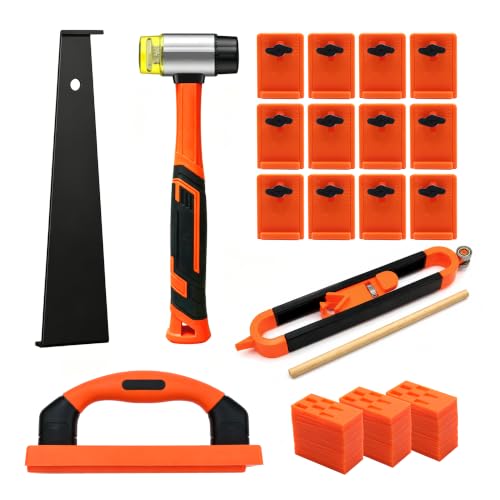 WXINOYU Laminate Wood Flooring Installation Kit, Vinyl/LVP Flooring Tools,Tapping Block with Handle,Pull Bar,Rubber Mallet,Floor Spacers,12-Pack Upgraded Spacers,Contour Scribe Tool,Floor Gap Fixer