How to Adjust Cabinet Door Hinges: Your Ultimate Guide
Hey there! I’m so thrilled you’re here to chat with me about a handy skill I’ve mastered over time: how to adjust cabinet door hinges! It’s one of those practical fixes that can transform your kitchen, bathroom, or even a garage cabinet where you store your car tools. A while back, I noticed my kitchen cabinet doors were sagging and rubbing, driving me up the wall! I rolled up my sleeves, figured it out, and now I’m excited to share my journey with you. This guide is perfect for my USA automotive blog readers—mechanics, car enthusiasts, or anyone who loves a good DIY project. So, grab a seat, and let’s get those cabinet doors lined up perfectly!
I’ve learned a ton from tweaking hinges myself, and I’ll break it down into simple, clear steps. We’ll cover why doors go wonky, how to adjust different hinges, and tips to make it easy. It’s like tuning a car engine—straightforward and so satisfying! Let’s dive in!
Why Do Cabinet Doors Need Adjusting?
When my cabinet doors started acting up, I wondered what was going on. Turns out, cabinet doors take a beating! You open and close them daily, grabbing snacks, tools, or car polish. Over time, hinges loosen up. Screws wiggle free, and doors start to sag. I saw this in my kitchen—doors hung crooked, annoying me every time I walked by.
Sometimes, the wood expands or shrinks from humidity, common in the USA with our crazy weather! A new cabinet might settle, too, throwing hinges off. Maybe a door rubs the frame or won’t close right. I had one that scraped another door—grrr! Figuring out why helped me fix it. It’s like diagnosing a car’s squeak—find the cause, and you’re halfway there!
What Tools Will You Need?
Before I started, I grabbed my tools. It’s like prepping for a car tune-up—you need the right stuff! Here’s what I used:
- Screwdriver: A Phillips is common for hinge screws. I keep a flathead handy, too.
- Level: A small one checks if the door’s straight—super useful!
- Tape Measure: To measure gaps and alignment.
- Pliers: For gripping or tweaking if needed.
- Rag: To wipe dust or grease—cabinets get grimy!
- Shims: Thin wood or plastic pieces to adjust fit, if necessary.
I had these in my garage—same tools I use for car fixes! One tip: work in a clear space. I cleared my counter so I wouldn’t trip over anything. You’re all set to roll now!
What Types of Hinges Might You Have?
Hinges vary, and I learned this the hard way! Not all cabinet hinges adjust the same. Here’s what I found in my kitchen and garage:
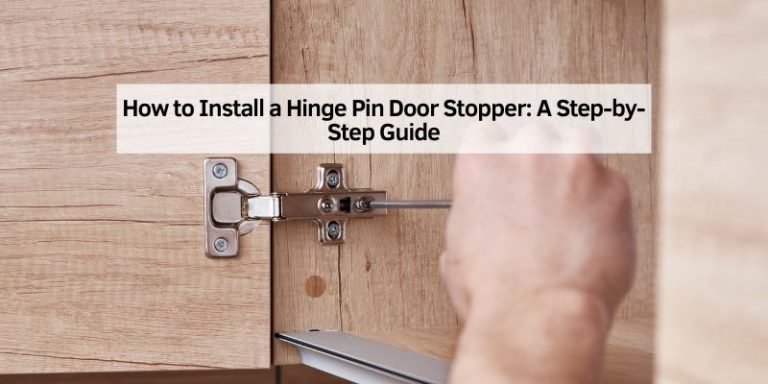
- Concealed Hinges: These hide inside the cabinet—super common in modern USA kitchens. They adjust up, down, side to side, and in or out. Mine were these!
- Butt Hinges: Two flat pieces, one on the door, one on the frame. Old-school, less adjustable, but sturdy.
- European Hinges: A type of concealed hinge, often with three screws for tweaking. I saw these in newer cabinets.
- Surface-Mount Hinges: Visible outside, simple, but might only need tightening.
I checked mine by opening the door and looking. Concealed ones were tricky at first, but I got the hang of it. Knowing your hinge type is key, like checking your car’s make before a repair!
How to Spot the Problem
Let’s play detective! I started by inspecting my cabinet doors. Open the door—does it sag? Mine hung lower on one side. Close it—does it rub the frame or another door? I heard a scrape, Eliot in my kitchen—yep, scraping! Check the gap between the doors or the frame. Uneven gaps mean alignment’s off.
I used my level—placed it on top of the door. Not straight? Hinges need work. I also turned the knob or handle—did it feel loose or sticky? Look for loose screws or a door that won’t latch right. I noticed one door overlapped another—clues everywhere! Spotting the issue guides your fix, like troubleshooting a car’s rattle.
How to Adjust Concealed Cabinet Hinges
Most of my kitchen cabinets had concealed hinges—super adjustable! Here’s how I fixed them:
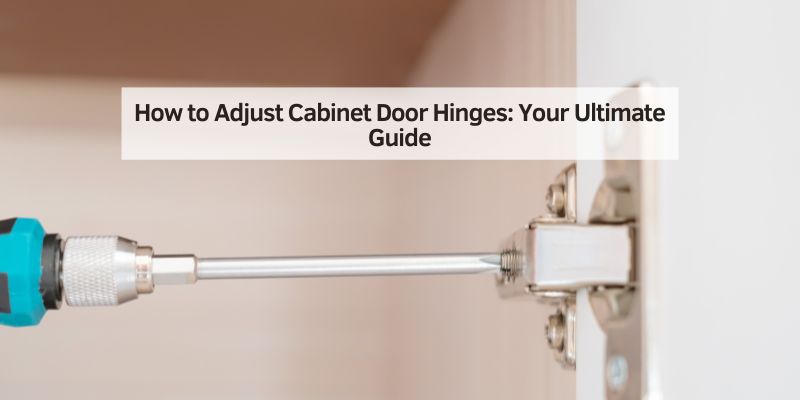
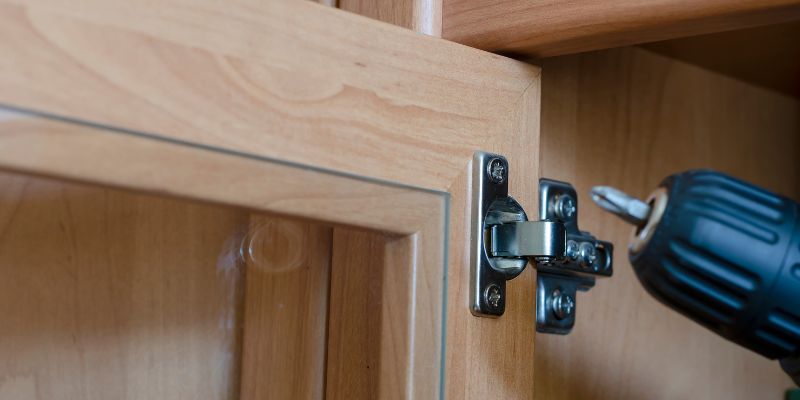
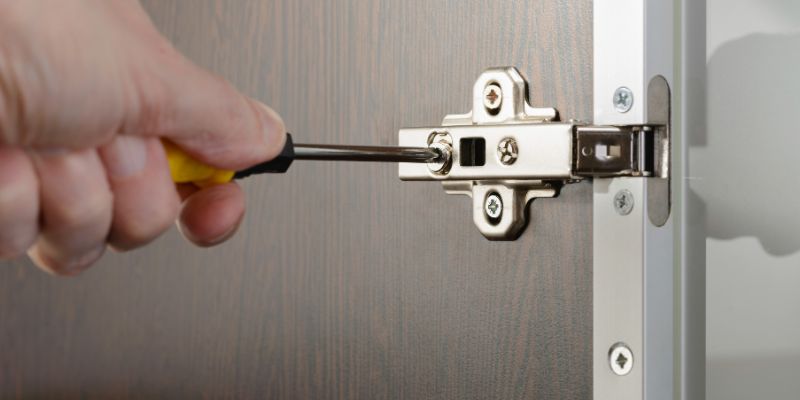
I opened the door and looked at the hinge. Usually, there are three screws for adjusting. One moves the door up or down—mine sagged, so I focused there. I grabbed my Phillips screwdriver and turned that screw clockwise to lift the door, counterclockwise to lower it. Small turns—maybe a quarter at a time—did the trick.
Another screw shifts the door side to side. My door rubbed the frame, so I turned it to move the door left or right. The third screw adjusts depth—how far in or out the door sits. I tweaked it to stop a gap. I tested after each turn, opening and closing the door. Took me 10 minutes per door, and they lined up like a dream!
How to Adjust Butt Hinges
I found butt hinges on an old garage cabinet. They’re simpler but trickier to adjust. Here’s my approach:
I checked the screws first—two or three on each hinge part, one on the door, one on the frame. I tightened them with my screwdriver—clockwise, nice and snug. If they’re loose, the door wobbles!
If the door still sagged, I tried shims. I slipped a thin piece of wood or plastic behind the hinge on the frame, lifted it just right. I had to loosen screws, slide the shim in, then tighten again. Closing the door showed if it worked—no more rubbing! If alignment was way off, I considered a new hinge or door tweak. Felt like realigning a car’s wheels—patience wins!
How to Fix a Door That Won’t Close Properly
Some doors wouldn’t latch right—frustrating! I tackled this, too. Here’s what I did:
I closed the door—the latch didn’t catch the strike plate, that metal piece on the frame. I checked alignment with my level—the door was off! I adjusted the hinges—up or down, side to side—with my screwdriver, like before.
If the latch still missed, I loosened the strike plate screws. I shifted it a bit—up, down, or sideways—then tightened. I tested—closed the door, heard a click! If gaps stayed big, I added a shim behind the plate. Took a few tries, but it shut tight—satisfying, like fixing a car’s sticky hood!
What If Hinges Are Loose or Worn?
Loose hinges drove me nuts! I found this common. Here’s my fix:
I checked screws—some were loose. I tightened them with my screwdriver—clockwise, not too hard. If screws spun without gripping—stripped threads!—I grabbed longer or thicker ones from the store. Fixed it!
Worn hinges? Mine in the garage were old, rusted. If tweaking didn’t help, I replaced them. I unscrewed the old hinge, matched a new one to the holes, and screwed it in. Tested the door—solid again! Like swapping a worn car part—sometimes new is best.
Why This Matters for Car Enthusiasts
You might wonder how this fits our automotive world. I’ve got you! We, USA car lovers, cherish our spaces—kitchens for fuel, garages for our rides. Sagging cabinet doors in my shop made getting tools a hassle. Adjusting hinges keeps everything tidy and accessible.
If you’re a mechanic, neat cabinets impress clients. Drivers, you want a smooth home base—kitchen or shop—before a road trip. I fixed my doors and loved the clean look. It’s like tuning your car—small tweak, big difference!
How to Test Your Adjustments
After tweaking, I had to be sure it worked. Testing’s key! I opened the door—did it sit straight? I used my level—perfectly level! Closed it—no rubbing, no gaps.
I checked the handle or knob—turned smooth, latched tight. I opened and closed a few times—smooth motion, solid fit. I eyed the gaps, even all around. Took five minutes, and I knew I nailed it. Like a test drive—confirms your fix is golden!
How to Maintain Your Cabinet Hinges
I wanted my hinges to stay perfect. Maintenance is simple! I tighten screws every few months—just a quick turn with my screwdriver. I check for dust—garage cabinets get gritty from car work. A rag wipes it clean.
Humidity can shift things, so I watch alignment. I tweak screws if doors sag. A drop of lubricant—WD-40 works—keeps hinges smooth, but I wipe excess. Hinges last longer, like a well-oiled engine. Here’s my plan:
| Task | How Often | What to Do | Why It Helps |
|---|---|---|---|
| Tighten Screws | Every 3–6 months | Screwdriver, turn clockwise | Stops sagging, keeps doors steady |
| Clean Dust | As needed | Keeps hinges moving smoothly | Prevents sticking from grime |
| Check Alignment | Every 6 months | Use level, adjust hinges | Doors close right, no rubbing |
| Lubricate Hinges | Once a year | Dab WD-40, wipe excess | Keeps hinges moving smooth |
Tips for a Smooth Adjustment
I’ve got tricks to make this easy. Here’s what I’d tell you:
- Go Slow: Small screw turns—quarter at a time. I rushed once, and overdid it!
- Check Both Sides: Adjust all hinges on a door. Keeps it even.
- Test Often: Open and close after each tweak. Caught a tilt early!
- Match Hinges: If replacing, bring an old one to the store. Perfect fit!
- Be Patient: Takes 10-20 minutes per door. I got better with practice.
It’s like a car repair—steady hands win! You’ll feel like a pro.
Safety and Practical Benefits
I thought about the payoff, too. Fixed hinges make cabinets safe—no doors falling off! In my garage, a solid door keeps tools handy and secure. I love knowing my car polishes and rags are easy to grab.
In the kitchen, aligned doors look sharp and work right. No more banging or stuck doors when I’m rushing for a snack. I fixed mine and felt proud—your space deserves that, too!
How This Boosts Your Automotive Life
We car folks in the USA love order—our rides, tools, and homes. Adjusted cabinet hinges tidy up your kitchen or shop. My garage cabinets hold car stuff—cleaners, wrenches—and now they open smoothly. Whether you’re wrenching on a classic or prepping for a drive, neat cabinets save time and stress. Small fix, big win!
Wrapping It Up: Master Your Cabinet Door Hinges
Wow, we’ve tackled a lot, haven’t we? I’ve loved guiding you on how to adjust cabinet door hinges! From spotting sags to tweaking concealed or butt hinges, I’ve shared my fixes, and now you’re ready. Grab your screwdriver, check the problem, adjust screws, and test it—simple and fun, like fine-tuning your car.
For us USA car lovers, perfect cabinets keep our kitchens and shops in top shape—great for tools, snacks, or your automotive vibe. You’ve got the skills now! Dive in, align those doors, and feel the pride. I’m cheering for you—fix those hinges, keep your space sharp, and roll on in the car world!
Frequently Asked Questions
Why do my cabinet doors sag?
Hinges loosen over time—screws come free, or wood shifts. Tightening or adjusting fixes it!
What tools do I need to adjust cabinet hinges?
A screwdriver, a level, a tape measure, pliers, and a rag. Shims help if the alignment’s off.
How do I know what hinges I have?
Open the door! Concealed are hidden inside, butt hinges show outside—check the style.
How do I fix a cabinet door that rubs?
Adjust hinges—turn screws to move it up, down, or sideways. Test to stop the scrape.
What if my door won’t close right?
Tweak hinges for alignment, or shift the strike plate. Small moves make it latch!
Can I adjust old butt hinges?
Yes! Tighten screws, or add a shim behind the hinge to lift or shift it.
How do I keep hinges working well?
Tighten screws often, clean dust, and lube yearly. Check alignment to avoid trouble!