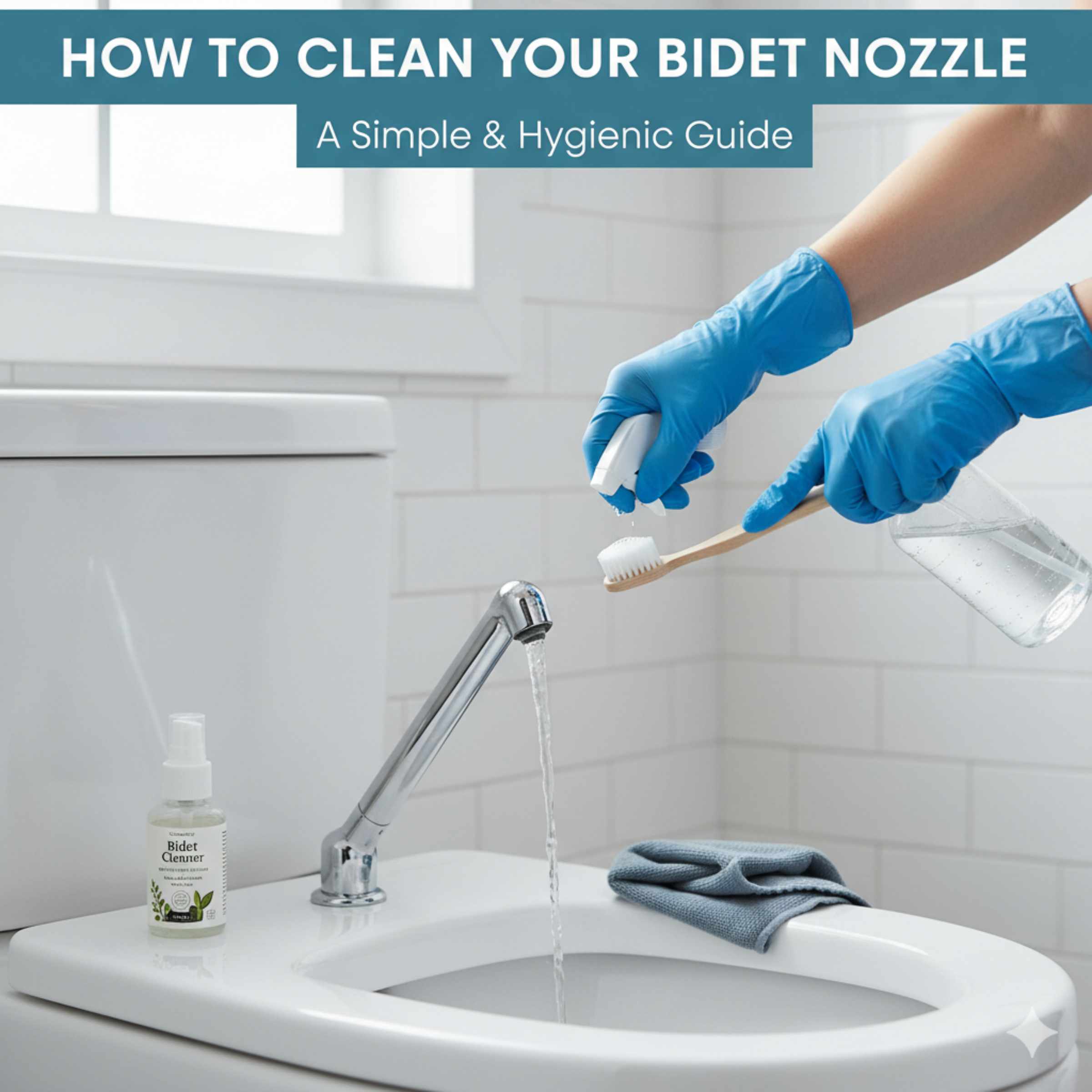
How To Clean Bidet Nozzle: Essential Guide
To clean your bidet nozzle effectively, turn off the water supply, extend the nozzle (if possible), gently wipe it down using mild soap and a soft cloth or toothbrush, and rinse thoroughly. For deep cleaning stubborn buildup, use a vinegar solution, ensuring you never use harsh chemicals that could damage the delicate parts.
Welcome! If you’ve recently installed a bidet or you’re just noticing your current one needs a little sprucing up, you might be wondering about cleaning that crucial little nozzle. It’s easy to overlook because it hides away until you need it. Keeping it clean is simple, but it requires a gentle touch—we don’t want to scratch or break anything! As someone who loves making home maintenance straightforward, I promise this job is much easier than you think. We’ll walk through the exact steps, from the easiest daily wipe-down to a deeper soak for tough spots. Let’s get your hygiene helper sparkling clean and working perfectly!
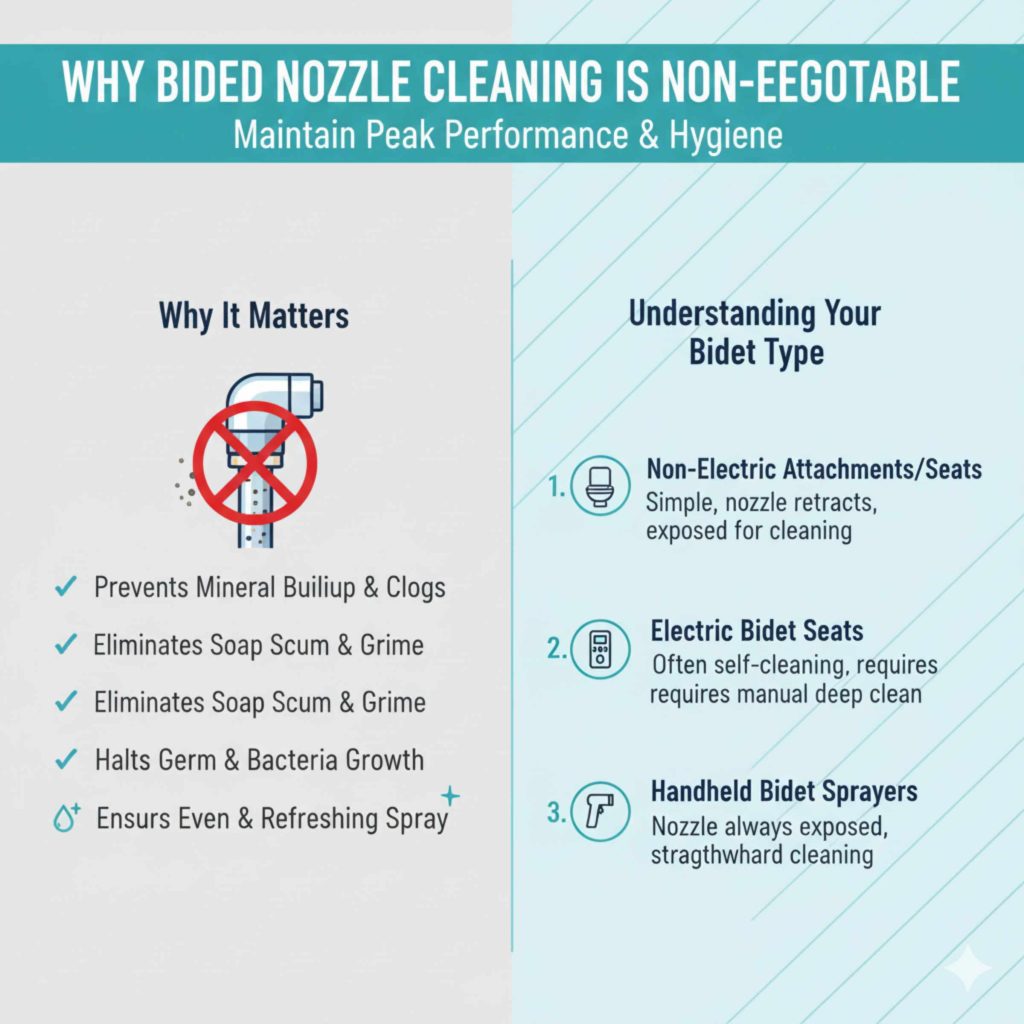
Why Bidet Nozzle Cleaning is Non-Negotiable
Think of your bidet nozzle like the spray head on a kitchen sink—it’s an essential part that handles water flow directly. Over time, mineral deposits from hard water, soap scum, and even general bathroom grime can build up. If left unchecked, this buildup can clog the tiny holes, leading to uneven spray patterns or, worse, harbor unwanted germs. Regular, gentle cleaning ensures your bidet always provides the clean, refreshing experience it was designed for. It’s all about maintaining peak performance and hygiene!
Understanding Your Bidet Type
Before we grab any tools, it’s helpful to know what kind of bidet system you have. The cleaning process varies slightly depending on the setup. Most homeowners have one of three main types:
- Non-Electric Bidet Attachments/Seats: These are usually the simplest. The nozzle often retracts when not in use and is exposed for cleaning.
- Electric Bidet Seats: These often have self-cleaning features, but manual cleaning is still necessary for deep grime. The nozzle might extend automatically when you press the cleaning button.
- Handheld Bidet Sprayers (Shattaf): These don’t have a hidden nozzle; the head is always exposed, making cleaning very straightforward.
Tools You Will Need: Keeping It Gentle
The secret to cleaning sensitive plastic or metal fixtures is avoiding anything abrasive. We want clean, not scratched! Gather these simple items before you start. Most of these you likely already have in your cleaning caddy.
Essential Cleaning Kit
| Tool | Purpose | Why We Use It |
|---|---|---|
| Soft Microfiber Cloth or Cotton Swabs | Gentle wiping and scrubbing tight spots. | Prevents scratching the nozzle finish. |
| Mild Dish Soap or Gentle Bathroom Cleaner | Breaking down soap scum and oils. | Strong cleaners can damage plastic or rubber seals. |
| Distilled White Vinegar | Dissolving hard water mineral deposits (limescale). | A natural, effective acid that is safe for most plumbing components. |
| Small, Soft Toothbrush (Dedicated for cleaning) | Reaching the tiny spray holes gently. | Provides targeted scrubbing without being too harsh. |
| Towel or Paper Towels | Drying and final buffing. | Ensures no water spots are left behind. |
Step-by-Step Guide: How to Clean Your Bidet Nozzle
We will break this down into two phases: the quick exterior clean (which you should do regularly) and the deep clean (for when you notice buildup). Always remember safety first—if you are unsure about turning off a water valve, consult a plumbing guide or a professional.
Phase 1: The Quick Exterior Wipe-Down (Weekly/Bi-Weekly)
This quick routine keeps things fresh and prevents major buildup. It usually takes less than five minutes.
- Activate the Nozzle Extension: Locate the “Wash” or “Nozzle Clean” button on your bidet control panel. Press it. The nozzle should slide out. If your bidet does not have an electronic extension feature, you might need to manually pull the nozzle gently if the design allows, or simply clean it while it’s retracted (though this is less thorough).
- Turn Off the Water Supply (Recommended for Safety): While not strictly necessary for a quick wipe, it’s a great habit to turn off the small shut-off valve usually located behind or beside the toilet, connecting the bidet hose. This ensures no accidental spraying occurs while you are working closely with the nozzle.
- Prepare Your Cleaning Solution: Mix a few drops of mild dish soap into a small bowl of warm water. Dampen your microfiber cloth with this solution.
- Gently Wipe the Entire Nozzle: Slowly wipe down the entire exposed length of the nozzle. Be very gentle around the tip where the holes are located. Use a slightly damp, clean cloth to remove any soap residue immediately.
- Rinse and Retract: Once clean, turn the water supply back on (if you turned it off). Press the “Stop” button on the controls so the nozzle retracts back into its housing. A final rinse cycle (if your model has one) is a great way to finish.
Phase 2: The Deep Cleaning Soak (Monthly or As Needed)
If you see white, crusty spots (limescale) or if the spray pattern looks weak or uneven, it’s time for a deeper clean using vinegar.
Step 1: Accessing the Nozzle Fully
This is the most critical step. You need the nozzle extended as far as it can go, or you need to remove it entirely, depending on your model. Check your bidet’s user manual first! Many modern bidets have a specialized “Nozzle Removal” or “Deep Clean” mode that allows the nozzle to be detached easily for thorough cleaning.
- If Removal is Possible: Follow your manual’s instructions precisely. Usually, this involves pressing a release tab while the nozzle is extended. Place the removed nozzle in a small cup or plastic bag.
- If Removal is NOT Recommended/Possible: We will work with the extended nozzle in place.
Step 2: The Vinegar Soak (For Mineral Deposits)
Vinegar is fantastic because it naturally breaks down calcium and magnesium deposits found in hard water, which clog those tiny spray holes. The Environmental Protection Agency (EPA) notes that acids are effective at dissolving these mineral deposits.
If the Nozzle is Removed:
- Fill a small, sealable plastic bag or a small cup with undiluted white vinegar.
- Submerge the entire nozzle head into the vinegar.
- Let it soak for 30 minutes to an hour. Do not soak for excessively long periods (over 4 hours) as prolonged acid exposure can sometimes affect certain plastic components, although 30-60 minutes is generally safe.
If the Nozzle Stays Attached:
- Create a small “vinegar pouch.” Take a small plastic bag (like a sandwich bag) and place a few paper towels inside it.
- Saturate the paper towels with white vinegar.
- Carefully position the bag so that the nozzle head is completely wrapped and soaking in the vinegar-dampened towels. Use a rubber band or tape to secure the bag around the base of the nozzle housing, ensuring the tip stays immersed.
- Let it sit for 30 to 60 minutes.
Step 3: Scrubbing the Spray Holes
After soaking, the grime should be soft and easy to remove.
- Take your dedicated soft toothbrush or a cotton swab.
- Gently scrub around the individual spray holes. Use a circular motion. Do not poke aggressively into the holes; you are just cleaning the exterior surfaces around them.
- If you removed the nozzle, rinse it thoroughly under warm running water.
Step 4: The Final Flush and Rinse
This step is crucial to remove all traces of vinegar and loosened debris.
- If the nozzle was removed, carefully reattach it according to your manual.
- Turn the water supply back on.
- Run the bidet’s dedicated “Nozzle Clean” cycle several times (or run a normal wash cycle) to flush water through the system at full pressure. This forces out any remaining loosened particles.
- Wipe the exterior one last time with a clean, damp cloth.
- Retract the nozzle and enjoy your perfectly clean bidet!
Handling Self-Cleaning Bidet Features
Many modern electric bidet seats boast a “Self-Cleaning” function. It’s important to understand what this feature actually does and what it doesn’t do.
What Self-Cleaning Does:
- It usually sprays clean water over the nozzle surface before and after each use.
- Some higher-end models use UV light sanitation or electrolysis to treat the water or the nozzle surface while retracted.
Why Manual Cleaning is Still Necessary:
Self-cleaning systems are great for daily maintenance, but they cannot remove heavy, caked-on mineral scale or hardened soap scum that clings tightly to the nozzle tip. Think of it like washing your car—the automatic car wash is great, but you still need to manually scrub bug guts off the windshield sometimes. Manual cleaning ensures the physical openings are completely clear for an optimal spray pattern.
Troubleshooting Common Bidet Nozzle Issues
Sometimes, even after cleaning, you might notice performance issues. Here are a few quick fixes for common problems related to the nozzle area.
Issue 1: Weak or Crooked Spray Pattern
Cause: Clogged spray holes on one side, or the nozzle is slightly misaligned.
Fix: Focus your vinegar soak and gentle scrubbing specifically on the holes that are underperforming. If the spray is crooked even after cleaning, check your user manual for instructions on how to adjust the nozzle angle manually (some models allow minor adjustments). Misalignment can sometimes happen if the bidet was bumped hard.
Issue 2: Nozzle Won’t Extend or Retract
Cause: Debris or grit stuck in the retraction track, or the water pressure is too low.
Fix: First, ensure the water supply valve behind the toilet is fully open. If it is, carefully extend the nozzle manually (if possible) and inspect the housing track for any visible debris. Gently clean the track area with a damp cloth. Never force it! If the mechanism is jammed, refer to the troubleshooting section of your manual.
Issue 3: Lingering Odor Near the Nozzle Housing
Cause: Residue or mold growing in the area where the nozzle retracts.
Fix: This requires a deeper clean of the housing area itself. After extending the nozzle, use a cloth lightly dampened with a 50/50 vinegar/water solution to thoroughly wipe the entire area where the nozzle rests when retracted. Let this area air dry completely before allowing the nozzle to retract.
Maintenance Schedule for Long-Lasting Cleanliness
Consistency is key in home maintenance. By sticking to a simple schedule, you can avoid ever needing a truly difficult deep clean.
| Frequency | Task | Focus Area |
|---|---|---|
| Daily/After Use | Quick surface check. | Wipe down the exterior of the toilet seat and controls. |
| Weekly | Quick Exterior Wipe-Down (Phase 1). | Gently wipe the extended nozzle with a damp, soapy cloth. |
| Monthly | Deep Cleaning Soak (Phase 2). | Vinegar soak to target limescale and clean spray holes thoroughly. |
| Every 6 Months | Check Water Supply Line. | Inspect the hose connecting the bidet to the water line for any leaks or wear. (Reference resources like the This Old House guide on leak checking for general plumbing tips). |
A Note on Safety and What to Avoid
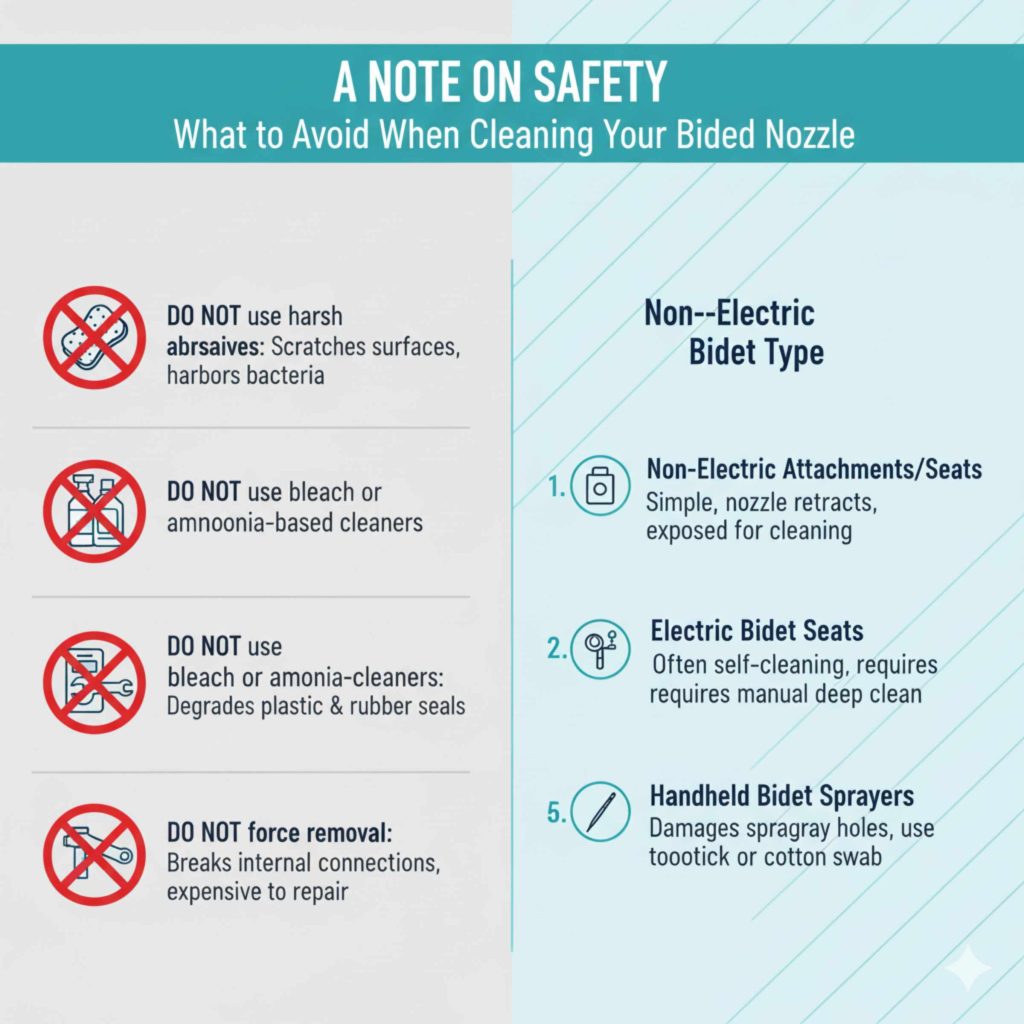
As a DIY enthusiast, I always emphasize safety, especially when dealing with plastics and electronics. Your bidet nozzle is engineered to be durable, but it’s not indestructible. Here are the big “don’ts” when cleaning:
- DO NOT use harsh abrasives: Avoid scouring pads, steel wool, or abrasive powders like Comet. These will instantly scratch the nozzle tip, creating microscopic valleys where bacteria can hide and making future cleaning harder.
- DO NOT use bleach or ammonia-based cleaners: Strong chemicals like chlorine bleach can degrade plastic components, rubber seals, and specialized coatings over time, leading to premature failure. Mild soap or vinegar is always best.
- DO NOT force removal: If your manual doesn’t explicitly state the nozzle is removable, do not try to yank it out. Forcing it will likely break the internal connection, leading to an expensive repair.
- DO NOT use sharp metal objects: Never use a pin, paperclip, or needle to poke the spray holes. If you need to clear a hole, only use a soft toothpick or the tip of a cotton swab very gently.
Frequently Asked Questions (FAQ) About Bidet Nozzle Care
Q1: How often should I manually clean my bidet nozzle?
A: For best results and hygiene, aim for a quick exterior wipe-down once a week. A deep clean using vinegar should be performed once a month, especially if you have hard water.
Q2: Can I use rubbing alcohol on my bidet nozzle?
A: It’s generally best to stick to mild soap or white vinegar. While rubbing alcohol evaporates quickly, it can be drying or potentially harsh on certain plastic finishes over repeated use. Vinegar is the safest disinfectant and descaler.
Q3: My nozzle is stuck inside the housing. What do I do?
A: First, run a normal wash cycle to see if the motor can push it out. If it’s still stuck, check your shut-off valve to ensure water pressure is sufficient. If it remains stuck, do not pull hard; consult your owner’s manual for specific troubleshooting on jammed nozzles.
Q4: Does cleaning the nozzle affect the water pressure?
A: Yes, but only if it is dirty! Clogged holes reduce pressure because the water flow is restricted. A thorough cleaning restores the intended pressure and spray pattern.
Q5: Is it safe to clean the nozzle while the bidet is plugged in?
A: Yes, for most modern electric bidets, it is safe to run the nozzle clean cycle while the unit is plugged in, as the nozzle mechanism is usually sealed. However, when using liquid cleaners like vinegar, it is always safest to unplug the unit entirely before you begin wiping down the exterior components.
Q6: What is the best way to clean the hard water buildup (limescale)?
A: The best method is soaking. For removable nozzles, soak them in straight white vinegar for 30-60 minutes. For attached nozzles, create a small vinegar pouch around the tip to keep it saturated during the soak time.
Conclusion: Confidence in Your Cleanliness
There you have it! Cleaning your bidet nozzle is a straightforward task that ensures your bathroom fixture remains a source of comfort and hygiene, not worry. Remember the key takeaways: be gentle, use mild solutions like soap or vinegar, and tackle the deep cleaning process about once a month. By following these simple, hands-on steps, you’ve taken control of your home maintenance, extended the life of your bidet, and ensured a consistently pleasant experience every time you use it. You don’t need specialized skills for this—just a soft cloth and a little patience. Happy cleaning!