My First Door Knob Hack: Fit It Right First
Measure the door thickness, backset, and bore opening first; then buy a knob or lock that matches those measurements, and check handing if the hardware requires it. If the lock does not fit, it may not mount or latch properly, and it may leave old holes exposed. I check those measurements before I leave the aisle. This guide shows the exact measurements to take, how to compare package labels, and the safe steps for swapping the hardware yourself.
What you’ll need before you buy anything
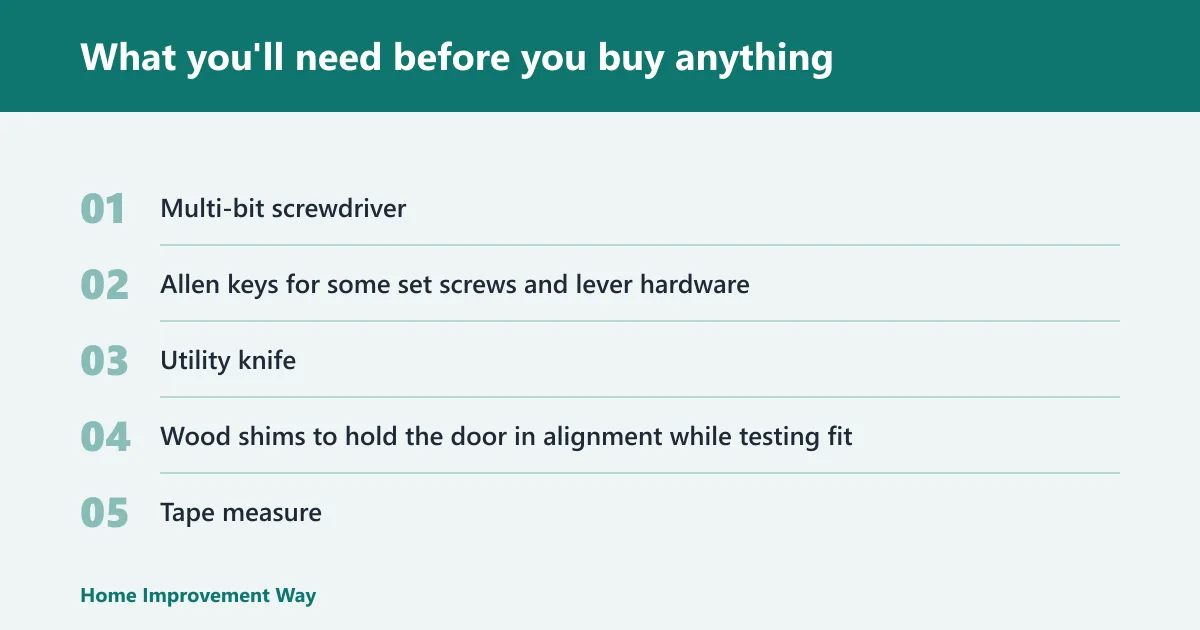


- Multi-bit screwdriver for faceplate, strike, and trim screws
- Allen keys for some set screws and lever hardware
- Utility knife for paint lines, caulk, or tight trim edges
- Wood shims to hold the door in alignment while testing fit
- Tape measure to record door and bore dimensions
- Door lock set that matches the door prep and function
- Temporary locking system if the permanent hardware is not on hand yet
A standard door lock set is replacement hardware that needs to match the door’s existing openings. Many are DIY-friendly, but only after the measurements line up. A temporary locking system can keep the opening secure while the correct part is sourced.
Measure the door and old lock first

The fastest way to miss on a first replacement is to guess. Measure the door prep and note the old lock’s function before shopping, because the package must fit the holes already in the door. I have seen good hardware fail here for one simple reason: the door was measured after the purchase.
First-time fit check
| What to measure | What to observe | What to match on the package before you buy |
|---|---|---|
| Door thickness | Measure the slab at the lock edge and at the bore area | Lockset thickness range that covers the door |
| Backset | Distance from door edge to center of the cross-bore | Latch that matches the same backset |
| Cross-bore | Diameter of the main hole through the face of the door | Rose or trim that covers the opening |
| Edge-bore | Diameter of the hole drilled through the door edge | Latch body that seats fully in the edge hole |
| Handing | Which side the door swings and where the hinges sit | Handed hardware only if the model requires it |
| Latch style | Round-corner, square-corner, or drive-in | Same latch style or a kit with the needed faceplate |
| Lock function | Keyed, privacy, or passage | Same function for the room and door location |
Read the package, not the brand name
Look for the backset, door thickness, and bore-size details on the box. For interior bedrooms or baths, privacy and passage knobs are common. For exterior doors, keyed hardware is the right starting point. I read those numbers first and ignore the logo until the fit checks out.
How do I change a door knob lock myself?
Remove the old knob, latch, and trim, then install the new latch, align the trim, and test the bolt before tightening everything fully. The job is beginner level, with about 40 minutes of working time and 60 minutes total when fit checks and final adjustments are included.
Step-by-step removal and installation
- Open the door and keep it steady with wood shims if it drifts while working.
- Remove the interior screws with a multi-bit screwdriver or Allen key.
- Pull both knob halves apart and slide out the latch.
- Match the old latch to the new one before installing anything.
- Insert the new latch into the edge bore and fasten the faceplate.
- Set the exterior and interior trim through the cross-bore.
- Tighten the screws evenly so the trim stays flat.
- Turn the knob, throw the latch, and close the door to confirm smooth action.
If that didn’t work, try this next
- Back out the screws one turn and center the latch body in the edge bore.
- Loosen the strike plate screws and shift the plate until the latch enters cleanly.
- Use a utility knife to remove paint buildup around the latch opening.
Should I rekey or replace my door lock?
Rekeying keeps the existing hardware and changes the pin pattern inside the cylinder so a new key works. Replacement means taking off the old lock and installing new hardware. Rekeying is usually the lower-cost option when the body still works; replacement makes more sense when the parts are worn, missing, or the fit is wrong. (thisoldhouse.com)
Pick rekeying when the hardware still works
If the knob turns smoothly, the latch lines up, and the outside finish is fine, rekeying is the simpler path. It is also the cleaner answer after a move or when a key is missing or stolen and the hardware itself is still serviceable.
Pick replacement when the lock is damaged or outdated
Choose a replacement lock when the cylinder sticks, the trim is loose, the screws strip repeatedly, or the door prep does not match the old unit. I also replace it when the style is outdated and the parts no longer fit the opening well. A full replacement is also the better choice when moving from a plain knob to a handle-lock combo or a more secure exterior set.
How do I know what size lockset to buy?
Match the prep holes and function first, then the finish. The key measurements are door thickness, backset, cross-bore, and edge-bore. After that, choose keyed, privacy, or passage hardware based on where the door is used.
Choose the right style for the door location
Exterior doors often need keyed hardware. Bedrooms and bathrooms often use privacy knobs with an inside push or turn button. Hallways, closets, and other non-locking interior doors usually need passage hardware.
Check the door before buying combo hardware
If the opening already uses a deadbolt plus knob, a handle-and-deadbolt combo or separate replacement pieces may be the better fit. Do not assume the old trim will cover a different hole pattern; measure first or the old openings may show.
Common mistakes to avoid
Most first installs fail for fit, not for effort. Stripped screws, latch bind, and a door that drags against the strike are the usual problems. Each has a practical fix if the hardware itself is still sound.
Stripped screws and how to back out safely
If the screw head starts to round off, stop before applying more force. Use the correct bit from the multi-bit screwdriver, press firmly, and back it out slowly. If the head is already chewed up, replace the screw instead of reusing it.
Latch misalignment and binding after installation
If the knob works with the door open but binds closed, loosen the strike plate and test the latch again. A latch that sits too high or too low usually points to door sag or strike misalignment, not a bad lock.
When the door, not the lock, is the problem
If the door rubs at the top, bottom, or latch edge, the slab may need shimming or hinge adjustment. A lock cannot fix a warped door or a strike plate that sits too far in or out. Check the door swing before swapping parts twice.
Prevention: Keep the old latch and screws until the new set passes a full open-close test. That makes it easier to compare parts if the new hardware needs a swap.
How long does it take, and when should you call a locksmith?
Expect about 40 minutes of working time and about 60 minutes total for a straightforward replacement. The project is beginner level. Cost can run from $30 to $250 depending on whether you rekey, replace a basic knob, or step up to more comprehensive hardware.
Time, skill level, and cost by solution type
Rekeying is usually the least disruptive if the lock body is sound. A basic knob swap is the simplest replacement path. A full replacement lock takes longer only when the door prep, strike alignment, or damaged parts need correction.
Stuck key, missing key, worn parts, or damage beyond a simple swap
If the key is missing or stolen, rekeying is the cleanest immediate answer when the cylinder still works. If the key sticks, the cylinder grinds, or the lock body is cracked, replacement is usually smarter. Call a locksmith when the cylinder is seized, the door is damaged, or the hardware does not match standard prep.
Frequently asked questions
How do I change a door knob lock myself?
Remove the interior screws, separate the knob halves, and slide out the latch. Install the new latch first, then fit the trim and test the bolt with the door open and closed. If the latch drags, loosen the strike plate before tightening anything fully.
What tools do I need to replace a door lock?
Start with a tape measure, multi-bit screwdriver, Allen keys, utility knife, and wood shims. Keep the new door lock set on hand before opening the old one. A temporary locking system helps if the new hardware has not arrived yet.
Should I rekey or replace my door lock?
Rekey when the hardware works and only the key needs to change. Replace when the lock is worn, the key sticks, the finish is damaged, or the door prep does not match the old unit. If the hardware is bent or the latch binds badly, replacement is the safer call.
How do I know what size lockset to buy?
Measure door thickness, backset, cross-bore, and edge-bore, then match the latch style and function. A package listing those dimensions is the one to buy. If the door is an exterior entry, choose keyed hardware; for bedrooms and baths, privacy hardware is usually the fit.
How long does it take to change a door knob?
Plan on about 40 minutes of working time and about 60 minutes total if the fit is clean. Add more time if the strike plate needs adjustment or if screws are stripped. A first-time install is still manageable for most homeowners with basic tools.
What should I do if my key is missing or stolen?
Rekey the lock if the existing body is in good shape and you want the old key to stop working. If the hardware is worn or the door fit is poor, replace the lock at the same time. If the door is exterior, change the cylinder before relying on it again.
Sponsored / affiliate links. As an Amazon Associate I earn from qualifying purchases. I may earn additional commission from eligible campaigns.