Does Your Hunter Ceiling Fan Need Oil?
Only the Hunter Original and Anniversary ceiling fans use an oil-bath motor; every other Hunter series has permanently sealed bearings and never needs oil. Adding the wrong oil, or trying to oil a sealed motor, can cause leaks or damage. This guide covers finding the oil hole, using SAE 10 non-detergent oil the right way, checking the level with a pipe cleaner, and how to tell which type your fan is.
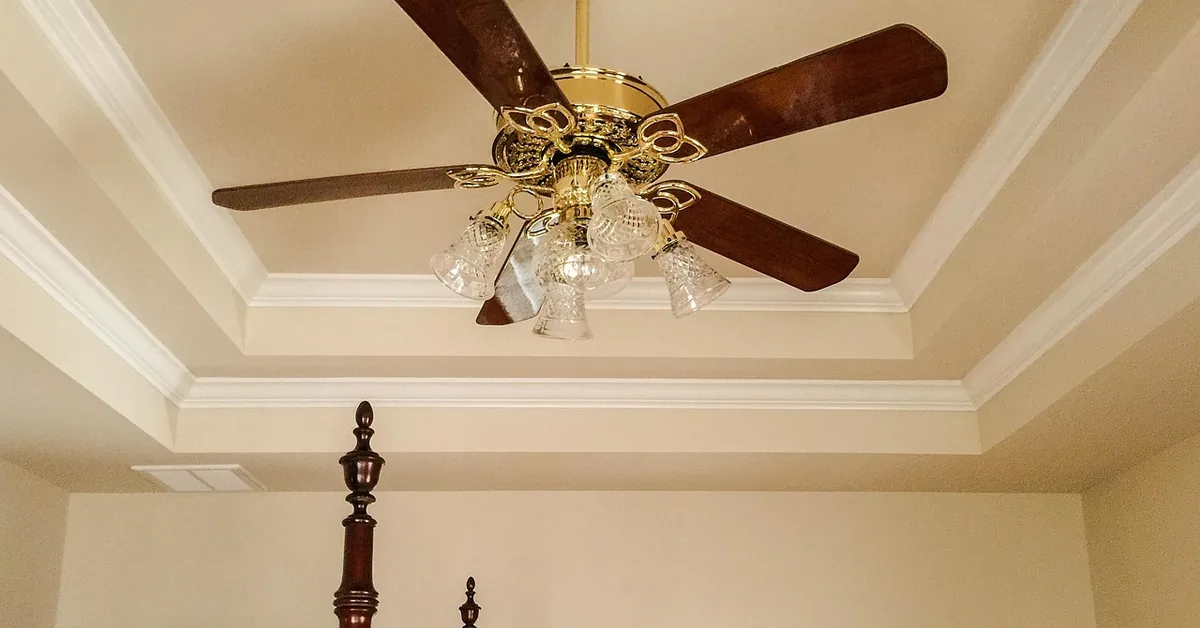
Does Your Hunter Fan Actually Need Oil?
An oil-bath motor is a lubrication system that keeps the main bearings submerged in oil at all times for quiet, long-life operation. Hunter uses this design in exactly one line: the Original and Anniversary models. Every other Hunter series — Builder, Low Profile, and most fans made in the last two decades — ships with permanently sealed bearings and has no oil hole at all.
To check which type you have, look for a small round hole marked “OIL” near the top of the motor housing, close to the downrod. If you can’t find one, your fan almost certainly has sealed bearings — there is nothing to oil, and prying open the housing to force oil in will void the warranty and can damage the motor. The model number, usually on a sticker on the motor housing, confirms which series you have.
“Hunter fans do not require oil, with one exception. The Hunter Original has a very unique motor that uses an oil-bath lubrication system.”
— Hunter Fan Support, Why Do Some Fans Require Oil and Some Do Not
What You’ll Need
- Hunter SAE 10 non-detergent oil (not SAE 20 or automotive motor oil)
- A stable ladder
- A basic pipe cleaner, for checking the oil level
- A soft cloth to wipe up any drips
- A Phillips screwdriver, if your model has a cover to remove
Best Fan Oil Pick
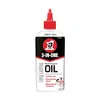
3-IN-ONE Multi-Purpose Drip Oil, Twist Spout – $7.39
A lightweight, non-detergent household oil with a precision spout — matches the “a little at a time” technique this guide covers for oil-bath Hunter motors.
- Best for: topping off an Original or Anniversary model’s oil reservoir
- Why we picked it: twist spout controls flow better than an open can
- Main drawback: not Hunter-branded, so check your manual if it specifies a particular product
Compare more fan-maintenance options
 Option 1 Precision Oiler Can, 2-Pack – $10.99
|
 Option 2 3-IN-ONE Oil, 8 oz Refill Bottle – $5.79
|
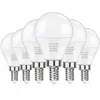 Option 3 LED Daylight Ceiling Fan Bulb – $7.99
|
As an Amazon Associate we earn from qualifying purchases.
How to Oil a Hunter Original or Anniversary Ceiling Fan
These fans ship without oil and need filling before first use, then periodic top-offs afterward.
- Power off the fan: Switch off power at the wall switch and, if possible, at the breaker so the blades stay stationary while you work.
- Set up your ladder: Position it so you can reach the top of the motor housing near the downrod without overreaching.
- Find the oil hole: Lift the small cap covering the oil reservoir opening at the top of the fan.
- Add oil a third at a time: Pour roughly a third of the oil in, then pause 30 seconds to let it settle before adding the next third.
- Replace the cap and test: Wipe away any drips, restore power, and run the fan on low to confirm it turns quietly.
📊 Hunter recommends checking the oil level every 1–5 years, even if the fan seems to be running normally — oil-bath motors lose a small amount over time and a dry reservoir leads to bearing wear. Source: Hunter Fan, How to Oil a Ceiling Fan
How to Check the Oil Level
Older Hunter Original fans don’t have a sight-glass gauge — the official method uses a household pipe cleaner as a makeshift dipstick.
- Power off the fan and remove the oil hole cap.
- Bend a half-inch hook into one end of a basic pipe cleaner.
- Dip the hooked end into the reservoir until it touches bottom, then pull it straight back out.
- Check for oil on the hook: if it comes out coated, the reservoir is full; if it comes out dry, the level is low.
- Top off if needed, adding a third of a tube at a time and rechecking until the pipe cleaner comes out wet.

If you’re relocating the fan to a different room, drain the existing oil first — Hunter notes that moving a filled fan risks spilling the reservoir during transport.
Common Mistakes
Using the Wrong Oil Weight
Hunter specifies SAE 10 non-detergent oil, not SAE 20 or automotive motor oil — detergent additives and heavier weights can gum up the bearing over time. If you’re unsure what’s in an unlabeled bottle, buy a fresh one rather than guessing.
Trying to Oil a Sealed Motor
If your model has no oil hole, it has sealed bearings by design. Forcing oil in through a vent or seam doesn’t lubricate anything useful and can let dust and moisture into the motor instead.
Model-Specific Notes
Owners frequently ask about specific model numbers — 22441, 59177, and older Robbins & Myers-era Hunter units among them. The model number sticker on the motor housing is the definitive answer: cross-reference it against your owner’s manual or Hunter’s support site rather than assuming based on age or appearance, since Hunter has produced both oil-bath and sealed designs across many decades of production.
Frequently Asked Questions
Does my Hunter ceiling fan need oil?
Only if it’s a Hunter Original or Anniversary model with an oil-bath motor. Every other Hunter series has sealed bearings and never needs oil. Check for a small cap marked “OIL” near the downrod — if there isn’t one, your fan is sealed.
What type of oil is best for my fan?
Use Hunter high-grade SAE 10 non-detergent oil. Avoid SAE 20, automotive motor oil, or any detergent-formula oil, which can damage the bearing over time.
Can I oil the fan without taking it down?
Yes. Power off the fan, climb a stable ladder, lift the cap on the oil hole near the top of the motor, and add oil a third at a time. There’s no need to remove the fan from the ceiling.
Why does my Hunter fan make noise?
On an oil-bath model, noise often means the reservoir has run low and needs a top-off. On a sealed-bearing model, persistent noise usually points to loose mounting hardware, an unbalanced blade, or a worn bearing that oil can’t fix.
Can oil be added to a sealed Hunter ceiling fan?
No. Sealed-bearing motors have no oil hole and aren’t designed to be opened for lubrication. If a sealed fan is noisy or slow, the fix is usually a bearing or motor replacement, not oil.
Conclusion
Check the motor housing for an oil cap before doing anything else — only Hunter Original and Anniversary fans have one. If yours does, use SAE 10 non-detergent oil, add it a third at a time, and confirm the level with the pipe cleaner method every 1–5 years.
While you’re up on the ladder, it’s also worth checking whether your fan spins the correct seasonal direction and confirming the amp draw matches your circuit, especially on older installations. If the light fixture needs attention too, see our guide on replacing a ceiling fan light bulb, or browse the full lighting and ceiling fan topic hub for more.
Sponsored / affiliate links. As an Amazon Associate I earn from qualifying purchases. I may earn additional commission from eligible campaigns.
 Round PU Ceiling Medallion Cover, for Fan or Light Fixture, 26cm, 35cm White Decorative Panel, with No-Drill Installation, to Conceal Imperfections and Enhance Interior(35cm)
 12inch Ceiling Medallion, Decorative Ceiling Fan Light Cover Plate, Ceiling Medallions with Round PU Medallion for Replacement Canopies Home Chandelier Fans(1pcs)