Solar Lanterns vs Fixed Fixtures for Outdoor Use
Choose Solar Lanterns for flexible accent lighting, and Fixed Fixtures for Outdoor Use when you need dependable task, safety, or perimeter light. If a path, stair, or entry must stay bright every night, Fixed Fixtures for Outdoor Use are the better choice. Weak lighting can cause trips, dark corners, and wasted effort on the wrong setup. This guide compares runtime, brightness, installation, upkeep, weather exposure, and where each option fits best.
Cordless mobility versus permanent Outdoor installation
Solar Lanterns are built for cordless placement and quick relocation. Fixed Fixtures for Outdoor Use are built for permanent mounting, steadier output, and fixed lighting zones.
The difference shows up fastest in shade, wind, and nighttime reliability. A lantern can move to a table or terrace in minutes, while a wall or ceiling light stays where the wiring and mounting allow it.
Solar lanterns comparison matrix
| Decision factor | Solar Lanterns | Fixed Fixtures for Outdoor Use | Winner |
|---|---|---|---|
| Installation effort | No-wiring placement; move and set down as needed | Permanent wall or ceiling mounting, often with electrical work | Solar Lanterns |
| Light consistency | Dependent on daylight charging and battery condition | Steadier output from mains power or fixed circuits | Fixed Fixtures for Outdoor Use |
| Ambient vs task output | Best for decorative, warm white pools of light | Better for task, safety, and perimeter lighting | Fixed Fixtures for Outdoor Use |
| Weather exposure | More exposed to moving, tipping, and theft | Better anchored, with weatherproof construction options | Fixed Fixtures for Outdoor Use |
| Wind stability | Can shift or tip if left on light tables or exposed corners | Mounted and less likely to move in gusty conditions | Fixed Fixtures for Outdoor Use |
| Maintenance | Battery care, panel cleaning, and seasonal output checks | Lens cleaning, bulb replacement, and wiring checks | Tie |
| Placement flexibility | Portable and cordless, ideal for changing layouts | Limited to the fixed mounting point | Solar Lanterns |
| Cost over time | Lower setup burden, but battery aging can shorten useful life | Higher installation cost, but steadier long-term service | Tie |
| Theft risk | Easier to carry off because they are portable | Harder to remove once mounted | Fixed Fixtures for Outdoor Use |
| Best-use zones | Tables, patios, terraces, balconies, and temporary layouts | Pergolas, covered patios, outdoor kitchens, steps, pathways, and perimeter zones | Depends on zone |
Installation effort
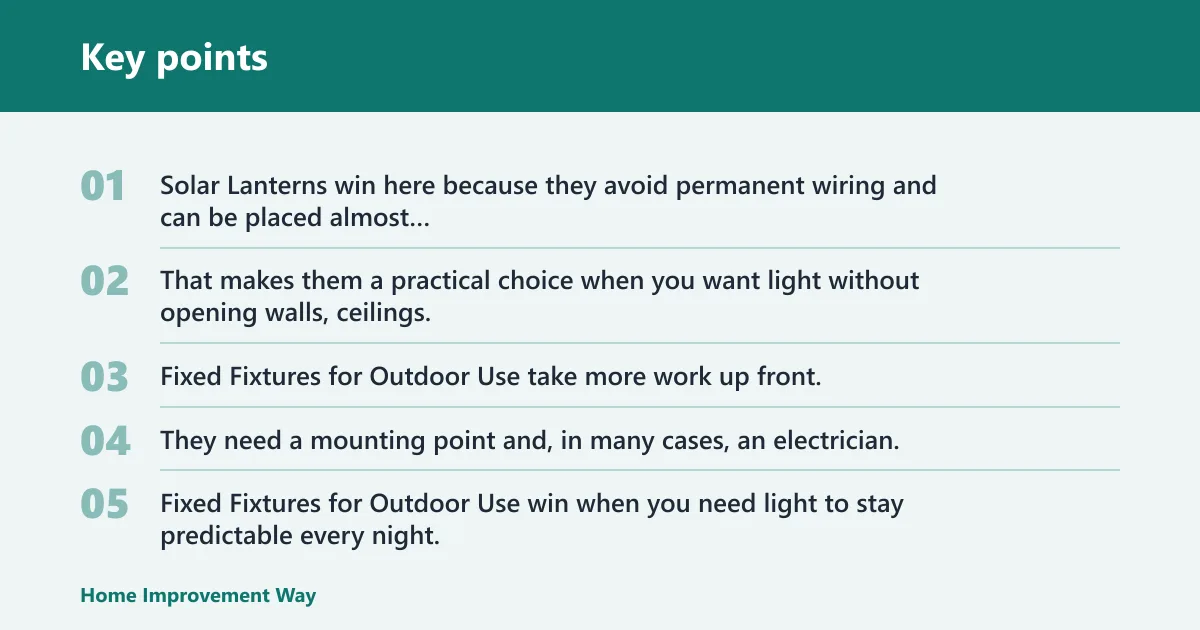
Solar Lanterns win here because they avoid permanent wiring and can be placed almost anywhere with daylight exposure. That makes them a practical choice when you want light without opening walls, ceilings, or conduit runs.
Fixed Fixtures for Outdoor Use take more work up front. They need a mounting point and, in many cases, an electrician, but that effort buys a permanent result.
Light consistency and runtime
Fixed Fixtures for Outdoor Use win when you need light to stay predictable every night. Solar Lanterns depend on the previous day’s charging, so a dark winter day or a shaded position can shorten runtime and reduce brightness sooner.
Battery capacity matters, but it does not erase the basic limit: less sun means less stored energy. After several cloudy days, many solar lights may dim earlier and may not hold a full night’s output as well as a fixed circuit.
Weather exposure and stability
Fixed Fixtures for Outdoor Use are usually the stronger choice in exposed spots because they are mounted and less likely to shift in wind or get knocked over in rain. A lantern can be weather-resistant and still be vulnerable to movement, theft, or an uneven surface.
A common first-timer mistake is putting a solar lantern on an open step edge and treating it like a fixed fitting. If a gust moves it a few inches, the light pattern changes and the step can fall partly into shadow.
Placement flexibility and cost over time
Solar Lanterns win for flexibility because you can move them from a table to a terrace or from a balcony to a pathway edge without rewiring. That matters for renters, seasonal layouts, and spaces that change from dinner use to lounging use.
Fixed Fixtures for Outdoor Use usually make more sense when the layout is stable. Their longer service life can justify the installation work, especially if you need the same lighting pattern year-round.
How do solar lanterns perform in UK weather?
Solar Lanterns can work well in the UK, but only where they still receive usable daylight and are not stuck in deep shade. Cloudy weather reduces panel charging, which means less stored battery energy and a shorter evening runtime.
Daylight charging and cloudy-day output
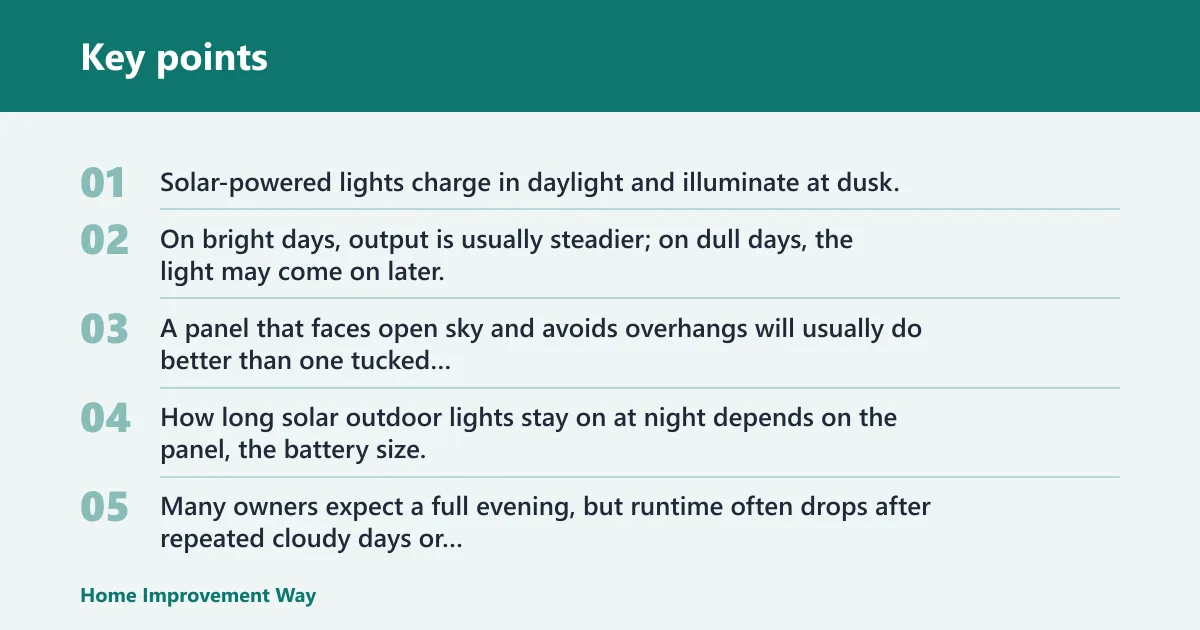
Solar-powered lights charge in daylight and illuminate at dusk, but the charging stage is where weather matters most. On bright days, output is usually steadier; on dull days, the light may come on later, run dimmer, or shut off earlier.
That makes panel placement important. A panel that faces open sky and avoids overhangs will usually do better than one tucked under a dense tree canopy or under a deep eave.
Battery capacity, runtime, and seasonal decline
How long solar outdoor lights stay on at night depends on the panel, the battery size, and how much sun the unit actually receives. Many owners expect a full evening, but runtime often drops after repeated cloudy days or when the battery ages over seasons.
Battery decline is gradual, not sudden. If a lantern that once held through the evening starts fading after a few hours, the battery or charging conditions are usually the first place to look.
Panel exposure and orientation
Panel exposure matters more than product style. A south-facing position with open daylight is usually better than a shaded balcony rail or a spot that only gets late-afternoon sun.
Orientation also affects winter use. Low sun angles and short days can reduce charge time, so a panel that can tilt toward the sky may hold up better than one fixed flat in a poor position.
When do fixed fixtures work better?
Fixed Fixtures for Outdoor Use work better when the lighting job is functional, repeated, and safety-sensitive. They are the stronger pick for outdoor kitchens, covered seating, steps, pathways, and perimeter light where the goal is dependable coverage, not movable ambience.
Task lighting for outdoor kitchens and covered seating
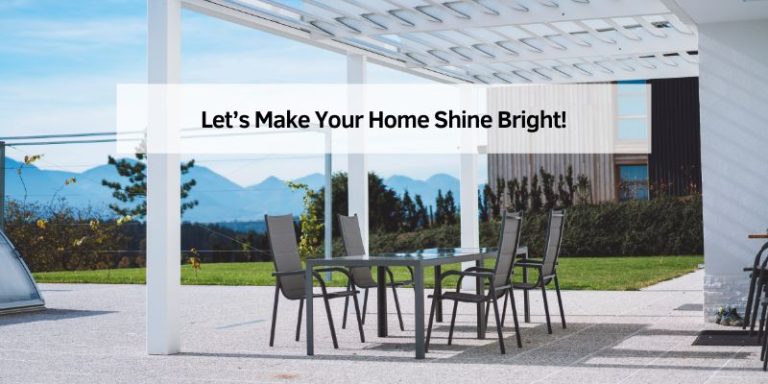
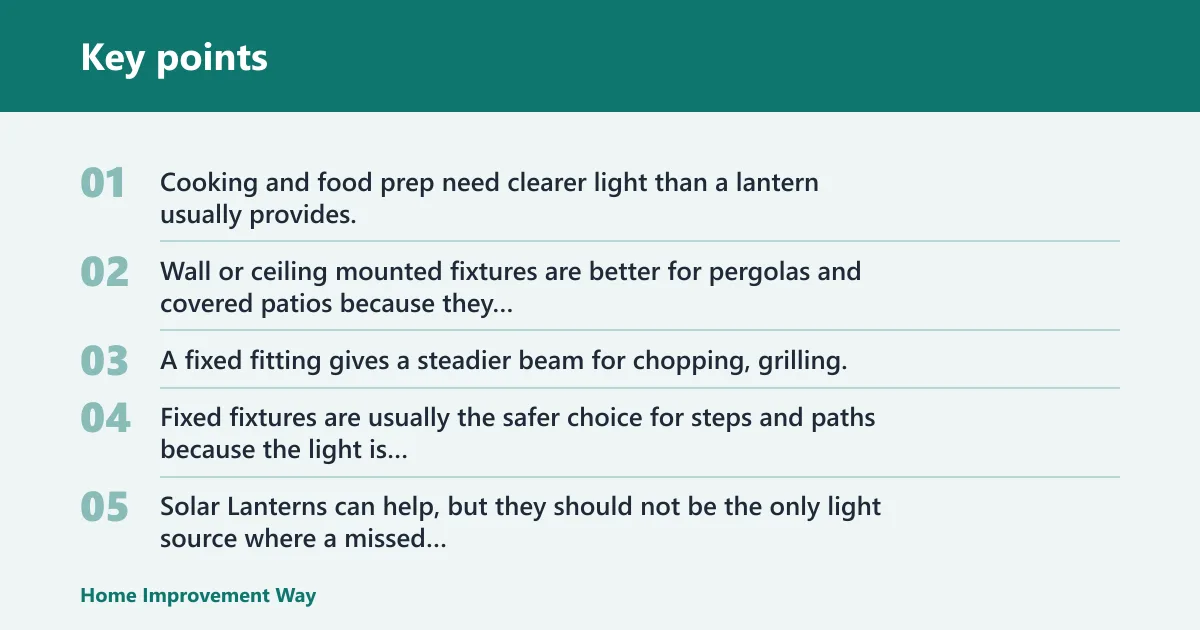
Cooking and food prep need clearer light than a lantern usually provides. Wall or ceiling mounted fixtures are better for pergolas and covered patios because they can aim light where hands, counters, and seating areas need it most.
The same is true for outdoor kitchens. A fixed fitting gives a steadier beam for chopping, grilling, or moving around a serving area after dark.
Safety lighting for steps and pathways
Fixed fixtures are usually the safer choice for steps and paths because the light is more predictable. Solar Lanterns can help, but they should not be the only light source where a missed step would matter.
For paths, steps, and play areas, the goal is visibility, not mood. A fixed light can stay on every night, which is valuable when visitors, children, or older family members are using the space.
Perimeter and security lighting needs
Fixed Fixtures for Outdoor Use work better for security lighting because they are harder to move and more reliable in poor weather. A portable lantern can light a corner, but it is not the best answer for a driveway edge, side gate, or back boundary that needs constant coverage.
For security, consistency matters more than portability. The light should be where you need it every night, without depending on whether a unit was moved, charged, or left out in the right place.
What IP rating do outdoor lights need?
Outdoor lights need an IP rating that matches the exposure at the location. IP44+ and IP65 are common reference points, but the right choice depends on whether the light faces rain, frost, damp air, or a more sheltered position.
What IP44 and IP65 mean in practice
IP44+ is often used as a weather-resistance baseline for outdoor use, while IP65 is commonly the stronger option when rain exposure is more direct. Both are relevant, but neither means every light is fit for every exposed position.
Choose the rating to fit the mounting spot. A covered patio may need less protection than a lantern sitting on an open terrace or a fixture exposed to direct rainfall.
Rain, frost, and damp exposure
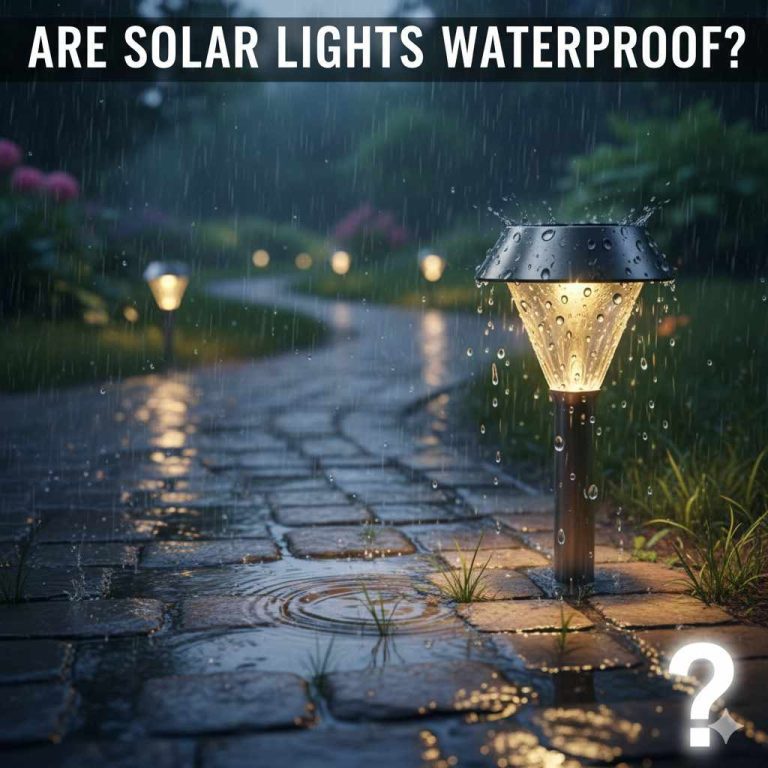
Rain resistance matters, but damp air and frost also count. Moisture can affect seals, solar panels, battery compartments, and wiring over time, especially if the fitting is left in a cold, wet corner all season.
Weather-resistant designs reduce risk, but they do not cancel it. A shaded, exposed, or low-lying location still needs more attention than a sheltered one.
Why mounting location changes the rating you need
A wall-mounted fixture under a pergola does not face the same exposure as a path marker in the open. That is why the same IP rating may be acceptable in one zone and too low in another.
With Solar Lanterns, placement can shift from sheltered to exposed in minutes. With fixed fittings, the rating should match the most exposed conditions that the light will regularly face.
Choose Solar Lanterns if… / Choose Fixed Fixtures for Outdoor Use if…
Choose Solar Lanterns if you want flexible placement on patios, tables, terraces, or balconies; the space changes often; and the goal is warm, decorative light rather than all-night task lighting. They also suit short-term setups where no wiring is wanted.
Choose Fixed Fixtures for Outdoor Use if you need dependable light for pergolas, covered patios, outdoor kitchens, steps, pathways, or perimeter zones. They are the better pick when safety, security, and stable output matter more than portability.
Suppose a small terrace has a dining table that moves between one side and another through the week. Solar Lanterns fit that pattern because the light can move with the furniture. If the same space also has two steps leading to the garden, a fixed light should cover those steps every night.

Can you mix both outdoor lighting types?
Yes. A hybrid layout is often the best answer for mixed-use outdoor spaces. Solar Lanterns can handle ambience on tables, low seating, and temporary corners, while Fixed Fixtures for Outdoor Use cover safety, entry points, and perimeter light.
Lanterns for ambience
Solar Lanterns are a strong fit for warm white mood lighting and decorative pools of light. They work well when the purpose is to soften a patio, terrace, or balcony without putting a hard beam in everyone’s face.
They are also useful when the layout changes from one evening to the next. You can move them closer to guests, away from glare, or onto a different table without changing the wiring plan.
Fixtures for safety and perimeter coverage
Fixed Fixtures for Outdoor Use should handle the areas where the consequences of poor light are higher. That includes steps, side returns, gates, outdoor kitchens, and any perimeter line that benefits from dependable illumination.
Hybrid lighting keeps each type in its lane. The lanterns add atmosphere, and the fixed lights do the heavy lifting.
Simple hybrid layouts for mixed-use spaces
A practical layout is one wall light over a door or kitchen zone, plus two or three lanterns on tables or low shelves. That splits the job between stable coverage and flexible ambience without asking one type of light to do everything.
Another common setup is a fixed light at the step or entry point, with portable lanterns on the terrace. That combination keeps movement safe while leaving the seating area softer and more relaxed.
Frequently asked questions
Are solar lanterns better than fixed outdoor lights?
Solar Lanterns are better for flexible accent lighting, while Fixed Fixtures for Outdoor Use are better for dependable task, safety, and perimeter light. If you need lighting that can move with furniture or seasonal layouts, lanterns have the edge. If the light must stay steady every night, fixed fixtures win.
When should I choose a solar lantern instead of a wall light?
Choose a solar lantern when you want cordless placement on a table, patio, terrace, or balcony and do not want wiring or permanent mounting. It is the better choice for decorative ambience, temporary setups, and spots where you may want to move the light later.
Do solar lanterns work well in cloudy UK weather?
They can work, but output is less reliable in cloudy weather because charging depends on daylight exposure. Performance is usually weaker under shade, during short winter days, or after several dull days in a row. A well-placed panel still matters more than the weather label on the box.
How long do solar outdoor lights stay on at night?
Runtime varies by panel exposure, battery capacity, and weather. After a full charge, many solar lights are designed to come on at dusk, but cloudy days and seasonal battery decline can shorten that run and cause dimming before morning. Check the product’s stated runtime only as a starting point.
What IP rating do outdoor solar lights need?
IP44+ is a common baseline for outdoor use, while IP65 is better for more exposed rain conditions. The right rating depends on whether the light sits under cover, faces direct rain, or lives in a damp, frost-prone corner. Mounting location matters as much as the rating itself.
Can solar lanterns light paths and steps safely?
They can add useful visibility, but they should not be the only light source on paths or steps if safety is the priority. For regular night use, fixed fixtures are usually the safer choice because they provide steadier coverage and are less affected by charging limits, shade, or battery fade.
Sponsored / affiliate links. As an Amazon Associate I earn from qualifying purchases. I may earn additional commission from eligible campaigns.