Key Stuck in a Door Lock? 8 Fixes That Work (Without Breaking It)
A key that won’t come out of a door lock is almost always dirt, a worn-down key, or the wrong lubricant — WD-40 works once but attracts grime over time, while dry PTFE or graphite lubricant doesn’t. Forcing it can snap the key or damage the pins, turning a 2-minute fix into a locksmith call. This guide covers the 8-step removal process, the lubricant locksmiths actually recommend, and when to stop and call a professional.
Affiliate disclosure: This post contains Amazon affiliate links. We may earn a commission at no extra cost to you. [Insert your Affiliate Disclosure reusable block here]
Quick Answer
Spray dry PTFE or graphite lubricant into the keyhole, wait a minute, then wiggle the key gently side to side while pulling straight out. If it’s half-turned, push it back in and press a fingertip on the lock face beside it first. If the key is bent or snapped, stop — call a locksmith ($50–$200) rather than risk breaking it further.
Why Do Keys Get Stuck in Door Locks?
A stuck key is rarely random bad luck — it’s almost always one of a few mechanical causes. Understanding which one you’re dealing with tells you which fix to try first.
Dirt and grime inside the lock is the most common cause — dust, debris, or rust builds up around the pins over years of use. A worn-out or bent key is the second most common cause: if the key’s grooves are rounded off or the shaft is slightly bent, it won’t align with the pins the way a fresh-cut key does. Temperature also plays a role — metal contracts in cold weather and swells slightly in heat or humidity, which changes the tolerance between the key and the pin stack by just enough to bind it. Less often, the lock itself is worn: the pins or springs inside a pin-tumbler mechanism can wear unevenly or fall out of alignment after years of use, which no amount of lubricant fully fixes.
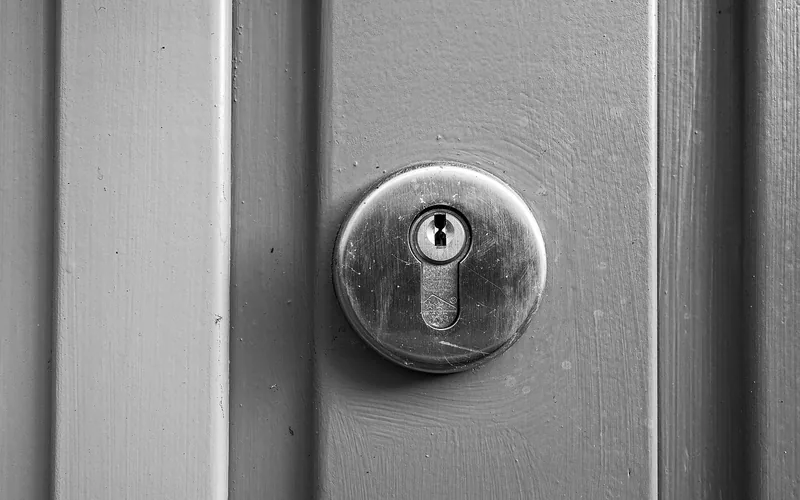
Tools You’ll Need to Remove a Stuck Key
Reaching for whatever is nearby — a butter knife, a random screwdriver — is how locks and keys get scratched or bent further. Keep these on hand instead:
- Dry PTFE or graphite lubricant: Locksmiths recommend a dry lubricant over WD-40 for locks — it doesn’t leave an oily residue that attracts dust.
- Pliers or tweezers: For gripping the key gently without twisting it.
- Small screwdriver: Its handle is used for light tapping, not prying.
- Paperclip or thin pin: Useful for probing around the keyway to clear debris.
- Small brush: An old toothbrush works to clear out loose debris.
- Rag or cloth: To wipe down the key and lock face.
- Ice pack or hairdryer (optional): For weather-related sticking — cold to contract the lock further, or gentle heat to expand it.
You won’t need all of these every time, but having them ready means you’re not scrambling for a substitute that scratches the finish.
How to Remove a Key from a Door Lock: Step-by-Step
Work through these steps in order — most stuck keys come free by step 3, without needing pliers or a locksmith at all.
Step 1: Stay Calm and Assess the Situation
Pulling too hard can bend the key or damage the lock, so don’t yank on it. Check whether the key is fully inserted, turned slightly off from vertical, or completely frozen. Wiggle it gently first — that alone tells you whether you’re dealing with light resistance or something more stuck.
Step 2: Apply a Dry Lubricant — Not WD-40
Spray a small amount of dry PTFE (Teflon) or graphite lubricant into the keyhole and let it sit for a minute. WD-40 will loosen a stuck key once, but it’s an oil-based product — locksmiths advise against it as a regular lock lubricant because the residue attracts dust and grit, which packs into the pin chambers and makes the lock stickier over the following months. A dry lubricant leaves no residue for debris to stick to.
Step 3: Wiggle the Key — or Push It Back to Position
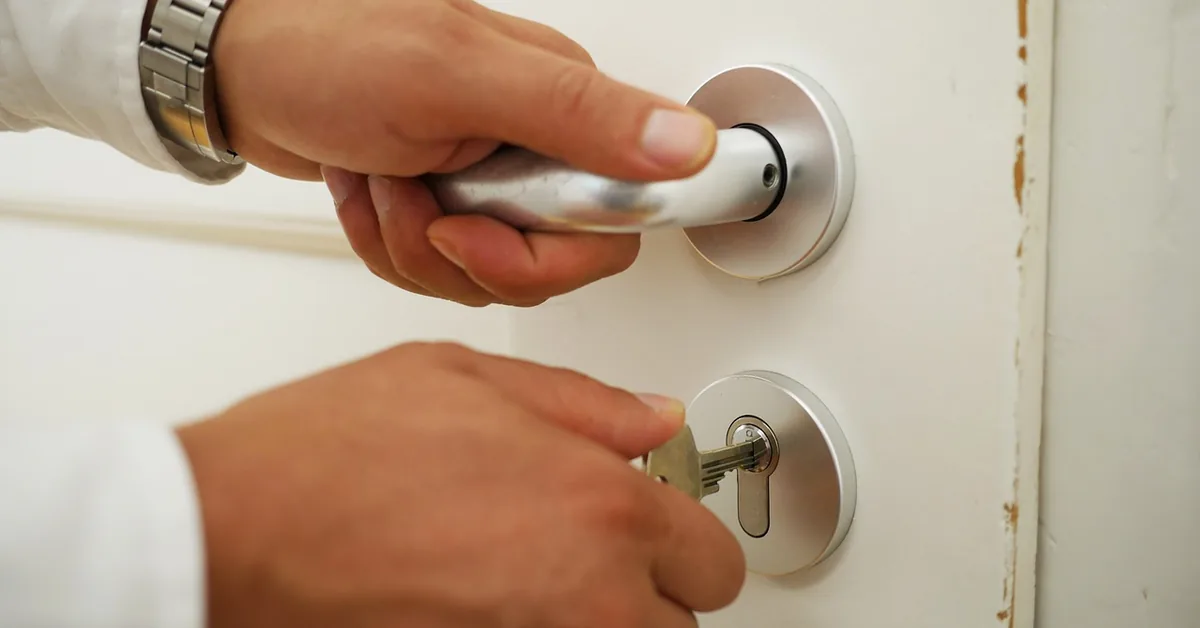
After lubricating, hold the key with your fingers (or pliers for more grip) and move it side to side and up and down while applying slight outward pressure. If the key is stuck half-turned rather than jammed straight, push it back in as far as it goes, rotate it to the exact position it was in when inserted, and press a fingertip firmly on the lock face right beside the key — this seats the pins back where they were and often releases the bind immediately.
Step 4: Tap the Lock Lightly
If the key still won’t budge, give the lock face a few light taps using the handle of a screwdriver (or your palm), aiming inward toward the keyway. This can dislodge stuck pins or loose debris. Light taps are enough — hitting it hard risks bending the key or cracking the lock housing.
Step 5: Try Cooling or Heating the Lock
Weather changes the metal’s tolerance. In cold weather, a lock that’s already stuck can sometimes be freed by holding an ice pack against it briefly, then wiggling again — this sounds backward, but it’s most useful when the key is bound from swelling, not shrinking. In hot or humid conditions, a hairdryer on low for 20–30 seconds can expand the lock face just enough to release the key. For a frozen car door lock specifically, see our guide to de-icing a car door lock — the approach is slightly different from a house lock.
Step 6: Check the Key for a Bend
If the key still won’t come out, look closely at it. A bent key can catch on the pin stack in a way a straight key wouldn’t. If it’s only slightly bent, pliers can straighten it gently while it’s still in the lock. If it’s visibly damaged or you feel it flexing, stop here — working a bent key back and forth risks snapping it off inside the lock, which turns a simple fix into a locksmith call.
Step 7: Probe Gently With a Paperclip or Pin
For stubborn cases, straighten a paperclip or use a thin pin and carefully insert it alongside the key — not instead of it — to help push out debris or nudge a misaligned pin. Go slowly; forcing a pin in beside the key risks scratching the pin chambers.
Step 8: Call a Locksmith If the Key Won’t Move
If none of the above works, or the key is visibly bent or broken, it’s time to call a locksmith rather than keep forcing it. A locksmith carries specialized key extractor tools — narrow hooked and sawtooth picks built specifically to hook a broken key fragment and draw it straight out without scratching the pin chambers. If the key has actually snapped off, see our dedicated guide to getting a broken key out of a door lock for extraction methods before you call anyone.
Here’s a quick reference for all 8 steps:
| Step | Action | Tools Needed | Notes |
|---|---|---|---|
| 1. Assess | Gently wiggle the key to test resistance | None | Stay calm, don’t force it |
| 2. Lubricate | Apply dry PTFE or graphite lubricant | Dry lubricant (not WD-40) | Let it sit for a minute |
| 3. Wiggle / Reposition | Wiggle side to side, or push back to original position | Pliers (optional) | Don’t pull too hard |
| 4. Tap | Tap the lock face lightly | Screwdriver handle | Dislodges stuck pins |
| 5. Cool/Heat | Use an ice pack or a hairdryer | Ice pack, hairdryer | For weather-related sticking |
| 6. Check Key | Look for bends in the key | Pliers | Straighten carefully, or stop |
| 7. Probe | Insert a paperclip or pin alongside the key | Paperclip, pin | Remove debris gently |
| 8. Call Pro | Contact a locksmith | Phone | $50–$200 for extraction |
Best Lock Lubricant Pick
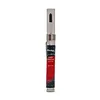
Master Lock PTFE Lock Lubricant – $15.15
This is the dry lubricant Step 2 above recommends instead of WD-40 — it’s non-toxic, biodegradable, and rated from -40°F to 500°F, so it works for the cold-weather sticking covered in Step 5 too.
- Best for: Any residential door lock, padlock, or deadbolt that’s starting to stick
- Why we picked it: Dry PTFE formula, no oily residue to attract dust like WD-40 does
- Main drawback: Small 0.25 fl oz bottle — one application per lock, needs restocking
Compare more lock-repair options
 Option 1 Lock-ease Graphited Lock Fluid – $8.48
|
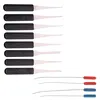 Option 2 12-Pc Broken Key Extractor Kit – $11.99
|
 Option 3 8-Pc Pick & Hook Driver Set – $6.99
|
As an Amazon Associate we earn from qualifying purchases.
📊 Locksmith key-extraction service typically costs $50–$200, on top of a $90–$205 general service-call fee — Source: Fixr.com Locksmith Service Costs, 2026
Special Cases: Car Door Locks vs. House Locks
Car door locks and house door locks behave differently when a key sticks. Car locks are more compact, so they’re prone to getting sticky from dust or rust — lubrication alone usually solves it. House locks, especially deadbolts, have longer pin stacks and more complex mechanisms, so tapping or probing with a paperclip tends to help more. For car ignitions, which use a similar pin-tumbler principle to door locks, avoid forcing the key — wiggle it while turning the steering wheel slightly to release the ignition lock’s internal tension.
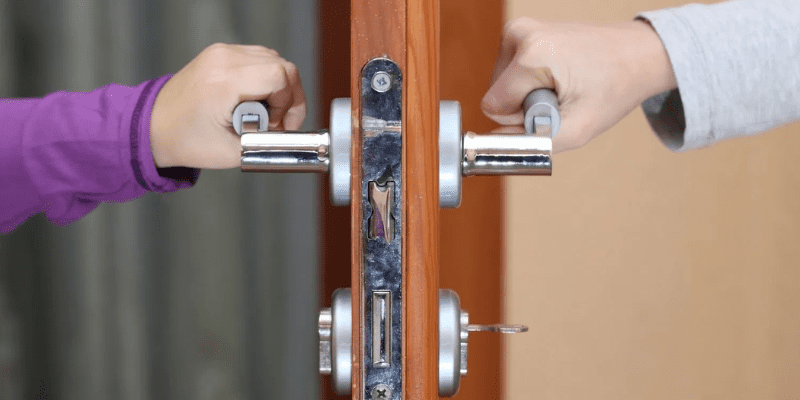
If your car door lock is frozen shut rather than just sticky, don’t force the key at all — see our guide to de-icing a car door lock for the safe way to thaw it first.
Preventing Keys from Getting Stuck
Once a stuck key is free, a few habits keep it from happening again:
- Keep locks clean: Brush out the keyhole every few months to keep dirt from building up.
- Lubricate with a dry lubricant: Apply dry PTFE or graphite lubricant every six months — see our full guide on lubricating a door lock for the exact application method.
- Get keys cut professionally: A key cut at a hardware store kiosk is more likely to have rounded or uneven grooves than one cut by a locksmith on calibrated equipment — replace a worn or duplicate-of-a-duplicate key rather than keep using it.
- Avoid overloading keychains: Extra weight from bulky keychains bends keys over time — a slimmer keychain reduces the leverage on the key shaft.
- Protect locks in bad weather: Covering an exterior lock with a small piece of tape in winter keeps moisture from freezing inside it.
- Consider rekeying a chronically worn lock: If a lock has been in place for many years, a locksmith can rekey it with a fresh pin set instead of just cutting a new key to fit worn pins.
Common Mistakes to Avoid
These mistakes are what usually turn a stuck key into a broken key or a damaged lock:
- Yanking too hard: This is the single most common way a key bends or snaps. Be patient and gentle instead.
- Using WD-40 or cooking oil as a permanent fix: Both are oil-based and attract dirt into the pin chambers over time. Use a dry lubricant instead.
- Ignoring the problem: A key that sticks a little today usually sticks more next month, as more debris accumulates.
- Forcing the wrong tools: A knife or a random metal object can gouge the pin chambers — stick to the tools listed above.
When to Replace Your Lock or Key
A stuck key that keeps recurring even after cleaning and lubricating is usually a sign the lock itself is worn out — replacing it is more reliable than repeating the same temporary fix. The same applies to the key: if it’s visibly bent or the shaft flexes, get a fresh one cut rather than keep forcing a marginal key into the lock. A locksmith can test both the lock and the key to confirm which one is actually failing before you pay to replace either.
“WD-40 will free a stuck key in the moment, but it’s not a lock lubricant — the oil holds onto dust and grit, and six months later that same lock is stickier than before. A dry PTFE or graphite spray doesn’t have that problem.”
Our own experience matches this: a stuck garage padlock that WD-40 had “fixed” three separate times over a year finally stopped sticking for good only after switching to a dry graphite spray and cleaning out the old oily residue first.
Frequently Asked Questions
Why does my key keep getting stuck in the lock?
Dirt, rust, or a worn-out key is the usual cause. Cleaning the lock and checking your key for bends or rounded grooves every few months prevents most recurring sticking.
Is WD-40 bad for door locks?
Yes, for regular use. WD-40 will free a stuck key once, but its oily residue attracts dust and grit that builds up inside the pin chambers over months, making the lock stickier than before. Use a dry PTFE or graphite lubricant for ongoing maintenance instead.
What should I do if my key breaks off in the lock?
Don’t try to dig it out with random tools — that risks pushing the fragment deeper or scratching the pin chambers. Use a proper key extractor kit or call a locksmith. See our broken key extraction guide for the exact method.
How often should I lubricate my door locks?
Every six months with a dry PTFE or graphite lubricant is standard. Locks in exterior or high-humidity locations may need it slightly more often.
Can cold weather cause a key to get stuck?
Yes. Cold makes the lock’s metal components contract slightly, which can bind the key against the pins. Warming the lock gently with a hairdryer, rather than forcing the key, is the safer fix.
Is it better to replace a key or the lock if it keeps sticking?
Check the key first — if it’s bent or heavily worn, replace it. If a freshly cut key still sticks in the same lock, the lock’s pins are worn and the lock itself should be replaced or rekeyed.
Can I use pliers to pull out a stuck key?
Yes, but grip gently and pull straight out — never twist. Pliers work best combined with lubricant and gentle wiggling, not as a substitute for them; excessive force with pliers is a common way keys snap in half.
Conclusion
A stuck key is almost always fixable without a locksmith: apply a dry PTFE or graphite lubricant (not WD-40), wiggle the key gently, and tap the lock lightly if needed. If the key is visibly bent, snapped, or a locksmith is needed for extraction, stop forcing it — the $50–$200 service call is cheaper than a damaged lock. Regular lubrication with the right product, not just when a key sticks, is what actually prevents this from recurring.
Sponsored / affiliate links. As an Amazon Associate I earn from qualifying purchases. I may earn additional commission from eligible campaigns.