How to Remove a Schlage Door Knob Without Screws
It can be a bit tricky when you need to take off a door knob, especially a Schlage one, and you can’t find any screws to take out. This happens more often than you might think, and it can leave you feeling stuck. Don’t worry, though! It’s usually a simple process once you know what to look for. We’ll walk you through it step-by-step to make it easy for you.
Removing a Schlage Door Knob Without Visible Screws
This section explains the common scenarios and the underlying reasons why Schlage door knobs might not have visible screws on the exterior. It will cover the different types of fasteners used for these knobs and what tools you might need to get started. Understanding these basics will prepare you for the actual removal process.
Understanding Hidden Fasteners
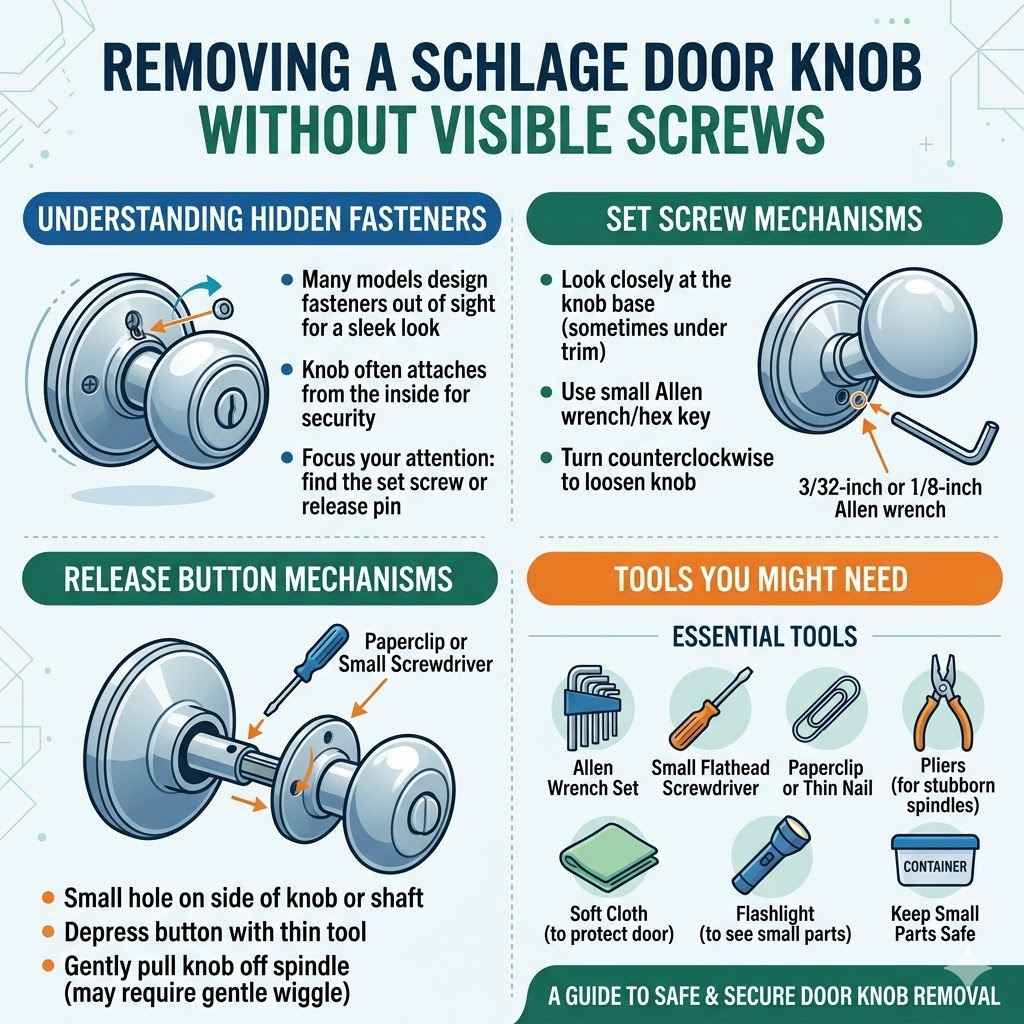
Many door knobs, including some Schlage models, are designed with hidden fasteners to provide a cleaner look. These are often set screws or a release button that isn’t immediately obvious. The purpose is to keep the knob looking sleek without any visible hardware from the outside.
The absence of visible screws means the knob is likely attached from the inside of the door. This is a security feature, but it can be confusing when you just want to remove the knob for replacement or repair. Knowing this helps you know where to focus your attention.
There are several types of hidden fasteners. The most common is a small set screw, often located on the neck of the knob or under a decorative cover. Another type uses a spring-loaded pin or button that needs to be depressed to release the knob. We will explore how to find and work with these specific mechanisms.
Set Screw Mechanisms
A set screw is a small screw that holds something in place by pressing against another part. For door knobs, it locks the knob onto a spindle. This spindle is what connects to the latch mechanism inside the door.
To access the set screw, you often need to look closely at the base of the knob where it meets the door. Sometimes, it’s hidden under a decorative trim ring or escutcheon. You might need a small Allen wrench or a hex key to turn the set screw. Turning it usually loosens the knob.
If you’re having trouble finding the set screw, try rotating the knob. Sometimes, the screw is positioned so it’s only accessible when the knob is turned to a specific angle. This is a clever design to make it harder to tamper with from the outside.
Release Button Mechanisms
Some Schlage knobs use a different system that involves a small release button or pin. This button is typically located on the side of the knob, often near the shaft. You’ll need a very small tool, like a paperclip, a thin nail, or a small screwdriver, to press this button.
When you press the button, it releases a catch that holds the knob in place. You then need to gently pull the knob off the spindle. This method is common in more modern or decorative knob designs.
It’s important to use a tool that fits the hole snugly but doesn’t force it. Too much pressure can damage the internal mechanism. The goal is to simply depress the button enough to disengage the lock.
Tools You Might Need
Having the right tools makes the job much easier. For removing a Schlage knob without visible screws, you might need a few basic items. Don’t worry if you don’t have them all; many can be substituted with common household items.
Allen Wrench Set: Essential for set screw mechanisms. Look for a set with small sizes, as door knob set screws are often tiny.
Small Flathead Screwdriver: Useful for prying off decorative covers or gently manipulating release buttons.
Paperclip or Thin Nail: Can be used to press release buttons on some knob types.
Pliers: Might be needed to grip a spindle if it’s stuck.
Soft Cloth: To protect the door finish from scratches.
Flashlight: To help you see small parts and screws.
It is also a good idea to have a small container or bag to keep any small parts you remove, like screws or washers, so they don’t get lost.
Using an Allen Wrench
An Allen wrench, also known as a hex key, is a common tool for set screws. These screws have hexagonal sockets. Schlage knobs often use a 3/32-inch or 1/8-inch Allen wrench.
You’ll insert the Allen wrench into the set screw opening and turn it counterclockwise. This loosens the screw and allows the knob to slide off its mounting. Keep turning until the knob feels loose.
Sometimes, the set screw doesn’t need to be fully removed. You just need to loosen it enough. It’s important to remember which direction to turn to reassemble later.
Using a Paperclip or Small Screwdriver
For knobs with a release button, a thin, sturdy object is needed. A straightened paperclip or a thin flathead screwdriver works well. You need to push the tool into the small hole to activate the release mechanism.
When you press the button, you will feel a slight give. At the same time, you should try to pull the knob off. It might require a gentle wiggle.
This method is straightforward, but patience is key. Don’t force it if the knob doesn’t come off immediately. Ensure you are pressing the button correctly.
Step-by-Step Guide: How to Remove a Schlage Door Knob Without Screws
This guide provides the detailed steps to successfully remove a Schlage door knob when screws are not readily apparent. It breaks down the process into manageable actions, ensuring clarity and ease of execution for anyone, regardless of their DIY experience.
Locating the Hidden Fastener
The first and most crucial step is to find out how the knob is secured. This involves a close inspection of the knob and its components. Don’t assume there are no screws just because you can’t see them on the face of the knob.
Look all around the neck of the knob, where it connects to the door. Often, there will be a tiny hole or a slight seam. This is where a set screw or a release button is usually hidden.
If you see a small hole, it’s likely for a set screw. If you don’t see a hole, look for a very small dimple or a tiny button on the side. Sometimes, there’s a decorative cover that needs to be gently pried off first.
Examining the Knob’s Neck
The neck of the knob is the cylindrical part that extends from the main body towards the door. This area is a common place for manufacturers to hide set screws.
Run your finger around the entire circumference of the neck. Feel for any tiny indents or screw heads. They can be very small, so good lighting is helpful.
Some knobs have a split neck, where one part can rotate slightly. This rotation can reveal a set screw. Try turning the knob and checking again.
Checking Underneath Decorative Caps
Some Schlage knobs feature a decorative cap or trim ring that covers the internal mechanism. This cap might need to be removed first to expose the fasteners.
These caps are often held in place by friction or a small retaining clip. You might be able to gently twist or pry them off. Use a flathead screwdriver or a thin putty knife, being careful not to damage the knob or the door finish.
A soft cloth can be placed between the tool and the knob to prevent scratches. Once the cap is off, you should see the set screw or release mechanism.
Executing the Removal Process
Once you’ve identified the type of fastener, you can proceed with removing the knob. The method will vary depending on whether you found a set screw or a release button.
Follow these steps carefully to avoid damaging the knob or the door. Remember to work slowly and deliberately.
Method 1 Removing Knobs with Set Screws
If you found a small hole on the neck of the knob, it’s likely a set screw. Grab your Allen wrench or a small screwdriver that fits the screw head.
Insert the tool into the set screw opening. Turn it counterclockwise to loosen the screw. You don’t usually need to remove the screw completely, just loosen it enough so the knob slides off.
Keep turning until you feel the knob become loose. Once it’s loose, you should be able to gently pull the knob straight off the spindle. Sometimes, wiggling it slightly can help.
Example: A Stiff Set Screw
Imagine you are trying to remove a Schlage knob, and the set screw feels incredibly tight. You’ve inserted the Allen wrench, but it won’t budge. This can happen if the screw is old or hasn’t been touched in years.
In such cases, you might need to apply a bit more steady pressure. If the Allen wrench starts to slip, ensure you have the correct size. Sometimes, a drop of penetrating oil, like WD-40, can help loosen a stubborn screw. Apply it to the screw and let it sit for a few minutes before trying again.
Method 2 Removing Knobs with Release Buttons
For knobs with a release button, you’ll need a thin, pointed object. A straightened paperclip, a small nail, or a thin Phillips screwdriver can work.
Locate the small hole on the side or bottom of the knob shaft. Insert your chosen tool into the hole. You need to push firmly to depress the internal button or pin.
As you hold the button down, pull the knob away from the door. It might require a slight twist or wiggle to detach completely. If it doesn’t come off, ensure you are pressing the button as far as it will go.
Sample Scenario: The Stubborn Button
You’ve found the release button hole, and you’re pressing down with a paperclip. However, the knob just won’t budge. This could mean the button needs to be pushed at a specific angle or that there’s a secondary locking mechanism.
Try gently pulling on the knob while holding the button down. Sometimes, the release is triggered by pressure on the knob itself as the button is depressed. If that doesn’t work, try slightly rotating the knob while holding the button. This might align an internal part that’s preventing release.
Detaching the Knob and Spindle
Once the knob is loose, it should slide off the spindle. The spindle is the metal rod that goes through the door and connects the two knobs.
Gently pull the knob straight towards you. If it resists, try wiggling it side to side or up and down slightly. Avoid yanking forcefully, as this could damage the door or the knob’s internal parts.
After removing one knob, you’ll usually see the spindle still attached to the other knob or the latch mechanism. The second knob can often be removed by following a similar process, or by simply pulling it off if its attachment is now loose.
Understanding the Spindle
The spindle is the backbone of the door knob assembly. It’s a square or rectangular rod that passes through the latch mechanism in the door. Both knobs are attached to this spindle.
When you remove the knob, you are essentially detaching it from the spindle. The spindle remains in place, connecting the latch to the other knob. This allows you to turn one knob and operate the latch.
The spindle often has grooves or flats where the knob’s internal mechanism grips it. This grip is what allows the knob to turn the spindle.
Removing the Second Knob
Often, removing the first knob loosens the second one as well. Once the first knob is off, you can usually see how the spindle is attached to the second knob.
If the second knob is also held by a set screw or release button, repeat the process. If it’s simply attached to the spindle, you might just need to pull it off.
In some designs, the spindle itself might need to be removed from the latch mechanism. However, for simple knob replacement, this is rarely necessary.
Troubleshooting Common Issues
Even with clear instructions, you might run into some snags. This section addresses common problems that can arise during the process and offers solutions.
Knob Won’t Come Off
If the knob is still stuck after loosening the set screw or pressing the release button, there could be a few reasons. The set screw might not be loose enough, or the release button might not be fully engaged.
Double-check that you are turning the set screw counterclockwise sufficiently. If it’s a release button, ensure you are pressing it firmly and that the tool is small enough to fully depress it.
Sometimes, rust or corrosion can make parts stick. A little penetrating oil can help. Gentle tapping with a rubber mallet on the knob’s base might also help dislodge it, but be very careful not to damage anything.
The Set Screw Won’t Turn
This can be frustrating. Ensure you have the correct size Allen wrench. A worn-out wrench or screw head can prevent a good grip.
If the screw head is stripped, you might need a screw extractor kit. These kits are designed to grip and remove damaged screws. However, for a small set screw, this might be overkill.
Try applying firm, consistent pressure. Sometimes, a slight tap on the end of the wrench can help break a stubborn screw loose.
The Release Button Feels Stuck
If the release button is difficult to press or seems jammed, there might be debris in the hole, or the internal mechanism could be damaged.
Try to clean out the hole with a can of compressed air. If that doesn’t work, a very thin wire or needle might help dislodge any obstructions.
If the mechanism is truly broken, you might need to resort to more forceful methods, like carefully prying the knob off, but this risks damage.
Damaging the Door or Knob
It’s important to protect your door’s finish. Use a soft cloth or a thin piece of cardboard when using tools near the door surface. Avoid excessive force that could scratch paint or wood.
If you’re prying off a decorative cap, use a tool with a flat edge and apply pressure gradually. Don’t force it suddenly.
For the knob itself, try not to bend or deform its parts. The goal is to remove it cleanly, so it can be reinstalled or so the new one fits properly.
Protecting the Door Finish
Scratches on your door can be unsightly and difficult to repair. Always place a cloth or a thin piece of plastic between your tool and the door. This acts as a buffer.
When using screwdrivers or pry tools, ensure they are the correct size. A tool that’s too large can slip and damage the surface.
Work slowly and deliberately. It’s better to take a little extra time to be careful than to rush and cause damage.
What If the Spindle is Stuck?
The spindle can sometimes get stuck within the latch mechanism inside the door. This is usually due to rust or wear.
If the spindle won’t pull out with the knob, you might need to get the knob off first. Then, you can focus on the spindle.
Try gently tapping the spindle with a hammer or pliers to loosen it. If it’s a metal spindle, a bit of penetrating oil can also help.
When to Call a Professional
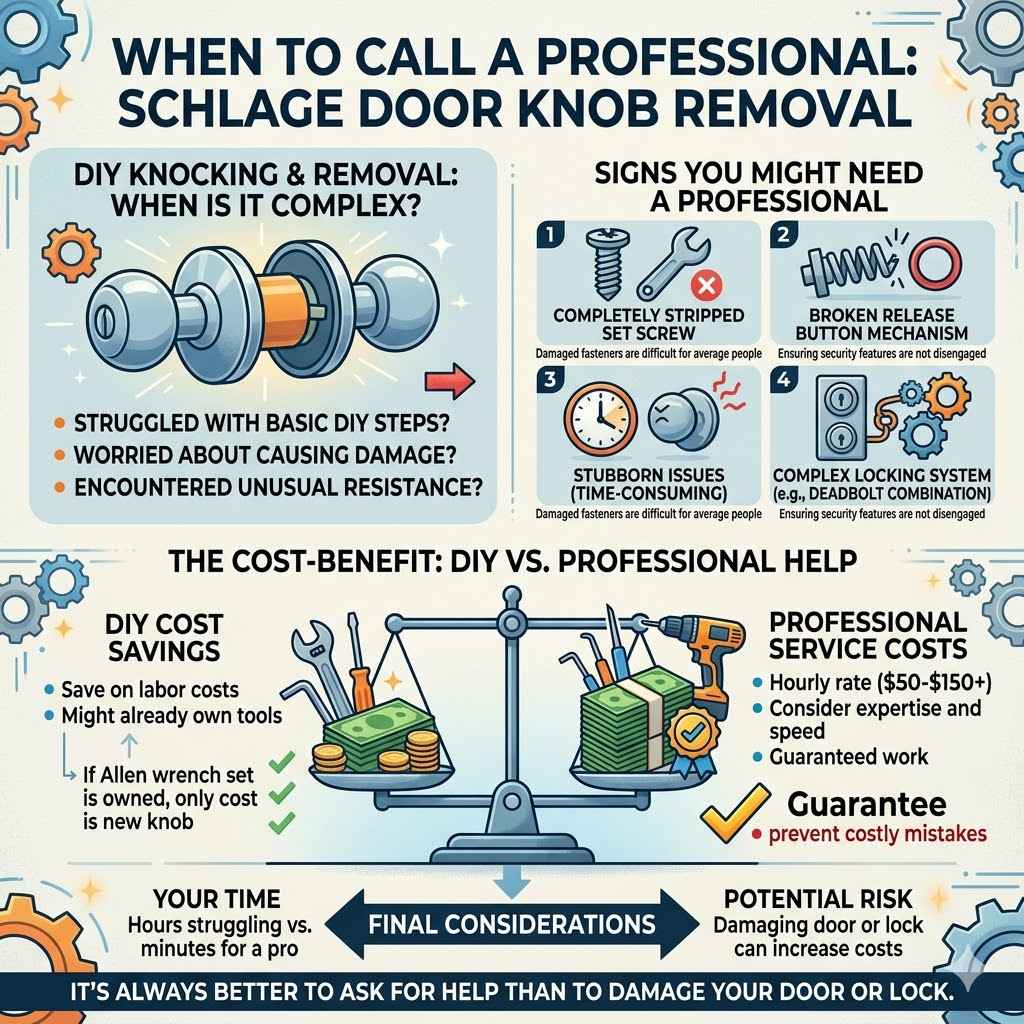
While many Schlage door knobs are designed for easy removal, sometimes you encounter a situation that’s beyond basic DIY. If you’ve tried the steps above and are still struggling, or if you’re worried about causing damage, it’s perfectly fine to call a locksmith or a handyman.
They have specialized tools and experience with various lock mechanisms. They can often resolve stubborn issues quickly and efficiently, saving you time and potential frustration. It’s always better to ask for help than to damage your door or lock.
Signs You Might Need a Professional
If the set screw is completely stripped and won’t turn, or if the release button mechanism appears broken, a professional can help. They have ways to deal with damaged fasteners that are difficult for the average person.
Also, if the door knob is part of a more complex locking system, like a deadbolt combination, it’s wise to consult a professional. They can ensure that you don’t accidentally disengage a security feature that you don’t understand.
The Cost-Benefit of DIY vs. Professional Help
Doing it yourself can save you money on labor costs. However, if you end up damaging the door or the lock, the repair costs could outweigh the savings. A professional might charge a fee, but they usually guarantee their work and can prevent costly mistakes.
Consider the value of your time. If you’re spending hours struggling with a simple task, it might be more efficient to hire someone who can do it in minutes.
DIY Cost Savings
The primary benefit of DIY is cost reduction. You avoid paying for labor, and you might already own the necessary tools. For a simple knob replacement, this can be a significant saving.
For instance, if you already have an Allen wrench set, your only cost might be the new door knob itself. This makes DIY an attractive option for many homeowners.
Professional Service Costs
Locksmiths and handymen typically charge an hourly rate. This can range from $50 to $150 or more, depending on your location and the complexity of the job.
While this might seem like a lot, consider the expertise and the tools they bring. They can often diagnose and fix problems much faster than an inexperienced person.
Frequently Asked Questions
Question: Can I remove a Schlage door knob without any tools at all
Answer: In some rare cases, if the knob has a very accessible release button, you might be able to use something like a strong fingernail or a very sturdy piece of plastic. However, most Schlage knobs that don’t show screws will require at least a small tool like a paperclip or a tiny screwdriver.
Answer: If you’ve thoroughly checked the knob’s neck and sides and can’t find any indication of a hidden fastener, it’s possible the knob is attached in a less common way. Some decorative knobs might have a very small slot or groove where a tool can be inserted to pry off a cap covering the actual fastener. Look very closely for any seams or slight differences in the knob’s surface.
Question: How do I know if I have the right size Allen wrench
Answer: The right size Allen wrench will fit snugly into the hexagonal socket of the set screw. If the wrench is too loose, it will spin without gripping the screw, or it might strip the screw head. If it’s too tight, you won’t be able to insert it fully.
Schlage knobs commonly use 3/32-inch or 1/8-inch sizes, but it’s best to test a few if you have a set.
Question: Can I reuse the same set screw when I put the knob back on
Answer: Yes, you can usually reuse the original set screw as long as it’s not damaged. When you reattach the knob, just tighten the set screw firmly until the knob feels secure and doesn’t turn independently of the spindle. Do not overtighten, as this could strip the screw or damage the knob’s internal threads.
Question: What is a spindle
Answer: A spindle is the metal rod that passes through the door and connects the two knobs. When you turn a knob, it grips and turns the spindle, which then operates the latch mechanism inside the door, allowing the door to open or close. The knobs themselves attach to this spindle.
Wrap Up
Removing a Schlage door knob without visible screws is quite manageable. By locating the hidden set screw or release button, you can easily detach the knob. Remember to use the correct small tools and work gently. This guide provides the steps to get the job done.