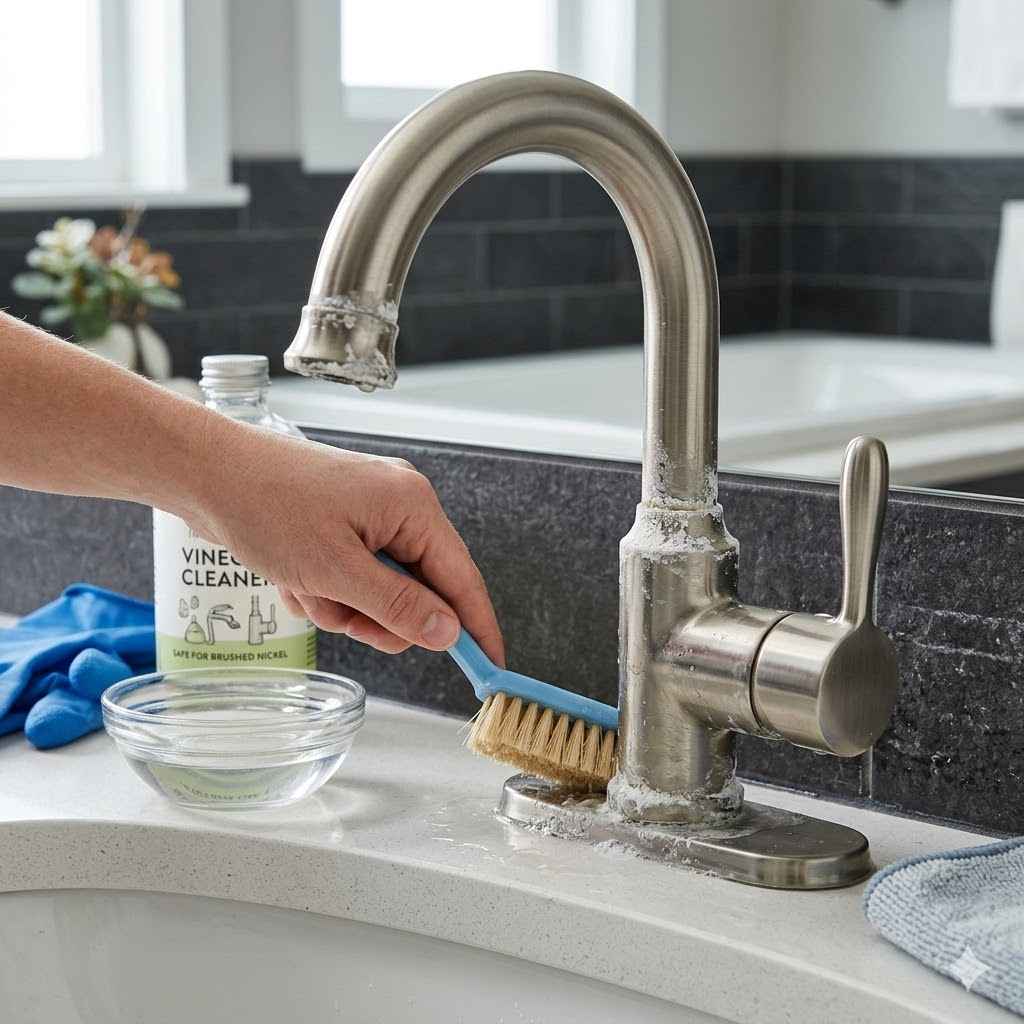
How to Remove Calcium Deposits From Brushed Nickel Faucet
Calcium deposits can be a real headache, especially when they show up on your shiny brushed nickel faucet. It’s a common problem for many homeowners, and figuring out How to Remove Calcium Deposits From Brushed Nickel Faucet without damaging the finish can seem tricky at first. Many people worry about scratching or dulling their faucet’s beautiful look.
But don’t worry! We’re going to walk you through a super simple, step-by-step process that will have your faucet looking like new again. Get ready to see how easy it can be.
Understanding Calcium Deposits on Faucets
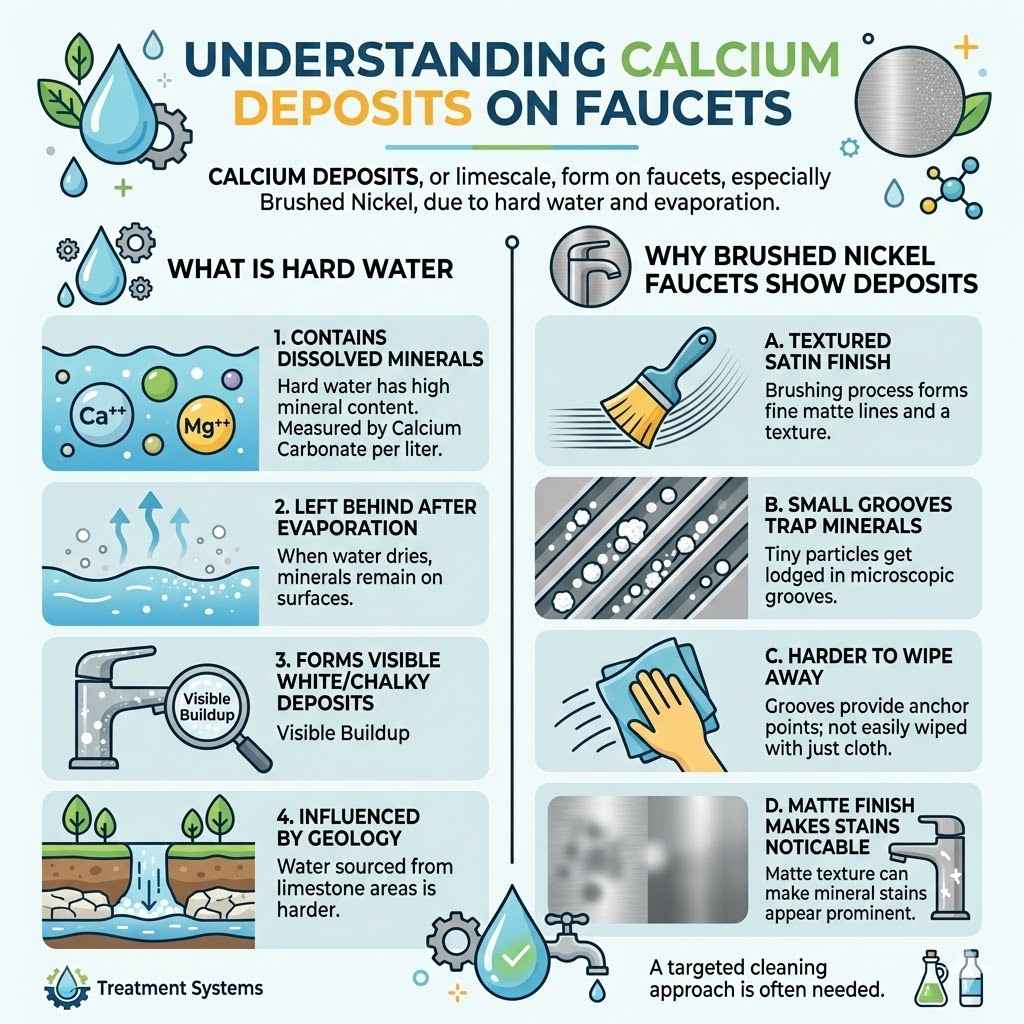
Calcium deposits, often called limescale or hard water stains, are a natural consequence of water containing high mineral content, primarily calcium and magnesium. When water evaporates, these minerals are left behind, clinging to surfaces. Brushed nickel faucets, with their unique textured finish, can sometimes make these spots more noticeable and a bit harder to wipe away with a simple cloth.
This is because the microscopic grooves in the brushed finish can trap the mineral buildup, making it stick more firmly than on a smooth, polished surface. Dealing with this is a common challenge for anyone with hard water in their home.
What is Hard Water
Hard water is simply water that has a high mineral content. The most common minerals are calcium and magnesium. The “hardness” of water is measured by the concentration of these minerals.
Water is considered hard if it contains more than 60 milligrams of calcium carbonate per liter. Many regions naturally have hard water, which can cause issues in homes, from plumbing problems to dingy laundry. It’s not harmful to drink, but it can leave stubborn stains and buildup on fixtures like your faucets.
This buildup is what we aim to remove.
- Hard water contains dissolved minerals like calcium and magnesium.
- These minerals are left behind when water evaporates from surfaces.
- Over time, they form visible white or chalky deposits.
The presence of these minerals is influenced by the geology of the area where the water is sourced. If your water passes through limestone or chalk deposits, it will likely pick up more calcium and magnesium, leading to harder water. This isn’t a sign of impurity, but rather a characteristic of the water that affects how it interacts with your home appliances and fixtures.
Many water treatment systems are designed to reduce water hardness, but in the meantime, dealing with the effects is common.
Why Brushed Nickel Faucets Show Deposits
Brushed nickel faucets have a satin finish created by brushing the metal surface. This brushing process creates fine lines or a matte texture. While beautiful, this textured surface can trap mineral deposits more easily than a smooth, polished surface.
Tiny particles of calcium and magnesium can get lodged in these microscopic grooves, making them difficult to remove with just soap and water. The duller appearance of brushed nickel can also make the white or gray mineral stains stand out more prominently. This makes the task of cleaning and maintaining these faucets a bit more involved than with other finishes.
- The brushed texture has small grooves that trap minerals.
- These trapped minerals are harder to wipe away than on smooth surfaces.
- The matte finish can make mineral stains appear more noticeable.
When water evaporates from the faucet surface, it leaves behind the dissolved minerals. On a smooth surface, these minerals might sit loosely and be easily wiped off. However, on a brushed nickel surface, the texture provides anchor points for these mineral particles.
They adhere to the metal in a way that requires a more targeted cleaning approach. This is why a simple wipe-down often isn’t enough to get rid of stubborn limescale from brushed nickel faucets.
Simple Ways to Remove Calcium Deposits From Brushed Nickel Faucet
Tackling calcium deposits on your brushed nickel faucet doesn’t require harsh chemicals or complicated tools. The goal is to use gentle yet effective methods that break down the mineral buildup without harming the faucet’s finish. We’ll cover several popular and easy-to-follow techniques.
Each method uses common household items, making it accessible and budget-friendly. By following these steps, you can restore the shine to your faucet and prevent future buildup.
Using White Vinegar
White vinegar is a fantastic natural cleaner because its acetic acid content is effective at dissolving calcium and lime deposits. It’s also gentle enough for most surfaces when used correctly. For brushed nickel, it’s important not to let the vinegar sit for too long, as prolonged exposure can potentially dull the finish.
The key is to apply it strategically and rinse thoroughly. This is often the first and most successful method people try for this specific issue.
- White vinegar’s acidity dissolves mineral buildup.
- It’s a natural and cost-effective cleaning solution.
- Use with caution on brushed nickel to avoid prolonged contact.
The acetic acid in vinegar reacts with the calcium carbonate in the deposits, breaking them down into a soluble form that can be easily washed away. Think of it like a gentle acid bath that dissolves the stubborn mineral shell. For particularly tough spots, you can increase the vinegar’s effectiveness by slightly warming it, but be sure it’s not too hot to handle.
Always test a small, inconspicuous area first if you’re concerned about the finish.
Step-by-Step Vinegar Method
Here’s how to use white vinegar to clean your faucet:
- Gather your supplies: white vinegar, a soft cloth or sponge, a small bowl, and a toothbrush (optional).
- Soak a soft cloth or paper towel in white vinegar.
- Wrap the soaked cloth around the faucet parts with calcium deposits. Ensure the deposits are well-covered.
- Let it sit for about 15-30 minutes. For very tough stains, you might extend this slightly, but monitor closely.
- Remove the cloth and gently scrub the area with the cloth or a soft toothbrush.
- Rinse the faucet thoroughly with clean water.
- Dry the faucet completely with a clean, soft cloth to prevent new water spots.
This method is effective because it allows the vinegar to work directly on the mineral buildup. The cloth acts like a poultice, keeping the vinegar in contact with the affected areas for a sustained period. After the soaking time, the deposits should be softened enough to be scrubbed away.
Remember to be gentle when scrubbing to avoid scratching the brushed nickel finish. A light scrub is usually all that’s needed.
Using Baking Soda Paste
Baking soda is a mild abrasive and a natural deodorizer. When mixed with water, it forms a paste that can help lift and scrub away mineral deposits. It’s a great alternative or addition to vinegar, offering a physical scrubbing action that complements the chemical action of vinegar.
For brushed nickel, its mild abrasiveness is generally safe, but it’s always best to rub in the direction of the brush lines to avoid visible scratches.
- Baking soda acts as a gentle abrasive for scrubbing.
- It helps lift and remove mineral deposits.
- Mix with water to create a cleaning paste.
The fine particles in baking soda can mechanically dislodge the calcium buildup. When combined with a liquid like water or even vinegar, it creates a paste that can be applied directly to the affected areas. This paste allows you to gently scrub away the loosened minerals.
The slightly alkaline nature of baking soda also helps to neutralize odors, though this is less of a concern for faucet cleaning.
Creating and Applying Baking Soda Paste
Follow these steps to use baking soda paste:
- In a small bowl, mix baking soda with just enough water to form a thick paste. It should be spreadable but not runny.
- Apply the paste generously to the areas of the faucet with calcium deposits.
- Let the paste sit for about 10-15 minutes to allow it to work on the deposits.
- Gently scrub the paste-covered areas using a soft cloth, sponge, or a soft-bristled toothbrush. Rub in the direction of the brushed finish.
- Rinse the faucet thoroughly with water.
- Dry the faucet completely with a soft, dry cloth.
This paste acts as a mild scouring agent. The tiny crystals of baking soda work to abrade the surface of the mineral deposits, making them easier to scrub off. The paste also provides some friction, helping to lift the softened minerals away from the faucet.
It’s a great option for areas that might be slightly more stubborn than what vinegar alone can tackle. Always use a soft touch to protect the finish.
Lemon Juice as a Natural Solvent
Lemon juice, like white vinegar, contains citric acid, which is effective at breaking down calcium deposits. It’s another natural and safe option for cleaning many household surfaces, including brushed nickel. Its pleasant scent is also a nice bonus compared to the stronger smell of vinegar.
For best results, fresh lemon juice is recommended.
- Lemon juice contains citric acid, a natural solvent.
- It’s safe for brushed nickel finishes.
- Offers a pleasant scent as a cleaning agent.
The citric acid in lemon juice works similarly to acetic acid in vinegar. It lowers the pH and reacts with the alkaline mineral deposits, causing them to dissolve. This makes them easier to wipe away.
Because it’s a natural acid, it’s generally considered safe for most metal finishes, but as always, a test spot is a good idea if you’re unsure. The natural enzymes in lemon juice can also help lift away grime.
Using Lemon Juice on Your Faucet
Here’s how to use lemon juice:
- Cut a lemon in half.
- Rub the cut side of the lemon directly onto the calcium deposits on the faucet.
- For more stubborn areas, you can squeeze some lemon juice onto a cloth and apply it to the spots.
- Let the lemon juice sit for about 10-20 minutes.
- Gently scrub the area with a soft cloth or an old toothbrush.
- Rinse the faucet thoroughly with water.
- Dry the faucet with a clean, soft cloth.
This is a simple and effective method that leverages the natural cleaning power of citrus. The acidity works to loosen the grip of the calcium on the brushed nickel. It’s particularly useful for smaller areas or when you only have minor spotting.
The process is quite hands-on, allowing you to target specific problem spots with precision.
Preventing Future Calcium Deposits
Once you’ve successfully cleaned your brushed nickel faucet, the next crucial step is to prevent those unsightly calcium deposits from returning. Prevention is always easier than removal, and a few simple habits can make a big difference in keeping your faucet looking its best.
Regular Wiping and Drying
The simplest and most effective way to prevent mineral buildup is to wipe down your faucet after each use. This removes water droplets before they have a chance to evaporate and leave minerals behind. Keeping a soft, dry cloth handy in your bathroom or kitchen makes this task quick and easy.
This habit is incredibly effective for maintaining the shine of any faucet finish, including brushed nickel.
- Wipe down the faucet after every use.
- This removes water before it evaporates and leaves minerals.
- Use a soft, dry cloth for best results.
Think of it as a daily polish. Even a quick swipe with a microfiber cloth can make a significant impact. Microfiber cloths are excellent because they are highly absorbent and gentle on surfaces.
By consistently removing moisture, you prevent the conditions under which limescale forms. This proactive approach saves you time and effort in the long run.
Considering a Water Softener
If you live in an area with very hard water, consistently wiping might not be enough. In such cases, investing in a whole-house water softener can be a long-term solution. A water softener removes the excess calcium and magnesium from your water supply, preventing them from depositing on your faucets, showerheads, and other fixtures, and even improving the effectiveness of your soaps and detergents.
- A water softener removes minerals that cause hard water.
- This prevents deposits from forming on all fixtures.
- It can also improve the lathering of soaps and detergents.
Water softeners work by using an ion exchange process. As water passes through a resin bed in the softener tank, positively charged mineral ions (like calcium and magnesium) are attracted to the resin beads. These beads are typically coated with sodium ions.
The calcium and magnesium ions “stick” to the resin, and in exchange, sodium ions are released into the water. Periodically, the system regenerates by flushing the resin bed with a brine solution (saltwater), washing away the collected minerals and recharging the resin with sodium ions.
Using Protective Coatings
There are various protective coatings and sealants available that can be applied to your faucet. These products create a barrier on the surface, making it more difficult for water and minerals to adhere. Some are spray-on waxes, while others are more durable sealants.
Always ensure the product is safe for brushed nickel finishes before application.
- Protective coatings create a barrier against water and minerals.
- They make it harder for deposits to stick to the faucet.
- Choose products specifically designed for metal finishes.
These coatings work by filling in any microscopic pores or imperfections on the faucet’s surface, creating a smoother, more water-repellent finish. This makes water bead up and roll off more easily, taking potential mineral deposits with it. Applying these coatings typically involves cleaning the faucet thoroughly, applying the product according to the manufacturer’s instructions, and then buffing it to a shine.
Regular reapplication might be necessary depending on the product and usage.
Alternative Cleaning Methods
While vinegar, baking soda, and lemon juice are excellent choices, other methods can also be effective. These alternatives might be useful if you don’t have the primary ingredients on hand or if you have particularly stubborn stains that require a different approach. Always prioritize gentle methods first.
Using Mild Dish Soap and Water
For very light mineral spots, a simple solution of mild dish soap and warm water can sometimes do the trick. This method is the gentlest and least likely to harm the brushed nickel finish. It’s best used for prevention or for very recent, minimal buildup.
- Mild dish soap is a gentle cleaner.
- Warm water helps to loosen minor deposits.
- Use a soft cloth or sponge.
The dish soap helps to break down any greasy residue that might be present, allowing the water to lift away the light mineral film. This is more about maintaining a clean surface than deep cleaning heavy buildup. It’s an excellent daily or weekly cleaning routine that can prevent more significant problems from developing.
Commercial Cleaners for Brushed Nickel
If natural methods aren’t providing the desired results, there are commercial cleaners specifically formulated for brushed nickel finishes. It’s crucial to choose products that are explicitly labeled as safe for brushed nickel. Avoid abrasive cleaners or those containing harsh chemicals like bleach or ammonia, as they can damage the finish.
Always read and follow the manufacturer’s instructions carefully.
- Look for cleaners labeled “safe for brushed nickel.”
- Avoid harsh chemicals like bleach or ammonia.
- Test in an inconspicuous area first.
These specialized cleaners often contain mild acids or solvents that are designed to target mineral deposits without corroding or discoloring the metal. They can be more potent than household remedies, so using them sparingly and as directed is important. Many brands offer cleaning kits that include specific products for cleaning and protecting brushed nickel fixtures.
Vinegar and Dish Soap Combination
Sometimes, combining the acidic power of vinegar with the degreasing and lifting properties of dish soap can be more effective than using them separately. The dish soap can help the vinegar cling to the surface better and work on both mineral deposits and any greasy grime that might be present.
- Combines acidity with degreasing power.
- Helps the cleaner adhere to the surface.
- Effective for moderate buildup.
This combination offers a slightly more robust cleaning action. The vinegar tackles the mineral scale, while the dish soap helps to emulsify oils and dirt, allowing both to be rinsed away more easily. It’s a good mid-range option for stains that are beyond what simple soap and water can handle but not yet requiring a heavy-duty commercial cleaner.
Troubleshooting Stubborn Stains
Occasionally, you might encounter calcium deposits that are particularly resistant to your cleaning efforts. Don’t get discouraged! There are a few tricks you can try to tackle these more persistent stains.
Patience and persistence are key.
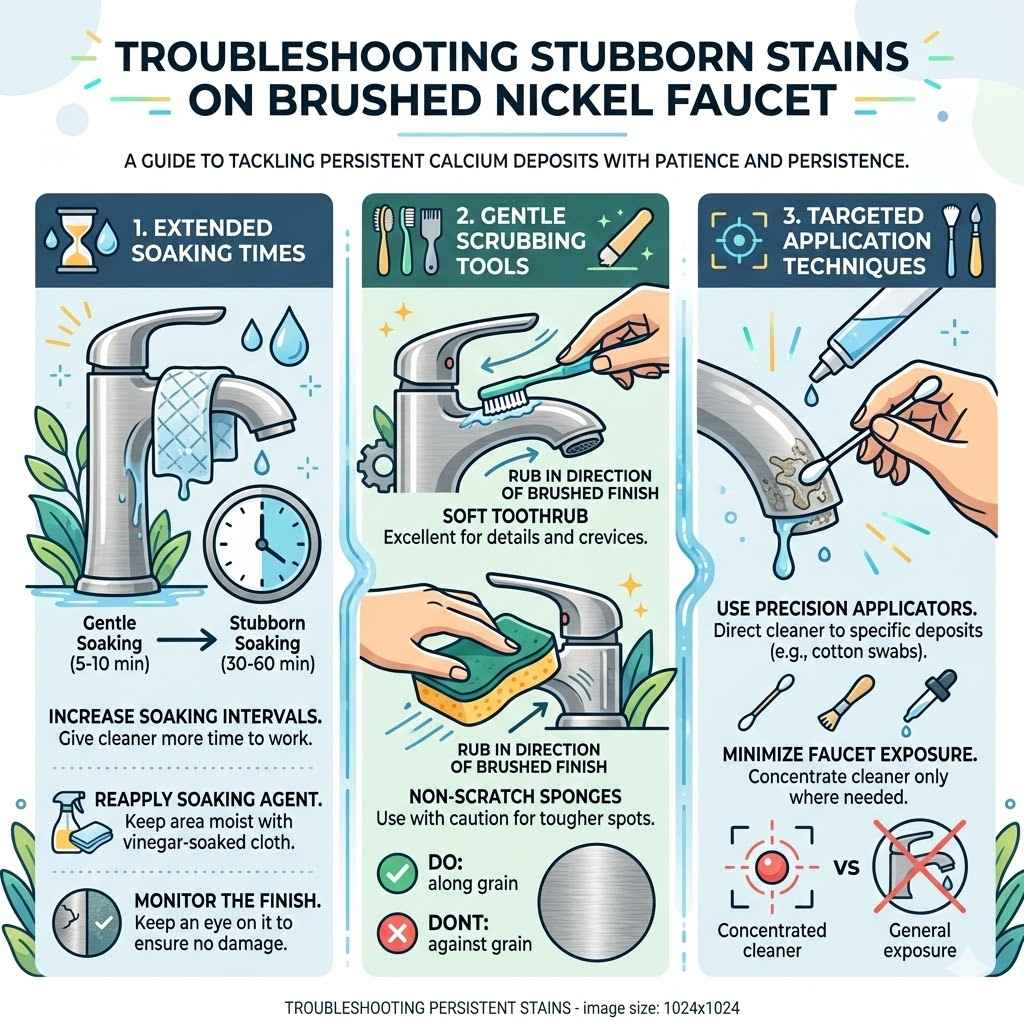
Extended Soaking Times
For very tough stains, you might need to increase the soaking time with your chosen cleaning solution. If you used vinegar, try soaking for 30-60 minutes, but always keep an eye on it to ensure the finish isn’t affected. You can reapply the vinegar-soaked cloth periodically to keep the area moist.
- Allow more time for the cleaner to work.
- Reapply the soaking agent to keep it effective.
- Monitor the faucet for any signs of damage.
The longer the acidic solution has to break down the mineral structure, the easier it will be to remove. However, it’s a balancing act. You want to give the cleaner enough time to be effective without risking damage to the faucet’s finish.
This approach is best reserved for cases where gentler, shorter applications have not yielded the desired results.
Gentle Scrubbing Tools
If a soft cloth isn’t cutting it, you can try a slightly firmer, but still non-abrasive, scrubbing tool. A soft-bristled toothbrush is excellent for reaching into crevices. For more stubborn spots on areas where scratching is less of a concern (like the base of the faucet or aerator, if applicable), a non-scratch scrub sponge can be used with caution.
Always rub in the direction of the brushed finish.
- Use tools that are safe for brushed nickel.
- A soft toothbrush is great for details.
- Consider non-scratch sponges for tougher spots.
The goal is to provide enough friction to dislodge the minerals without abrading the metal itself. The texture of brushed nickel requires careful attention to the direction of your scrubbing. Going against the grain can create noticeable scratches.
Therefore, always move your scrubbing tool along the existing brush lines on the faucet.
Targeted Application Techniques
Sometimes, the way you apply your cleaner makes all the difference. Instead of wrapping a cloth around the entire faucet, you can use a cotton swab or a small applicator to apply the cleaning solution directly and precisely to the individual deposits. This ensures the maximum concentration of the cleaner is focused on the problem area, minimizing exposure to the rest of the faucet.
- Focus cleaner on specific problem areas.
- Use tools like cotton swabs for precision.
- This maximizes the cleaner’s effectiveness.
This method is particularly useful for small, isolated spots of calcium buildup. It allows for a more controlled and potent application of the cleaning agent. By concentrating the efforts on just the affected areas, you can often achieve results more quickly and with less overall exposure of the faucet to the cleaning solution.
Frequently Asked Questions
Question: Can I use abrasive cleaners on brushed nickel faucets?
Answer: No, it is strongly recommended to avoid abrasive cleaners on brushed nickel faucets. Abrasive cleaners can scratch and dull the finish, permanently damaging its appearance. Stick to gentle, non-abrasive methods and tools.
Question: How often should I clean my brushed nickel faucet?
Answer: For best results and to prevent buildup, it’s ideal to wipe your faucet dry after each use. A more thorough cleaning with a mild solution can be done weekly or as needed, especially if you have hard water.
Question: Will vinegar damage the brushed nickel finish if left on too long?
Answer: Yes, prolonged exposure to undiluted white vinegar can potentially dull or etch the brushed nickel finish. It’s important to limit the soaking time to 15-30 minutes and rinse thoroughly. Always test in an inconspicuous area first.
Question: What is the best way to remove hard water stains from a brushed nickel shower head?
Answer: You can often remove hard water stains from a shower head by unscrewing it and soaking it in a bowl of white vinegar for about an hour. Then, scrub gently with a soft brush and rinse thoroughly before reattaching.
Question: Are there any specific cleaners to avoid for brushed nickel?
Answer: Yes, you should avoid cleaners containing harsh chemicals like bleach, ammonia, and abrasive powders. Also, steer clear of steel wool or scouring pads, as these will scratch the finish.
Final Thoughts
Removing calcium deposits from your brushed nickel faucet is achievable with simple, safe methods. By using common household items like vinegar or baking soda and following gentle techniques, you can restore your faucet’s shine. Regular wiping and drying after use are your best defenses against future buildup, keeping your fixtures looking great with minimal effort.