How to Remove Paint From Glass Without Scratching It
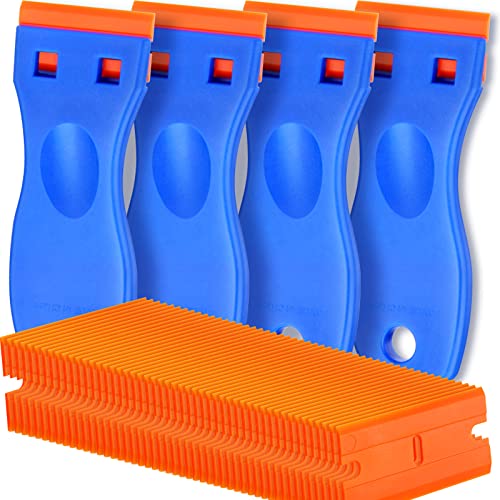
Start with a lower-risk option: cleanable paint on uncoated glass often comes off with warm soapy water, then a plastic scraper; use a razor only on plain glass, and avoid it on coated, shower-coated, or tinted panes. Scratch the coating, and the pane can be permanently marked or fogged. This guide helps you sort by coating, paint type, and location, then choose the safest removal method.
Start here


Glass is non-porous, so paint usually stays on the surface instead of soaking in. That makes removal possible, but the wrong tool can still dull the surface, and abrasive pads can leave permanent damage.
First, check whether the paint is wet or dried. Then identify the paint type and the glass surface: plain pane glass, Low-E glass, mirrored glass, tempered glass, textured glass, or shower-door glass. If the surface type is unclear, try a small hidden corner and stop if it marks.
Wet paint and dried paint are not the same job. Fresh paint usually responds to lubrication and gentle lifting. Dried paint often needs a solvent step before scraping.
What you’ll need
- Microfiber cloths
- Soft cloths
- Warm water
- Dish soap
- White vinegar
- Rubbing alcohol
- Acetone nail polish remover
- New razor blade
- Fine steel wool #0000
Glass paint decision table
| Paint type | Glass type/coating | Safest first-line method | Stop/avoid signals |
|---|---|---|---|
| Latex | Plain glass | Warm soapy water, then a new razor blade held low on the surface | Stop if the pane scratches, if the blade chatters, or if residue turns hazy |
| Acrylic | Plain glass | Warm soapy water first; if dry, try rubbing alcohol on a microfiber cloth | Avoid coarse pads; stop if the paint softens unevenly or leaves a cloudy film |
| Oil-based paint | Plain glass | Test a hidden spot, then use acetone on a cloth for tiny spots only | Stop if nearby caulk softens, if fumes build up, or if the finish looks streaky |
| Spray paint | Plain glass | Heated white vinegar for light overspray; then a razor on wet or soapy glass | Avoid dry scraping first; stop if layers are thick or if the paint is mixed with adhesive |
| Decorative glass paint | Plain glass or craft glass | Check the maker’s removal guidance; use spot testing and gentle rubbing alcohol if removable | Stop if the finish is meant to stay, if the paint turns sticky, or if the glass clouds |
| Any paint | Low-E glass | Use a soft cloth and warm soapy water only until the coating is confirmed safe | Avoid blades and abrasives; stop if the coating looks scratched, fogged, or uneven |
| Any paint | Tempered glass | Use gentle cleaning first, then cautious spot treatment; confirm there is no coating | Stop if the pane shows chips, edge damage, or coating haze |
| Any paint | Shower-door glass | Work from the flat glass only; keep solvents off seals and gaskets | Stop if seals swell, turn sticky, or show discoloration |
How do you remove fresh paint first?
Fresh paint usually comes off fastest with lubrication. Start with warm soapy water, because it helps reduce scratching while you lift the paint. On plain glass, a new or sharp razor blade works better than a nicked blade, but only at a low angle.
- Wet the paint with warm water and a few drops of dish soap.
- Wait about 1 to 2 minutes for the film to soften, then rewet it if it starts to dry.
- Hold a new razor blade at a low angle and push gently across the wet area.
- Wipe the loosened paint away with a microfiber cloth before it dries again.
- Rinse and dry the pane with a clean cloth.
Picture a kitchen window with a 6-inch strip of latex overspray from trim work. If the paint is still wet, soap and water plus a low-angle blade usually remove it with less risk than solvent use.
If that didn’t work, try this next
If the paint has already set up, move to a solvent that matches the paint type. Water-based paint often responds to rubbing alcohol. Oil-based paint and cured spray paint usually need a more careful spot treatment, especially near caulk or gaskets.
- Recheck the glass type and make sure it is plain and uncoated.
- Apply heated white vinegar to the dried spot with a microfiber cloth.
- Let it sit for 1 to 2 minutes, then wipe and recheck.
- If the mark is water-based, switch to rubbing alcohol and wipe again to remove haze.
How do you remove dried paint?
Dried paint needs more patience than force. Heated white vinegar can loosen light residue, rubbing alcohol can handle many water-based marks, and acetone nail polish remover can help with stubborn spots. Fine steel wool #0000 is a last-resort tool for plain glass only, and it should be used very lightly.
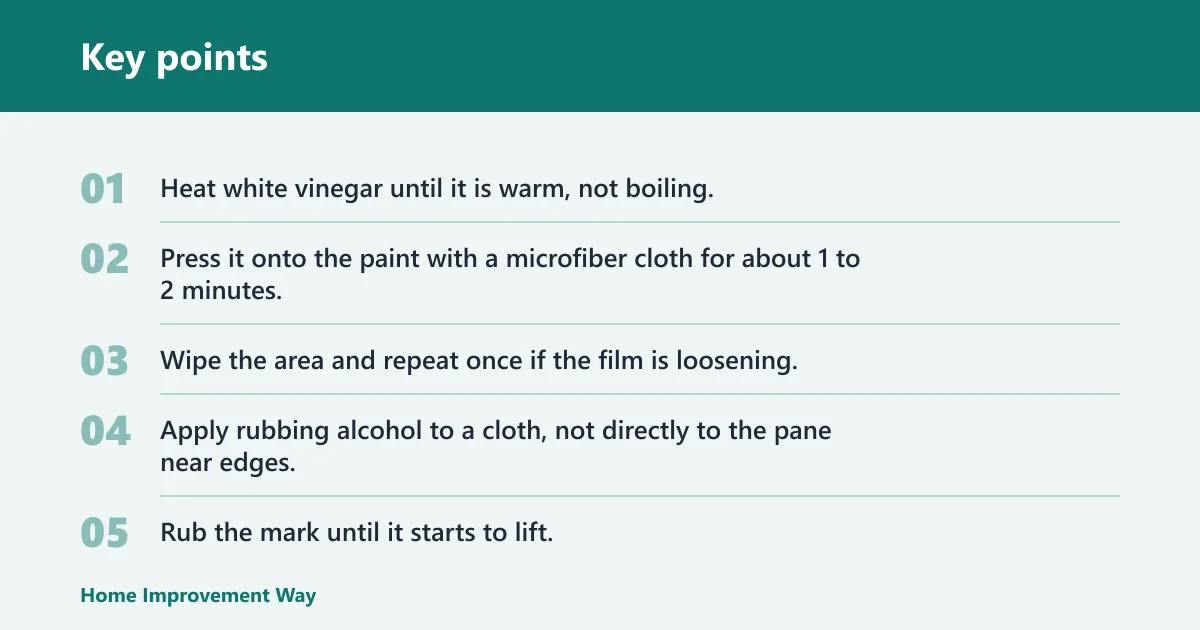
Use heated white vinegar for dried residue
Warm vinegar helps soften thin paint edges and light overspray. It is most useful on plain glass with a small amount of dried paint, not on coated panes. Keep a microfiber cloth damp, not dripping, so the liquid does not run into seals.
- Heat white vinegar until it is warm, not boiling.
- Press it onto the paint with a microfiber cloth for about 1 to 2 minutes.
- Wipe the area and repeat once if the film is loosening.
Try rubbing alcohol on water-based paint marks
Rubbing alcohol is a good next step for water-based paint residue. It can work on dry residue, but it often leaves a faint film that needs follow-up cleaning. That final wipe matters, because haze can look like damage when the paint is actually gone.
- Apply rubbing alcohol to a cloth, not directly to the pane near edges.
- Rub the mark until it starts to lift.
- Wipe again with clean water and dry the glass to remove haze.
Use acetone only for tiny stubborn spots
Acetone nail polish remover is best for small, stubborn spots. Use it with ventilation and a test spot first. Keep it away from seals, gaskets, paint trim, and any finish that could soften.
- Test acetone in a hidden corner.
- Dampen a cloth lightly and touch only the paint spot.
- Wipe immediately with clean water, then dry the area.
Suppose you find three specks of dried spray paint on a bathroom mirror edge. Acetone may remove the specks, but the mirror coating and nearby seal need extra caution, so the spot should stay tiny and controlled.
Reserve fine steel wool for very light finishing passes
Fine steel wool #0000 is generally the steel wool grade to consider here, and only on plain glass. It can help with some dried marks, but it should be used very lightly. Do not use coarse pads or sandpaper.
- Confirm the surface is plain, uncoated glass.
- Use #0000 steel wool with light pressure only after the paint has been softened.
- Stop at the first sign of drag, haze, or scratching.
What should you avoid on coated glass?
Low-E glass and mirrored glass may have thin coatings that scratch or cloud. Tempered glass can also be damaged at the edges, and shower-door glass has seals and hardware that can react badly to solvent runoff. Treat these surfaces as separate from plain pane glass.
Keep blades, acetone, and alcohol off any area that has not been tested. If the glass turns hazy, if the finish looks streaked in a way that does not wipe off, or if the coating shows a dull patch, stop.
- Check labels or markings for Low-E or coated glazing.
- Test the method on a hidden area first.
- Keep solvents off edges, caulk, seals, and gaskets.
- Stop if the pane clouds, the coating lifts, or the seal softens.
Common mistakes
Using a nicked blade is a quick way to scratch glass. A new or sharp blade glides better and gives you more control. A dull edge can chatter and catch.
Scraping dry glass without lubrication creates avoidable drag. Wet the surface with soapy water first whenever you are using a razor on plain glass. Skipping the test spot is another common mistake, especially on coated or mirrored panes.
Letting solvent sit on seals is risky on shower-door glass and at window edges. Wipe overspray promptly, and do not let acetone pool in corners. A common beginner mistake is using the same scraper technique on dried paint on a shower door and paint smeared along the rubber seal. They are not the same surface.
Sponsored / affiliate links. As an Amazon Associate I earn from qualifying purchases. I may earn additional commission from eligible campaigns.