How to Remove Paint From Wood Without Damaging the Finish
Check the wood finish first, then use the mildest method that fits the paint: dry scraping or a damp microfiber cloth for fresh paint, denatured alcohol for latex on many clear coats, and mineral spirits only when the finish can take it. Skip that order, and you can haze, soften, or strip the coating with the paint. This guide shows how to identify the finish, pick the safest remover, and clean paint off furniture, trim, or floors without harming the original coating.
Paint-on-finished-wood triage
| finish type | paint type | safest first test | stop signal | fallback method |
|---|---|---|---|---|
| polyurethane | fresh latex paint | Damp microfiber cloth, then a plastic scraper | Do not continue if the finish turns cloudy or feels tacky | Mineral spirits on a cotton swab, then wipe dry |
| polyurethane | acrylic paint | Rubbing alcohol on a hidden edge for 10 seconds | Do not continue if color transfers to the swab or sheen lifts | Plastic scraper with light pressure, then mineral spirits |
| polyurethane | oil-based paint | Mineral spirits on a swab in a hidden spot | Do not continue if the coating softens or dulls | Citrus stripping gel for the paint only, then gentle scraping |
| varnish | fresh latex paint | Warm soapy water and a plastic scraper | Do not continue if the varnish clouds or smears | Mineral spirits, then wipe clean and dry |
| varnish | acrylic paint | Rubbing alcohol on a hidden edge for 10 seconds | Do not continue if the finish gets sticky or lifts | Mineral spirits, then a plastic scraper |
| varnish | oil-based paint or old alkyd enamel | Mineral spirits, then a plastic scraper | Do not continue if the varnish turns soft or hazy | Citrus stripping gel |
| shellac | latex paint | Warm soapy water and a dry microfiber cloth | Do not continue if the finish turns cloudy or color comes off | Dry scraping with a plastic scraper |
| shellac | acrylic paint | Dry scraping with a plastic scraper | Do not continue if the finish softens or the swab picks up amber color | Stop and refinish the spot |
| shellac | oil-based paint | Dry scraping with a plastic scraper | Do not continue if the finish clouds or gums up | Spot refinish after paint removal |
| lacquer | latex paint | Dry microfiber cloth and plastic scraper | Do not continue if the lacquer turns sticky or dull | Stop and switch to spot refinishing |
| lacquer | acrylic paint | Dry scraping with a plastic scraper | Do not continue if the finish hazes or softens | Spot refinish |
| wax | fresh latex paint | Dry microfiber cloth | Do not continue if the wax smears or the cloth drags pigment | Very light scraping, then rewax the spot |
| wax | oil-based paint | Plastic scraper only | Do not continue if the wax finish patches or the wood color changes | Full strip and refinish the area |
How do you tell what finish is on the wood?
Start with the finish, not the paint. Polyurethane is often described as feeling hard and holding up well to rubbing alcohol; varnish can also feel hard but may dull sooner; shellac is commonly reported to soften quickly with alcohol; lacquer can haze or soften with stronger solvents; wax tends to have a lower sheen and may smear when rubbed. That difference decides which remover is safe.
Quick clues for polyurethane, varnish, shellac, lacquer, and wax
A cotton swab rubbed with alcohol for 10 seconds can separate shellac from harder clear coats: shellac often softens or transfers color, while polyurethane usually does not. If the finish turns tacky, cloudy, or color-stained, stop right away.
Wax marks easily. A dry cloth may pick up a slight smear, and any solvent test can leave a dull patch. Lacquer is also sensitive, especially on older trim and furniture. If you are unsure, treat the surface as delicate and begin with the mildest test.
Why finish identification changes the remover you choose
Paint removal is not only about the paint. A solvent that loosens dried latex may also soften shellac, and a strong gel that lifts oil paint can dull lacquer. On finished wood, the safest method removes the paint without changing sheen, color, or hardness underneath.
When you should stop and use a different approach
Stop if you see clouding, lifted sheen, gummy residue, color transfer, or a visible wood-color change. Those signs mean the coating is reacting, not only the paint. If the finish has already failed in the spot, do not keep scrubbing; switch to controlled refinishing instead of chasing a clean patch.
Which remover should you try first?
Choose the least aggressive remover that matches the paint. Fresh latex or acrylic on many sealed surfaces often responds to warm soapy water, rubbing alcohol, or mineral spirits before anything stronger. Oil-based paint and old alkyd enamel usually need mineral spirits, boiled linseed oil, or citrus stripping gel, with scraping only after softening.
Fresh splatter on sealed wood
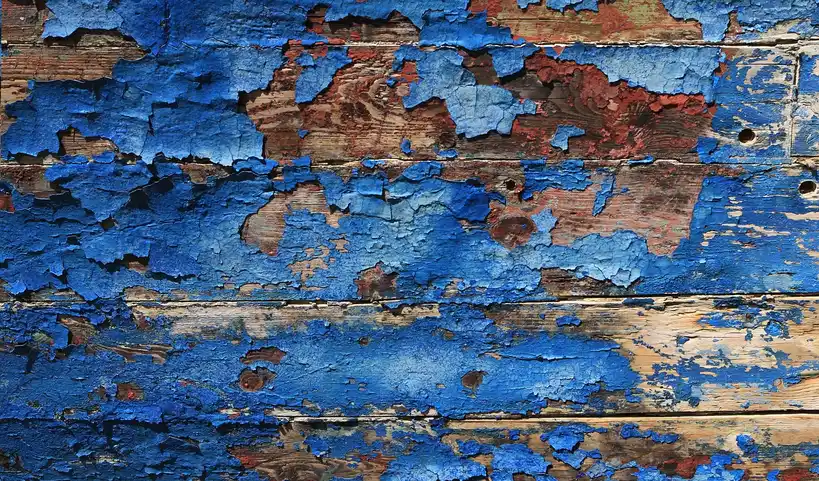
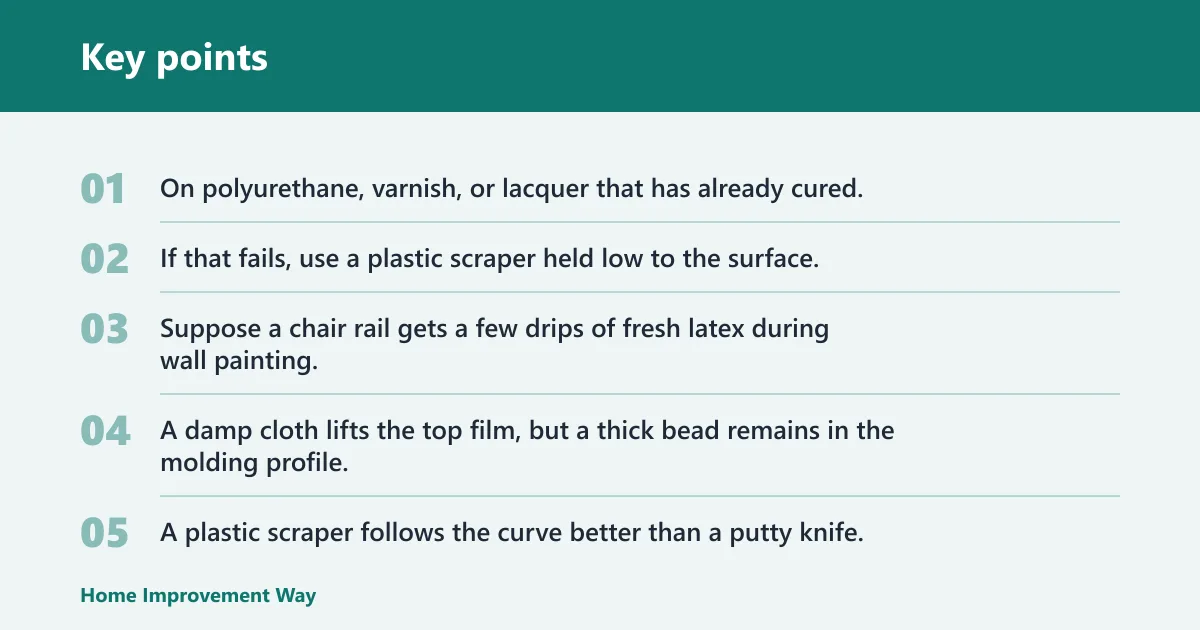
Fresh splatter is the easiest case. On polyurethane, varnish, or lacquer that has already cured, start with warm soapy water and a microfiber cloth. If that fails, use a plastic scraper held low to the surface, then wipe residue with a solvent that matches the paint type.
Suppose a chair rail gets a few drips of fresh latex during wall painting. A damp cloth lifts the top film, but a thick bead remains in the molding profile. A plastic scraper follows the curve better than a putty knife, which is more likely to nick the finish on the ridge.
Latex or acrylic paint on finished wood
Latex paint on cured clear coats often gives way to rubbing alcohol or mineral spirits in small amounts. The guide’s hidden-edge check uses a cotton swab with rubbing alcohol for 10 seconds. If the swab brings up finish color or the spot turns tacky, stop at once.
Acrylic craft paint can be trickier than architectural latex because it can bond hard but still react to alcohol. On furniture, start with the smallest possible test area. On floors, keep the test away from seams and high-wear zones so you do not leave a bright spot in traffic paths.
Oil-based paint and old alkyd enamel on finished wood
For oil-based paint or old alkyd enamel, mineral spirits are usually the first solvent to try on a hidden spot. If the paint softens without harming the coating, keep working in short passes. If the finish clouds, stop and move to a different approach, often a citrus stripping gel on the paint only.
Boiled linseed oil can help soften dried oil-based splatter. Use it as a spot softener, not a soak. Wipe the area dry after the paint loosens so the oil does not spread into surrounding grain or leave a glossy patch.
When mineral spirits, rubbing alcohol, or citrus stripping gel is the better first step
Use mineral spirits when the paint is oil-based, old alkyd, or stubborn residue on a solvent-resistant finish. Use rubbing alcohol when latex or acrylic paint is on shellac-compatible or other delicate clear coats, but only after a hidden-edge test. Use citrus stripping gel for larger painted areas where a liquid solvent would run and stain adjacent finish.
CitriStrip is presented as a low-odor stripping gel for larger painted areas. It can reduce drip risk on trim and cabinet faces, but it still needs a careful stop point. If the gel reaches bare finish edges or the coating swells, clean it off and reassess rather than waiting longer.
How do you remove paint from wood furniture without ruining the finish?
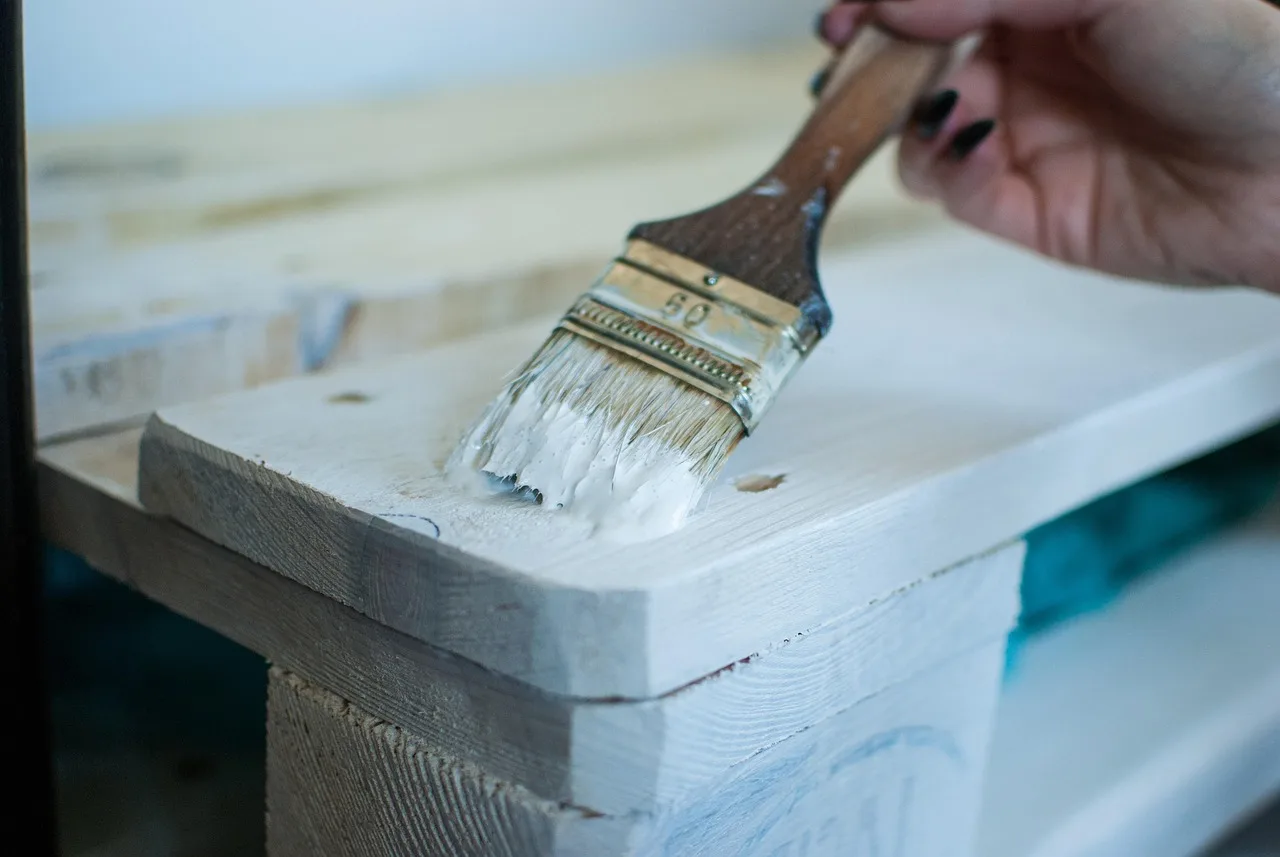
Furniture usually gives you better access than floors, but edges, curves, and veneer make it easier to damage the finish. Begin with a cloth, then a plastic scraper, then a targeted solvent. Stop as soon as the paint lifts and the clear coat remains hard, glossy, and unchanged in color.
Spot removal on tabletops, cabinets, and chair rails
Work in small patches. On tabletops and cabinet doors, keep the solvent on a swab or folded cloth rather than flooding the panel. If the paint is fresh, dry scraping often removes the bulk before any solvent is needed.
For chair rails and carved trim, use the corner of a plastic scraper or a dull putty knife only where the finish is thick and stable. Keep the blade flat. If you tilt it up, it can cut through the coating and leave a bright scar.
Using a plastic scraper on curved or thin surfaces
A plastic scraper is safer on curved legs, thin moldings, and painted-over inlays because it flexes and lowers gouging risk. A carbon-steel paint scraper cuts more aggressively and belongs only where the finish is already failing or the paint is thick enough that gentle tools will not move it.
Fine steel wool can help with residue, but it can also scratch gloss finishes and leave gray marks if used too early. Use it only after a hidden test, and only if the finish can tolerate light abrasion. For cleanup, fine-grit sanding belongs at the very end, not as the first move.
When veneer needs a lighter touch
Veneer is thin. If the finish is on veneer, use a plastic scraper rather than a putty knife or steel wool unless the area is already being refinished. If paint remains in a narrow line, soften it and lift it in stages instead of pushing harder and risking the wood layer below.
How do you remove paint from wood floors without damaging the finish?
Floors need more caution than furniture because you are dealing with traffic wear, joints, and larger visible fields. Small splatters can often be lifted with warm soapy water, a plastic scraper, or mineral spirits. Dried drips may need a slower softening step, but if the finish starts to dull, stop and plan a spot refinish.
Small splatters versus dried drips
Fresh splatters on a floor usually come off with a damp cloth and a plastic scraper. Dried drips often need a solvent and time to soften before removal. Do not pry up hardened paint with a metal blade; that is how finish chips start at the edges of the drip.
A common first-timer mistake is chasing a dried drip across a floor plank with a sharp scraper. The paint comes off, but the clear coat around it turns dull in a wide crescent. At that point the repair is no longer a spot clean; it is a finish repair.
Working around floor finish wear patterns
Use extra caution in high-wear lanes, near doorways, and at thresholds where the floor coating may already be thin. Those spots react faster to solvents and abrasion. If the finish is uneven before you start, the cleaned patch may look brighter even when the paint is gone.
When to stop spot-cleaning and plan a refinish
Stop spot-cleaning if the floor shows dulling, color loss, or a raised grain that does not settle after drying. If paint remains after two careful passes with the mildest safe method, the better move may be a controlled spot refinish or a larger blend-in repair rather than more scrubbing.
What should you do about lead paint risk?
Homes built before 1978 need a lead check before aggressive removal. The federal government banned lead-based residential paint in 1978. Use LeadCheck or D-Lead test kits on suspect layers, and treat a positive result as a change in method, not only a warning label.
Using LeadCheck or D-Lead test kits
EPA recognizes LeadCheck and D-Lead kits for wood testing. If a test is negative, you can proceed with the methods listed here. If it is positive or uncertain, keep the work controlled and avoid methods that spread dust or heat the paint enough to create a hazard.
Heat-gun limits, sanding limits, and HEPA cleanup
EPA limits heat guns to below 1,100°F when lead paint is possible. Open flame or torch is prohibited for lead-paint removal work. Power sanders or grinders are prohibited unless shrouded with a HEPA vacuum, and steam strippers are listed at a maximum of 212°F.
For lead-safe cleanup, vacuum with HEPA filtration after the paint is removed and before any touch-up work. Do not dry sand a suspect coating just to speed the job. If the finish is already damaged and lead is present, that often moves the task into professional restoration territory.
Cleanup and touch-up after paint removal
After the paint is gone, clean the residue without dulling the coating. Wipe the spot dry, check the sheen under angled light, and remove any solvent film before it sets. Then decide whether the area needs a simple blend, a polishing paste, or a spot refinish.
Remove residue without dulling the coating
Use a clean cloth to lift leftover solvent and paint film. If residue smears into the grain, stop and let the area dry before trying again. More rubbing can push softened paint deeper into pores and leave a larger stain line.
Blend sheen after the spot is clean
Pumice polishing powder is used for blending sheen after paint removal. For very fine correction, a pumice paste or rottenstone paste can help even the look of a cleaned spot, but only after the surface is fully dry. Match the sheen to the surrounding finish, not the other way around.
When to use pumice paste, rottenstone paste, or a spot refinish
Use pumice paste when the spot is slightly dull but the finish is intact. Use rottenstone paste when you need a finer sheen blend on a harder clear coat. If the finish is clouded, softened, or missing entirely, skip polishing and refinish the spot instead.
How to touch up bare wood without making the repair obvious
If you break through to bare wood, touch up the wood color first, then rebuild the clear coat. Keep the repair narrow and feathered into the surrounding area. On larger losses, a full spot refinish is usually cleaner than trying to disguise a patch with more stain and more rubbing.
Frequently asked questions
How to remove paint from wood furniture without damaging the finish
Start with the finish, not the paint blob. On furniture, use warm soapy water for fresh latex, rubbing alcohol for some acrylics on a hidden edge, and mineral spirits only if the coating stays hard and clear. Stop if the finish clouds, softens, or transfers color.
How to remove acrylic paint from wood furniture without damaging the finish
Test rubbing alcohol on a hidden edge for 10 seconds first. If the finish stays unchanged, use small passes and a plastic scraper to lift softened paint. If the coating turns sticky or dull, stop and switch to a different method or a spot refinish.
How to remove paint from wood floor without damaging finish
Use the mildest method that works: damp cloth, then a plastic scraper, then a solvent matched to the paint. Floors show dulling fast, so watch for sheen change, color loss, or grain lift. If any of those appear, stop spot-cleaning and plan a finish repair.
How to remove paint from varnished wood without damaging finish
Varnish usually tolerates careful scraping and limited mineral spirits better than shellac or lacquer, but it still can haze. Test in a hidden spot first. If the surface stays hard and clear, continue in short passes; if it clouds, switch methods before the repair spreads.
How to remove dried paint from wood without damaging finish
Softening is safer than forcing dried paint off. Use mineral spirits for oil-based paint, boiled linseed oil for dried oil-based splatter, or rubbing alcohol for some acrylics on sound clear coats. If the finish reacts, stop and avoid sanding unless the area is going to be refinished.
How do you remove paint from wood floors without damaging the finish: work in small spots?
Work in small spots and keep the tool flat. A plastic scraper is usually safer on finished floors than a putty knife, and fine steel wool should wait until you know the coating can handle it. If the floor dulls or the finish lifts, stop and reassess.
Sponsored / affiliate links. As an Amazon Associate I earn from qualifying purchases. I may earn additional commission from eligible campaigns.