How to Remove Paint from Clothes: Wet vs Dried Stains
Treat paint on clothes by stain state first: blot wet spills at once, then let dried paint dry before you try to scrape it and clean it. Match the cleaner to the paint type and fabric next. Using the wrong method can spread the stain, push it deeper, or damage the fibers. This guide shows the exact steps for wet and dried paint on cotton, synthetics, wool, silk, and common paint types like latex and oil-based.
| Decision factor | Wet Spills | Dried Stains | Winner |
|---|---|---|---|
| Removal difficulty | Easier to lift before the paint bonds to fibers. | Harder because the film has already set. | Wet Spills |
| Risk of spreading | Higher if you rub or use too much liquid. | Lower once you lift loose flakes first. | Dried Stains |
| Chance of full removal | Better, especially with latex or acrylic paint. | Lower, especially after full curing. | Wet Spills |
| Time needed | Usually shorter if you act right away. | Usually longer because you need scraping plus spot treatment. | Wet Spills |
| Best use case | Fresh wall paint, craft acrylic, or trim paint on washable fabric. | Old splatter, dried drips, or paint you found after laundering. | Tie |
Wet spills versus dried stains


Wet spills usually clean up faster because the paint has not fully cured. Dried stains need loosening before any cleaner can work. Fresh paint is also less likely to lock into the weave, but it spreads easily if you scrub. Dried paint often needs a lift-first approach, especially on textured fabrics.
Wet spills
Wet paint calls for quick blotting, a rinse for water-based paint, and a detergent step before the stain sets. Stop if the color starts transferring into a wider ring, because extra rubbing can drive pigment deeper into cotton, polyester blends, or knits.
Dried stains
Dried paint needs a mechanical lift first: scrape, flake, or tape off what you can before adding liquid. Fully cured paint may not come out completely, even with repeated treatment, so the goal is often to reduce the stain as much as possible without damaging the fabric.
Why the winner changes by factor
Wet spills win on speed and removal odds because the paint has not bonded fully. Dried stains can be less messy to handle at first, but they demand more steps and more care. If the stain has already set, you trade convenience for control.
Say your shirt gets a palm-sized splash of interior latex while you are painting trim. Immediate blotting and a warm-water rinse usually beat any dry-stain method because the paint is still workable. If the same shirt dries overnight, scraping and detergent matter more than speed.
What you’ll need before you start
- Butter knife or metal spoon
- Liquid laundry detergent
- Warm water
- Rubbing alcohol
- Oil paint thinner or turpentine
- Clean cloths or paper towels
- Gloves
- Good ventilation
What should you do first after getting paint on clothes?
First, remove excess paint without pushing it deeper, then identify whether the paint is water-based or oil-based. That order matters because the wrong solvent can spread the stain or damage the fabric. For wet paint, blot first; for dried paint, let it harden so you can lift the surface layer cleanly.
- Scrape off thick paint with a butter knife or spoon.
- Blot wet paint with a clean cloth or paper towel.
- Check the paint label or test a hidden spot to separate water-based from oil-based paint.
- Match the cleaner to the paint type and fabric.
How do you get wet paint out of clothes?
Wet paint comes out best when you lift the excess first, rinse water-based paint with warm water, and use liquid laundry detergent on the remaining residue. If the stain is stubborn, a small dab of rubbing alcohol can help with latex or acrylic paint after a colorfastness spot test.
- Scrape away blobs with a spoon or butter knife.
- Rinse the back of the fabric with warm water for latex or acrylic paint.
- Rub liquid laundry detergent into the stain and rinse again.
- Dab stubborn water-based residue with rubbing alcohol on a hidden spot first.
- Wash the item normally after the stain lightens.
If that didn’t work, try this next
- Repeat the detergent step instead of scrubbing harder.
- For cotton or denim, use a clean cloth to blot, then rinse again with warm water.
- For polyester blends, work from the back of the stain to avoid driving paint inward.
How do you get dried paint out of clothes?
Dried paint is harder to remove because the film has already bonded to the fibers, so start by loosening flakes and lifting small bits with tape before using any cleaner. If the stain is fully cured, you may only be able to reduce it, not remove it completely. Stop if the fabric pills, fades, or distorts.
- Let the stain harden if it is still tacky.
- Scrape loose layers with a spoon or dull edge.
- Press duct tape onto tiny dried flakes and pull it away quickly.
- Treat the remaining stain by paint type.
- Wash only after the visible paint has lifted.
If that didn’t work, try this next
- Repeat tape lifting on the top layer only.
- Use rubbing alcohol only on water-based paint and only after a spot test.
- Use thinner or turpentine only on oil-based paint in a ventilated area.
How do you know if paint is water-based or oil-based?
Water-based paint is also called latex or acrylic, and it usually cleans up with water; it is common for interior walls and many craft projects. Oil-based paint needs thinner or turpentine and is harder to remove. Check the can label before you touch the stain with a solvent. (wikihow.com)
How cleanup changes by paint chemistry
Latex and acrylic paint respond to warm water, liquid laundry detergent, and sometimes rubbing alcohol on a spot test. Oil-based paint needs oil paint thinner or turpentine before laundering, and you should not treat it like latex. Mixing up the two often drives the stain in deeper.
Paint type guide: latex or acrylic vs oil-based
Latex or acrylic paint is the easier path because it is water-based, while oil-based paint needs a solvent step before washing. That split determines the first cleaner you use, the order of steps, and how much risk you take with delicate fabrics. Never start with thinner unless you have confirmed an oil-based stain.
| Paint type | Fabric type | First action | Safe solvent | Stop conditions |
|---|---|---|---|---|
| Latex/acrylic | Cotton/denim | Scrape off excess, then rinse with warm water. | Liquid laundry detergent; rubbing alcohol on a hidden spot if needed. | Stop if color lifts from the fabric or the stain stops changing after two detergent passes. |
| Latex/acrylic | Polyester blends | Lift dried bits, then dab detergent into the stain. | Warm water and detergent; alcohol only after a spot test. | Stop if the fabric warps, pills, or the stain edge spreads. |
| Latex/acrylic | Wool/silk | Blot lightly and avoid soaking. | Very small amount of water-based detergent solution; spot test first. | Stop if the fabric fuzzes, shrinks, or loses sheen. |
| Latex/acrylic | Delicate items | Lift flakes with tape only. | None without a care-label check. | Stop and switch to professional cleaning if the label says dry clean only. |
| Oil-based | Cotton/denim | Scrape first, then apply thinner or turpentine sparingly. | Oil paint thinner or turpentine, then warm water and wash. | Stop if the fabric fades, the stain smears wider, or fumes build up indoors. |
| Oil-based | Polyester blends | Test a hidden seam before solvent use. | Very small amount of thinner or turpentine; do not soak. | Stop if the fabric softens, clouds, or shows dye transfer. |
| Oil-based | Wool/silk | Avoid direct solvent treatment. | Professional cleaning only in most cases. | Stop at the first sign of shrinkage, texture change, or color loss. |
| Oil-based | Delicate items | Do not attempt full removal at home. | None for home soaking or scrubbing. | Stop and send out for care if the garment is labeled dry clean only. |
Cotton and denim
Cotton and denim often tolerate more agitation than some other fabrics, so they can be a good place to start. Latex, acrylic, and many house paints often respond to warm water and detergent here, while oil-based paint still needs thinner or turpentine before washing. Stop if the cloth starts fading.
Polyester blends and other synthetics
Polyester blends can hold paint on the surface longer, which helps scraping, but they can also show distortion if you overwork the stain. Use light dabbing, not hard rubbing. If a hidden seam reacts badly to alcohol or thinner, do not continue on the visible area.
Wool and silk
Wool and silk need the most caution because heat, moisture, and solvents can change the fabric’s shape or finish. Use only the mildest spot treatment after a hidden-area test, and avoid soaking. For oil-based paint on these fabrics, professional cleaning is usually the safer path.
Sensitive fabrics and dry-clean-only items
Sensitive fabrics include garments labeled dry clean only, plus items that pill, stretch, or lose sheen easily. For these, tape off loose paint and avoid liquid cleaners unless the care label clearly allows them. Do not use thinner or turpentine as a blanket fix.
Can duct tape remove dried paint from clothes?
Duct tape can lift small dried paint bits from the surface, especially when the stain has flaked into thin layers. It works best as a first cleanup step, not as a full cure. Press it on, pull it off quickly, and stop if the fabric starts fuzzing or stretching.
What clothes are too delicate for normal paint removal?
Delicate clothes are the ones that cannot handle scrubbing, soaking, or strong solvents without damage. Wool, silk, and dry-clean-only items need a lighter touch, and some should go straight to a cleaner after you lift loose flakes. If the label warns against water, skip home soaking.
Common mistakes to avoid
The biggest errors are scrubbing too hard, using the wrong solvent, skipping a spot test, and drying the garment before the stain is gone. Heat can lock residue in place, especially with dried paint. If the stain is not moving after a reasonable attempt, stop before the fibers take more damage.
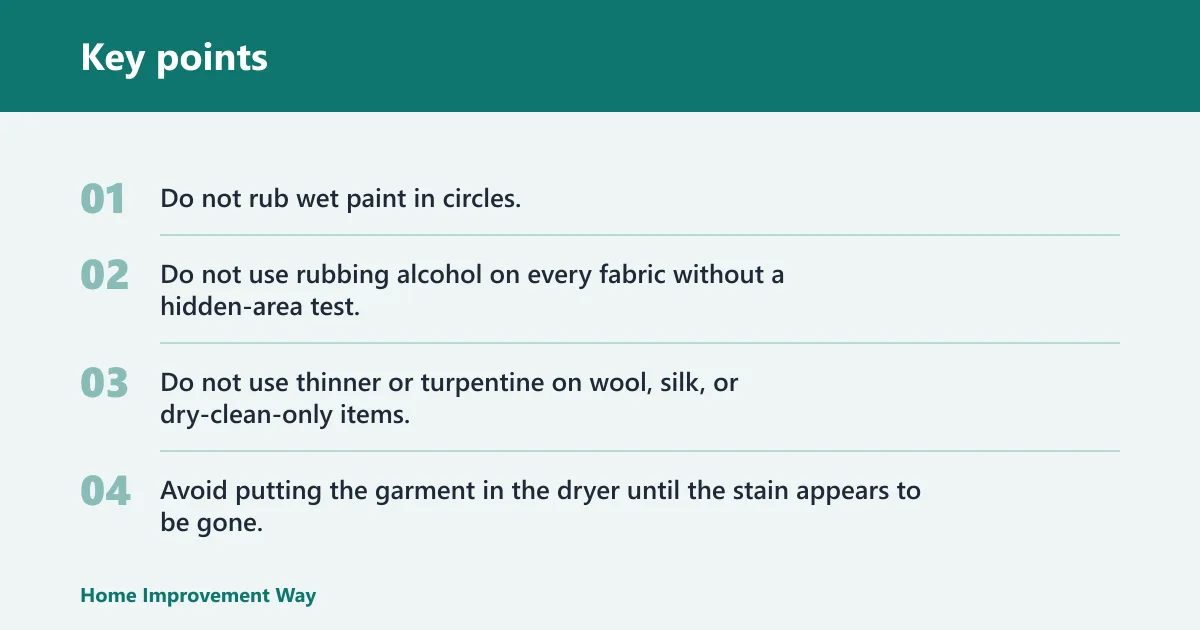
- Do not rub wet paint in circles.
- Do not use rubbing alcohol on every fabric without a hidden-area test.
- Do not use thinner or turpentine on wool, silk, or dry-clean-only items.
- Avoid putting the garment in the dryer until the stain appears to be gone.
Picture a white polyester work shirt with a 2-inch acrylic drip on the sleeve. Warm water and detergent can often reduce the mark, but aggressive scrubbing may spread the edge into the weave. For a silk blouse with the same drip, the safer move is to stop after tape-lifting loose bits and hand it off to a cleaner.
Prevention: If you are painting indoors, keep a stack of paper towels, a spoon, and gloves nearby so you can lift spills before they set.
Frequently asked questions
Does rubbing alcohol remove paint from clothes?
It can help lift stubborn water-based paint, including some latex or acrylic residue, but only after a spot test on a hidden area. Dab it on rather than soaking the fabric. Do not use it as a universal cleaner for oil-based paint or delicate textiles.
Can you wash paint out of clothes after it dries?
Yes, but only after you remove loose paint and pretreat the stain. Washing alone usually is not enough for dried paint, especially if it is oil-based or fully cured. Use the right pretreatment first, then wash in warm water if the care label allows it.
How do you remove oil-based paint from clothes?
Use oil paint thinner or turpentine first, then soak or wash the garment in warm water if the fabric can handle it. Keep the area ventilated and wear gloves. If the item is wool, silk, or dry-clean-only, stop and choose professional cleaning instead.
Sponsored / affiliate links. As an Amazon Associate I earn from qualifying purchases. I may earn additional commission from eligible campaigns.