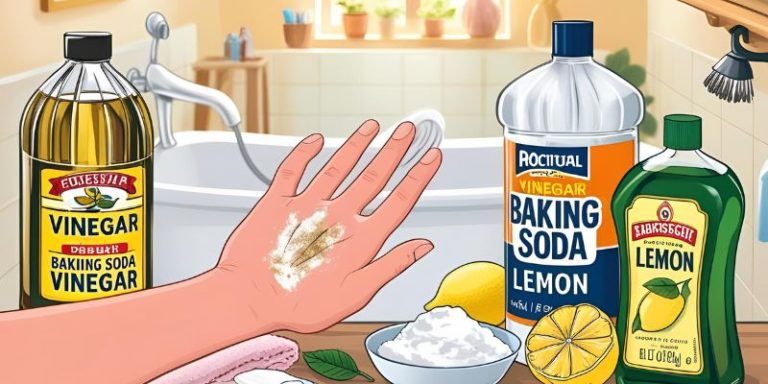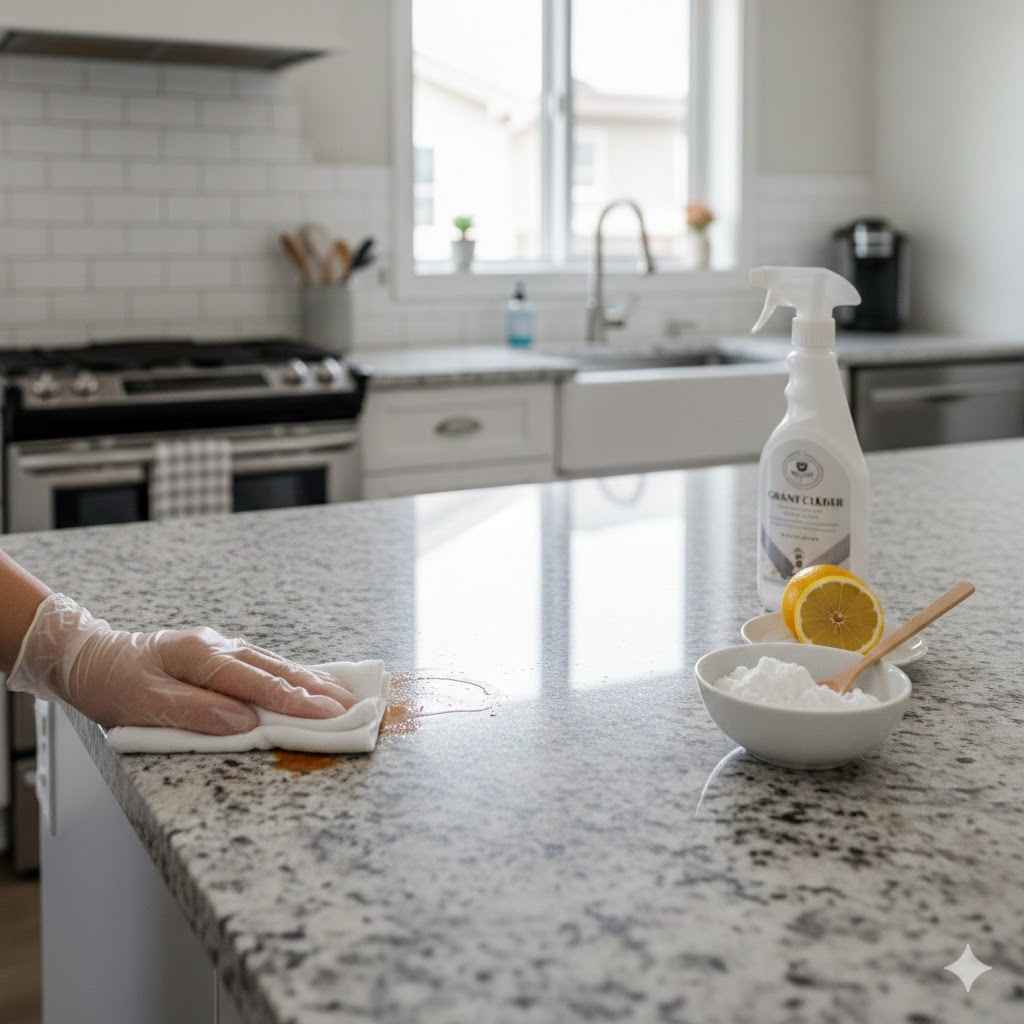
How to Remove Stains From Granite Countertops
Granite countertops look beautiful, but sometimes spills happen and leave tough marks. Many people worry about how to clean these without damaging their stone. Learning How to Remove Stains From Granite Countertops might seem tricky at first, especially with different types of stains.
But don’t fret! We have a straightforward, step-by-step guide to help you make your granite shine again. Get ready to tackle those marks with simple solutions.
Getting Granite Countertop Stains Out
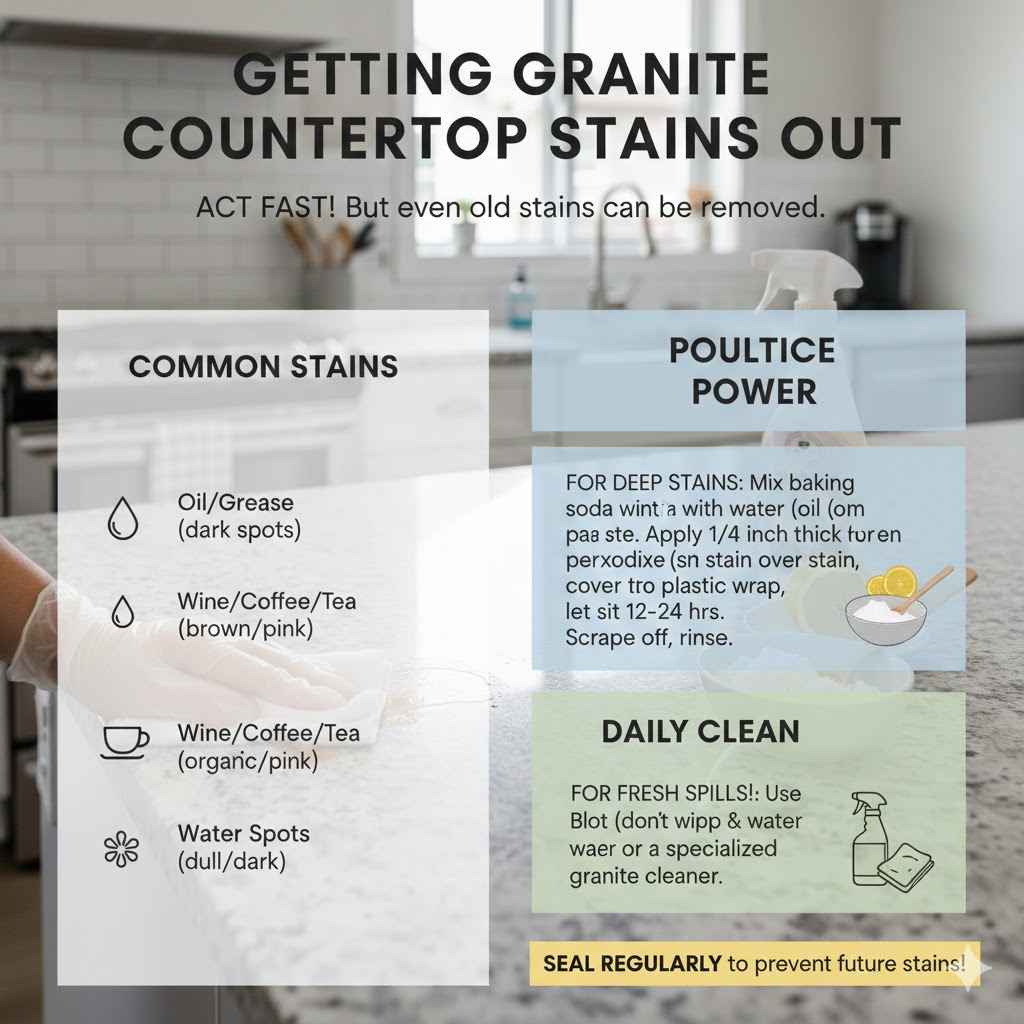
Granite is a strong and beautiful natural stone, often used for kitchen and bathroom countertops. However, it’s also porous, meaning it can absorb liquids. When liquids with color, like wine, coffee, or oil, sit on the surface for too long, they can seep into the stone and cause stains. Different types of stains need different cleaning methods. It’s important to act fast when a spill happens, but even older stains can often be removed with the right approach.
Common Types of Granite Stains and How to Tackle Them
Understanding the type of stain is the first step to removing it effectively. Here are some of the most common culprits and how to deal with them.
Oil-Based Stains
Oil stains are common in kitchens. Think cooking oil, grease, or even makeup. These stains often appear as dark spots on the granite. Because oil is greasy, it can soak into the stone.
How to Remove Oil Stains
The key to removing oil stains is to draw the oil out of the granite. A poultice is the best method for this.
Making a Poultice
A poultice is a paste that draws out stains. For oil stains, you can make one using baking soda and water.
Steps for Oil Stain Removal
1. Mix baking soda with enough water to create a thick paste, like peanut butter.
2. Apply the paste directly to the stain, making sure it covers the entire spot.
3. Cover the paste with plastic wrap and tape down the edges. This keeps the paste moist, allowing it to work longer.
4. Let it sit for at least 24 hours.
5. Remove the plastic wrap and let the poultice air dry completely.
6. Once dry, gently scrape it off with a plastic scraper or a putty knife.
7. Wipe the area clean with a damp cloth and dry it thoroughly.
8. You might need to repeat this process a few times for stubborn stains.
Organic Stains
These stains come from things like coffee, tea, fruit juices, food, or even mold and mildew. They often look pinkish or brownish.
How to Remove Organic Stains
For lighter organic stains, a simple solution might be enough.
Using Hydrogen Peroxide
A diluted solution of hydrogen peroxide is effective for organic stains.
Steps for Organic Stain Removal
1. Mix one part hydrogen peroxide with two parts water.
2. Apply this solution to the stain using a soft cloth.
3. Let it sit for a few minutes.
4. Wipe the area clean with a damp cloth and dry it.
For tougher organic stains, a poultice can also be used. You can make this with baking soda and a few drops of hydrogen peroxide.
1. Mix baking soda with enough hydrogen peroxide to form a thick paste.
2. Apply this paste to the stain.
3. Cover with plastic wrap and tape the edges.
4. Let it sit for 24 hours, then let it dry completely.
5. Scrape off the dried paste.
6. Clean with a damp cloth and dry.
Water Stains and Rings
Water spots and rings are common, especially around sinks or where glasses have sat. They can leave dull marks or cloudy spots on the granite.
How to Remove Water Stains
Often, these are just surface deposits.
Using Mild Soap and Water
For light water marks, regular cleaning usually does the trick.
Steps for Water Stain Removal
1. Wipe the area with a soft cloth dampened with warm water and a little mild dish soap.
2. Rinse thoroughly with clean water.
3. Dry the countertop completely with a soft, dry cloth.
If the water stain is tougher, you might need something a little stronger.
Using a Fine Steel Wool Pad (0000 Grade)
For very stubborn water rings, a very fine steel wool pad can sometimes help.
1. Gently rub the water ring with a 0000-grade steel wool pad. This is the finest grade available and is less likely to scratch granite.
2. Use light pressure.
3. Wipe the area clean with a damp cloth.
4. Dry thoroughly.
5. Test this method on an inconspicuous area first to ensure it doesn’t dull your granite’s finish.
Metal Stains
Metal stains can appear as rust spots, usually from metal cans or objects left on the counter. They can also be caused by minerals in the water, appearing as brown or green marks.
How to Remove Metal Stains
Rust stains are particularly stubborn and require specific products.
Using a Commercial Rust Remover
There are special rust removers designed for natural stone.
Steps for Metal Stain Removal
1. Always follow the product instructions carefully.
2. Many rust removers are in a paste form. Apply the paste to the stain.
3. Let it sit for the recommended time, usually a few hours.
4. Wipe off the residue and rinse the area.
5. Dry the countertop.
Alternatively, you can try a poultice using commercial rust remover powder mixed with water.
1. Mix the rust remover powder with water to form a paste.
2. Apply to the stain, cover with plastic, and let it dry for 24-48 hours.
3. Scrape off, clean, and dry.
Ink Stains
Ink from pens or markers can leave unsightly marks on granite.
How to Remove Ink Stains
Different inks require different solvents.
Using Rubbing Alcohol
Rubbing alcohol (isopropyl alcohol) is good for many ink stains.
Steps for Ink Stain Removal
1. Dampen a soft cloth with rubbing alcohol.
2. Gently blot the ink stain, working from the outside in.
3. Avoid rubbing, which can spread the ink.
4. Rinse with a damp cloth and dry.
For permanent marker or tougher ink, you might need a poultice with acetone or a commercial stain remover. Always test these products in a hidden spot first.
Paint Stains
Fresh paint can often be wiped away with a damp cloth. Dried paint requires a bit more effort.
How to Remove Paint Stains
Gentle scraping is usually the best approach for dried paint.
Using a Plastic Scraper or Razor Blade
For small, dried paint spots, a careful approach can work.
Steps for Paint Stain Removal
1. Try to gently scrape off the paint with a plastic scraper.
2. For very stubborn paint, you can carefully use a razor blade held at a very low angle. Be extremely cautious not to scratch the granite.
3. If the paint persists, a small amount of mineral spirits or acetone might help. Apply sparingly to a cloth and dab at the paint.
4. Clean the area with soap and water afterward and dry well.
Preventing Future Stains on Your Granite Countertops
The best way to deal with stains is to prevent them from happening in the first place. Regular maintenance and quick clean-ups make a big difference.
Sealing Your Granite
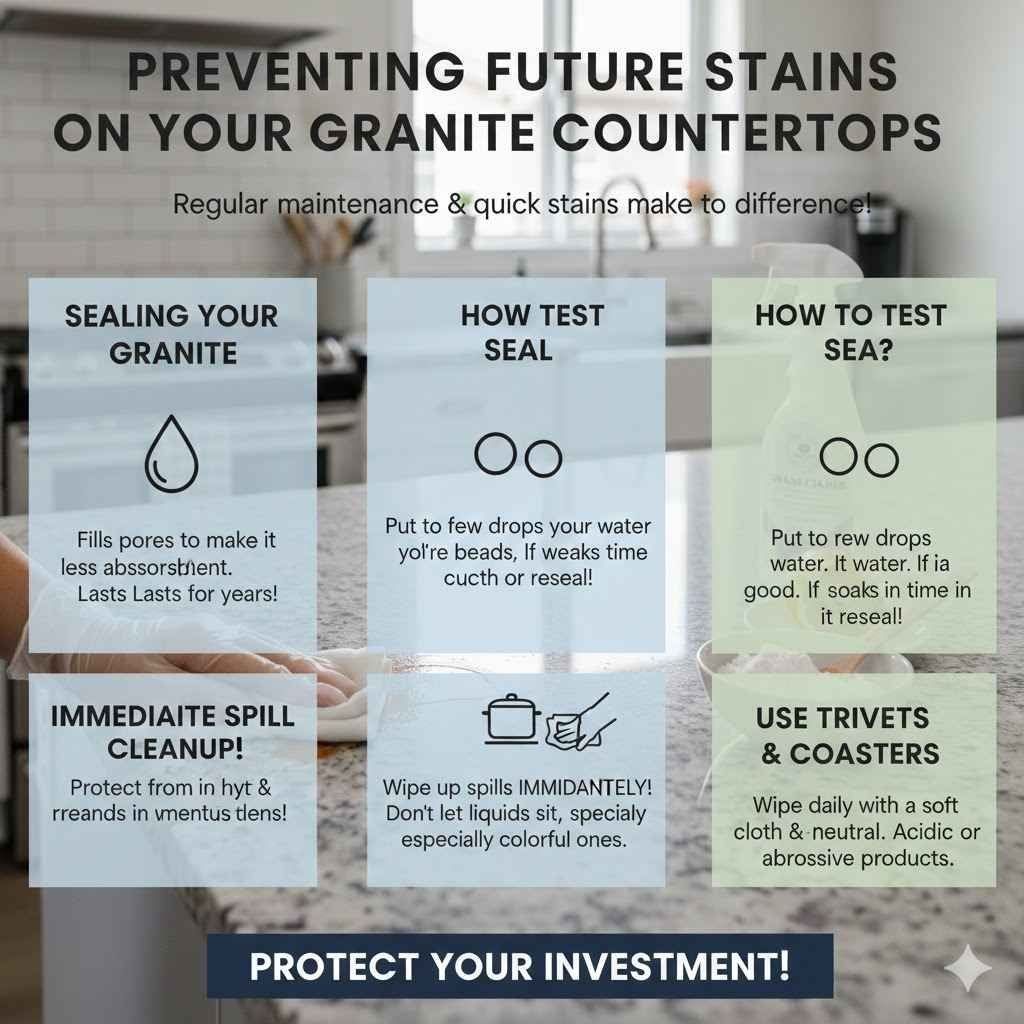
Granite countertops should be sealed periodically. Sealing fills the pores in the stone, making it less absorbent. A good sealant can protect your countertops from spills for years.
How to Test Your Granite’s Seal
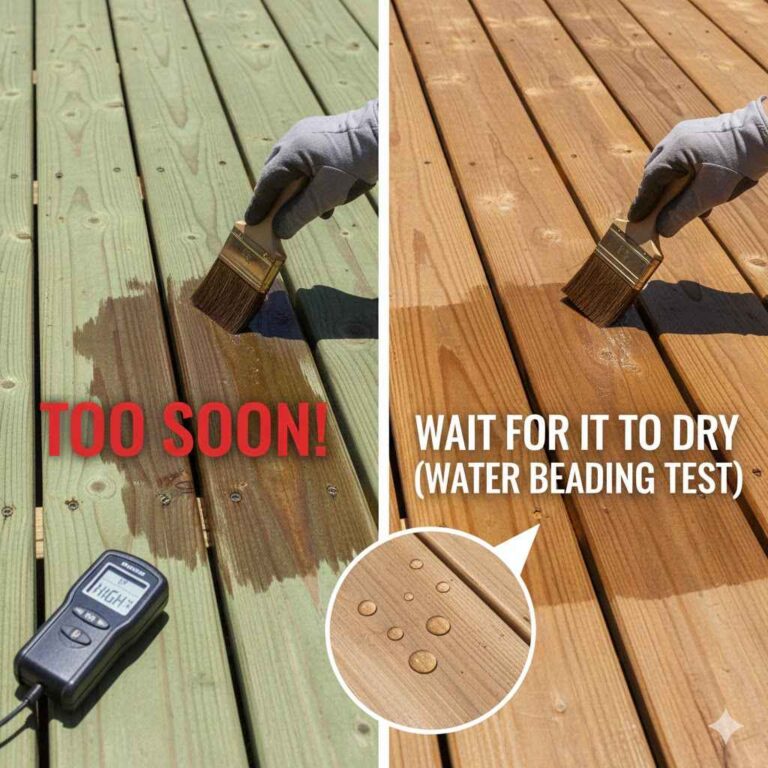
You can test if your granite needs sealing by putting a few drops of water on the surface. If the water beads up, the seal is good. If it soaks in and darkens the stone after a few minutes, it’s time to reseal.
Resealing Your Granite
Follow the instructions on the sealant product. Typically, you’ll clean the countertops thoroughly, let them dry, apply the sealant, let it penetrate, and then wipe off any excess.
Immediate Spill Cleanup
The most important preventative measure is to wipe up spills immediately. Don’t let liquids sit on the surface, especially colorful ones.
Using Trivets and Coasters
Use trivets under hot pots and pans to protect your granite from heat damage. Coasters under glasses can prevent water rings, especially if your granite isn’t perfectly sealed.
Daily Cleaning Routine
Wipe down your granite countertops daily with a soft cloth and a mild, pH-neutral cleaner. Avoid abrasive cleaners or acidic products like vinegar or lemon juice, as these can etch or dull the finish over time.
Frequently Asked Questions
Question: What is the best way to remove a coffee stain from granite?
Answer: For a coffee stain, try a poultice made from baking soda and water. Apply the paste to the stain, cover with plastic wrap, let it dry for 24 hours, then scrape and clean. For tough stains, you might need to repeat the process.
Question: Can I use vinegar to clean granite countertops?
Answer: It is not recommended to use vinegar on granite. Vinegar is acidic and can etch or dull the surface of your granite, making it look less shiny. Stick to mild, pH-neutral cleaners.
Question: How do I get grease stains out of granite?
Answer: Grease stains can be removed using a baking soda paste poultice. Mix baking soda with water to form a thick paste, apply it to the stain, cover with plastic, and let it dry completely before scraping and cleaning. This draws the grease out of the stone.
Question: How often should I seal my granite countertops?
Answer: The frequency of sealing depends on your usage and the type of granite. As a general rule, test the seal every 6-12 months by applying a few drops of water. If the water soaks in, it’s time to reseal.
Question: Will a razor blade scratch my granite countertops?
Answer: A razor blade can scratch granite if not used very carefully. If you need to use one for very stubborn dried paint or similar, hold it at an extremely low angle to the surface and use minimal pressure. Always test in an inconspicuous area first.
Final Thoughts
Removing stains from granite is manageable with the right techniques. You’ve learned how to tackle common issues like oil, organic, and water stains using simple methods like poultices and mild cleaners. Remember that quick action and regular sealing are key to keeping your granite looking its best. Don’t be afraid to try these steps to restore your countertops’ beauty.
Wrap Up
Successfully cleaning granite stains involves understanding the stain type and using the right approach. From baking soda poultices for oil to mild solutions for water spots, these methods help. Keeping your granite sealed and wiping spills promptly are your best defenses against future marks. Your countertops can look great again with these simple, effective tips.