How to Tell What Type of Track Lighting You Have: Essential Guide
Quick Summary:
Identifying your track lighting type involves checking the connector on the track and the bulb base. Most common are H-type (Halo) and J-type (Juno), distinguished by their connector shapes and often labeled on the track or fixture. Knowing this helps you buy compatible bulbs and accessories.
Ever stared at a track light fixture, wondering what kind it is so you can buy the right bulb or add another light? You’re not alone! It can seem a bit confusing at first, with all the different shapes and sizes. But don’t worry, it’s actually quite straightforward once you know what to look for. This guide will walk you through it, step-by-step, making it easy to identify your track lighting system.
We’ll cover the simple checks you can do right now, without needing any special tools. By the end, you’ll be a pro at spotting the differences between common track lighting types. This knowledge will save you time and frustration the next time you need to swap out a bulb or expand your lighting setup. Let’s get started and demystify your track lighting!
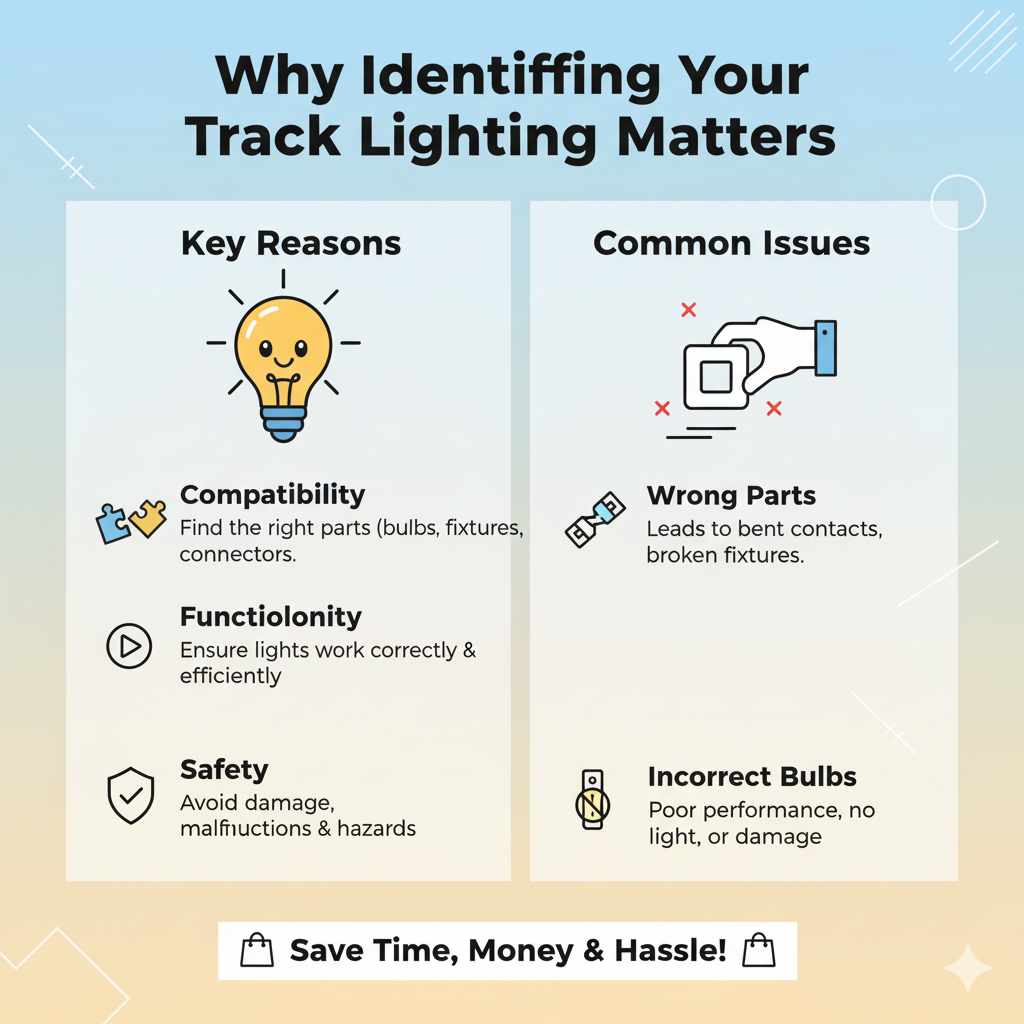
Why Identifying Your Track Lighting Matters
Knowing the type of track lighting you have is super important for a few key reasons. Think of it like knowing the right key for a specific lock – the wrong one just won’t work! If you need to replace a burnt-out bulb, add a new light fixture, or even just buy an accessory like a connector or end cap, you need to know the system you’re working with. Using the wrong parts can damage your fixtures, cause them not to work at all, or even create a safety hazard.
For instance, different track systems use different connectors to attach the light heads to the track. If you try to force a fixture designed for one type of track onto another, you could bend or break the contacts. Similarly, some specialized track lighting might use unique bulb types. Getting this right ensures your lights function correctly, look good, and operate safely. Plus, it saves you a trip back to the store and the hassle of returns!
Understanding Track Lighting Basics
Before we dive into identifying specific types, let’s quickly touch on what makes up a track lighting system. At its core, a track lighting system consists of three main parts:
- The Track: This is the metal bar that houses the electrical conductors. It’s usually mounted on the ceiling or wall and comes in various lengths.
- The Fixtures (or Heads): These are the individual lights that attach to the track. They can be spotlights, floodlights, pendant lights, or even decorative elements.
- The Connectors: These are the mechanisms that allow the fixtures to slide into and connect electrically with the track. This is often the key differentiator between track types.
The track itself usually has two electrical channels inside, plus a ground channel. The connectors on the fixtures bridge these channels to power the light. The way these connectors are shaped and positioned is what defines the type of track system you have.
Common Types of Track Lighting
There are several types of track lighting systems, but a few are much more common in homes and smaller commercial spaces. The most prevalent are the H-type, J-type, and L-type systems. Each has a distinct connector shape and often a specific voltage or amperage rating.
H-Type Track Lighting (Halo)
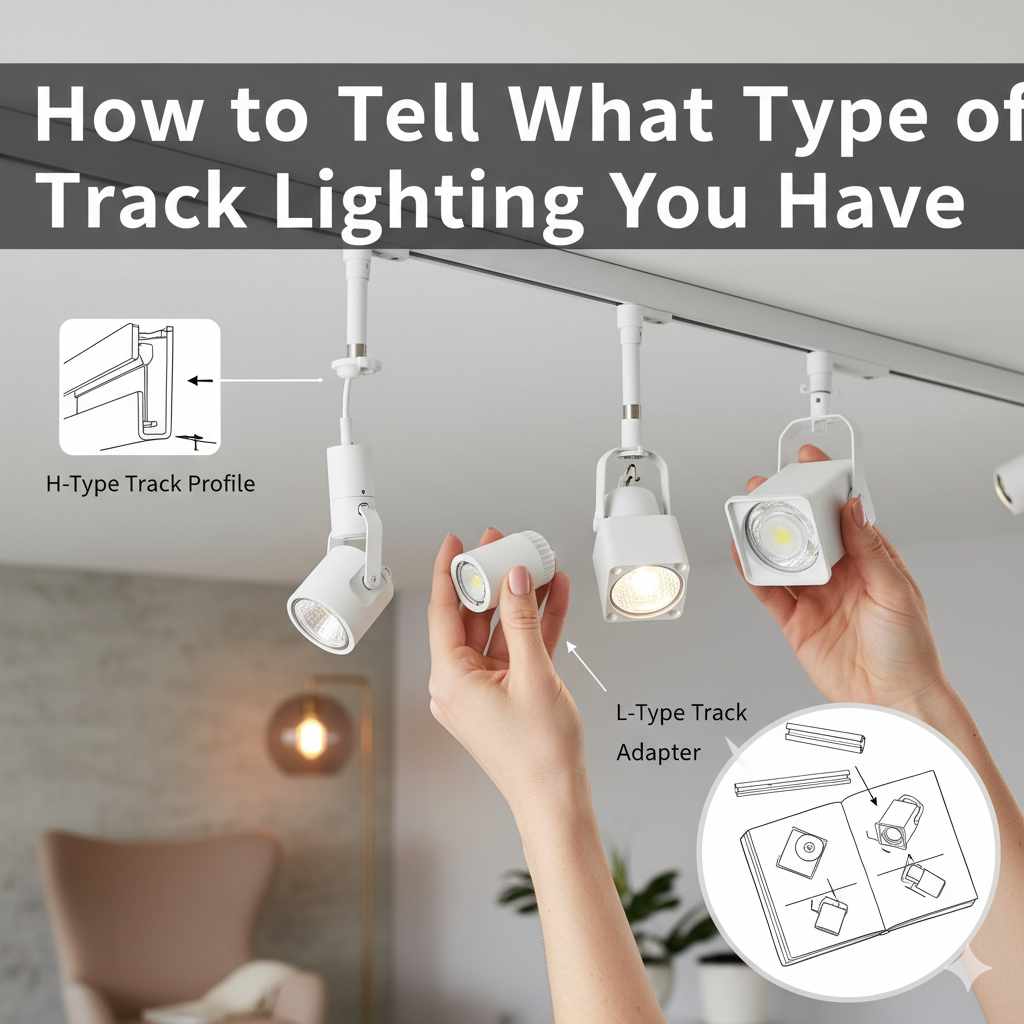
The H-type system is one of the most widely used, especially in residential settings. It’s often referred to as Halo track lighting because Halo is a major manufacturer of this system. The key identifier for H-type is the shape of the connector on the light fixture.
Key Features of H-Type:
- Connector Shape: The connector typically has two flat parallel bars and a U-shaped grounding bar. When you look at the end of the fixture’s connector, it often looks like a capital ‘H’ lying on its side, or two parallel lines with a dip in the middle.
- Compatibility: H-type fixtures will only work with H-type tracks.
- Voltage: Most commonly 120-volt systems in North America.
- Common Brands: Halo is the most recognized, but other manufacturers also produce compatible fixtures and tracks.
When you examine the part of the fixture that plugs into the track, look for those two parallel metal contacts. If they are relatively close together and parallel, and you can see a third, often U-shaped, contact for grounding, you likely have an H-type system.
J-Type Track Lighting (Juno)
The J-type system is another very popular choice, often associated with the Juno brand. It’s also commonly found in homes and retail environments. The connector design is different from H-type, making it distinct.
Key Features of J-Type:
- Connector Shape: The connector on J-type fixtures usually has two round pins and a U-shaped grounding pin. When you look at the end of the connector, it might resemble a ‘J’ shape due to the arrangement of these pins.
- Compatibility: J-type fixtures are not interchangeable with H-type or L-type tracks.
- Voltage: Typically 120-volt systems.
- Common Brands: Juno is the primary brand, but others also make compatible J-type systems.
To identify J-type, look for the two round pins on the fixture’s connector. The spacing and shape are crucial here. If you see distinct round pins, it’s likely a J-type system.
L-Type Track Lighting (Lightolier)
L-type track lighting, often associated with Lightolier, is less common in new residential installations but can still be found in older homes or specific commercial applications. Its connector design is again different from H and J types.
Key Features of L-Type:
- Connector Shape: L-type connectors usually have two flat bars, similar to H-type, but they are spaced further apart. The grounding contact is typically a flat bar as well, positioned differently.
- Compatibility: L-type fixtures are specific to L-type tracks.
- Voltage: Commonly 120-volt systems.
- Common Brands: Lightolier is the main brand, though some other manufacturers might have compatible lines.
The key difference here is the wider spacing between the two main electrical contacts compared to H-type. If the pins or bars look wider set, it might be an L-type.
Other Less Common Types
While H, J, and L types cover the majority of track lighting you’ll encounter, there are other systems, often proprietary or designed for specific applications. These might include:
- Monopoint/Monorail Systems: These are more flexible and often involve a single wire or a more intricate rail system. They are less common for general room lighting and more for accent or task lighting.
- Low-Voltage Track Systems: These systems operate at lower voltages (e.g., 12V) and use transformers. They typically have smaller fixtures and connectors. You’ll usually find a transformer unit somewhere in the system.
- European Systems: Some track lighting systems originating from Europe might have different standards for connectors and track spacing.
For most DIYers, focusing on H, J, and L types will cover 95% of situations. If you have something that doesn’t fit these descriptions, it’s wise to take photos and consult with a lighting specialist or the manufacturer if possible.
How to Identify Your Track Lighting: A Step-by-Step Guide
Ready to figure out what you’ve got? It’s easier than you think! Grab a stepladder and a flashlight, and let’s take a closer look. Safety first: make sure the power to the track lighting is turned OFF at the switch or breaker before you start inspecting closely.
Step 1: Inspect the Fixture Connector
This is the most important step. You need to look at the part of the light fixture that inserts into the track. Often, you can do this without removing the fixture from the track.
What to Look For:
- Shape of the Contacts: Are they flat bars, round pins, or something else?
- Number of Contacts: Most systems have two main electrical contacts and a third for grounding.
- Spacing: How far apart are the main contacts?
Visual Guide to Connectors:
| Track Type | Main Contact Shape | Ground Contact Shape | Typical Appearance |
|---|---|---|---|
| H-Type (Halo) | Two parallel flat bars | U-shaped or two small parallel bars | Looks like an ‘H’ on its side or two parallel lines |
| J-Type (Juno) | Two round pins | U-shaped or sometimes a single pin | Looks like a ‘J’ with round pins |
| L-Type (Lightolier) | Two flat bars, wider spacing than H-type | Flat bar or U-shaped | Similar to H-type but with noticeably wider contacts |
You might need to gently rotate the fixture or slide it slightly to get a clear view of the connector. Sometimes, the fixture itself might have a label indicating the type or brand.
Step 2: Check for Manufacturer Labels
Many track lighting systems have labels on the track itself or on the fixtures. These labels can directly tell you the brand or type.
Where to Look:
- On the Track: Look along the length of the track, especially near the end caps or power feed.
- On the Fixture: Check the body of the light fixture, the part that attaches to the track, or sometimes underneath.
- On the Canopy: If there’s a canopy covering the connection point to the ceiling, check there as well.
Labels might say “Halo,” “Juno,” “Lightolier,” or indicate a specific model number or system type. This is often the quickest way to confirm your identification.
Step 3: Examine the Track Profile
While the fixture connector is the primary identifier, the track itself can sometimes offer clues. Different track types might have slightly different profiles or dimensions, though this is less definitive than the connector.
What to Observe:
- Grooves/Slots: Look at the slots where the fixture’s connector slides in. The shape and number of these slots correspond to the connector type.
- Overall Shape: Most common tracks are U-shaped or rectangular.
For example, H-type tracks typically have three slots: two for power and one for ground. J-type tracks also have these, but the internal shape and spacing are designed for their specific connectors.
Step 4: Consider the Age and Location of Installation
Sometimes, the age of your home or the context of the installation can provide hints. For instance:
- Older Homes (pre-1990s): Might be more likely to have older L-type or proprietary systems.
- General Residential Use (1990s-Present): H-type (Halo) and J-type (Juno) became dominant and are very common.
- Retail or Commercial Spaces: Often use standardized H-type or J-type, but could also have specialized systems.
This is more of a supporting clue rather than a definitive identification method, but it can help narrow down possibilities if other methods are difficult.
Step 5: Test Compatibility (With Caution!)
If you’re still unsure, and you have a spare, compatible bulb from another fixture of the same type, you could cautiously try to insert it. Only do this if you are absolutely certain the power is off and you are not forcing anything. If it slides in smoothly and the contacts appear to align correctly, you’ve likely found your match.
Important Safety Note: Never force a fixture into a track. If it doesn’t fit easily, stop. Forcing it can damage the track or the fixture, leading to electrical issues or failure. If you have any doubts, it’s always best to consult a professional electrician or a lighting store.
Troubleshooting Common Issues
Sometimes, even after identifying your track type, you might run into problems. Here are a few common scenarios and how to address them:
- Fixture Won’t Connect: This is usually a mismatch of track type or a bent connector. Double-check your identification and ensure the fixture’s contacts aren’t damaged.
- Light Flickers or Doesn’t Turn On: Ensure the fixture is fully seated in the track. The electrical contacts might be dirty or corroded. Turn off the power, and carefully clean the contacts on both the fixture and the track with a dry cloth or a pencil eraser. Sometimes, sliding the fixture back and forth in the track can help reseat the connection.
- Bulb Type is Unclear: If the fixture itself doesn’t specify the bulb type (e.g., GU10, MR16), look at the shape and size of the bulb currently installed. This is often the easiest way to identify the correct replacement. Many bulb types have specific base configurations that are visually distinct. For example, MR16 bulbs typically have two pins (often flat or slightly rounded), while GU10 bulbs have two pins and a twist-lock base.
If you’re dealing with a system that seems old or unusual, it might be a good time to consider upgrading to a more modern and standardized track lighting system. This can make future replacements and additions much simpler.
Tools and Resources That Can Help
While most identification can be done by eye, a few simple tools can make the process easier and more accurate.
- Stepladder: Essential for safely reaching your track lighting. Ensure it’s stable and on a level surface.
- Flashlight: To clearly see the details of the connectors and labels.
- Measuring Tape: If you need to measure the spacing of contacts or the track width, though visual comparison is often sufficient.
- Camera/Smartphone: Take clear photos of the connectors and any labels. This is incredibly helpful if you need to show them to a salesperson at a lighting store or consult online resources.
- Magnifying Glass (Optional): For very small or unclear labels or details.
Online Resources:
When you’re trying to match a fixture or track, online retailers and manufacturer websites are invaluable. Websites like Home Depot, Lowe’s, or specialized lighting suppliers often have detailed product descriptions and compatibility charts. Searching for the brand name you found (e.g., “Halo track lighting accessories”) can lead you to the right parts.
For more in-depth electrical safety information, resources like the U.S. Consumer Product Safety Commission (CPSC) offer excellent guidance on electrical safety in the home. Understanding basic electrical principles can also be very helpful, and sites like Energy.gov provide general information on lighting technologies.
When to Call a Professional
While identifying track lighting is usually a DIY-friendly task, there are times when it’s best to bring in an expert. If you encounter any of the following situations, don’t hesitate to call a qualified electrician:
- Uncertainty About Power: If you’re unsure about turning off the power or dealing with electrical connections, it’s safer to let a pro handle it.
- Damaged Track or Fixtures: If the track or any part of the fixture appears broken, melted, or significantly damaged, it could be a safety hazard.
- Complex Systems: If you have a very old, unusual, or commercial-grade system that doesn’t match common types, an electrician will have the experience to identify it.
- Installation or Rewiring: If you need to install new track, move existing track, or upgrade your system, an electrician can ensure it’s done correctly and safely.
- Persistent Electrical Problems: If lights are constantly flickering, tripping breakers, or not working despite your best efforts, there might be a deeper electrical issue.
A professional can not only identify your system but also ensure all work is up to code and performed safely, giving you peace of mind.

FAQ: Your Track Lighting Questions Answered
Q1: How do I know if my track lighting is 12V or 120V?
A1: Most residential track lighting is 120V. If you see a bulky transformer box somewhere in the system or very thin wires, it might be low-voltage (12V). However, the connector type (H, J, L) is usually independent of voltage. If unsure, check for labels or consult an electrician.
Q2: Can I mix and match fixtures from different brands on the same track?
A2: Only if they are designed for the same track system type (e.g., all H-type, or all J-type). Even then, using fixtures from different brands on the same circuit is generally okay, but it’s always best to stick with reputable brands and ensure they are compatible with your specific track system.
Q3: My track lighting isn’t working. What’s the first thing I should check?
A3: First, check if the power is on at the switch and the circuit breaker. If that’s okay, ensure the fixture is securely seated in the track. Then, check the bulb. If the bulb is good and the fixture is seated, try cleaning the electrical contacts on both the fixture and the track (with power OFF!).
Q4: What does it mean if my track lighting has three slots for connectors?
A4: Most common track lighting systems use three slots: two for the main electrical current and one for the grounding wire. This is standard for H, J, and L type systems and ensures safe operation.
Q5: I found a label that says “XTS” or “T5” on my track. What does that mean?
A5: These often refer to specific track system types or profiles used by certain manufacturers. For example, “T5” is a common designation for a 5-foot track length or a specific track profile. You would still need to identify the connector type (H, J, L) to ensure compatibility with fixtures.
Q6: Can I replace just the track, or do I need to replace the whole system?
A6: You can often replace just the track if it’s damaged or you want a different length, as long as you buy a track that is compatible with your existing fixtures and connectors. However, if you have an older, proprietary system, it might be easier to upgrade the entire system to a modern H-type or J-type for better compatibility and availability of accessories.
Q7: What’s the difference between a spotlight and a floodlight in track lighting?
A7: The main difference is the beam angle. A spotlight has a narrow beam, good for highlighting specific objects. A floodlight has a wider beam, suitable for general illumination or covering a larger area. Both types are available in various track lighting systems (H, J, L).
Conclusion
You’ve now got the knowledge to confidently identify your track lighting system! By simply examining the connectors on your fixtures and looking for any manufacturer labels, you can easily distinguish between common types like H-type, J-type, and L-type. This skill is invaluable for ensuring you purchase the correct replacement bulbs, accessories, or additional fixtures, saving you time, money, and frustration.
Remember, safety is always the top priority. Always turn off the power before inspecting or working on your lighting. If you ever feel unsure or encounter complex issues, don’t hesitate to call a qualified electrician. With this guide, you’re well-equipped to manage your track lighting needs like a pro. Happy lighting!