How to Unlock a Privacy Door Knob: Essential Guide
Quick Summary
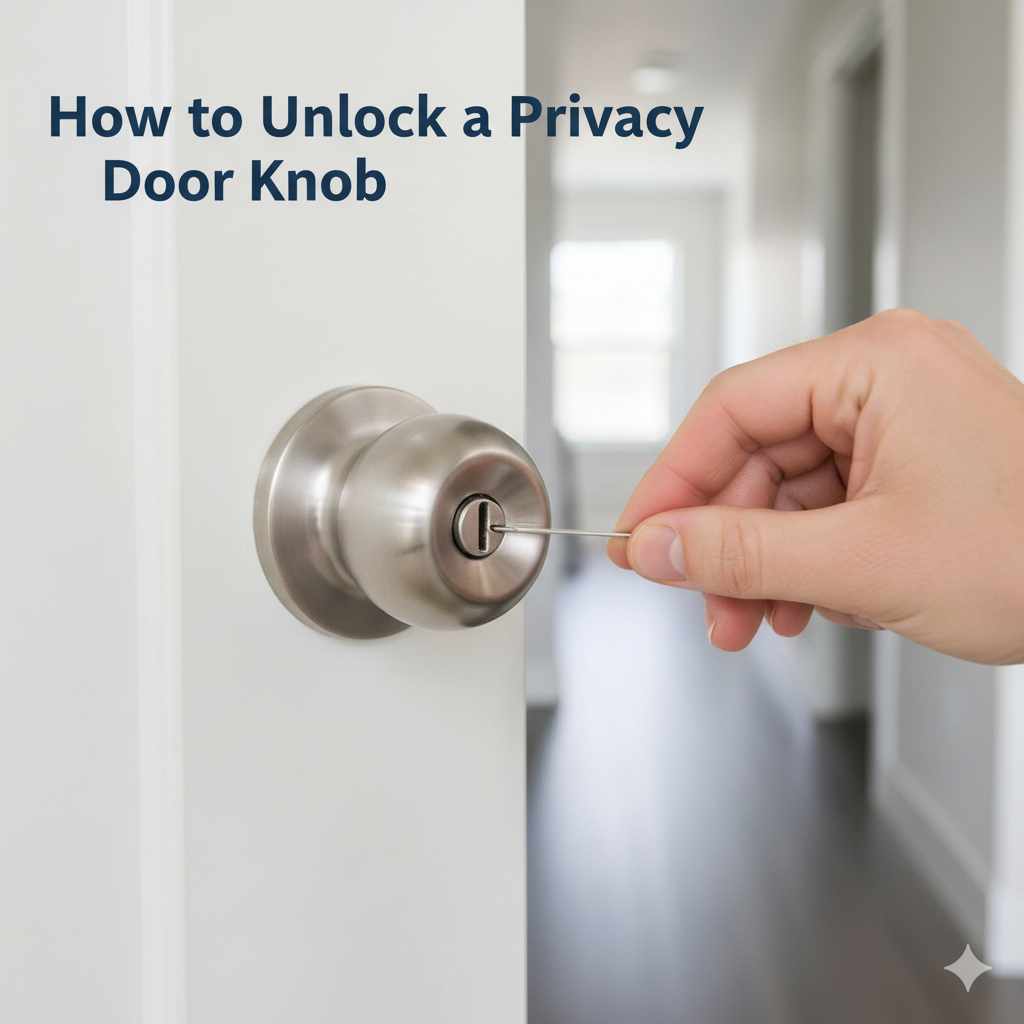
To unlock a privacy doorknob, locate the small hole on the knob’s exterior. Insert a thin, stiff object like a paperclip or small screwdriver into the hole and push gently. This disengages the locking mechanism, allowing the knob to turn and the door to open.
Hello there! I’m Md Meraj, your go-to guide for making home improvement projects feel less like a chore and more like a rewarding adventure. You know those moments when you accidentally lock a bathroom or bedroom door from the inside, or perhaps a child plays a prank? It can be a bit frustrating, right? Especially when you’re in a hurry or just want to get on with your day. But don’t worry, unlocking a privacy doorknob is a surprisingly simple fix that most of us can handle with common household items. No need to call a locksmith for this one! We’ll walk through it step-by-step, so you can regain access quickly and easily. Ready to tackle this common household puzzle? Let’s get started!
Understanding Your Privacy Doorknob
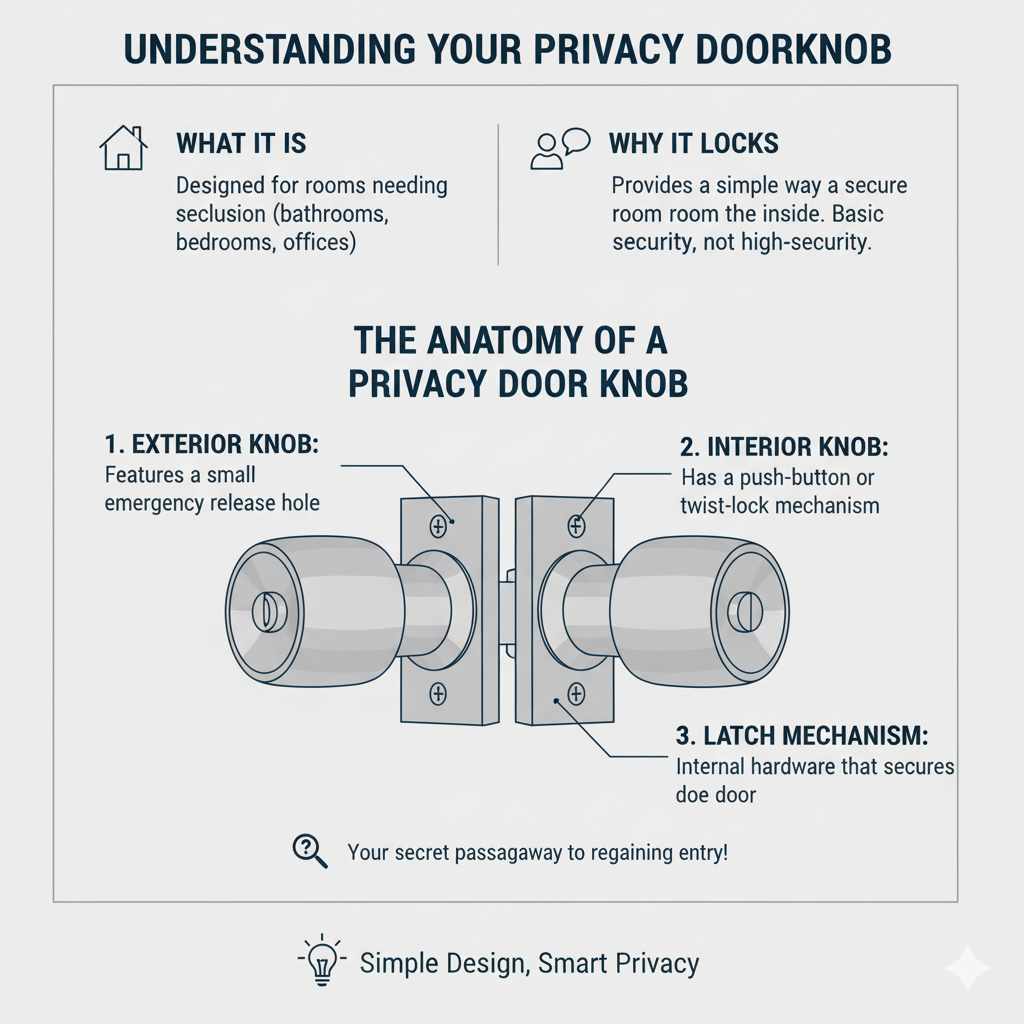
Privacy doorknobs are designed for specific rooms where you might want a bit of seclusion, like bathrooms, bedrooms, or home offices. Unlike keyed doorknobs, they don’t have a traditional lock cylinder. Instead, they feature a simple push-button or twist-lock mechanism on the interior side. The key to unlocking them from the outside lies in a small, often overlooked, emergency release hole on the exterior side of the knob. This hole is your secret passageway to regaining entry. It’s a clever, straightforward design intended for quick access in situations just like this.
Why Do Privacy Doorknobs Lock?
The primary reason for a privacy doorknob is to provide a simple way to secure a room from the inside. This is crucial for maintaining privacy in areas like bathrooms and bedrooms. The locking mechanism is usually engaged by pushing a button or turning a small knob on the inside handle. It’s a basic security feature, not meant to be a high-security lock, but rather to prevent accidental or unwanted entry. Think of it as a personal space signal rather than a fortress gate!
The Anatomy of a Privacy Doorknob
Before we get to unlocking, let’s quickly look at the parts involved. On the inside of the door, you’ll see the knob and the locking mechanism – usually a small button or a turnable piece. On the outside, the part you’ll be focusing on is the doorknob itself, and crucially, a tiny hole. This hole is the key to our mission. It’s typically round and about the size of a pinhead or a very small screwdriver tip. Don’t confuse it with the screw holes you might see on some decorative plates; this is specifically for the emergency release.
What You’ll Need: Simple Tools for the Job
The beauty of unlocking a privacy doorknob is that you rarely need specialized tools. Most of the time, you can find what you need right in your home or office. This makes it a truly accessible DIY task. Here’s a rundown of common items that work perfectly:
- A straightened paperclip: This is the classic go-to. Just unfold a standard metal paperclip so you have a straight, stiff piece of wire.
- A small, thin screwdriver: A flathead screwdriver with a very narrow tip is ideal. Make sure it’s small enough to fit comfortably into the release hole.
- A bobby pin: Similar to a paperclip, you can straighten out a bobby pin to create a useful tool.
- A toothpick (sturdy one): While less common, a very strong wooden toothpick might work in a pinch, though it’s more prone to breaking.
- A small nail or pushpin: If the hole is particularly small, these can also be effective.
The goal is to have something thin, rigid, and long enough to reach into the hole and push the release mechanism inside. Always try to use something that fits snugly but isn’t so large that it might damage the hole or the internal mechanism. Safety first, even with simple tools!
Step-by-Step Guide: How to Unlock a Privacy Doorknob
Now for the main event! Unlocking your privacy doorknob is a straightforward process. Follow these steps carefully, and you’ll have that door open in no time. It’s like a little puzzle, and you’re about to solve it!
Step 1: Locate the Emergency Release Hole
Turn your attention to the exterior side of the doorknob. Carefully inspect the center of the knob or the escutcheon plate (the decorative metal plate around the knob). You are looking for a very small hole. It might be perfectly round, or it could be a very narrow slot. Sometimes, it’s right in the middle of the knob, and other times it’s on the surrounding plate. Don’t worry if it’s not immediately obvious; it’s designed to be discreet.
Step 2: Choose Your Tool
Select one of the items we discussed earlier. A straightened paperclip or a very small flathead screwdriver is usually the best bet. Ensure your chosen tool is clean and has a tip that can be inserted into the hole without excessive force.
Step 3: Insert the Tool
Gently insert the tip of your tool into the emergency release hole. You don’t need to force it. It should slide in smoothly. If it feels like you’re meeting resistance, double-check that you’re in the hole and that your tool isn’t bent or obstructed.
Step 4: Push and Turn
Once the tool is inserted, apply a gentle inward pressure. You should feel a slight click or resistance as the tool makes contact with the internal locking mechanism. While maintaining that inward pressure, try to turn the doorknob as you normally would to open the door. In many cases, this is all it takes! The pressure from your tool disengages the lock, allowing the knob to rotate freely.
Troubleshooting Tip: If turning the knob immediately doesn’t work, try wiggling the tool slightly while maintaining pressure. Sometimes, the mechanism just needs a little nudge to align correctly. You might also need to push the tool in a bit further or at a slightly different angle. Patience is key here!
Step 5: Open the Door
With the knob now able to turn, simply open the door. Congratulations, you’ve successfully unlocked your privacy doorknob! It’s a simple but satisfying fix.
Alternative Scenarios and Tips
While the standard method usually works, sometimes you might encounter a slightly different situation. Here are a few alternative scenarios and extra tips to help you out.
When the Hole is Not Obvious
Some privacy knobs have a very cleverly hidden release. Look very closely at the knob’s face and the surrounding plate. Sometimes, the hole is disguised as a decorative element or is extremely small. If you still can’t find it, consult the manufacturer’s manual if you have it, or search online for your specific doorknob model. Many manufacturers provide diagrams or videos.
If the Lock is Stuck
Occasionally, the internal mechanism might be a bit stiff or jammed. Try applying a small amount of lubricant, like WD-40 or graphite lubricant, into the release hole. Let it sit for a few minutes, then try the unlocking process again. Gentle persuasion is always better than brute force.
When a Child Locks the Door
Children sometimes engage the lock by accident or as a game. The method described above is perfect for these situations. It’s a safe and quick way to get the door open without any damage. Just be sure to explain to your child that the button is for privacy and should only be used by adults.
Push-Button vs. Twist-Lock
Most privacy knobs use a push-button on the inside. When you push it, the knob locks. The emergency release hole is designed to push this button back out. Some older or different styles might use a small twist knob on the inside. For these, the emergency release hole might operate a small lever or pin that retracts the locking bolt. The principle is the same: insert a tool and apply pressure to disengage the lock.
Preventing Future Lock-Ins
To avoid getting locked out or accidentally locking someone in, consider the following:
- Educate household members: Make sure everyone knows how the privacy lock works and when to use it.
- Check before closing: If you’re leaving a room and don’t want it locked, double-check that the privacy button isn’t engaged.
- Consider a different knob: For doors where accidental locking is a frequent problem and privacy isn’t paramount, you might consider a passage doorknob that doesn’t have a locking feature at all.
Comparing Privacy Doorknob Types
While the unlocking mechanism is largely universal for privacy knobs, there are some variations in how they are designed and installed. Understanding these can sometimes help in troubleshooting.
| Feature | Standard Privacy Knob | Smart Privacy Knob (Less Common) | Decorative Privacy Knob |
|---|---|---|---|
| Locking Mechanism | Push-button or twist-lock on interior knob. | May have electronic override or app control, but still includes an emergency release hole. | Functionality is the same as standard, but design is more ornate. |
| Emergency Release | Small hole on exterior knob/plate. | Standard hole, sometimes with additional electronic reset buttons. | Standard hole, may be harder to find on very intricate designs. |
| Installation Difficulty | Easy DIY installation. | May require basic wiring or battery setup. | Similar to standard, but placement of decorative elements is key. |
| Common Use | Bathrooms, bedrooms, home offices. | High-end homes, integrated smart home systems. | Homes prioritizing aesthetics. |
| Unlocking Method | Paperclip/thin tool into hole. | Paperclip/thin tool into hole (primary method), or electronic override. | Paperclip/thin tool into hole. |
For the vast majority of homeowners, the “Standard Privacy Knob” is what you’ll encounter. The unlocking method remains consistent across most types, focusing on that essential emergency release hole. Even with smart home technology evolving, the basic mechanical release for privacy knobs is a reliable fallback.
When to Call a Professional
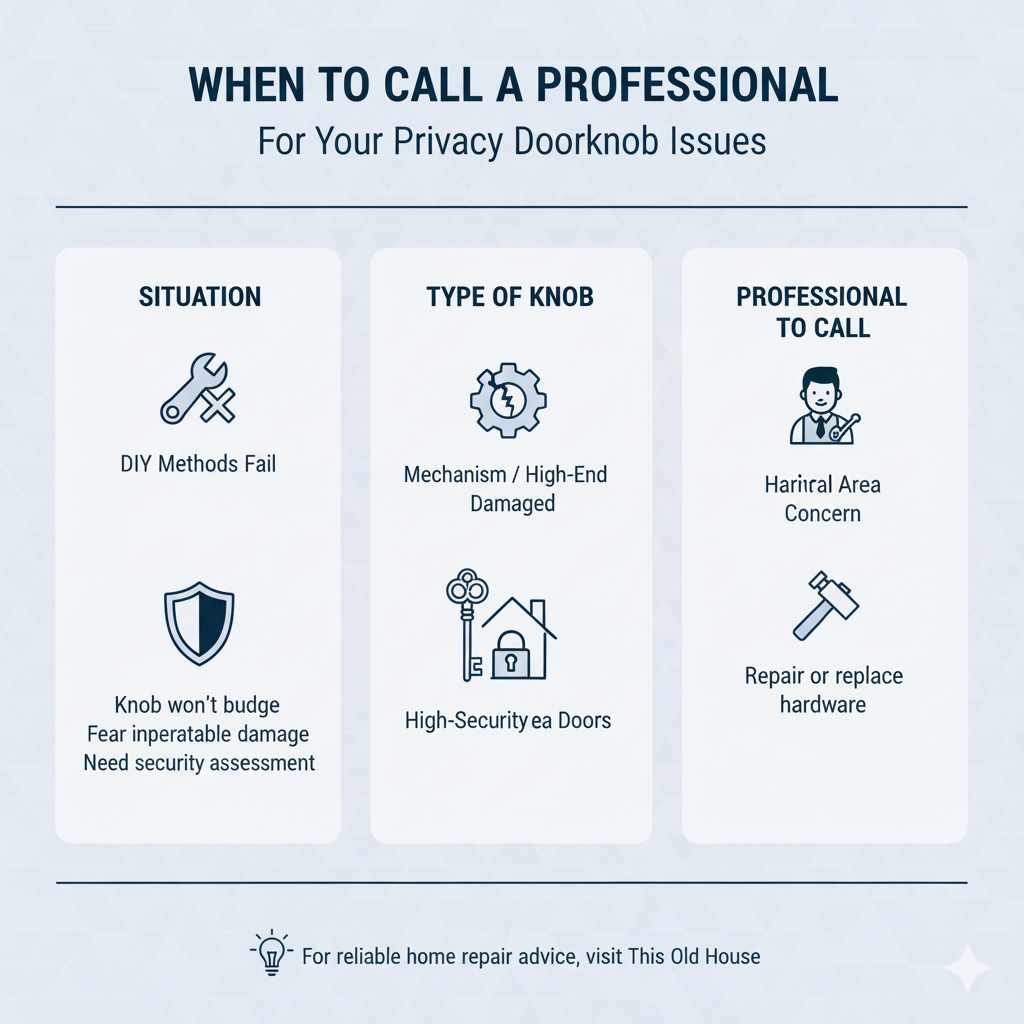
While unlocking a privacy doorknob is usually a simple DIY task, there are a few instances where it’s wise to seek professional help. If you’ve tried the common methods and the knob still won’t budge, or if you suspect the mechanism is severely damaged, it might be time to call a locksmith or a handyman. This is especially true if you’re dealing with an antique or a very high-end designer knob where you don’t want to risk causing irreparable damage. Additionally, if the door is for a critical area or you’re concerned about security, a professional can assess and repair or replace the hardware effectively. For most everyday situations, however, the paperclip method should suffice!
For more information on door hardware and basic home repairs, resources like This Old House offer excellent, reliable advice for homeowners.
Frequently Asked Questions (FAQ)
Q1: What is a privacy doorknob?
A privacy doorknob is a type of interior door handle that can be locked from the inside for seclusion, typically found on bathrooms and bedrooms. It features a simple locking mechanism that doesn’t require a key and can be unlocked from the outside in emergencies.
Q2: Why can’t I just use a regular key to unlock it?
Privacy doorknobs do not have key cylinders on the exterior. They are designed for interior privacy and rely on a small emergency release hole rather than a key mechanism for outside access.
Q3: How do I know if I have a privacy doorknob?
Look at the interior side of the doorknob. If there’s a small button on the knob itself or a small turnable piece on the interior handle that locks the door, it’s a privacy doorknob. The exterior side will have a small hole for emergency unlocking.
Q4: Can I damage the doorknob by trying to unlock it?
If you use excessive force or the wrong type of tool (e.g., something too large or sharp), you could potentially damage the internal mechanism or the finish of the doorknob. Always use gentle pressure with a thin, appropriate tool.
Q5: What if the hole on my doorknob is a slot instead of a circle?
A slot-shaped hole is also common and works the same way. Use a thin, flat object like a small flathead screwdriver or the edge of a straightened paperclip to insert into the slot and push to release the lock.
Q6: My paperclip broke off inside the hole. What should I do?
This is a tricky situation. If a piece of the paperclip is stuck, you might need to try to carefully extract it with a pair of needle-nose pliers. If you can’t remove it, you may need to call a locksmith or a handyman to resolve the issue without damaging the entire doorknob assembly.
Q7: Are there different types of privacy doorknob locking mechanisms?
Yes, the most common is the push-button lock, where you push a button on the inside knob to lock it. Some may have a small twist-lock mechanism on the inside. The unlocking method via the exterior hole remains consistent for both types.
Conclusion
And there you have it! Unlocking a privacy doorknob is a common household task that’s surprisingly easy to handle once you know the simple trick. By locating that small emergency release hole and using a common item like a straightened paperclip or a thin screwdriver, you can bypass the lock and regain access to your room quickly and efficiently. Remember, these knobs are designed for privacy, not high security, and this simple unlocking method ensures you’re never truly locked out. You’ve got this! With these steps, you’re now equipped to handle this situation with confidence, saving yourself time and potentially a locksmith’s fee. Keep these tips in mind, and happy home maintaining!