Is a Noisy Bathroom Fan Dangerous? When to Clean, Repair, or Stop
Most noisy bathroom fans are annoying rather than dangerous, but a few specific warning signs mean you should stop using the fan and act immediately rather than waiting for a convenient weekend. This guide separates the noises that just need cleaning, the ones that need a repair, and the ones that mean real fire or electrical risk.
When it is actually a hazard
An overheating motor, indicated by a burning smell, discoloration around the grille, or a housing that is hot to the touch, is a genuine fire risk and reason to cut power at the breaker right away rather than continuing to run the fan. Bathroom fans that accumulate heavy dust and lint over years without cleaning can struggle to dissipate heat from the motor, and if the exhaust duct is also partially blocked, the trapped heat has nowhere to go; lint-clogged bathroom fans are a documented, if less common, house fire cause compared with dryer vents, but the mechanism is the same. Repeated breaker trips, visible scorch marks near the fixture, or an audible sparking or crackling sound from inside the housing are all reasons to stop use and call an electrician rather than an appliance repair person, since the fault is likely in the wiring, not just the fan motor.
When it is just noise, not danger
A rattling or vibrating sound is almost always mechanical, not electrical: a loose grille clip, dust-imbalanced fan blade, or a housing that has worked loose from the joists it was screwed to. A steady hum with no unusual smell is often just normal motor noise, though a hum that appears only when the fan is on a dimmer switch usually means the switch type is not rated for a motor load and should be swapped for a standard switch, which is a wiring fix rather than a safety emergency. None of these noises by themselves indicate a fire or shock risk, though ignoring them long enough can eventually lead to bearing seizure and a stalled motor.
When cleaning is enough
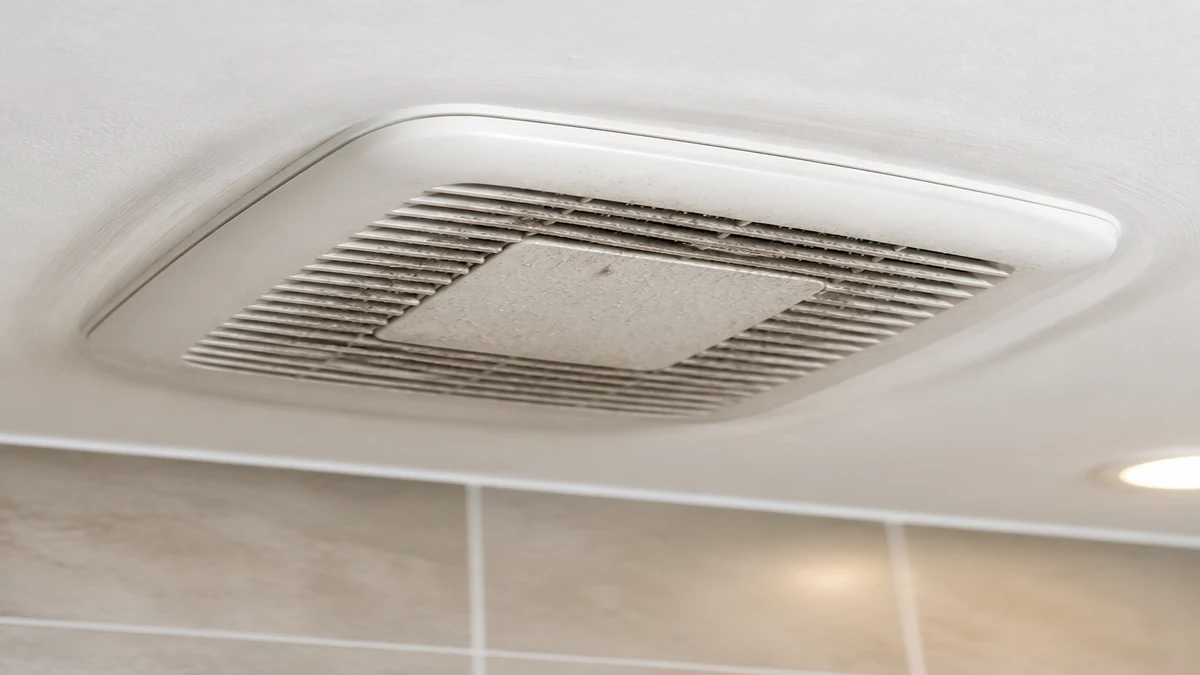
With power off at the breaker, remove the grille and vacuum out visible dust and lint from the blade and housing. A rattle that disappears once the blade is clean and rebalanced was simply a dust imbalance, not a mechanical failure. Regular cleaning every six months to a year prevents most of the buildup that eventually leads to bearing wear or motor strain in the first place.
When it needs repair or replacement instead
A grinding or high-pitched squealing noise that does not clear up after cleaning usually means the motor’s sealed bearings are worn, and unlike older fans with oil ports, most modern sealed-bearing motors cannot be lubricated back to quiet operation. At that point, many fan housings accept a motor-only replacement part, often $20 to $40, without needing to replace the entire housing and duct assembly. If the fan is also tripping the breaker repeatedly, that points toward an electrical fault rather than a mechanical one, and is worth reading up on separately since it is a different failure mode than simple bearing wear.
Frequently Asked Questions
Can a bathroom fan actually cause a house fire?
Yes, though it is uncommon. Heavy lint and dust buildup combined with a struggling or overheating motor is the documented mechanism, similar to how clogged dryer vents cause fires, just at a lower frequency.
Is it okay to keep running a noisy fan for now?
If the noise is a rattle or hum with no burning smell or heat at the housing, it is generally fine to keep using while you plan a cleaning or repair. If you notice a burning smell, a hot grille, or the fan keeps tripping the breaker, stop using it immediately.
How often should a bathroom fan be cleaned to prevent problems?
Every six months to a year for most households, more often in dusty environments or homes with pets, since dust buildup on the blade and inside the motor housing is the root cause of most noise and overheating issues.
Sponsored / affiliate links. As an Amazon Associate I earn from qualifying purchases. I may earn additional commission from eligible campaigns.