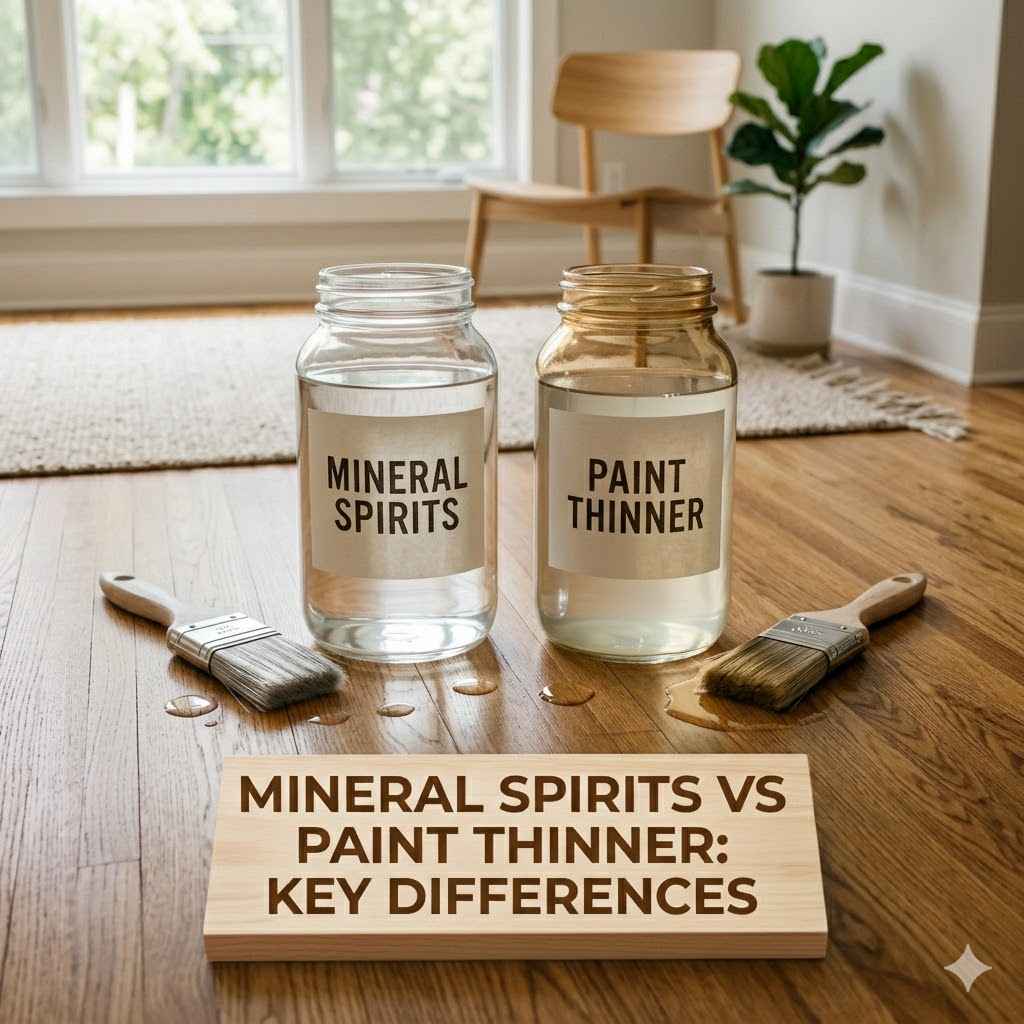
Mineral Spirits vs Paint Thinner: Key Differences
Picking the right cleaner for your painting projects can feel tricky. Many people get confused by terms like mineral spirits and paint thinner. They sound alike, and sometimes they’re used for similar jobs.
This can lead to mistakes that make painting harder than it needs to be. But don’t worry! We’ll break down the Mineral Spirits vs Paint Thinner: Key Differences simply, step by step.
You’ll know exactly what to use and when. Let’s clear things up so you can get back to your project with confidence.
What Are Mineral Spirits
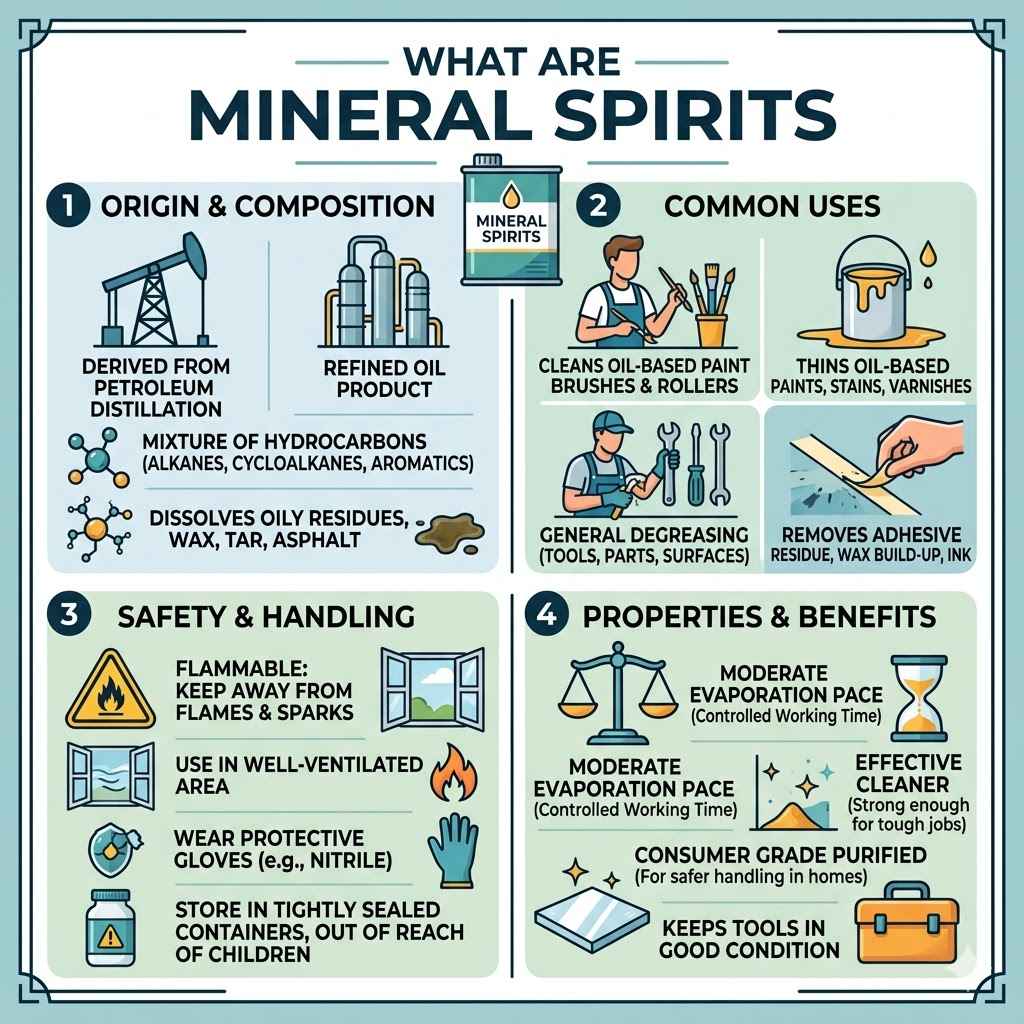
Mineral spirits are a common solvent used in many home and workshop tasks. They are derived from petroleum. Think of them as a refined oil product that acts as a cleaner and thinning agent.
Because they come from petroleum, they have a distinct smell. Their cleaning power is strong enough for many tough jobs but gentle enough for most people to handle safely. We will explore their uses and properties in more detail.
Origin and Composition
Mineral spirits are essentially a mixture of various hydrocarbon solvents. These hydrocarbons are obtained from the distillation of petroleum. The specific composition can vary slightly between brands.
However, they generally consist of alkanes, cycloalkanes, and aromatic hydrocarbons. This makes them effective at dissolving oil-based paints, varnishes, and grease. The process of refining petroleum separates these components into different grades.
Industrial grades might be stronger or have more impurities. Consumer-grade mineral spirits are typically purified for safer handling and use in homes.
The key benefit of their composition is their ability to break down and lift oily residues. This includes things like tar, asphalt, and wax. They are also excellent for cleaning brushes and tools that have been used with oil-based products.
Unlike some harsher solvents, they evaporate at a moderate pace, allowing some working time. This controlled evaporation is important for cleaning and thinning applications where too fast evaporation can cause problems.
Common Uses for Mineral Spirits
Mineral spirits are incredibly versatile. They are a staple for artists and DIYers alike. One of their most popular uses is cleaning paint brushes and rollers that have been used with oil-based paints, stains, or varnishes.
They help to remove the pigment and binder from the bristles or foam, keeping your tools in good condition. Beyond cleaning, mineral spirits can also be used to thin oil-based paints. This makes the paint flow more smoothly and apply more easily.
Another common application is general degreasing. If you have greasy tools, parts, or surfaces, mineral spirits can cut through the grime effectively. They are also used to remove adhesive residue, wax build-up, and even some types of ink.
For artists, they are essential for creating glazes or for achieving specific textural effects with oil paints. Their ability to dissolve oils makes them a go-to for many maintenance and artistic tasks around the house or workshop.
Safety and Handling
When working with mineral spirits, safety is important. They are flammable liquids, so keep them away from open flames, sparks, and heat sources. Always use them in a well-ventilated area.
Breathing in the fumes for too long can cause headaches or dizziness. It is also a good idea to wear gloves, like nitrile gloves, to protect your skin. Prolonged skin contact can lead to dryness and irritation.
Store mineral spirits in tightly sealed containers. This prevents evaporation and reduces the risk of fire. Keep them out of reach of children and pets.
If you get mineral spirits on your skin, wash the area thoroughly with soap and water. If you inhale a lot of fumes, move to fresh air immediately. Always read the product label for specific safety instructions and warnings from the manufacturer.
Proper handling ensures you can use them effectively and safely.
What Is Paint Thinner
Paint thinner is a broader category of solvents. It refers to any liquid used to thin oil-based paints or clean painting tools. While mineral spirits are a type of paint thinner, not all paint thinners are mineral spirits.
This is where much of the confusion comes from. Paint thinners can vary in their chemical makeup and strength. Some are much stronger and evaporate faster than mineral spirits.
Understanding the different types will help you choose the best one for your specific painting need.
Types of Paint Thinner
The term “paint thinner” can refer to several different solvent mixtures. One common type is naphtha. Naphtha is a highly flammable liquid with a strong odor.
It evaporates quickly and is very effective at thinning oil-based paints. Another type is turpentine. True turpentine is derived from pine trees and has a distinct pine scent.
It is often used by artists. However, many products labeled “turpentine” are actually mineral spirits.
A stronger, more aggressive solvent often called “lacquer thinner” is also sometimes grouped under paint thinners. Lacquer thinner is a blend of several solvents, including ketones and aromatics. It evaporates very quickly and can be harsh.
It’s typically used for thinning lacquers, epoxies, and some industrial coatings. Then there are specialized thinners, like enamel thinner, which are formulated for specific paint types. The key takeaway is that “paint thinner” is a general term, and its exact composition dictates its properties and best uses.
How Paint Thinner Works
Paint thinners work by dissolving the binder in oil-based paints. The binder is the part of the paint that dries and forms a film. When you add paint thinner, it breaks down this binder, making the paint more liquid.
This allows it to spread more easily and evenly. The solvent then evaporates as the paint dries, leaving the binder and pigment behind to form the dried paint film.
The rate at which a paint thinner evaporates affects how you use it. Fast-evaporating thinners, like lacquer thinner, can cause paint to dry too quickly. This can lead to brush marks or an uneven finish.
Slow-evaporating thinners allow for more working time, which can be beneficial for achieving a smooth surface. The chemical components of the thinner also determine its effectiveness against different types of paint and coatings. Stronger solvents can break down tougher resins.
Applications of Paint Thinner
The primary application of paint thinner is thinning oil-based paints, varnishes, and enamels. This helps to achieve the desired consistency for brushing, rolling, or spraying. It can also be used for cleaning brushes, rollers, spray equipment, and other tools that have come into contact with these types of coatings.
Different types of paint thinners are suited for different paint systems. For example, you wouldn’t typically use mineral spirits to thin a fast-drying lacquer; you’d use lacquer thinner for that.
Beyond cleaning and thinning, paint thinners can also be used to remove old paint or finishes from surfaces. They can help dissolve stubborn stains and marks. Some paint thinners are also effective at removing grease, oil, and tar from various surfaces.
However, it’s important to test the thinner on an inconspicuous area first to ensure it doesn’t damage the underlying material. The broad range of applications makes paint thinners essential for many painting and maintenance jobs.
Mineral Spirits vs Paint Thinner Key Differences
Understanding the Mineral Spirits vs Paint Thinner Key Differences is essential for any painting project. The main distinction lies in specificity and composition. Mineral spirits are a specific type of solvent, a petroleum distillate.
Paint thinner is a more general term that can include mineral spirits but also other solvents like naphtha or acetone blends. Think of it this way: all mineral spirits can be considered paint thinners, but not all paint thinners are mineral spirits. This difference impacts their strength, evaporation rate, and intended uses.
Chemical Composition Differences
Mineral spirits are primarily a mixture of aliphatic hydrocarbons. They are typically composed of C7 to C12 alkanes and cycloalkanes. This gives them a moderate evaporation rate and good solvency for oil-based products.
They have a relatively mild odor compared to stronger solvents. Paint thinner, on the other hand, can have a much wider range of chemical compositions. Some paint thinners are essentially mineral spirits, but others might contain aromatic hydrocarbons like toluene or xylene, or even ketones like acetone.
The presence of these other chemicals can drastically change the properties of the paint thinner. Aromatic solvents are generally stronger solvents and evaporate faster than aliphatic hydrocarbons. Ketones like acetone are very strong and evaporate extremely quickly, making them suitable for cleaning tough residues or thinning very specific coatings like lacquers.
The specific blend determines how aggressive the thinner is, how quickly it evaporates, and what types of binders it can dissolve effectively. This is the core of the Mineral Spirits vs Paint Thinner Key Differences.
Solvency and Evaporation Rates
The solvency power and evaporation rate are key differences. Mineral spirits are moderately strong solvents. They effectively dissolve oil-based paints, varnishes, and greases.
Their evaporation rate is also moderate; they don’t dry too fast, which is good for brushwork, but they don’t linger too long either, allowing for a reasonable drying time for the paint. This makes them a good all-around choice for many general painting tasks.
Many other types of paint thinner can be significantly stronger and evaporate much faster. For instance, lacquer thinner, which is a type of paint thinner, contains solvents that can aggressively attack and dissolve many finishes. It evaporates so quickly that it can be difficult to use for brushing without leaving marks.
Conversely, some specialized thinners might be formulated to evaporate very slowly, giving you extended working time, which is useful for certain artistic techniques or high-gloss finishes. The choice depends on how quickly you need the paint to dry and the type of finish you are working with.
Typical Applications and Compatibility
Mineral spirits are your go-to for most general cleaning of oil-based paint, stains, and varnishes from brushes, rollers, and equipment. They are also excellent for thinning oil-based paints to a workable consistency for home projects. They are generally safe for use on most surfaces, provided you test them first.
Their compatibility is highest with oil-based products.
Stronger paint thinners, like lacquer thinner, are used for more demanding tasks. They are ideal for thinning industrial coatings, automotive paints, and lacquers. They can also be used for stripping old paint or cleaning very stubborn residues.
However, their aggressive nature means they can damage some plastics, rubbers, and finishes. It’s crucial to match the paint thinner to the specific paint or coating you are using. Using the wrong thinner can ruin your paint job or damage your tools.
Cost and Availability
Mineral spirits are widely available at hardware stores, home improvement centers, and art supply stores. They are generally one of the more affordable solvent options for common household and workshop use. Their widespread availability makes them easy to purchase for most projects.
Paint thinners, as a broader category, can vary in price. Simple mineral spirit-based “thinners” are usually as affordable as straight mineral spirits. However, more specialized paint thinners, such as those containing aromatic solvents or ketone blends, can be more expensive.
Their availability might also be more limited to dedicated paint stores or industrial suppliers for the highly specialized types. For most general painting needs, mineral spirits offer a good balance of cost-effectiveness and performance.
When to Use Which
Deciding whether to grab mineral spirits or a general “paint thinner” depends on your specific task. It’s not always a one-or-the-other situation, but rather about selecting the right tool for the job. For most common painting and cleaning tasks involving oil-based products, mineral spirits are usually the best and safest choice.
If you encounter a more stubborn paint or need a faster-drying solvent, you might need a different type of paint thinner.
Choosing For Cleaning Tools
For cleaning brushes, rollers, and spray equipment that have been used with oil-based paints, stains, or varnishes, mineral spirits are an excellent choice. They effectively dissolve the paint residue without being overly harsh on the bristles or foam. You can soak your brushes in mineral spirits, rinse them, and then wash them with soap and water to ensure they are clean and ready for reuse.
This is a cost-effective and efficient method for tool maintenance.
If you are dealing with a particularly stubborn or thick layer of oil-based paint, a stronger paint thinner might be necessary. However, be cautious, as these can degrade brush bristles more quickly. For latex or water-based paints, you should always use water for cleaning tools, not mineral spirits or paint thinners.
Using the wrong solvent for latex paint will not work and can create a sticky mess. Always confirm the type of paint you used before selecting a cleaner.
Choosing For Thinning Paint
When thinning oil-based paints, the type of paint itself is the biggest guide. Most standard oil-based house paints will thin well with mineral spirits. The goal is to achieve a smooth, fluid consistency that applies easily.
Add mineral spirits slowly, a little at a time, stirring well, until you reach the desired flow. Too much thinner can weaken the paint film, reduce its durability, and affect its sheen.
For specific types of coatings, like lacquers, enamels, or epoxies, you will need a more specialized paint thinner. Lacquer thinner is designed for lacquers. Enamel thinner is formulated for enamels.
Using mineral spirits on these specialized coatings may not work effectively or could even cause undesirable reactions. Always consult the paint manufacturer’s recommendations for the correct thinning agent. This ensures optimal performance and durability of the finish.
Choosing For Removing Old Finishes
If you need to remove old paint, varnish, or other finishes, the choice depends on the type of finish. For old oil-based paints or varnishes, mineral spirits can sometimes soften them enough for scraping. However, for tougher finishes like multiple layers of old paint, epoxy coatings, or industrial paints, a stronger paint stripper or thinner might be required.
Products specifically labeled as “paint removers” or “strippers” often contain more aggressive solvents.
Be aware that stronger paint thinners can also damage the underlying material. For example, using aggressive thinners on wood might raise the grain or discolor it. On plastics or certain metals, they can cause etching or melting.
Always test the stripper or thinner on a small, inconspicuous area first to ensure it is compatible with the surface you are trying to clean or strip. Safety precautions, including good ventilation and protective gear, are even more critical when using strong stripping agents.
When A General Paint Thinner Is Best
You might opt for a general “paint thinner” when the product label explicitly recommends it for the specific paint you are using, and it’s not simply mineral spirits. This often applies to specialty paints or coatings where the manufacturer has blended solvents for optimal performance. For instance, if a can of industrial enamel says “use with approved paint thinner,” and the paint store offers a thinner specifically for that type of enamel, that would be the best choice.
Another scenario is when you need a faster evaporation rate than mineral spirits provide. If you’re spraying a finish and need it to set up quickly to avoid runs, a faster-evaporating paint thinner might be indicated. Similarly, if you are cleaning up a very thick, sticky residue that mineral spirits struggle with, a more potent blend found in some paint thinners could be more effective.
Always read the paint can and the thinner label to ensure compatibility.
Understanding Related Solvents
Beyond mineral spirits and general paint thinners, several other solvents are commonly found in workshops and homes. Knowing what these are and how they differ can further clarify your choices. Some are much stronger, some have different uses, and all require careful handling.
Familiarizing yourself with these related solvents helps avoid confusion and ensures you pick the right product.
Acetone
Acetone is a powerful and fast-evaporating solvent. It is commonly known as nail polish remover, but in its pure form, it’s a potent industrial solvent. Acetone is highly effective at dissolving many plastics, resins, and adhesives.
It’s great for cleaning up uncured epoxy, fiberglass resins, and adhesives. Because it evaporates so quickly, it can leave a surface very clean and dry.
However, acetone’s strength also makes it risky for some applications. It can damage or dissolve many plastics, some painted surfaces, and certain synthetic fibers. It is also highly flammable, with a low flash point, so extreme caution is needed around any heat or sparks.
While useful for specific cleaning tasks and thinning certain strong coatings like some acrylics or epoxies, it’s not a general-purpose thinner for most paints.
Denatured Alcohol
Denatured alcohol is ethanol that has additives to make it undrinkable. These additives typically include methanol and other chemicals. It is a less aggressive solvent than acetone or mineral spirits.
Denatured alcohol is excellent for cleaning glass, electronics, and removing shellac. It also evaporates very quickly and leaves no residue, making it ideal for preparing surfaces before painting or sealing.
It is not effective for thinning oil-based paints or dissolving heavy greases. However, it can be used to thin shellac and some water-based finishes. Its primary uses are cleaning and surface preparation.
Like other solvents, it is flammable and should be used in a well-ventilated area. Its distinct odor is another characteristic that sets it apart from other solvents.
Toluene and Xylene
Toluene and xylene are aromatic hydrocarbon solvents. They are often found in more aggressive paint thinners and removers. These solvents are very powerful and evaporate relatively quickly.
They are effective at dissolving a wide range of coatings, including many industrial paints, epoxies, and lacquers. Their strong solvency makes them useful for tough cleaning jobs and thinning demanding finishes.
However, toluene and xylene have strong, distinct odors and are considered more hazardous than mineral spirits. They can be harmful if inhaled in large quantities or if they come into prolonged contact with skin. They can also damage certain materials.
Because of their potency and health concerns, they are often used in industrial settings or for specific DIY tasks where their power is necessary and can be handled with appropriate safety measures.
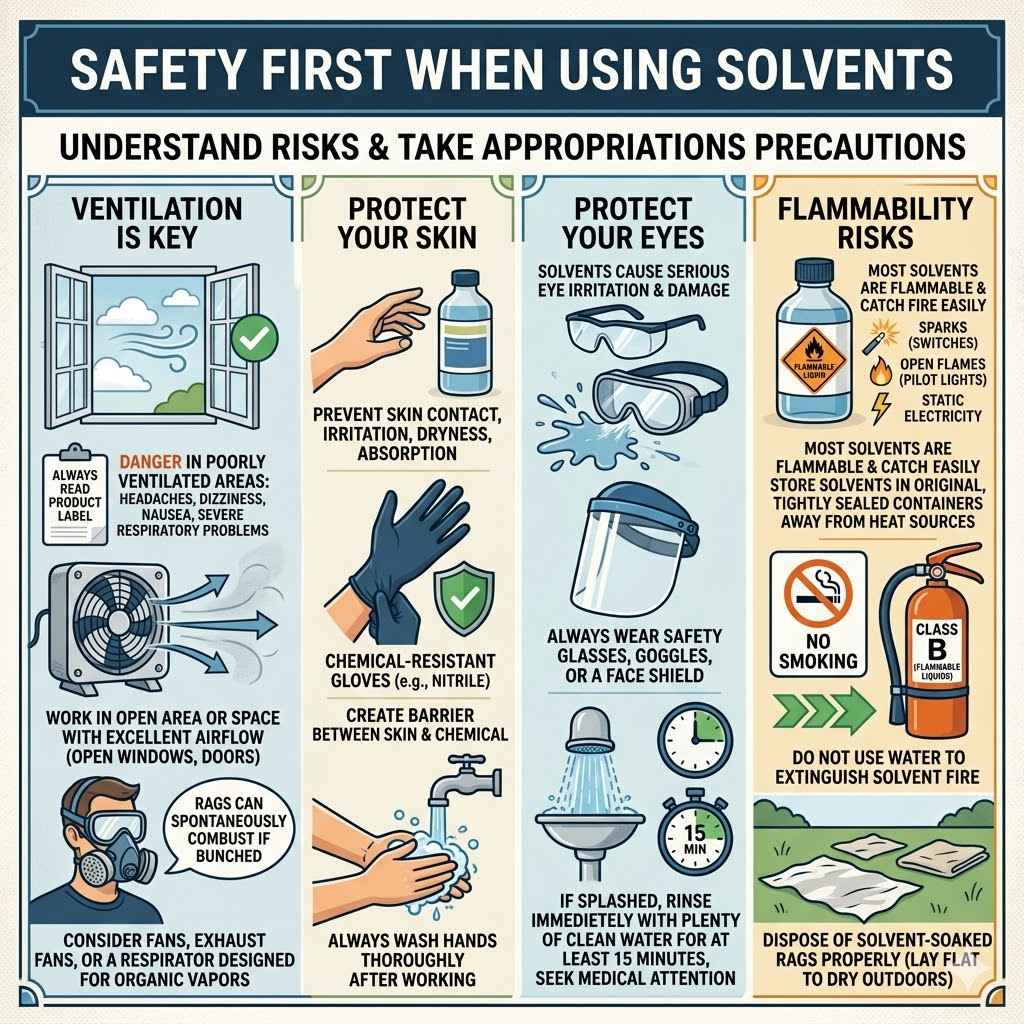
Safety First When Using Solvents
No matter which solvent you choose, safety should always be your top priority. These products are chemicals designed to dissolve or clean, and they can pose risks if not handled properly. Understanding these risks and taking appropriate precautions will help ensure your projects go smoothly and safely.
Always read the product label carefully for specific safety information and warnings.
Ventilation Is Key
Working with solvents in poorly ventilated areas is dangerous. The fumes released by solvents can be harmful to your health. They can cause headaches, dizziness, nausea, and in high concentrations, can lead to more severe respiratory problems.
Always use solvents in an open area or a space with excellent airflow. If you are working indoors, open windows and doors. You might even consider using fans to help circulate the air and direct fumes away from you.
If you don’t have adequate natural ventilation, consider using an exhaust fan or a respirator designed for organic vapors. This is especially important when working with stronger solvents or for extended periods. The goal is to keep the concentration of solvent fumes in the air as low as possible.
Good ventilation protects your lungs and makes the working environment much more pleasant.
Protect Your Skin and Eyes
Many solvents can irritate or dry out your skin with prolonged contact. Some can even be absorbed through the skin. Wearing chemical-resistant gloves, such as nitrile gloves, is highly recommended when handling solvents.
This creates a barrier between your skin and the chemical. Always wash your hands thoroughly with soap and water after you finish working.
Solvents can also cause serious eye irritation or damage if splashed. Always wear safety glasses or goggles to protect your eyes. If a solvent gets into your eyes, rinse them immediately with plenty of clean water for at least 15 minutes and seek medical attention.
A face shield can offer additional protection, especially when dealing with larger quantities or when there’s a risk of splashing.
Flammability Risks
Most solvents used in painting and cleaning are flammable. This means they can easily catch fire from sparks, open flames, pilot lights, or even static electricity. Store solvents in their original, tightly sealed containers away from heat sources.
Never smoke while using solvents, and be mindful of any potential ignition sources in your work area.
If a solvent does ignite, do not try to extinguish it with water, as this can spread the fire. Use a fire extinguisher rated for flammable liquids (Class B) or smother the flames with a fire blanket or sand. After use, dispose of solvent-soaked rags or materials properly.
Some rags can spontaneously combust if left bunched up, so lay them flat to dry outdoors or store them in a metal container with a tight lid filled with water.
Frequently Asked Questions
Question: Are mineral spirits and paint thinner the same thing?
Answer: Not exactly. Mineral spirits are a specific type of petroleum distillate. Paint thinner is a general term that can include mineral spirits but also other solvents.
So, mineral spirits are a kind of paint thinner, but not all paint thinners are mineral spirits.
Question: Can I use mineral spirits to thin latex paint?
Answer: No, you should not use mineral spirits or paint thinners to thin latex or water-based paints. Water is the appropriate solvent for latex paints. Using mineral spirits will not work and can create a gummy mess.
Question: Is paint thinner safe to use indoors?
Answer: Paint thinner can be used indoors, but only if the area is very well-ventilated. Always ensure good airflow by opening windows and doors. If ventilation is poor, it’s best to work outdoors or use a respirator rated for organic vapors.
Question: How long does paint thinner take to evaporate?
Answer: Evaporation time varies greatly depending on the type of paint thinner and environmental conditions. Mineral spirits evaporate moderately. Other thinners, like lacquer thinner, evaporate very quickly, while some specialized ones evaporate slowly.
Question: Can I reuse mineral spirits for cleaning brushes?
Answer: Yes, you can often reuse mineral spirits for cleaning brushes multiple times. As you use them, the paint and residue will settle to the bottom of the container. You can then carefully pour off the cleaner liquid from the top for reuse.
Summary
Mineral spirits are a reliable solvent for general cleaning and thinning oil-based paints. Paint thinner is a broader category. Understanding the specific type of paint thinner you have, like mineral spirits, naphtha, or stronger blends, is key.
Always match the solvent to the paint and task. Prioritize safety by ensuring good ventilation, wearing protective gear, and being mindful of flammability. This knowledge helps you pick the right product for a great finish.