What Does a Rubber Band on a Door Handle Mean
Sometimes you see little things that make you wonder, and a rubber band on a door handle is one of those curious sights. It’s not something you see every day, which is why asking What Does a Rubber Band on a Door Handle Mean? can pop into your head. For many, it’s a simple mystery waiting for a quick answer.
Don’t worry, it’s not complicated! We’ll break down the common reasons and show you exactly why someone might tie a rubber band around a door handle.
Common Reasons for a Rubber Band on a Door Handle
Seeing a rubber band on a door handle can be a bit of a puzzle at first glance. It’s a small, everyday object used in a way that isn’t immediately obvious for securing or opening a door. This common sight, especially in places like schools or offices, often sparks curiosity because it’s not a standard method for door management.
Many people, particularly those new to certain environments or practices, wonder about the purpose behind this simple setup. It’s a visual cue that suggests a specific function or need, but without context, that function remains a mystery. This article aims to solve that mystery for you, explaining the practical reasons behind this seemingly odd arrangement in a clear and easy-to-understand way, preparing you for what you’ll learn next about this clever trick.
The Practical Purpose of a Door Handle Rubber Band
The primary reason for placing a rubber band around a door handle is to keep the door from latching shut. This is incredibly useful when you need to move through the door frequently or when you have your hands full. Imagine carrying groceries, a stack of books, or a baby; you don’t want to have to use your elbow or foot to push the door open, only to have it click shut behind you.
The rubber band acts as a temporary lock override, preventing the latch mechanism from engaging fully.
This simple hack allows the door to remain ajar, making passage smoother and more convenient. It’s a small detail that can make a big difference in busy environments. It saves time and effort, especially for people who are constantly going in and out.
It’s a low-tech solution to a common everyday problem.
How the Rubber Band Actually Works
To understand how a rubber band keeps a door open, you need to know how a door latch works. A door latch is the metal piece that sticks out from the edge of the door into the door frame. When you turn the doorknob, a mechanism inside retracts this latch, allowing you to open the door.
When you let go of the doorknob and the door swings shut, the angled edge of the latch hits the strike plate in the frame and pushes the latch back into the door. This allows the latch to spring out again, securing the door.
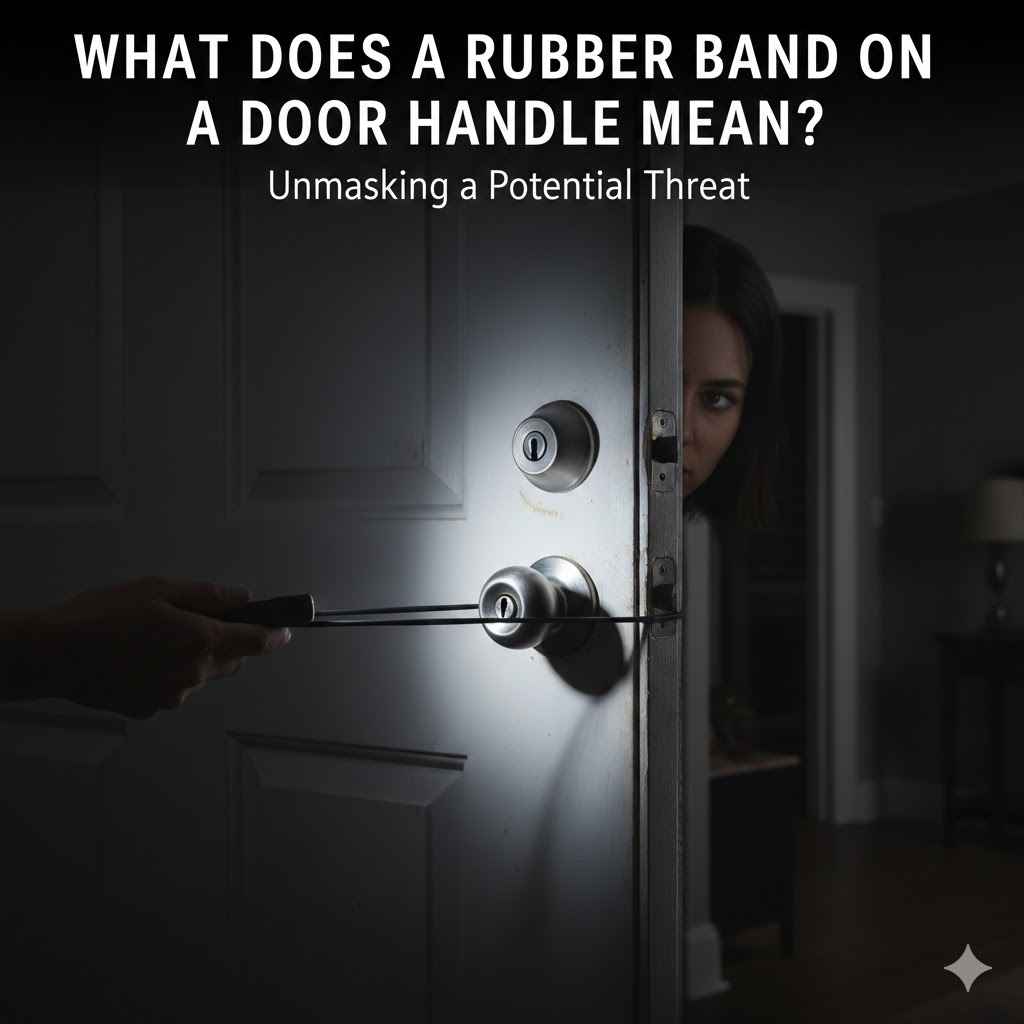
A rubber band is placed around both the doorknob and the lever or handle on the other side of the door. It’s stretched taut across the gap between the doorknob and the strike plate area. When the door is pushed closed, the rubber band prevents the latch from fully extending and catching on the strike plate.
Instead, the rubber band holds the latch slightly retracted, so the door doesn’t fully latch. It’s like a gentle pushback against the latch mechanism.
Key Components Involved
-
Door Latch: This is the part of the door that normally slides into the frame to keep it shut. The rubber band essentially stops this piece from doing its job temporarily.
-
Doorknob/Handle: This is what you turn or push to retract the latch. The rubber band loops around this.
-
Strike Plate: This is the metal plate on the door frame that the latch slides into. The rubber band’s purpose is to prevent the latch from reaching this.
-
Rubber Band: The simple elastic band that creates the tension to keep the latch from engaging.
When and Why This Method Is Used
This technique is most commonly seen in places where people need to pass through a door repeatedly or carry items. Think about classrooms, doctor’s offices, or even busy home environments. Teachers might use it so students can easily enter and exit for bathroom breaks or to see someone in the hallway without disturbing a lesson.
Healthcare professionals might use it in hospitals to move patients or equipment without fumbling with the door.
It’s a practical solution when a more permanent door stopper or wedge isn’t available or suitable. It’s also a temporary fix that can be set up in seconds and removed just as easily. The advantage is its simplicity and portability.
You don’t need any tools to implement it, making it a go-to trick in many situations.
Examples of Use
-
Classroom Management: A teacher might place a rubber band on the classroom door handle to allow students to go to the restroom or get help from another teacher without the door slamming shut or requiring a full stop in the lesson. This keeps the flow of the classroom smoother.
-
Healthcare Settings: In a hospital ward, nurses might use a rubber band on patient room doors to allow quick access for checks or to move gurneys and equipment without repeatedly opening and closing the door, which can be noisy and time-consuming.
-
Busy Household: At home, especially with young children or pets, parents might use it on a door to a room where they are working or a playroom so they can enter and exit easily without the door latping behind them, preventing a child from being accidentally locked out or in.
Potential Issues and Alternatives
While a rubber band on a door handle is a clever hack, it’s not a perfect solution for all situations. One of the main drawbacks is that it can make the door less secure. Because the latch isn’t fully engaged, it’s much easier for someone to push the door open, even if it looks closed.
This is why it’s typically used in places where security is not the primary concern, or for very short periods.
Another issue is that the rubber band can degrade over time, especially with constant stretching and exposure to elements, and may break. It might also not work on all types of door handles or latch mechanisms. For example, some heavy doors might simply push past the rubber band’s resistance, or doors with very strong closing springs might overcome the effect.
Drawbacks of the Rubber Band Method
-
Security Risk: The most significant downside is reduced security. The door can be easily opened from the outside without a key or turning the knob. This makes it unsuitable for any door that needs to be secured against unauthorized entry.
-
Durability: Rubber bands can break. Constant use, stretching, and exposure to sunlight or temperature changes can weaken the rubber, leading to unexpected breakage. This means the door could latch shut unexpectedly.
-
Limited Effectiveness: Not all door latches and handles are compatible with this method. Some heavy doors or latches with very strong springs might not be held open effectively by a single rubber band.
-
Aesthetics: While functional, a rubber band is not the most visually appealing solution. It can look makeshift or unprofessional in certain settings.
When to Use Alternatives
If security is a concern, or if you need a more reliable way to keep a door open, there are better alternatives. Door wedges are a classic and effective option. You can place them at the bottom of the door to prevent it from closing.
Many commercial buildings use door stops that are mounted to the floor or wall, which hold the door open at a desired angle.
For a more permanent solution, some doors can be fitted with automatic door closers that can be adjusted to hold the door open. In settings where a door needs to be frequently accessed and secured, an electronic lock system or a keyed entry system might be more appropriate. These solutions offer enhanced security and control over door access.
Common Alternatives
-
Door Wedges: These are wedge-shaped blocks made of rubber, wood, or plastic that you slide under the door. They are simple, cheap, and effective for most floor types.
-
Wall or Floor Mounted Door Stops: These are permanent fixtures that prevent the door from closing past a certain point. They can be a simple rubber bumper or a more elaborate magnetic catch.
-
Automatic Door Closers with Hold-Open Function: These devices are installed at the top of the door and can be adjusted to close the door automatically but also to hold it open if needed.
-
Door Holders: These can be magnetic devices that attach to the door and the wall, or mechanical arms that prop the door open. They offer a more robust solution than a rubber band.
Understanding Door Latch Mechanisms
To truly grasp why the rubber band trick works, it helps to understand the basic mechanics of a door latch. Most interior doors use a spring-loaded latch bolt. This is a cylindrical metal bolt that is typically spring-loaded and protrudes from the edge of the door.
When the door is closed, the angled front of the latch bolt strikes the strike plate in the door frame. The angle of the bolt allows it to be compressed into the door by the strike plate, and the spring then pushes it back out once it’s aligned with the opening in the strike plate.
The doorknob or lever is connected to a spindle that passes through the door. This spindle operates a mechanism inside the door that retracts the latch bolt when the knob is turned. This retraction allows you to pull the door open.
The rubber band’s job is to prevent this automatic extension of the latch bolt when the door is pushed shut, thereby keeping the door from locking.
The Role of the Latch Bolt
The latch bolt is the crucial component that keeps a door secured. It’s a metal cylinder that extends from the side of the door, designed to fit into a corresponding hole in the strike plate on the door frame. When the door is closed, the angled end of the latch bolt makes contact with the edge of the strike plate.
This contact forces the bolt to retract into the door, and as the door closes fully, the spring mechanism inside the door causes the bolt to extend again into the strike plate’s opening, thus locking the door.
The “holding open” function of the rubber band works by interfering with this natural extension. By creating tension, the rubber band keeps the latch bolt slightly retracted, so it doesn’t fully engage with the strike plate when the door is closed. This effectively bypasses the locking action without requiring constant manual effort.
How the Doorknob Mechanism Works
The doorknob or lever is the interface for manually operating the latch. Inside the door, a spindle connects the exterior doorknob to an internal mechanism. When you turn the doorknob, this spindle rotates, pushing levers or cams that engage with the back of the latch bolt.
This engagement retracts the latch bolt, allowing the door to be opened. When you release the doorknob, springs return it to its original position, and the latch bolt is extended by its own spring.
The rubber band wraps around the exterior of the doorknob or lever and is stretched across to the other side of the door. When the door is closed, the rubber band applies a constant outward force on the latch bolt, resisting its full extension. It’s this resistance that prevents the latch from entering the strike plate and locking the door.
The tension of the rubber band is key to its effectiveness.
A Simple Analogy
Think of it like holding a spring-loaded pen cap. Normally, the cap snaps into place. But if you held a rubber band to keep the cap from snapping shut, it would stay slightly open.
The rubber band on the door handle acts similarly, preventing the latch from snapping into its locked position.
Factors Affecting Rubber Band Performance
The effectiveness of a rubber band on a door handle can depend on several factors. The most obvious is the strength and elasticity of the rubber band itself. A thick, strong rubber band will provide more tension and be more effective at holding back the latch than a thin, weak one.
Different types of rubber have varying elasticity and durability. Some rubber bands are designed for heavy-duty use, while others are more delicate.
The type of door handle also plays a role. Rounded doorknobs are easier to wrap a rubber band around securely than levers, which might require careful placement to ensure the band doesn’t slip off. The size of the gap between the doorknob and the door frame, and the force of the door’s closing spring, also influence how well the rubber band works.
A door with a very strong spring might need a much tighter or thicker rubber band.
-
Rubber Band Strength and Thickness: A thicker, more robust rubber band will provide greater tension, making it more effective at holding the latch bolt retracted. Thin, weak bands may not have enough power to overcome the spring in the latch mechanism.
-
Elasticity and Durability: The quality of the rubber matters. High-quality rubber bands will maintain their elasticity longer and are less likely to snap under strain, ensuring the door stays open as intended.
-
Handle Type and Shape: Rounded doorknobs are generally easier to secure a rubber band around than lever-style handles, which might require more precise positioning to prevent slipping.
-
Door Closing Spring Strength: Doors with a powerful closing mechanism require more tension from the rubber band to keep the latch retracted. A weak rubber band will likely be overpowered.
-
Environmental Factors: Extreme temperatures or exposure to sunlight can degrade rubber over time, reducing its effectiveness and increasing the risk of breakage.
When This Trick is a Smart Solution
There are specific scenarios where the rubber band trick shines as a genuinely smart and practical solution. It’s all about situations where convenience and temporary accessibility outweigh the need for robust security. Think about busy work environments where people are constantly moving in and out of a shared space.
For example, in a graphic design studio, team members might need to pop into a meeting room for quick discussions without the door slamming shut and interrupting workflow.
This method is ideal for short-term needs. If you’re expecting a delivery and need to keep the front door slightly ajar so you can hear the doorbell, a rubber band is perfect. It allows you to be present and accessible without leaving the door wide open.
It’s also a fantastic aid for individuals who might have difficulty operating a doorknob with full hands, such as parents managing young children or people carrying tools for a task.
Facilitating Frequent Entry and Exit
In environments where doors are opened and closed many times an hour, a rubber band can significantly improve efficiency. Consider a photography studio where models or clients might be coming and going, or a workshop where tools and materials are frequently moved in and out. The ability to keep the door slightly open means less time spent fiddling with the handle, allowing for quicker transitions and less disruption to ongoing activities.
This is particularly helpful in spaces like art studios, music practice rooms, or shared office spaces where people need to collaborate or share resources frequently. The simple act of keeping the door unlatched saves valuable seconds and mental energy, contributing to a smoother, more productive atmosphere. It removes a small but consistent barrier to movement.
Scenario Example
-
Busy Reception Area: A receptionist in a busy office might use a rubber band on the interior door to the main workspace. This allows them to easily step out to greet visitors or direct them without having to pull the door shut and reopen it each time. It keeps the flow of the office smooth and welcoming.
-
Home Office Access: If you work from home and often need to step out to grab a package or speak with a family member, but don’t want the door to fully latch and make noise, a rubber band is a quick fix. It lets you maintain a connection to your home while focusing on work.
-
Temporary Event Setup: During events, like setting up for a party or a conference, volunteers or staff might need to move equipment and supplies in and out of a room continuously. Using rubber bands on doors allows them to keep the pathways clear and reduce delays.
When to Reconsider This Approach
While incredibly useful in certain contexts, the rubber band method is not a universal solution. The most critical factor is security. If the door leads to a space that requires privacy, protection from unauthorized access, or sensitive information, a rubber band is never an appropriate solution.
For example, using it on an exterior door to your home or a secure office would be a significant security risk.
Additionally, in environments with strict safety regulations or fire codes, temporary measures like rubber bands might be prohibited. Fire doors, for instance, are designed to close automatically to prevent the spread of smoke and flames. Interfering with their function could have serious safety consequences.
Always assess the primary purpose of the door and the potential risks before opting for this hack.
Critical Considerations
-
Security Needs: If the door protects valuable assets, personal information, or requires privacy, do not use a rubber band. The lack of a proper latch makes the door insecure.
-
Safety Regulations: Always check local building codes and fire safety regulations. Interfering with fire doors or emergency exits is dangerous and illegal.
-
Durability and Reliability: If the door needs to be held open reliably for extended periods, a rubber band is not the best choice. Its tendency to break or lose tension makes it unreliable.
-
Professional Appearance: In formal or professional settings, a rubber band can look unprofessional. More permanent and aesthetically pleasing solutions are usually preferred.
The Psychology Behind Simple Solutions
The appeal of the rubber band trick lies in its simplicity and resourcefulness. It’s a testament to human ingenuity – finding a common, everyday object and repurposing it to solve a practical problem. This kind of problem-solving often reflects a pragmatic and adaptable mindset.
Instead of seeking out a specialized tool, we look at what’s available and figure out how to make it work.
This approach to problem-solving is often observed in environments where resources might be limited, or where quick fixes are frequently needed. It demonstrates an ability to think outside the box and to utilize the immediate environment to our advantage. The widespread adoption and understanding of this trick across different settings suggest that it taps into a universal desire for efficiency and ease in our daily lives.
It’s a small but powerful example of how simple tools can lead to effective outcomes.
Resourcefulness and Adaptability
The use of a rubber band is a prime example of resourcefulness. It shows that we don’t always need complex tools or expensive equipment to solve a problem. By using something readily available, like a rubber band, individuals demonstrate an ability to adapt to their surroundings and make do with what they have.
This trait is often linked to creativity and a willingness to experiment.
This adaptable approach is valuable in many aspects of life, not just in using hacks for doors. It means being able to pivot when plans change, find alternative routes when faced with obstacles, and make the best of any situation. The rubber band trick is a tiny demonstration of this larger capacity for ingenuity.
Efficiency in Everyday Tasks
The core benefit of the rubber band method is efficiency. It streamlines a simple task—moving through a doorway—by removing a small but recurrent point of friction. This focus on efficiency is something many people strive for in their daily routines.
We are always looking for ways to save time and energy, whether it’s through a well-organized schedule, an ergonomic workspace, or a simple trick like keeping a door unlatched.
The satisfaction derived from such a simple solution comes from its direct impact on convenience. It’s a small win that makes a noticeable difference. This drive for efficiency is a key aspect of modern life, where time is often considered a precious commodity.
The rubber band, in its own small way, helps to reclaim a bit of that time and make daily tasks a little bit easier.
Frequently Asked Questions
Question: What is the main purpose of a rubber band on a door handle?
Answer: The main purpose is to prevent the door from latching shut, allowing it to remain ajar for easier passage without needing to hold it open manually.
Question: Is this method secure?
Answer: No, this method is not secure. It significantly reduces the door’s security, making it easy for anyone to open.
Question: Where is this trick commonly used?
Answer: It’s often seen in places like classrooms, doctor’s offices, or busy households where frequent, easy access is more important than security.
Question: Can a rubber band damage a door handle?
Answer: Generally, no. Rubber bands are soft and unlikely to cause damage to most door handle materials, though very cheap or brittle bands could potentially scratch some finishes if stretched too tightly or rubbed excessively.
Question: What are better alternatives for keeping a door open?
Answer: Better alternatives include door wedges, wall-mounted door stops, or automatic door closers with a hold-open feature, especially when security or reliability is needed.
Summary
So, what does a rubber band on a door handle mean? It means someone needed a quick, easy way to keep a door from latching shut. It’s a clever hack for convenience, not security.
Use it when you need to pass through frequently or have your hands full, but always remember its limitations for safety and privacy.