What Grit Level For Sanding Trim Nail Holes? Answered
It’s a common moment in any DIY project. You’ve put up new trim, filled those nail holes, and now you’re looking at a bumpy surface. You want it to look perfect, right?
But then the questions start. What grit sandpaper should I use? How do I even do this without making it worse?
It’s frustrating when a small detail can make the whole job look unfinished. You’re not alone. Many people struggle with getting this part just right.
This guide will walk you through it, step by step, using simple terms so you can get that smooth, professional look.
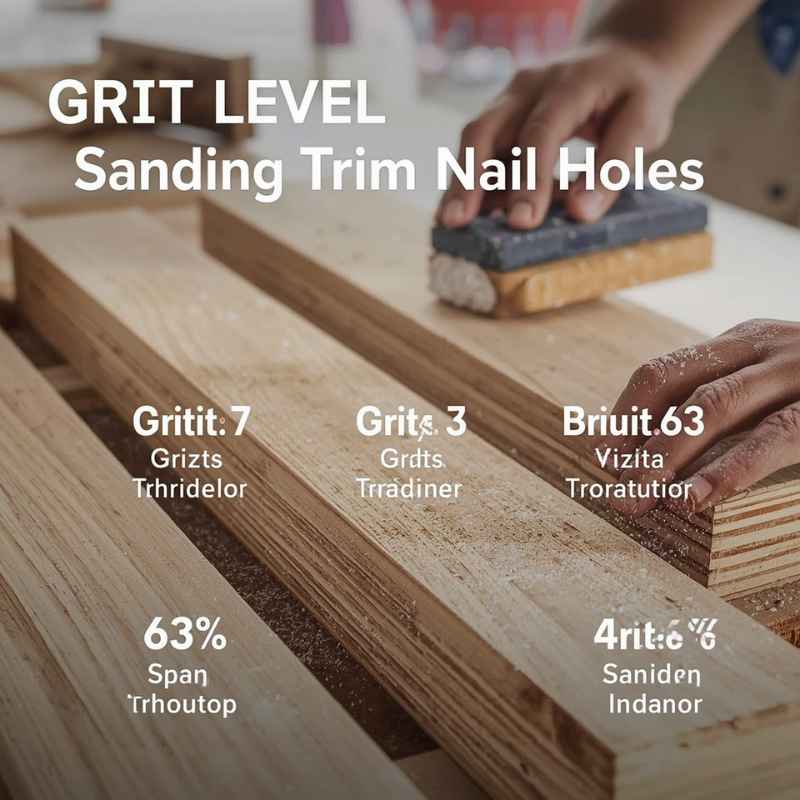
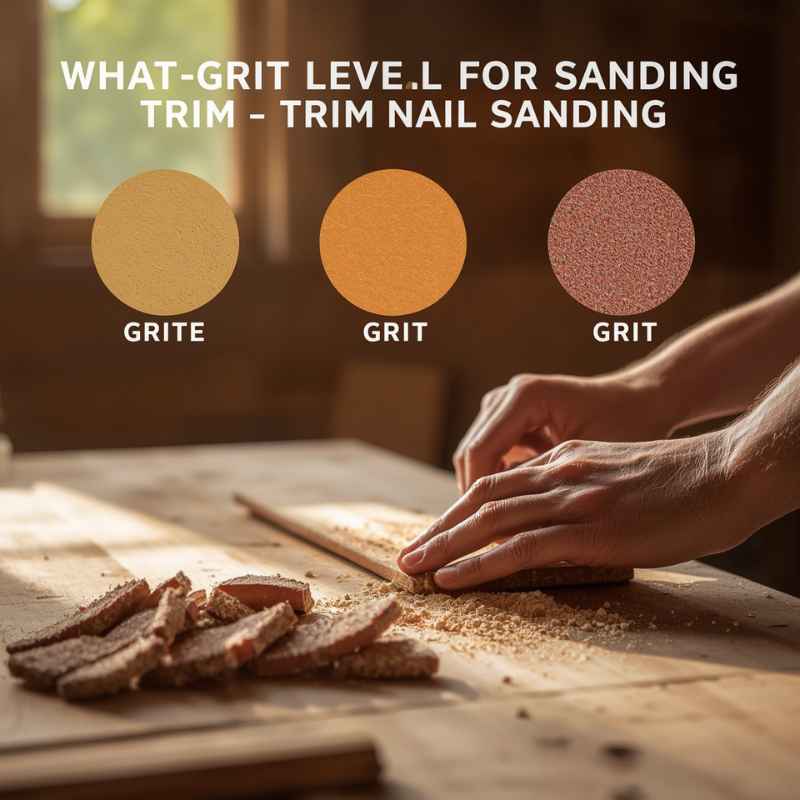
The best grit level for sanding trim nail holes is typically a medium-fine grit, around 120 to 180. This range is effective for smoothing filler without damaging the surrounding wood or paint. Always start with a slightly coarser grit if needed, then move to finer grits for a smooth finish.
Understanding Sandpaper Grits
Sandpaper comes in many grades. These grades tell you how rough or fine the paper is. This is shown by a number, called the grit number.
A lower number means a coarser grit. Coarser grits have bigger grains. They remove more material faster.
A higher number means a finer grit. Finer grits have smaller grains. They smooth surfaces and leave a polished look.
Think of it like this. If you have a big scratch, you need a rougher paper to level it down. If you just want to make something feel super smooth, you use a very fine paper.
For trim nail holes, you’re usually dealing with dried wood filler. This filler is often softer than the wood itself. So, you don’t need a super rough sandpaper.
The goal is to make the filled spot level with the trim. You also want it smooth enough for paint. If you use sandpaper that’s too rough, you can easily damage the trim.
You might create new marks or sand away too much of the surrounding paint. This can lead to more work and a less-than-perfect finish.
Why Grit Matters for Nail Holes
When you fill nail holes, you use a product like wood putty or spackle. This filler needs to dry completely. Once dry, it might be a little higher than the trim surface.
Or it might have shrunk slightly. Either way, you need to sand it down. You want that filled spot to be flush with the trim.
If you use too coarse a grit, say 60 or 80, it’s like using a cheese grater on a delicate cake. It will remove filler very fast. But it will also likely scratch the wood trim.
It can also create a noticeable rough patch. This rough patch will be hard to cover with paint later. The paint might not stick well.
Or it might show the sanding marks.
On the other hand, using a grit that is too fine, like 320 or 400, might not be strong enough. It might take forever to smooth down the filler. You might end up rubbing too much.
This can create a slight dip. This is also not ideal. You need a balance.
You need enough grit to do the job, but not so much that it causes problems.
The Sweet Spot: 120 to 180 Grit
For most trim nail holes, a grit range of 120 to 180 is perfect. Let’s break down why this range works so well. Many people start with 120 grit.
This is a good, sturdy grit. It can easily handle dried wood filler. It levels the filler down to the trim’s surface.
If the filler is a bit proud (sticking up) or has a rougher texture, 120 grit is your friend. It’s coarse enough to do the job efficiently. But it’s not so coarse that it will ruin your trim.
After using 120 grit, you’ll likely want to move to a finer grit. This is for the smoothing stage.
This is where 180 grit comes in. Using 180 grit after 120 grit will smooth out any tiny marks left by the 120. It creates a surface that is ready for primer and paint.
It’s smooth to the touch. It looks like the rest of the trim. It’s this two-step process that gives the best results.
Gritting Basics for Trim
Start Here: Always use a grit that matches your filler. Dried wood filler is usually smooth.
What to Avoid: Very coarse grits (like 60 or 80) can damage trim.
The Goal: Make the filled spot flat and smooth. No bumps or dips.
Easy Does It: Sand gently. You can always sand more, but you can’t un-sand.
When to Use Coarser Grits (and When Not To)
Sometimes, you might encounter a situation where the filler is very uneven. Or maybe you used a filler that dried unusually hard. In these rare cases, you might consider starting with a grit slightly coarser than 120.
Perhaps an 80 or 100 grit. But this comes with a big warning.
Using anything coarser than 100 grit requires extreme caution. You must be very gentle. You must avoid touching the surrounding wood or paint as much as possible.
For most people, and for most common DIY fillers, this isn’t necessary. It’s usually overkill and introduces a higher risk of error.
I remember one project where I rushed the filler. I didn’t let it dry long enough. When I went to sand, it was gummy.
It was terrible. I tried to use 120 grit, and it just smeared. I ended up having to scrape it off.
Then I let it dry properly. That taught me a lesson about patience. Rushing the drying is worse than sanding.
So, stick to the 120 to 180 range unless you are very experienced. Or unless you have a specific, unusual filler. Always test your sandpaper on a scrap piece first if you can.
This helps you understand how it will behave.
The Importance of Finer Grits
Once you’ve used your initial grit (likely 120) to level the nail holes, you’re not done. The surface might feel smooth to you, but it might have tiny scratches from the 120 grit. These are hard to see.
But they can show up when you paint. Paint has a way of highlighting imperfections.
This is where moving to a finer grit, like 180, is crucial. Sanding with 180 grit will take away those microscopic scratches. It refines the surface.
It makes it silky smooth. This is what you want for a professional finish. A smooth surface means the paint will lay down evenly.
Imagine painting a rough surface versus a smooth one. The paint clings better. It looks more uniform.
It has a nice sheen. The difference is huge. So, even if you think 120 grit did a good job, take that extra step with 180 grit.
It’s worth it.
Some people even go a step further. After 180, they might use 220 grit. This is for an exceptionally smooth finish.
Especially if you are using a high-gloss paint. For most interior trim and standard paint jobs, 180 grit is plenty. It offers the best balance of effort and results.
Quick Grit Guide
- 60-80 Grit: Too coarse for trim nail holes.
- 100 Grit: Use with extreme caution, only if needed.
- 120 Grit: Great for initial leveling of filler.
- 150 Grit: A good stepping stone if you have it.
- 180 Grit: Excellent for final smoothing.
- 220+ Grit: For very high-gloss finishes or advanced smoothing.
Sanding Techniques for Trim
How you sand is as important as the grit you choose. For nail holes, you want to be precise. You don’t want to sand the entire trim piece.
Just the filled spots.
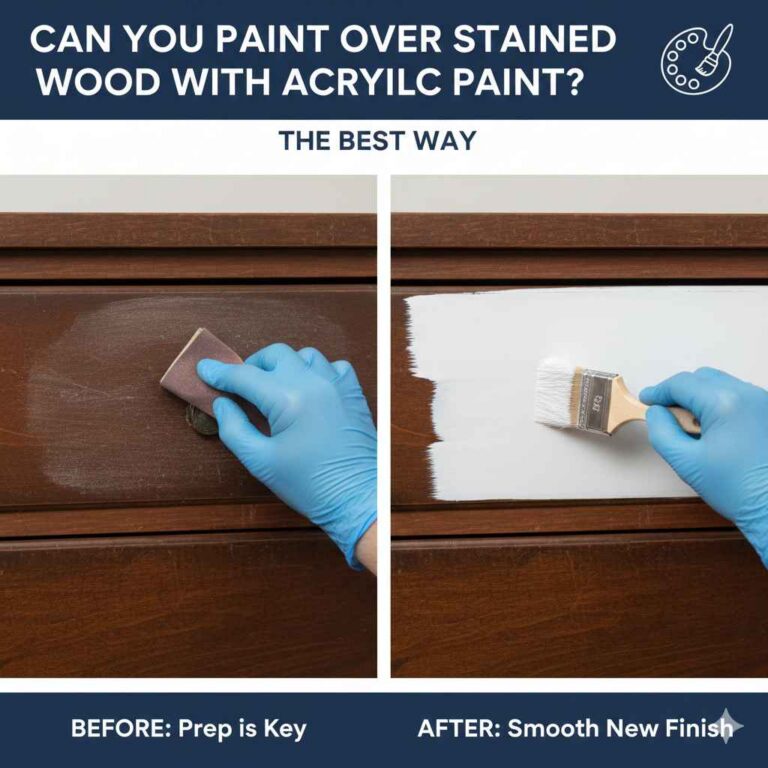
Use a Sanding Block: For larger trim, a small sanding block is helpful. This keeps the sandpaper flat. It helps you apply even pressure.
It prevents you from creating dips or uneven areas. You can wrap sandpaper around a small, firm block of wood. Or you can buy small sanding blocks.
Sand Gently: Apply light to medium pressure. Let the sandpaper do the work. You are not trying to scrub away the trim.
You are just trying to blend the filler in. Go back and forth a few times. Check your progress often.
Feather the Edges: When sanding, slightly angle your strokes. This helps to blend the edges of the filler with the trim. It makes the transition much smoother.
You don’t want a hard line between the filled spot and the wood.
Clean Up: After sanding, dust is your enemy. Use a tack cloth or a slightly damp (not wet) cloth to wipe away all the dust. This is vital.
If you don’t remove the dust, it will mix with your primer or paint. This creates a rough finish and poor adhesion.
I remember a time I was painting a hallway. I thought I had cleaned everything well. But I missed a spot on a piece of trim.
When the primer went on, I saw a little dusty halo around the nail hole. It looked awful. I had to re-sand that spot and repaint it.
Now, I always use a tack cloth. It makes a big difference.
Tip: The Sanding Block Advantage
What it is: A small, flat, firm surface to hold sandpaper.
Why use it: Ensures even pressure and a flat sanding surface.
How to make one: Wrap sandpaper around a scrap piece of wood. Secure with tape if needed.
When it helps most: For larger trim pieces where flat sanding is important.
Alternative Tools for Sanding Trim Nail Holes
While sandpaper is the standard, other tools can help. For very small areas or delicate trim, you might use something else.
Sanding Sponges: These are great for curved or detailed trim. They are flexible. They can get into nooks and crannies.
Look for sponges with a grit rating. You’d still want a medium-fine grit, like 120 or 180.
Detail Sanding Tools: Some electric sanders have small, pointed attachments. These are for very precise work. You can use them to sand just the nail hole.
Be very careful with these. They can easily remove too much material. For most DIYers, manual methods are safer.
Emery Boards: For the tiniest of nail holes, even a nail file (emery board) can work. These are typically very fine grit. They are meant for nails, so they are gentle.
Again, you’d want one labeled with a grit or know that nail files are generally fine.
The key with any tool is control. You need to be able to sand only the filler and blend it into the surrounding trim. Overdoing it is the biggest mistake.
It’s always better to sand a little less, then check, and sand a little more if needed.
What to Do If You Sand Too Much
It happens. You’re sanding along, you get distracted for a second, and oops. You’ve sanded too much.
You’ve created a small divot or a very thin spot in the trim around the nail hole. Don’t panic. There are ways to fix this.
Re-apply Filler: If you’ve created a divot, you can carefully re-apply a thin layer of wood filler. Let it dry completely. Then, sand it down again.
This time, be extra careful. Use your 180 grit paper and a sanding block. Focus on leveling it perfectly.
Use a Wood Patching Compound: For slightly larger divots, a patching compound might be better than wood filler. These compounds are designed for larger repairs. They often have a finer texture.
Follow the product instructions carefully. Let it dry. Then sand smooth with 180 grit.
Consider the Paint Layer: If you’ve only lightly sanded into the paint, sometimes a good primer and a couple of paint coats can hide it. The new paint layer will fill in the slight imperfection. This is less likely to work if you’ve gone deep into the wood.
I made this mistake on a baseboard once. I was trying to fill a small gouge. I sanded it down, thinking it was perfect.
But I’d sanded too much of the paint off. The wood underneath looked different. It was a patch.
I had to go back. I re-filled it with a tiny bit of filler. Then I sanded it.
Then I used primer. Finally, I matched the paint color. It took extra time, but the repair was invisible.
Oops! Fixed It.
Sanded too much filler: Re-apply filler, let dry, sand again gently.
Created a divot: Use wood filler or patching compound, let dry, sand smooth.
Sanded into paint: Primer and multiple paint coats can often hide minor damage.
Lesson learned: Patience and light pressure save time in the long run.
When to Worry About Trim Nail Holes
Most of the time, filling and sanding nail holes is straightforward. But there are times when it’s a sign of a bigger issue. Or when the sanding itself can cause problems beyond appearance.
Wood Rot or Damage: If the nail hole seems unusually deep. Or if the wood around it is soft and crumbly, it might be rot. Sanding this might just make the problem worse.
You might need to address the underlying rot first.
Multiple Holes Close Together: If you have many nail holes very close together, the wood might be weakened. Sanding too aggressively could cause the wood to split or break. This might be the case if you’re working with very old, dry wood.
Structural Issues: In rare cases, if nails are part of a structural element, and they’ve been filled and sanded, it could be a sign that the structure is being compromised. This is highly unlikely for typical trim work, but worth a mention for completeness.
Paint Adhesion Problems: If after sanding and priming, paint still won’t adhere well to the filled spot, it could be an issue with the filler itself. Or, you may have used a lubricant like wax or silicone on the wood. These can prevent paint from sticking.
Sometimes, a bit of light sanding with a super-fine grit (like 220 or 320) can help “re-open” the surface. Then clean and re-prime.
If you are unsure about the integrity of your wood, it’s always best to consult a professional. For standard home improvement projects, these issues are rare.
The Final Coat: Priming and Painting
Once you’ve sanded your nail holes smooth, and you’ve cleaned all the dust away, it’s time for the final steps. This is where your careful sanding really pays off.
Priming is Key: Always use a good quality primer. A good primer seals the filler. It creates a uniform surface.
It ensures that your topcoat of paint will look consistent. Apply the primer evenly over the filled spots and a little around them. Let it dry completely.
Inspect After Priming: Once the primer is dry, inspect the filled areas again. This is your last chance to catch any minor imperfections. You might see a tiny bump you missed.
Or a slight unevenness. If you do, a quick touch-up with 180 or 220 grit sandpaper can fix it. Clean the dust again.
Apply the Topcoat: Now you’re ready for your paint. Apply your topcoat of paint. For best results, use two thin coats rather than one thick one.
This gives a smoother, more durable finish. Brush or roll evenly. Avoid overloading your brush or roller.
Watching that freshly painted trim come to life is so satisfying. Those filled nail holes disappear. It looks like a brand-new installation.
All that attention to detail pays off. The smoothness of the sanded area is what makes the paint look so good.
Paint Prep Checklist
- Clean: Wipe all dust from sanding.
- Prime: Use a good quality primer over filled areas.
- Inspect: Check for imperfections after priming.
- Sand (Lightly): Touch up any missed spots with fine grit.
- Clean Again: Remove any new dust.
- Paint: Apply two thin coats of your topcoat.

Frequently Asked Questions About Sanding Trim Nail Holes
What is the best grit sandpaper for beginners sanding nail holes?
For beginners, starting with 120-grit sandpaper is a safe bet. It’s effective for leveling dried filler without being too aggressive. Follow up with 180-grit for a smooth finish.
Always sand gently and use a small sanding block for better control.
Can I use the same sandpaper for wood filler and paint?
No, you should use different grits. You’ll use a medium-fine grit like 120 or 180 for sanding wood filler. After the filler is smooth and flush, you’ll want to use a finer grit, like 180 or even 220, to smooth the transition into the paint.
Some people use a fine grit sponge specifically for paint touch-ups.
How long should I wait for wood filler to dry before sanding?
This depends on the type of wood filler. Most water-based fillers need at least 30 minutes to an hour to dry. Some tougher fillers might need several hours or even overnight.
Always check the product instructions. Sanding wet filler will create a mess and won’t work.
What if the nail hole is really small?
For very small nail holes, you can often get away with just using 180-grit sandpaper. You might even use a sanding sponge or a pencil eraser to gently smooth it. The key is to be precise and not sand the surrounding trim unnecessarily.
A quick rub with a finger after filling can sometimes make it flush enough.
Should I sand with or against the grain on trim?
When sanding wood filler on trim, the direction of sanding is less critical than when sanding bare wood. However, it’s generally best to sand in a back-and-forth motion over the filled spot. Try to blend the edges of the filler into the surrounding trim.
Avoid sanding too hard or too long in one spot, which can create a divot.
Do I need to prime after sanding nail holes on pre-painted trim?
Yes, it’s highly recommended. Even if the trim is already painted, sanding the filled nail holes can remove some of the paint. Primer helps to seal the filler and create a uniform surface for the new paint.
This prevents the filled spot from looking different in sheen or color after you paint over it.
Conclusion
Getting that perfect finish on your trim means paying attention to the small details. Sanding nail holes might seem minor, but it’s a critical step. Using the right grit sandpaper, like 120 for leveling and 180 for smoothing, makes a big difference.
Remember to sand gently and clean up thoroughly. With a little care, you can achieve a seamless look. Your trim will look professionally done.
Sponsored / affiliate links. As an Amazon Associate I earn from qualifying purchases. I may earn additional commission from eligible campaigns.