What Is Recessed Lighting? (Can Lights + IC Rating Explained)
Recessed lighting — also called can lights or downlights — is a fixture whose housing sits above the ceiling line, showing only the trim and bulb at a flush opening. But any fixture touching insulation must be IC-rated under NEC and IRC code, or it risks overheating. This guide covers the housing/trim/bulb parts, new-construction vs. remodel types, 2026 costs, and the glare trade-offs most guides skip.
Understanding Recessed Lighting: The Basics
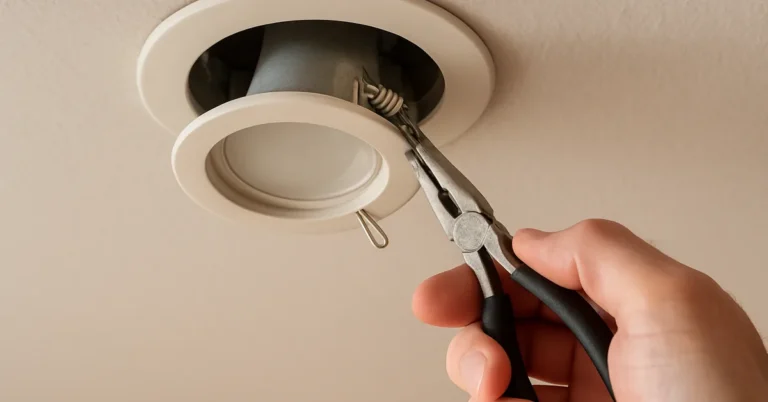
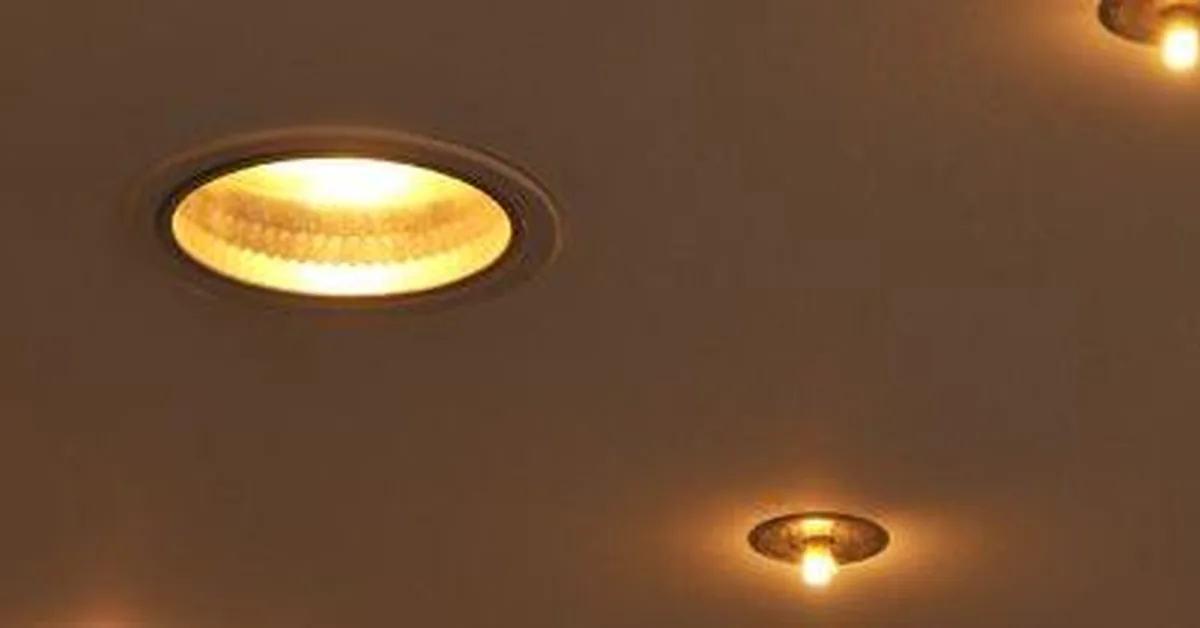
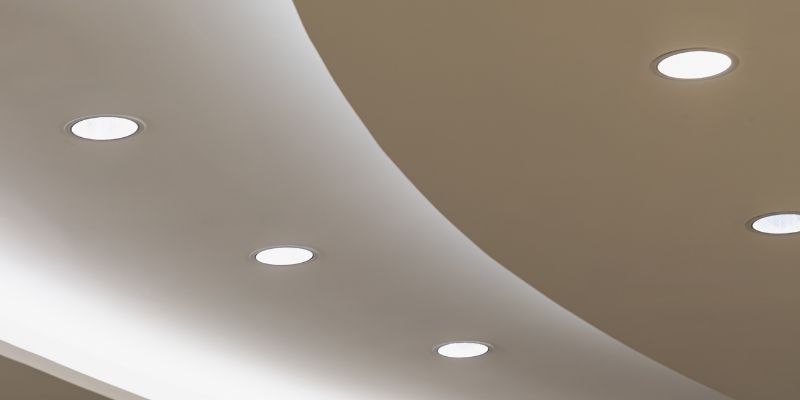
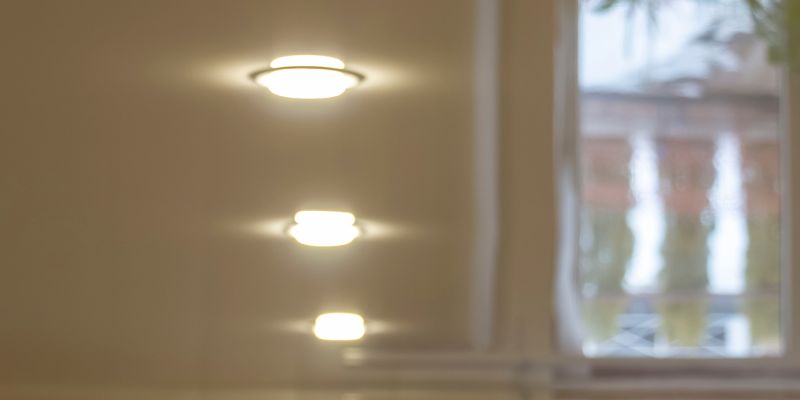
Walk into a room lit by recessed lighting and the ceiling looks clean and uncluttered, but the space is perfectly lit. These fixtures, often called can lights or downlights, are installed into a hollow opening in the ceiling. The light source sits above the ceiling line, so all you see is a small, neat opening that emits a soft or focused glow.
These lights are made up of three main parts: the housing, the trim, and the bulb. The housing is the part hidden in the ceiling, holding everything together and (per NEC/IRC code) rated IC if it touches insulation. The trim is the visible piece that covers the edge of the hole, and the bulb (or lamp) is what actually produces the light.
What makes recessed lighting so appealing is its versatility. You can use it for general lighting, accent lighting, or even to highlight a specific area, like a piece of art or a countertop — in a living room to create warm ambiance, or in a home office to keep things bright and focused. It’s like having a blank canvas—you can customize it to fit your style and needs.
Why Choose Recessed Lighting for Your Home?
Recessed lighting offers a few unique benefits over hanging fixtures. First, it saves space. Unlike chandeliers or pendant lights, recessed lights don’t hang down or take up visual space. This makes them perfect for rooms with low ceilings or small spaces where you want a clean look — a lower-ceiling bedroom feels bigger and less cluttered with cans instead of a fixture hanging down.
Second, it’s incredibly versatile. You can adjust the brightness, choose different beam angles, or even pick colored trims to match your decor. Recessed lights work everywhere from cozy cabins to sleek, modern apartments.
Finally, it can add value to your home. Real estate agents often say that good lighting can make a home more attractive to buyers, and updated recessed lighting is a common signal of a recently modernized kitchen or living room.
Types of Recessed Lighting: Finding the Right Fit
Not all recessed lights are created equal. There are different types to suit various needs, and choosing the right one matters. Here’s how to break down the main types so you can figure out what works best for your space.
One key distinction is between new construction and remodel recessed lights. New construction lights are installed before the ceiling is finished, so they’re great for homes being built or undergoing major renovations. Remodel lights, on the other hand, are designed for existing ceilings — the kind you’d use adding fixtures to a finished dining room without tearing anything apart.
Another thing to consider is the size of the fixture. Recessed lights come in different diameters, typically 3 to 6 inches. Smaller ones are great for accent lighting, like highlighting a fireplace. Larger ones work better for general lighting in bigger spaces, like a living room.
You’ll also come across terms like “fixed” and “adjustable” recessed lights. Fixed lights point straight down, which is great for even, general lighting. Adjustable ones let you tilt the light to focus on a specific spot, like a painting or a reading nook.
Here’s a quick table to summarize the types of recessed lighting:
| Type | Best For | Key Feature |
|---|---|---|
| New Construction | New homes or major renovations | Installed before ceiling is finished |
| Remodel | Existing ceilings | Easy to install without major demo |
| Fixed | General lighting | Light points straight down |
| Adjustable | Accent or task lighting | Light can be tilted to focus on a spot |
| Small (3-4 inches) | Accent lighting, small spaces | Subtle and focused |
| Large (5-6 inches) | General lighting, larger rooms | Broad, even light distribution |
Best Recessed Retrofit Kit Pick
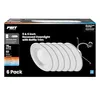
Feit Electric 5/6in LED Recessed Downlight Retrofit Kit – $39.97
A retrofit kit like this converts an existing can into an LED fixture without rewiring — the same “remodel fixture” approach this guide describes for adding lights to a finished ceiling.
- Best for: upgrading one or two existing recessed cans to LED
- Why we picked it: no new housing or wiring needed, matches the remodel-type fixture explained above
- Main drawback: single-unit price is higher per fixture than buying a multi-pack for a whole room
Compare more recessed lighting options
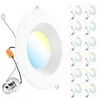 Option 1 Sunco 12-Pack 6in Retrofit LED Recessed Lights, Dimmable – $44.99
|
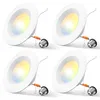 Option 2 Amico 4-Pack 5/6in LED Recessed Retrofit Can Lights – $22.99
|
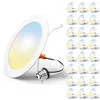 Option 3 FREELICHT 24-Pack 6in Retrofit LED Recessed Lighting – $84.99
|
As an Amazon Associate we earn from qualifying purchases.
Recessed Lighting vs. Surface-Mounted Lighting
The other common option is surface-mounted lighting — flush-mount or semi-flush fixtures fixed directly to the ceiling surface rather than cut into it. The table below compares the two on the factors that actually decide which one fits your room.
| Factor | Recessed | Surface-Mounted |
|---|---|---|
| Ceiling access needed | Yes — space above ceiling required | No — works on solid/concrete ceilings |
| Install cost | Higher — cutting, wiring, drywall patch | Lower — mounts to existing junction box |
| Look | Flush, minimal, disappears into ceiling | Visible fixture, can be decorative |
| Best for | Low ceilings, ambient/general lighting | Concrete ceilings, accent/decorative light |
How to Plan Your Recessed Lighting Layout
Planning where to put recessed lights can feel overwhelming, but it’s doable with a little thought. A common early mistake is spacing the lights too far apart, which leaves dim gaps between fixtures.
Start by thinking about the room’s purpose. In a kitchen, you’ll want brighter, more focused light over work areas like countertops. In a bedroom, softer lighting creates a relaxing vibe. Sketch the room on graph paper, marking where furniture goes, so you avoid placing a light directly over a couch or headboard.
A good rule of thumb is to space recessed lights about 4 to 6 feet apart, depending on the room’s size and ceiling height — for an 8-foot ceiling, about 4 feet apart gives even coverage. If your ceiling is higher, space them a bit closer or use a wider beam angle. If you’re unsure how many fixtures a specific room needs, measuring the room first makes the spacing math straightforward.
Another tip is to think about layers of lighting. Recessed lights are great for ambient or task lighting, but pairing them with a floor lamp or wall sconces gives a more balanced look — a dining room, for example, often combines recessed lights with a chandelier for both practical and decorative lighting.
Don’t forget about dimmers. Installing dimmer switches in every room with recessed lighting lets you lower the lights for a movie night or brighten them for a task like folding laundry — it’s like having multiple rooms in one.
Choosing the Right Bulbs for Recessed Lighting
The bulb you choose for your recessed lights can make or break the vibe of your room. LED bulbs that run too cool can make a kitchen feel like a hospital — here’s how to pick the right one.
Most recessed lights today use LED bulbs because they’re energy-efficient, long-lasting, and versatile. You’ll want to pay attention to two things: color temperature and lumens. Color temperature, measured in Kelvin (K), determines how warm or cool the light looks. For a cozy feel, like in a living room or bedroom, go for 2700K to 3000K. For task-oriented spaces like kitchens or offices, 3500K to 4100K works better.
Lumens measure brightness. A typical recessed light needs about 700-800 lumens for general lighting, though task areas may need more and accent lighting less — 600-lumen LED bulbs work well for a softer bathroom glow.
You’ll also need to check the bulb type your fixture requires — some use standard screw-in bulbs, while others need pin-based or GU10 bulbs. Always check the fixture’s specs before buying, since mismatched sockets are a common (and avoidable) return-trip mistake.
Installing Recessed Lighting: DIY or Hire a Pro?
If you’re handy, you might be tempted to install recessed lighting yourself, and it can be a rewarding weekend project — but it’s not for everyone. For the full step-by-step process, including IC-rated housing selection, see our complete recessed lighting installation guide; the short version is below.
For a DIY install, you’ll need basic tools like a stud finder, drywall saw, and wire cutters, plus some electrical know-how. Safety is key — always turn off the power at the breaker before starting. Using a template to cut the ceiling holes and following the fixture’s wiring instructions, a typical single-room job takes a weekend.
That said, if you’re not comfortable with electrical work or your home has tricky wiring, hiring an electrician is the way to go. A pro can also help with permits, which some areas require for electrical work — especially when insulation is involved and the fixture needs to be IC-rated to stay code-compliant.
If you do hire someone, get quotes from a few electricians and check reviews, and ask for a detailed breakdown of costs upfront to avoid surprises.
Maintaining and Upgrading Your Recessed Lighting
Once your recessed lights are installed, they’re pretty low-maintenance, but a little care goes a long way.
First, clean the trim regularly. Dust and grime can build up, especially in kitchens where grease is a factor — a damp cloth every few months keeps trims shiny and new.
If a bulb burns out, replace it promptly to avoid straining the fixture. Keep a few spare bulbs on hand so you’re not caught off guard, and check the housing occasionally for signs of wear or loose connections, especially if the lights flicker.
Upgrading is another option worth considering. Swapping old trims for sleeker, black ones is a fast way to match a modern decor refresh, or upgrade to smart bulbs that let you control the lights from your phone or voice assistant — dim them or change color without getting off the couch.
Cost of Recessed Lighting: What to Expect
Recessed lighting cost varies depending on a few factors: fixtures, bulbs, and installation. For a full room-by-room breakdown, see our dedicated recessed lighting installation cost guide.
Fixtures range from $20 to $100 each, depending on the brand and features. Basic remodel fixtures are on the lower end, while smart or specialty fixtures cost more.
Bulbs are another cost. LED bulbs typically cost $5-$15 each, but they last for years, so they’re usually treated as an investment rather than a recurring expense.
Installation is the big variable. A DIY job needs just tools and materials, which might run $50-$100 total. Professional installation nationally runs $150 to $300 per light in 2026, including housing, LED trim, and wiring — up from the roughly $100-$200 per-light range seen in past years.
📊 Recessed lighting installation runs $150–$300 per fixture nationally in 2026, with a typical 4-6 light room totaling $600-$1,800 — Source: Angi 2026 Cost Guide
“Wiring and permits were the real swing factor in our own installs — a single DIY fixture in a home office ran under $100 in parts, while a five-light professional kitchen job came to about $750 all-in, including materials.”
To save money, shop around for fixtures and bulbs at hardware stores or online retailers, and watch for holiday sales.
Common Mistakes to Avoid with Recessed Lighting
One big mistake is not planning the layout carefully — placing a light too close to a wall creates an awkward shadow. Always sketch out a plan and double-check measurements.
Another mistake is choosing the wrong bulb color temperature — a too-cool bulb can make a kitchen feel clinical instead of cozy. Test a bulb in one fixture before buying a whole set.
Finally, don’t skimp on quality. Cheap fixtures might save money upfront, but they can flicker or fail sooner than a reputable brand.
The Trade-Offs: What Most Recessed Lighting Guides Don’t Mention
Recessed lighting is a downlight fixture that concentrates light in a narrow downward cone rather than bouncing it off walls. That directional quality is also its biggest limitation: it can leave walls comparatively dark while the floor is bright, an effect lighting designers call the “cave effect.” Rooms lit only with recessed cans often need a floor lamp or wall sconce added just to avoid that flat, tunnel-lit look.
- Glare and eye strain: a bare downlight aimed straight down can cause noticeable glare at eye level, especially over seating areas — a baffle or deeper trim reduces this.
- Insulation clearance: non-IC-rated fixtures need a 3-inch clearance from insulation, which can leave a drafty gap in an attic ceiling if it isn’t addressed.
- Harder bulb access: flush-mounted bulbs sit higher and can be more awkward to reach and replace than a hanging fixture, especially on tall ceilings.
- Cutting into the ceiling: unlike surface-mounted fixtures, adding recessed lights to an existing ceiling always means cutting drywall — messier and more disruptive than a flush-mount swap.
Why Recessed Lighting Is a Popular Upgrade for Your Home
Weighed against its trade-offs, recessed lighting remains one of the most requested lighting upgrades homeowners make. It’s not just about the light — it’s about how it makes a home feel. The clean, modern look, the flexibility to create different moods, and the way it opens up a space are hard to beat with a hanging fixture in the same spot.
Dimmed low, it turns a living room into a cozy retreat at night; turned up bright, it makes meal prep easier in the kitchen. If you’re on the fence, start small — add a few lights in one room and see how it transforms the space before committing to a whole-house upgrade.
FAQs About Recessed Lighting
Can I install recessed lighting in any room?
Yes, recessed lighting works in almost any room. Just make sure to use wet-rated fixtures for bathrooms or covered outdoor areas so the fixture handles moisture safely.
How many recessed lights do I need for a room?
It depends on the room’s size and purpose. A general rule is one light per 4-6 feet of ceiling space — a 12×12 living room typically needs about four 4-inch lights for even coverage. Larger rooms or task areas may need more.
Are recessed lights energy-efficient?
Yes. LED recessed bulbs use significantly less energy than older incandescent bulbs and last far longer, which lowers replacement and energy costs over time.
Can I add recessed lighting to an existing ceiling?
Yes — that’s what remodel fixtures are for. They’re designed to install into a finished ceiling without tearing it out. An electrician can help if you’re not comfortable with the wiring.
Do recessed lights increase home value?
Often, yes. Good lighting makes a home feel modern and well-maintained, which buyers notice during showings, though it’s a minor factor compared to kitchens, bathrooms, or major systems.
What are the downsides of recessed lighting?
The main downsides are the “cave effect” (dark walls under bright floors), possible glare at eye level, harder bulb access, and the need to cut into the ceiling and manage insulation clearance during installation. None of these are dealbreakers, but they’re worth planning around.
Sponsored / affiliate links. As an Amazon Associate I earn from qualifying purchases. I may earn additional commission from eligible campaigns.