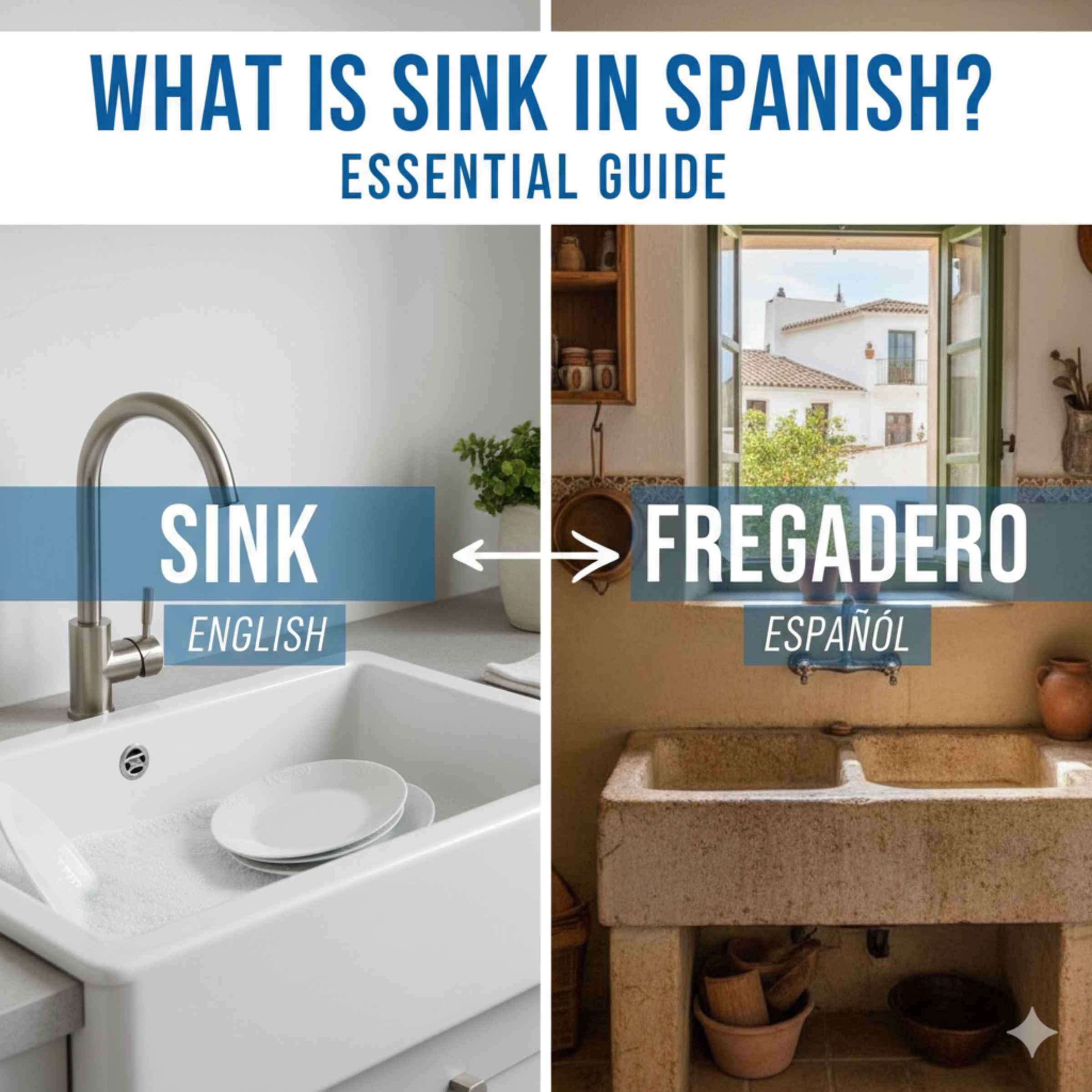
What Is Sink In Spanish: Essential Guide
The most common and useful translation for “sink” in Spanish is el fregadero (kitchen sink) or el lavabo (bathroom sink). Knowing the context is key, as other words like la pila or hundirse are used depending on whether you mean the fixture or the action of sinking.
What Is Sink In Spanish: Essential Guide for Homeowners and DIYers
As a homeowner or DIY enthusiast, you often need to talk about tools, materials, or fixtures around the house. If you’re tackling a renovation project that crosses language barriers, or maybe you’re just curious, knowing how to ask for a “sink” in Spanish is super useful. It can feel confusing because, just like in English, there’s more than one word for it!
Don’t worry about getting tripped up. We are going to break down exactly what “sink” means in Spanish, depending on where you are looking—the kitchen, the bathroom, or maybe you are talking about something heavy that is sinking into the ground. I’ll give you the simple, clear words you need, along with pronunciation tips.
By the end of this guide, you will confidently know which Spanish word to use whether you’re talking to a plumber, shopping for fixtures, or reading instructions. Let’s grab our metaphorical tool belts and dive into the essential Spanish vocabulary for sinks!
The Two Big Words: Kitchen Sink vs. Bathroom Sink
In English, we often just say “sink,” but a kitchen sink has a very different job than a bathroom sink. Spanish respects this difference! The word you use almost always depends on the room.
Think of it like this: if you are washing dishes, you use one word. If you are washing your hands, you use another. This is the most important starting point for any beginner learning this vocabulary.
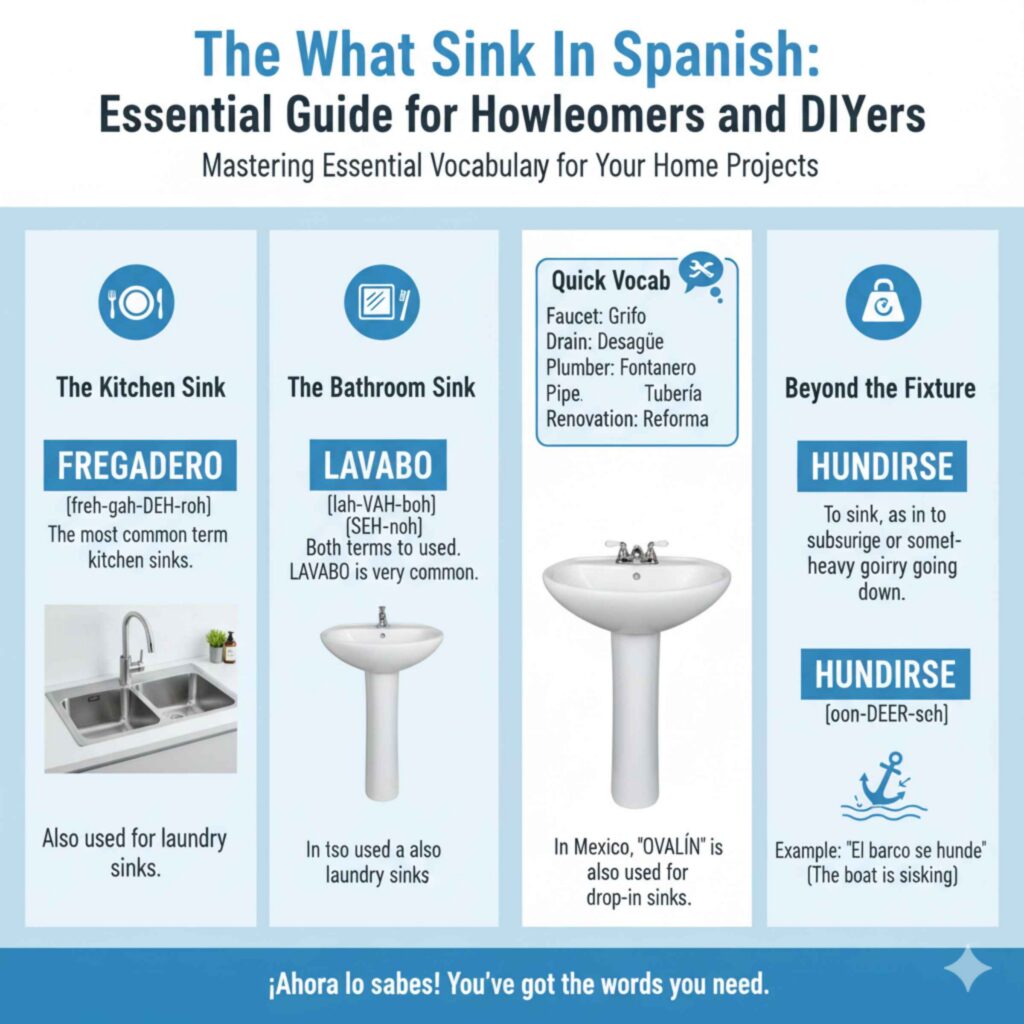
1. The Kitchen Sink: El Fregadero
When you are standing in the kitchen, ready to scrub pots and pans, the fixture you are looking at is called el fregadero.
This word refers specifically to the basin used for washing food or dishes. It is the counterpart to your kitchen countertop area.
- Word: El fregadero
- Pronunciation Tip: “Eff-reh-gah-DEH-roh” (Roll that ‘r’ lightly if you can!)
- Usage Context: Kitchen, utility room, or where heavy washing happens.
If you are shopping for a new kitchen sink, perhaps a big farmhouse style or a double basin, you will ask for un fregadero nuevo.
2. The Bathroom Sink: El Lavabo
In the bathroom, where you brush your teeth or wash your face, the term changes. Here, we use el lavabo.
This word often refers to the sink fixture itself, especially the pedestal or vanity-mounted basins common in home bathrooms.
- Word: El lavabo
- Pronunciation Tip: “Lah-VAH-boh”
- Usage Context: Bathroom, washroom, powder room.
Sometimes, people might use el lavamanos, which literally means “hand washer.” While lavabo is widely understood, lavamanos is very clear too, especially in certain regions.
Other Essential Spanish Words for Sinks and Basins
Just like you might call a utility sink a “slop sink” or a deep wash basin a “tub,” Spanish has several other terms depending on size, material, and purpose. Don’t let these confuse you; they just offer more precision!
3. La Pila (The Utility Sink/Basin)
La pila is a versatile word. It literally means “pile” or “battery,” but in a household context, it often refers to a deep, standalone basin, often made of stone, concrete, or sturdy plastic. This is common for laundry rooms or outdoor washing areas.
Think of the heavy-duty sink you might use for soaking tough laundry items—that’s a perfect use for la pila.
- Word: La pila
- Pronunciation Tip: “PEE-lah”
- Usage Context: Utility sink, laundry tub, deep basin.
4. El Lavadero (The Laundry Area)
If you are talking about the entire room dedicated to washing clothes, that area is el lavadero. Within the lavadero, you will almost certainly find a pila (utility sink) or a fregadero.
5. El Lavatorio (The Vessel or Basin)
Less common in modern homes but seen in older texts or specific religious/formal contexts, el lavatorio refers to a basin or vessel specifically for washing.
Quick Reference Table: Context is King
To make this stick, here is a simple chart comparing the most common terms. Keep this handy when you’re planning your next plumbing supply run!
| English Term | Primary Spanish Translation | Context/Room | Gender (Article) |
|---|---|---|---|
| Kitchen Sink | El Fregadero | Washing dishes/food prep | Masculine (El) |
| Bathroom Sink | El Lavabo | Washing hands/face | Masculine (El) |
| Utility Sink/Tub | La Pila | Laundry, soaking, heavy-duty washing | Feminine (La) |
| Hand Washer (Alternative) | El Lavamanos | Bathroom (Regional variation) | Masculine (El) |
Beyond the Fixture: The Verb “To Sink”
This is where DIY knowledge becomes crucial! Sometimes, you aren’t talking about the physical fixture; you are talking about the action—like when a support beam starts sinking into the soil, or when your project budget is sinking fast!
The verb for “to sink” (the action of going down into a fluid or soft surface) is usually hundirse (reflexive) or hondear (less common, meaning to lower).
When you are dealing with foundation issues or drainage problems, understanding hundirse is vital for clear communication with contractors. If a pier post is sinking, you might say:
“El poste se está hundiendo en la tierra.” (The post is sinking into the earth.)
Why is this important for DIYers?
If you are installing a new post for a deck or fence, you need the ground to be stable. If you notice existing structures are hundiendo, you have a bigger problem than just installing a new sink! Safety first! According to structural engineering guidelines, understanding ground movement is key to long-term stability, which is something we always prioritize in solid home building.
Understanding Gender: El vs. La
In Spanish, every noun has a gender (masculine or feminine), which determines whether you use el (the, masculine) or la (the, feminine). Getting this right makes your Spanish sound much more natural.
Notice how the two main sink terms break down:
- El Fregadero (Kitchen): Masculine. You must say el fregadero, not la fregadero.
- El Lavabo (Bathroom): Masculine. You must say el lavabo.
- La Pila (Utility): Feminine. You must say la pila.
If you are ever unsure, try to associate the word with the article. If you are buying a fregadero, remember it is one of the “El” words.
How to Ask for Sinks in Spanish (Practical Scenarios)
Knowing the vocabulary is half the battle; knowing how to use it in a sentence is the other half. Here are some practical phrases you might use while shopping or working on a renovation project.
Scenario 1: Shopping for a New Kitchen Fixture
Imagine you are at a large home improvement store (like a Spanish version of Home Depot) and need to find the kitchen sink aisle.
- “¿Dónde puedo encontrar los fregaderos?” (Where can I find the kitchen sinks?)
- Busco un fregadero doble de acero inoxidable.” (I am looking for a double stainless steel sink.)
- ¿Cuánto cuesta este lavabo?” (How much does this bathroom sink cost?)
Scenario 2: Describing a Problem to a Plumber
If you have a leak or an installation issue, clear communication is essential. Remember, leaks often involve tuberías (pipes).
- “El fregadero de la cocina tiene una fuga.” (The kitchen sink has a leak.)
- “Necesito reemplazar el lavabo del baño.” (I need to replace the bathroom sink.)
- “La pila del lavadero está atascada.” (The utility sink in the laundry room is clogged.)
Scenario 3: Asking for Accessories
You might also need accessories like a drain or faucet, which use different terms:
| English Item | Spanish Translation | Used With |
|---|---|---|
| Faucet/Tap | El Grifo (Spain) / La Llave (Mexico/LatAm) | El Fregadero or El Lavabo |
| Drain Stopper | El Desagüe | The hole in the bottom |
| Plumbing/Pipes | Las Tuberías | Under the sink |
Regional Variations and Dialect Differences
One thing to remember about Spanish is that it changes significantly depending on where you are. While fregadero and lavabo are understood almost everywhere for the fixtures, other words might be more common regionally.
For example, in some parts of Central America, you might hear:
- El lavatrastes: Literally “dish washer,” often used for the kitchen sink.
- La tarja: Used frequently in Mexico and parts of the Southwest US for the kitchen sink basin.
When in doubt, stick to fregadero for the kitchen and lavabo for the bathroom. These are the safest bets for clear communication with a professional contractor across most Spanish-speaking countries.
DIY Safety Note: Plumbing Terminology
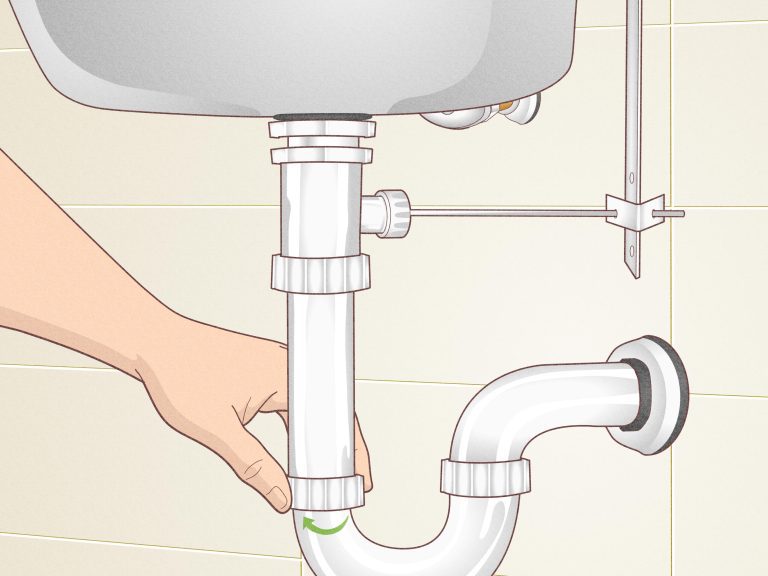
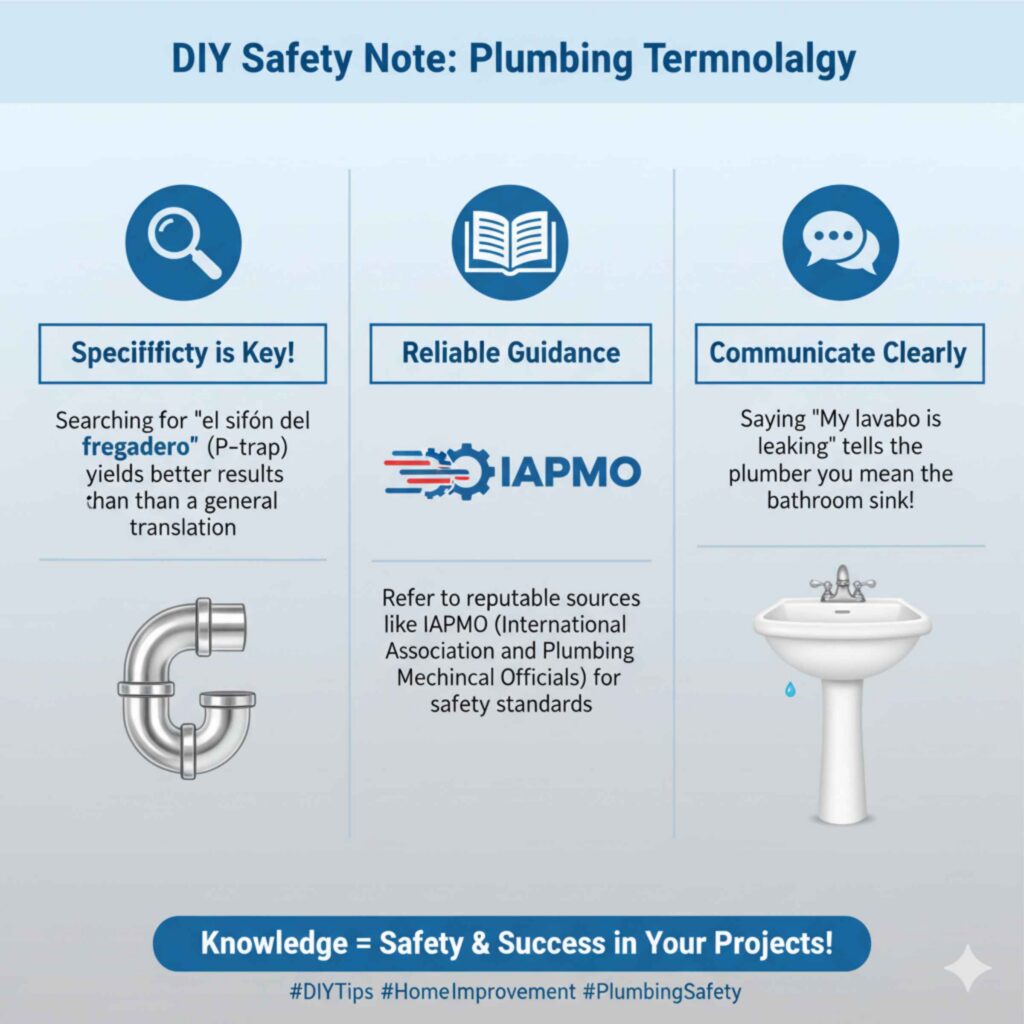
When undertaking any DIY plumbing project, knowing the right term helps you find reliable guidance. For instance, when looking up how to replace a P-trap under your sink, searching for el sifón del fregadero will yield much better results than a general translation.
Always refer to reputable sources for construction guidance. For general safety standards related to water systems and plumbing in North America, resources like the International Association of Plumbing and Mechanical Officials (IAPMO) provide excellent foundational knowledge, which translates into better practices regardless of the language you use on site.
Remember, taking the time to learn these specific terms shows respect and ensures that when you say “My lavabo is leaking,” the plumber knows exactly which room you mean!
Frequently Asked Questions (FAQ)
Q1: If I am in Spain, is lavabo always the right word for the bathroom sink?
A: Yes, el lavabo is the standard, widely accepted term for the bathroom basin throughout Spain. You will rarely need another word for that specific fixture there.
Q2: Can I use lavabo for the kitchen sink too?
A: While you could technically use lavabo because it means “washing place,” it is strongly associated with bathrooms. Using el fregadero for the kitchen sink is much clearer and avoids confusion with your kitchen plumbing supplies.
Q3: What is the difference between el fregadero and la pila?
A: El fregadero is typically built-in, usually made of stainless steel or porcelain, and designed for kitchen use. La pila is often a separate, deeper, utility-style basin used in laundry rooms or outdoors for heavy washing.
Q4: How do I say “The sink is clogged” in simple Spanish?
A: The simplest way is: “El fregadero (or lavabo) está tapado.” Tapado means covered or stopped up/clogged.
Q5: Do I need to worry about the gender when just pointing at a sink in a store?
A: Not really! If you point and say, “Quiero este,” (I want this one), pointing does most of the work. However, learning the correct article (el or la) is key for confidence when speaking full sentences.
Q6: What is the Spanish word for a drop or drip coming from the faucet?
A: A drop is una gota. If the faucet is dripping, you would say: “El grifo está goteando.” (The faucet is dripping.)
Conclusion: Confidence in Your Spanish Plumbing Vocabulary
Learning the right word for “sink” in Spanish is a perfect example of how targeted vocabulary makes DIY projects smoother and communication clearer. You now know that context dictates your choice: el fregadero for the kitchen, el lavabo for the bathroom, and la pila for heavy-duty utility work.
Don’t stress about mastering every regional term overnight. Start with these essentials. The next time you are browsing international hardware sites or talking to a Spanish-speaking neighbor about a renovation, you can confidently ask where to find the right basin or explain where that annoying drip is coming from. Keep practicing these simple terms, and you’ll find that building skills—whether with wood or language—gets easier every single day. Happy building, or happy translating!