Who Invented the Doorknob? Osbourn Dorsey’s 1878 Patent (Age 16)
Osbourn Dorsey, a formerly enslaved 16-year-old, patented the doorknob-and-doorstop mechanism on December 10, 1878 (Patent #210,764) — though standalone glass knob designs by Enoch Robinson existed decades earlier. Before Dorsey’s design, doors relied on thumb latches and leather straps that offered no real privacy or one-motion operation. This guide covers Dorsey’s actual patent text, how door knob materials evolved after it, and how to choose the right knob today.
Affiliate disclosure: This post contains Amazon affiliate links. As an Amazon Associate, we earn from qualifying purchases at no extra cost to you.
Quick Answer
Osbourn Dorsey, a formerly enslaved 16-year-old inventor from Washington, D.C., is credited with the modern doorknob: he patented a combined door-holding and latching device on December 10, 1878 (U.S. Patent #210,764). Standalone glass and porcelain knob designs existed decades before his patent, but Dorsey’s is the first to combine the knob and latch into one practical mechanism.
The Humble Beginnings of Door Closures
Doors have existed since ancient Egypt and Rome, but for most of that history nothing resembling a knob held them shut. Early doors were heavy wooden slabs or animal hides secured with wooden bars, leather straps, or simple latches — functional, but slow and easy to force open.
By the Middle Ages, wrought-iron thumb latches were standard on castles and homes: press a thumb lever to lift an internal bar and the door swings open. Sturdy, but not private and not one-handed — exactly the gap a later inventor would close.
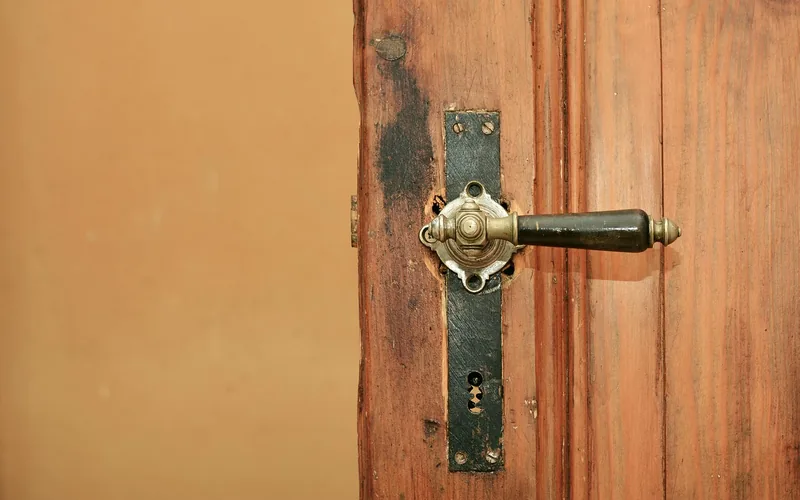
It wasn’t until the 19th century that a single mechanism combined a graspable knob with an internal latch into one practical, patented device.
Who Invented the Modern Door Knob?
The name most often credited is Osbourn Dorsey, a formerly enslaved African American inventor living in Washington, D.C. On December 10, 1878, at age 16, Dorsey received U.S. Patent #210,764 for a “door-holding device” — a mechanism that secured a door open or closed and could be screwed directly onto it.
“This invention relates to certain improvements in door-holding devices for securing it (the door) open at any desired angle, and by which there is no possible chance of its being forced to by the draft or other cause, to prevent its accidental slapping and risking the breaking of the glass therein.”
Dorsey’s device combined a knob-like grip with a latch, letting a door open, close, and hold at any angle with a single twist — a clear improvement over thumb latches and straps. His patent laid the groundwork for the door hardware industry that followed.
Dorsey wasn’t working in a vacuum, though. Standalone glass doorknob designs by Boston hardware maker Enoch Robinson date to 1836 and 1837 (U.S. Patents #65, #98, and #434, filed with Francis Draper and George W. Robinson), decades before Dorsey’s patent. Robinson’s knobs solved a different problem — how to fasten a glass knob to its spindle without cracking it — rather than the combined holding-and-latching mechanism Dorsey patented. That distinction is why Dorsey, not Robinson, is credited with the modern doorknob specifically.
📊 Over 100 U.S. patents were granted for doorknobs between 1830 and 1873 alone — Dorsey’s 1878 patent was not the first knob patent, but the first to combine the knob with a practical internal latch. Source: Encyclopedia.com, Doorknob
The Evolution of Door Knob Materials
Door knob materials shifted dramatically in the century after Dorsey’s patent. Early 1800s knobs were plain wood or cast iron. The 1820s brought the glass-pressing machine, which made affordable, mass-produced pressed-glass knobs possible — a decorative, sparkly style popular in America through the 1850s.
By the mid-1800s, imported porcelain and ceramic knobs competed with cast brass, which could be polished to a shine and held up to daily use. Victorian-era homeowners used ornate brass or cut-glass knobs as a visible style statement. During the Great Depression, glass and porcelain knobs saw a resurgence simply because metal was scarce and rationed for the war effort that followed. Today’s options run from stainless steel and bronze to crystal and molded plastic.
| Era | Popular Materials | Characteristics |
|---|---|---|
| Early 1800s | Wood, Cast Iron | Basic, functional, not very decorative |
| 1820s–1850s | Pressed Glass | Affordable, sparkly, mass-produced |
| Mid-1800s | Porcelain, Ceramic, Brass | Elegant, durable, often imported |
| Late 1800s–1900s | Cast Brass, Cut Glass | Ornate, luxurious, highly decorative |
| Great Depression | Glass, Porcelain | Affordable, metal-saving |
| Modern Day | Stainless Steel, Bronze, Crystal | Sleek, versatile, blends style and function |
How Door Knobs Changed Home Design
Before a reliable one-handed knob existed, keeping a room private meant lifting a bar or holding a strap — not practical for the growing, multi-room houses of the 19th century. Once Dorsey’s design made doors fast to operate one-handed, houses could add more separate rooms — bedrooms, dining rooms, parlors — and give each real privacy.
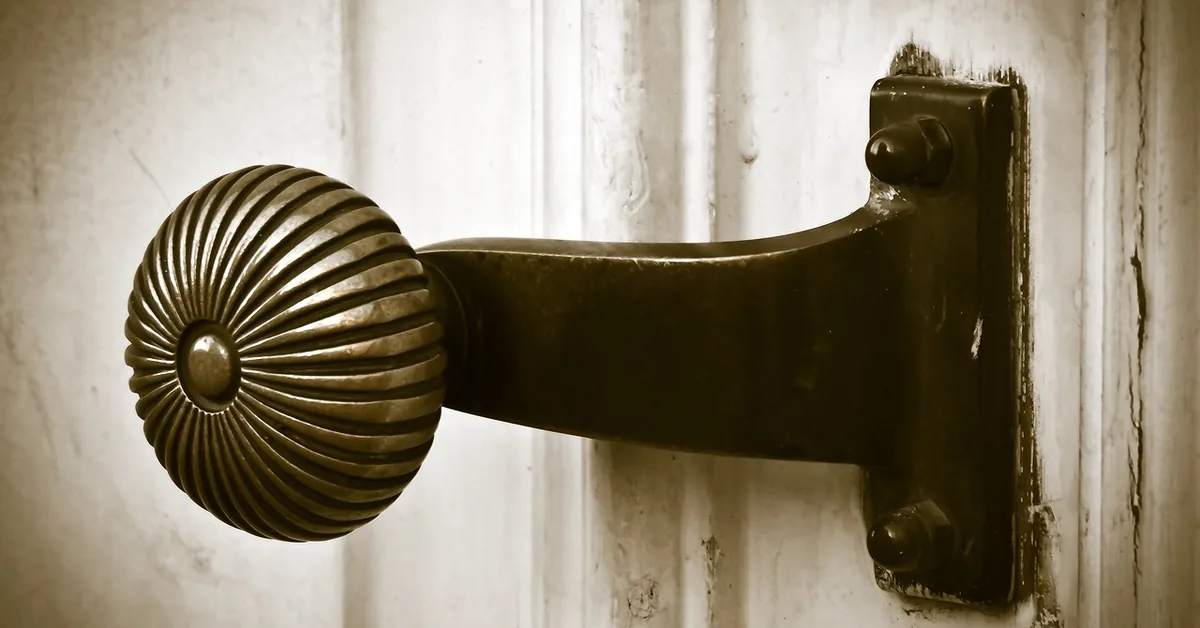
Door hardware also became a visible design statement. Victorian homeowners commissioned knobs with intricate floral or geometric patterns, and antique collectors still hunt for those originals today — small, functional objects that double as pieces of decorative history. In modern home design, swapping dated knobs for a current finish remains one of the cheapest ways to update a room’s look without a full renovation.
The Rise of Door Handles and Levers
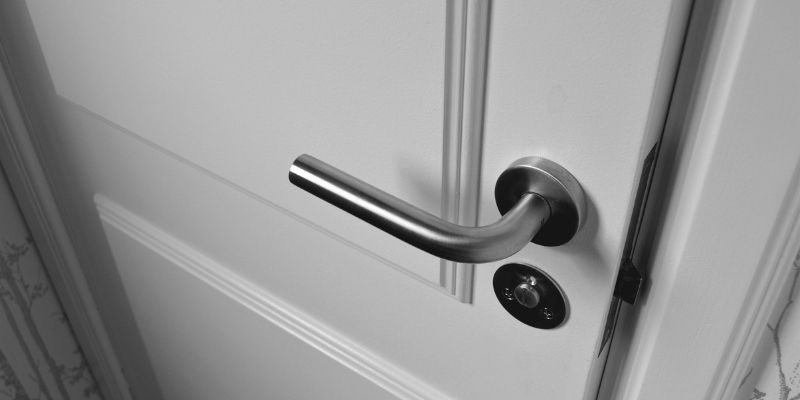
Round knobs aren’t the only option. In much of northern Europe, lever-style door handles are the default — easier to operate with a full hand, an elbow, or a forearm than a knob you have to grip and twist.
Some jurisdictions, including Vancouver, now require lever handles rather than round knobs in new residential construction, citing accessibility for people with limited grip strength or mobility. Twisting a round knob takes more hand strength than pushing down a lever, which is why levers continue gaining ground in the U.S. even outside accessibility-mandated buildings.
Modern Innovations in Door Knobs
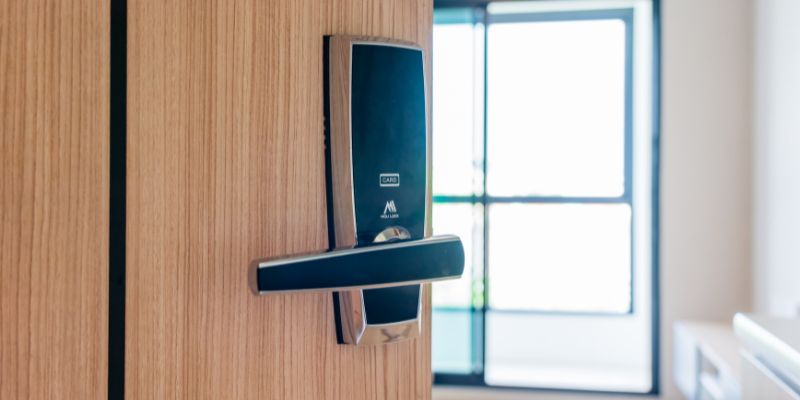
Today’s door knobs go well beyond opening a door. Smart knobs and levers now unlock with a smartphone app or fingerprint, and keyless touchpad models use a numeric code instead of a physical key — useful for rental properties or households with frequent visitors.
Finish options have also expanded well past plain brass: matte black, brushed nickel, and oil-rubbed bronze are now standard choices that let a knob match a home’s existing style rather than the other way around. Forged brass hardware, made by heating and shaping metal under pressure, holds up to far more daily use than the cast brass common a century ago.
Tips for Choosing the Right Door Knob for Your Home
Match the knob to its job first. Passage knobs don’t lock and suit closets or hallways. Privacy knobs have a push-button or twist lock built in, made for bedrooms and bathrooms. Keyed entry knobs belong on exterior doors where real security matters. Dummy knobs don’t turn at all — they’re purely decorative, common on pantry doors and double-door pairs.
Style should match the house, not just personal taste — sleek stainless or matte black suits a modern build, while vintage-inspired brass or glass fits a pre-1950s home more naturally. Anyone with arthritis or limited hand strength in the household is usually better served by a lever than a round knob, regardless of the home’s era.
Quick reference for choosing a knob type:
| Type of Knob | Best For | Pros | Cons |
|---|---|---|---|
| Passage Knob | Hallways, Closets | Simple, no lock needed | Not secure for private rooms |
| Privacy Knob | Bedrooms, Bathrooms | Easy to lock for privacy | Not suitable for exterior doors |
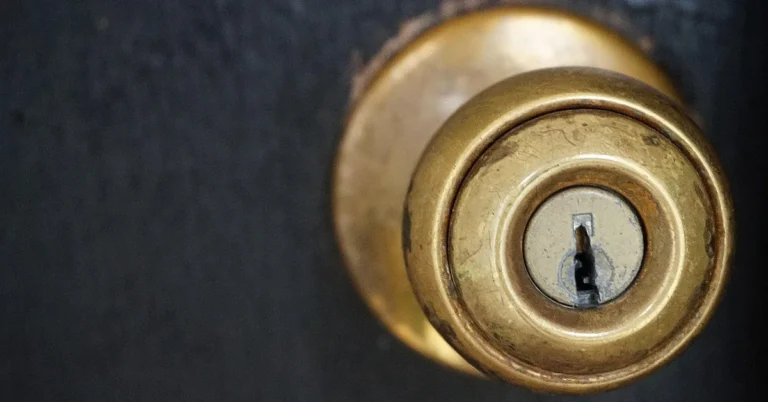
| Keyed Entry Knob | Front Doors, Exterior Doors | High security, lockable with key | Can be pricey, keys can be lost |
| Dummy Knob | Decorative Doors, Pantry Doors | Affordable, purely decorative | No function, doesn’t turn |
Best Passage Door Knob Pick
Probrico Brushed Nickel Passage Door Knobs – $38.99
A non-locking multipack that matches the passage-knob category covered above — sized for closets and hallways where a lock isn’t needed.
- Best for: replacing several hallway or closet knobs in one project
- Why we picked it: brushed nickel finish matches most modern and transitional homes
- Main drawback: non-locking, so it won’t work for bedrooms or bathrooms
Compare more door knob options
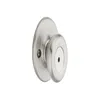 Option 1 Kwikset Tylo Privacy Knob – $13.34
|
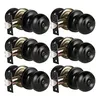 Option 2 KNOBWELL Privacy Knob 6-Pack – $30.99
|
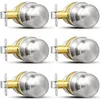 Option 3 Brushed Nickel Passage 6-Pack – $32.99
|
As an Amazon Associate we earn from qualifying purchases.
How to Install or Replace a Door Knob
Replacing a door knob is a straightforward DIY project. All you need is a new knob set, a screwdriver, and about 20 minutes.
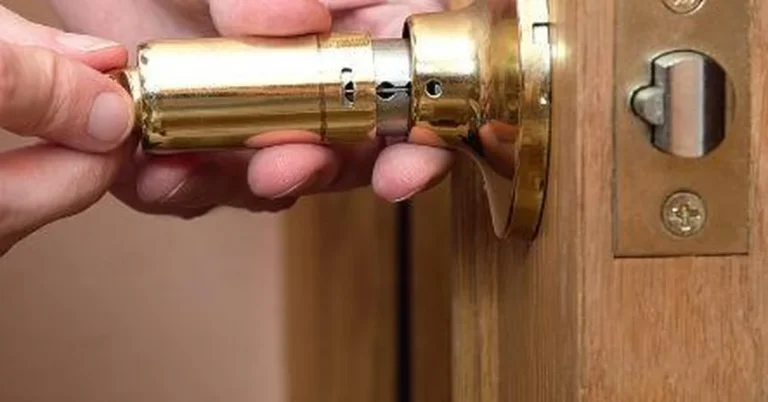
- Remove the old knob: Find the small slot or hole on the knob or its cover plate, insert a flat-head screwdriver to release it, then unscrew the plate from the door.
- Remove the old latch: Once the knob is off, the latch mechanism inside the door edge is exposed; unscrew and remove it too.
- Insert the new latch: Fit the new latch into the edge hole with the slanted side facing the direction the door closes.
- Align and attach the new knob: Fit the two knob halves together through the latch — one side has a square peg that passes through it — and screw them into place.
- Attach the strike plate and test: Screw the strike plate to the door jamb, then test that the knob turns smoothly and the latch catches; tighten or realign if it feels loose.
If the old knob left marks or scratches, a small touch-up with paint or wood stain finishes the job cleanly.
Why Door Knobs Matter in Home Improvement
Door hardware is a small detail with an outsized effect on how a room reads — a sleek modern knob reads contemporary, while antique brass adds warmth and age-appropriate character to an older home. Swapping knobs is also one of the cheapest ways to refresh a room: it costs a fraction of repainting or replacing furniture and takes an afternoon rather than a weekend.
Knob and lever choice also affects accessibility and safety for the people actually living in the house — levers over knobs for anyone with reduced grip strength, and modern keyless or smart locks add security options that a Victorian-era cast-brass knob never had to consider.
Frequently Asked Questions
Was the doorknob invented by a Black inventor?
Yes. Osbourn Dorsey, a formerly enslaved African American inventor from Washington, D.C., patented the doorknob-and-doorstop mechanism on December 10, 1878, at age 16 (U.S. Patent #210,764). His design combined a rotating knob with an internal latch into one practical device.
Did doorknobs exist before Osbourn Dorsey’s 1878 patent?
Yes — doorknobs in some form existed before 1878. Encyclopedia.com records over 100 U.S. patents granted for knobs between 1830 and 1873, including glass knob designs by Enoch Robinson. Dorsey’s 1878 patent is credited as the first to combine the knob shape with a working internal latch mechanism, which is why it’s considered the origin of the modern doorknob specifically.
What is the difference between a door knob and a door handle?
A door knob is a round or spherical device you twist to open a door. A door handle, often called a lever, is a long, flat piece you push or pull. Knobs require more grip strength, while handles are easier to use, especially for people with limited mobility.
Are door knobs still popular today?
Yes, door knobs are still widely used, especially in the U.S. However, door levers are gaining popularity for their accessibility and modern look. It depends on your style and needs — knobs are classic, while levers are practical.
Can I install a door knob myself?
Yes. Installing a door knob is a simple DIY project that needs only a screwdriver and a new knob set. Remove the old knob, insert the new latch, align the knob halves, and screw everything in place — it usually takes less than 30 minutes.
What materials are best for door knobs?
It depends on style and budget. Brass and stainless steel are durable and versatile. Glass or crystal knobs add a vintage or elegant touch. Porcelain or plastic knobs cost less but may not last as long.
Why are some places banning round door knobs?
Some cities, including Vancouver, have banned round knobs in new construction because they are harder to operate for people with limited mobility or grip strength. Levers are more accessible since they can be operated with an elbow or forearm, which is why they are increasingly required under universal-design building codes.
Conclusion
The door knob traces to a specific, documented moment: a formerly enslaved 16-year-old named Osbourn Dorsey patenting a combined knob-and-latch device in 1878, decades after the first glass knob patents but the first to solve the whole problem at once. From cast iron to smart locks, every material and mechanism since has built on that same basic idea — a device you can operate with one hand, without lifting a bar or fumbling a strap.
Sponsored / affiliate links. As an Amazon Associate I earn from qualifying purchases. I may earn additional commission from eligible campaigns.