Best Exterior Siding for a Mobile Home
For many mobile homes, insulated vinyl siding is often a strong exterior siding choice because it is relatively light, affordable, and easier to retrofit. Choose fiber cement only when the wall framing and sheathing can carry the extra load, and you want a harder, longer-wearing finish. The wrong siding can trap moisture, strain thin wall assemblies, and lead to rot, leaks, or costly repairs. This guide compares siding materials by weight, moisture control, installation limits, and maintenance so you can pick the right option.
Mobile home siding options
Mobile home siding has to fit the wall assembly, the trim system, and the fastening limits already built into the home. That is why the best exterior siding for a mobile home is often not the same answer you would pick for a site-built house. Fit and water control matter more than appearance.
Vinyl siding
Vinyl is a low-maintenance exterior cladding that works well on many manufactured homes because it is lightweight and common in DIY-friendly retrofits. It moves with temperature changes, so panels need room for expansion and contraction. Choose a profile that matches the existing trim and panel layout, especially around openings and long runs.
Insulated vinyl siding
Insulated vinyl adds a thermal layer behind the face panel, which can help with energy efficiency and gives the wall a thicker profile. It is still light enough for many mobile home retrofits, but it costs more than standard vinyl and can complicate trim transitions. It often makes sense when the existing wall is uneven but structurally sound.
Aluminum and steel siding
Metal siding, including aluminum and steel variants, is light and can work well on some mobile homes, especially when you want a period-correct look or easier panel replacement. Aluminum can dent, while steel resists impacts better but brings more corrosion concerns if coatings fail. Both require careful termination at corners, windows, and skirting.
Fiber cement siding
Fiber cement is durable and takes a painted finish well, with fewer impact dents than vinyl or aluminum. The tradeoff is weight, cutting dust, and more demanding fastening. On a mobile home, it should usually be considered only when the wall assembly, framing, and sheathing are confirmed to handle the load.
Mobile home siding decision table
This table scores the common retrofit choices against the issues that matter on a mobile home, not just on paper. Higher scores mean better performance for that criterion, except on DIY difficulty and retrofit complexity, where higher scores mean easier work.
| Material | Weight | Moisture tolerance | Wind performance | Maintenance | Repairability | Cost | DIY difficulty | Retrofit complexity | Best fit |
|---|---|---|---|---|---|---|---|---|---|
| Vinyl | 5/5 | 3/5 | 3/5 | 4/5 | 4/5 | 5/5 | 4/5 | 4/5 | Budget replacements, sound walls, common DIY retrofits |
| Insulated vinyl | 4/5 | 4/5 | 3/5 | 4/5 | 3/5 | 3/5 | 3/5 | 3/5 | Energy-focused upgrades, uneven walls, colder climates |
| Aluminum | 5/5 | 3/5 | 4/5 | 4/5 | 4/5 | 4/5 | 3/5 | 3/5 | Older homes, light retrofit loads, replacement panel work |
| Steel | 4/5 | 4/5 | 5/5 | 4/5 | 3/5 | 3/5 | 2/5 | 2/5 | Wind-prone areas, impact resistance, long service life |
| Fiber cement | 1/5 | 5/5 | 4/5 | 3/5 | 3/5 | 2/5 | 1/5 | 1/5 | Homes with strong framing and a higher-end exterior plan |
For a home with older sheathing, a light wall assembly, or uncertain framing, vinyl or insulated vinyl is usually the safer retrofit choice. For high-wind locations, steel is often the better metal option if the trim system and fasteners are set correctly. Fiber cement belongs on the short list only when the structure can support it.
What makes siding work on a mobile home?
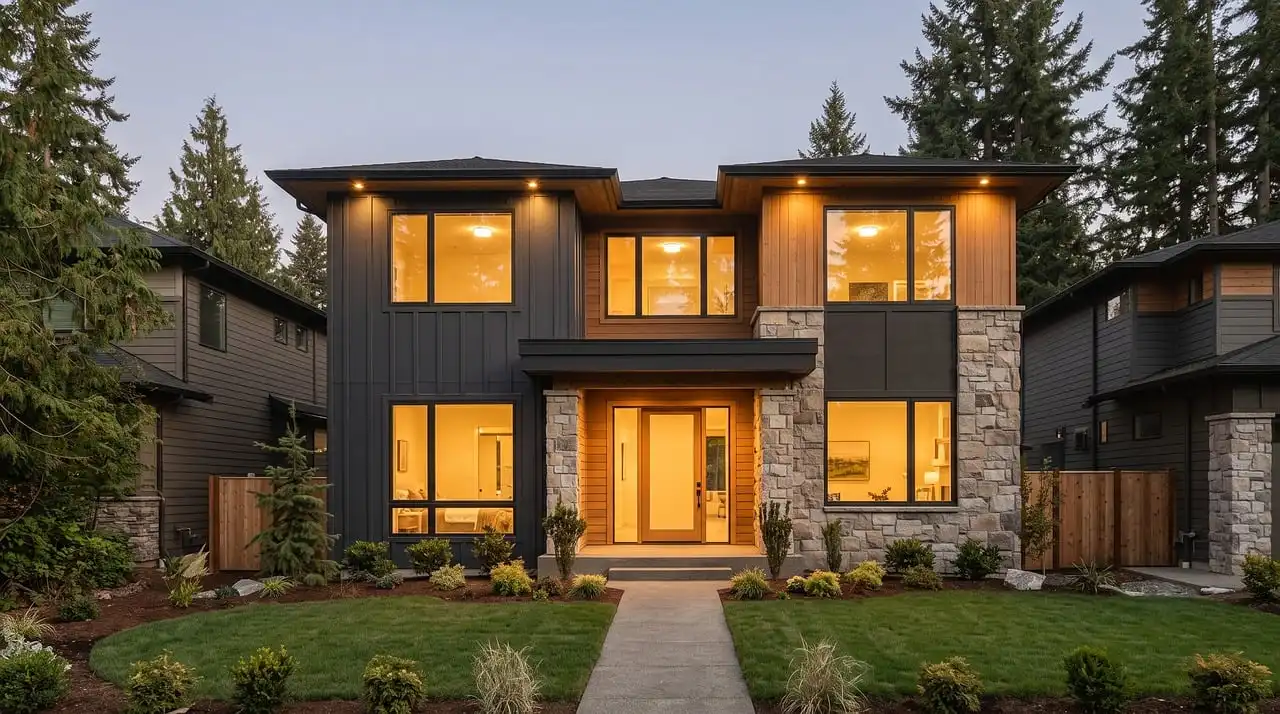
Siding works on a mobile home when the panel size, trim system, and fastener pattern match the wall assembly already in place. Manufactured-home-specific details matter because many homes have thin walls, nonstandard dimensions, and trim that was never meant for heavy cladding. Water control behind the siding matters just as much as the face material.
Panel sizing and trim compatibility
Many mobile home siding panels come in panel or lap style, and replacement compatibility depends on matching the existing profile. Vertical and horizontal profiles do not solve the same problems. If the new siding does not fit the starter strip, corner trim, and J-channel, water entry and loose edges become more likely.
Check whether the existing trim system can accept the new panel thickness. A thicker profile can bind in J-channel around windows, doors, and utility penetrations. That is one reason mobile home siding panels should be selected with the trim in mind, not as a standalone product.
Weight and wall assembly limits
Site-built houses usually have more structural margin than a typical manufactured-home wall. That matters when you move from vinyl to heavier cladding. Fiber cement, and in some cases layered retrofit systems, can overload weak wall framing or poorly fastened sheathing.
Suppose a 14-foot-wide home has soft sheathing near a window and loose trim at the corners. Adding a heavier product over that problem will not fix the wall. It can hide the damage until water intrusion becomes worse.
Moisture control behind the cladding
House wrap or another weather barrier helps manage moisture and reduce air infiltration behind new siding. On a mobile home, seam treatment matters because wall assemblies may have different panel joints than a site-built wall. Tape seams as specified by the barrier manufacturer and keep laps consistent around openings.
Do not rely on siding alone to stop leaks. If the wall already has rot, staining, or soft spots, those issues need repair before new cladding goes on. Siding can shed water, but it cannot restore damaged sheathing.
Can you put vinyl siding on a mobile home?
Yes, vinyl siding can go on a mobile home, and it is one of the most common retrofit choices because it is light, affordable, and relatively easy to install. It works best when the wall is sound, the trim system is compatible, and you leave room for expansion and contraction movement.
When vinyl is the better retrofit choice
Vinyl makes sense when you want a lighter cladding, a wide color range, and straightforward replacement panels later on. It is also a practical option when the budget is tight and the existing wall structure is not ideal for heavier products. Many owners choose it because installation is simpler than fiber cement or steel.
When insulated vinyl makes more sense
Insulated vinyl is worth a look when you want a slightly thicker wall profile and some added thermal layer. It can be a better fit for homes with minor unevenness in the existing wall surface, because the backing can help the finished wall look more uniform. The price premium is the tradeoff.
What to check before fastening
Before fastening any vinyl panels, confirm the nailing zone, the length of the fasteners, and the clearance for movement. Use corrosion-resistant nails or screws that match the wall assembly, and do not cinch the panel tight. The siding needs room to move without buckling.
A common first-timer mistake is fastening vinyl too tightly at one end of a long wall run. The panels then ripple when temperatures change, especially on a south-facing wall. Leave the manufacturer-specified gap, and make sure the starter strip is straight before the first course goes up.
How do you replace mobile home siding?
Replace mobile home siding by removing damaged panels, checking the sheathing, installing a weather barrier, then rebuilding the trim and panel layout in the correct order. The sequence matters because mobile home walls can hide moisture damage that you need to see before the new surface goes on. Do not cover soft spots.
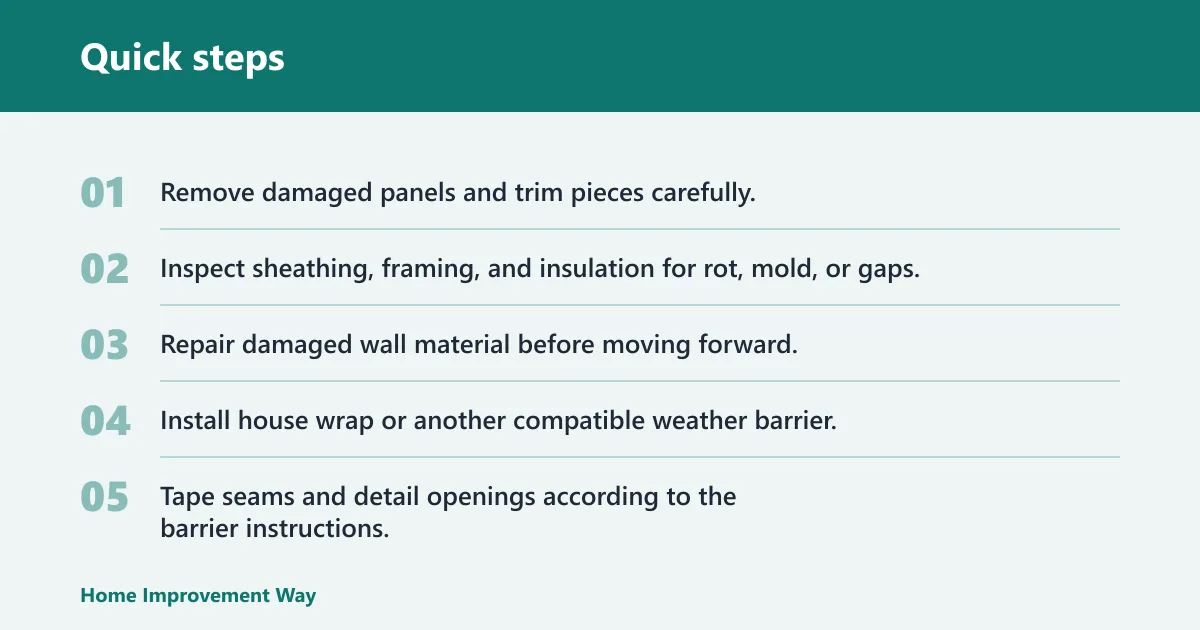
- Remove damaged panels and trim pieces carefully.
- Inspect sheathing, framing, and insulation for rot, mold, or gaps.
- Repair damaged wall material before moving forward.
- Install house wrap or another compatible weather barrier.
- Tape seams and detail openings according to the barrier instructions.
- Set the starter strip level and align corner trim and J-channel.
- Hang the new panels with corrosion-resistant fasteners in the nailing zone.
- Check termination details at skirting, soffits, and openings.
Remove damaged panels and inspect sheathing
Start by lifting off the damaged panel sections and exposing the wall underneath. Look for soft sheathing, rusted fasteners, and wet insulation. If the existing siding failed because of a leak, the leak source needs to be corrected before new material is installed.
Install house wrap or other weather barrier
A weather barrier belongs behind the siding when the wall assembly allows it. It helps control moisture and air movement, but it must be compatible with the existing wall material. Make sure seams overlap correctly and are taped where required.
Set starter strips, trim, and new panels
The starter strip supports the bottom edge, sets the first course level, and helps keep water out of the wall. Corner trim and J-channel need to match the chosen profile, otherwise the edges will look forced and the seals can fail. Good termination details are part of the system, not an afterthought.
Choose corrosion-resistant fasteners and proper spacing
Fasteners should be corrosion-resistant and long enough to engage the wall assembly without punching through parts they should not. Place them in the nailing zone and leave room for thermal movement, especially with vinyl and insulated vinyl. Tight fasteners can distort the panel and weaken wind resistance.
How much does mobile home siding replacement cost?
Mobile home siding replacement cost depends on material, labor, repair needs, and trim work. A simple vinyl job costs less than a full fiber cement retrofit because the latter needs heavier handling, more cutting, and stronger fastening. If sheathing repairs, weather barrier work, or trim replacement are needed, the total rises fast.
Use these broad project buckets for planning: material cost, underlayment or weather barrier, trim and accessories, fasteners, and labor if you are not doing the work yourself. Homes with damaged corners, soft sheathing, or odd-sized openings cost more because the retrofit takes longer and the waste factor goes up. Accurate measurements help avoid ordering too little or too much material, which is why careful takeoff matters before you buy.
HOVER says accurate measurements lead to accurate estimates and purchase orders, and that is especially true on mobile homes with nonstandard dimensions. It also notes that siding choices should consider color, material, and manufacturer, while climate and weather patterns matter when you choose the system. Those points help reduce ordering mistakes and bad fit.
What should you check before buying siding?
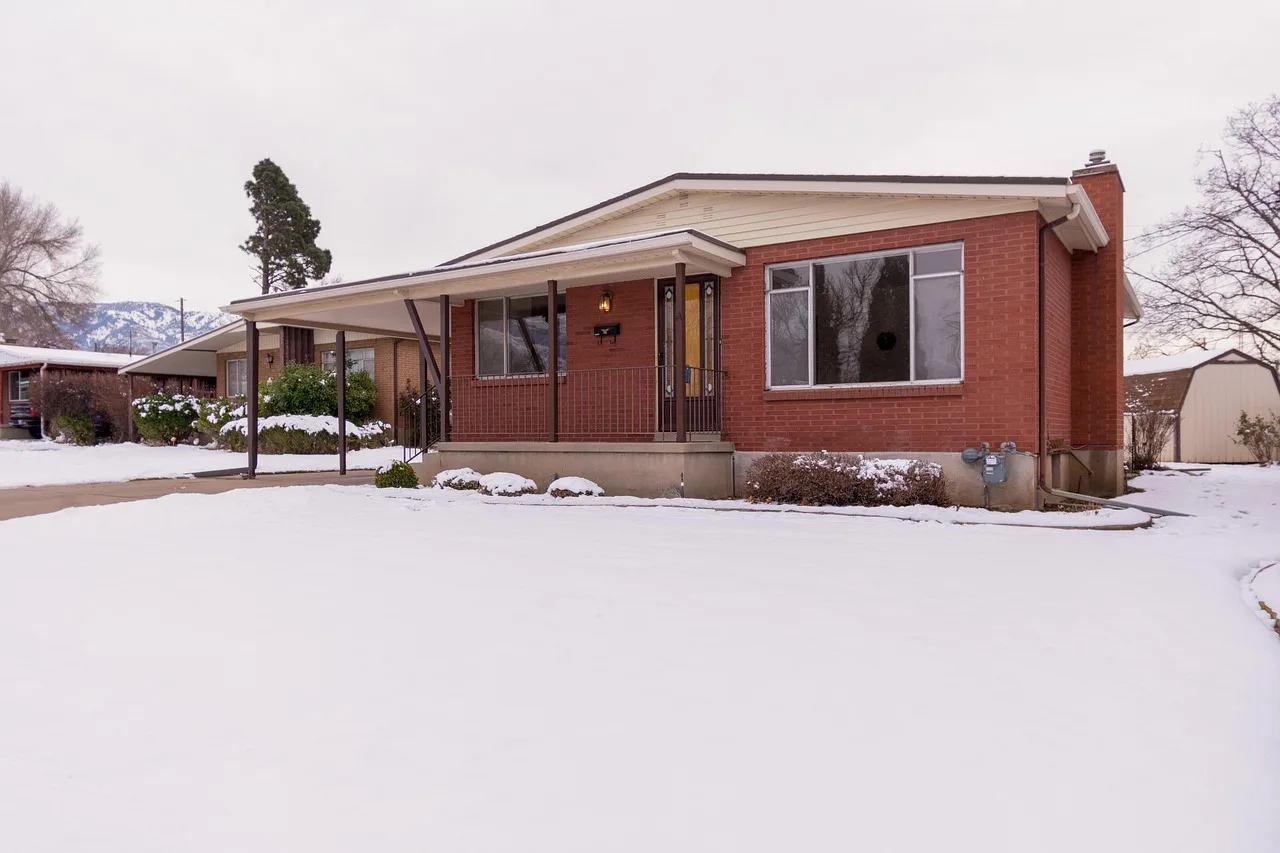
Before you buy siding, check the openings, corners, skirting intersections, existing damage, and the exact panel profile already on the home. These details decide whether a material is practical or a poor fit. A siding product can look right and still fail if the trim system or wall thickness does not match.
Openings, corners, and skirting intersections
Window and door trim, outside corners, and the joint where siding meets skirting are common leak points. Measure those areas carefully and confirm the accessory pieces exist for your chosen profile. If the home has unusual edge details, the best siding for a mobile home may be the one that minimizes custom trimming.
Existing damage, rot, or soft spots
Look for blistered panels, staining, soft sheathing, and loose fasteners. Those signs usually mean the wall needs repair before any new cladding goes on. Heavy siding over damaged framing is a mistake because it hides the issue while adding load.
Measurements, panel profile, and replacement parts
Measure wall lengths, height changes, and all accessory runs before you order. HOVER uses 3D models based on smartphone photos, which is one way to improve ordering accuracy before purchase. The goal is not just to estimate material quantity, but to verify the profile, trim compatibility, and manufacturer match.
Where to buy mobile home siding depends on the profile you need and whether you want panel-by-panel replacement or a full exterior package. A broad building-supplies source can be useful when you need trim, fasteners, barrier materials, and replacement pieces from one place. For unusual panel sizes, ask for manufactured-home-specific sizing before you commit.
Picture a 28-foot by 60-foot home with faded aluminum siding on three walls and one corner panel bent by wind. If the sheathing is dry and the trim is still compatible, replacing the damaged sections with matching metal panels can be a clean fix. If the corner is soft or the wall is swollen, the repair has to start behind the siding.
Frequently asked questions
What siding material is best for a mobile home?
Insulated vinyl is the best all-around choice for many mobile homes because it is light, affordable, and easier to retrofit than heavier products. Fiber cement is a stronger pick only when the wall structure can handle the load and you want a harder, more durable finish. The best choice still depends on wall condition and trim fit.
How do I repair damaged mobile home siding panels?
Repair depends on the material and the size of the damage. Small vinyl damage can sometimes be replaced panel by panel, while dented aluminum may be swapped as a section. If the panel damage came from water entry, inspect the wall behind it first so you do not cover rot or wet insulation.
What is the most low-maintenance siding for a manufactured home?
Vinyl is usually the lowest-maintenance choice for a manufactured home because it does not need repainting and it handles routine exposure well. Insulated vinyl keeps that advantage with added thickness and a small thermal benefit. Fiber cement is durable, but painted finishes need upkeep over time.
What should I check before installing siding on a mobile home?
Check the wall thickness, trim compatibility, corner details, skirting intersections, and any signs of rot or soft sheathing. Confirm the weather barrier plan, fastener length, and panel profile before you order materials. Those checks prevent the common retrofit failures that come from treating a mobile home like a standard site-built wall.
Sponsored / affiliate links. As an Amazon Associate I earn from qualifying purchases. I may earn additional commission from eligible campaigns.